← Science Weekly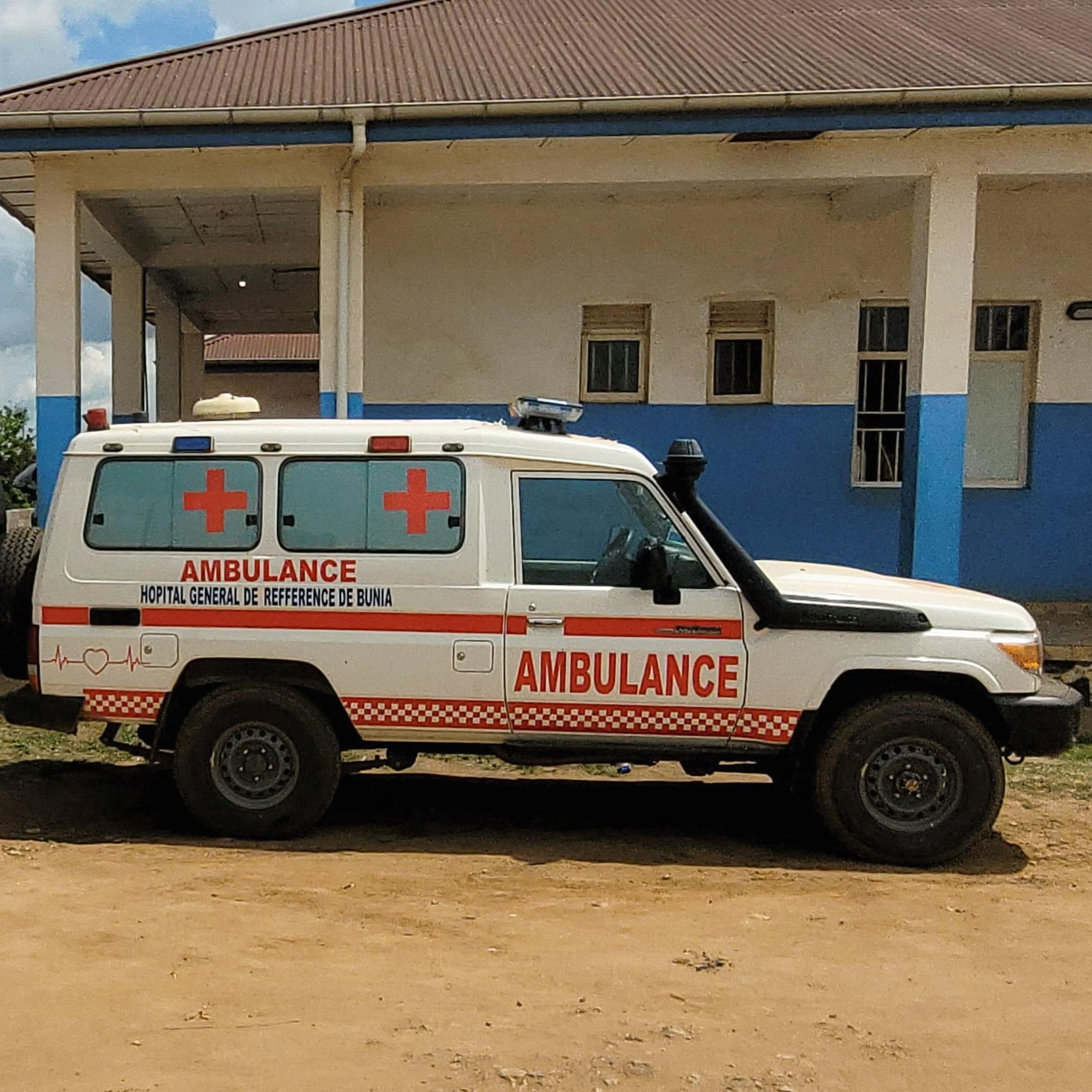
Science Weekly
Ebola: how does it spread and can the outbreak be contained?
00:13:50
Ian Sample hears from Daniela Manno, a clinical epidemiologist at the London School of Hygiene and Tropical Medicine
Loading summary
Transcript58 lines
- [00:00]
Ian Sample
This is the Guardian.
- [00:10]
Chelsea Clinton
Do you ever find yourself scrolling through headlines and thinking, possibly screaming, at least on the inside, that can't be true. There's rising rates of vaccine preventable diseases and someone on the Internet saying that watermelon juice is a natural alternative to sunscreen. Just no. I'm Chelsea Clinton and that Can't Be True is back for season three. My guests and I cut through a lot of chaos to help all of us understand what is true, what is overblown and what's false.
- [00:42]
Quo Advertiser
Running a business means juggling a lot of moving parts. And when your communication tools can't keep up, things start to slip. Missed calls, slow replies, scattered conversations. They're not just frustrating, they're lost opportunities and revenue left on the table. That's where Quo comes in. Spelled Q U O. Quo is the number one rated business phone system on G2, trusted by over 90,000 businesses. One shared business number for calls and texts so every conversation stays visible, organized and accountable. It works from an app or computer. You can keep your existing number, add teammates and sync your CRM, letting you scale without adding complexity. And with built in AI, Quo logs calls, summarizes conversations and flags. Next steps even after hours Stop missing customers. Stop leaving revenue on the table. Try quo free and get 20% off your first six months@quo.com tech. That's quo.com tech. No missed calls, no missed customers.
- [01:57]
Ian Sample
An outbreak of Ebola has emerged in the Democratic Republic of Congo and Uganda.
- [02:03]
An outbreak of Ebola in the Democratic Republic of Congo has been declared as a public health emergency of international concern by the World Health Organization.
- [02:13]
So far, there have been around 400 suspected cases and more than 100 people. People have died. Ebola is often fatal. It has a death rate of around 50%. And this outbreak has experts particularly worried because the strain involved is rare and there's currently no vaccine for it. So today, what do we know about the Ebola outbreak and can it be contained? I'm the Guardian Science editor, Ian Sample, and this is Science Weekly. Doctor Daniela Mano. You're a clinical epidemiologist at the London School of Hygiene and Tropical Medicine, and you've worked on Ebola vaccine trials. Tell us a bit about what we know so far in terms of when did this outbreak begin, how many people have been affected, and obviously, where is it happening?
- [03:16]
This outbreak likely started weeks ago, and the number of suspected cases and deaths are already quite high. But the true size of this outbreak is still not fully known. So this outbreak is in a region of eastern DRC Called Ituri. It's a region that is highly populated and has movement of populations within DRC and also cross borders with Uganda and also neighboring Rwanda is a region where there is insecurity and conflicts. So it's a place where outbreak response can have issues.
- [03:53]
And what exactly is Ebola? And you know, if you're infected with the virus, what happens?
- [03:59]
Ebola is a severe viral infection that is caused by a group of viruses of the genus Orthoebola virus. And it consists in symptoms such as fever, tiredness, body ache and then can progress into diarrhea vom and severe manifestation like bleeding complications and eventually the case could have multi organ failure and die.
- [04:26]
And how does it spread?
- [04:27]
Through direct contact with body fluids from an infected or dead person. And these body fluids can be vomit, diarrhea, but also breast milk, tears or contaminated materials. It doesn't spread through air like COVID 19 so it's less transmissible than One of the situation where transmission can occur is when family members look after relative sick relatives or when they engage in traditional burial practices that requires touching the dead body and washing the dead body.
- [05:17]
The outbreak we're talking about emerged in DRC and has now spread to Uganda. What are some of the factors that make these countries susceptible to Ebola outbreaks?
- [05:29]
Ebola viruses are present in wildlife. The reservoir is considered to be a species of bats. And then occasionally there is a spillover event to humans that can start an outbreak. There are traditional practices that have been considered at risk. So for example, hunting or butchering wild animals or consumption of wild meat. But in general, with landscape changes in those countries and human activities encroaching more and more in wild environments, the contacts between human and animals are increasing. So I would say it's a combination of ecological, environmental and social factors.
- [06:16]
And I was going to ask about that, Daniela, actually is why is it that these spillover events can then turn into these much larger outbreaks? I mean, does that say something about the healthcare system, about awareness of these diseases?
- [06:30]
So traditionally Ebola outbreaks happened in remote areas and possibly died out without involving a large number of cases. But now the regions that are at risk of Ebola outbreaks are more and more densely populated and are connected. And so a case can easily travel to a major city. One important factor of Ebola outbreaks is also that sometimes it infects healthcare workers in a setting where infection prevention and controls are not followed properly. Maybe because the outbreak happens in an area where the healthcare system is quite weak and there's no suspicion that infection could Be Ebola.
- [07:19]
Daniela, it's now been confirmed that the Bundibugio virus is behind this particular outbreak. What do we know about this particular strain?
- [07:28]
So Bundibugio is a rare virus. It appeared the first time in Uganda in 2007. It has caused only two previous outbreaks, and so it's not been prioritized for vaccine development and therapeutics. There are other vaccines, especially against Ebola virus disease, formerly known as Zaire Ebola virus. And we have also several therapeutics that can be used against Ebola virus. But those vaccines and drugs do not work against pudimogio because the virus is different. And that's why we do not have currently a vaccine or a drug that can be used during the current outbreak.
- [08:13]
I know there are some experimental vaccines for Bundubuggio in development, but as you say, these probably won't be available during this outbreak, nor will any specific treatments. So how are patients cared for?
- [08:26]
There are other treatments that can be used and they are extremely beneficial. I think the first important thing is that if a case is identified early, it's much easier to manage. The treatment that can be given are intensive care treatment like fluid resuscitation, pain management, management of complications, and those treatments actually reduce mortality of infected cases substantially.
- [08:58]
It sounds like that is largely supporting the patient to basically get through the infection themselves. Is that right?
- [09:04]
Yes, it is right.
- [09:05]
And what sort of traditional containment measures will the authorities be relying on?
- [09:11]
They will rely on early identification of cases and generic treatment and then contact tracing and isolation, safe burials, infection prevention and control measures in healthcare settings, and also community engagement. These more traditional outbreak response methods have been extremely important in the response to previous outbreaks, and they work when applied properly,
- [09:43]
Coming up with no treatment or vaccine, how will authorities try and get this outbreak under control?
- [09:57]
Kai Wright
I'm Kai Wright.
- [09:57]
Kari Sherman
I'm Kari Sherman.
- [09:58]
Kai Wright
And we are here to tell you about our new show, which is rooted in this feeling that at least I have. I know you have. Where, you know, it's kind of like when you wake up in the morning and you pick up your phone and you're just hit in the face with a fire hose of news, right?
- [10:15]
Kari Sherman
Like there's war, there's authoritarianism, our planet is burning. I could go on and on and
- [10:21]
Kai Wright
on and on and on and on. But, like, we're trying to figure out how to manage it, right? Like, how do you manage it?
- [10:26]
Kari Sherman
I manage it by leaning in and trying to learn more and trying to figure out, okay, how can I be smarter about this particular topic and who can I talk to that's going to make me feel better about it.
- [10:36]
Kai Wright
And who can tell me who's responsible for the mess that I'm reading about? So that's our mission. That's the show.
- [10:42]
Kari Sherman
Welcome to Statesite with Kai and Carter. We're a new show from the Guardian.
- [10:46]
Kai Wright
We're talking to big thinkers and the best journalists just trying to understand the world through smart conversation and honest reporting.
- [10:53]
Kari Sherman
We don't have billionaires telling us what to say.
- [10:55]
Kai Wright
Stateside with Kyan Carter is out now. Every Monday, Wednesday and Friday.
- [11:00]
Kari Sherman
Follow on Apple Podcasts or catch us wherever you watch or listen.
- [11:10]
Quo Advertiser
Running a business means juggling a lot of moving parts. And when your communication tools can't keep up, things start to slip. Missed calls, slow replies, scattered conversations. They're not just frustrating, they're lost opportunities and revenue left on the table. That's where quo comes in. Spelled Q U O. Quo is the number one rated business phone system on G2, trusted by over 90,000 businesses. One shared business number for calls and texts. So every conversation stays visible, organized and accountable. It works from an app or computer. You can keep your existing number, add teammates and sync your CRM, letting you scale without adding complexity. And with built in AI, Quo logs calls, summarizes conversations and flags next steps even after hours Stop missing customers. Stop leaving revenue on the table. Try quo free and get 20% off your first six months@quo.com tech that's quo.com tech quo. No missed calls, no missed customers.
- [12:25]
Ian Sample
So look, what will the response to the outbreak look like now? I mean, what will the health authorities from drc, from Uganda and internationally, what will they be doing now?
- [12:36]
The fact that the WHO has now declared a public health emergency of international concern is extremely important. This is recognizing that the outbreak has the potential to spread regionally. And so it's extremely important that there is a coordinated response effort across different countries including drc, Uganda, Rwanda. And this will allow to mobilise international coordination, release of funding and also technical support and cross border preparedness to avoid further spread.
- [13:12]
And presumably it is one of those situations where time is of the essence, that these health workers need to get in early, as early as they can to start doing that case isolation, identification, the contact tracing and getting all of this containment procedure in place as soon as they can.
- [13:33]
Yes, absolutely. This outbreak is worrying because we do not know the exact size of the outbreak at the moment so it can spread uncontrolled. So it's extremely important that control measures are applied rapidly.
- [13:51]
As this emergency response kicks in, then what are going to be the challenges you think that will lie ahead for containing this?
- [13:58]
Challenges would be coordination within the country and also among neighbouring countries. But also the area where the outbreak is happening is a difficult area where there is insecurity, conflict, and so outbreak control teams could have a difficult job. And the population sometimes do not have a huge trust in the authorities. And also maybe Ebola is not fully understood. And sometimes the reason why the outbreak occur is not attributed to a virus or an infection, but other reasons like black magic or, you know, beliefs in the. In the community, that needs to be understood so the communication efforts can tackle the misjudgment. And Ebola is a difficult disease to handle because it affects close contacts. And I think in general, it's difficult for someone to actually report the disease in a family member. Like, it can be your son, it can be your husband, it can be parents. And you need to report that case to the authorities and they will come and take it away from you. And sometimes people reasonably do not want to do that. So it's important that communication is done in a sensitive way with the communities that are affected.
- [15:23]
Just finally, Daniela, how long do you think it will be before we can have a sense of whether this is being contained, whether these measures are working?
- [15:32]
Yes, I think it would be important to have an accurate number of cases recorded. And I think in the next weeks, probably we will have an increase of these numbers because the transmission has been going on for some weeks already. But once we have an idea of the size of this outbreak and numbers starts to slow down and decrease, maybe we will have reached the tip of the outbreak and cases will slowly go down. It's difficult to say when this is going to happen.
- [16:05]
Well, let's hope that all does happen soon and we see signs of that. Daniela, thank you very much.
- [16:11]
Thank you.
- [16:13]
Thanks again to Dr. Daniela Mano. You can follow our coverage of the ebola outbreak@theguardian.com this episode was produced by Madeline Finley. The sound design was by Joel Cox and executive producer was Ellie Burey. We'll be back on Thursday. See you then.
- [16:42]
This is the Guardian.
- [16:52]
Kari Sherman
Hannah, I just Venmoed you for dinner.
- [16:54]
Venmo Advertiser
Obsessed. I'm spending it right now in the lip gloss that's been sitting in my cart.
- [16:58]
Kari Sherman
What do you mean, spending it right now?
- [17:00]
Venmo Advertiser
You can instantly spend your balance with the Venmo debit card or when you pay with Venmo at checkout.
- [17:05]
Kari Sherman
Stop. Say more.
- [17:06]
Venmo Advertiser
More. Exactly. The more you do with Venmo, the more you get, like, earning up to 5% cash back with Venmo Stash. Get the Venmo debit card or checkout online. Venmo Stash Bundle terms and exclusions apply. Max $100 per month. See terms at Venmo Me Stash terms. Venmo Checkout not available at all merchants. The Venmo MasterCard is issued by the Bancorp Bank N.A.
- [17:31]
Chelsea Clinton
do you ever find yourself scrolling through headlines and thinking, possibly screaming, at least on the inside, that can't be true. There's rising rates of vaccine preventable diseases and someone on the Internet saying that watermelon juice is a natural alternative to sunscreen. Just no. I'm Chelsea Clinton and that can't Be True is back for Season three. My guest and I cut through a lot of chaos to help all of us understand what is true, what is overblown, and what's false.
- [18:04]
Ian Sample
ACAST powers the world's best podcasts. Here's a show that we recommend.
- [18:11]
Brooke Devart
Hello hello, it's Brooke Devart from Naked Beauty. Join me each week for unfiltered discussion about beauty trends, self care journeys, wellness tips, and the products we absolutely love and cannot get enough of. If you are a skincare adventure obsessive and you spend 20 plus minutes on your skincare routine, this podcast is for you. Or if you're a newbie at the beginning of your skincare journey, you'll love this podcast as well. Because we go so much deeper than beauty, I talk to incredible and inspiring people from across industries about their relationship with beauty. You'll also hear from skincare experts. We break down lots of myths in the beauty industry. If this sounds like your thing, search for naked beauty on your podcast app and listen along. I hope you'll join us.