← Science Weekly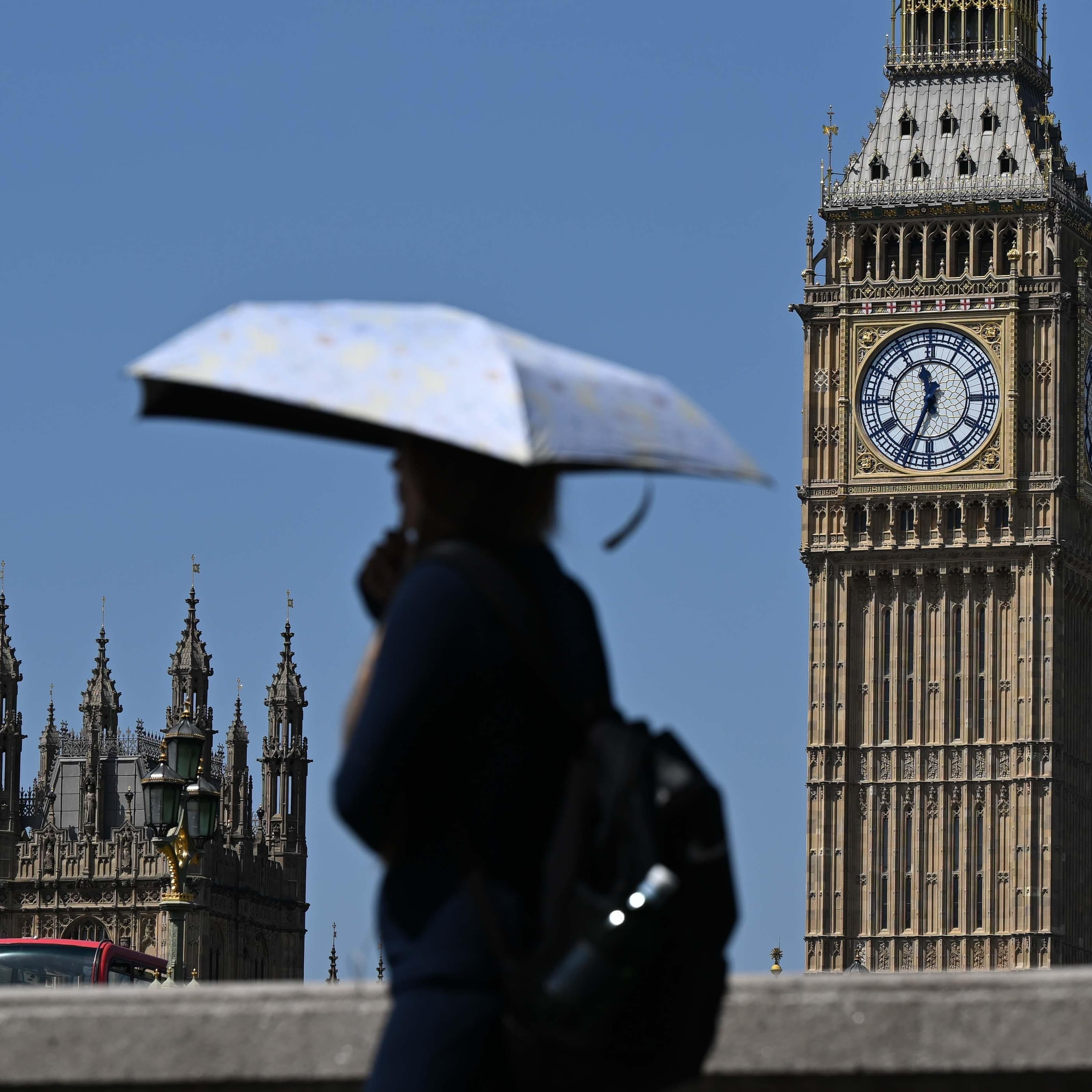
Science Weekly
Extreme heat: is the UK becoming a 40C country?
00:14:41
Ian Sample hears from our Europe climate correspondent, Ajit Niranjan
Loading summary
Transcript39 lines
- [00:00]
Ajit Naranjan
This is the Guardian.
- [00:11]
Quo Advertisement Voice
Running a business means juggling a lot of moving parts and when your communication tools can't keep up, things start to slip. Missed calls, slow replies, scattered conversations. They're not just frustrating, they're lost opportunities and revenue left on the table. That's where Quo comes in. Spelled Q U O. Quo is the number one rated business phone system on G2, trusted by over 90,000 businesses. One shared business number for calls and texts so every conversation stays visible, organized and accountable. It works from an app or computer. You can keep your existing number, add teammates and sync your CRM, letting you scale without adding complexity. And with built in AI, Quo logs calls, summarizes conversations and flags next steps even after hours. Stop missing customers. Stop leaving revenue on the table. Try quo free and get 20% off your first six months at quo.comtech that's quasho.com tech quo no missed calls, no missed customers. You're listening to this podcast, so I know you've got a curious mind. Here's a helpful fact you might not know yet. Drivers who switch and save with Progressive save over $900 on average. Pop over to progressive.com, answer some questions and you'll get a quick quote with discounts that are easy to come by. In fact, 99% of their auto customers earn at least one discount. Visit progressive.com and see if you can enjoy a little cash back. Progressive Casualty Insurance Company and affiliates national average 12 month savings by $946 by new customers surveyed who with Progressive between June 2024 and May 2025. Potential savings will vary.
- [02:02]
Ian Sample
Temperatures across the world are once again breaking records. In the UK this week we're expecting to have the hottest June day ever.
- [02:12]
Ajit Naranjan
An intense heat wave will be developing this week affecting many parts of the uk and the UK Met Office has now issued a very rare red weather warning for extreme heat on Thursday.
- [02:24]
Quo Advertisement Voice
Parts of Italy, France and Spain are
- [02:26]
Ajit Naranjan
facing heatwave conditions this weekend. Temperatures in northern and central regions are forecast to reach 40 plus degrees Celsius. France placed about a third of the
- [02:35]
Quo Advertisement Voice
country on red alert, banned drinking alcohol
- [02:38]
Ajit Naranjan
in public in some areas and ordered 845 schools to close Monday.
- [02:45]
Ian Sample
And this extraordinary heat might be just the beginning of a sweltering year ahead. The latest El Nino climate event is coming our way and some scientists have nicknamed it Godzilla. But why exactly is it so hot? Could El Nino make it even worse? And how can we adapt to this new normal? I'm the Guardian Science Editor, Ian Sample, and this is Science Weekly. Ajit Naranjan you're the Guardian's Europe environment correspondent. We're just heading into what is set to be an extreme heat wave across Europe. What are we likely to see?
- [03:34]
Ajit Naranjan
So the UK is set to come close to its all time record of 40 degrees Celsius this week. So temperatures will likely go as high as kind of 38, 39 degrees C. Parts of France are expected to hit temperatures even as high as 42. Spain may even surpass that. Now, all of this is kind of quite striking, partly because a of just how hot northern Europe has really become. If you think about Spain and France, maybe you're more used to these sorts of temperatures. The UK really is just not. So I think the temperature record for June is just 35.6 degrees Celsius, which is a full 2 to 3 degrees lower than what we're about to see this week. Now, because it's so humid, scientists expect that this heat is going to feel even more oppressive than it otherwise would be. And so that will come with these tropical nights. And that's when the minimum temperatures don't drop below 20 degrees Celsius. And that means you can't even properly recover from the stress of the day.
- [04:29]
Ian Sample
What is behind this heat wave then? What's causing it?
- [04:32]
Ajit Naranjan
So the immediate cause of this is what's called a heat dome. So this massive area of high pressure sitting over the UK and Western Europe, I saw one scientist describe it this morning as an atmospheric lid that's suppressing cloud formation and allowing this relentless sunshine to just bake the brown day after day after day. Now, why do these heat waves keep getting hotter? Both I and probably every single climate scientist you ever speak to will sound like a broken record here. It is because we burn fossil fuels that spew gas that trap sunlight and heat the planet. So temperatures at a global average level have increased by about 1.3 degrees Celsius since the Industrial Revolution. And they are predicted to just keep getting hotter and hotter.
- [05:17]
Ian Sample
Ajit, you've been writing about what some people are calling the Godzilla El Nino, this global climate phenomenon where temperatures in many parts of the world are pushed up alongside extreme events like droughts and rain. Is this the start of the El Nino?
- [05:34]
Ajit Naranjan
So El Nino is just beginning to form in the Pacific Ocean. We're just seeing the first signs that meteorological agencies are calling it as having returned after a few years without it. It is only expected to reach its full strength toward the end of the year and then last over into 2027. So this heat wave is essentially unrelated to anything going on over there. But the projections are that it may well be a very strong one when it peaks. And the World Meteorological Organization has cautioned that it's still a bit too early to call the strength of it. So they've kind of thrown a little bit of cold water on the projections calling it a Super El Nino or Godzilla El Nino. But that is largely because the models that they're showing still show a fairly wide range of what could happen. If you look at kind of the average of where those models are ending up, it does seem like it could be in the moderate to strong category. And all of that together makes it pretty likely that next year will end up being the hottest year on record globally. And for the heat waves that we're experiencing, that means that each one will just be pushed that extra bit hotter. In terms of the other effects that an El Nino year brings, in many ways they're coming at the worst possible time. So the Iran war has led to huge spikes in energy prices. The closure of the Strait of Hormuz means that there's less fertiliser getting out of. And then coupled with things like inflation, all the rest of it, you end up with this quite toxic mix of different factors that basically mean a lot of people who are worried about food security have started to say, hey, this is actually a kind of a looming disaster and if we don't act now to avert a crisis, then we are going to see these kind of very, very heavy knock on effect.
- [07:16]
Thomson Reuters Advertisement Voice
Foreign.
- [07:21]
Ian Sample
As you mentioned, in the uk we're set to beat previous temperature records set for June by about 2 degrees. I think that was set 50 years ago in 1976. But we're seeing more and more heat waves driven by the climate crisis. Are Europe and the UK becoming 40 degree countries?
- [07:40]
Ajit Naranjan
Essentially, yes. I mean, I think the 40 degree temperature mark was crossed in the UK for the first time in 20. This year and the following year are very likely to be years in which more records fall, more records are broken, partly, as we just said, as a result of the El Nino, that will boost global temperatures a bit further next year. What's interesting in the UK's case is that, I mean, I think none of us would imagine 40 degrees even just 10 years ago. Fifteen years ago, these sorts of temperatures were not things that people were discussing. I think in my case, when it goes above 25 degrees, I feel a bit too hot. I don't know if, Ian, from your childhood, you remember anything even vaguely approaching a 40 degree heat wave. And we're not Even at the July, August stage, where things usually tend to be the worst. But it's always worth mentioning that from the perspective of today, we can look back and think, gosh, I didn't remember that when I was young. And now it seems to be happening more and more when we're old, we're going to look back at some of these heat waves and think, oh, that was actually quite a cool year.
- [08:40]
Ian Sample
What kinds of impacts do heat waves like this have? Let's start with health impacts.
- [08:45]
Ajit Naranjan
So the thing about heat waves is that they basically stress the body. All your organs start to have to work harder, your heart's pumping blood faster, your body's struggling to deal with all the different processes that it kind of completes on a regular day to day basis. And what happens is when you get this high level of heat, people often think about it as, oh, gosh, that means that I'm going to be out in the sun, I'm not going to have drunk enough water and I might get knocked down by heatstroke. That is a risk. And particularly if you're homeless, if you're working a job that requires you being outdoors, then you are definitely at quite a high risk of stuff like that happening. But what people maybe fail to grasp is that the bulk of the deaths that happen, and we're talking tens of thousands across Europe on a typical summer, the bulk of these deaths are happening out of sight. Perhaps a grandparent, perhaps an older relative, perhaps a neighborhood. People, particularly with pre existing health conditions, are basically just being stressed that little bit further to an extent that pushes them over the edge. Maybe you could cynically say some of these deaths would have happened anyway. Can you really blame it on the heat wave? In a lot of cases, these are people who are not expected to die within the following six months or so. So it is a considerable amount of life that is being lost as a result of these heat waves. And it extends down to young and fit and healthy people as well. And, and one thing we mentioned earlier, the kind of tropical nights that we're now having, these are really significant because even if you manage to kind of get through the day and you keep yourself well hydrated, you stay in the shade, you do all the things that people tell you should do. If your body can't really rest at night, then you really can't recover that well from all the stress that's kind of accumulated in your body over the course of the day.
- [10:25]
Ian Sample
And what about the impact sort of more widely in society, things like transport, agriculture, infrastructure?
- [10:32]
Ajit Naranjan
The problem with heat is that society tends to kind of just slightly slow down or the processes that would otherwise happen start to fall apart. So energy is a big one for this because when you've got high heat and you've also got drought, that comes with it often then hydropower dams, they have less water to kind of power economies. The nuclear power plants that require a lot of cooling also start to struggle. So you have these little ripple effects in different parts of the economy. For farmers, people know it probably best as having drought and dry land, high heat that kind of kills some of their crops, particularly when it comes to crucial times around harvesting or planting. It runs the full gamut of the economy. In El Nino years where you've got the high level of global temperature combined with these different various shocks that have been turbocharged, these extreme weather events that have been made a bit worse because of the extra heat or because of the El Nino, then you end up with these kind of often catastrophic failures where crops fail and these can trickle down into into almost society collapsing events.
- [11:40]
Ian Sample
Coming up, how to stay cool in a fiery future.
- [11:54]
Max Rushton
Hello, I'm Max Rushton. The World cup is back and Football Weekly is going daily. If you want award winning soccer coverage from a podcast that's been overanalyzing the game for more than 20 years and still hasn't run out of opinions or just repeats the same ones over and over again, this is where you'll find it. We'll be producing 33 daily episodes across the tournament, breaking down all the action, the results and of course the drama. Can the US make it out of the group stage and into the spotlight on the biggest stage? World Cup Daily. Listen wherever you get your podcasts or watch full episodes on YouTube.
- [12:24]
Quo Advertisement Voice
Running a business means juggling a lot of moving parts. And when your communication tools can't keep up, things start to slip. Missed calls, slow replies, scattered conversations. They're not just frustrating, they're lost opportunities and revenue left on the table. That's where Quo comes in. Spelled Q U O. Quo is the one rated business phone system on G2, trusted by over 90,000 businesses. One shared business number for calls and texts so every conversation stays visible, organized and accountable. It works from an app or computer. You can keep your existing number, add teammates and sync your CRM, letting you scale without adding complexity. And with built in AI, Quo logs, calls, summarizes conversations and flags. Next steps even after hours Stop missing customers. Stop leaving revenue on the table. Try Quo free and get 20% off your first six months@quo.com tech. That's quashuo.com tech quo no missed calls, no missed customers.
- [13:37]
Ian Sample
Ajit A lot of people are gonna be wishing right now that they had aircon in their homes. And certainly compared to the Mediterranean, Northern Europe feels woefully ill prepar for the heat that's coming. What are the kinds of things that we should be doing to be prepared for future heat?
- [13:54]
Ajit Naranjan
So the most boring answer that I think the scientists would stress to me is that governments need heat health action plans. And that is basically saying, have a plan for when it gets too hot. Your climate scientists can predict your weather, forecasters are telling you it's going to get hot. You as a country, as a government, as a city, you need to be able to respond. And people need to know to take precautions before the heat wave has hit. I think a survey of European countries in 2024 found that just 21 of 38 European countries had heat health action plans. That figure, I think has gone off slightly better in the last couple of years. But we're still talking just over half. Right. In terms of how a society can adapt in practice. I mean, anyone living in a city will know that it is just so uncomfortably hot when it does get hot. And this is partly related to something called the urban heat island effect, which basically means that cities and urban spaces are about a couple of degrees Celsius higher than their surroundings because you've got all of this concrete and tarmac absorbing the heat and you've got this extra activity, combustion of fuels. If you were to turn car parks into parks with green spaces and trees, you would solve multiple issues at the same time. But one of them is that you make cities better able to cope with heat waves.
- [15:11]
Ian Sample
And what about on an individual level? What are the things we should be doing ourselves to cope better with a heat wave when it comes?
- [15:19]
Ajit Naranjan
Yeah, so it's a good question because I think when you talk about a lot of climate related problems, there is maybe this feeling that, oh, I can't do anything. It should be the government. Why are we talking about anything other than just burning fewer fossil fuels? But the thing about heat is that it kills way more people than it should, even in relatively rich countries. Right. And one thing that some of the health experts have made the case to me on is that if you were to take many simple measures, you could avoid a lot of the deaths. A lot of these deaths are essentially needless suffering that could be avoided. And some of that can be done through quite simple individual actions. So to tick off the obvious ones, drink lots of water, stay in the shade if you can, stay indoors if you can, maybe slightly counterintuitively, but if your home is cooler than the outside, then keep your windows closed. Don't open them if you can, draw blinds if you can increase the shading. That being said, thinking about yourself is really only one part of the solution here. And that's because most of the people who are dying during a heat wave are much older. And in many countries, many rich countries, a lot of older people are living alone. And this is really probably one of the most powerful things that you can do in a heat wave, I think, is to check in on older relatives. Go knock on the door of your neighbor if maybe they're retired, maybe they're living alone, maybe one of their, their spouse has passed away and just see how they're doing. Maybe that requires you calling an ambulance, maybe it requires you just sitting with them and enjoying an ice cream. Looking after the people around you who are going to be at risk is probably one of the first steps to avoiding the much more catastrophic suffering that we tend to see when we have studies at the end of heat waves that show, okay, across an entire continent, 40, 50, 60, 70,000 people have died as a result of the heat wave.
- [17:05]
Ian Sample
Tough summer ahead. By the sounds things. Ajit. Thank you.
- [17:08]
Ajit Naranjan
Thank you.
- [17:13]
Ian Sample
Thanks again to Ajit Naranjan. You can find all his reporting@theguardian.com that's it for today. This episode was produced by Madeline Finley. It was sound, designed by Ross Burns and the executive producer is Ellie Burey. We'll be back on Thursday. See you then.
- [17:38]
Ajit Naranjan
This is the Guardian.
- [17:48]
Thomson Reuters Advertisement Voice
This podcast is brought to you by Thomson Reuters. The best don't just do their work. They change what's possible. Cases 1. Audits completed, jobs saved. Behind every one of those moments is a professional who needed to get it right and did. Thomson Reuters builds the technology that sharpens insights, speeds up decision making and powers the outcomes that matter. So when professionals act, the impact is felt by everyone. Be a changemaker. Visit tr.com changemakers our trip up the coast was perfection.
- [18:21]
Ajit Naranjan
With my Sapphire preferred card, we earned three times the points on gas, online, grocery and dining.
- [18:26]
Quo Advertisement Voice
It was amazing.
- [18:27]
Ajit Naranjan
Chase Sapphire preferred the card that's preferred for a reason. Cards issued by JP Morgan Chase bank and a member FDIC subject to credit approval terms apply. Many business leaders see AI's tremendous potential for their companies, but they're still struggling to turn their potential into measurable results and competitive advantage. I'm Andrew. And I'm Sarah Elk. And on our new podcast Winning with AI. We're talking to CEOs who are using AI to drive business transformation, delivering real
- [18:53]
Quo Advertisement Voice
wins and changing how their companies run.
- [18:55]
Ajit Naranjan
We'll hear how leaders empower and mobilize their people and make the use of AI part of how the whole organization thinks.
- [19:02]
Quo Advertisement Voice
Winning with AI.