← Science Weekly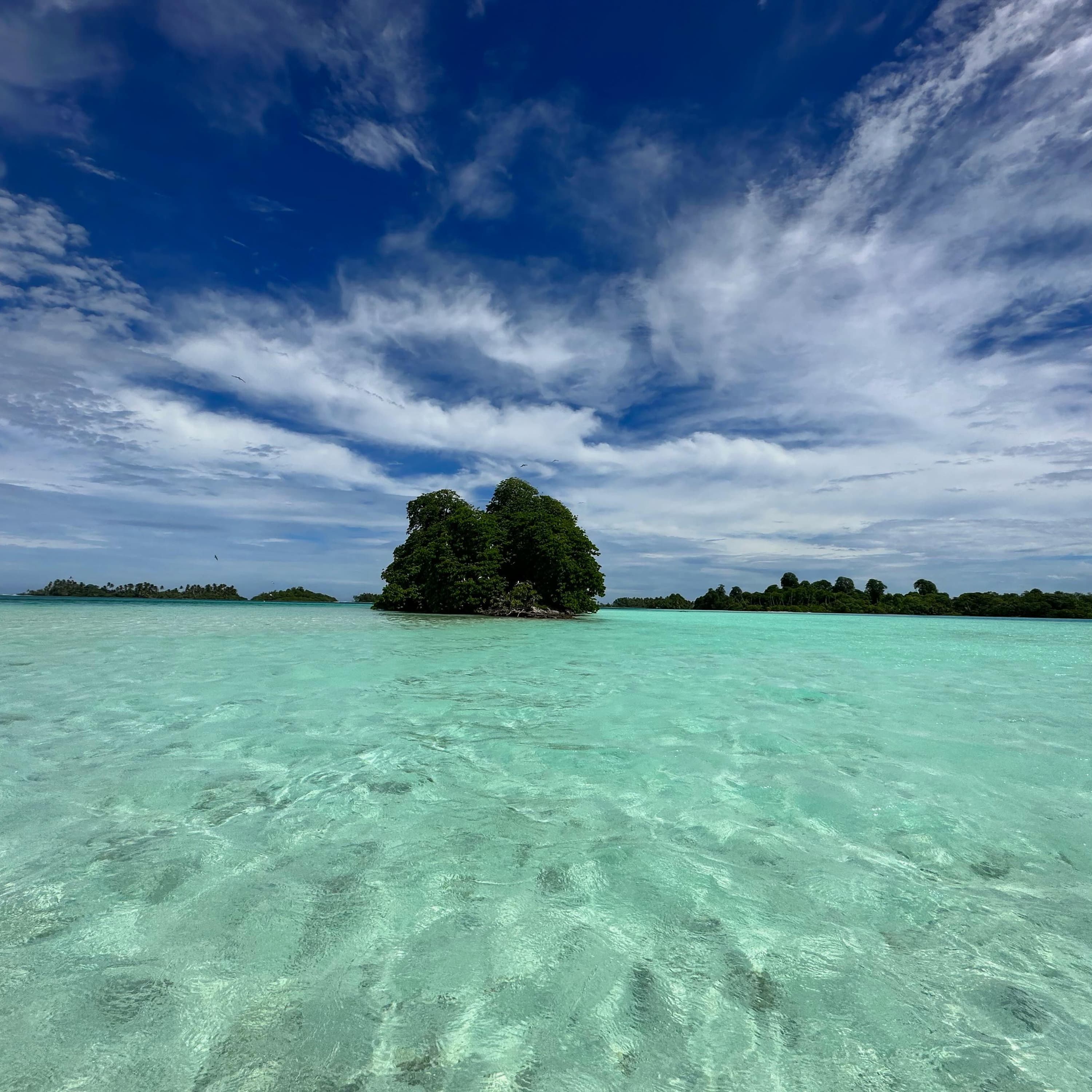
Science Weekly
Fungi: the invisible force protecting our planet
00:16:29
Ian Sample hears from professor of evolutionary biology Dr Toby Kiers about how fungi could be the key to our planet’s survival
Loading summary
Transcript61 lines
- [00:00]
Ian Sample
This is the Guardian.
- [00:12]
Automated Voice System
Your call has been forwarded to an automatic voice message system.
- [00:15]
Quo Business Phone System Advertiser
Running a business means you're always reachable. Until you're not. And the moment you miss that call, a competitor picks it up. That's why this episode is brought to you by Quo, spelled Quo, the business phone system. Built so you never miss an opportunity. All your calls, texts and voicemails live in one place. Anyone on your team can pick up a conversation, see the full history and respond fast. Quo is the 1 rated business phone system on G2, trusted by over 90,000 businesses. Set up in minutes on any device. Keep your existing number. Add teammates as you grow. No it, no hassle. Quo's built in AI agent even handles after hours calls and books appointments so you're covered around the clock. Money is on the line. Always say hello with Quo. Try Quo Free plus 20% off your first six months at Quo.com Tech that's Quashuo.com Tech this podcast is brought to
- [01:14]
Guardian Podcast Announcer
you by Thomson Reuters. The best don't just do their work. They change what's possible. Cases won, audits completed, jobs saved. Behind every one of those moments is a professional who needed to get it right and did. Thomson Reuters builds the technology that sharpens insights, speeds up decision making and powers the outcomes that matter. So when professionals act, the impact is felt by everyone. Be a changemaker. Visit tr.com changemakers.
- [01:51]
Interviewer / Host
In the center of the Pacific Ocean, between Samoa and Hawaii, there's a tiny speck of land.
- [01:58]
Ian Sample
So people say that Palmyra Atoll is the most remote island on Earth.
- [02:04]
Interviewer / Host
The island has no permanent inhabitants.
- [02:07]
Ian Sample
There's only infrastructure for research. So it's all scientists, all the time.
- [02:13]
Interviewer / Host
Scientists like Dr. Toby Kears. When she visited, she was stunned by the abundance of life on the island, including the absolutely ginormous coconut crabs.
- [02:24]
Ian Sample
They can be as wide as about a meter across. They actually hunt and they climb trees and they have an incredible sense of smell and so you can't leave any equipment out at night or they'll actually steal, feel it and bring into their burrows.
- [02:40]
Interviewer / Host
Palmyra is also known for its incredible seabird populations. Calls from colonies of red footed boobies and sooty terns fill the air.
- [02:50]
Ian Sample
It's so loud that you need to shout.
- [02:53]
Interviewer / Host
But there's something far quieter and less conspicuous that lies at the heart of the atoll's ecosystem.
- [03:01]
Ian Sample
When you're there, you really start to see the underground very differently because there's so much, so much going on down there below the surface.
- [03:09]
Interviewer / Host
Toby and her team have just published the first global Map of mycorrhizal fungi, the planet's incredible underground network which supports plant life above ground. According to some estimates, they draw down 13 billion tons of CO2 into soil systems every year. There's so much subterranean fungi that stretched out, it would reach from the earth to the sun to 750 million times. And Palmyra offers an ideal case study for the role these mycorrhizal networks are playing and how they can help us to restore landscapes across the globe. So today, a trip to an atoll in the middle of the ocean and what it can teach us about the fungi quietly engineering the natural world. I'm the Guardian science editor, Ian Sample, and this is Science Weekly.
- [04:15]
Ian Sample
When we go and visit Palmyra Toll, there are many things that you have to do, including freezing all of your clothes before you arrive on the islands. This is to make sure that you're not bringing any invasive species. And then once you're there, you actually freeze your clothes. Every morning before you head out to the smaller atolls, you're digging these frozen clothes out of a freezer chest, putting them on, doing a whole day of field work, and then coming back to the main island, taking those clothes off, freezing them again, and the whole thing starts the next morning.
- [04:49]
Interviewer / Host
Toby is a professor at the Free University in Amsterdam and executive director of the Society for the Protection of Underground Networks, or spun, an organization that aims to map and protect mycorrhizal fungi. When she and her team visited Palmyra, frozen clothes were just one small part of the island experience.
- [05:11]
Ian Sample
At night, there were so many crabs covering the ground that you couldn't take a step without touching one. So you kind of had to shuffle your way across the ground to make sure that you didn't hurt any organisms.
- [05:26]
Interviewer / Host
The water also brought something new.
- [05:29]
Ian Sample
So imagine all of these small tolls that are connected by water, but you can't ride boat directly up to them. So as scientists, you bring up your boat as closely as you can and then you start wading in sort of waist high water, depending on the tides. Now, the sharks don't see very many humans, so they're very curious. So these are just reef sharks. And they kept telling us, I'm not going to hurt you, but they're definitely curious enough that they'll come up and brush against you. So for somebody that has spent her life on land collecting fungi, interacting with these sharks was really surprising.
- [06:07]
Interviewer / Host
The cacophony of bird calls, equipment stealing mega crabs and curious sharks make Palmyra sound like an untouched wilderness. But it's actually an ecosystem that suffered decades of damage. The introduction of rats, which ate seabird eggs and the seedlings of the native pisonia trees, caused plenty of destruction. But it was another arrival that conservationists are still tackling to this day. Coconut palms. After taking root in the 1850s, they quickly spread across the atolls. It's been a big problem because the seabirds don't like to nest in the crowns of the coconut palms. They much prefer psonia.
- [06:50]
Ian Sample
These psonia trees are known to create a very sticky substance, and when seabirds land on it, especially in sort of masting years when they're making lots of seeds, then the birds actually get stuck and they can no longer move. And so you can have these situations where the birds are sort of hanging off the trees because they've died, because they're not able to move anymore, to fly away, and they start to decompose, and all of those nutrients go to the base of the tree. So it's called a bird eating tree.
- [07:23]
Interviewer / Host
Despite the pisonia trees sometimes eating the birds, they're the favored nesting site. That makes them a critical part of the island's ecosystem, because with a lot of birds, you get a lot of bird poo.
- [07:35]
Ian Sample
They can be considered keystone species, because life on these atolls is incredibly dependent on those seabirds and them having a good place to nest, because the seabirds leave guano that's incredibly rich in nitrogen and phosphorus and potassium, and those are the nutrients that fuel the entire island. The nutrients are also leaking out into the marine marine environment. And you have plankton, for example, and they benefit also from this bird guano. And the coral reefs benefit from the fishes that feed on the plankton. So you have this very tight nutrient cycling.
- [08:13]
Interviewer / Host
The introduction of the coconut palm disrupted this cycle.
- [08:17]
Ian Sample
Organisms have evolved an extreme dependence on each other because it's such a remote island. So there's even more interdependence among these species. And so if you lose one particular species, then there's huge negative cascading effects for the others. Remove one, and the rest falls apart. So since 2019, there was, like, this massive effort to remove coconut palms, and I think so far, about 1.5 million have been removed.
- [08:55]
Interviewer / Host
Toby. Now these efforts are underway to restore the native personia grandis trees to Palmyra.
- [09:01]
Guardian Podcast Announcer
And.
- [09:02]
Interviewer / Host
And this is where your research comes in, because your team has been looking at a crucial element that has so far been missing, right?
- [09:09]
Ian Sample
Well, we were invited to Palmyra Atoll to start mapping the underground fungi of the atoll. They call this team fungi. It's like a SWAT team. And our job was to understand how PIA trees are able to survive on this incredibly hard, nutrient po poor coral rubble. Now, a lot happens underground that a lot of people are not aware of. And in the case of this very special rainforest tree called psonia, we were interested in documenting their mycorrhizal fungal partners. Now, mycorrhizal fungi, it's a very special class of organisms that form a trade partnership with plants. The plants provide carbon to the fungi, and in return, the fungi provides nutrients.
- [09:54]
Interviewer / Host
So you were there to map the fungi on the island. How did you do it?
- [09:58]
Ian Sample
You're going out on these atolls, often hiking between atolls in sort of waist high water, and going and setting up grids where then you core the soil and you extract what's underground, both in the native forest stands, but also in places where there were invasive palms. And that gets taken back to a lab where you extract the fungal DNA and start to understand which fungal partners are there. And we were asking whether these pisonia trees, these very important keystone species, depended on mycorrhizal fungi to survive in such an extreme place.
- [10:34]
Max Rushton
Right.
- [10:34]
Interviewer / Host
And so as part of this mapping, you were trying to figure out what role the fungi is playing in supporting the psonia trees. What did you find?
- [10:44]
Ian Sample
Well, can you guess? I mean, we found that fungi are critically important to the survival of the psonia trees. We found that 100% of the sample trees were associated not with just only generally mycorrhizal fungi, but a very specific type of mycorrhizal fungi called tomentella. Now, tomentella is what we call an ectomycorrhizal fungi. It's sometimes called a crust fungi or a patch fungi. And we found it associated with every tree that we tested.
- [11:14]
Interviewer / Host
So what role are the Tomantella fungi playing in their partnership with the trees? Do we have an understanding of what they're doing?
- [11:21]
Ian Sample
There are these very extreme nutrient conditions around these pisonia trees. So either there's no nutrients because it's too sandy, or it's all coral rubble, or all of a sudden there's this huge pulse of nutrients, which in many case can almost be toxic. There's so much nutrient availability at once. And so when you think about what these tomentella mycorrhizal fungi are doing, it's almost like they have superpowers because they allow the tree to survive when there's very little nutrients, but they also can feed the nutrients to the plant and survive when there's a huge pulse of nutrients and so yes, we know now that the Psonia trees very much depend on these mycorrhizal fungi.
- [12:05]
Interviewer / Host
This close partnership between Pisonia and Tomentella fungi is important. The fungi can survive the extreme conditions created by the seabirds as they nest and drop guano down to the ground, recycling the nitrogen, phosphorus and potassium to make it available for the trees. And what about those meter wide, equipment stealing crabs? They're part of this intimately connected web too.
- [12:32]
Ian Sample
Another key finding of this work was that crabs are important for fungi, and that's because they burrow. So we did an experiment where we tested for fungal diversity inside crab burrows and then in control holes that we would dig ourselves. And we found significantly higher fungal diversity inside the crab burrows. The crabs are actually helping the fungi disperse across these atolls.
- [13:00]
Interviewer / Host
Coming up, fungi's critical role in the survival of our ecosystems.
- [13:11]
Max Rushton
The World Cup's entering its final stages. And if you want football punditry from a podcast that's been overanalyzing the game for more than 20 years, then join me, Max Rushton and a host of football experts as we keep delivering shows every day until the end of the World Cup. The Guardians World Cup Daily available Wherever you get your podcast,
- [13:31]
Automated Voice System
Your call has been forwarded to an automatic voice message system.
- [13:35]
Quo Business Phone System Advertiser
Running a business means you're always reachable. Until you're not. And the moment you miss that call, a competitor picks it up. That's why this episode is brought to you by Quo, spelled Quo, the business phone system. Built so you never miss an opportunity. All your calls, texts and voicemails live in one place. Anyone on your team can pick up a conversation, see the full history and respond fast. Quo is the number one rated business phone system on G2, trusted by over 90,000 businesses. Set up in minutes on any device, Keep your existing number, add teammates as you grow. No it. No hassle. Quo's built in AI agent, even handles after hours calls and books appointments. So you're covered around the clock. Money is on the line. Always say hello with quo. Try quo free plus 20% off your first six months at quo.com tech that's qu-uo.com tech
- [14:36]
Interviewer / Host
so Toby, how does this knowledge that you're building on Palmyra, how does that really help you with restoring the biodiversity there?
- [14:43]
Ian Sample
So first we have to understand that these coconut palms, they don't associate with the appropriate type of fungi that are needed to restore the psonia forests. We know that Pisonia forests depend on tomentella fungi and we know that the tomentella are present within, let's say, 100 meters of a psonia tree. But the further you get away from the trees, that just drops off until a point about 250 meters where the fungi just don't exist anymore. And so what that tells us is that we can now design experiments where seedlings can be planted even closer to the psonia trees themselves so they have access to this critical fungal resource.
- [15:26]
Interviewer / Host
The psonia trees have an intimate interdependent relationship with the tomentella. If you want to restore the trees, you have to think about the fungi. It's a principle that could be applied across all kinds of restoration projects. It also reveals how important fungi are for keeping existing ecosystems thriving. Scientists from Toby's organization spun have now created a global map of mycorrhizal fungi so that the health of these network can be monitored and restored.
- [16:00]
Ian Sample
We think just like our guts have a microbiome, soils have a microbiome, and they're very, very complex and not at all the same. I think people are always surprised to learn that about 59% of all species on earth live underground, and that's what creates these complex microbiomes. So I think recent studies, they've really explored the use of soil microbiome transplants as a method to ensure that native fungi are co inoculated with native plant seedlings. And introducing soil microbiomes from native ecosystems, it really has been shown to improve restoration success. So I was part of a team that did a meta analysis of 80 experiments and it found that native soil transplants can increase biomass by more than 60% across diverse ecosystems. More often than not, we don't know the exact role of each fungal species, nor exactly how they work together. I think this is really the frontier science. But we've made progress, especially in lab studies where we can start to manipulate the abundance of particular individual fungal strains and start to understand their individual contributions. But this is really why mapping fungi is so important.
- [17:13]
Interviewer / Host
And so presumably this means we should be putting more effort into protecting and conserving fungi.
- [17:20]
Ian Sample
Well, that's why we started spun to map these mycorrhizal communities and advocate for their protection. And that's because fungal biodiversity is just not included in climate and conservation agendas to the level that it should be. There's still so much unknown about fungal biodiversity, and it really represents a library of solutions to so many problems that the world faces today. And yet the amount of resources going into fungal research is so, so far below other types of research. And so a big question for us is how can we get people to start paying attention to this critical biodiversity below ground, we know that there's a problem. We know that the destruction of these networks increases global warming, it accelerates biodiversity loss, it disrupts nutrient cycles. And so now the question is, what exactly do we do about it? We always talk about flora and fauna, but we need to start talking about flora, fauna and funga, which is the third kingdom, the kingdom of fungi.
- [18:31]
Interviewer / Host
Toby, thank you very much.
- [18:33]
Ian Sample
Thank you so much. Such a pleasure.
- [18:37]
Interviewer / Host
Thanks again to Dr. Toby Kears. You can read about the spun team's new global map of fungi networks on the Guardian. Dr. And that's it for today. This episode was produced by Meline Finley. The sound design was by Joel Cox and the executive producer was Ellie Bury. We'll be back on Thursday. See you then.
- [19:07]
Guardian Podcast Announcer
This is the Guardian.
- [19:17]
Chase Sapphire Advertiser
This year's girls trip to Telluride was the best. We one upped ourselves with my Sapphire Preferred card and with 5 times points on Chase Travel, plus 3 times points on vacation homes with top brands, we got this incredible cabin.
- [19:28]
Ian Sample
It was a mansion.
- [19:30]
Chase Sapphire Advertiser
And with three times the points on dining, we ordered a wagyu steak dinner and that pistachio gelato was too good. So where should we go next year?
- [19:38]
Ian Sample
I've got ideas.
- [19:39]
Chase Sapphire Advertiser
Chase Sapphire preferred the card that's preferred for a reason. Cards issued by JP Morgan, Chase bank and a member FDIC subject to credit approval terms apply.
- [19:47]
Guardian Podcast Announcer
This podcast is brought to you by Thomson Reuters. The best don't just do their work. They change what's possible. Cases won, audits completed, jobs saved. Behind every one of those moments is a professional who needed to get it right and did. Thomson Reuters builds the technology that sharpens insights, speeds up decision making and and powers the outcomes that matter. So when professionals act, the impact is felt by everyone. Be a change maker. Visit tr.com changemakers he's dribbling the ball
- [20:17]
Automated Voice System
with everything on the line. He's driving down the pitch. He's facing price hikes and cuts past him. Carrier contracts, tries to block him. Oh, he leaves him in the dust. He's at the edge of the box. He cuts past the non stop group chat trash talk. He clears on goal. He shoots unlimited data for $25 a month forever.
- [20:35]
Boost Mobile Advertiser
Visit your local Boost Mobile store today to get unlimited data with a price that never changes. Boost mobile after 30gb, customers may experience lower speeds. Customers will pay $25 a month as long as they remain active on the boost. $25 unlimited.