← Science Weekly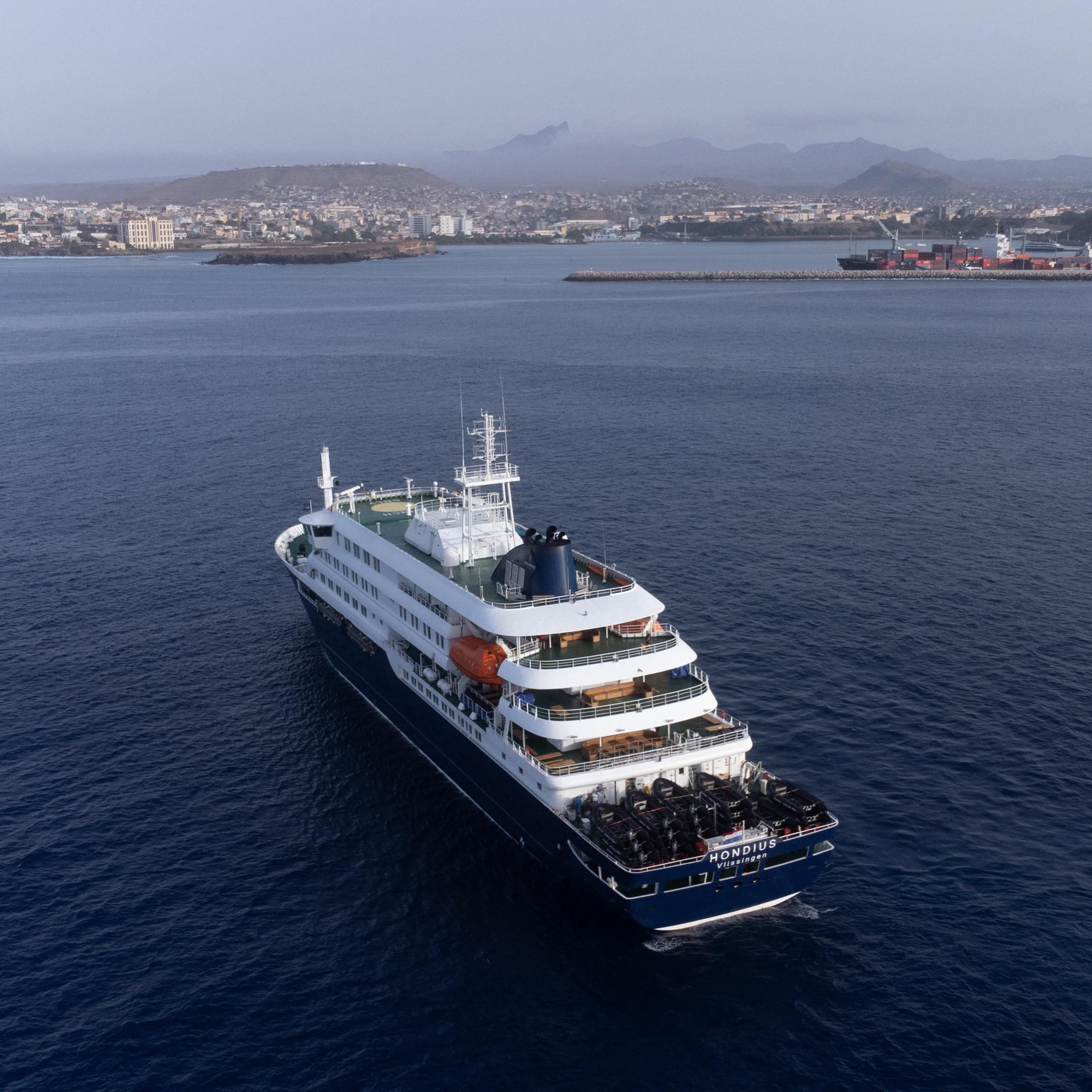
Science Weekly
Hantavirus explained: how does it spread and who is most at risk?
00:13:29
Madeleine Finlay talks to Prof Jonathan Ball from Liverpool School of Tropical Medicine to find out more about the virus behind the outbreak on a luxury cruise ship
Loading summary
Transcript40 lines
- [00:00]
Andrew
This is the guardian.
- [00:10]
Progressive Insurance Announcer
Insurance isn't one size fits all. That's why drivers have enjoyed Progressive's name your price tool for years now. With the name your price tool, you tell them what you want to pay and they'll show you options that fit your budget. So whether you're picking out your first policy or just looking for something that works better for you and your family, they make it easy to see your options. Visit progressive.com, find a rate that works for you with the name your price tool. Progressive Casualty Insurance Company and affiliates Price and coverage match Limited by state law
- [00:39]
Andrew
Many business leaders see AI's tremendous potential for their companies, but are still struggling to turn their potential into measurable results and competitive advantage. I'm Andrew.
- [00:49]
Sarah Elk
And I'm Sarah Elk. And on our new podcast, Winning with AI, we're talking to CEOs who are using AI to drive business transformation, delivering real wins and changing how their companies run.
- [01:00]
Andrew
We'll hear how leaders empower and mobilize their people and make the use of AI part of how the whole organization thinks. Winning with AI.
- [01:13]
Madeline Findlay
Over the weekend, reports emerged of a suspected hantavirus outbreak on a luxury cruise ship. Two cases of hantavirus have been formally confirmed after three people died in a suspected outbreak while on a cruise ship off the coast of West Africa traveling from Argentina to the Cape Verde Islands. Another four suspected cases were then identified on the MV Hondias. The World Health Organization has now stated it believes there may be some human to human transmission among very close contacts and medical personnel have boarded the ship. Human infections are rare, but the virus was also thought to be behind the death of actor Jean Hackman's wife Betsy Arakawa last year.
- [01:57]
Sarah Elk
The medical investigator saying an autopsy shows 65 year old Arakawa died of hantavirus.
- [02:03]
Madeline Findlay
So what is hantavirus, how is it transmitted and how dangerous is it? From the Guardian I'm Madeline Findlay and this is Science Weekly. Professor Jonathan Ball, your Deputy Vice Chancellor of Tropical Disease Biology at Liverpool School of Tropical Medicine. First of all, what is hantavirus?
- [02:36]
Professor Jonathan Ball
Okay, so hantavirus is a virus that circulates widely in rodents. There are different species of hantavirus across all continents except Antarctica, although there may well be some rodents living there that could possibly harbour hantavirus. I'm not sure we've extensively checked, but essentially we can divide the hantaviruses into two main groups, the New World hantaviruses, which mainly are found in the Americas, for example, and the Old World hantaviruses, which are in places like Africa, Asia, and also Europe, the New World Hantaviruses can cause what we call hantavirus pulmonary syndrome, which is quite a severe respiratory problem. It can really interfere with your ability to breathe correctly, whereas the Old World ones can cause haemorrhagic fever with renal problems as well.
- [03:33]
Madeline Findlay
And so these are viruses normally found in rodents. How do humans tend to become infected?
- [03:40]
Professor Jonathan Ball
Humans become infected when they become exposed predominantly to rodent urine or faeces. Basically the rodent excretia, and particularly as it dries, it can form little particles that can become airborne. And then people acquire the virus when they breathe in these contaminated particles. And anybody who is exposed to rodents regularly is at increased risk of getting a hansavirus infection.
- [04:08]
Madeline Findlay
And the WHO is now saying that human to human transmission on the cruise ship is likely. How rare is that?
- [04:17]
Professor Jonathan Ball
So human to human transmission is rare, but there is some evidence of transmission amongst people who are in very close proximity, so family members, for example. And we certainly know that there is a risk of transmission for healthcare workers, and it can occur through either contact with contaminated materials that the person is producing. But I think there's also evidence of sexual transmission.
- [04:42]
Madeline Findlay
And you said infections can be very severe. What are the kind of mortality rates that we're looking at for each of the different lineages?
- [04:50]
Professor Jonathan Ball
Well, it's almost difficult to come up with a definitive answer on that, and I'm not hedging my bets. The reason I say that is that most infections are probably either asymptomatic or mild. So we think there's between 100,000 and 200,000 cases of hantavirus infection around the world. But that's probably the tip of the iceberg. And very, very few of those infections will result in serious disease. But if people do become unwell, then their risk of death is increased. Some of the individuals will die between 5 and 15%, for example.
- [05:36]
Madeline Findlay
Okay, so because some people do present as asymptomatic or mild, there will be plenty of cases that aren't being picked up. And of course, there is additional risk if you're working with or near rodents or happen to live in a place where there might be rodents nearby. But how unusual is the suspected outbreak that we're seeing on the cruise ship on MV Hondias?
- [06:00]
Professor Jonathan Ball
I think it's fair to say that outbreaks generally are relatively well contained, and we don't get huge reports of significant outbreaks. What's unusual here is you're talking about what are essentially a captive contained bunch of people. It means that if there is human to human transmission, then they're at greater risk because they are incarcerated on this cruise ship. If you think about most outbreaks, it's usually in populations who aren't constrained to a single place and co living with one another.
- [06:34]
Madeline Findlay
And when it comes to how this outbreak started, I know there have been questions raised around the fact that the cruise ship was stopping off on islands that have bird populations and therefore are likely to have big rodent populations, or that the virus was maybe brought aboard by somebody who was already infected. The WHO now say that they've been told that no rats were found aboard the ship. But when something like this happens, what are some of the explanations that experts would look at and consider?
- [07:03]
Professor Jonathan Ball
I think the WHO are working on the hypothesis that it's probably the Andes virus, which is quite prevalent in South America and in particular in Argentina. And so, you know, both of those scenarios, either people picking up the virus before they boarded the ship in Argentina, or on the stop offs en route, the likelihood of people being exposed is certainly true. We know that rodents are one of the most prevalent groups of animals worldwide. And wherever you got large rodent populations, there's a chance of becoming exposed. I think one of the things that's very noticeable about hantavirus infections, and we used to see this a lot in Europe, is often virus cases or outbreaks would mirror good years for things like beech tree nuts. So these periods of great production of seeds, and essentially because there's so much food, the rodent populations explode and therefore the hantavirus prevalence in those animals increases. I mean, that's just as an aside, but I think the hypothesis of rodents stowing away on the ship is certainly plausible. It's very difficult to keep rodents off ships. If we think about one hantavirus called the sole hantavirus, it's pretty much worldwide distributed and that's because it infects the common rat, so Ratis norvegicus. And we know that the common rat is found in every continent. It's very good at stowing away on ships and being transported as humans go about their daily business. So I think one of the questions that the authorities that the scientists will be trying to work out is how did this outbreak occur so that similar ones can be prevented in future?
- [08:50]
Madeline Findlay
And on the subject of prevention, I wonder what kind of precautions are they likely to be taken on board now to reduce the likelihood of further infection?
- [09:01]
Professor Jonathan Ball
You will try and minimise the amount that people are mixing. But also, and I'm sure this has already happened, there'd be a process of Deep cleaning the ship, so trying to make sure that there aren't areas where there is contamination. So it's all about cleanliness and then isolation. And I think the most important thing is, is to be vigilant in monitoring the health of the passengers to ensure that if anybody does start to show symptoms that could be hantavirus infection, that those individuals are isolated from the rest of the ship's passenger and crew as quickly as possible.
- [09:37]
Madeline Findlay
Presumably because of the long incubation time, the people involved in dealing with this outbreak are probably expecting that there are going to be more cases coming.
- [09:48]
Professor Jonathan Ball
Yeah, there may well be more cases. We know that the incubation period for the hantavirus can be up to several weeks. And so that gives the virus a long window during which it can replicate but also potentially transmit. So I think it's really important that the ship is allowed to dock somewhere and for the people on board to be allowed off the vessel to be tested and those who are infected to get the care and treatment that they require.
- [10:22]
Madeline Findlay
Coming up, how is hantavirus treated and what will health authorities do now?
- [10:35]
Andrew
Many business leaders see AI's tremendous potential for their companies, but are still struggling to turn their potential into measurable results and competitive advantage. I'm Andrew.
- [10:45]
Sarah Elk
And I'm Sarah Elk. And on our new podcast, Winning with AI, we're talking to CEOs who are using AI to drive business transformation, delivering real wins and changing how their companies run.
- [10:56]
Andrew
We'll hear how leaders empower and mobilize their people and make the use of AI part of how the whole organization thinks. Winning with AI.
- [11:09]
Madeline Findlay
Jonathan, are there any treatments available for those who have been infected?
- [11:14]
Professor Jonathan Ball
There are no specific treatments for hantavirus infection that have been licensed, but there are treatments that can be used on a compassionate basis. And there's some evidence that they may help relieve some of the symptoms and help prevent serious symptoms from developing. And one such treatment is called ribavirin, which is a fairly broad acting antiviral. So it directly inhibits the replication the growth of the virus. But as I say, if it is the Andes virus or a New World hantavirus and the normal symptoms or serious symptoms develop, these viruses we know cause difficulty with breathing, then it's the normal things that we do for patients who are struggling for breath, and that would be to give them additional oxygen. And if that doesn't work, they may what you call, intubate the patient. So that means putting a pipe inside their airway to try and help with that breathing. And they can be mechanically ventilated if the worst plays out.
- [12:11]
Madeline Findlay
And Jonathan, although this is present all around the world, this disease is very, very rare. But is there anything we should bear in mind when it comes to protecting ourselves, aside from avoiding cruise ships?
- [12:24]
Professor Jonathan Ball
Yes. I wouldn't like to comment on cruise ships, whether or not we should go on them. My personal opinion is I would really like to go on a cruise ship. You know, we do see a lot of outbreaks of different viral infections in cruise ships. And a lot of the problem is because you are living cheek by jowl with other people. And so if you get an infectious agent introduced into that population, it does help the spread. And we all know that there are lots of norovirus outbreaks on cruise ships, for example, and we can all think back to Covid and the cruise ship that got stranded because it had a Covid outbreak. So other than avoiding cruise ships, which I wouldn't advocate and I wouldn't not advocate, the main thing is to avoid or limit your exposure to rodents and the excretia. We know that people who have a lot of exposure to rats through their work or because they keep pet rats, for example, means that you've got an increased risk of exposure to the virus.
- [13:24]
Madeline Findlay
And just finally, Jonathan, you mentioned about getting the passengers off the cruise ship and monitoring and surveillance. Is that what happens next in terms of this outbreak? Is it just keeping an eye on all of the passengers to make sure that they're not showing any symptoms?
- [13:41]
Professor Jonathan Ball
Yeah, clearly, authorities, wherever they dock, they need to be reassured that there's no risk of either the virus being imported into the place that they dock or if there are rodents present on the ship, that those rodents don't get out onto the land. But the reality is there are ways that we can limit the risk of rodents if they are on the ship from escaping, but also equally get patients and passengers off the ship and then tested and if necessary, monitored. So I think that will be happening next. I heard that it's likely that the ship will be allowed to go onto the Canary Islands, where it hopefully will dock, possibly at Tenerife. And I'm sure then the passengers will be disembarked and isolated if need be.
- [14:30]
Madeline Findlay
Well, Jonathan, thank you very much for joining us today.
- [14:33]
Professor Jonathan Ball
No problem at all.
- [14:36]
Madeline Findlay
Thanks again to Professor Jonathan Ball. You can find our coverage of the hantavirus outbreak on theguardian.com and that's it for today. This episode was produced by me, Madeline Finlay, and the executive producer is Ellie Burey. We'll be back on Thursday. See you then.
- [15:00]
Andrew
This is the guardian. Many business leaders see AI's tremendous potential for their companies, but are still struggling to turn their potential into measurable results and competitive advantage. I'm Andrewton.
- [15:20]
Sarah Elk
And I'm Sarah Elk. And on our new podcast, Winning with AI, we're talking to CEOs who are using AI to drive business transformation, delivering real wins and changing how their companies run.
- [15:31]
Andrew
We'll hear how leaders empower and mobilize their people and make the use of AI part of how the whole organization thinks.
- [15:38]
Sarah Elk
Winning with AI Summer Smells like summer road trips, ocean breezes, and long evenings under the stars, it's a feeling you want to hold onto. Restore your sense of place with Pura's new Summer Fragrance Collection. We've captured the magic of the season in clean, premium scents that transform your home into your favorite destination. Discover the art of scentscaping and bring the summer in. Visit pura.com to explore the collection.