← Science Weekly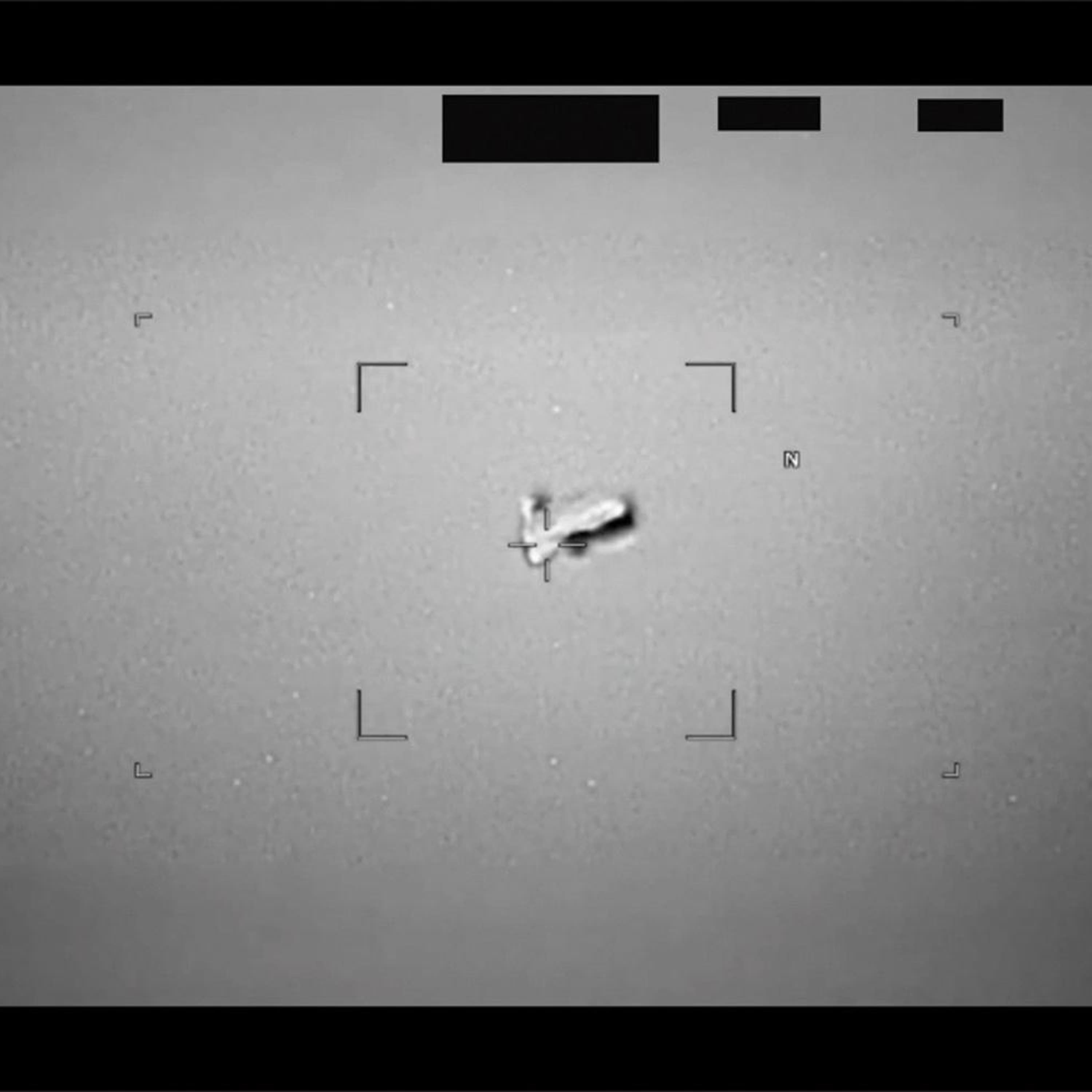
Science Weekly
Hantavirus update, Pentagon’s UFO files, can art slow biological ageing?
00:21:17
Madeleine Finlay sits down with co-host and science editor Ian Sample to discuss three eye catching stories from the week
Loading summary
Transcript63 lines
- [00:00]
Madeleine Findlay
This is the Guardian.
- [00:11]
Quo Advertiser
Running a business means juggling a lot of moving parts. And when your communication tools can't keep up, things start to slip. Missed calls, slow replies, scattered conversations. They're not just frustrating, they're lost opportunities and revenue left on the table. That's where Quo comes in. Spelled Q U O. Quo is the number one rated business phone system on G2, trusted by over 90,000 businesses. One shared business number for calls and texts so every conversation stays visible, organized and accountable. It works from an app or computer. You can keep your existing number, add teammates and sync your CRM, letting you scale without adding complexity. And with built in AI, Quo logs calls, summarizes conversations and flags next steps even after hours. Stop missing customers. Stop leaving revenue on the table. Try quo free and get 20% off your first six months at quo.comtech that's quasho.com tech quo no missed calls, no missed customers.
- [01:20]
Andrew
Many business leaders see AI's tremendous potential for their companies, but are still struggling to turn that potential into measurable results and competitive advantage. I'm Andrew.
- [01:30]
Sarah Elk
And I'm Sarah Elk. And on our new podcast, Winning with AI, we're talking to CEOs who are using AI to drive business transformation, delivering real wins and changing how their companies run.
- [01:41]
Andrew
We'll hear how leaders empower and mobilize their people and make the use of AI part of how the whole organization thinks. Winning with AI.
- [01:56]
Madeleine Findlay
Last Friday was a pretty big day for those who believe the US government is hiding something.
- [02:03]
Quo Advertiser
UFOs real. The Trump administration released its first tranche of declassified UFO files from the Pentagon, NASA and the FBI.
- [02:13]
Carvana Advertiser
It's a thing.
- [02:14]
Quo Advertiser
It's a real thing.
- [02:15]
Madeleine Findlay
The trove of documents released by the Pentagon details reports of alien encounters, sightings of unidentified anomalous phenomena, and videos of strange objects flying through the sky.
- [02:28]
Ian Sample
There's a whole fleet of them. Look on the S.A. my gosh.
- [02:38]
Madeleine Findlay
And from spaceships to cruise ships, namely the hantavirus hit MV Hondias. As scientists analyze the virus and health organizations continue in their response, the passengers have finally been allowed to disembark, but many will now be facing six weeks of quarantine. A question they might be asking themselves is how to stay occupied. And they could do worse than indulging in some arts and crafts. According to a new study, activities like singing, dancing and painting have been linked to slower biological aging. So today I chat to Ian Sample about the stories that have caught our eye this week from the Guardian. I'm Madeleine Findlay and this is Science Weekly. Ian since our episode about hantavirus last week, the epicenter of the outbreak, the cruise ship MV Hondius has been on quite a voyage. So where do things stand now in terms of the numbers of cases and what's happening with the response?
- [03:51]
Ian Sample
So at the moment, the latest figures at the time of recording are 11 cases reported, though only nine of those have been confirmed. So two of those 11 are probable, but they're still awaiting the checks. And we know of course there have been these three deaths, the Dutch couple and a German. But the World Health Organization has warned that countries should prepare for more cases due to the interactions of those passengers before the ship really went into sort of infection control measures. So all of those passengers now have scattered to their various countries, but they're being either kept in various facilities or they're self isolating and being monitored. But some of those may pop up as extra cases still.
- [04:31]
Madeleine Findlay
And of course, this has such a long incubation time as well that there's some delay in the cases coming to light. But do we know any more about how the virus actually made it onto the ship and then spread among the passengers? You know, it's been confirmed that this is the Andy strain, which is known to sometimes transmit between people, but that is very rare.
- [04:52]
Ian Sample
Yeah, we don't know for sure how the virus got onto the ship, but the strongest suspicion has fallen on the first two cases, the Dutch couple who sadly died. But they had traveled through Argentina, Chile and Uruguay on a bird watching trip prior to boarding. And when sort of authorities went through their itinerary, they stopped at sites and reportedly even a landfill where you can see various birds. But you also find the type of rat that carries the Andes virus. So it's possible one or both of them contracted the virus during that trip and that would be from infected rat droppings or urine, and then spread it to others when they boarded the ship.
- [05:34]
Madeleine Findlay
And scientists are now obviously delving into the genetics. Does that tell us any more?
- [05:39]
Ian Sample
It does. What's coming through at the moment is that certainly the confirmed cases all seem to come from the same original source of infection, which is probably what you'd expect, but it's nice to know that from the genetics. It also shows, which I think is really comforting, that it's not a new variant. This virus is similar to the Andes viruses that are known to circulate in South America. And it's actually when you group them with sequences that we know about from the past, it's actually most similar to sequences from this 2018, 2019 outbreak. That happened in Argentina. And in that event, three people who came into contact with infected rodents spread the andes virus to 34 other people and 11 of those died. So what it suggests so far is that the cases on that ship are the result of a single spillover event from these infected rodents, rather than the emergence of a radically different strain. And there's currently no evidence that this is a version that spreads more easily or causes more severe disease than any of the other Andes viruses.
- [06:45]
Madeleine Findlay
Okay, so some really reassuring stuff there. Now, what's happened to the passengers of the MV Hondius?
- [06:51]
Ian Sample
This is a Dutch flagged cruise ship that was originally sailing from Argentina to Cape Verde. Some passengers had left at various stops along the way and others who tested positive were evacuated to hospitals in Europe and elsewhere. But the rest all disembarked at Tenerife and all those passengers had medical chips, checks before basically being repatriated. The 20 passengers from Britain who left in Tenerife, they were taken to Arrow Park Hospital in Merseyside on a block that was actually last used to quarantine. Britain's returning from China at the start of the COVID pandemic. None of them are ill, but symptoms can take six weeks or so to emerge. So they're all being monitored. Ten people from these UK territories, San Helena and Ascension, will be brought back to the UK to complete their self isolation here. And we know that there's two other British nationals who are being treated in hospitals in the Netherlands and South Africa. They're among the confirmed cases. So there's a big effort afoot containing these people.
- [07:51]
Madeleine Findlay
And those Brits you mentioned in Arrow park, they're now starting to leave to go back to their own homes for a further 42 days of self isolation. It's an awfully long time to be stuck inside. But look, Ian, what are health authorities going to be thinking about now?
- [08:07]
Ian Sample
Well, as I say, the World Health Organization has warned countries and basically warning the public that we may see more cases in the coming weeks. And that's really because what I was saying earlier is that people are most infectious early on and there was a lot of mingling on that ship between the passengers before it really went into sort of its own little lockdown and people were taking these precautionary measures. So some of those people are still within their sort of six week period where they may have had last exposure. But obviously WHO's also urged countries to, apart from this quarantine, they want constant monitoring of their sort of high risk contacts. So that will be people that they're in relationships with or people they're sharing houses with. The message to the broader public is still that the risk to them is very low. And again, there's nothing in the genetics that points to this being anything particularly unusual. So I think as long as that quarantine and self isolation is adhered to, well, then this should fizzle out pretty quickly. The late last week, the Pentagon released a batch of 162 never before seen secret files on UFOs. What brought this on?
- [09:22]
Madeleine Findlay
Yes, no longer secret. Well, in February, President Donald Trump directed federal agencies to begin to identify, declassify and release the government files that they had on UFOs, which are now more commonly called unidentified anomalous phenomena, or UAPs by authorities, and also files on the possibility of alien life beyond Earth. And Trump said this was because there was tremendous interest from the public in what the US Government knows about aliens and UFO sightings and how it's all being tracked and monitored. And so on Friday, the Pentagon released this initial group of files with the Defense Secretary Pete Hegseth saying in a statement on X these files, hidden behind classifications, have long fueled justified speculation and it's time the American people see it for themselves.
- [10:19]
Ian Sample
So what's in there?
- [10:20]
Madeleine Findlay
There are a lot of written reports, videos and images. The images that I've seen are largely black and white. Grey landscapes that are hard to make out where they would be with black dots on them. They're not massively exciting. If you were hoping for a picture of a sort of slimy alien, you're not going to get one. And the video files, they also include more dots moving in weird ways. And it's been reported that there are some over Iraq, Syria and the United Arab Emirates. When it comes to the written documents, it's all sorts of things, really. So there are pamphlets, there's correspondence, interview transcripts, eyewitness accounts of supposed encounters and sightings of UFOs. And so one example our colleague Richard Luscombe gave in his article about this was a 1947 report from Air Defence Command headquarters in New York of an account by a pilot and navigator of a Pan Am aircraft who said they momentarily sighted a mystery bright orange object in the sky that was visible for just a few seconds and then it disappeared behind a cloud and wasn't seen again. But actually, I think some of the most interesting are the transcripts from Debrief interviews with Apollo astronauts.
- [11:42]
Ian Sample
So let me check one thing before I move on. Maddy, you mentioned interview transcripts, presumably not interviews with aliens.
- [11:49]
Madeleine Findlay
No, no, just with People who say that they've seen them and the FBI,
- [11:53]
Ian Sample
just in case the conspiracy theorists wondered if we were sort of hiding that. Okay, so what did the astronauts report?
- [11:59]
Madeleine Findlay
Yeah, so Apollo 11 astronaut Buzz Aldrin. So that's the second man to walk on the moon. In his 1969 debrief, he says about seeing a sizable object close to the lunar surface and a quote, fairly bright light source. And supposedly the crew felt it looked like a laser. And later Apollo astronauts also reported seeing these bright lights in space. Now it's thought that some of these were maybe something to do with the cameras. They were using faults on the cameras or the camera film, or maybe they were very small rocks colliding with the moon. So there's a few different theories to explain this.
- [12:40]
Ian Sample
So what do you think we should make of it all? Now we have this material.
- [12:43]
Madeleine Findlay
One of the things that I took away from this was the fact that actually the FBI and the US government do investigate these claims that it looks like they take this stuff seriously. You know, you've got all these transcripts of people who say they've had encounters with aliens and the FBI could just put the phone down on that. But they do ask questions. There are a lot of unidentified anomalous phenomena that are being reported. And although these are things that remain unexplained, I think one thing I've taken away from this is how many reports of UAPS must end up being figured out. And actually, even if these are a mystery, there's still no good reason in my mind to think that they therefore must be UFOs or alien visits or something like that. That jump is still quite big because we might not be able to explain them, but they're still probably Earth based phenomena. But I have to admit they are really interesting to go and have a look through. And there are more coming. And if any of our listeners want to go and have a look, they can go to war.govu UFO and they'll land on a very sci fi style website from the US Government where they can have a look through the pictures and files themselves. Coming up, does engaging in art and culture keep you younger? For longer?
- [14:18]
Kai Wright
I'm Kai Wright.
- [14:19]
Cara Sherman
I'm Cara Sherman and we are here
- [14:20]
Kai Wright
to tell you about our new show, which is rooted in this feeling that at least I have. I know you have, where, you know, it's kind of like when you wake up in the morning and you pick up your phone and you're just hit in the face with a fire hose of news, right?
- [14:36]
Cara Sherman
Like there's war, there's authoritarianism. Our planet is burning. I could go on and on and
- [14:42]
Kai Wright
on and on and on and on. But like, we're trying to figure out how to manage it, right? Like, how do you manage it?
- [14:47]
Cara Sherman
I manage it by leaning in and trying to learn more and trying to figure out, okay, how can I be smarter about this particular topic and who can I talk to that's going to make me feel better about it?
- [14:57]
Kai Wright
And who can tell me who's responsible for the mess that I'm reading about? So that's our mission. That's the show.
- [15:04]
Cara Sherman
Welcome to Stateside with Kai and Carter. We're a new show from the Guardian.
- [15:07]
Kai Wright
We're talking to big thinkers and the best journalists just trying to understand the world through smart conversation and honest reporting.
- [15:14]
Cara Sherman
We don't have billionaires telling us what to say.
- [15:16]
Kai Wright
Stateside with Kai and Carter is out now every Monday, Wednesday and Friday.
- [15:21]
Cara Sherman
Follow on Apple podcasts or catch us wherever you watch or listen.
- [15:30]
Quo Advertiser
Running a business means juggling a lot of moving parts. And when your communication tools can't keep up, things start to slip. Missed calls, slow replies, scattered conversations. They're not just frustrating, they're lost opportunities and revenue left on the table. That's where Quo comes in. Spelled Q U O. Quo is the 1 rated business phone system on G2, trusted by over 90,000 businesses. One shared business number for calls and texts so every conversation stays visible, organized and accountable. It works from an app or computer. You can keep your existing number, add teammates and sync your CRM, letting you scale without adding complexity. And with built in AI quo logs, calls, summarizes conversations and flags next steps, even after hours, stop missing customers. Stop leaving revenue on the table. Try Quo free and get 20% off your first six months@quo.com tech. That's Quasho.com tech
- [16:35]
Kai Wright
quo.
- [16:36]
Quo Advertiser
No missed calls, no missed customers.
- [16:43]
Madeleine Findlay
Ian the final story that we're talking about today is how your favorite artist can keep you biologically young, potentially. There was a study out this week about how cultural engagement, so going to art galleries, museums, taking part in creative activities can supposedly slow down biological aging. Tell me about that.
- [17:06]
Ian Sample
This is a study from researchers at UCL University College London on whether doing artsy things like going to arty exhibitions and events or doing crafts and such like painting is linked to the rate of biological aging. So how fast you're aging in biological terms rather than chronological terms. Right. So to do this, they looked at survey responses, so questionnaires basically, and blood test data from just over three And a half thousand people in the uk. They were UK adults enrolled in this thing called the UK Household Longitudinal Study. And this is a nationally representative sample of people. And their blood was analyzed to estimate their sort of biological age and also their rate of aging. And they answered questions about whether they engaged in various kinds of art or if they went along to exhibitions, and crucially, how often they did these things. So the blood was analyzed using what are called epigenetic clocks. And these are tests that look at the chemical patterns that appear on DNA to estimate someone's biological age. Okay. Because those patterns change over time.
- [18:13]
Madeleine Findlay
Okay. And so with this data, the blood works and also this self reported information about what kind of arts they were engaging with, what did they find?
- [18:25]
Ian Sample
So first of all, I'll say that the researchers use seven different epigenetic clocks. And the older clocks in the study, they actually found no association between whatever you did around the arts and your biological age. The more modern ones did find a link. So one of them I'll pull out found that doing an arts activity at least three times a year was linked to aging 2% more slowly. And monthly engagement was linked to 3% slower biological aging. Doing this stuff weekly that was linked to a 4% slower aging rate. And these are all compared to people who engage with art sort of less than three times a year. Another one of these epigenetic clocks showed that but those who undertook an arts activity at least once a week were on average a year younger biologically than those who rarely engaged in those kinds of things. But those who exercised once a week were only six months younger by that same measure. So the studies suggest that this link is stronger actually between biological aging and the arts than biological aging and exercise.
- [19:34]
Madeleine Findlay
Now, this isn't the first piece of research that's looked at how engaging in the arts can affect your health and your lifespan. But this to me all sounds very correlational and not causational. Right. Nobody is saying, right now, go and look at some Matisse and you're going to live longer.
- [19:54]
Ian Sample
That's right. I mean, this is an observational study. And observational studies don't tell you about causality. Right. If you want to find out anything about causality, you need to do an interventional study where you get a bunch of people and you'd have half of them do the intervention, half of them don't, and then you see if they're different at the end. Right. This is observational, so you're just looking at what people say they did. So the most you can get is a correlation from this. Now, the researchers do use pretty standard statistical methods to try and account for the obvious confounders like smoking, drinking, education, and things like that. But it's hard to eliminate all of those. And again, as with any observational study, you cannot prove causality anyway. Now, it's interesting that given all of that, the researchers are actually saying that taking part in arts activities can be, and this is their phrase, a potential contributor to healthy aging at the biological level. So that potential is doing quite a lot of work. And they also say that these results support, and again, in their words, it's inclusion in public health strategy. So they are absolutely suggesting that people engage in the arts to at least have the chance of aging more healthily.
- [21:03]
Madeleine Findlay
I get that there is some logic behind this. In that art, if you find the kind of art that you like doing, it can be fun, it can be relaxing. And if it is those things, then it may well improve your stress levels or improve your mental health. And so you can then see how this would have an effect on your health and ultimately how you're aging. But, Ian, what do you think can actually really be drawn from this study?
- [21:34]
Ian Sample
I think my biggest question over this study is that of reverse causality. It's entirely possible, and this is always the case with observational studies, that people who are aging more slowly for all manner of reasons, including their genetics and their lifestyle, they're just able to engage more in the arts. And let's say someone who prioritizes their work, life balance, they can have a good job, a good income and have time to paint or go to the museum every week. You can also have someone else who has a really good job. Right. They might work 70 hours a week. They might have a huge income, but they might be aging faster because they're working themselves to the bone and they never have time to go to the gallery. Okay, so it's not the art that's driving the aging, it's the aging that's driving the access to the art or whatever else you might want to look at. So I see these things as intertwined. And a study like this, it doesn't unpick it. It just presents the link and you say, okay, what do we make of that? I don't know, but it can't hurt to go to more galleries.
- [22:34]
Madeleine Findlay
I think that's a really good point, bearing in mind everything that you've said. Perhaps we can't take any conclusions from this, but it doesn't hurt to engage in the arts. It's nice, it's enjoyable, it's a leisure activity.
- [22:47]
Ian Sample
But if you hate galleries, obviously going to galleries are probably not going to be a great thing for you to do, but you wouldn't choose to do it when you're an adult. So, you know, you would find other things. Maybe it's, I don't know, taking apart old radios or record players or something that might be your equivalent. And I think those things are probably going to be probably just as beneficial.
- [23:10]
Madeleine Findlay
Thanks to Ian. You can read about all of these stories@theguardian.com and before you go, I just wanted to tell you about a video podcast that our New York office has launched this week. It's called Stateside with Kai and Carter, and it's hosted by our colleagues Kai Wright and Carter Sherman. Each week they're going to be trying to make sense of some of the biggest stories happening right now. The show will feature conversations with some of the smartest thinkers and reporters, not just from the Guardian, but from across the world. Episodes are out every Monday, Wednesday and Friday. You can find it on YouTube or wherever you get your podcasts. And that's it for today. This episode was produced by Ellie Sands. It was sound, designed by Joel Cox, and the executive producer is Ellie Burie. We'll be back on Tuesday. See you then.
- [24:09]
Ian Sample
This is the Guardian.
- [24:18]
Andrew
Many business leaders see AI's tremendous potential for the companies, but they're still struggling to turn their potential into measurable results and competitive advantage. I'm Andrew.
- [24:28]
Sarah Elk
And I'm Sarah Elk. And on our new podcast, Winning with AI, we're talking to CEOs who are using AI to drive business transformation, delivering real wins and changing how their companies run.
- [24:40]
Andrew
We'll hear how leaders empower and mobilize their people and make the use of AI part of how the whole organization thinks. Winning with AI.
- [24:49]
Quo Advertiser
9 out of the 10 largest banks get it. They get advantagescore. The modern credit Score is the leader in predictive power, improving mortgage default predictions and saving lenders billions. Better predictions, better for your business with Vantage Score.
- [25:04]
Carvana Advertiser
Hey, sweetie. Your mother showed me this Carvana thing for selling the car. I'm going to give it a try. Wish me luck. Me again. I put in the license plate. It gave me an offer. Unbelievable. Okay, I accepted the offer. They're picking it up Tuesday from the driveway. I haven't even left my chair. It's done. The car is gone. I'm holding a check anyway. Carvana, give it a whirl. Love ya.
- [25:27]
Sarah Elk
So good you'll want to leave a voicemail about it. Sell your car today on Carvana. Pickup fees may apply.