← Science Weekly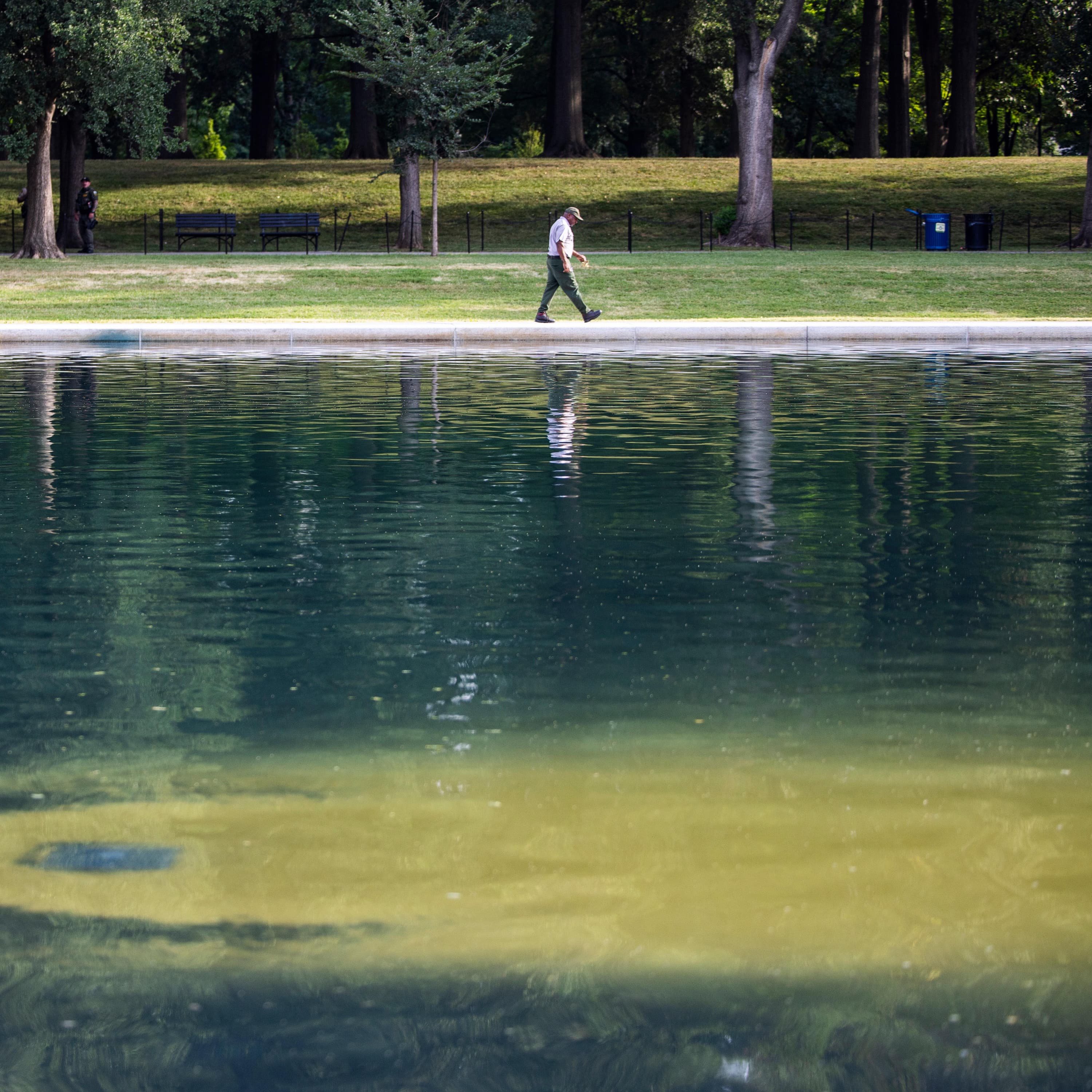
Science Weekly
Reflecting pool algae: the science Trump needs to know
00:16:19
Ian Sample hears from co-host Madeleine Finlay and from Dr Linda May, a freshwater ecologist at the UK Centre for Ecology & Hydrology.
Loading summary
Transcript43 lines
- [00:00]
Ian Sample
This is the guardian.
- [00:10]
Progressive Insurance Advertiser
Insurance isn't one size fits all. That's why drivers have enjoyed Progressive's name your price tool for years now. With the name your price tool, you tell them what you want to pay and they'll show you options that fit your budget. So whether you're picking out your first policy or just looking for something that works better for you and your family, they make it easy to see your options. Visit progressive.com find a rate that works for you with the name your price tool Progressive Casualty Insurance Company and affiliates Price and Coverage match limited by state
- [00:39]
Creative Planning Advertiser
law because you didn't just say, how can I provide these investments? You'd be how do I holistically provide everything? How do I bring in the legal, the accounting, all this, and do it at a price point no one else is doing it.
- [00:48]
Progressive Insurance Advertiser
Learn more about how we approach wealth management@creativeplanning.com integrated.
- [01:03]
Maddy
On Saturday, the USA will celebrate its 250th birthday. And to mark the occasion, Donald Trump had a special gift in mind. It was supposed to be a quick,
- [01:14]
Dr. Linda May
easy and cheap job to transform Washington
- [01:17]
Maddy
D.C. 's Lincoln Memorial Pool to an American flag blue, all in time for America's 250th birthday. At first, Trump's renovation efforts seem to be going well.
- [01:29]
Ian Sample
We have it finished. The water is pouring in as we
- [01:32]
Progressive Insurance Advertiser
speak, and maybe we'll show that what
- [01:35]
Ian Sample
it looks like, because I'm sure the
- [01:38]
Maddy
fake news will be thrilled. But then everything started to go a bit green and smelly.
- [01:46]
Progressive Insurance Advertiser
Two weeks after it was refilled, the Lincoln Memorial Reflecting Pool is going through some things. Its brand new $14 million blue coating, a color personally picked by President Donald Trump, is obscured by bright green algae.
- [02:00]
Maddy
Over the past week, the administration has thrown everything at it, from innovative new technology, hydrogen peroxide, and even vacuuming. And finally, on Sunday, Trump took to Truth Social to announce the reflecting pool is now in full use and the criminally made algae is gone foreign. The fight against the algae is basically a huge science experiment happening in real time. And it got us wondering, what is the science behind algal blooms? And given its size and location, will the pool really ever be American flag blue? From the Guardian, I'm Ian Sample, and this is Science Weekly. Matty. Today we're getting into the science behind the ongoing reflecting pool saga. Give me a bit of background about the pool itself.
- [03:03]
Ian Sample
So this is the Lincoln Memorial Reflecting pool in Washington, D.C. at one end of the pool you've got the Washington Monument. So that's of the big pointy Stick. And then at the other end you've got the Lincoln Memorial, super famous. And across both sides you've got this promenade of elm trees. So it's such a beautiful spot. It was completed in the early 1920s and since then it's been a site for so many big historical moments. So one example, it's where Martin Luther King Jr. Did his I have a Dream speech. He was looking out over this reflecting pool and actually it's had a lot of renovations over the years, including a big one in 2012 that actually also caused an algae bloom.
- [03:52]
Maddy
So let's get into the science here. What actually is algae?
- [03:56]
Ian Sample
These are plant like organisms. They photosynthesise and they're typically aquatic, so you find them in water. They, they tend not to have true plant structures, things like roots and stems and leaves, and they're often referred to via their colour. You might hear about green algae, brown algae, red algae, but really they're this huge, diverse group with tens of thousands of species. You go from the very, very small, so plankton, but it goes all the way up as well, to seaweeds like kelp. And obviously things that photosynthesize are really helpful for us, turning carbon dioxide into oxygen. But I wanted to find out a little bit more about algae and the role that they play in our ecosystems. So I got in touch with Dr. Linda May. She's a freshwater ecologist from the UK Centre for Ecology and Hydrology.
- [04:51]
Dr. Linda May
I divide them into nice algae and bad algae. So the bad algae that cause the scums and become toxic and cause problems for people. The sign of bacteria are one thing, but just like any other system, you need plants to feed your smaller animals that are eaten by your bigger animals and so on. It's the same in a lake or a pond. Selgae are really important in trapping the sun's energy and providing food and energy for ecosystems. They feed larvae and things that fish feed on and if they're not there, then the fish can't grow. They feed this small zooplankton. You need the small zooplankton because when the fish first hatch out of their eggs, then they've got tiny, tiny gape sizes. We call it tiny, tiny mouths. And so for the four or five weeks, they need the tiny, tiny zooplankton because they can't eat the bigger ones. And those are all fed by the algae. We need them, but we don't need too many. It's like a lot of things.
- [05:46]
Ian Sample
Now, going back to what Linda referred to as the bad algae you often hear about blue green algae. This is also called cyanobacteria. And that's actually a little hint that it's not really an algae at all. It's a bacteria.
- [06:00]
Maddy
Do we know what kind of algae this is and where it came from?
- [06:04]
Ian Sample
Well, some scientists have sneakily, I guess, tested the water over the past few weeks, and they seem to have identified it as a kind of green algae called cynodesmus. Now, this hasn't been officially confirmed by the administration. There were concerns at first that it might be this kind of bad algae called cyanobacteria. And the reason that some people were scared, suspicious of this is because, unfortunately, in the water, they have found dead ducks and dead ducklings. And cyanobacteria produces a lot of toxins. But it may be that these ducklings died because of what they were doing to treat the algae or just the disruption to their habitat. And Trump did imply that this algae came from vandals and criminals, maybe putting nutrients in the water. But what I would say is that algae spores are absolutely everywhere. You know, they're traveling along in the wind. If you've got any kind of body of water, you're probably going to find an algae spore in there and the water itself. Now, there are a few different sources on this. When I was looking, it seems like the water used to actually be the same as the city's drinking water, the stuff that comes out the taps. But now it seems as if the water comes from this reservoir known as the tidal basin, which is connected to the Potomac River. You'd assume that there's some kind of filtration system going on before it enters the reflecting pool. But perhaps there isn't a filtration system, or at least it isn't working well enough.
- [07:40]
Maddy
So what causes the kind of bloom that we've seen in the reflecting pool?
- [07:44]
Ian Sample
Right. So algae love three things. So algae love light because they're photosynthesizing. They love warmth, and they love nutrients, in particular phosphorus and also nitrogen. It's kind of like if you wanted to build a structure that caused an algae bloom, build a reflecting pool. It's shallow, so the water gets really nice and warm. It's wide, so it has all the light, and it's stagnant water. It's the perfect place for algae. And so actually, there have been lots of blooms over the years. This is not the first time this has happened, because algae's everywhere. And what causes the actual blooms themselves is things like agricultural runoff. So that's when you're getting a lot of nutrients into the water. Linda told me that scientists like her when they're called to take a look at these algal blooms, the first thing that they do is try and work out where these additional nutrients are actually coming from. Because if you want to do something about an algal bloom, that's really the root cause that you have to get at because you're not going to do anything about the sun.
- [08:56]
Maddy
And some people have wondered whether this botched paint job has been anything to do with it. Is there any chance of that?
- [09:02]
Ian Sample
I saw one theory that was talking about the kind of texture of this paint job, which is quite rough. And maybe that was helping the algae. I'm not sure that's true. Algae might like rough surfaces when it's things like bricks or paving slabs, because those little, you know, divots and dents that you would find in there are collecting water and that's where you find most algae. So I don't really think that's the issue. Some people have also said, and this is more plausible, is that the paint job itself, because it's been painted dark blue, that's making the water much warmer. I mean, before now, the reflecting pool was a kind of grey slab, so it was reflecting off the light and the heat. And so maybe the water is a little bit more warmer than usual. But to be honest, it's the summer. So how much difference that colour of paint is making to the temperature of the water and the algal bloom, I'm not sure.
- [10:05]
Maddy
Maddy, let's talk through what the administration says they've been doing to try and get this under control. And the Interior Department said it was using the wonderfully named advanced nanobubbler technology to kill algae, which the National Park Service then goes and sort of vacuums. What is this?
- [10:22]
Ian Sample
It does sound made up, doesn't it? It sounds like a made up technology, but it is. It's real and it's actually very new. Basically you have this specialized equipment and it injects air, like ozone, oxygen into the water. And it does that through injecting sort of millions, billions of these tiny, tiny, tiny little nano bubbles. So each nanobubble will probably be 100 nanometers in sort of diameter on average. And that's about a thousandth of the thickness of a human hair. And when you inject all these like tiny little bubbles, because they're so small, they don't have much buoyancy and they're able to kind of really get into the water and spread and stay. And what they do there is they oxygenate the water. And this has two effects really. So one is that it can promote the growth of aerobic bacteria, which consumes the nutrients that the algae mite and kind of out competes the algae and keeps the algae in check. Alternatively, what it might do is when you're delivering all these nanobubbles, all this oxygen, this ozone gas that's very reactive and what it does is it can break down the cells of the algae and kill it.
- [11:41]
Maddy
They've also tried pouring in hydrogen peroxide, which I thought was used for bleaching hair.
- [11:47]
Ian Sample
Yeah, hydrogen peroxide, it's the same chemical process that makes your hair blonde. As works as a pretty good algaecide. It's kind of breaking down the algae cell walls. And actually hydrogen peroxide is really good in this instance because it breaks down into oxygen and water, so it's not toxic when you pour it in there. For the other aquatic life that might be present, like the nanobubbler technology, it is a kind of short term corrective. It's not going to last that long. And unlike the nanobubbler technology, which is really good at spreading out in the water, hydrogen peroxide, when you pour it in, it's not going to diffuse that well. It's probably not going to go that deep and it's not going to get that far in. And one of the issues there is that when you break down the algae, you're releasing the nutrients that that algae has sort of taken in back into the water. And so what you might do is actually put cause another bloom so you're providing more food for the algae that's still in there.
- [12:51]
Maddy
Coming up, could Trump turn the pool blue by embracing a green solution?
- [13:07]
Progressive Insurance Advertiser
You're listening to this podcast, so I know you've got a curious mind. Here's a helpful fact you might not know yet. Drivers who switch and save with Progressive save over $900 on average. Pop over to progressive.com, answer some questions and you'll get a quick quote with discounts that are easy to come by. In fact, 99% of their auto customers earn at least one discount. Visit progressive.com and see if you can enjoy a little cash back. Progressive Casualty Insurance Company and affiliates national average 12 month savings by $946 by new customers surveyed who saved with Progressive between June 2024 and May 2025. Potential savings will vary.
- [13:43]
Creative Planning Advertiser
Foreign.
- [13:48]
Maddy
There's not much time now before the 250th celebrations. Trump says the pool is now in full use and that they'll drain it again after the July 4th to fix any issues once and for all. Should it start going green again, is there anything else they can do?
- [14:04]
Ian Sample
When I asked Linda about this, she really sold me on this idea of introducing water fleas. And these are also known as Daphnia, and they're found all around the world. And as she described it, they are absolutely brilliant at tackling algae. If you wanted to, this is going to be your most effective method.
- [14:26]
Dr. Linda May
In Lochleven, which is my main stomping ground. Up in Scotland, we've been looking at what happens there, and one of the things we have noticed is that the Daphnia, the water fleas, when they're there on a summer's day, the entire population of water fleas will remove the algae from about 60% of the entire loch every day. They work like little Hoovers and they're really very cute. So if you've got a really good population of them, then that works very well. But they are very, very sensitive to pollution. And so in Loch Leven, for example, between 1954 and 1971, we lost all of the Daphnia because of pesticide pollution, which was then stopped. And the difference when the Daphnia weren't there to when they reappeared in 1972 is absolutely amazing. We had lots and lots of algal blooms. Daphnia came back, and the algal blooms just disappeared in 1972.
- [15:23]
Ian Sample
Okay. So, Ian, I've actually got a radical suggestion. If you wanted to create a system which eventually sort of looked after itself, so you don't have to have these nanobubbler technology machines around the side. You don't have to come up with this incredible filtration system. You could turn the reflecting pool into a functioning ecosystem. You could put in the Daphnia. You could put in some plants. Hey, you could put in some fish. I think that would be quite fun. I don't know if it's appropriate for a national monument. So if you don't want to do that and you want to get rid of the algae or keep them at bay, you just have to tackle the nutrients. And how is that brought down to a level where these algae blooms aren't going to suddenly take off, it's hard
- [16:08]
Maddy
to see them really going for something that would inevitably become known as the flea pool.
- [16:14]
Ian Sample
Yes. Which is better, the algae swamp pool or the flea pool? I don't know.
- [16:21]
Maddy
A lot of political people have called this the perfect metaphor. What do you think we should take from this saga, scientifically speaking?
- [16:30]
Ian Sample
So Obviously, this redo of the reflecting pool was to mark the 250th. And when you think about the incredible scientific and technological advances that we've had over the last 250 years, it's truly amazing. And yet, what's also quite fun to think about is that occasionally, still, we are bested by ancient, simple organisms like algae. And in honour of our World cup hosts, at the moment, I'll just say algae one Trump nil.
- [17:08]
Maddy
Thanks to Maddy, who also produced this episode. The sound design was by Ross Burns and the executive producer was Ellie Burie. And if you'd like to hear more about the Reflecting Paul saga, listen to the latest episode of Politics Weekly America, where host Johnny Friedland talks to Arwa Madawi about why the project has proved so embarrassing for Trump. Just search wherever you're listening to this. We'll be back on Thursday. See you then.
- [17:40]
Ian Sample
This is the Guardian.
- [17:49]
Progressive Insurance Advertiser
For investors at the highest level of sophistication, those with strong advisory support, the natural outcome is two distinct portfolios, one public, one private. Each plays a different role in the overall strategy. Uncover new investment opportunities for you@creativeplanning.com New this episode is brought to you by Progressive Insurance. Do you ever think about switching insurance companies to see if you could save some cash? Progressive makes it easy to see if you could save when you bundle your home and auto policies. Try it@progressive.com Progressive Casualty Insurance Company and affiliates. Potential savings will vary. Not available in all states.
- [18:24]
Creative Planning Advertiser
This podcast is brought to you by Thomson Reuters. The best don't just do their work. They change what's possible. Cases won, audits completed, jobs saved. Behind every one of those moments is a professional who needed to get it right and did. Thomson Reuters builds the technology that sharpens insights, speeds up decision making and powers the outcomes that matter. So when professionals act, the impact is felt by everyone. Be a changemaker. Visit tr.com changemakers.