← Science Weekly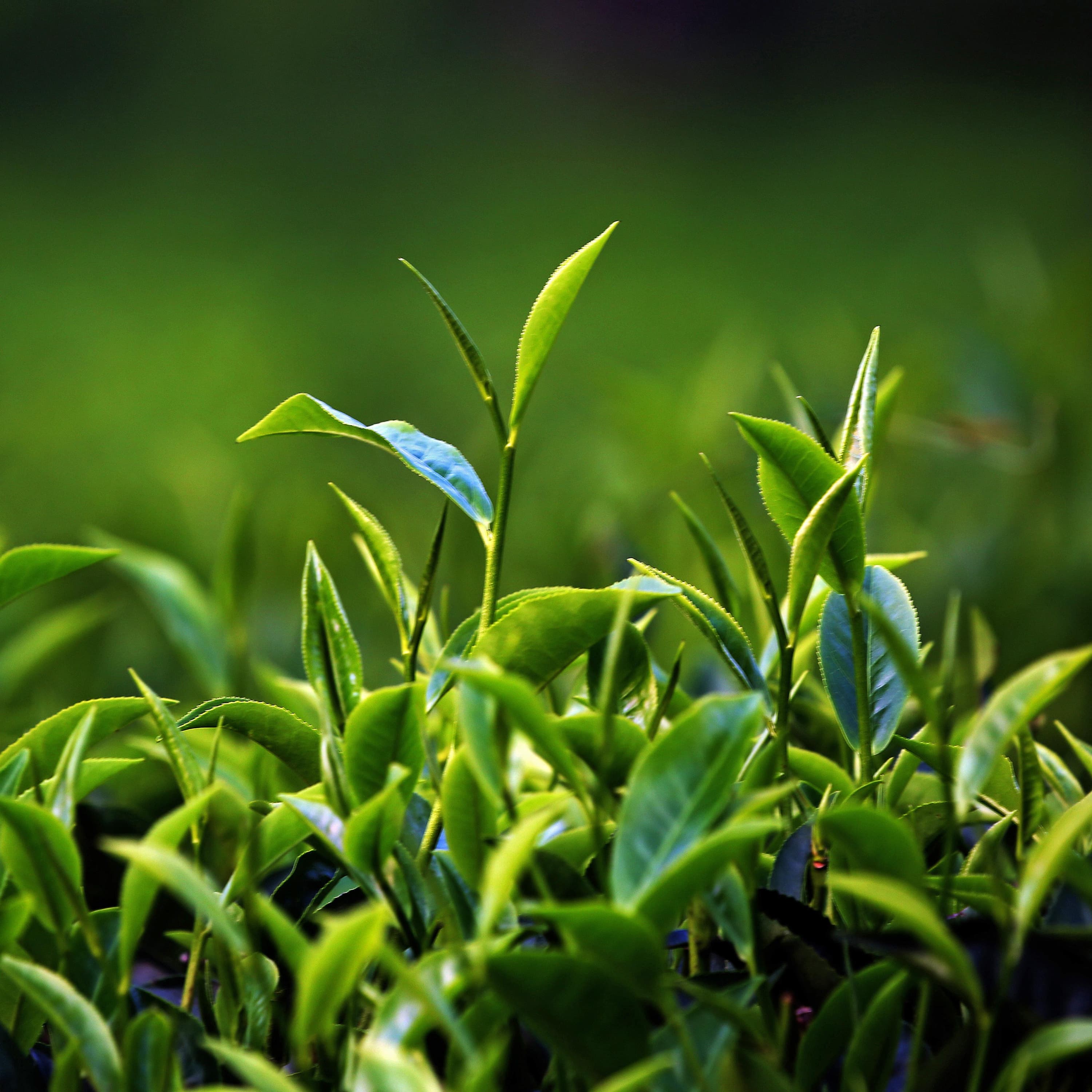
Science Weekly
Revisited: A Scottish tea mystery, episode one – green shoots
00:22:29
Nicola Davis looks back on her first meeting with Tam O’Braan, who was selling Scottish-grown tea to some of the UK’s finest hotels, but something didn’t quite add up
Loading summary
Transcript88 lines
- [00:00]
Nicola Davis
This is the Guardian.
- [00:10]
Progressive Insurance Announcer
You're listening to this podcast, so I know you've got a curious mind. Here's a helpful fact you might not know yet. Drivers who switch and save with Progressive save over $900 on average. Pop over to progressive.com, answer some questions and you'll get a quick quote with discounts that are easy to come by. In fact, 99% of their auto customers earn at least one discount. Visit progressive.com and see if you can enjoy a little cash back. Progressive Casualty Insurance Company and affiliates national average 12 month savings by $946 by new customers surveyed who saved with Progressive between June 2024 and May 2025. Potential savings will vary.
- [00:46]
Aura Advertisement Narrator
Most people don't realize how much of their personal information is being bought and sold every day. Data brokers are making billions pulling details about you from public records and the Internet. Then packag selling it, usually without your consent. That's how your information lands in the hands of scammers, spammers, even stalkers. It's why you get endless robocalls and why ads seem to follow you everywhere. That's where Aura comes in. Aura actively removes your data from broker sites and keeps it off. They also instantly alert you if your information shows up in a breach or on the dark web. But Aura goes beyond data protection. With one app you get a vpn, antivirus, password manager, spam, call protection, dark web monitoring and even up to $5 million in identity theft insurance. All backed by 24, 7 US based fraud support. Other companies might sell just credit monitoring or even just a vpn. Aura gives you all of it together at the same price competitors charge for just one service. Start your free trial today at aura.com safety. Protect yourself now at aura.com safety.
- [02:03]
Madeline Finley
Hi, it's Madeline here. The Science Weekly team is on a break so for the next two weeks we'll be bringing you some of our favourite episodes from the past year. This week you'll hear a Scottish tea mystery, our investigation into an eye catching business venture that seemed just too good to be true and how science finally provided some answers. Here's episode one. I hope you enjoy it.
- [02:32]
Nicola Davis
It's 2014 and a new venture in Scotland is starting to generate a buzz.
- [02:38]
Tam o' Brien
When I first came here I met the fellow community, the agricultural community and they asked me what I was going to do here and I told them I was going to grow tea and there was a sort of raising of eyebrows, few rice miles and they just went ay right.
- [02:58]
Nicola Davis
Explaining his audacious entry into the World of Tea growing to BBC presenter Mark Stephen is Tam o'.
- [03:05]
Aura Advertisement Narrator
Bran.
- [03:07]
Tam o' Brien
My name's o' Brien and as you can see, the river that marks out the boundary of our land is the Bran, the River Bran, which the whole of the glen's named after. So they've renamed me the. I'm no longer Tom o'. Brien, I'm Tam o'.
- [03:21]
Chase Sapphire Card Advertiser
Brien.
- [03:28]
Nicola Davis
Back then, I wasn't long into my career as a science journalist and it would be a few months until I met Tam myself for a feature I was writing. And in the decades since, there's been a question tucked away at the back of my mind, something that I just couldn't figure out until now. And over the next three episodes, that's the story you're going to be hearing. I'm Nicola Davis, science correspondent at the Guardian. This is a special mini series from Science Weekly, A Scottish tea mystery, Green shoots. Let there be no doubt, journalists love a quirky story. And for a British journalist like me, what's better than a quirky story about tea? Which is why in 2015, I ended up in one of London's fanciest hotels, the Dorchester. By the time we met, Tam o' Bran had already been making waves with his new venture. He was everywhere, on tv, radio, even social media, telling anyone he could about his wee tea plantation on the Dalryack estate in Perthshire.
- [04:49]
Tam o' Brien
Those plants were originally propagated from three plants we brought in from Italy. We were told categorically by people who had been working in the tea industry for 30, 40 years that they couldn't be done. Here is a beautiful bush that's just giving us the tips of the tea. From this we'll make white tea or the one of the finest teas in the world.
- [05:16]
Nicola Davis
I sat down with Tam, together with the director of food and beverage at the Dorchester. Tam was supplying them with his Scottish grown teas and had even helped set up a rooftop tea garden. He was a fascinating character, very dapper with twinkling eyes and, and the total self assuredness of an entrepreneur. And there was nothing, it seemed, he didn't know about tea.
- [05:39]
Tam o' Brien
We surround that heavily plucked plant in a tree guard. This tree guard contains ultraviolet light inhibitors. So they use retard photosynthesis by holding back 99% of the light spectrum.
- [05:54]
Richard Ross
Why would you want to retard photosynthesis in a plant?
- [05:57]
Tam o' Brien
Well, as I think my father would have been been able to tell most people, my dad was quite proud of the fact that he could grow rhubarb underneath the kitchen sink without a Drop of soil or water. I mean, a lot of people know this and it's. It. It's been going on for 60 years. We have not far, far more. So we've been able to grow and force crops to grow. If you stand in the growing sheds, you can hear those plants growing. They're growing so fast. So if not.
- [06:23]
Richard Ross
That's not literal, you can't seriously hear of them.
- [06:26]
Tam o' Brien
Oh, wow. Yes, you can, can you? Yeah.
- [06:31]
Nicola Davis
As we chatted, he explained to me how he'd been successfully propagating Camellia sinensis for several years, his wee tea plantation now boasting 14,000 plants. The plantation had scooped a gold award from the Salon d' you in Paris for its Dal Rioc smoked white tea and was selling to luxury hotels like the Dorchester and the Balmoral in Edinburgh. It seemed eccentric, amusing and the sort of plucky thing that was worth reporting. More than 300 miles away in Scotland, someone else heard about his story too.
- [07:11]
Richard Ross
I started to hear publicity about this guy who was growing tea and selling plants in Scotland.
- [07:18]
Nicola Davis
Drinks writer Richard Ross was intrigued.
- [07:21]
Richard Ross
And the more I read about it, I realized that he was just down the road from a piece of land my family owns that I was thinking about trying to do something with.
- [07:33]
Nicola Davis
Richard exudes a calm confidence, his light blue eyes giving away that he's both very shrewd and has a knack for recognizing the ridiculous. I met up with him recently in the Butterfly and Pig Tea Room, a cavernous cafe just off a busy road in the centre of Glasgow. It was filled with dark wooden furniture, mismatched cups and saucers, and lots of novelty teapots. After a scone with cream and jam alongside our Earl Greys and English breakfasts, Richard explained his journey into growing tea.
- [08:07]
Richard Ross
My grandfather, who I never knew, was a tea planter in Sri Lanka. So my mother had been born on this tea plantation and I grown up with all these stories about the romance of beautiful tea plantations and lush gardens and tasting tea on the balcony and that sort of thing.
- [08:23]
Nicola Davis
All these threads fell into place with a moment of serendipity. On a long drive, driving down the
- [08:29]
Richard Ross
road from this piece of land in Perthshire back to my home in Glasgow and hearing a BBC report talking about how this guy had started to grow tea in Scotland and was starting to sell it to some quite major hotels and restaurants in London. Pretty much immediately after hearing, I thought, well, this is somebody I should probably go and visit.
- [08:49]
Nicola Davis
So he arranged to meet Tam, and
- [08:52]
Richard Ross
this would have been in the very end of 2014, sat in one of the steadings in his farm with a roaring fire going and him looking tall, intense purposes, like this sort of country gent sitting there with his tweed jacket on and telling me all the economics about the possibility of growing tea in Scotland and the sort of returns we could expect to get. He came across as quite a kind of jovial character who was interested in other people and quite affable. Very easy chat. Yeah, he seemed like somebody I could do business with, and it just seemed a very exciting prospect to be part of this potentially new industry in Scotland. And so I agreed fairly quickly to buy 500 tea plants from him.
- [09:37]
Nicola Davis
According to Tam, these were tea plants that he had been selectively breeding and cultivating to, to better suit Scottish conditions. They were Scottish tea plants as far as it was possible. Tam also put Richard in touch with the other growers around Scotland, and together they set up a sort of cooperative called the Scottish Tea Growers Association.
- [09:58]
Richard Ross
I was in Perthshire, which is pretty much bang in the middle of Scotland. We had one grower from Orkney, we had another from Aberdeenshire on the east, and we had a couple of other growers right down in the southwest. So really all four points of the compass in Scotland,
- [10:15]
Nicola Davis
and Tam was at the centre of it all.
- [10:17]
Richard Ross
He said that he had a background in agronomy, that he was trained as an agronomist and had owned an agronomy business that worked in sort of different parts of the world where they were trying to get crops to succeed in extreme climates. So he had bought the farm where the tea was being planted as a kind of test station for. For growing sort of new possible crops. And that's how the tea had come
- [10:40]
Nicola Davis
about, because Tam was already processing and selling tea. He was going to be the middleman for the hotels and shops too, taking a commission from the tea he sold. Their Scottish tea would inevitably be exclusive small batches that came with a much higher price tag than your average cuppa.
- [11:00]
Richard Ross
We were never going to be replacing the likes of Assam, but, you know, it was the start of what could be a really niche boutique kind of tea industry, where we would get fair returns on the money we were investing and the time we were putting in. So my plants were planted in September of 2015 and we kind of tucked them in for the winter and hoped for the best, that they would start to show signs of growth in the spring.
- [11:24]
Nicola Davis
While Richard's tea hibernated through the chilly winter months, Tam continued to promote his new venture. As spring drew near, a French news agency decided to visit as they were keen to see not just Tam's plantation, but also one of the others too.
- [11:40]
Richard Ross
Because I was relatively close geographically to where he was, he asked if they could come and see me. I couldn't be there that day, but I was happy for him to show them around and it seemed to go well. Then he turned up on my doorstep about three weeks later, looking a bit sheepish and said, there was a bit of a misunderstanding. When the news agency were there, they were taken over to your plantation by a couple of my plantation workers and as they were filming, they wanted to see some tea being picked. So the workers went in and started to pick some leaf for the cameras.
- [12:17]
Nicola Davis
Tam explained that before he could stop them, Richard's entire crop had been picked. And that's when he produced a big plastic tub.
- [12:27]
Richard Ross
In it were 3 kg of processed green tea. So we're talking about 3 kilos of dry leaf, so you need quite a substantial amount more of that picked from the plants. I look him in the eye and say, so you're telling me that this is all from my plants? And he held my eye contact and said, yes, it is. And the agreement had always been that he would sell the tea, so he took away most of that. But I took a small amount so that I could, you know, taste some myself and maybe show off to my family that actually, you know, I had. I had the first Scottish tea that I'd managed to grow myself. But in the back of my mind, I was thinking, this just doesn't ring true.
- [13:14]
Progressive Insurance Announcer
This episode is brought to you by Progressive Insurance. Do you ever think about switching insurance companies to see if you could save some cash? Progressive makes it easy to see if you could save when you bundle your home and auto policies. Try it@progressive.com Progressive Casualty Insurance Company and affiliates. Potential savings will vary. Not available in all states.
- [13:37]
Nicola Davis
Richard was suspicious. A whole bucket of tea from his plants and this was February in the Highlands. Surely there couldn't have been that much growth. Already curious and annoyed he hadn't got to pick his plants first, Richard went to go and have a look at them.
- [13:55]
Richard Ross
I went through my tea plantation and I could see no appreciable difference in the plants from what they had looked like three weeks before. And then I took 30 grams of the tea that he'd left me and I counted out the individual leaves and then extrapolated that figure up to the full amount of what he had in the bucket and realised that if he'd picked every leaf off every plant in my plantation, he couldn't have achieved the amount of tea that was in that bucket.
- [14:24]
Nicola Davis
Richard wondered whether Tam had bolstered the bucket of leaves with some from his own plantation to make it look a bit more impressive. But the sheer amount of tea in the bucket wasn't the only only thing raising doubts. In Richard's mind.
- [14:37]
Richard Ross
I saw that there were also these little tiny they call silver needles the Chinese called grandfather's eyebrows, which are these tiny little leaf shoots that are indicative of our first flush, as we call it, where the very young leaf growth is coming in the spring on a tea plant. Now, at that time of year, there was no first flush of tea on those plants. And yet in this tea that had supposedly come from my bushes, there were very clearly these little silver needles. It was a strangely conflicted moment because on one side I was proud that maybe I had produced some tea for the first time, but then I still had this niggling feeling that it couldn't possibly have come from my plants.
- [15:23]
Nicola Davis
Richard wasn't the only one with questions. After writing up my article, I tried to find out more about the Wee Tea Plantation Salon d'. Award. As a tea drinker myself, I wondered who'd won it before. But beyond news articles about Tam's win, I couldn't find any record of any such award anywhere. And in the back of my mind too, it just felt a bit too good to be true that he'd already managed to produce enough tea to sell to so several hotels and shops. In all the pictures and films I'd seen of his plantation, all the plants looked, well, rather twiggy.
- [16:06]
Beverly Claire Wainwright
What we're finding in Scotland, it's taking eight years, maybe 10 years before the plants mature, if they survive.
- [16:15]
Nicola Davis
Beverly Claire Wainwright is a tea consultant based in Scotland with an extensive career working on plantations in Sri Lanka.
- [16:23]
Beverly Claire Wainwright
The quantity of plants you need in order to produce any kind of a crop is quite substantial. So for example, some of the growers in Scotland, with one and a half thousand plants that are seven years old, producing as little as one kilo of tea per year,
- [16:43]
Nicola Davis
it may be a long and difficult process, but it's not completely outlandish to try to grow tea in Scotland. Beverly herself has attempted it.
- [16:51]
Beverly Claire Wainwright
So let me tell you what tea requires to grow. Soil pH 4.5 to 5.5, so it's quite acidic. It requires 1,500 millimetres of rain for
- [17:01]
Nicola Davis
a year, so it needs acidic soils and it turns out a lot of rain. Believe it or not, some areas in Scotland aren't wet enough.
- [17:12]
Beverly Claire Wainwright
Here in Perthshire, we only have 800 millimetres per year. So even in Scotland, it generally needs to be irrigated. And the other big thing, tea is quite an unusual plant. It takes oxygen up through the root and so the soil that they're in has to be free flowing. So they constantly need water to keep them alive, but you can't sit them in a tub of water because they will literally drown and die.
- [17:40]
Nicola Davis
Then there's the cold. Below 10 degrees, tea plants go dormant. And with its very short days for much of the year, the Scotland's tea growing seasons are rather brief.
- [17:51]
Beverly Claire Wainwright
In many cases, people lose more than 50% of their plants in the effort of trying to grow them.
- [17:58]
Nicola Davis
And yet, as Tan's new co operative of Scottish tea growers proved, there were plenty of people willing to give it a go.
- [18:07]
Beverly Claire Wainwright
You know, it's very interesting making tea, growing tea. People get hooked into tea and, you know, it's quite obsessive. There's a huge amount of romance behind it.
- [18:20]
Nicola Davis
So with my doubts pushed to the back of my mind as usual, I had to get on with the next story. Richard moved on too, trying to coax his plants into getting bushy.
- [18:33]
Richard Ross
As that year progressed, they'd never really thrived terribly. Well, you start to think as an early grower of these things, that maybe your knowledge is just not that great yet and you're not doing quite the right thing.
- [18:46]
Nicola Davis
He stayed hopeful. Tam's plants were thriving.
- [18:49]
Richard Ross
When I first visited, he showed me these large plants looked more like trees, big bushes four or five feet high, which he described as the mother plants from which he'd taken cuttings and which he had then propagated the tea that I and others had bought as plants, plants that had grown in Scotland for Scottish conditions and ready to be put out on a Scottish field. And we thought, he's selling tea to these interesting institutions, so they must be able to thrive well in Scottish conditions.
- [19:22]
Nicola Davis
And some of his colleagues who'd also bought plants from Tam weren't doing too badly at all.
- [19:27]
Richard Ross
Those who bought six months to a year later seemed to have much, much more success. The people who bought these plants, you know, one or two of them had background in agriculture and farming. We thought, well, you know, maybe that kind of lifetime knowledge is really playing out here and they just know what they're doing.
- [19:45]
Nicola Davis
But as each new season rolled around, Richard's plants weren't happy.
- [19:50]
Richard Ross
They just weren't coping with the Scottish conditions.
- [19:53]
Nicola Davis
It wasn't just his plants that were being difficult. Tam had, well, changed. No longer a charming country gent, full of Maverick ideas and a passion for his growers.
- [20:05]
Richard Ross
He could get quite prickly and could be quite difficult to talk to, and he could take offence quite easily at things that were said to him. And so we found that we were kind of tiptoeing around him more and more. As time went on, he also became
- [20:21]
Nicola Davis
harder to get hold of.
- [20:23]
Richard Ross
We started to get communications from somebody who said they were his office manager. And increasingly those emails from this office manager were really trying to put us off getting in touch with Tam himself. They would be very much phrased as, Tam's taking some time away from the business, or he's got a health issues at the moment and it's taking some time away, or he's traveling in China as well. All ways of not letting us speak to him, actually.
- [21:04]
Nicola Davis
And there was someone else Tam was avoiding who was desperately trying to track
- [21:09]
Paolo Zakara
him down when came up for a few days to Glasgow, to Edinburgh, and went to see him and was nobody at home.
- [21:20]
Nicola Davis
Paolo Zakara is a nursery man from northern Italy. He grows lots of different plants on the slopes of Lake Maggiore, including tea, which is how he ended up getting to know Tam.
- [21:32]
Paolo Zakara
I am the only person in Europe growing between 20 and 30,000 small plants of tea each year. So somehow he contacted me, he said how successful he was in selling this tea. Scottish tea, in big hotels, most expensive hotels in London are a good price you could get. So he was asking me for a lot of plants. And when he saw my plants growing here, he pushed me to say, go ahead, I will sell your tea with no problem and just go on and
- [22:08]
Beverly Claire Wainwright
plant and grow more plants, because there's
- [22:11]
Nicola Davis
no such thing as native Scottish tea. Tam had to start with plants from abroad to be able to take cuttings and seeds and to grow the hardiest possible cultivars better suited to Scottish weather. And so he got to know Paolo.
- [22:27]
Paolo Zakara
He was my guest here and he came three or four times in Bourbonia in my home. And some friends of us were making party because the daughter had just graduated from university and there was a small group playing and they said, but all the girls here want to dance and nobody make them dance. So it worked all the evening to make everybody dance. And it was very sweet. Successful was very good relation with people, pushing people.
- [22:54]
Nicola Davis
Well, charmed by Tam and his dancing abilities, Paulo expanded his efforts with tea and started supplying Tam with plants from his hill on the lakeside. And for years they worked well together.
- [23:07]
Paolo Zakara
It was good until the last time when I brought him to the airport and they gave me a very good bottle of whiskey as a present and told me, when I'm going home, I'm going to pay you.
- [23:17]
Nicola Davis
The money never arrived.
- [23:21]
Paolo Zakara
So I tried to call him, send him email first. Our secretary said, oh, he's away, he's in China or whatever. When he comes back, he will be available. And then I could not get any touch with him. They never heard of him anymore.
- [23:41]
Nicola Davis
Something very strange was brewing and an unpaid bill was just the start of it.
- [23:49]
Ellie Bewie
We always had this gap, as in, we know he's been selling tea, but what is he actually selling? And it's only once you start digging into the nuts and bolts of the claims that you start to think to yourself, right, there's something not quite right here.
- [24:06]
Nicola Davis
That's tomorrow's episode. A Scottish tea mystery was reported and presented by me, Nicola Davis. It was produced by Madeline Finley. The sound design was by Joel Cox, and the executive producer was Ellie Bewie.
- [24:34]
Boost Mobile Advertiser
Foreign.
- [24:40]
Ellie Bewie
This is the Guardian.
- [24:49]
Boost Mobile Advertiser
He's dribbling the ball with everything on the line. He's driving down the pitch. He's facing price hikes. It cuts past him. Carrier contracts, tries to block him. Oh, he leaves him in the dust. He's at the edge of the box. He cuts past the knock stop, group chat, trash talk. He clears on goal. He shoots. No unlimited data for $25 a month forever. Visit your local Boost Mobile store today to get unlimited data with a price that never changes. Boost mobile after 30gb, customers may experience lower speeds. Customers will pay $25 a month as long as they remain active on the Boost $25 Unlimited plan.
- [25:20]
Chase Sapphire Card Advertiser
This year's girls trip to Telluride was the best. We one upped ourselves with my Sapphire Preferred card. And with 5 times points on Chase Travel, plus 3 times points on vacation homes with top brands with we got this incredible cabin. It was a mansion. And with three times the points on dining. We ordered a wagyu steak dinner and that pistachio gelato was too good. So where should we go next year?
- [25:42]
Nicola Davis
I've got ideas.
- [25:43]
Chase Sapphire Card Advertiser
Chase Sapphire preferred the card that's preferred for a reason. Cards issued by JP Morgan Chase bank and a member FDIC subject to credit approval terms apply.
- [25:51]
Jane Coston
Former politics reporter Jane Coston is now hosting Crooked Media's daily news podcast what a Day. Five days a week. With stories constantly flooding your for you page, it's hard to separate what matters from all the noise. That's why every weekday, Jane and the what a Day team scour the biggest headlines and bring you the stories that matter most to your life. All in just 20 minutes. Listen to what a Day wherever you get your podcast or subscribe to what a Day on YouTube for the video version.