← Science Weekly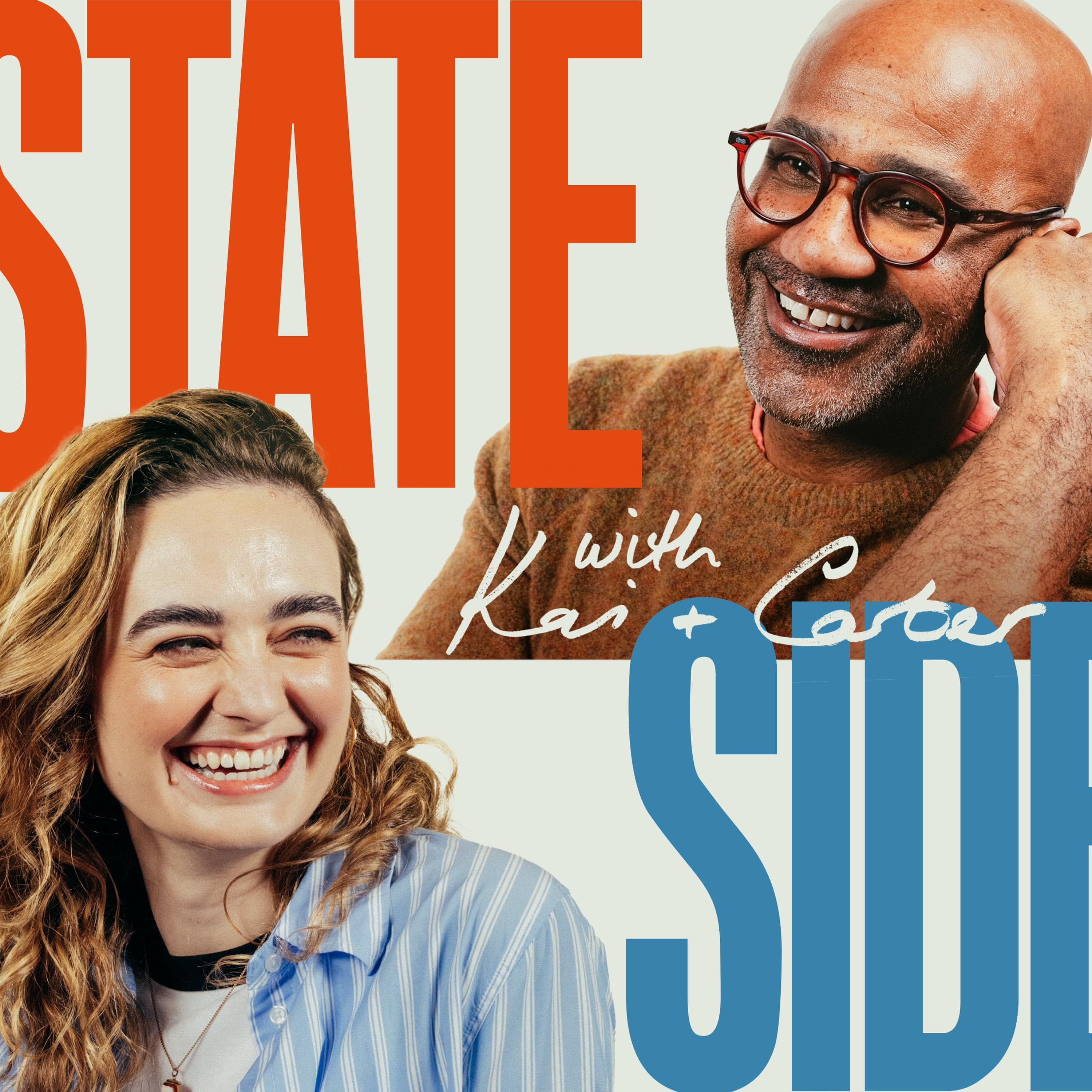
Science Weekly
Stateside with Kai and Carter: Stacey Abrams on why gutting of the US Voting Rights Act is ‘evil’
00:35:38
The US supreme court demolished the 1965 Voting Rights Act when it ruled in Louisiana v Callais last month. Kai Wright talks to the voting rights advocate and former Georgia state legislator Stacey Abrams about what she believes is the way forward
Loading summary
Transcript74 lines
- [00:00]
Guardian Announcer
This is the Guardian.
- [00:11]
Quo Business Phone System Advertiser
Running a business means juggling a lot of moving parts. And when your communication tools can't keep up, things start to slip. Missed calls, slow replies, scattered conversations. They're not just frustrating, they're lost opportunities and revenue left on the table. That's where Quo comes in. Spelled Q U O. Quo is the number one rated business phone system on G2, trusted by over 90,000 businesses. One shared business number for calls and texts so every conversation stays visible, organized and accountable. It works from an app or computer. You can keep your existing number, add teammates and sync your CRM, letting you scale without adding complexity. And with built in AI, Quo logs calls, summarizes conversations and flags next steps even after hours. Stop missing customers. Stop leaving revenue on the table. Try quo free and get 20% off your first six months at quo.comtech that's quasho.com tech quo no missed calls, no missed customers.
- [01:22]
Acast Podcast Promoter
Acast powers the world's best podcasts. Here's a show that we recommend.
- [01:31]
Jameela Jamil
What if you laughed all through your commute? Or if you heard the funniest story while at the gym? Well, now you can. I'm Jameela Jamil and guests on my new podcast Wrong Turns share their most mortifying and hilarious disaster stories. I'm talking people like Mae Martin, Bob the Drag Queen, Katherine Ryan, Jake Johnson, Margaret Cho, Simon Pegg, Penn Badgley, and so many more. So listen wherever you get your podcast. Wrong Terms where dignity goes to die
- [02:01]
Acast Podcast Promoter
ACAST helps creators launch, grow and monetize their podcasts everywhere. Acast.com.
- [02:12]
Jameela Jamil
Hi, it's Madeline here. Today we're bringing you something different. The first episode of a brand new show from the Guardian's New York office called Stateside with Kyan Carter. They'll be releasing episodes on their feed every Monday, Wednesday and Friday. So search for Stateside with Kyan Carter wherever you're listening to this podcast or watch on YouTube and Apple Podcasts.
- [02:36]
Stacey Abrams
My nieces and nephews. They are the first generation to lose civil rights since reconstruction. This is evil, but it's also so pedestrian they can't win on their ideas. And so their solution is to silence the other side. But this time what they have done is misread the moment. And that's the part that gives me not optimism, but determination. Optimism says I'm sure we'll win. Determination says I'm going to win.
- [03:10]
Kai Wright
Foreign. I'm Kai Wright. I'm Carter Sherman and from the Guardian. This is Stateside Carter. Here we are. It is the first episode of Stateside
- [03:24]
Carter Sherman
I Know, I'm so excited. I feel like over the last few years, I have just felt so overwhelmed by the news. Yeah, I. Something happens, and I have all these questions, why is this happening? Who's responsible for it? Generally, I want to know how we can make it stop. And one of the things I've been doing to try to get those answers is I go to my colleagues at the Guardian and I ask them these questions, and they've been able to tell me what they think. But I see this show as an opportunity to bring their expertise to a broader audience, to help other people get these answers. And frankly, for you and I to also go to some of the world's biggest thinkers and put questions to them.
- [04:03]
Kai Wright
So that's what we're doing here. And, you know, I really wanna start today with a story that I have so many questions about because it has moved really, really quickly, and that is the Supreme Court's gutting of the Voting Rights act.
- [04:15]
Carter Sherman
In Louisiana v. Calais.
- [04:16]
Kai Wright
In Louisiana v. Calais. And over the past, in particular week or so watching Tennessee. I know you're watching it, too. It's just been really dramatic to see this. The state legislature immediately move into gear to erase the last remaining. There's one black majority black ticket district where was. And now it's gone.
- [04:37]
Carter Sherman
It was wild to just, like, see them do exactly the thing that people have been worried about them doing just immediately. No pretense of even saying, oh, no, we're not going to. We're not going to do this overnight.
- [04:47]
Kai Wright
And I have to say, on a personal level, you know, I was born in 1973, so I am the first generation of black people to grow up in democracy. Right. Like, I'm the. It's. And all of these laws that were passed in the 1960s as the culmination of the civil rights movement. It is not an overstatement to say they have shaped almost everything about my life, where I went to school, my ability to be here hosting this show with you, and certainly my participation in democracy. And it just feels like. It feels like those things are not gonna be around for the next generation of black people, which means the next generation of the United States as well.
- [05:25]
Carter Sherman
It's so stark to hear you say that because I think Americans love to think that we have always been a democracy, that we have started this grand project through 300 years ago, and we've lived up to those promises that were made by the founders. And the truth is, we have just not. And in fact, in many ways, we're moving backwards from Fulfilling those promises.
- [05:42]
Kai Wright
And so, just to make sure everybody's on the same page about this ruling, we're talking about the Supreme Court guts the Voting Rights act, the way it did that. It's really been two rulings. The Voting Rights act had this sort of prevention and treatment model of enforcement. And the prevention was that, you know, if you were a place that was established to have racist voting laws, that that was established, whether it was a local jurisdiction estate, you had to get clearance from the federal government before you changed your voting rights.
- [06:11]
Carter Sherman
You had to basically go to them and say, is this okay or are we being racist again?
- [06:15]
Kai Wright
Correct. They got rid of Supreme Court, overruled that back in 2013, threw that part of the law out. And then now, a couple of weeks ago, they turned to the treatment part of the Voting Rights act, which was to say, if you or I, a citizen, says, I have been disenfranchised illegally, I feel like that this law, this rule, has a racist outcome. And so I'm gonna sue to get a remedy. They have also now gotten rid of that by saying that in order to sue, I have to prove that there was an explicit intentional racism involved in writing the law. That the purpose of it was to disenfranchise me, not just that the outcome of it was to.
- [06:54]
Carter Sherman
Oh, right, because famously, when people are being racist, they usually say out loud, hey, I'm being racist right now, and I want the world to know.
- [07:03]
Kai Wright
And so as a consequence of that, with these two rulings, the Voting Rights act is a dead letter law at this point.
- [07:09]
Carter Sherman
You brought up Tennessee earlier, but I just want to say, like, this ruling has thrown the midterm elections across the south into total chaos. In Louisiana, which was the home of this lawsuit, this Louisiana governor has actually paused the state's congressional primary elections, which was actually already in progress, which means that tens of thousands of ballots have now been thrown into legal limbo. And incredibly, the Supreme Court has actually waded into this issue again, ruling that Alabama can use an old map in this year's midterms, even though this exact same map, they used to say, violated the Voting Rights Act. You can't make this up.
- [07:45]
Kai Wright
You can't make this stuff up. And it's useful to think about history as we watch this unfold, because it's not just a question of partisanship. This is not about Democrats versus Republicans. I mean, we have to remember that there was no democracy. We didn't even try to be a democracy until 1865, until the out in the wake of the civil War. And it is also worth remembering just like how successful we were right at first in that effort.
- [08:10]
Carter Sherman
During Reconstruction.
- [08:11]
Kai Wright
During Reconstruction. And just to give an example, like if you look at Mississippi in 1867, something like 66% of black men, because women couldn't vote but of black men were registered to vote in the state of Mississippi in 1867.
- [08:28]
Carter Sherman
People would love to have that number of people voting today.
- [08:31]
Kai Wright
Today. Right. You know, 100 years of Jim Crow unfold following that, and by 1955, fewer than 5% of black people in the state of Mississippi were registered to vote.
- [08:42]
Carter Sherman
5%.
- [08:43]
Kai Wright
So you have this massive collapse. Voting Rights act is passed in 1965. Within a couple of years, black voter registration in Mississippi back up into the 60 something percentiles. That's what that law did. It was so remarkably successful. It's like one of the most successful laws in the history of laws, but it is dead and gone now. So, Carter, I wanted to talk to somebody who knows all this history we're talking about, but also who has been really engaged in the fight for voting rights in the south, really her whole life and my whole life. And so I called up Stacey Abrams, who folks will remember rose to national prominence in 2018 when she ran for governor of Georgia and almost won.
- [09:29]
Carter Sherman
I covered her race a lot at the time, and had she won, she would have been the first female black governor anywhere in the United States. But of course she didn't. She lost to Brian Kemp, who remains the governor of Georgia today.
- [09:41]
Kai Wright
Right. But she lost that race narrowly, I will say, by like 1.7 percentage points. And there is. She argued at the time and made a credible case that voter suppression was part of why. And so she spent her time ever since then, and really before that, but certainly since then, advocating for voting rights in the south, trying to figure out how you can build more black political power in the south and therefore change America's politics. And I wanted to ask her, does she feel now like me, that in spite of all that kind of back to the 1860s and what we're facing, and is it going to take another hundred years of activism to get democracy back just to the place it was when I was born? Stacey Abrams, welcome to Stateside. I feel like you are exactly who I need to be talking to this week.
- [10:41]
Stacey Abrams
Thank you for having me.
- [10:43]
Kai Wright
So you probably won't remember this because you had many, many people chasing you around on the campaign trail, but back in 2018, I followed you on your campaign trail when you were running for governor in Georgia. And I have this really stark emotional memory of. There was an afternoon, we were sitting in a car, I was interviewing you about your theory of change, of engage voters in every single county. And I was paying attention, but I remember my mind kept wandering to thinking, this is the Voting Rights act at work. This is what this is. If she wins this campaign, this is the triumph of the civil rights movement. And it's not Barack Obama winning presidency. To me, it's a black woman being able to win statewide office in Georgia. And I say all that to say that that feeling of optimism about black political power, in particular in the south that I had in that moment feels so incredibly distant to me now. And I just. I wonder, you know, when you're telling the whole truth, whether it feels distant to you as well.
- [12:04]
Stacey Abrams
I approach it differently. And, Kai, I do appreciate that. I remember that conversation, and I remember, I think, saying to you, and I say it to everyone, as much as that campaign was about proof of concept, it was never going to be the end game. When you're pushing against power, when you're pushing against entrenched interest, when you are trying your best to make manifest a promise that is 250 years old. It's lovely and cinematic if it happens in a moment, but it's unusual. And as excited as I was about that campaign, as bullish as I remain, I'm never going to be buffeted by how hard it feels because I know where we started. And that feels like a very long way around saying that, yes, there is a current attack that is visceral and vicious, but it is not unprecedented. It's just different. And this is a long fight. It's a fight over power. It's a fight over presence. It's a fight over who gets to be heard. And that's the. The work that we have to keep doing.
- [13:22]
Kai Wright
I think I've heard you talk about your father speaking of where we started being arrested, registering voters in Mississippi as a teenager. Did I get that right?
- [13:30]
Stacey Abrams
Yeah, he was 14.
- [13:32]
Kai Wright
How did your family talk about that history?
- [13:37]
Stacey Abrams
I was actually giving a speech in Birmingham a couple of weeks ago, and I mentioned my dad is very sick right now. And the day that the Supreme Court decision came down, I went to visit my parents in the hospital. My dad and my mom had been there. My mom stays by his side. And he had been in for about 12 days at that time. And I go in to check on him. He had been, you know, he doesn't like being in the hospital, of course, and my mom had not left his side. But they didn't want to talk about his pain. They wanted to talk about voting rights. They wanted to talk about how angry they were. But also they wanted to remind me and my siblings that, you know, we still had work to do. And I tell that story because for my parents, even their personal hardship pales in comparison to the larger enterprise that we face. My dad was arrested at 14 for a right that his father, his mother, could not exercise. He understood at such a visceral level that democracy demanded participation, that he was willing to risk going to jail at 14. And even today, at 77, he was telling me, he said, you know, you do what you've gotta do because we have to keep fighting. We don't have the right to stop. And my mom, who we like to tease, my dad, my mom was doing the same work on the other side of town at 14. She just managed not to get caught.
- [15:09]
Kai Wright
Often the case.
- [15:11]
Stacey Abrams
Yeah. Both of my parents understood as children basically, that what was happening in the country was wrong. But they also believed so fundamentally in the American promise that they were willing to test it and to force it to be better. And that's our call right now. That is our enterprise right now.
- [15:30]
Kai Wright
I'm not gonna lie to you. I'm struggling with that belief as a child of the civil rights movement as well. We're both children of this movement. My life was made possible by these laws, and I'm just not sure that they're gonna exist for people after me.
- [15:44]
Stacey Abrams
Well, here's the thing. One of the things I talk about these days is that my nieces and nephews, they range in age from 10 to 20. They are the first generation to lose civil rights during their lifetime since reconstruction. So let's be clear. This is bad, this is horrible, this is evil. When evil is about what you strip from another in pursuit of power, this is evil. This is evil incarnate. But it's also so pedestrian, they can't win on their ideas. And so their solution is to silence the other side. But this time, what they have done is misread the moment. And that's the part that gives me not optimism, but determination. Optimism says, I'm sure we'll win. Determination says, I'm going to win. And I always sit in determination. Optimism can ebb and flow. Determination is internal. And I need us all to harness our determination, because determination is all we've got. And the minute they can strip us of that determination, what they've gotten is the complacency and the compliance that they've been after. For 400 years, and I refuse to give them that.
- [17:02]
Kai Wright
Last week you testified in Tennessee, this has been one of the first places to see an outcome of Section 2 of the Voting Rights act being stripped away. You testified against the legislature's intent to get rid of the last remaining remaining black majority district. They went ahead and did so following your testimony. Put us on this. What did the determination look like there in Tennessee? What did that. Where are folks at?
- [17:34]
Stacey Abrams
Okay, so if you were watching what we were doing, I was in the Tennessee Senate Judiciary Committee. If you looked at the phalanx of senators sitting there, you could tell from the very beginning what the outcome was going to be. So, again, a product of the Georgia State Legislature. I can count. I'm really good at counting. So the victory wasn't supposed to be them not voting for those maps. There was nothing that was gonna change their minds. There was nothing that was going to alter the outcome. And it was made very clear when the Senate minority leader said to the author of the bill, where is the actual text? And he said that a picture was enough. He didn't even bother to bring the bill. They were moving so fast that he said with sincerity, well, you have the map. And she said, so we're supposed to vote on a picture. That's just how little regard they have for the citizens of Tennessee, how little regard they have for the law. But what she was able to do, what we were able to do in our testimony, is build a record. And I wanna do this one thing, Kai. I think it's important for us to re situate where we are in this conversation. This is no longer a battle of democr. Democrats versus Republicans. This isn't red versus blue. We're in a competitive authoritarian state. And in competitive authoritarianism, Democratic institutions, small D democratic. Those institutions become the weapons of authoritarianism because you hollow out what they mean. You compromise their accountability, you erase their legitimacy by using the very laws that people have come to accept as the tools for governance. And the reason this matters is that winning in Tennessee was never going to be about stopping the maps. They are going to do this. We have got to accept that. The answer, though, is what do we do in response? We have to respond using the courts. Even if the courts do not rule in our favor, we still have to fight in the courts. Long before we got Brown v. Board of Education, we had Plessy versus Ferguson, we had Dred Scott. Fighting the courts is how we build the record, but it's also how we build the muscle memory for why we fight. And how we sharpen and refine our arguments. We do it at the ballot box. Because in Tennessee, because they have fractured these districts, they are likely to win. Absolutely. But they now have created three new opportunities where they have fractured communities and said, we're going to scatter these seeds. Our job is to grow. Our job is to use the scattering and say, okay, fine, you took the one we had. Well, now you've given us three opportunities to come back. So what do we need to do then?
- [20:23]
Kai Wright
Meaning to build in those districts?
- [20:25]
Stacey Abrams
Exactly. We cannot discredit the harm that they will do to themselves with their overreach. And so part of our job is the patience of building the electorates that we need. And then third, we've got to hold them accountable when they get these jobs. Even if you were elected under a different ideological banner, when you are a representative, you are literally responsible for everyone under your ambit. And our job is to now start holding them accountable and telling the truth. And so I want us to, yes, be very grounded in the harm that was done, but we cannot get mired there.
- [21:03]
Kai Wright
I want to talk about, though, like, this was a radical, radical decision, as you have said, right? And just so folks don't lose sight of it, like, even down to the point of Congress had already addressed the question that the Supreme Court just ruled upon. Congress had decided way back in 1982 when they reauthorized the Voting Rights act, that, you know, they did not want you to have to prove racist intent in order to show that racial discrimination had happened. This has been decades of trying to reverse that choice. So this was a really, really radical decision by the Supreme Court. And I wonder about equally radical responses like, could we, what are the chances of just rewriting an entirely new Voting Rights act at this point in history?
- [21:48]
Stacey Abrams
So let's be clear, and I appreciate you grounding us in what happened. This is bad law. This is intentionally bad law. This is Plessy vs Ferguson level bad law. This is Dred Scott bad law. This is saying, in the United States of America, we are once again relegating entire communities to second class citizenship because we fear their power. And what we have to remember from Jim Crow was that when the 15th Amendment gave black men the right to vote because black women weren't given the right to vote for a while. Indeed, when black men were given the right to vote under the 15th amendment, what the Jim Crow laws did when it comes to voting rights, it used ra. It could not use race explicitly. Now, they could use race explicitly in physical segregation. They could use race explicitly and who had access to jobs because there was nothing in the Constitution that said you couldn't be racist in every other way. But because the 15th amendment said you could not use race in voting rights and voting laws, what Jim Crow did, which was so cruel and brilliant, was that what it said was race neutrality was going to be the law of the land. So poll taxes applied to everyone, literacy test applied to everyone. But here's how they did it. The literacy test. Well, you had a literacy test because most of the newly freed blacks had been prohibited from learning to read. So you needed a literacy test because it was a race neutral marker that in the context of post slavery, most black people couldn't pass that test. We've gotta see that the same dynamic is at play here. Race neutrality is the most dangerous phrase in America today because it gives a pass for what our intended targeted anodyne attempts to steal democracy. So the question you asked was, how do you fix it?
- [23:43]
Kai Wright
How do you fix it? The Voting Rights act fixed all that back then. Is there a version today?
- [23:47]
Stacey Abrams
The Voting Rights act mitigated all of that. The fact that we had to have the 1970 renewal, the 1975 renewal, the 1982 renewal. The reason we have to keep coming back to it is that those who do not want our voices are never going to stop. So, yes, the John Lewis Freedom to Vote act is absolutely essential, but so is a constitutional amendment that further embeds how we see the right to vote. Because what the 15th amendment said was that you could not prohibit the right to vote based on race. We have never in this country had an actual explicit right to vote.
- [24:22]
Kai Wright
People don't know that. Every time I say that to somebody, people are shocked. We do not have an affirmative right to vote in the United States.
- [24:29]
Stacey Abrams
And that's why we have to have so many laws to stop people from blocking it, because there isn't a basic right to vote. And so any solutions have to be at the ballot box, in the courts, and among citizens themselves.
- [24:41]
Kai Wright
So we. So we could in fact have the grandest solution is a new constitutional amendment that gives us an affirmative right to vote. Short of that, a new Voting Rights Act. I want to zoom in a little bit in, you know, in some of the actual districts. So those are the big. The big ideas. But right now, in the immediate elections, absent the Voting Rights act, what are the strategies that worked in the past to get engagement in every county that are no longer gonna work? The answer is more democracy. How do we get it, like, in the next coming election cycles.
- [25:21]
Stacey Abrams
So in 2026, it starts with harnessing the anger, the outrage and the fear of the Cali decision. People are now paying attention. When you, you are an American, you get used to believing that you have these rights until they are, you know, soundly stripped away from you. And it's what we saw happen with the Dobbs decision. When the Dobbs decision happened, you suddenly saw a bunch of folks in states you didn't expect realize, oh wait, you met me too, and they started participating. It's why Kansas has been one of the lead states in pushing back against anti abortion legislation. We've got to do the same thing with anti voting behavior. These districts now require that we show up. So let's look at Tennessee. Tennessee has one of the lowest voter registration rates in the country. So you got to increase voter registration. Shelby county, where Memphis sits, was wildly under performing in the last few election cycles. That means you've got fertile ground. Yes, they, they crack those districts. So they're 33. 33. 33 in terms of black participation, but that's 33%. You just gotta add 22%. And so the next job is to figure out how do you maximize your capacity for the 33 and then how do you find folks who now have common cause with you? That's the work that we did. And even though I lost, we came really close. In a state of 11 million. Yeah, in a state of 11 million people. We're talking a suburb made the decision. And so across the country, this can happen. If we look at Louisiana, the last governor's race was decided by 36% of the population. The winner of that contest got 570,000 votes. So you can close those gaps by going to the people who did not believe their voices mattered. And, and if you're going to be practical, the number of people who have the possibility of voting is less relevant than the number of people who believe that voting matters. And so our job is the hardest assiduous work of actually talking to people and reminding them why democracy exists and showing that democracy can deliver.
- [27:41]
Acast Podcast Promoter
Acast powers. The world's best podcasts. Here's a show that we recommend.
- [27:49]
Guardian Announcer
Do you like being educated on things that entertain but don't matter? Well, then you need to be listening to the podcast with Knox and Jamie. Every Wednesday we put together an episode dedicated to delightful idiocy to give your brain a break from all the serious and important stuff.
- [28:01]
Knox and Jamie Podcast Hosts
Whether we're deep diving a classic movie, dissecting the true meanings behind the newest slang, or dunking on our own listeners for their bad takes or cringy stories. We always approach our topics with humor and just a little bit of side eye, and we end every episode with recommendations on all the best new movies, books, TV shows or music.
- [28:17]
Guardian Announcer
To find out more, just search up the podcast with Knox and Jamie Wherever you listen to podcasts and prepare to make Wednesday your new favorite day of the week.
- [28:28]
Acast Podcast Promoter
Acast helps creators launch, grow and monetize their podcasts everywhere. Acast.com.
- [28:40]
Kai Wright
I want to back up to something you said. I mean, when we talk about turnout, even in a place like Tennessee, you know, part of the argument for the Supreme Court in this case was that we have seen elections in which black turnout was greater than white turnout, and as a consequence, we don't need the Voting Rights act anymore. That was a part of the argument for why there's not racism anymore. Just to say that the Guardian three of our reporters have gone through some previous data and pointed out the fact that that's only if you look at when Barack Obama was on the ballot. And if you game the numbers a little bit, then it looks like that. But in reality, there's actually been a dropping in Black turnout since 2012, since Barack Obama left the ballot. Which is to say we're already in a bit of a crisis with black voter registration. And that was while we had the Voting Rights Act. So I hear you saying it's coalition building, it's telling people why democracy matter. But I mean, are you concerned that, like, the key tool we had, you know, to make sure that people could in fact get registered and get to the voting booth is gone?
- [29:59]
Stacey Abrams
Oh, absolutely. I mean, look, we've been grappling with voter suppression in Georgia for as long as I've been involved in politics. I was a college student registering people to vote on Spelman's campus. So I've been at this for about 30 years. At first it was just trying to convince young black people that their votes mattered because they had lived through. I mean, my freshman year was the Rodney King decision. So we've got to remember context. It's insufficient to simply look at do you have the piece of paper that says you should vote?
- [30:32]
Jameela Jamil
It is.
- [30:33]
Stacey Abrams
Does that piece of paper translate into actual change in your lived experience? And when it does not, or when you don't believe it can, people will not vote. So that's full stop. However, voter suppression is about changing the psychic belief that it's even worth the effort. Voter suppression is can you register and stay on the rolls? Can you cast a ballot and does that ballot get counted? And Georgia has perfected suppression of all three of those opportunities. And yet every time they do so, we have to work a little bit harder to circumvent their behavior. The Voting Rights act was never a perfect solution, but it was a cheat code to overwhelm voter suppression. And what they have done is say, okay, we're just going to rewrite the game. So our job is to accept that they've done so, but not that it was right for them to do so. So we have to have these conversations. We got to talk about the fact that they are cheating. That's what this is about. And this is not just cheating so Republicans can beat Democrats. This is cheating so that authoritarians can dismantle our systems so they don't have to compete ever again. And the urgency you hear in my voice is that as someone who has lived under soft authoritarianism in the south for most of my life, I know what it means when they can dilute your vote. What it means is you don't have health care. What it means is that you don't have housing. What it means is that your lived experience is dismal except for what you can put into it, because the government that's supposed to protect you doesn't just ignore you, it actively harms you by suppressing your wages, by making it nearly impossible for you to lift your children to the next best place. So this isn't, for me, a game of politics. This is what lives are we expected to live. And so I need us to understand that, yes, the Voting Rights act being gutted and hollowed out is egregious, but it cannot be a barrier to us fighting anyway. And it can sound quixotic, but it's not, because I've been a part of proving it. So we may not have gotten as far as I wanted, but look at Senator Jon Ossoff and Senator Raphael Warnock. We. We got things done. And our responsibility is to not allow their intended psychic intent. They want us to be so dismayed and so disheartened that we think there's no solution. That's the part that I'm the most terrified of. That we start to believe that because they have done what they've done, we no longer have the ability to fight back. We do. It's just harder. It is more expensive. It will take longer. But the numbers are on our side. And that's the last thing I'll say about this. We got to remember the reason for the urgency, the reason for the speed, the Reason it took less than a week for Tennessee to take advantage of the Calais decision is that they can look at demographic numbers across this country, and in 2046, this is a country that becomes majority minority. Yeah, they can count. And so should we.
- [33:49]
Kai Wright
So I am gonna ask you to say one more thing on this.
- [33:51]
Stacey Abrams
Sure.
- [33:53]
Kai Wright
You've made a few references in this conversation to the shift in thinking from a partisan framework about this to something different, to understanding that we're talking about authoritarianism versus democracy. I am relieved to hear that framework. I have always found it very frustrating that questions about my citizenship as a black person are so tied to a partisan conversation. And. And I just. I wanna wrestle with this for a minute because, one. I mean, you are a partisan, right? Like, you are a Democrat. You have fought for the Democratic Party. You have built the Democratic Party in the South. That has been the tool for black people to gain political participation, unquestionably, certainly in the south, for generations. And so it's a reality. At the same time, it is the thing that stands in the way of full equality as well. And it's this. Framing these as partisan conversations has made it impossible or more difficult to build the kind of coalitions that you're describing. And how do we shift that, particularly in the South?
- [35:02]
Stacey Abrams
So for most of our lifetimes, ostensibly, we all had the same destination. We all believed in this democracy that was enshrined in our documents. We just differed by party over the route we were going to take. Democrats were using Apple Maps, Republicans were using Google Maps. All the third parties were using Waze. But we were all heading in the same direction. We all wanted the same thing. We're in a very different moment now. They want authoritarianism. There is a community of power that has the destination of authoritarianism. That is what they want. And let's be clear about authoritarianism means they want to strip people of their civil liberties and their freedoms. They want to concentrate power. That's economic power, political power. They want to concentrate power in the hands of a few. And they don't want to be held accountable for the fallout. That's what authoritarianism seeks. Democracy says we're going to expand access to those freedoms. Democracy says we want more people to share in power. And democracy says there has to be accountability for the misuse of that power. And so I had credit before I ran for governor. I was well known in the Georgia General assembly for being someone who could work across the aisle. I was the Democratic leader, and yet Republicans would bring their bills to my desk before they dropped them in the hopper. They would say, can you look at this for me, leader? Not because they thought I was going to change my ideological frame, but because they knew that I believed that ideological diversity could make us a stronger state. And more importantly, because I didn't like bad law, because bad law hurt real people. And so they would bring their bills to me to look at. And my Democratic colleagues and some of their Republican colleagues, like, why would you let her see it? And the reality was, as a partisan, that is my secondary identity, my first identity is a patriot. I want to win. Let's be clear. I want to win. I want my value system to win. I want my team to win. But I am never going to rig the game in order to make it so. And that's what we're facing right now. And we've got to point out that they are not just rigging the game. They are not just cheating. They're kneecapping the players. They are taking out the opposition. That's not fair. That is not right. That is not American. And when we finally all come to the understanding of the destination this community intends for us, then I think we'll have more people fighting on the side of democracy. And I just say, look at what happened in Hungary. Hungary pulled it off. But we don't have 16 years to wait.
- [37:43]
Kai Wright
We sure do not. Stacey Abrams is, among many other things, host of the podcast Assembly Required. Thank you so much for this time.
- [37:52]
Stacey Abrams
Thanks for having me. I appreciate it.
- [37:57]
Kai Wright
This is Stateside and we want to hear from you. If you've got follow ups, questions, thoughts, whatever it is, send us an email or a voice memo to StatesidePod, the guardian.com and follow us on all the platforms at StatesidePodcast. Look out for new episodes every Monday, Wednesday and Friday. This episode was produced by Annabelle Bacon and Monica Espitia and it was edited by Jonathan Minhar. Our engineer is Ivan Korayev, our social media producer is Russell Kogan, and I am Kai Wright. Thanks for spending time with us.
- [38:46]
Acast Podcast Promoter
Acast powers the world's best podcasts. Here's a show that we recommend.
- [38:54]
Guardian Announcer
Do you like being educated on things that entertain but don't matter? Well, then you need to be listening to the podcast with Knox and Jamie. Every Wednesday we put together an episode dedicated to delightful idiocy to give your brain a break from all the serious and important stuff.
- [39:06]
Knox and Jamie Podcast Hosts
Whether we're deep diving a classic movie, dissecting the true meanings behind the newest slang, or dunking on our own listeners for their bad takes or cringy stories we always approach our topics with humor and just a little bit of science. And we end every episode with recommendations on all the best new movies, books, TV shows or music.
- [39:22]
Guardian Announcer
To find out more, just search up the podcast with Knox and Jamie wherever you listen to podcasts and prepare to make Wednesday your new favorite day of the week.
- [39:33]
Acast Podcast Promoter
ACAST helps creators launch, grow and monetize their podcasts everywhere. Acast.com.