← Science Weekly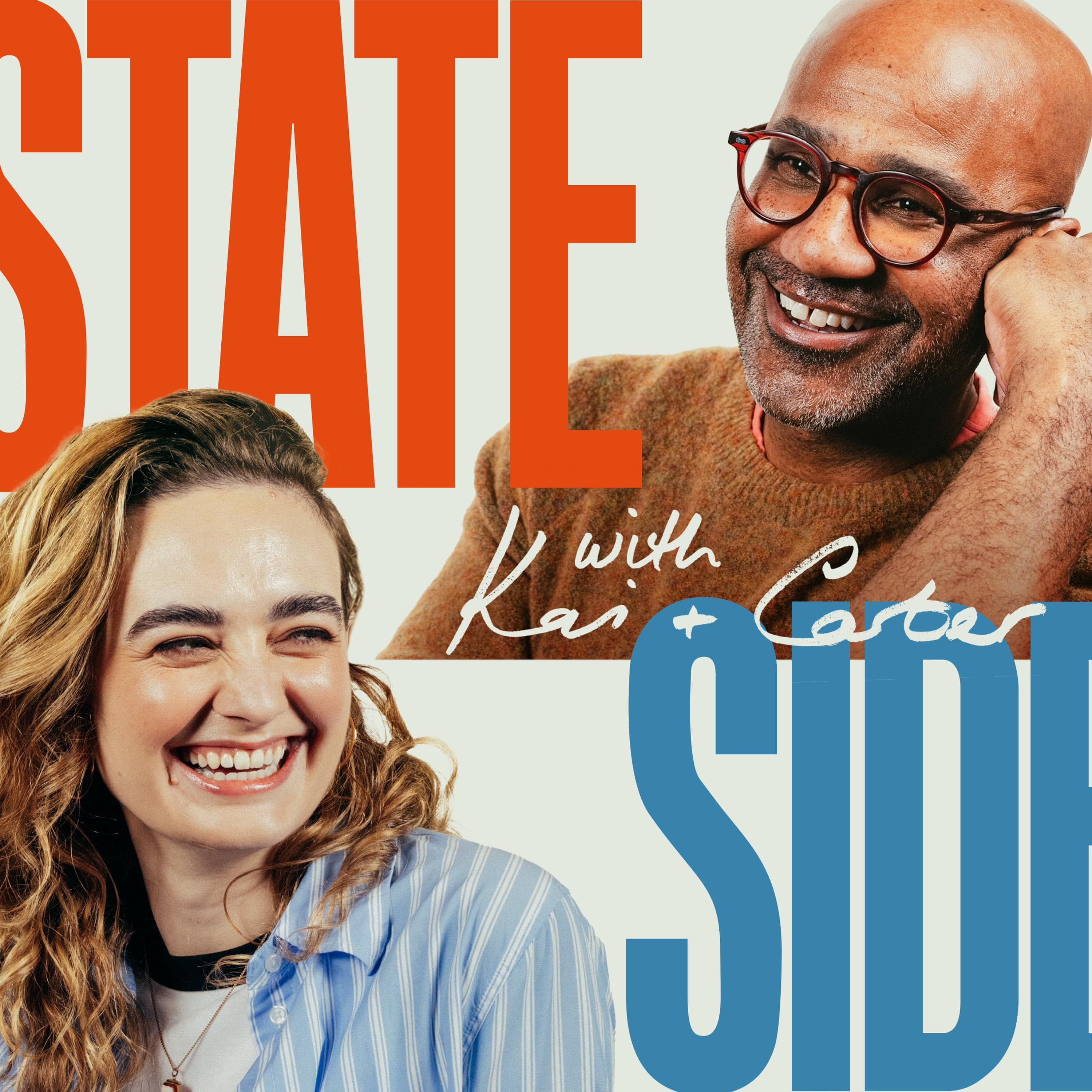
Science Weekly
Stateside with Kai and Carter: why the fight over abortion pills is only just beginning
00:42:35
The US supreme court has preserved nationwide access to mail-order abortion pills – for now. As Carter Sherman explains, the fight to protect this medication is far from over, as a near-total abortion ban could be on the horizon
Loading summary
Transcript128 lines
- [00:00]
Dr. Angel Foster
This is the Guardian.
- [00:08]
Carter Sherman
Hey, it's Carter Sherman here, host of the Guardian's new podcast, Stateside with Kai and Carter. Today we're bringing you one of our latest episodes. It looks at why the political and legal fight over abortion pills in the US Is really just at the beginning. Listen on to hear the episode in full and find all of our shows every Monday, Wednesday and Friday on Apple video podcasts, YouTube or wherever you are hearing this.
- [00:34]
Progressive Insurance Advertiser
You're listening to this podcast, so I know you've got a curious mind. Here's a helpful fact you might not know yet. Drivers who switch and save with Progressive save over $900 on average. Pop over to progressive.com, answer some questions and you'll get a quick quote with discounts that are easy to come by. In fact, 99% of their auto customers earn at least one discount. Visit progressive.com and see if you can enjoy a little cash back. Progressive Casualty Insurance Company and affiliates national average 12 month savings by $946 by new customers surveyed who saved with Progressive between June 2024 and May 2025. Potential savings will vary.
- [01:10]
Carter Sherman
Do you ever find yourself scrolling through headlines and thinking, possibly screaming, at least on the inside, that can't be true. There's rising rates of vaccine preventable diseases and someone on the Internet saying that watermelon juice is a natural alternative to sunscreen. Just no. I'm Chelsea Clinton and that can't be true is back for season three. My guests and I cut through a lot of chaos to help all of us understand what is true, what is overblown and what's false.
- [01:46]
Dr. Angel Foster
What I see in terms of anti abortion movement rhetoric is that I fear that there is going to be a continued push to criminalize the abortion patient. Ten years ago, this was almost unthinkable that the anti abortion rights movement would say out loud that a strategy for reducing the number of abortions was to put abortion seekers or abortion patients in jail. But now we're seeing more and more of this conversation in the press and we're also seeing state legislatures taking this up.
- [02:24]
Carter Sherman
From the Guardian. This is Stateside. I'm Carter Sherman.
- [02:27]
Kai Wright
I'm Kai Wright.
- [02:28]
Carter Sherman
Today, the fight over abortion pills is just beginning. Kai, as you know, before I entered the glorious world of podcasting with this show, I covered gender and sexuality for 10 years. So I wanted to bring you a fact you might not know. In the years since the US Supreme Court overturned Roe v. Wade, abortions in the US have actually gone up, not down. In 2024 for example, there were more than 1.1 million abortions in the United States, which is the highest number on record in recent years.
- [02:58]
Kai Wright
Wow. So I had heard they'd gone up, but I didn't realize by quite that much. Is that considered a surprising victory in the abortion rights movement?
- [03:06]
Carter Sherman
Well, I think it speaks to the breadth and the depth of the organizing that advocates have undertaken in the years since Roe fell. In particular, advocates have worked very hard on exposing expanding access to abortion pills, and they have started mailing pills into states with abortion bans so that even people who live under those bans can still end their pregnancies. For the anti abortion movement, though, this is an as existential threat.
- [03:30]
Kai Wright
Right.
- [03:30]
Carter Sherman
And recently, the fight over abortion pills made its way all the way back up to the Supreme Court.
- [03:34]
Kai Wright
And when you say abortion pills, just so we can level set, what are we talking about?
- [03:39]
Carter Sherman
Well, in a medication abortion, which is abortion, that is mediated through drugs, there are two drugs that people tend to take. The first is called mifepristone, and you take one dose of it, 24 hours later, you take doses of a second drug called misoprostol. The mifepristone stops the pregnancy from growing. The misoprostol contracts the uterus so that it expels the pregnancy. And it is after that taking of the second drug, misoprostol, that people tend to have the side effects that you associate with an abortion. So bleeding, cramping, nausea, diarrhea, et cetera.
- [04:12]
Kai Wright
So it's mifepristone and misoprostol. Right. Which one of them is at stake now in the court fight?
- [04:20]
Carter Sherman
Okay, so that is mifepristone. Got it. Mifepristone is the drug that is at stake right now. Last year, Louisiana sued the FDA over the fact that it allows abortion providers to mail mifepristone. And on May 1, the Fifth Circuit Court of Appeals ruled to pause mail order access to mifepristone. While litigation in Louisiana's case plays out
- [04:40]
Kai Wright
easily the most conservative court in the appeals circuit.
- [04:43]
Carter Sherman
Absolutely. So what that means is that under the fifth Circuit's ruling, no one can get access to mail order mifepristone, including people who live in states that don't ban abortion, people who live in blue states who might think that their abortion rights are protected.
- [04:56]
Kai Wright
And are they arguing in court that they're doing this because mifepristone is unsafe? Is it a safety debate we're having here?
- [05:03]
Carter Sherman
That argument has entered the chat, shall we say? But it's not really a good faith argument. Mifepristone and misoprostol are incredibly well researched. More than 100 studies conducted across more than a dozen countries have found that when you use these two drugs to end a pregnancy, it is a safe and effective abortion method in the first trimester of pregnancy. Now, the thing to understand here is that it is possible to have a misoprostol only abortion and just use that second drug in the regimen, but it tends to be less safe and less effective. But abortion providers have said that if they're not allowed to mail mifepristone anymore, they'll send people misoprostol only.
- [05:41]
Kai Wright
So now, I did follow this court case. Many people will have seen the news that the Supreme Court has decided to allow, in that Louisiana case to allow continued access to mifepristone. Right. So again, this seems like a victory. And is that the end of it that, you know, we continue to have access to abortion pills now?
- [06:02]
Carter Sherman
Well, no. Basically what the Supreme Court did is they just punted. They just kicked the can down the road. And presumably they might want to avoid having this argument in open court until after the midterms. There's a lot to unpack here, and we're going to get into it. We don't know what the Supreme Court is ultimately going to do with abortion pills. But the thing that haunts me is that in the years before Roe v. Wade was overturned, when I was working as a reporter covering abortion rights, I spent a lot of time telling people that Roe was going to be overturned. And the thing was that people just didn't believe me. They just did not think that that was possible. And I think a lot about this woman I spoke to in the summer of 2021. I was working on a story then called the Last Summer of Roe v. Wade.
- [06:43]
Dr. Angel Foster
And.
- [06:43]
Carter Sherman
And I asked her why she wasn't worried about the erosion of abortion rights. And she said, quote, we're two countries, and that's happening more in the other one.
- [06:52]
Kai Wright
This is an all too common perspective on a whole lot of issues, and a lot of people are being disabused of that belief here lately.
- [06:59]
Carter Sherman
Right. We now live in a country where about a dozen states ban virtually all abortions. And for the people who live in those states, oftentimes their only way to end their pregnancies to get an abortion is to get mifepristone through the mail. To that end, I recently spoke with someone who is on the front lines of this issue. Her name is Dr. Angel Foster. And she is an abortion provider who mails abortion pills to people throughout the country, including people who live in states with abortion bans. I spoke to her about what the last few weeks have been like for her and the women her practice treats. But the thing hanging over our entire conversation is that I think the recent Supreme Court case indicates that the anti abortion movement already has the tool that it needs to ban abortion. And when I say ban abortion, I don't just mean abortion through the mail. I don't just mean mifepristone. I mean that the anti abortion movement may already have the tool to ban abortion nationwide for everyone under virtually all circumstances. So if you are a person who supports abortion rights, and most Americans are, you really need to pay attention to what is happening with abortion pills. Dr. Angel Foster, thank you so much for joining us on Stateside.
- [08:07]
Dr. Angel Foster
Thanks so much for having me. It's nice to speak with you.
- [08:10]
Carter Sherman
You run the Massachusetts Medication Abortion Access Project, or the map. And I think since the overturning of Roe, the MAP has probably become one of the biggest abortion providers in the country. I actually visited you guys, as you might remember, several months ago, and watched volunteers pack pills, put together packages to send to patients. And I'm wondering, how many abortions is the MAP facilitating each month at this point?
- [08:39]
Dr. Angel Foster
So we're providing care to between 3,000 and 3,500 patients a month. And we launched on September 28th of 2023, which was international Safe Abortion Day. And since our launch, we've now cared for more than 50,000 patients.
- [08:53]
Carter Sherman
Who is a typical patient for the MAP? Is there a typical patient?
- [08:57]
Dr. Angel Foster
So about a third of our patients are from Texas. About 90% of our patients come from near total band states or six week band states. And so we are both caring for patients that previously got in person care. And I think what we're now seeing is that folks who weren't able to get abortions prior to Dobbs because they couldn't afford it and couldn't navigate the systems are now able to access high quality, affordable abortion care.
- [09:26]
Carter Sherman
It's been a long few weeks for you. On May 1, the Fifth Circuit ruled that abortion providers could no longer mail mifepristone after Louisiana sued over access to that common abortion pill. On May 4, the Supreme Court stayed that ruling, preserving access to mifepristone. But that kicked off more than a week of uncertainty about the pill's future. We are speaking the day after the Supreme Court issued a decision that preserved the status quo and preserves access to mail order mifepristone but this is definitely not the end of the case. I'm wondering, what have those last few weeks been like for you?
- [10:03]
Dr. Angel Foster
It has been a tough two weeks. So the Fifth Circuit's decision was released on May 1, which was a Friday. We had already sent packages to patients that afternoon before the decision was announced.
- [10:18]
Carter Sherman
Packages of abortion pills.
- [10:19]
Dr. Angel Foster
Packages of abortion pills that included mifepristone and misoprostol. So over that weekend, we were really working with three different groups of patients. The first were the 350 or so patients that we had sent packages with mifepristone and misoprostol to in the previous few days. So on the Wednesday, Thursday, and Friday before the decision was released, and those patients hadn't received their packages yet. And so we were inundated with questions about, you know, am I going to get my pills still? Is the post office going to intercept my package? Can I take the mifepristone once it arrives? But the second group of patients, which is the group that we spent the most time with over that weekend, were those who had already been approved for our service, but who hadn't yet paid for the pills by the time the Fifth Circuit's decision was released. And it's actually pretty common for our patients to request pills in the last week of the month, but then not pay for them until after the first, because that's when people get paychecks. And so over that weekend, we had about 200 people who were kind of in this limbo stage. And so we were explaining, you know, what the options were for our patients, that they could wait for a week and see what happens. We could send them the misoprostol only regimen if that's what they wanted. We could issue a refund. And then we were also trying to explain to patients that even if we weren't able to send mifepristone through the mail, there would be other ways for them to get the mifepristone misoprostol regimen. And then the third group of patients were the new patients who were starting the process with our service. And so we spent that weekend really building out all of our systems so that all of those patients would understand that we would send mifepristone and misoprostol if we could, but if not, we would send just the misoprostol and that they would get instructions and information about how to use it. And when I think about what our patients have gone through over the last two weeks, you know, it Makes me really sad.
- [12:14]
Carter Sherman
Why?
- [12:16]
Dr. Angel Foster
Well, for them, I mean, I'm somebody who's in this space. I often say I sort of live and breathe abortion. And sometimes I'm confused about what some of these decisions mean for our patients who are maybe reading the headlines and don't really understand what's happening in the broader politics of abortion. But what they want is to be unpregnant. It makes them tremendously anxious. You know, am I going to be able to get the abortion pills that I want? Am I going to be able to be unpregnant quickly? How do I do that? Are you going to still be able to help me? And if not, what do I do? What is this court? Why does somebody in Louisiana get to determine what I do? I don't understand abortion is legal in my state or how does this affect me? Just having no idea why something that a 5th Circuit court would decide on a Friday afternoon would impact their ability to have an abortion or get pills sent to them on Monday.
- [13:07]
Carter Sherman
It sounds like you had to mitigate all of this confusion. There was a lot of damage control you were trying to get done. But I feel like folks might hear what had happened and think, okay, why doesn't, why don't people just take misoprostol? Why is it a big deal to switch from imifeprostone plus misoprostol regimen to the misoprostol only protocol?
- [13:26]
Dr. Angel Foster
So from the medical side, misoprostol only, or misoprostol is a single abortifacient regimen, is highly safe and effective. We have evidence based regimens that we use. We have a lot of experience using this regimen internationally in places where mifepristone is not available. So we have this very good alternative regimen. The regimen does have more side effects that are associated with it because there's more misoprostol. And misoprostol is the drug that really has the side effects. And so we want patients, the side
- [14:01]
Carter Sherman
effects that people associate with abortion, with
- [14:04]
Dr. Angel Foster
medication, abortion, and there's ongoing research to really look at the, the efficacy or the completion rate with misoprostol.
- [14:11]
Carter Sherman
It sounds like if you're saying that a misoprostol only abortion is associated with more side effects, more nausea, more cramping, more bleeding. It does sound like those are abortions that cause individuals more suffering.
- [14:25]
Dr. Angel Foster
Right? I mean, I think of it as being less comfortable. We do know that people who use misoprostol alone all over the world are very satisfied with the regimen and have good outcomes. But it, you know, but we have a gold standard. And that gold standard involves mifepristone. And there's a reason for that. It makes for a more comfortable and shorter process. You know, this decision that the fifth Circuit issued was, in addition to being a travesty and not grounded in science, was also cruel. It was cruel because it didn't take into consideration that there were real people who were in the process of getting abortion care and that this would wreak havoc on their ability to do that and cause a lot of stress and anxiety. And it's cruel because we can pivot to another regimen, but it's a regimen that is potentially less comfortable for patients. And it really feels like it's a way of trying to punish people for getting the abortion care they want, need, and deserve.
- [15:24]
Carter Sherman
It feels like a punishment for people from the court. It feels like the court is trying to punish people.
- [15:30]
Dr. Angel Foster
Right. And the thing that really keeps me up at night is what's happening within emergency departments in the United States right now, everywhere in the world, with very, very rare exception, Even where abortion is severely, legally restricted. If a patient has a complication and gets to a hospital, they're given post abortion care and they're given that care and not turned over to authorities. They're not thrown out on the street. They are treated for whatever their medical needs are at that facility. But what's happening in the United States is that abortion patients who. And pregnant people in general who are presenting at the hospital, at a hospital with complications, are not getting the care that is standard. And to me, that's. That just continues to be shocking.
- [16:21]
Carter Sherman
If it becomes no longer possible for abortion providers to mail abortion pills. What patients. Are there particular groups of patients that you're most worried about?
- [16:32]
Dr. Angel Foster
So one of the groups of patients that I'm worried about are those patients that are experiencing intimate partner violence in all of its different forms. We just recently completed a study with the more than 3,000 patients who completed our medical questionnaire and got pills from our service in March of 2026. And 8% of our patients reported experiencing one or more forms of violence either in becoming pregnant or during the pregnancy. So, you know, not over the course of their lives, not in the last 12 months, but during the current pregnancy. And for these patients, you know, being able to get pills by mail is sometimes a lifeline. It's a way for them to extricate themselves from abusive relationships. It's a way for them to sever ties with an abusive partner and for some of these patients who are in these violent relationships, they don't have the option of being able to travel across state lines. We also know that violence kind of co occurs with financial precarity. I have a couple of stories from patients that I think are really telling. This one is from a 23 year old patient from Oklahoma and she wrote to us to say the man I'm impregnated by had assaulted me by strangulation and is being charged with domestic abuse. I found out I was pregnant when I got rushed to the emergency department. I want nothing to do with this man being a part of my life to be able to hurt me again. I would really greatly appreciate the help from y'.
- [18:11]
Carter Sherman
All.
- [18:11]
Dr. Angel Foster
Thank you. A 29 year old patient from South Carolina wrote to us to say just left a domestic violence situation with the father of all the kids. It's only been three weeks of him being in jail and I just found out I was a stay at home mom for seven years and have literally just started getting all of the balls caught up and figuring out life. I have no idea how to even afford this right now, but I cannot have another. I've had extremely difficult pregnancies and end up hospitalized almost every time and I don't have a support system to help. And so I fear that if we are unable to provide care through our telemedicine service to patients in states with near total bans or with severe gestational duration restrictions, it's patients like these that are not going to get the care that they need.
- [19:07]
Carter Sherman
One of the things that was most interesting to me about the ruling from the Supreme Court was actually the dissent that Justice Samuel Alito wrote. And he says that at the heart of this case over miferpristone is really, quote, the perpetration of a scheme to undermine our decision in Dobbs v. Jackson Women's Health Organization, which is of course the case that overturned Roe v. Wade. And what Alito is talking about is the existence of shield laws, which are these laws, as you know, that have been passed in states like New York and California and Massachusetts that seek to protect abortion providers from out of state prosecutions. Even in cases where the providers are mailing pills across state lines into states that ban abortion. The Massachusetts Shield law is of course what makes the map possible. When you saw Alito's dissent, when you saw that he is. When you saw that he is so skeptical of shield laws, what did you think? What did you make of that decision?
- [20:07]
Dr. Angel Foster
I'm not a lawyer, but when I read the dissent. What immediately came to mind was that Justice Alito was providing a roadmap for anti abortion actors, anti abortion rights actors, writing them a roadmap for how to go after shield law providers and using language that suggested that there were conspiracies and schemes that involved the pharmaceutical company, the providers, potentially the state, other kind of advocacy groups. This current stay that's been extended of the Fifth Circuit's decision is just another step in this process. The anti abortion rights movement is preoccupied with restricting mifepristone in particular, but medication abortion more generally. And they're doing a lot of things to do that, whether that's these suits that are coming through attorneys general or, or the lawsuits against individual providers, whether those are criminal or civil suits. And you know, what we're seeing is the shield laws. In states where individual providers have been indicted or sued, the shield laws are doing their job. The shield laws are working.
- [21:18]
Carter Sherman
We can't anticipate that this is going to happen. But really, cases like this have real implications for you as a person and other providers as individuals. At least two doctors have so far been indicted for allegedly shipping abortion pills across state lines into states that ban abortion. Neither of those doctors have actually been apprehended because they're staying out of Louisiana, which is the state that indicted them. But you could be next. What kind of precautions do you take to protect yourself?
- [21:51]
Dr. Angel Foster
Everybody who's involved with the map has done their own kind of individual risk assessment to determine what makes the most sense for, you know, each person. In my case, because I'm the most public facing person involved with the map, I don't travel to or through states with near total abortion bans or states with gestational duration restrictions. I don't drive a car outside of Massachusetts and I fly into the country. When I leave the U.S. i fly back through Canada.
- [22:24]
Carter Sherman
Why don't you drive a car in states outside of Massachusetts?
- [22:27]
Dr. Angel Foster
So this is interesting information that I would never have thought of, but this is advice that came from lawyers. It turns out that for, you know, in general, for people who are law abiding, the time when you have the most contact or the time at which you are at most risk of having contact with law enforcement agencies is when you drive a car. Traffic violations, car accidents, witnessing a car accident, anything like that. And if you can imagine you're outside, I'm outside of Massachusetts, it turns out that there's some kind of either subpoena or warrant or something that's been issued against me. I get into a car accident Somebody in another state, even a friendly state in New England, runs my name and that pops up. And so one of the things that lawyers have advised is that's another way to decrease or minimize risk is just to not put yourself in a place where you're vulnerable for getting pulled over.
- [23:19]
Carter Sherman
If you don't go to red states. Do you feel like your life has been curtailed at all? Are you missing out on things?
- [23:27]
Dr. Angel Foster
I think the biggest thing for me is that my mom and stepdad live in South Carolina, so I'm not able to visit them in person there and haven't for over two and a half years. And that makes me sad. We see each other in other places and we made the decision as a family that this is what we wanted to do and my husband's been really supportive of that. But, but that, but that does make me sad.
- [23:50]
Carter Sherman
I mean, I feel like what you're doing is, it's kind of radical like it is a risk. Providing abortion can be a really dangerous business. 11 people have been killed in anti abortion violence. There have been hundreds of arson attacks, of bombings, of butyric acid attacks. You keep the physical location of the map itself, your offices, a secret. Do you worry at all that when abortion is back in the headlines like this that you or the people who volunteer with the MA are in actual danger?
- [24:20]
Dr. Angel Foster
I mean, we certainly all think about it and have decided collectively that that risk is worth it because the care that we're providing is so important.
- [24:31]
Carter Sherman
After the Supreme Court ruling came out on Thursday evening, Louisiana's Attorney General Liz Merrill said, quote, it's shocking that the Supreme Court would block the common sense return to medically ethical practices and oversight. DOJ did not defend Big Pharma, which is profiting from the illegal and unethical distribution of abortion. P We will keep fighting. What do you feel like that fight is going to look like next? Where do you think the anti abortion movement is going to attack next?
- [24:59]
Dr. Angel Foster
Well, I certainly think there's going to be a sort of multi pronged attack on medication, abortion pills in general and on mifepristone in particular. But the thing that I'm watching, and again I say this as a non lawyer, but as someone who's been following what's going on in state legislatures, what, what I see in terms of anti abortion movement rhetoric is that I fear that there is going to be a continued push to criminalize the abortion patient. And you know, 10 years ago this was almost unthinkable that the anti abortion rights movement would say out loud that A strategy for reducing the number of abortions was to put abortion seekers or abortion patients in jail. But now we're seeing, we're seeing more and more of this conversation in the press and we're also seeing state legislatures kind of taking this up. And you know, that is just, that's just devastating. That's just so awful. It's only a handful of countries in the world where there are abortion bans, where women and other pregnancy capable people have actually gone to jail. So it really, that is, it's upsetting that I think this is the direction and I think part of the reason that this is the direction that at least some part of the anti abortion rights movement is going in is because the number of abortions have actually increased since Dobbs. And even if shield law providers all went away tomorrow, even if mifepristone by telemedicine was no longer available, people will still be able to get mifepristone and misoprostol. They'll be able to get that through community networks, they'll be able to get medication, abortion pills through international clinics. That's not going to go away.
- [26:42]
Carter Sherman
Yeah. I mean, I can say as someone who covered abortion rights for 10 years, I was really struck by how in the last year, I think it was, about a dozen states introduced laws that would have criminalized, that would have treated abortion as homicide, which is to say women who got abortions would be treated as murderers and faced criminal consequences accordingly. And the thing is, you know, these proposals get introduced every year, but they usually, I feel like, draw more outrage and controversy. And then in the last year it was just sort of like, oh, this is maybe an increasingly normal thing to propose. Maybe it's not something that people need to get as up in arms about. And I was really struck by, it seems like the normalization of this idea, which is incredibly politically unpopular even among most of the anti abortion movement.
- [27:30]
Dr. Angel Foster
I agree with you. I mean, I think we're seeing some slight shifts in the Overton window and I think this is a good example of that. Where, you know, I think back to when Donald Trump was running the first time and was asked on, was asked in an interview about whether or not a woman who has an abortion should go to jail if abortion's illegal. And he said yes. And it felt like the entire anti abortion rights community at that point was like, no, that's not the message.
- [28:00]
Carter Sherman
You can't say that that's not the right thing. We're pushing forward.
- [28:03]
Dr. Angel Foster
This is not what we're doing. And and had to do this whole backtracking of that. And you know, that was a little, that was 10 years ago. And now I agree with you. It's not that these, not that fetal personhood bills have never been introduced or no one's thought about this before, but the way that they're being discussed, the fact that they're actually being debated, the fact that organizations are anti abortion rights movement organizations are issuing statements about them, it really does feel like there's a bit of a shift in time.
- [28:33]
Carter Sherman
Dr. Angel Foster, thank you so much for your time.
- [28:36]
Dr. Angel Foster
Thank you.
- [28:44]
Progressive Insurance Advertiser
You're listening to this podcast, so I know you've got a curious mind. Here's a helpful fact you might not know yet. Drivers who switch and save with Progressive save over $900 on average. Pop over to progressive.com answer some questions and you'll get a quick quote with discounts that are easy to come by. In fact, 99% of their auto customers earn at least one discount. Visit progressive.com and see if you can enjoy a little cash back. Progressive Casualty Insurance Company and affiliates national average 12 month savings by $946 by new customers surveyed who saved with Progressive between June 2024 and May 2025. Potential savings will.
- [29:25]
Carter Sherman
I think some people might hear Dr. Foster talk about the idea that the anti abortion movement is going to criminalize women and think that that is a Looney Tunes take.
- [29:33]
Kai Wright
I think it's a terrifying thing.
- [29:35]
Carter Sherman
I think that that is also a valid response. And I think that a lot of people are taking comfort in the fact that within the mainstream pro life movement, quote unquote, that this is not a politically popular position. This is not what most people in the mainstream want to see happen. But I can say as someone who has covered this issue for many, many years, the idea that we would criminalize women for abortions has slowly but surely started to creep into mainstream thought. Do I think that this is something we're going to see anti abortion activists embrace in the next year? No. Do I think we might start to see it in the next 10 years? Very possibly.
- [30:10]
Kai Wright
Certainly the lesson of American history and the lesson of this modern conservative movement is believe them when they tell you something.
- [30:17]
Carter Sherman
Right? And if they're floating up ideas today, then within the next five to 10 years we're gonna start to see those things take the shape of laws.
- [30:25]
Kai Wright
All right, so then what are the realistic, like imminent threats that you're looking at right now that makes you feel like we are at the near the end game on having access to any abortion rights anywhere in the country?
- [30:39]
Carter Sherman
Well, I think there are four major threats to abortion access that are imminent and that I am watching very closely. Those are the things that I wanted to talk about because I do feel like, again, if you are someone who cares about abortion rights, you need to know about these things because they can sneak up on you if you're not paying close attention. The first threat is that there are lots of lawsuits around mifepristone and around access to abortion pills. This lawsuit, the one that made its way up to the Supreme Court from the Fifth Circuit, that is going to continue. It will likely get appealed at the 5th Circuit. It may ultimately go back to the Supreme Court for oral arguments. But there are other lawsuits that have also been filed. Most notably, there was a lawsuit filed by the Republican attorneys general of Kansas, Missouri and Idaho that has also asked for the FDA to limit access to mifepristone. They even recently filed paperwork while this case at the Supreme Court was ongoing, saying, we want to push forward, we want to continue with this lawsuit and see what we can get. The second threat that I'm following was actually mentioned in this most recent Supreme Court ruling. There are two dissents in this case. One of them was written by Samuel Alito and the other was written by Clarence Thomas. These are two of the most hardline right wing people on the Supreme Court and they have a track record of citing against abortion rights. They both, in fact, joined the conservative majority in overturning Roe v. Wade. So I want to start, Kai, by asking you to read from Alito's dissent, if you can. Give me your best. Samuel Alito here.
- [32:09]
Kai Wright
Oh, the things that I do for this job. I know.
- [32:14]
Carter Sherman
I am so sorry. I really, really am.
- [32:18]
Kai Wright
Okay, here we go. So this is. This is Samuel Alito writing. He says, quote, states, including Louisiana, made abortion illegal except in narrow circumstances. But Louisiana's efforts have been thwarted by certain medical providers, private organizations, and states that abhor laws like Louisiana's and seek to undermine their enforcement. These medical providers and private organizations have developed an operation enabling women. Enabling women.
- [32:49]
Carter Sherman
Can you believe these women being enabled?
- [32:51]
Kai Wright
Enabling women in Louisiana and other states that restrict abortions to place an online order for a pill called mifepristone that induces abortion.
- [33:03]
Carter Sherman
I am going to thank Samuel Alito for reminding us what mifepristone is because again, it's confusing. And I will just translate what he just said because it's dense, it's legalesey. Remember, this was a case that was brought out of Louisiana, a state that has banned virtually all abortions in this operation, quote unquote, that Alito was talking about. He is talking about the exact kind of operations that are run by people like Dr. Angel Foster and her colleagues. Dr. Foster and I talked about this a little bit, but her work is made possible entirely by the existence of this novel legal strategy called shield laws. Right. Do you know what these are?
- [33:36]
Kai Wright
Yeah. So these are the laws that some states like New York passed to say, okay, if you are providing abortion services here, we are going to protect you from prosecution by some outside state that wants to come and grab you.
- [33:49]
Carter Sherman
Exactly. And in some of these states, including New York, including Massachusetts, including California, they have specifically said that it doesn't matter where the abortion patient is located. So if I am an abortion provider in New York City and I never leave the boundaries of my state and I mail an abortion pill to someone in, say, Texas, I can still be protected by the shield law, at least in theory, because a New York official is not going to assist Texas if they try to come after me and try to prosecute me.
- [34:17]
Kai Wright
But Texas will certainly try to come after you.
- [34:19]
Carter Sherman
I mean, we've already started to see it. We've already started to see many red states getting really angry about these shield laws and trying to sue or even indict people who are allegedly shipping abortion pills across state lines into red states.
- [34:32]
Kai Wright
And so why exactly has Alito brought this up in the course of this ruling?
- [34:37]
Carter Sherman
I mean, it's speculative, but I do think that Dr. Foster is right when she says that Alito is trying to draw a roadmap for anti abortion advocates who are trying to figure out how to continue to undermine shield laws.
- [34:50]
Kai Wright
Like inviting for future cases potentially.
- [34:54]
Carter Sherman
Yeah, maybe he's sending up some kind of smoke signal to say, hey, I'm not a huge fan of abortion. I'm not a huge fan of shield laws. Bring me something that will allow me to say that in writing from the highest court in the nation, which is
- [35:07]
Kai Wright
what a lot of people were concerned about in Clarence Thomas concurring opinion on in getting rid of Roe in the first place, that he was inviting cases to get rid of same sex marriage under the same kind of case law.
- [35:19]
Carter Sherman
So thank you so much for bringing up Clarence Thomas. He is actually very critical to the third threat. Remember, this is a list of four possible threats. This is, I would say, the biggest threat to abortion access. And specifically Clarence Thomas brings up something called the Comstock Act. I can see what you're. I can see the sigh you just brought up, but I would like you to read what Clarence Thomas said.
- [35:45]
Kai Wright
I'm gonna have to read Clarence Thomas on Anthony Comstock.
- [35:49]
Carter Sherman
Exactly.
- [35:50]
Kai Wright
This is a lot.
- [35:51]
Carter Sherman
And if you're listening, we're gonna explain this. You're gonna hear why Kai has so much consternation already in his voice.
- [35:58]
Kai Wright
Low point in my. My professional life. Okay. Clarence Thomas's opinion reads, quote, it is a criminal offense to ship mifepristone for use in abortions. The Comstock act bans using, quote, the males to ship, quote, any drug for producing abortion. Applicants are not entitled to a stay of an adverse court order based on lost profits from their criminal enterprise, criminal enterprises.
- [36:29]
Carter Sherman
So he is saying that the applicants, which, to be clear, are pharmaceutical companies that manufacture mifepristone. He is saying that they are committing a criminal enterprise because of the Comstock Act. Kai, you know what the Comstock act is? Do you want to do a little spiel on it? A little 101?
- [36:47]
Kai Wright
I do my best. I'll do my best.
- [36:49]
Carter Sherman
I'll fill in the blanks.
- [36:49]
Kai Wright
Yeah. This is an anti obscenity law going back to the 1870s in which Anthony Comstock, one of the most despicable people in the history of the United States.
- [37:00]
Carter Sherman
Which, you know, that's a rare distinction, I have to say. There's been a lot of despicable people in the US History.
- [37:07]
Kai Wright
Even in his time, no one liked him. Like, none of his allies didn't like him. He was this guy who collected dildos and sex toys and things.
- [37:19]
Carter Sherman
They were called rubber products in the literature of the time.
- [37:22]
Kai Wright
He had an obsession with anything that produced pleasure, particularly for women. And he kind of was the pioneer of the idea of vice. And so this law, the Comstock act, was a way to prosecute people who engaged in, quote, vice by chasing down things they sent through the mail. Cause that lets you use federal law.
- [37:44]
Carter Sherman
Exactly right. Anthony Comstock loved to just run around New York City and harass people who he saw as doing obscene things. And the Comstock act in particular banned mailing, quote, any article or thing designed or intended for procuring an abortion. Now, when Roe was in effect, this was really not something that people worried about because Roe v. Wade was the law of the land. Abortion was legal. We don't need to think about whether or not there's this obscure law from the 19th century that bans the mailing of abortion related materials. And then Roe was overturned. And so now anti abortion activists have taken a look at this law and said, wait, this is still on the books? Is this still good law? We think this is still good law. We think that this zombie law should be enforced. And I just wanna say, if the Comstock Law was enforced, it would not just be banning the mailing of mifepristone or abortion pills. It could be used to ban all abortion in the United States, because even abortion clinics rely on the mail. Right. They receive things that they need to do their job through the mail. That's how they can get ultrasound machine equipment. That's how they can get vacuum aspirators. That's how they can get gloves. So the Comstock act, if it came back to life, could effectively result in a de facto nationwide abortion ban.
- [38:59]
Kai Wright
So this is what you were talking about earlier. Exactly. Do you think they've already got the tool to wipe out abortion, period, everywhere? It's this.
- [39:06]
Carter Sherman
It's the Comstock Act. Exactly.
- [39:08]
Kai Wright
So I hate to ask this, Carter, but, like, given that the law is operable still, why hasn't the Trump administration done it yet?
- [39:15]
Carter Sherman
No, this is a great question, because I have to be honest, when the Trump administration came back into power, I was prepared to be writing stories about the Comstock act being in effect and what that would mean for the American people. Monroe was first overturned. Joe Biden was obviously in office. He was the President and his Department of Justice put out some guidance that basically said, we are not going to be enforcing the Comstock act except in some very narrow circumstances. The Trump administration could overturn that guidance. Would people sue over it? Probably, but they could make that call. And so the question has been, really, since Trump came back into power, why hasn't he done so? And the thing is that Trump has really tried to run away from the issue of abortion. And so it's very possible that the reason we don't see a revived Comstock act right now today is because Trump really doesn't want to talk about this issue. Abortion rights are incredibly popular. He knows it, the Republican Party knows it. And Trump, I don't think, really cares all that much about abortion. Like, this is not really his top issue. He has flip flopped on it a lot. And so I can't imagine he really wants to swing a spotlight back onto it at this time. Especially ahead of the news. Oh, yeah, especially ahead of the midterms. This is not something that I think the GOP really, really wants people to be focused on right now.
- [40:27]
Kai Wright
Nonetheless, it is that this is the thing that's out there. It exists that could, in fact, end abortion. And that is chilling to think about. So you got it. So there's the cases moving through the courts. There's the shield law attack and there's Anthony Comstock's ghost.
- [40:48]
Carter Sherman
Thank you. I really appreciate the sum up.
- [40:50]
Dr. Angel Foster
This is helpful.
- [40:51]
Carter Sherman
I like being listened to.
- [40:52]
Kai Wright
But you promised me four.
- [40:53]
Dr. Angel Foster
What's the fourth?
- [40:54]
Carter Sherman
Okay, so the fourth thing is that the Trump administration has taken kind of a baby step to limiting abortion access and the FDA has agreed to review the safety of mifepristone. Now remember, mifepristone is safe. That is not really something that is up for debate. Nevertheless, the fda, because it's reviewing it, could change the terms of access to mifepristone. They could make it harder for abortion providers to mail it. They could make it harder for abortion providers to access it. We don't know what they're going to do and we don't know when they're going to do it. Anti abortion activists have actually gotten kind of mad over the FDA review because they feel like it's being slow walked. So we will see in the coming months and years if anything ultimately comes out of the fda.
- [41:36]
Kai Wright
I mean, this depends on them having a functioning FDA in the first place, which has been a challenge.
- [41:40]
Carter Sherman
Yes. That is the question of whether or not the FDA can do anything at all right now seems to be a big one.
- [41:46]
Kai Wright
So what is like the immediate next thing that you're watching? Like, we've got all of this stuff that we know that's on the horizon that you're concerned about. What's like the next next thing?
- [41:55]
Carter Sherman
I mean, ultimately abortion is going to end up back at the Supreme Court in some form or fashion. We don't really know how much appetite the Supreme Court justices have for this issue. But I think it's become pretty clear since Roe fel that there are so many differences in state laws around abortions. There's so many disagreements around what states owe each other when it comes to enforcing abortion laws that the Supreme Court is probably going to have to weigh in at some point. The thing though, that I'm really keeping an eye on is what is the anti abortion movement doing? This is a movement that is incredibly motivated. Right. If you believe that abortion is the killing of an innocent baby, that's a belief that's probably going to keep you extremely committed to. This is a movement that spent five decades working to overturn Roe v. Wade. They stacked state legislatures with Republicans. They helped create the modern day conservative majority on the Supreme Court. They are very powerful and they are very, very committed. I think at this point it's pretty clear that the modern day anti abortion movement is an undemocratic one because they believe something that is not popular with the majority of Americans. It is a minority that is now trying to enforce its rule on the rest of the country, and it seems like the best way for them to do that will likely lie through the nine unelected justices on the Supreme Court. They're not going to stop. There are going to be more court cases and this movement is going to try very hard to convince the Trump administration or whatever Republican administration comes next to enforce the Comstock act and to enact that nationwide abortion ban. This is not the time for people to stop paying attention to abortion rights. This is Stateside. If you've got follow ups, questions, thoughts, send us an email or a voice memo to statesidepodtheguardian.com Follow us on all platforms at Stateside. Podcasts look out for new episodes every Monday, Wednesday and Friday. This episode was produced by Suzanne Gabber and Monica Espitia and edited by Rachel Humphries. Our engineer is Ivan Korayev. Our social media producer is Russell Kogan and I'm Carter Sherman. Thanks for spending time with us.
- [44:20]
Dr. Angel Foster
This is the Guardian. If you're listening to this, you're ready. Ready to join the Industrial Intelligence generation. A generation defined not by age, but by a shared mindset to connect teams, accelerate efficiency and drive innovation. Using the power of Aviva software to reshape industries, turning real time insights into real world growth. Discover our stories@industrialintelligence.com Join Generation I.
- [45:00]
Progressive Insurance Advertiser
You're listening to this podcast, so I know you've got a curious mind. Here's a helpful fact you might not know yet. Drivers who switch and save with Progressive save over $900 on average. Pop over to progressive.com, answer some questions and you'll get a quick quote with discounts that are easy to come by. In fact, 99% of their auto customers earn at least one discount. Visit progressive.com and see if you can enjoy a little cash back. Progressive Casualty Insurance Company and affiliates national average 12 month savings by $946 by new customers surveyed who saved with Progressive between June 2024 and May 2025. Potential savings will vary.
- [45:36]
Carter Sherman
Hannah, I just Venmoed you for dinner.
- [45:38]
Dr. Angel Foster
Obsessed. I'm spending it right now on the lip gloss that's been sitting in my cart.
- [45:42]
Carter Sherman
What do you mean spending it right now?
- [45:44]
Dr. Angel Foster
You can instantly spend your balance with the Venmo debit card or when you pay with Venmo at checkout.
- [45:49]
Carter Sherman
Stop. Say more.
- [45:50]
Dr. Angel Foster
More. Exactly. The more you do with Venmo, the more you get, like earning up to 5% cash back with Venmo Stash get the Venmo debit card or checkout online. Venmo Stash bundle terms and exclusions apply. Max $100 per month. See terms at Venmo Me Stash terms. Venmo Checkout not available at all merchants. The Venmo MasterCard is issued by the Bancor N A.