← Science Weekly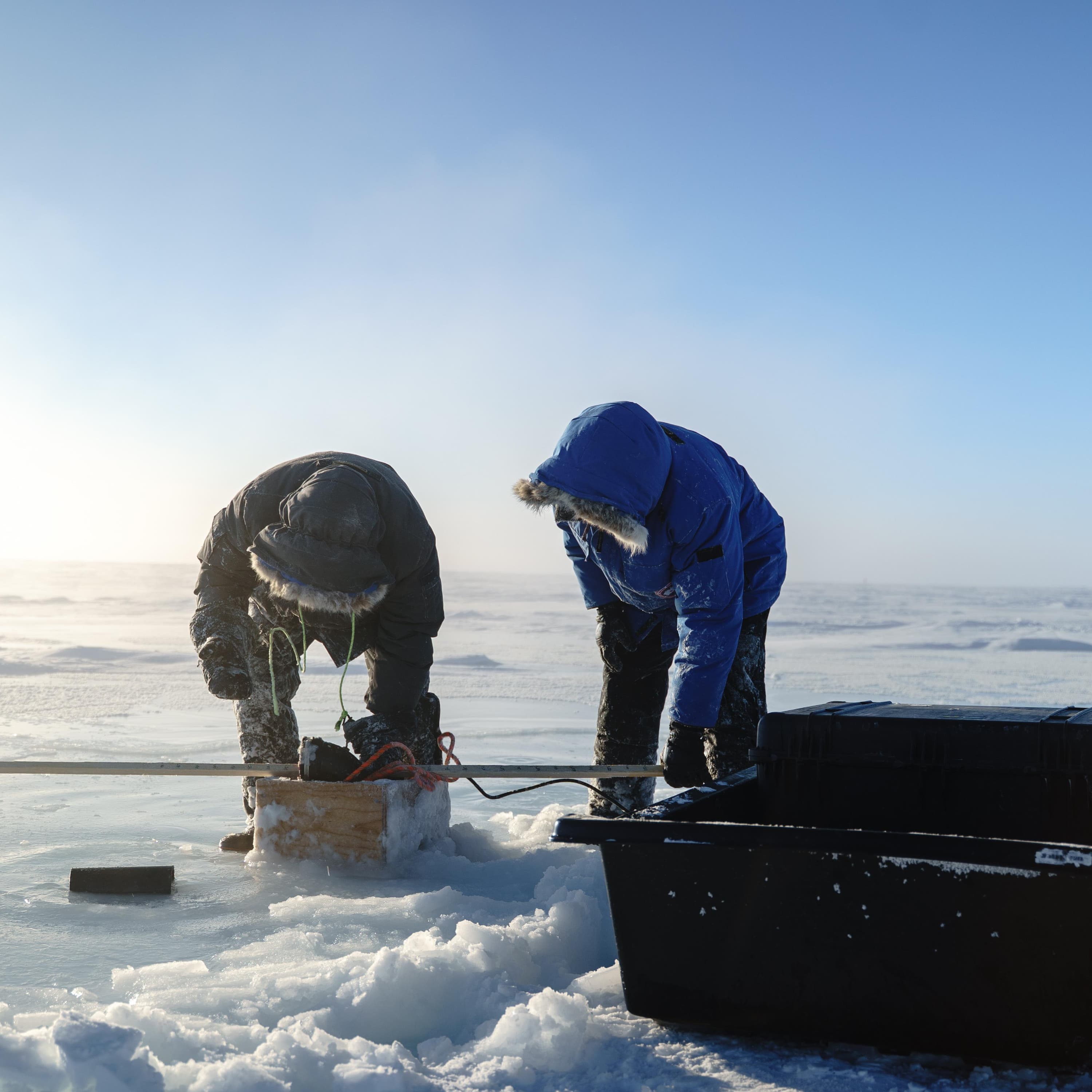
Science Weekly
The audacious plan to refreeze the Arctic
00:16:22
Madeleine Finlay is joined by environment editor Damian Carrington to discuss a bold attempt to refreeze the Arctic which is showing early signs of success
Loading summary
Transcript59 lines
- [00:00]
Madeline Findlay
This is the Guardian.
- [00:10]
Chase Sapphire Preferred Advertiser 1
With my Sapphire Preferred card, we took
- [00:12]
Chase Sapphire Preferred Advertiser 2
a trip to a desert Oasis, earning
- [00:14]
Chase Sapphire Preferred Advertiser 1
five times the points on Chase Travel, two times the points on all other travel, plus $100 hotel credit.
- [00:19]
Chase Sapphire Preferred Advertiser 2
Chase Sapphire Preferred a car that's preferred for a reason.
- [00:22]
Chase Sapphire Preferred Advertiser 1
Cards issued by JP Morgan, J's bank and a member FDIC subject to credit approval terms apply.
- [00:26]
Podcast Host Jane Coston
Former politics reporter Jane Coston is now hosting Crooked Media's daily news podcast, what a Day. Five days a week. With stories constantly flooding your for you page, it's hard to separate what matters from all the noise. That's why every weekday Jane and the Whataday team scour the biggest headlines and bring you the stories that matter most to your life all the time, all in just 20 minutes. Listen to what a Day wherever you get your podcast or subscribe to what a Day on YouTube for the video version.
- [01:08]
Madeline Findlay
At the end of May, Environment editor Damien Carrington travelled very far north to the Arctic Circle.
- [01:15]
Damien Carrington
It was a small Inuit village in the territory called nunavut. So about 70 degrees north, roughly.
- [01:24]
Madeline Findlay
It was, as you'd imagine, pretty remote.
- [01:28]
Damien Carrington
Cambridge Bay is a very small place, about 1500 people, these kind of weatherized houses on stilts, one shop, one cafe and a lot of rocks.
- [01:38]
Madeline Findlay
But it was a good time to go. The temperatures were just above zero.
- [01:44]
Damien Carrington
The sea ice was still there, but starting to melt, which is what this story is all about.
- [01:52]
Madeline Findlay
Damian had gone to meet Real Ice, a company with an audacious ambition.
- [01:59]
Damien Carrington
They want to see if they can make the sea ice last longer in the Arctic summer so that it reflects more sunlight and curbs climate change.
- [02:10]
Madeline Findlay
Since 1979, sea ice area has halved at its minimum. And evidence suggests that that from 2010, its thickness has dropped by 0.6 centimeters per year. And so today, Damien Carrington on the Bold geoengineering project to refreeze the Arctic. From the Guardian. I'm Madeline Findlay and this is Science Weekly. Damien, you got the chance to head up north to the Arctic to see this incredible geoengineering experiment in action. But before we talk about how they want to refreeze the Arctic, why do they want to do this?
- [03:03]
Damien Carrington
Well, I mean, take the climate change thing first. The melting of the Arctic ice is one of the biggest climate feedbacks on the planet. A very dangerous kind of vicious circle. So the ice reflects about 70% of sunlight. Dark ocean, which underneath reflects only about 7%. So as you lose the ice, more sunlight gets into the ocean, it heats up more and that melts more ice. And so you go around in circles. So that's really important from a climatic point of view. But obviously for the Inuit people who live in the north of Canada and all around the Arctic, the sea ice is kind of fundamental to their way of life. Is it for traveling, for hunting? Hunting is the main way of gathering any food. For traveling, it's incredibly important. It's so much quicker to get to places on the ice and then for, you know, the wildlife and ecology, ice is really important. Seals and polar bears, for example, build dens in the winter snow on top of the ice, where they have their pups and cubs.
- [03:56]
Madeline Findlay
Tell me a bit more about this project. Who's behind it and how exactly are they attempting to increase the amount of ice?
- [04:04]
Damien Carrington
So Real Ice is the name of the company. It's set up so that it can't distribute profits to anybody that's in it. It's kind of like a not for profit company. It's been funded for this series of field seasons by actually the UK government, the Advanced Research and Innovation Agency, which is, I like to think of kind of the UK's long shot agency. You know, it kind of funds crazy ideas that might just work out. So in terms of what they're trying to do, it's a relatively simple idea. The idea is that they go there in the winter, like in February, January, drill holes in the ice. At that time it's minus 40. They pump up seawater. Seawater is not frozen below the ice, out on top of the ice and it freezes really quickly. So they added this season about 50 cm to the ice, which was already going to be about one and a half meters. And the idea is that because it's thicker, it lasts longer in the summer and reflects more sun.
- [04:55]
Madeline Findlay
And one of the things that I wondered was when you're pumping this ice, obviously it takes a bit of energy, Right? How do they know that the amount of energy that they're using isn't kind of counteracting what they're attempting to do in terms of stopping the melting?
- [05:11]
Damien Carrington
Yeah, and that's a good question. So their goal is to use renewable energy, but in the short term it's actually surprisingly little energy. So they pumped 50,000 tons of water onto the ice over the winter, and I think that was using six or eight pumps. Each of these pumps has less power than a toaster. Right. It's not a powerful pump, it's not using a lot of energy, and it sounds counterintuitive given that enormous amount of water, but the explanation is that you're not moving it very far. You're moving it from sort of just below the ice until just on top of the ice. So, you know, maybe a meter or two. Listen, there's lots of questions around the feasibility of this project, particularly around scale and accessibility, but I think energy use probably isn't one to worry about so much.
- [05:56]
Madeline Findlay
And so Damien, you said that they had managed to add 50cm of ice on top of what was already there. So maybe you can talk me through the kind of results that they've seen. That sounds pretty good, but how big is this project? I mean, what kind of area are they doing this over?
- [06:13]
Damien Carrington
It's a sort of question of perspective. So on one level it's quite big. You know, it's 450 meters by 450 meters. You stand there and you can see it. It's very striking on the ice. I was there just at the right time just as the ice was starting to melt. So you could see the blue melt water forming all around it and you end up with this kind of island of white. You could see it from the drone I saw on the plane as I flew out. You can see in satellite pictures it was, it was impressive. On the other hand, the Arctic is a gigantic. And I think every year the long term trend is we're losing about 80,000 kilometers squared of Arctic sea ice in the summer. So compared to that, it's pretty tiny. But that's the point of it. It's meant to be an experiment just to see how feasible it is. There's still lots of things they need to work out.
- [06:59]
Madeline Findlay
You mentioned that this ice has kind of a different quality to naturally formed ice. Tell me a bit about that.
- [07:05]
Damien Carrington
Well, there was one thing that surprised them, which is that the artificial ice, if you want to call it that, the ice that they'd thicken by pumping the water on top turned out to be brighter than the naturally forming ice. And they don't really know why. That is the theory. One theory at least is that because it's frozen very quickly, normal sea ice just forms very gradually as the sea slowly freezes as winter comes on and it gets cold, you know. But here they're just pumping up all this water and if it freezes quite quickly, it might freeze more air bubbles within it, which would make it more opaque and therefore more reflective. Another little bonus actually which is worth mentioning is that when they pump out the water in the winter, there's snow on top of the ice and it kind of floods the snow and turns it into sl and then into ice that Snow is an incredible insulator. And what it means then is you've removed that so that you've got these -40 degrees temperature above, and that can therefore penetrate through the ice. And so they actually grew more ice on the bottom than in the other areas as well. So there were these sort of additional benefits which they hadn't.
- [08:14]
Madeline Findlay
So, Damien, in the winter months, they're pumping this seawater up to the surface, which then, because of the cold weather, is freezing over. And that's providing a layer of insulation for the summer months. But during the summer months, are they trying any other techniques?
- [08:30]
Damien Carrington
Yeah, they happened across a different strategy which was quite fun. Also involved drilling holes. But in this case, what happens as the ice begins to melt? At the start of the melt season, you get these pools of bluish water on top of the ice that absorbs the sun. But what they've noticed is that some natural holes occasionally occur and the meltwater drains away down into the sea below and then leaves the white ice exposed again, reflecting the sun. So they thought they'd try and drill a few test holes just to see how that worked. And it was really interesting. So they drilled just 5 centimeter diameter holes and it was like pulling the plug out. You know, the water started swirling around and then within half an hour, 45 minutes, it had broadened down to about the size of a dinner plate. And when we went back the next day, it was like the size of a manhole cover and it was just swirling away, draining this water down. So again, just at the start of looking into how effective that is. But the kind of interesting thing about that particular tactic is that even though it only works in that short period during the meltwater season, it's just really easy to do. An underwater drone could be poking holes up through and moving on.
- [09:35]
Madeline Findlay
And so what kind of impact could regaining this kind of ice have? In theory, early days important to stress
- [09:44]
Damien Carrington
that, but they think that this thickening of the ice could help it last maybe seven to 10 days longer. And that may be enough to have some effect. We'll see.
- [09:54]
Madeline Findlay
So ultimately, you know, you've got these pumps which are only the power of a toaster, so you would hope that this could be scaled up, but how possible is that in terms of the feasibility of scaling this up to a. You know, as you said, the Arctic is very big. And also in terms of the cost of doing that.
- [10:13]
Damien Carrington
Absolutely. So, yeah, what they're trying to do here is just do step by step. So first of all, they've shown they can thicken the ice. They've shown that thickened ice lasts a bit longer. Whether that has, you know, an impact in the long run, we'll have to wait and see. But they've still got to do studies about the ecology. But then the feasibility, obviously, is the really big thing. So they have ideas about this. Okay. And so one is that trying to do a large scale project using people as they do now would be crazy inexpensive and very difficult to do. So they've actually already tested a prototype underwater drone. They tested this in Finland in the winter. And so this little drone would go around and it has a kind of heated electrical probe which it pushes up through the ice and that creates the hole. So it's creating it from underneath, and then you pump up through that. There's sort of strategy is to do stuff under the ice because it's much easier to move around in the water. It's actually warmer there. It's like minus 1.6. That's as cold as the seawater gets, rather than on top in the winter when, as I say, it's like minus 40 degrees. So they're hoping to be a bit more practical. They have done a kind of back of the envelope calculation. Right. So they've kind of made this rough estimate that if you were to do a really big scale project with these drones, if they cost $5,000 a piece to try and thicken about 80,000 square kilometers, which is roughly what gets lost every year because of the climate crisis, they reckon it might cost $10 billion. $10 billion sounds like a lot of money. It really is a lot of money. But it was interesting because the context for that number came from a story I'd done not long before I'd left, which was about the excess profits that oil companies had made thanks to the conflict in Iran, and basically their excess windfall profits for the top 100 oil companies in two weeks was $10 billion. So it's not a crazy amount of money when you put it into that sort of context.
- [12:01]
Madeline Findlay
Coming up, even if we could refreeze the Arctic, should we.
- [12:15]
Max Rushton
33 days, 33 episodes, no off. Switch from the goals and the glories, the politics and the problems of the World Cup. If you want football analysis from a podcast that's that's been overanalyzing the game for more than 20 years, this is it. Join me, Max Rushton, and our expert team of football journalists every day of the tournament. Can England end 60 years of hurt? Probably not. Or will this be another year of falling just short? Probably. World Cup Daily listen wherever you get your podcasts or watch the full episodes on YouTube.
- [12:44]
Chase Sapphire Preferred Advertiser 2
This year's girls trip to Telluride was the best. We one upped ourselves with my Sapphire preferred card and with five times points on Chase Travel, plus three times points on vacation homes with top brands or we got this incredible cabin.
- [12:56]
Chase Sapphire Preferred Advertiser 3
It was a mansion.
- [12:57]
Chase Sapphire Preferred Advertiser 2
And with three times the points on dining, we ordered a wagyu steak dinner
- [13:00]
Chase Sapphire Preferred Advertiser 3
and that pistachio gelato was too good.
- [13:04]
Chase Sapphire Preferred Advertiser 2
So where should we go next year?
- [13:05]
Chase Sapphire Preferred Advertiser 3
I've got ideas.
- [13:06]
Chase Sapphire Preferred Advertiser 2
Chase Sapphire Preferred the card that's preferred for a reason. Cards issued by JPMorgan Chase bank and a member FDIC subject to credit approval terms apply.
- [13:18]
Madeline Findlay
Damien, this kind of geoengineering is less controversial than say pumping reflective aerosols into the atmosphere. But that doesn't mean it's totally without controversy or criticism. So what are the arguments against trying to refreeze the Arctic?
- [13:36]
Damien Carrington
Yeah, as you say, you know, geoengineering generally is controversial. And this particular project of, you know, rethinking Arctic sea ice, there's another group called Arctic Reflections which are doing a similar thing. So, you know, real ice aren't the only people. And actually not too long ago, a bunch of Polaris solar scientists wrote a critique saying it was environmentally dangerous, it was unfeasible and it was a dangerous distraction. So I mean, to unpick those things which are the sort of general criticisms of geoengineering, first of all, it's unfeasible and certainly this project has not proven feasibility by any stretch yet. It's still just a test, but a really interesting one in my view. Secondly, could be environmentally dangerous. I mean, they chose the site in collaboration with the Inuit hunters so that there aren't bears and seals in that location. But obviously you can do it on a larger scale. There's also of microbes and plants and all sorts of things that you're kind of pumping up on top of the ice and they still have to do the work on that. Does it affect the ecology? And then there's this kind of moral hazard argument which is that if you are saying that there's going to be a sort of get out of jail free card, geoengineering solve our problems, it will put the emergency brake on. We don't need to worry about cutting emissions and things like that. So I mean, of course I put all these questions to all the people involved in the project. They're really well aware of it. But my experience, having reported on geoengineering for a while, is that that the scientific community is split. You know, some people think that it is worth doing the research. We need to know what is so dangerous that we should never even go near it. We need to know, you know, how you might go about something if at some point in the future society decided that things were getting really bad, that we might want to do something. I mean, certainly all the people involved in the project absolutely clear that cutting emissions is the number one priority. That's what we've got to do. But this is about trying to research and provide information about other alternative ways of doing things should people want to engage with that in the future.
- [15:29]
Madeline Findlay
And finally, Damien, you know, you've been there yourself. You've seen this incredible landscape. You've seen how important it is to local communities, to the wildlife, and frankly to all of us globally. What did you end up thinking about the Arctic and this project to try and refreeze it?
- [15:50]
Damien Carrington
On a personal level, I really felt just blessed to be there because it's such a beautiful, kind of serene, amazing environment. I also thought I was, I was glad these people were there doing this work. It's kind of a long shot, everyone acknowledges that, but sometimes long shots work out and it could be really useful. And I think, you know, from everybody I spoke to, not just the team themselves, but some independent scientists who were there as well. They seem to be going around in a really good way, doing it step by step, responsibly, really engaged with the local community. Doing my job is often like kind of reporting on the four horsemen of the apocalypse, you know, each one day by day. So going to see something kind of positive and, you know, guardedly hopeful. Felt really good too.
- [16:32]
Madeline Findlay
Well, Damien, thank you so much for telling us about this fascinating project.
- [16:37]
Damien Carrington
My pleasure. Thanks for having me.
- [16:45]
Madeline Findlay
My thanks again to Damien Carrington. And you can head to theguardian.com to read all about this project. And while you're there, why not check out a really brilliant video. The Peptide how the US got hooked on Unregulated Miracle Drugs. The Guardian's Adangabba is on the ground meeting the users and influencers who are driving the rise of peptides. Substances that are sold under the guise of being good for weight loss, muscle growth or even younger looking skin.
- [17:15]
Podcast Host Jane Coston
Skin.
- [17:16]
Madeline Findlay
But for those after a quick fix, what's the risk? You can also find the video by searching for the Peptide boom from The Guardian on YouTube. And that's it for today. This episode was produced by me, Madeline Finley. It was sound designed by Ross Burns and the executive producer is Ellie Bury. We'll be back on Tuesday. See you then.
- [17:45]
Chase Sapphire Preferred Advertiser 3
This is the Guardian.
- [17:55]
Chase Sapphire Preferred Advertiser 2
This year's girls trip to Telluride was the best. We one upped ourselves with my Sapphire Preferred card and with 5 times points on Chase Travel, plus 3 times points on vacation homes with top brands, we got this incredible cabin.
- [18:07]
Chase Sapphire Preferred Advertiser 3
It was a mansion.
- [18:08]
Chase Sapphire Preferred Advertiser 2
And with three times the points on dining, we ordered a wagyu steak dinner
- [18:11]
Chase Sapphire Preferred Advertiser 3
and that pistachio gelato was too good.
- [18:14]
Chase Sapphire Preferred Advertiser 2
So where should we go next year?
- [18:16]
Chase Sapphire Preferred Advertiser 3
I've got ideas.
- [18:17]
Chase Sapphire Preferred Advertiser 2
Chase Sapphire Preferred the card that's preferred for a reason. Cards issued by JP Morgan, Chase bank and a member FDIC subject to credit approval terms apply.
- [18:25]
Thomson Reuters Advertiser
This podcast is brought to you by Thomson Reuters. The best don't just do their work. They change what's possible. Cases won, audits completed, jobs saved. Behind every one of those moments is a professional who needed to get it right and did. Thomson Reuters builds the technology that sharpens insights, speeds up decision making and powers the outcomes that matter. So when professionals act, the impact is felt by everyone. Be a changemaker visit tr.com changemakers imagine
- [18:56]
Chase Sapphire Preferred Advertiser 3
the merging of trusted intelligence into a unified experience. Imagine collaboration amongst teams and across community continents. Imagine an empowered ecosystem designed to deliver actionable insights that inspire growth and sustainability. That's the power of the Connect Industrial Intelligence platform to help you see further, innovate faster, accomplish more. That's the Connect effect. Learn more@thatstheconnecteffect.com.