← Science Weekly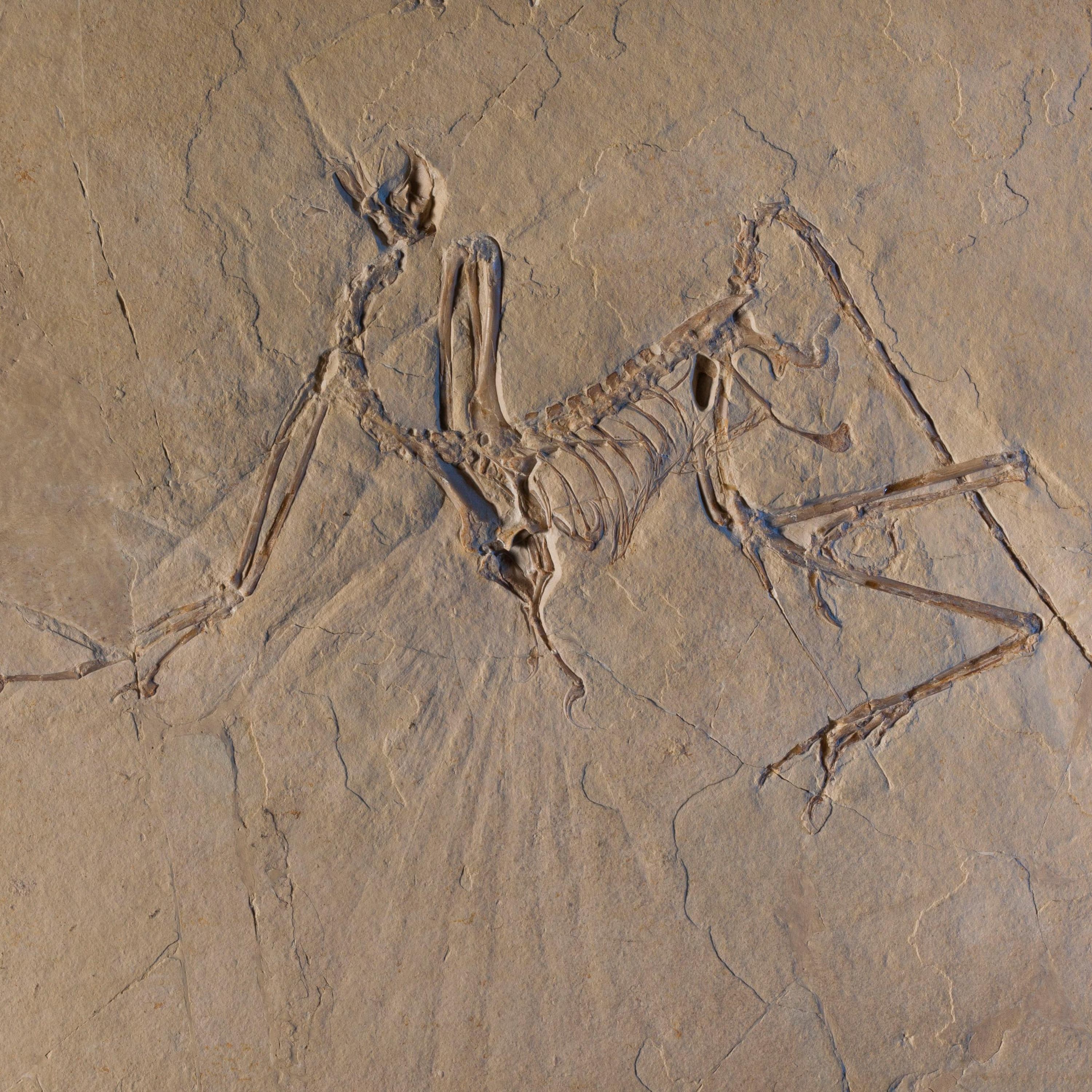
Science Weekly
The dinosaurs who survived the asteroid
00:17:15
Palaeontologist Prof Steve Brusatte joins science correspondent Nicola Davis to trace the evolution of our feathered friends from their dinosaur origins
Loading summary
Transcript56 lines
- [00:00]
Nicola Davis
This is the Guardian.
- [00:11]
Advertisement Voice 1
Running a business means juggling a lot of moving parts. And when your communication tools can't keep up, things start to slip. Missed calls, slow replies, scattered conversations. They're not just frustrating, they're lost opportunities and revenue left on the table. That's where Quo comes in. Spelled Q U O. Quo is the number one rated business phone system on G2, trusted by over 90,000 businesses. One shared business number for calls and texts so every conversation stays visible, organized and accountable. It works from an app or computer. You can keep your existing number, add teammates and sync your CRM, letting you scale without adding complexity. And with built in AI, Quo logs calls, summarizes conversations and flags next steps. Even after hours. Stop missing customers. Stop leaving revenue on the table. Try quo free and get 20% off your first six months at quo.comtech that's quasho.com tech quo no missed calls, no missed customers.
- [01:20]
Advertisement Voice 2
This is a vacation with Chase Sapphire Reserve. The butler who knows your name. This is the robe, the view, the steam from your morning coffee. This is the complimentary breakfast on the balcony. The beach with no one else on it. This is the Edit, a collection of handpicked luxury hotels you can access with Chase Sapphire Reserve and a $500 Edit credit that gets you closer to all of it. Chase Sapphire Reserve now even more rewarding.
- [01:45]
Advertisement Voice 1
Learn more@chase.com Sapphire Reserve cards issued by JP Morgan, Chase bank and a member FDIC subject to credit approval.
- [01:58]
Nicola Davis
It was the most cataclysmic event in the Earth's history.
- [02:03]
Professor Steve Brusatte
The asteroid came down and the dinosaurs died. But there was one peculiar type of dinosaur that did make it through.
- [02:13]
Nicola Davis
Yes, one type of dinosaur is miraculously still around today.
- [02:19]
Professor Steve Brusatte
My wife and I were at the Lyme Regis Fossil Festival and we had a little break and we were sitting by the beach and I was eating a pasty and one of these aerial assassins from the sky came down and stole my pasty. It was not pleasant. I was very hungry. My lunch was gone. It was just a sad scene.
- [02:44]
Nicola Davis
That's right, gulls. And every other bird too. Birds are in fact, dinosaurs.
- [02:51]
Professor Steve Brusatte
This is not a turn of phrase. This is not scientists tweaking the definition of words that you thought you knew. So we sound smarter. This isn't us hinging on some technicality. It's actually really straightforward. Today's birds evolved from dinosaurs.
- [03:08]
Nicola Davis
It's estimated that there are just over 6,000 species of mammals around today. But birds, 10,000 species.
- [03:18]
Professor Steve Brusatte
So in that way, the age of dinosaurs actually continues.
- [03:28]
Nicola Davis
So how did birds evolve from their reptile ancestors into our feathered friends. And if they survive the asteroid, can they survive us? I'm Nicola Davis, Guardian science correspondent, and this is Science Weekly.
- [03:48]
Professor Steve Brusatte
Birds are dinosaurs, and I want people to understand what that means.
- [03:53]
Nicola Davis
Professor Steve Brasati is a paleontologist and evolutionary biologist at the University of Edinburgh, and he's the author of a new book, the Story of An Evolutionary History of the Dinosaurs that Live Among Us.
- [04:06]
Professor Steve Brusatte
They are a strange type of dinosaur that millions of years ago got small, evolved wings, developed the ability to fly. They are part of the dinosaur family tree. They are part of the bloodline.
- [04:18]
Nicola Davis
Scientists estimate that somewhere between 165 million and 150 million years ago, birds first appeared. The oldest known bird that's so far been discovered is the Archaeopteryx. To picture this fossil, imagine the imprint of a bird that's flown very hard into a window.
- [04:37]
Professor Steve Brusatte
It is a transitional fossil. It has feathers, it has big wings, it has a wishbone. It has hollowed out bones just like birds today. But it still has teeth in its jaws. It has long, sharp claws on its hands. It has a long, skinny bony tail. It's very much a half reptile, has half bird, but it could fly. It was essential to Darwin's theory of evolution. It was one of the fossils that really proved evolution to the masses back in the 1860s and 1870s, and it remains today still the oldest known bird in the fossil record since the 1800s.
- [05:17]
Nicola Davis
More and more evidence has accumulated.
- [05:20]
Professor Steve Brusatte
We have enough fossils of dinosaurs in different stages of this transition that we can see, generally speaking, how evolution took a dinosaur and turned it into a bird. And the thing that's immediately clear is that this didn't happen quickly. It was gradual. It was a long process.
- [05:46]
Nicola Davis
What's the most iconic feature of birds? Their feathers. So where did these come from?
- [05:53]
Professor Steve Brusatte
Feathers have basically evolved from something like a scale. You can tweak a feather in a bird as it's growing in an embryo and actually turn it into a scale, or vice versa. And you see this when you look at a chicken. His body is covered in feathers, but look at those scaly feet. So there is this intimate relationship between feathers and scales.
- [06:13]
Nicola Davis
Evidence for the relationship between feathers and scales isn't just found in the fossil record.
- [06:19]
Professor Steve Brusatte
We now know from the genetics. Birds are more closely related to crocodiles than crocodiles are to lizards or snakes or turtles. Birds are nested. They're ensconced within the reptile family tree. They are a heavily modified reptile. This is simply based on what we know today and the DNA of animals today. And it is some of the strongest, most convincing evidence out there for anybody who maybe is doubting, could birds really have evolved from dinosaurs? Are birds really some type of weird reptile? How do you get a bird from something like a lizard or a crocodile? Look at the genetics. Birds are smack right in the middle of that reptile family tree.
- [07:00]
Nicola Davis
Paleontologists like Steve have discovered the beginnings of feathers in some very familiar dinosaurs.
- [07:07]
Professor Steve Brusatte
There are fossils of tyrannosaurs, early cousins of T Rex, with feathers. These were big, top of the food chain animals, but these were very simple feathers. They were feathers that looked a lot like hair, just little strands, tufty, fluffy little strands.
- [07:22]
Nicola Davis
These fluffy strands were probably developing as a kind of insulation. As dinosaurs metabolisms increased, mammals were doing the same with hair. Eventually, these protofeathers got more complex.
- [07:35]
Professor Steve Brusatte
They got longer. They started to branch out. They went from hairs to brushes. They started to line up on the arms. They started to form wings. But even the very first wings that we see in dinosaurs, they're too small to have been used for flying. The first wings appear on dinosaurs that are maybe the size of sheep, up to about the size of horses. And those wings are no bigger than a laptop screen. What were they used for? We don't know, but probably display to attract mates and intimidate rivals. And so what it really looks like is that these different components of the bird blueprint, they evolved one by one over tens of millions of years of dinosaur evolution for other reasons. And then it just so happened that you had feathers that had probably eroded originally evolved for insulation to keep these dinosaurs warm. They'd been modified into these display structures, these advertising billboards sticking off of the arms. Then some of those dinosaurs got small enough and those advertising billboards big enough that when they moved them around, they could generate a little bit of lift and a little bit of thrust just by the laws of physics. And a threshold had been crossed accidentally with no plan, with no purpose. Evolution doesn't work that way. But now these wings could provide some aerodynamic forces, and then natural selection could take over and fashion those wings into ever better airfoils.
- [08:57]
Nicola Davis
And so there were wings, lots of different types and shapes of wings started to turn up.
- [09:02]
Professor Steve Brusatte
You see some raptor dinosaurs with wings on their arms and on their legs, four wings. You see other raptor dinosaurs that still had long tails with a wing on their tail. You even see some small dinosaurs. There's one called Ichi from China. It is a tiny little thing, would have been really Cute. You could have held this thing in the palm of your hand and this thing had a wing. But that wing was made of skin, kind of like a bat's wing. So very clearly, there was this zone on the family tree of dinosaurs where you had all these different species of small dinosaurs that had feathers and had some kind of wing, a zone of experimentation. But all we have left of that is the one lineage.
- [09:55]
Nicola Davis
Alongside wings, another archetypal bird feature developed, the wishbone.
- [10:00]
Professor Steve Brusatte
So it's basically a link between the two arms and the two shoulder girdles. It helps stabilize the arms as the arms were being used for grabbing and slashing at prey.
- [10:12]
Nicola Davis
Once you have your prey, what do you do? Rip it apart and chew it up. Except the birds today aren't much for chomping because they don't have teeth. They have another tool in their kit that means they can tackle different food sources.
- [10:27]
Professor Steve Brusatte
By sometime late in the Cretaceous, their teeth were definitively gone. They only had beaks. What's really interesting is that birds today in the lab, developmental biologists can tweak the genes of chickens and quails and so on and make them grow little teeth that look like the teeth of tiny raptor dinosaurs. So the dinosaur DNA is there, buried deep in the genome of modern birds, and you can make that DNA express itself. Now, those little birds, something about that tooth mutation is fatal, so you can't actually hatch one. So there seems to be, over evolutionary time, the teeth were lost, the beak replaced them, and that was really set in genetic stone. But there is still that remnant, that little echo in the genome of birds today.
- [11:23]
Nicola Davis
Coming up, how did birds end up as the only dinosaur survivors of the asteroid?
- [11:41]
Max Rushton
33 days, 33 episodes, no off. Switch from the goals and the glory to the politics and the problems of the World Cup. If you want football analysis from a podcast that's been overanalyzing the game for more than 20 years, this is it. Join me, Max Rushton, and our expert team of football journalists every day of the tournament. Can England end 60 years of hurt? Probably not. Or will this be another year of falling just short? Probably. World Cup Daily. Listen wherever you get your podcasts or watch the full episodes on YouTube.
- [12:10]
Andrew
Many business leaders see AI's tremendous potential for their companies, but they're still struggling to turn that potential into measurable results and competitive advantage. I'm Andrew.
- [12:20]
Sarah Elk
And I'm Sarah Elk. And on our new podcast, Winning with AI, we're talking to CEOs who are using AI to drive business transformation, delivering real wins and changing how their companies run.
- [12:31]
Andrew
We'll hear how leaders empower and mobilize their people and make the use of AI Part of how the whole organization thinks. Winning with AI.
- [12:44]
Nicola Davis
When Steve points out that there are more species of birds today than mammals, it's strange to think that we're still living in the age of the dinosaurs. Since childhood, we've all been taught that that ended with a giant rock star slamming into the Earth 66 million years ago. And in a way, it did. All the other dinosaurs went extinct, but somehow, a single group of birds survived. How did they do it?
- [13:10]
Professor Steve Brusatte
It seems to be that these birds just had a winning hand of cards. They could fly really well with those big chest muscles, so they could fly better than the other birds. They could probably escape more easily. They grew super fast. Being able to go from a baby to an adult within a year and make a new generation and so on, that comes in really handy if the world around you is so unstable. These birds that survived did not live in the trees. They lived on the ground and waited in shallow water. This was important because the forests around the world collapsed when the Earth went dark and cold after the asteroid, There was no sunlight, at least for a few years. So plants couldn't photosynthesize, and they died, and they took their entire ecosystems with them. So if you lived in the trees, your home was gone. And it's not only that. If you ate plants, if you ate animals that ate those things, your entire food webs would be gone. But there was maybe one other ticket out of disaster, and that is if you could eat seeds, because long after trees die, seeds will be left in the soil. And so if you could eat seeds, you would have a source of food when pretty much everything else was gone. And what could eat seeds really? Well, well, those birds that had beaks instead of teeth.
- [14:24]
Nicola Davis
The birds that made it through had a brave new world in front of them. With less competition, they had endless opportunities to flourish. Out of this one group came a huge diversity of birds.
- [14:37]
Professor Steve Brusatte
Some of the most terrifying animals, I think, to ever live were the Terror birds. Their name, I think, says it all. These were birds that were taller than a human. They had a head the size of a horse's head. But at the end was this very pointy, very sharp beak, which they use for slicing flesh. They had tiny, piddly little wings. They were too big to fly. They were top predators. They were the top predators in South America for many tens of millions of years. Then there were also giant birds that maybe have ferocious names, but were not actually that ferocious. And one prime example were the demon ducks. You think, oh, my God, the demon ducks. These are something out of. Yeah, the portal of hell. But no, they're called demon ducks because they were huge, maybe the heaviest birds that have ever lived. These were birds that weighed many, many hundreds of kilos, maybe even approaching a ton, some of them. So imagine a duck, a regular duck we're all familiar with, and supersize it like a hundred times. Now, they lived for tens of millions of years, and they were some of the biggest plant eaters in Australia. And there are actually archaeological sites in Australia where there are campfires made by humans with charred demon duck eggs. They were making demon duck omelets for breakfast. And that is probably why the demon ducks didn't make it through.
- [16:08]
Nicola Davis
According to one study, in the past 120,000 years, humans have managed to drive at least 1400 bird species to extinction. That's about 12% of the total. And now we're doing it at a faster rate than ever before. The incredible creatures whose ancestors long ago made it through one of the worst cataclysms imaginable is being wiped out by us.
- [16:32]
Professor Steve Brusatte
Birds are certainly facing a crisis. There's many hundreds of species of birds that have gone extinct only over the last few hundred years or so, as humans have been really moving around the world. A lot of these birds have gone extinct on islands. But what's even in many ways more worrying is just that the standing population of birds has crashed. I mean, billions of individual birds have been lost in North America from the time that my parents were in high school until today. Even over just the last, like, five or six years alone in Britain, certain birds that live in hedgerows, they've lost, like, 50% of their standing diversity. That's incredible. We're changing the earth so quickly. Of course it's climate change, but it's not just that. It's how we slash and burn forests and turn forests into farmland. It's pollution, it's pesticides, it's rat poison in the cities. And so many birds simply fly into windows. I hate to say it for all of you pet enthusiasts out there, but the vast majority of birds that die unnatural deaths in the world today are felled by a serial killer that many of us let into our homes. Cats. Billions of birds a year are killed by cats. These are all things that we as humans are enabling to happen to bird populations.
- [17:56]
Nicola Davis
So what is the prognosis for birds today? If you look at the statistics, the numbers and trends, it all seems pretty dire, but zoom out and take a palaeontologist's perspective and a more hopeful picture emerges.
- [18:12]
Professor Steve Brusatte
What we can see is that birds are survivors. They are adaptable, they evolve quickly, they change quickly when they are confronted with a crisis. Maybe not all of them make it through, but some of them do and they can repopulate really quickly. So I am confident that birds will make it through through the current crisis. And I'm maybe more confident that birds will make it through than a lot of mammals, including maybe even our own species. You've had modern style birds around for well over 66 million years. They've already survived the single worst day in the history of the earth. And if I was a betting person I would probably put my money on bir.
- [19:00]
Nicola Davis
A huge thanks to Professor Steve Brasate. His book is the Story of Birds and it's out in the UK on the 11th of June. And that's it for today. This episode was produced by Madeline Findlay. It was sound designed by Ross Burns and the executive producer is Ellie Beery. We'll be back on Thursday. See you then.
- [19:21]
Professor Steve Brusatte
Foreign.
- [19:27]
Nicola Davis
This is the Guardian.
- [19:37]
Andrew
Many business leaders see AI's tremendous potential for the companies, but are still struggling to turn their potential into measurable results and competitive advantage. I'm Andrewton.
- [19:48]
Sarah Elk
And I'm Sarah Elk. And on our new podcast, Winning with AI, we're talking to CEOs who are using AI to drive business transformation, delivering real wins and changing how their companies run.
- [19:59]
Andrew
We'll hear how leaders empower and mobilize their people and make the use of AI part of how the whole organization thinks.
- [20:05]
Advertisement Voice 1
Winning with AI Insurance isn't one size fits all. That's why drivers have enjoyed progressives name your price tool for years. Now with the name your price tool, you tell them what you want to pay and they'll show you options that fit your budget. So whether you're picking out your first policy or just looking for something that works better for you and your family, they make it easy to see your options. Visit progressive.com find a rate that works for you with the name your price tool. Progressive Casualty Insurance Company and affiliates Price and coverage match limited by state law.
- [20:36]
Advertisement Voice 2
The day begins at the Chase Sapphire lounge by the club at Boston Logan Airport. You get the clam chowder in San Diego, it's Tostadas New York. Espresso martini. It's 10am why not? It's the quiet before your next flight, the shower that resets your day, the menu that lets you know where you are. This is access to over 1300 airport lounges and every Sapphire lounge by the club. And one card that gets you in Chase Sapphire Reserve now even more rewarding.
- [21:01]
Advertisement Voice 1
Learn more@chase.com Sapphire Reserve cards issued by JP Morgan, Chase bank and a member FDIC, subject to credit approval.