← Science Weekly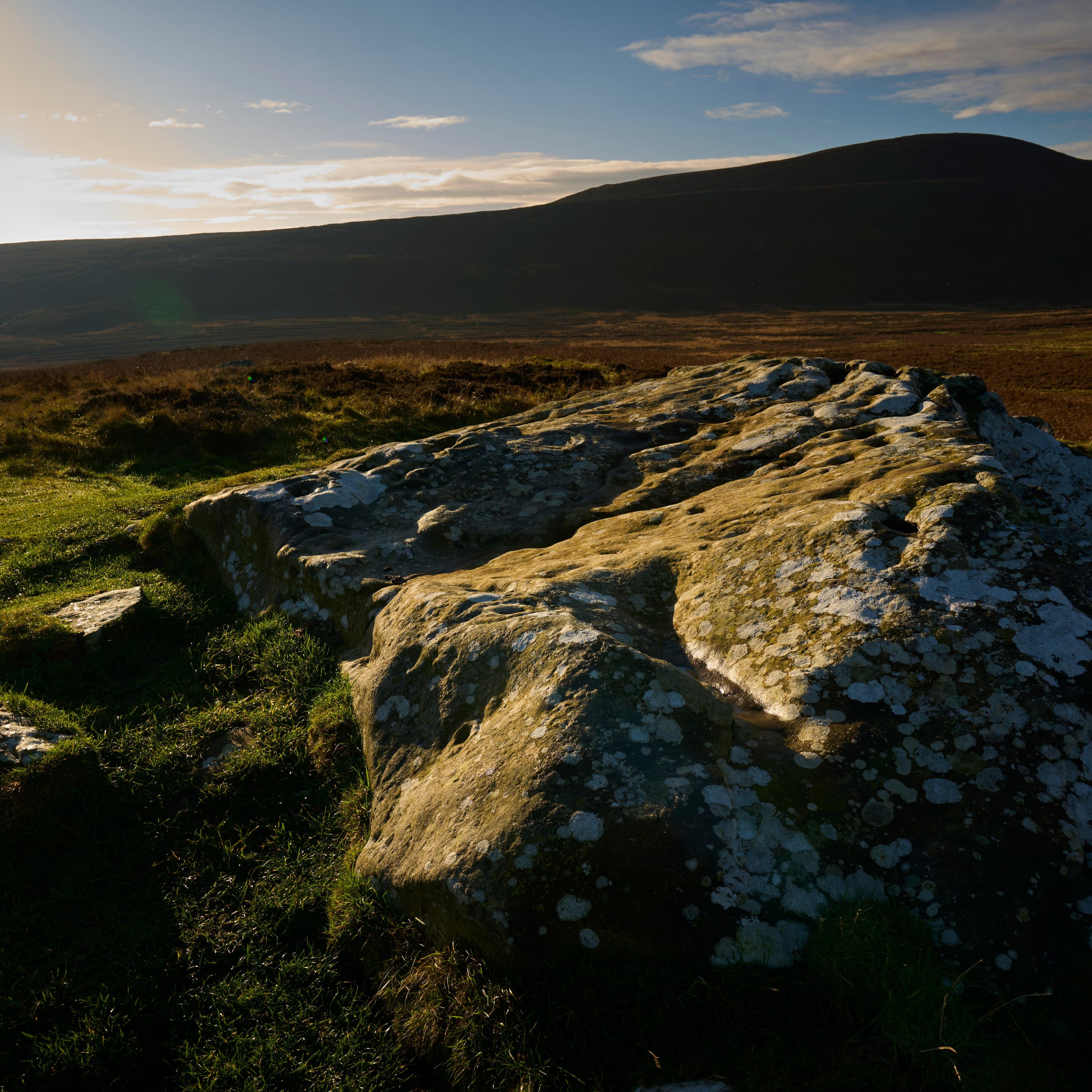
Science Weekly
The fight to save a historic English landscape
00:16:55
Madeleine Finlay travels to the Rothbury estate in Northumberland to find out why the UK’s Wildlife Trusts are trying to raise £30m to buy it from its current owner
Loading summary
Transcript40 lines
- [00:00]
Madeline Findlay
This is the Guardian.
- [00:10]
Thomson Reuters Announcer
This podcast is brought to you by Thomson Reuters. The best don't just do their work, they change what's possible. Cases won, audits completed, jobs saved. Behind every one of those moments is a professional who needed to get it right and did. Thomson Reuters builds the technology that sharpens insights, speeds up decision making and powers the outcomes that matter. So when professionals act, the impact is felt by everyone. Be a changemaker. Visit tr.com changemakers you're either all in on this model or maybe you're building with another.
- [00:44]
Madeline Findlay
Either speed or is it security or you're AWS AI.
- [00:50]
Thomson Reuters Announcer
Don't pick a side, pick them all. AWS AI is how.
- [01:04]
Madeline Findlay
In the northeast of England, near the border of Scotland, there's a vast stretch of land that's belonged to one family, an old English Noble family, for 700 years. But now the Duke of Northumberland's youngest son, Max Percy, has put it up for sale. 3,800 hectares. That's 38 square kilometers of sweeping vistas over moorlands. Woodlands and craggy hills dotted with sheep are available for purchase. All that doesn't come cheap. The Wildlife Trusts, a charitable organization made up of 46 local independent trusts, have already bought a chunk of it. But for the rest, the they need to raise 30 million pounds. And luckily for them, they've got the support of the world's most famous nature lover.
- [02:00]
Rosie Pearce
People know and love the Simonside hills that rise here. They walk the ridges and listen for the calls of the curlew.
- [02:09]
Madeline Findlay
They watch for red squirrels and admire the views as they scramble among the crags. But there's not long left. They've got until the end of September to secure the deal. If they manage it, what do they plan to do with this historic land? What will happen to the farmers that still work it? And how could it shape the future of nature in the uk? I went to the Rothbury Estate to find out from the Guardian. I'm Madeline Findlay and this is Science Weekly. At the estate, I met Katie Bark, head of nature recovery for Northumberland Wildlife Trust. We stood overlooked by nearby hills in a golden brown field, dry from weeks of relentless sunshine. A few butterflies flitted around and house martins swooped overhead. Katie explained why this piece of land is so special.
- [03:14]
Katie Bark
The really exciting thing about Rothbury is its scale. It's the biggest land purchase of this size to come up in a generation or more. And that's really why the Wildlife Trust is so interested, because you've got this opportunity for this intact parcel of land to really look at how that can work better for nature. But the even more exciting thing about that is that our neighbours are also working in really nature friendly ways. So you're looking at a much bigger area where we can work together and with Forestry England as well, to look at big scale nature recovery and restoring of natural processes. And then when we're talking about our neighbours, we also have this much bigger ambition of this 40 mile, what we call the northern nature corridor that connects Keelda. So Keelda, if you don't know where it is, that's right up on the Scottish border and all the way down to the coast. And when you look in that 40 mile corridor, there's so many people and organisations doing brilliant things that we want to just join them up and create this highway for nature and for wildlife to make its way and just make more space. So it's just that exciting, you know, I think it's probably the most exciting nature recovery project in England.
- [04:16]
Madeline Findlay
If the fundraising is successful, Katie and the team are going to have to work out what nature recovery looks like across the estate and how to make it happen. The ultimate goal is to restore natural habitats and return wildlife to the land to. But when in the site's history should they look at when's a good benchmark for what's natural and beneficial to a place? To figure that out, a research project is being undertaken to reveal how the land has been used across the centuries and what's grown there in the past few hundred years. For the visit, I'd been advised to wear long trousers tucked into boots to avoid tick bites. And I was glad I listened because my first meeting with Dr. Sam Turner, professor of Archaeology at Newcastle University, was among the long grass, ferns and creeping thistles on Garley Moor. A small mound topped with mossy grey stones ran alongside us, and down below, a line of trees was rustling in the breeze. So, Sam, the first thing that I really wanted to find out about was a bit of the history of this estate. What do we know about what's happened on this land over the years?
- [05:28]
Dr. Sam Turner
We know that on the hill behind us we've got a large Iron Age settlement and running down the hill towards us, we've got the remains of fields from different periods. Now, of course, that's all Moreland and the estate has in the recent period has been largely used for sheep farming. But we can see from the remains all around us on the surface of the land that before it was cultivated for cereals, for mixed agriculture probably, but we don't have much in the way of written Documentary records telling us about what happened in times before the recent centuries.
- [06:03]
Madeline Findlay
And this is where your project comes in. So what are you doing here?
- [06:07]
Dr. Sam Turner
We're doing a pilot study, really, with the Northumberland Wildlife Trust and with our colleagues from Durham University and the University of St Andrews. And our project is designed to try to understand the natural history of the land, the long term historical ecology of the land. One of the issues that we face is the so called problem of the shifting baseline. So if we're thinking about how we should make things in the future, we say, well, maybe we should make it like it was in the past, but when was the past? It's very hard to quantify what their ecological networks were like beyond a certain time back in the past. So what our work is trying to do is to create a picture of what the landscape might have been like at different periods. Going much further back into the past. What we hope to do is not provide a simple answer, but provide a richer understanding that gives us a knowledge of the kinds of changes that we might want to make in future and how they might relate to the types of ecology, the types of land uses that have existed here over the last, let's say, 5,000 years.
- [07:21]
Madeline Findlay
Unlike most archaeologists, Sam's digging holes not to search for artifacts, but to look at the sediment itself. The team are using a technique called environmental DNA analysis to search for genetic material left long ago by plants. They can then pin that to a date in time, revealing what nature was around when. Combine it with lidar surveys uncovering man made structures and you begin to build a picture of the ecology and history of the estate across hundreds, if not thousands of years.
- [07:58]
Dr. Sam Turner
Landscapes are defined by one key characteristic that unites all landscapes all around the world, and that is that they're always changing all the time. People have been here shaping the way this landscape has changed for 10,000 years. And so we need to remember that when we're making changes which are designed to help nature recover to the way that we think it used to be, that's also a cultural choice. That's something that we as human beings are deliberately deciding to do. And so, yeah, our work is designed to try and help us kind of situate that in the longer term, going forwards into the future.
- [08:33]
Madeline Findlay
The wildlife Trusts will not be managing the land alone. As it stands, there are 12 tenant farmers. If the purchase goes ahead, it can mark a time of change. The Northumberland Wildlife Trust are hoping to help us shift to more wildlife friendly agriculture. One of the people beginning to bring that change to the estate is Rosie I met her with her very sweet and well behaved Border colleague, Jock in a field on one of the farms she was working with. We were also joined by a crowd of very curious young bulls.
- [09:10]
Rosie Pearce
So, I'm Rosie Pearce and I am the farm liaison officer for Northumberland Wildlife Trust. I work with landowners and farmers who are wanting to do nature recovery on their land and improve their farming practices for nature.
- [09:23]
Madeline Findlay
So tell me about the kind of farming that happens right now on the Rothbury estate.
- [09:28]
Rosie Pearce
We have a flock of about 1900 sheep plus lambs. We also have a herd of 50 ling cattle, some of which are behind us. We've got some.
- [09:39]
Madeline Findlay
We've got some onlookers.
- [09:40]
Rosie Pearce
Yes. We've got. I think they're two year old steers. Yeah. So these ones would be the ones entering the food chain. But over time, I think the plan is to reduce the number of sheep that we have and increase cattle numbers to sort of balance those numbers out a bit.
- [09:53]
Madeline Findlay
And tell me, why would you want to exchange sheep for cattle?
- [09:57]
Rosie Pearce
Cattle can generally bring a lot more biodiversity benefits. They graze quite differently to sheep. Sheep create quite tight lawns and generally go for the tastier flowers. Cattle are not as selective, so they create a sort of diverse structure and allow for a lot more wildflowers. And obviously our wildflowers are really important for invertebrates and then those invertebrates are feeding all sorts of other animals further up the food chain. There's also benefits in terms of using cattle for, say, wintering outdoors and their dung being really important for invertebrate life as well. Those invertebrates being important for wading birds and bats and reptiles and things.
- [10:40]
Madeline Findlay
And so what would your ideally farmed landscape look like?
- [10:45]
Rosie Pearce
For starters, we're hoping to see a lot more trees and that will no doubt be important for, for biodiversity, but also it'll be really important for cattle and some of the sheep that we will have. In terms of the changing climate that we've got, hotter, drier, summer trees are going to be really important in keeping areas of grass in the summer and also for shade for livestock and shelter. If we have sort of storms and things in the winter that could be in forms of hedgerows or wood, pasture would be a brilliant way. So that's having your mature trees plus scrub and a lot more flowers as well, and all those combined are going to be great for livestock health as well as for biodiversity.
- [11:25]
Madeline Findlay
Why do those make a difference to livestock health?
- [11:27]
Rosie Pearce
Well, there's been studies to show that livestock can benefit from getting all sorts of different nutrients from certain trees. When they need minerals and nutrients, they will go to a certain plant or a certain tree to sort of self medicate. That can be really quite important for their health and also it can create really nutrient dense food as well, which is important for our health.
- [11:52]
Madeline Findlay
The field we were standing in was filled with long grasses and thistles. There was a messy hedgerow behind us and amazingly, a small puddle of water. And I could hear crickets singing. It seemed like a rich, diverse place, but Rosie explained to me that it was still too much of a monoculture, still too quiet. After a few years of regenerative farming, however, it might begin to look more colourful, get louder, maybe wetter too, with more waterfalls, wetlands and peat bogs across the estate. To an onlooker, it all sounded idyllic. But I wondered what the tenant farmers were making of the changes coming to Rothbury. So I asked Rosie what the reactions have been so far.
- [12:37]
Rosie Pearce
I think it's becoming a lot more accepted as a way that we maybe need to go in order to be more resilient. We have neighbours that are already doing things like your regenerative agriculture type, deferred grazing, rotational grazing, wintering livestock outdoors, all of which, you know, that's beneficial for the farm business at the end of the day and quite often for the farmer. It's not like we're going to say this is how it has to be done. There are obviously times when you need to be responsive as to what the land's telling you, but I think having this here to sort of be a showcase for what can be done in order to produce food in a sustainable and nature friendly way, I think is going to be absolutely massive if we can get it right. Because I think currently, when you look across certain landscapes and you see what should be there, it's quite heartbreaking. We need to not think that this level of loss and lack of diversity is normal, because it's not. And ultimately it will cause us to be unable to feed ourselves in the future unless we do something to change it.
- [13:45]
Madeline Findlay
Coming up, two months and £30 million. Can they do it?
- [13:58]
Aura Advertiser
Most people don't realize how much of their personal information is being bought and sold every day. Data brokers are making billions, pulling details about you from public records and the Internet, then packaging and selling it, usually without your consent. That's how your information lands in the hands of scammers, spammers, even stalkers. It's why you get endless robocalls and why ads seem to follow you everywhere. That's where aura comes in. Aura actively removes your data from broker sites and keeps it off. They also instantly alert you if your information shows up in a breach or on the dark web. But Aura goes beyond data protection. With one app, you get a vpn, antivirus, password manager, spam call protection, dark web monitoring and even up to $5 million in identity theft insurance. All backed by 24, 7 US based fraud support. Other companies might sell just credit monitoring or just a vpn. Aura gives you all of it together at the same price. Competitors charge for just one service. Start your free trial today@aura.com safety protect yourself now@aura.com safety.
- [15:13]
Madeline Findlay
If the wildlife trusts don't raise the funds in time, there's a chance the land could be broken up and sold off to private, private landowners. This could put public access to the estate at risk, which is home to popular walking routes where visitors can hear the calls of curlews and spot red squirrels in the woodlands. Despite the unknown ramifications if the land goes to individual buyers, there has been concern from farmers and locals as to exactly what the wildlife trusts will do if they own the land. Whispers of bison roaming the uplands unchecked, rewilding and even a return of wolves and lynxes have been circling the potential purchase. Head of Nature recovery, Katie Bark, was very keen to get on record that this wasn't currently forming part of their plans. So I asked Katie what we could expect to see.
- [16:09]
Katie Bark
So I have a personal interest in beavers, but at the moment it's not right for them. There isn't a habitat for them. That doesn't mean we can't work towards that and creating those conditions and all the wonderful benefits they bring. There's certain species that are making their way back here themselves, things like pine martin, you know, they're not far away, they may already be here. And actually if we can work together with our neighbors, then you provide safe havens for pine marten to re establish themselves. And the other really exciting species that people talk about a lot at the moment because they're being seen overhead, is golden eagle. So. So there's been a reintroduction project in the south of Scotland which, as the eagle flies, is, you know, no distance at all. And they're regularly being seen here. Now, they might not be on the Rothbury estate itself, but it's so evocative to think that you're here and you can look up and see golden eagle soaring and that's only going to increase. And I mean, that's just amazing.
- [16:56]
Madeline Findlay
And as we're standing here, most of the UK is in a drought, although unbelievably, we got rained on earlier. What a feeling. But, you know, the climate crisis, we are seeing the effects more and more and more strongly. This feels like a really critical time. So, Katie, we're heading towards the deadline for the Wildlife Trusts to raise their 30 million to put you on the spot here. What would be your plea to anyone listening?
- [17:30]
Katie Bark
Yeah, I think, you know, it's just such an exciting opportunity and, you know, when you watch the Totalizer on the, on the website, it's amazing because you get anything from, you know, somebody putting in their five pound pocket money or all these incredible tributes for, you know, friends lost or people's birthdays or. There's so many personal reasons why people are feel that this is something we should really do. So I really feel that this is a kind of a once in a generation opportunity to take ownership of a piece of land on this scale and put nature first. So, yes, we'd love you to visit and come and see what we're up to and yes, please, if you're able to support purchase of the Rothbury estate, we'd be delighted if you could.
- [18:06]
Madeline Findlay
Do you think you're going to do it?
- [18:08]
Katie Bark
Of course, yeah, of course. I mean, we will do this. Yeah. It's too important to not. Yeah, we're all committed.
- [18:18]
Madeline Findlay
My thanks to Sam Turner, Rosie Pierce and Katie Burke. If you'd like to find out more about the Wildlife Trust's efforts to purchase the Rothbury estate, head to theguardian.com
- [18:31]
Rosie Pearce
and
- [18:31]
Madeline Findlay
that's all for today. This episode was produced by me, Madeline Finley. It was sound, designed by Joel Cox and the executive producer is Ellie Bury. We'll be back on Thursday. See you then.
- [18:50]
Thomson Reuters Announcer
This is the Guardian. This podcast is brought to you by Thomson Reuters. The best don't just do their work, they change what's possible. Cases won, audits completed, jobs saved. Behind every one of those moments is a professional who needed to get it right and did. Thomson Reuters builds the technology that sharpens insights, speeds up decision making and powers the outcomes that matter. So when professionals act, the impact is felt by everyone. Be a changemaker. Visit tr.com changemakers.