Podcast
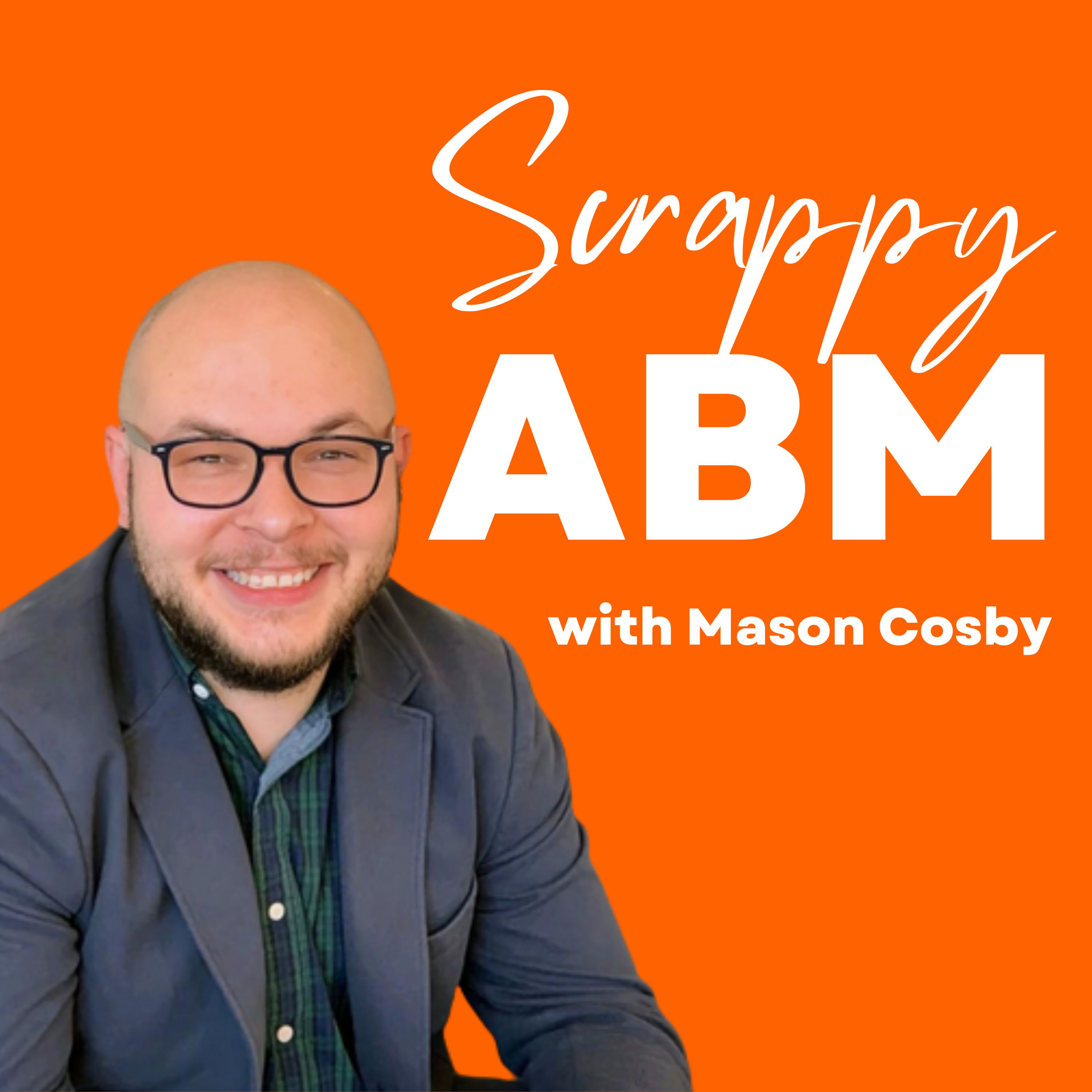
Scrappy ABM
Hosted by Mason Cosby · EN
Welcome to Scrappy ABM – your source for groundbreaking approaches to ABM that don't break the bank. ABM shouldn't cost $200K in technology to even get started. If you want to get started with ABM or make your program better without a massive budget, you're in the right place.
Each week, you'll hear from some of the brightest minds in the marketing world who are redefining ABM, achieving incredible results with untraditional methods, limited resources, and a whole lot of creativity.
This isn't a show about how much you can spend on fancy tech or overhyped tools. Instead, it's about celebrating creative problem-solving and the scrappiness it takes to get ABM right. We'll dive into how these marketing leaders built robust ABM strategies with limited resources, revealing the actionable insights that led to their biggest wins.
So, if you're a marketer ready to challenge the status quo, or an entrepreneur looking to scale your business through efficient and effective marketing strategies, Scrappy ABM is the show for you.
Get ready to discover ABM strategies that are lean, impactful, and utterly transformative. Remember, it's not about the budget, it's about the mindset. Let's get scrappy!
44episodes
Episodes
Newest firstAll episodes
Accounts Don't Buy, People Buy (with Amanda Oles from Stensul) | Ep. 280
5d ago00:27:53Tap to summarizeMost advice on building a target account list assumes you have the time to build one properly. Amanda Oles has a second answer for everyone else, and it starts with the accounts that already know who you are.ㅤMason Cosby and Amanda work through both paths on Scrappy ABM: the fully structured ICP approach for when ABM is your whole role, and the two programs to run when it isn't. Pipeline acceleration and closed lost. Her case is that those two lists define themselves, so you skip signals and orchestration and get straight to doing.ㅤFrom there they get into channels for long enterprise sales cycles, why Stensul's most influential combination is trade show plus email plus paid social, the two-minute pitch rule that makes customer dinners convert, and how Amanda knows she has momentum before pipeline shows up. Her closing lesson: simple is better.ㅤ👤 Guest BioAmanda Oles is Director of Revenue Marketing at Stensul, the governed creation platform for enterprise marketing teams. She stepped into the role in 2025 after two and a half years leading demand generation there, and came up through demand gen at Datto and WordStream. Her programs sell into large, highly regulated enterprises where sales cycles run long and compliance limits what marketing can say. She's active in the ForgeX ABM community.ㅤ📌 What We CoverWhy sales and marketing "need to be like best friends" before a target account list existsThe two programs Amanda recommends when the company treats ABM as a tactic: pipeline acceleration and closed lostUsing AI to analyze the past 100 Gong calls instead of relying on philosophical intent at the account levelGetting target contacts into Salesforce and tagged so the motion can scaleStensul's most influential channel combination: trade show plus email plus paid socialMason's split of digital for existence and in-person for accelerationThe two-minute pitch rule at customer dinners, and using an anchor customer to fill the roomOwning your own account score instead of being married to a platform's versionWhy the procurement one-pager came out of finding where deals stall the longestㅤ🔗 Resources MentionedStensulForgeXMarketo, Salesforce, GongInflu2 study presented at Gartner on ABM success metricsAmanda Oles on LinkedInㅤResources:Scrappy ABM: Visit for more ABM tips and strategies.Connect with Mason on LinkedIn for a conversation about ABM.ㅤIf you enjoyed today's episode and found valuable insights for your business, be sure to subscribe to the Scrappy ABM podcast for more expert discussions. Don't forget to leave a review and share this episode with your team or fellow marketers!
Transcribe →Your ICP Isn't Real Until It Shows Up in the CRM (with Christy Behnke from Terryberry) | Ep. 279
2w ago00:32:45Tap to summarizeMost target account lists get built backwards. Someone writes an ICP, sales adds the logos they've always wanted, and nobody checks it against a single closed deal. On this episode of Scrappy ABM, Mason Cosby talks with Christy Behnke, VP of Marketing at Terryberry, about where that list should actually come from.ㅤChristy starts with Salesforce reports on closed won and closed lost, and pays close attention to the stage where lost deals fell out. From there she grades accounts A through D, loops in product to see where the roadmap is headed, and tests messaging on 10% of the target account list instead of half of it.ㅤThe conversation also covers content mapped to funnel stage, ChatGPT ads as a new test channel, and why she treats ABM as part of demand gen rather than a separate program. Plus the measurement that happens before the MQL, her 25% of contract value rule for acquisition cost, and what she wishes she'd known before her first ABM campaign.ㅤ👤 Guest BioChristy Behnke is VP of Marketing at Terryberry, an employee recognition and engagement company founded in 1918 and headquartered in Grand Rapids, Michigan. She's built ABM at multiple organizations, with prior revenue marketing leadership roles at SMG (Service Management Group), Omnigo Software, and Rittal North America. At Terryberry she led the migration onto HubSpot and pulled the company's ABM launch forward to March, grading the ICP and building the target account list from CRM data.ㅤ📌 What We CoverWhy pulling closed won and closed lost comes before anything else in building a target account listWhat the stage a deal died at tells you about product fit versus a test segment worth runningICP grading with A, B, C, and D tiers, and why a bloated C tier is a signal to investigateMapping the product roadmap against firmographics when there's no historical closed won dataUsing content syndication and 10% of target accounts to test messaging without risking budgetWhy ABM is a play for demand gen rather than a separate programThe Engagement Maturity Map, and mapping content to top, middle, and bottom of funnelTop-of-funnel measurement, cost per lead, the 25% of contract value rule, and three to one CACㅤ🔗 Resources MentionedSalesforce (closed won and closed lost reporting)HubSpot, including the smart content feature for personalized landing pagesForrester and Gartner analyst reportsChatGPT ads, Bing, and Google paid searchTerryberry's Engagement Maturity MapChristy Behnke on LinkedInㅤResources:Scrappy ABM: Visit for more ABM tips and strategies.Connect with Mason on LinkedIn for a conversation about ABM.ㅤIf you enjoyed today's episode and found valuable insights for your business, be sure to subscribe to the Scrappy ABM podcast for more expert discussions. Don't forget to leave a review and share this episode with your team or fellow marketers!
Transcribe →20K in Sends, a Million in Pipeline (with Jess Annadurai from Supermetrics) | Ep. 278
3w ago00:30:04Tap to summarizeMost product-led companies decide ABM isn't built for them and move on. On Scrappy ABM, Mason Cosby makes the opposite case with Jess Annadurai, Senior Global Marketing Director at Supermetrics, who ran customer expansion as the entry point instead of new business.ㅤSupermetrics is a PLG company with a land-and-expand motion, and Jess treats its existing customer base as the strongest target account list it owns. She walks through how she, the VP of Sales, and the Director of Customer Success in North America picked accounts, why they started with an advocacy approach, and how a "meet your manager" campaign moved booked meeting rates from under 1% to 13-14%.ㅤThe conversation stays specific: product signals for targeting, gifting that feels personal instead of a $25 gift card, $150K to $200K in pipeline per send, and roughly 9X ROI on year-one spend. Jess also shares what didn't travel when she tried to take a US playbook global.ㅤ👤 Guest BioJess Annadurai is Senior Global Marketing Director at Supermetrics, where she's spent just over three and a half years, first as North American head of marketing and then across a global remit covering demand, field, partner, and customer marketing. She was an active 6sense power user around 2018 and has worked both sides of the ABM world, as a practitioner buying the tools and as a marketer at an ABM vendor before moving to the data side of martech.ㅤ📌 What We CoverWhy a PLG customer base is the best target account list you already own, and how much context it hands you for freeHow Jess, the VP of Sales, and the Director of Customer Success agreed that customer education was the real gapStarting with an advocacy approach: 10 customer case studies, and the new use cases and retention lift they uncoveredSegmenting customers by whether they had an account manager, then running two different motionsThe "meet your manager" campaign, with personalized gifting instead of gift cardsBooked meeting rates going from under 1% to 13-14%$150K to $200K in pipeline per send, ~$35K total gifting spend for the year, and roughly 9X ROIA small agency at ~$10K that expanded to $140K within six monthsWhy gifting norms differ by region, and what Jess would scale differently next timeㅤ🔗 Resources MentionedSupermetrics6sensePostal (now Sendoso)Looker StudioGoogle SheetsConnect with Jess on LinkedInㅤResources:Scrappy ABM: Visit for more ABM tips and strategies.Connect with Mason on LinkedIn for a conversation about ABM.ㅤIf you enjoyed today's episode and found valuable insights for your business, be sure to subscribe to the Scrappy ABM podcast for more expert discussions. Don't forget to leave a review and share this episode with your team or fellow marketers!
Transcribe →Your ABM List Is Just Brand Awareness With Extra Steps (with Mahsa Malekyar) | Ep. 277
4w ago00:26:03Tap to summarizeMost ABM target lists start the same way: sales names the accounts they want, marketing runs campaigns at them, and everyone hopes volume closes the gap. On this episode of Scrappy ABM, Mason Cosby sits down with Mahsa Malekyar to pull that approach apart. Her point is blunt: an account that will eventually need your tool is not the same as an account that needs it right now, and if you can't tell the difference, you're buying brand awareness and calling it ABM.ㅤThe conversation covers where free intent data already lives inside the tools you own, why in-person conversations are the trust signal that digital can't manufacture, and how to capture qualitative event conversations without asking a salesperson to open a spreadsheet. Mahsa also names the mistake she'd undo from her first ABM program, and it isn't a channel or a tool.ㅤ👤 Guest BioMahsa Malekyar, PMP, brings over a decade of marketing and project management experience, with prior leadership roles at First Onsite Property Restoration and Charter Communications. She builds ABM and event marketing programs with a marketing operations lens, and she's a self-described HubSpot power user who is very clear that HubSpot is not paying her to say so.ㅤ📌 What We Cover🔸 Why "who sales is targeting" is a fine starting point for ABM and a bad finishing point🔸 The three questions that separate a real target from good brand awareness: do they need it now, will they need it in three months, are they looking at contract signing🔸 Free and low-cost intent data sources: HubSpot's intent tracking, the Apollo.io website pixel, Microsoft Clarity, and Google tracking🔸 Why ABM campaigns have to establish or expand trust, not just educate, and where in-person events come in🔸 The event follow-up sequence: take the photo, ask to text it, get the number, then retarget with messaging tied to what they actually talked about🔸 Content that earns the follow-up: templated guides and industry data benchmarks instead of "let's book a call"🔸 How to measure conversations you can't put in a dropdown: dedicated event Slack channels, voice notes from the floor, and one person turning the dump into next steps🔸 Why getting salespeople to use spreadsheets is a losing battle, and what to build instead🔸 Mahsa's answer to what she'd do differently in her first ABM program: collaborate across sales, customer success, and product before the list is finalㅤ🔗 Resources Mentioned🔸 HubSpot (CRM and intent tracking)🔸 Apollo.io (enrichment, outreach, website pixel)🔸 Microsoft Clarity🔸 Canva (post-event photo collages)🔸 Slack (event channels and voice notes)🔸 Wispr Flow (AI voice-to-text)🔸 Freeman (research on media mistrust referenced by Mahsa)ㅤResources:Scrappy ABM: Visit for more ABM tips and strategies.Connect with Mason on LinkedIn for a conversation about ABM.ㅤIf you enjoyed today's episode and found valuable insights for your business, be sure to subscribe to the Scrappy ABM podcast for more expert discussions. Don't forget to leave a review and share this episode with your team or fellow marketers!
Transcribe →Why "Sales, Please Go After Google" Is How ABM Fails (with Ed VanderBush from LiveRamp) Ep. 276
Jul 200:31:59Tap to summarizeMost people are three to five years into account-based marketing. Ed VanderBush has been doing it for over a decade, and he's watched the whole thing move from a concept Bev Burgess was talking about in the early 2010s into an integrated mindset across a marketing team. On this episode of Scrappy ABM, Mason Cosby sits down with Ed, Senior Manager of Account-Based Marketing at LiveRamp, to get into what actually moves ABM forward when you don't have an unlimited budget.ㅤThey cover the three inputs Ed uses to build a target account list, why "sales, please go after Google" is how programs fail, and how framing existing content beats building bespoke assets for every account. Ed also walks through going from "the ABM guy off in the corner" to an integrated ABM motion, plus the accidental CIO deal acceleration he hammered out with a seller over Slack in under 20 minutes.ㅤ👤 Guest BioEd VanderBush is Senior Manager of Account-Based Marketing at LiveRamp, the data collaboration and identity platform. He happened into ABM by accident at LexisNexis in the early 2010s, picking up a project a colleague had to hand off, and it turned into the last decade-plus of his career. At LiveRamp he built the ABM function from the ground up and now runs it as part of the integrated marketing team. He's based in southwest Ohio.ㅤ📌 What We Cover🔸 The three inputs Ed uses to build a target account list: sales priorities, signals that validate them, and whether marketing actually has a story to tell🔸 Why "sales, please go after Google" is the wrong way to pick accounts, and the rocket-ship example of saying no when you have zero resources for a segment🔸 Building a first ABM program off existing CRM data and existing content instead of creating everything bespoke🔸 Why framing an asset for the audience beats custom reports, and the client who built a one-off report for a single CIO🔸 Customer stories as Ed's favorite content, and how a recognizable logo closes more than a stronger but unknown one🔸 Industry groups and subject matter experts as a sourcing channel that never shows up cleanly in a dashboard🔸 The "Anatomy of the Deal" conversations Ed ran to mine internal stories and build early evangelism🔸 The accidental deal acceleration: spotting a CIO engage with an ad, then closing the loop with the seller over Slack🔸 The Kroger coupon mailer that taught Ed what relevancy and value actually meanㅤ🔗 Resources Mentioned🔸 Bev Burgess, an early voice in account-based marketing referenced from the practice's infancy🔸 LiveRamp, the data collaboration and identity platform where Ed leads ABM🔸 LexisNexis, where Ed first picked up account-based marketing🔸 BambooHR, the recognizable customer story Mason credits with lifting close rates🔸 Salesforce and Slack, the tools behind the accidental deal acceleration story🔸 Kroger, the personalized coupon example behind Ed's lesson on relevancyㅤResources:Scrappy ABM: Visit for more ABM tips and strategies.Connect with Mason on LinkedIn for a conversation about ABM.ㅤIf you enjoyed today's episode and found valuable insights for your business, be sure to subscribe to the Scrappy ABM podcast for more expert discussions. Don't forget to leave a review and share this episode with your team or fellow marketers!
Transcribe →7 Hours of ABM in a Day, Distilled to 15 Minutes | Ep. 275
Jun 2500:12:29Tap to summarizeFor almost a year, the Scrappy ABM team has run a full-day workshop called ABM in a Day, with over 900 marketers coming through it. In this solo episode, host Mason Cosby pulls the best of the best from that workshop's survey feedback and condenses roughly seven hours of material into about 15 minutes.ㅤThe thing marketers rated most helpful was a clear structure and system for their ABM program. Mason walks through the two core frameworks behind that structure: the account progression model and the 4D framework. Then he gets into the best customer profile, a look-back method for finding the accounts you actually want more of.ㅤIf you're heading into H2 and trying to figure out where to make an impact in the second half of the year, this one hands you a starting exercise you can run with a sheet of paper today.ㅤ📌 What We CoverWhy a clear structure and system ranked as the most helpful takeaway from ABM in a DayThe account progression model: awareness, initial engagement, meaningful engagement, marketing qualified account, sales qualified account, opportunity, and a re-engagement stageThe paper-and-pen exercise: write down every program you run, then map each one to the stage that matches its primary intentThe 4D framework: data, distribution, destination, and directionWhy targets without triggers turn "ABM" into targeted cold outbound, and how a champion tracking play creates a real reason to reach outMatching direct vs indirect channels to where an account sits in its journey, plus weaving problem, product, and proof content across the modelThe BCP (best customer profile) and the look-back questions behind it: happiest by NPS, longest-tenured, most profitableHow the overlap of BCP and ICP creates the TAP (target account profile)ㅤ🔗 Resources MentionedABM in a Day workshop: Next live session on July 28th. Podcast listeners can use code 75OFF to join for $50.Free ABM template: The exact program-build template Scrappy ABM uses with every client, available behind a quick form fill.ㅤResources:Scrappy ABM: Visit for more ABM tips and strategies.Connect with Mason on LinkedIn for a conversation about ABM.ㅤIf you enjoyed today's episode and found valuable insights for your business, be sure to subscribe to the Scrappy ABM podcast for more expert discussions. Don't forget to leave a review and share this episode with your team or fellow marketers!
Transcribe →The Scrappy ABM Moves Worth Stealing | Ep. 274 (Best Of)
Jun 1800:21:28Tap to summarizeA best-of pulls the moments worth keeping, and this one runs from getting internal buy-in all the way to proving the ads nobody clicks. On Scrappy ABM, Mason Cosby revisits four conversations that each solve a different part of running an account-based program without an enterprise budget.ㅤHannah Forson explains how to bring channel managers along without wrecking their metrics. Payton Christopher builds a target list from CRM data and customer-service influence. Greg Rokisky turns organic social into an account channel. Adam Holmgren connects LinkedIn ad data to the CRM so brand awareness stops being invisible.ㅤ👤 GuestsHannah Forson, Senior Manager of Demand Generation at BambooHR, layers account-based motions on top of a primarily inbound engine.ㅤPayton Christopher, Head of Demand Generation and Growth Marketing at Delivery Solutions, runs an enterprise-focused program built on CRM data, events, and paid social.ㅤGreg Rokisky, Senior Social Media Marketing Manager at Calendly, built the organic social ABM program discussed here during his time at Sprout Social.ㅤAdam Holmgren, Co-Founder and CEO of Fibbler, created a tool to measure LinkedIn ad influence after struggling to prove the channel to his own board.ㅤ📌 What We CoverIsolating an ABM campaign so a channel manager's CPMs and form fills stay clean in reporting.Why a separate executive campaign over the holidays captures decision makers when the market is quiet.Defining the ICP from CRM data instead of asking each department for an opinion.Engaging frontline influencers who have no buying power but real internal influence.Building a target account list with sales and engaging brands during their viral social moments.Making content that is one-to-one for the account and one-to-many for the audience.Connecting LinkedIn ad data to the CRM to surface influenced companies and deals.Avoiding LinkedIn super titles so you target specific roles you can actually follow up with.ㅤResources:Scrappy ABM: Visit for more ABM tips and strategies.Connect with Mason on LinkedIn for a conversation about ABM.ㅤIf you enjoyed today's episode and found valuable insights for your business, be sure to subscribe to the Scrappy ABM podcast for more expert discussions. Don't forget to leave a review and share this episode with your team or fellow marketers!
Transcribe →Your Events Are Expensive Because You Skip This Step | Ep. 273
Jun 1100:24:39Tap to summarizeMost ABM programs stall not because the channels are wrong, but because nothing is designed to actually move accounts forward. This episode of Scrappy ABM pulls from the live Q&A section of one of Mason Cosby's ABM in a Day workshops, and the questions are exactly the ones practitioners get stuck on: how to define account progression stages, how long to run a re-engagement playbook before giving up, and what a real conversion mechanism looks like when you're running lean.ㅤThe episode wraps with a live program teardown with a workshop attendee, walking through her actual ABM stack channel by channel. It's the kind of honest, real-time problem solving that reveals where most scrappy programs break down.ㅤ📌 What We CoverHow to define the intent of each account progression model stage, from awareness through re-engagement, and why that definition has to come before you can track anythingWhat makes Mason's Fix Your Site program still his all-time favorite, and the broader philosophy behind programs built on first-party, willingly-given dataWhy live engagement formats (workshops, webinars) beat passive content for moving accounts and building relationships at scaleHow to structure a re-engagement playbook: four quarterly sales touches, mirroring initial engagement, with a 12-month window before you call an account deadThe four data sources that power a pre-event program, two of which cost nothing, and why most event ROI problems are actually a pre-event planning problemThree core event destinations (booth, speaking session, happy hour side event) and why getting the meeting set on-site is the only reliable path to a follow-up meetingA live ABM program audit with a workshop attendee targeting school superintendents, including a real-time diagnosis of what's missing: a conversion mechanism at meaningful engagementㅤ🔗 Resources MentionedScrappy ABM Workshop: ABM in a Day, runs every four to six weeksㅤResources:Scrappy ABM: Visit for more ABM tips and strategies.Connect with Mason on LinkedIn for a conversation about ABM.ㅤIf you enjoyed today's episode and found valuable insights for your business, be sure to subscribe to the Scrappy ABM podcast for more expert discussions. Don't forget to leave a review and share this episode with your team or fellow marketers!
Transcribe →Brand Recall Takes Three to Six Months. Are You Measuring ABM on the Right Clock? | Ep. 272
Jun 400:17:01Tap to summarizeMost ABM teams are drowning in signals and stressing about gaps in their programs. This episode of Scrappy ABM cuts through that with raw Q&A from the ABM in a Day workshop, where Mason Cosby answers the questions that keep coming up again and again. Measurement cadences. Signal prioritization. Partner plays for locked-down verticals. What to do when someone visits your book-a-meeting page and doesn't book.ㅤThis is part three of the ABM in a Day FAQ series, pulled straight from live workshop Q&A. No fluff, no setups. Just Mason working through real practitioner questions in real time.ㅤ📌 What We CoverWhy brand recall takes three to six months and why that should change how you set measurement windows at the awareness stage versus later stagesHow a $3 billion company uses the account progression model not to run more programs but to cut the signals they track down to what actually mattersA partner-based framework for breaking into relationship-locked verticals like oil and gas, including how to structure data, distribution, destination, and directionHow to classify content syndication leads within the account progression model and why they live closer to second-party data than most teams assumeWhat to do when accounts reach your book-a-meeting page and still don't convert, including why Mason uses a video telling people not to book as the primary CTAWhy curated target account landing pages outperform standard booking pages and how to build them without new toolingThe case for doing free work for high-priority accounts as a straight CAC calculation, and why every one-to-one play still needs to be systematic and repeatableThe "more and better before new" framework for prioritizing ABM investment without spinning up net-new programsㅤ🔗 Resources MentionedScrappy ABM Workshop: ABM in a Day, running every four to six weeksscrappyabm.com/contact: Mason's book-a-meeting page with the "don't book" video exampleHubSpot CMS: referenced as the tool used for cloning and customizing one-to-one landing pagesㅤResources:Scrappy ABM: Visit for more ABM tips and strategies.Connect with Mason on LinkedIn for a conversation about ABM.ㅤIf you enjoyed today's episode and found valuable insights for your business, be sure to subscribe to the Scrappy ABM podcast for more expert discussions. Don't forget to leave a review and share this episode with your team or fellow marketers!
Transcribe →Twenty Email Opens, Zero Replies: What That Signal Actually Means | Ep. 271
May 2800:17:25Tap to summarizeEngaged accounts that won't advance. SDRs burned too early. Twenty email opens with zero replies. This episode of Scrappy ABM pulls real Q&A from the ABM in a Day workshop and works through the questions every ABM operator hits when the playbook starts to crack.ㅤMason Cosby walks through why engaged accounts stall (usually because the wrong people are engaged, or nobody has quantified the cost of inaction), what signals to use when website visitor data isn't an option, and where SDRs actually fit in an account progression model. He also breaks down the minimum viable team for an ABM program, the case for content-led outbound, and how to read multiple email opens that never turn into replies.ㅤIf you've ever wondered whether your engaged accounts are actually engaged, or whether your outbound is asking for too much too early, this is the conversation.ㅤ📌 What We CoverWhy engaged accounts don't advance and the role of cost of inactionHow to spot when only influencers are engaged but no budget holders are involvedList-based versus signal-based triggers for B2B targeting without website visitor dataWhere SDRs actually belong in an account progression model (and where they don't)Why events and webinars carry weight in mid-market B2B AI software and cybersecurityThe content-led outbound approach with no meeting askThe core roles every ABM program needs: strategist, content, creative, ops, execution owner, sales and CSHow to read twenty to thirty email opens with no reply, and what to do next with audience expansionㅤ🔗 Resources MentionedABM in a Day workshopPLG motions for re-engaging enterprise accountsG2 review signals and third-party intent dataThe 4D framework: data, distribution, destination, directionㅤResources:Scrappy ABM: Visit for more ABM tips and strategies.Connect with Mason on LinkedIn for a conversation about ABM.ㅤIf you enjoyed today's episode and found valuable insights for your business, be sure to subscribe to the Scrappy ABM podcast for more expert discussions. Don't forget to leave a review and share this episode with your team or fellow marketers!
Transcribe →