Loading summary
Transcript223 lines
- [00:00]
Ian Coss
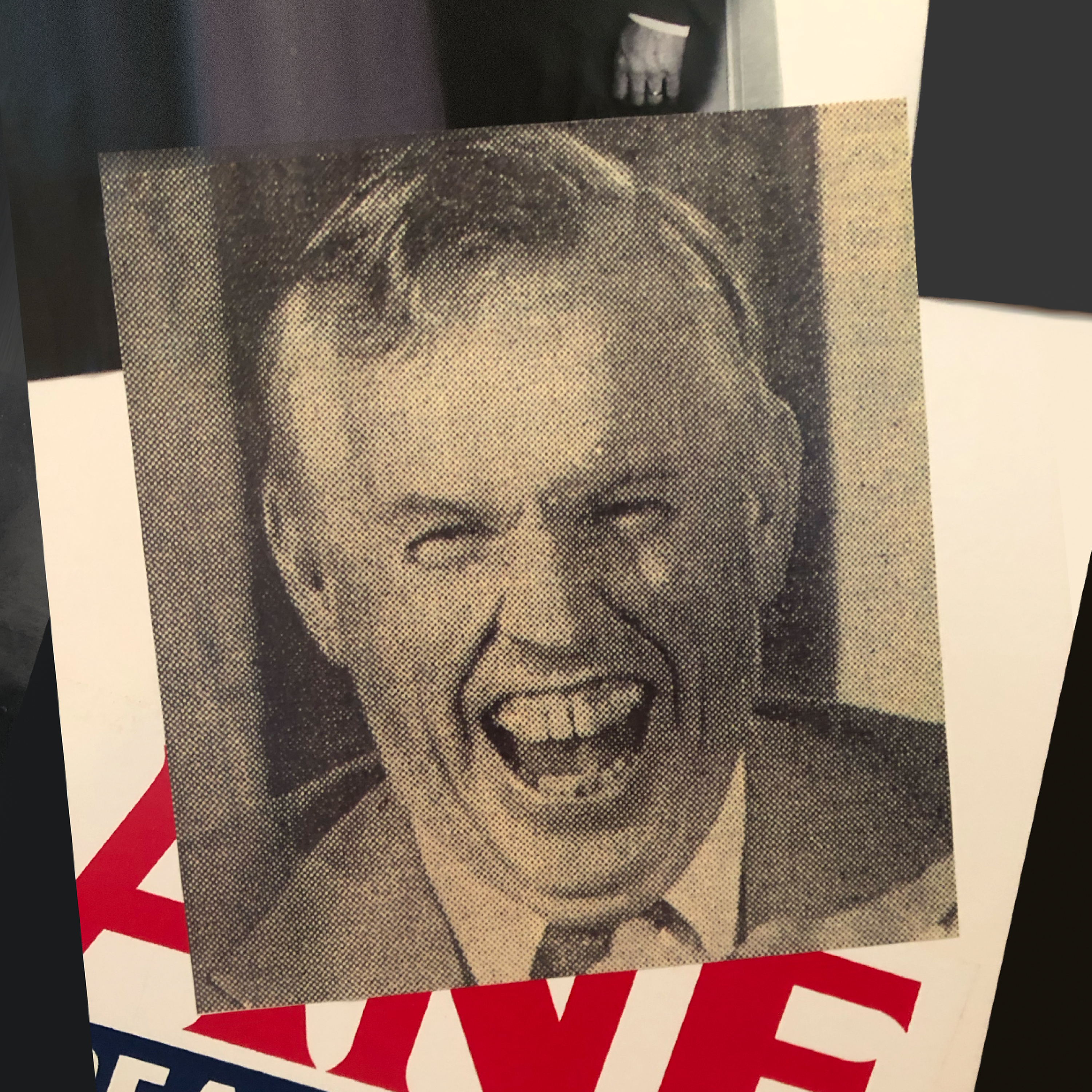
Support for Scratch and Win comes from Progressive Insurance. Fiscally responsible financial geniuses, monetary magicians. These are things people say about drivers who switch their car insurance to Progressive and save hundreds. Visit progressive.com to see if you could save Progressive Casualty Insurance Company and affiliates. Potential savings will vary. Not available in all states or situations. If you want to understand what sets the Massachusetts Lottery apart from all its peers, you have to understand the man at the top of it all. State Treasurer Bob Crane, who built the lottery from an idea on the page to a gambling juggernaut known throughout the world. Crane is your classic Boston Irish pole. Gleaming white hair, gleaming white teeth, huge, huge smile. And there's one story about Treasurer Crane that looms largest in his political mythology. It takes place long before the state lottery was created, before he was state treasurer even. But it explains a lot. I first heard the story from Renee Loth, longtime columnist for the Boston Globe. Okay, so the way I heard it, she heard it from Frank Phillips, one of the elder deans of the local press corps.
- [01:22]
William Galvin
You want a good story on Bob.
- [01:23]
Ian Coss
Crane, and he heard it from our sitting Secretary of state, William Galvin.
- [01:28]
William Galvin
Obviously, it's not firsthand. To me, it was 1960.
- [01:31]
Ian Coss
None of them could verify that this story is, strictly speaking true. So we'll treat it, like I said, as mythology. The legend of Bob Crane and the infamous stickers.
- [01:46]
William Galvin
1960. He was running for re election.
- [01:50]
Ian Coss
Bobby Crane was running for state rep in 1960. Crane had already been in the state legislature for a few years, serving his local Boston neighborhood of Brighton. So he was running that cycle as an incumbent.
- [02:05]
William Galvin
And no one took out papers against him.
- [02:07]
Bob Crane
No one was running against him.
- [02:09]
William Galvin
So he said, I can go out around the country and work for Jack Kennedy.
- [02:14]
Bob Crane
Kennedy.
- [02:15]
William Galvin
Kennedy.
- [02:15]
Bob Crane
Kennedy.
- [02:16]
William Galvin
Kennedy. Kennedy.
- [02:17]
Ian Coss
That year, Crane neglected his own campaign to go out and help his party, his team, in a historic race to put an Irish Catholic like himself in the White House.
- [02:28]
Bob Crane
So he's out there all summer long.
- [02:31]
Ian Coss
Working for Kennedy, and all of a.
- [02:33]
Bob Crane
Sudden some guy in Brighton decides to run against him.
- [02:36]
Ian Coss
And his opponent was a write in candidate. What we call it in Massachusetts is running on stickers.
- [02:43]
William Galvin
Running on stickers on stickers.
- [02:46]
Ian Coss
The reason they call it that is that the candidate's campaign would hand out stickers with the candidate's name printed proper, properly on it. Stickers you could put right on the ballot in that box for write in candidates to, like, save the voters from having to worry about getting it correct.
- [03:03]
William Galvin
And the opponent came very close because of the fact that Crane had not been paying A lot of attention to the area.
- [03:12]
Ian Coss
Some say the election was close. Some say Crane lost outright. And from here, the facts become harder to verify.
- [03:21]
William Galvin
Subsequently, there was a recount.
- [03:22]
Ian Coss
Bob calls for a recount. There's a recount.
- [03:26]
William Galvin
And he knows they store the ballots.
- [03:30]
Ian Coss
In the schoolhouse there over the weekend before they get to do it. The way I heard it, somebody in the Crane campaign had the bright idea of cranking up the heat in this school or wherever the ballots were being stored. They turn up the heat to 90 degrees to have the sticker glue basically melt off.
- [03:51]
William Galvin
All the stickers fall off the ballots. Bob wins. And that's the story.
- [03:59]
Ian Coss
That's the way I hear the story. Wonderful Boston Irish political story. Bob Crane passed away in 2018. But for what it's worth, he always denied the sticker story.
- [04:13]
William Galvin
That's very far fetched and not true. The fact is, I won a very close election by 93 votes, which I should have won by considerably more if I had paid attention to my own fight.
- [04:24]
Ian Coss
But setting aside whether this story is true or not, it tells us two things about the reputation of Bob Crane. First, that he was a team player, a man who would put his party ahead of himself. And second, that he was someone who would do whatever it took to win. And for the state Democratic Party, that is exactly the kind of person you want in charge of your lottery. From GBH News, this is Scratch and Win the making of America's most successful lottery. Hi, I'm Ian Coss. When states got into the gambling business in the 1960s and 70s, what they wanted out of it were the same things. Organized crime, money and power lotteries offered both. The question now was who in government would get to wield that awesome power? This is part two. The lottery Czar. The idea of a Massachusetts state lottery was not a new one in the 1970s. In fact, it had been kicked around the state house for decades by that time. And the man doing most of the kicking was named Francis Kelly, Attorney General.
- [06:06]
Bob Crane
Kelly lived around the corner.
- [06:09]
Ian Coss
This is Larry decara, a former Boston city councilor. But more importantly here. He was once a kid from the neighborhood of Dorchester and a very Irish corner of Dorchester.
- [06:21]
Bob Crane
He had a big house by Dorchester standards. And every year at Christmas, they'd have a sleigh with make believe presents on the lawn. And all the kids wondered whether the Kelly kids got more presents than anybody else. He was a character.
- [06:37]
Ian Coss
Francis Kelly held a number of political jobs in his career. Attorney general, lieutenant governor, city councilor. But that's not what he's known for. He's known for a lonely and quixotic campaign that he waged for over 30 years.
- [06:53]
Bob Crane
It was the Irish sweepstakes, weren't it?
- [06:55]
Ian Coss
Wasn't it?
- [06:56]
Bob Crane
Yes, and I'm Irish myself.
- [06:58]
Ian Coss
Sometime early on In World War II, Kelly became enamored with the idea of a statewide sweepstakes modeled on the then popular Irish sweepstakes.
- [07:08]
Bob Crane
Mr. Comiskey, how does it feel to be a winner of $75,000? I feel pretty happy over it.
- [07:13]
Ian Coss
These were lottery drawings held regularly in Dublin. But even though the drawings were in Ireland and raised money for Irish hospitals, the tickets were popular abroad and very popular in this corner of Dorchester.
- [07:27]
Bob Crane
It was a big deal even when I was a kid. You folks may have kissed the Blarney Stone for good luck, but I'll rub your head for good luck. All right, take a good rub. I hope you win next time.
- [07:36]
William Galvin
So do I.
- [07:36]
Bob Crane
People would send money to Ireland and get sweepstakes tickets. And he thought this was a great source of revenue.
- [07:44]
Ian Coss
So Kelly began a tradition. Once a year, every year, he would go before the state legislature. Legislature and hold hearings on sweepstakes. It was like a holiday. In fact, people called it Frankie Kelly Day. It started in the 1940s, continued all through the 1950s and through the 1960s, eventually earning him the name Sweepstakes Kelly.
- [08:12]
Bob Crane
Sweepstakes Kelly.
- [08:14]
Ian Coss
And the campaign wasn't just in the legislature.
- [08:17]
Bob Crane
He would go on the Jerry Williams show, the beginnings of. Of talk radio in Boston, and advocate for sweepstakes.
- [08:26]
Ian Coss
Good evening.
- [08:26]
Bob Crane
This is Jerry Williams here on this wonderful night.
- [08:30]
Ian Coss
He'd just been on that horse forever.
- [08:32]
Bob Crane
He'd been on it a long time. And I remember his children standing at the Charles Taylor school. Vote for my father, Francis Kelly. He'll give you sweepstakes. I'll still remember it.
- [08:47]
Ian Coss
And in due time, that promise would come true. One of the questions you have to ask about modern state lotteries is why did they start when they did and where they did? Why, after all those annual hearings, did Sweepstakes Kelly's idea finally take hold? I mentioned in the last episode that the first state lottery was in New Hampshire. The famously tax averse New Hampshire. But within a decade, most of the northeast followed suit. New York, New Jersey, Massachusetts, as far south as Maryland and as far west as Michigan. All these states needed new sources of revenue. That's a big piece of it that we'll get to. And to some extent, there was an actual contagion effect happening where lotteries would spread from one state to the next. Because if your residents are just driving across the state line to buy tickets anyway, you might as well keep those dollars in your own state. But there was something else going on that helps to explain why this cluster of states would all adopt lotteries around the same time. I first read about it in the work of lottery historian Jonathan Cohen. There's a direct correlation between the Catholic share of a state's population and the likelihood that it enacted one of the nation's first lotteries. The X factor is Catholics, which explains the concentration of lotteries. The first 14 are all in the northeast or so called Rust belt, All states with high percentages of Catholics. And of course, one of the highest percentages, one of the most Catholic states in the nation has for a long time been Massachusetts. Now, I would say the cultural divide between Protestants and Catholics does not feel especially salient in American society today. It's been blunted, crossed, layered over. But for a big slice of our history, this divide was very real. As in, my grandmother was disowned for marrying a Catholic. And this was also a major force in our politics. Catholicism has traditionally been tolerant of gambling. It was seen as a neutral act by the church, not necessarily good or bad, as long as it was conducted morally. Just think about the bingo games that Catholic parishes hold to raise funds, that is church sponsored gambling. Could you just introduce yourself? Tell me who you are.
- [11:23]
Bob Crane
My name is Linda Torregrossa. I come from Revere, Massachusetts for the last 55 years.
- [11:30]
Ian Coss
And are you a Catholic?
- [11:31]
Bob Crane
Oh, yes.
- [11:34]
Ian Coss
Of course I am. I'm at St. Anthony's St. Anthony's in Revere hosts bingo every Monday evening in a long, brightly lit church basement. Linda helps run the game here on Mondays. Then she helps out on Wednesdays at St. Joseph and Thursdays at Knights of Columbus. She loves it. She usually plays 30 bingo cards at once.
- [11:58]
Bob Crane
And I can watch my daughter when she comes. I can watch her cards.
- [12:02]
Ian Coss
And how many does she have? 12 to 15. What does the Catholic Church say about gambling as, like, a social activity?
- [12:10]
Bob Crane
I don't think we could run our church without bingo at all. So they teach you not to gamble your money away, but without this, we would have no Catholic church.
- [12:23]
Ian Coss
I think that's what you call a paradox. I was gonna say that, but I was being nice.
- [12:28]
Bob Crane
5 and 5.
- [12:30]
Ian Coss
As we talk, a steady stream of players was coming up to Linda's table, funding the church a few dollars and a few games at a time.
- [12:39]
Bob Crane
Do you have a dollar? Yes. Okay, you're all set.
- [12:43]
Ian Coss
Joe here's yours. Here's your change. The game bingo was first sold during the Great Depression, really, as a board game meant to be played by just a few people at a time. It was a Catholic priest who saw its potential as a revenue generator. If you could get enough people playing and buying in at once, you could have a handsome payout for the winner and keep some real money for the house, the church in this case.
- [13:11]
Bob Crane
You want these, Ken? Give me two more. Oh, God.
- [13:16]
Ian Coss
The problem was that if you have hundreds of people playing bingo in a church basement and some people, like Linda, playing 30 cards at a time, you need a lot of unique bingo cards. If any two are the same, you would get double winners. So this priest actually approached the game manufacturer with this idea, and soon enough they were offering the game. With not hundreds, but thousands of unique non repeating bingo cards, a phenomenon was born. And what does the shirt say?
- [13:48]
William Galvin
I don't know. You read it.
- [13:50]
Ian Coss
It says, what has balls and keeps the ladies smiling?
- [13:54]
Bob Crane
Bingo.
- [13:57]
Ian Coss
Bingo is part of that long cultural process of softening public opposition to gambling, of normalizing it. A lot of that softening took place in the basements of Catholic churches like this one. In Protestant churches, the situation was different. For many Protestant leaders, the very idea of gambling was an affront to their values and specifically their work ethic. Whether it's legal or illegal, gambling was, as one reverend put it, the antithesis of work. And if you look at survey Data from the 1960s, a healthy majority of Catholics supported the idea of a state lottery, while barely 40% of Protestants supported it. The thing that had changed by the 60s is that there are a lot more Catholics than there used to be. It started, of course, with waves of immigration from Ireland and Southern Europe in the 1800s. But the demographic shift continued well after the actual immigration had slowed down. One of Boston's first Irish mayors, Michael Curley, described it pretty succinctly.
- [15:18]
Bob Crane
Curley stood up and once said, the Irish shall prevail.
- [15:23]
Ian Coss
I heard the quote from Larry DiCara.
- [15:25]
Bob Crane
What do you mean? Or the Protestants will lose. Well, how do you predict that, Mr. Mayer? Ah, he said, the Catholics have children, the Protestants have dogs. And what happened is Catholics had lots of kids, especially after World War II, when most people were happy to still be around. We had three in our family, and we were sort of the smallest family in the street. There were fives and sixes was common. So Catholics had lots of babies. And eventually the babies turned 21 and they voted for Catholics. So you can see, decade by decade, the legislature becoming Less and less Protestant happened all over the state.
- [16:10]
Ian Coss
One of the great ironies of this state's love of gambling is that Massachusetts was once the domain of so called Yankee Republicans. White Anglo Saxon Protestants descended from the puritanical Pilgrims. People who didn't want you to drink on Sunday, let alone play bingo in a house of worship.
- [16:31]
Bob Crane
You couldn't do this on Sunday, you couldn't do that on Sunday. You couldn't gamble, you couldn't drink on election day. All these are these remnants of the Puritan settlers of Massachusetts.
- [16:45]
Ian Coss
But as the state became more Catholic, those old morality politics started to fade. By and large, the recent immigrants and their children gravitated towards the Democratic party, which for them was the more welcoming, less elitist of the two. And immigrants made the party strong. In 1948, the Democrats, led by Tip O'Neill, took control of the lower chamber of the state legislature. In 1958, they took the upper chamber. And of course in 1960, they lifted one of their own, JFK, to the highest office in the land. Here's Aaron O'Brien, a political scientist at UMass Boston.
- [17:31]
Aaron O'Brien
We talk a lot about the south and the South's transition from, you know, Democratic dominance to Republican dominance.
- [17:38]
Ian Coss
Right.
- [17:38]
Aaron O'Brien
An equal and opposite shift has happened here in Massachusetts.
- [17:42]
Ian Coss
From the 1960s on, Republicans in the state legislature entered a long decline. From a formidable opposition to a vocal minority to an endangered species.
- [17:55]
Aaron O'Brien
There really were Yankee Republicans back in the day. And then the Irish become a real power center. But that was a transition.
- [18:05]
Ian Coss
The longtime Massachusetts congressman Barney Frank told me that the state lottery was the last gasp of that cultural struggle between the Yankee Republicans and the Catholic Democrats. Momentum was building for lotteries all around the region. New York approved theirs in 1966, New Jersey in 1969. And in 1971, with a solidly Democratic state house and solid support among the public, the lonely crusade of sweepstakes Kelly was finally going to get a proper hit hearing. But there was another and perhaps more important reason why those Democrats were so interested in a state lottery. A more self interested reason.
- [18:54]
William Galvin
The patronage feature was very important to members of the legislature of that time. Yeah, I know that.
- [19:02]
Ian Coss
That's William Galvin, who again is our current Secretary of State. And when Galvin looks at all the possible motives for a state lottery, a very simple one rises to the top of the jobs, or in political parlance, patronage. Democrats in particular had a strong tradition of patronage. The modern Democratic party, the one that thrived in immigrant communities and dense urban centers, was built on a very transactional Kind of politics.
- [19:36]
Bob Crane
Very difficult for younger people today to understand that working for the government was something people really wanted to do again.
- [19:46]
Ian Coss
Larry Decara.
- [19:47]
Bob Crane
When I was on the city council 72 through 81, we had an incinerator right by the old expressway. And we would get guys who had come back from Vietnam jobs shoveling the stuff into the incinerator for 135 bucks a week. People needed those jobs. We were not a prosperous state. We were in a state which had been in economic decline probably since World War I. People would sit in my office asking for help, getting on a payroll, getting lifeguard jobs, which now they can't find people to be lifeguards. Every potential action of government was viewed as an opportunity to put people to.
- [20:34]
Ian Coss
Work in that kind of politics. The party was a social ladder, and once you got a foot on, it became part of your job to help get the next person on and the next person. And at the time, that kind of patronage was perfectly normal. It's literally what politics was for.
- [20:52]
Bob Crane
Tip O'Neill once told me that one Christmas he put 1,000 people on at the post office to work part time because the post office needed people at Christmas and people with 4 and 5 and 6 kids needed the money to buy Christmas presents. And you went through the congressman to do it. Very different from the culture today.
- [21:19]
Ian Coss
So now think about the business of gambling. It was everywhere. By one estimate, Illegal bookmakers employed 10,000 people in Massachusetts alone. If the state lottery could take over that business, it would be a patronage bonanza. Warehouse jobs, security jobs, delivery jobs, plus all the contracts you could dole out from marketing and research the relationships with small businesses, the millions of dollars that would have to be banked somewh somewhere. It all adds up to one political capital. A huge pile of political capital. Now, the trick was to make sure that it was Democrats who controlled that capital. But that would not be easy.
- [22:10]
William Galvin
A fight is on.
- [22:14]
Ian Coss
The trouble began in 1970 after a divisive and at times violent party convention. The Democrats failed to rally around their candidate and lost the governor's race that year.
- [22:26]
Bob Crane
The people of this state have spoken clearly and they have chosen Frank Sargent as their governor.
- [22:35]
William Galvin
Please.
- [22:37]
Ian Coss
This might seem to go against everything I've been saying about the rising power of Democrats, but this state has for a long time fancied moderate Republican governors, and Frank Sargent was very much that. A few months after Sargent took office, the legislature introduced a bill to create the state lottery. It was modeled very closely on the New Jersey lottery, but with one glaring difference. In New Jersey, the lottery was controlled by the governor. In Massachusetts, it would not be controlled by the governor.
- [23:15]
William Galvin
The legislature did not want to give the patronage that they perceived as part of the creation of the lottery to.
- [23:23]
Ian Coss
A Republican, again, William Galvin.
- [23:26]
William Galvin
And therefore, who else was there?
- [23:29]
Ian Coss
Who else but State Treasurer Bob Crane, who at that moment also happened to be the chair of of the state Democratic Party. When I started working on this story, I was kind of confused about what a treasurer does, why they matter. And every time I read about it or asked people about it, I would get this kind of grab bag list of responsibilities that made my mind wander. There was debt management, state bonds, unclaimed property, but also the convention center and public pensions, the clean water trust and the job. Is that a collection of responsibilities tied together under the loose theme of money? I guess. But here's how I've come to think about the job.
- [24:21]
William Galvin
Bob Crane's domain stretches as far as.
- [24:24]
Bob Crane
The eye can see.
- [24:25]
Ian Coss
The treasurer oversees a domain with plots of land scattered across state government. He's responsible for 18% of the state budget and has 270 employees. The individual plots are small enough that you don't necessarily see just how big the domain is, but it's there. Under Crane, the Treasurer's office has become rich in power and patronage. And in 1971, the legislature was offering to tack on one more plot. As somebody who knew Crane, why do you think he wanted to run the lottery?
- [25:03]
William Galvin
I'm not sure he did. In fact, I'm pretty sure he didn't.
- [25:07]
Ian Coss
According to William Galvin, Treasurer Crane didn't actually want the lottery. Not at first. It was really the legislature pushing the idea that he should run it. Crane himself was a teetotaler. He never drank and had no personal interest in gambling. And if all the role entailed was handing out low level jobs to the friends of legislators, then it wasn't all that exciting.
- [25:33]
William Galvin
He knew he was only sort of holding it as a placeholder for Democratic patriots. And that's true.
- [25:39]
Ian Coss
But there was another side to Crane, you have to understand, a less political side that the lottery did appeal to.
- [25:47]
William Galvin
When you think about the job of state treasurer, you're thinking about a banker. Bob was not a banker.
- [25:55]
Ian Coss
Jack Connors did advertising work for the Massachusetts lottery. But before and after that, he was a longtime friend of Bob Crane.
- [26:04]
William Galvin
Bob was a people guy. Bob was a showman.
- [26:07]
Ian Coss
Bob was an entertainer.
- [26:09]
William Galvin
He never saw a camera he couldn't fall in love with. Live on the old razzle dazzle, razzle dazzle.
- [26:19]
Ian Coss
When Bob Crane was a kid in the 20s and 30s. His dad worked as a stagehand for vaudeville shows. Bob was a bit of a caboose, the youngest of five, so he was the one who got to tag along, watching while his dad worked the lights and raised the curtain. He went to a lot of the shows and he was able to be backstage and he saw all of the great performers. This is Crane's daughter, Mary Lou. His friend Jack Connors once told me, your father knows the lyric to every song that was ever written. And he did.
- [27:00]
Bob Crane
He wasn't a bad singer.
- [27:01]
Ian Coss
You know, he had his own group, right? As treasurer, Crane had a piano installed in the state house and he assembled a singing group called the Treasury Notes, or T Notes for short.
- [27:14]
William Galvin
Piano tools. Here is a great talent of this organization.
- [27:17]
Ian Coss
In the 1970s, WGBH sent out to film them in concert at a nursing home. Think wood paneled walls, linoleum floors, red and white checkered tablecloths. In the footage, Crane is out in front, dressed in a three piece suit with wide lapels, paisley tie and a lot of buttons. He's flanked by backup singers with tambourines. Everyone is sweating. The pianist has pushed aside the bench so he can dance as he plays.
- [27:52]
William Galvin
A nursing home is a pretty conservative operation.
- [27:57]
Ian Coss
Until they started singing again, Crane's old friend, Jack Connors.
- [28:01]
William Galvin
Then in came the wheelchairs, in came the canes, in came the crutches, in came the folks and oh my, I hope Lilith and Crane rocks and rock to you.
- [28:15]
Ian Coss
As the song builds, Crane wades out into the elderly crowd, snapping in time and then holding out his arm as he delivers the final refrain. And he is. He's the happiest man on the planet. His daughter Mary Lou keeps a picture in her living room of Crane in that exact pose.
- [28:37]
William Galvin
The world of lottery gang.
- [28:46]
Ian Coss
What Crane came to realize was that the lottery could be more than a patronage machine if he ran it well, if he hired talented people, if those people created games that were fun and those games created millionaires all over the state. Crane could be the face of all that.
- [29:06]
William Galvin
He said, you know, it's not about the money, it's about the dreams.
- [29:10]
Ian Coss
With the lottery, a boring old state treasurer could become the purveyor of dreams.
- [29:16]
William Galvin
He saw it as an opportunity to reinvent himself. He was a performer. He was vaudeville. He enjoyed the status, he enjoyed the power. Not so much. He wasn't into that. He enjoyed being sort of on the stage, literally and figuratively.
- [29:38]
Ian Coss
So Crane was in. But it would be up to the legislature to put Crane on that stage. And not surprisingly, the brand new Republican governor had other plans.
- [29:50]
Bob Crane
When I fought with the legislature, it's.
- [29:53]
William Galvin
Been when the legislature was taking care.
- [29:56]
Bob Crane
Of its own interest, and I disagreed with him.
- [30:27]
Ian Coss
It's September of 1971, and the Democratic and largely Catholic legislature have finally followed through on the old dream of sweepstakes. Kelly House Bill 5925 sits on the governor's desk. An act providing for the establishment and operation of a state lottery. Now all the bill needs is one last signature. The governor is Francis Sargent, who a reporter once described as the Yankee Republican poster boy. Spare and angular with sandy hair, a lantern jaw and the S whistling through his teeth, living out in horse country growing his own vegetables and spending not a nickel more than necessary, end quote. In other words, Sargent was an old school Protestant who everyone would expect to oppose the lottery. And Sargent was skeptical about the state getting into the gambling business. But more than anything, he was defiant, offended that the Democrats would create the lottery in such a brazenly partisan fashion. And now Sargent faced a dilemma, because he was staring into the mouth of a political snare laid 200 years earlier for a governor just like him. Tell me about the Massachusetts State Constitution. Why is that document important in American history as well as state history?
- [31:59]
Aaron O'Brien
I'm just laughing. No one has ever asked. You teed me up in such a nice easy way when the nerdiest of all. I love it. Thank you.
- [32:08]
Ian Coss
Once again, I'm speaking with UMass political scientist and unabashed history nerd, Erin O'Brien.
- [32:15]
Aaron O'Brien
So it's incredibly important because it really serves as the model for the American Constitution.
- [32:21]
Ian Coss
Remember what I was saying last episode about how the state loves to tout our firsts? Well, here's a pretty good one. The Massachusetts State Constitution is the oldest functioning constitution in the world, and as Aaron O'Brien said, really the template for many others.
- [32:38]
Aaron O'Brien
Political scientists take such interest in it because they will compare the American Constitution to Massachusetts and then see how the two have diverged.
- [32:47]
Ian Coss
Wow. It's almost like a. You know, scientists love twins. Yes. You know, it's like they find twins who are separated at birth for some reason, and then they study their whole lives.
- [32:57]
Aaron O'Brien
Yes.
- [32:57]
Ian Coss
So what are the traditions that the US Constitution gets from the Massachusetts Constitution?
- [33:04]
Aaron O'Brien
The biggest one is legislative supremacy.
- [33:07]
Ian Coss
Legislative supremacy.
- [33:09]
Aaron O'Brien
And it makes complete sense. You know, you don't have to know much about American history to understand that. The Founders. I'm gonna teach something today. The founders were deeply distrustful of the crown.
- [33:21]
Ian Coss
Right. So even though we are now no longer a colony. The governor is the bad guy, is the crown is the overlord, and the legislature is the people.
- [33:30]
Aaron O'Brien
They're like, no, we're going to have legislative supremacy.
- [33:33]
Ian Coss
If you read Article 1 of the U.S. constitution, you'll see that the first thing it lays out is the legislative branch and all its powers. Spending, taxation, declaring war, regulating commerce, confirming judicial appointments. In theory and on paper, the legislature is clearly the most powerful of the three branches. So then how do the US Government and the Massachusetts state government diverge over time?
- [34:01]
Aaron O'Brien
As I say in class sometimes. Listen. A commonality of the modern American presidency is that every president has tried to expand his power, right, to take more power into the executive branch. Massachusetts, we haven't seen that happen.
- [34:19]
Ian Coss
So here's where our twin governments, separated at birth and nurtured by very different kinds of politics, have grown into very different political animals. I swear, this is not just more Massachusetts chauvinism, but our state government works much more like how the federal government is supposed to work. Legislative supremacy.
- [34:41]
Aaron O'Brien
The two most powerful people in Massachusetts politics are the speaker of the House and the Senate president, not the governor.
- [34:52]
Ian Coss
This is why Governor Francis Sargent was in a bind. His campaign slogan was put Sarge in charge. But now, with the lottery bill sitting on his desk, Sargent was being confronted with the fact of his own weakness. And that is something no politician likes to face. If he wanted to fight back, Sargent would need allies inside the legislature.
- [35:20]
Bob Crane
For Republicans in the House, of which I was one, the only real role you had was to carry the governor's water or to be a pain in the ass to the governor. There was no other role.
- [35:35]
Ian Coss
Marty linsky was in 1971, the number two Republican in the Massachusetts House, and he was prepared to carry his governor's water. He would vote against the lottery bill, and if the governor vetoed, he would sustain that veto. But the math was not great. Democrats had healthy majorities in both chambers, especially the House. And it was made even worse for Sargent by the fact that Bob Crane, the subject of the whole feud, was ultimately one of their own. Crane had started his career in the state legislature. That's where he built his relationships. And those relationships mattered.
- [36:15]
Bob Crane
When I first was elected to the legislature in 67, there were no offices, and there was a small reading room right off the chamber with a bunch of couches, and there was a mail room where you got your mail. So there was a lot of hanging around and a lot of sitting and schmoozing when the legislature was in recess. It was a very collegial place. And he was like everybody's kid brother, everybody's kid brother.
- [36:49]
Ian Coss
Crane, that is very unthreatening, very charming.
- [36:53]
Bob Crane
Knew everybody and not like many members, not burning with ambition either politically or legislatively.
- [37:03]
Ian Coss
Even after Crane left the legislature to become state treasurer, he went out of his way to maintain those relationships, relationships and maintain that goodwill. Linsky recalls a special, if unofficial, arrangement Crane offered to his old colleagues. Every year when the legislature adjourned in the fall, Everyone would get one last paycheck for the remainder of their salary. And that check had to last them through the holidays.
- [37:30]
Bob Crane
And so it was not atypical that members would run out of money near the end of the year.
- [37:38]
Ian Coss
So those legislators would go across the hall of the state house to the treasurer's office and see Crane.
- [37:44]
Bob Crane
When I went into his office, he said, I'll make a call, go down to Citibank and go to the teller and you'll get an advance on your salary.
- [37:55]
Ian Coss
It was basically an interest free loan. Nothing sketchy, nothing secretive, just a small thing. Crane, as treasurer, had the power to.
- [38:04]
Bob Crane
Offer, had this arrangement, anybody could take advantage of it.
- [38:08]
Ian Coss
Crane had spent years cultivating these relationships around the statehouse, which meant that once he did set his sights on the prize of the lottery, he would be a difficult man to deny.
- [38:20]
Bob Crane
People were motivated by. This was something we were doing for Crane. It was probably the only moment in my time in the state house where something was important to Crane, you know, and it's very, it's very personal.
- [38:44]
Ian Coss
All through the summer of 1971, Republican legislators fumed about the idea of Crane controlling the state's gambling operation. One feared the treasurer would be like the czar of the lottery with almost no checks on his power. And yet on September 9, both chambers passed the bill, sending it to the governor's desk. Two weeks after that, Governor Sargent decided to make his stand. He sent it back with a veto. The creation of the lottery was always going to be a team effort. And it took one last Irishman to get it the rest of the way there. Kevin Harrington.
- [39:33]
William Galvin
I am honored to place the name of Kevin B. Harrington of Salem. A nomination for the position of president of the Massachusetts Senate.
- [39:42]
Ian Coss
Could you just describe him physically, what he looked like, his demeanor?
- [39:46]
William Galvin
Kevin could be very imposing. He was 6ft 10.
- [39:49]
Ian Coss
Ed Burke served with Kevin Harrington in the state Senate, where Harrington, who, depending on who you ask, was either 6 foot 9 inches or 6 foot 10, had just been elected president of the chamber.
- [40:01]
Bob Crane
Have all the senators voted?
- [40:03]
William Galvin
And as his older brother once said, what Was a source of awkwardness when he was an adolescent, Became in his adult life. His height, his demeanor, his presence could be scary.
- [40:15]
Ian Coss
Harrington smoked long Churchillian cigars, long as croquet mallets in Burke's memory. And people called him king Kevin. He was intimidating, but he was also cunning. A vote counter. He had a boat that was named roll call, if that says anything about his love of the legislative process.
- [40:36]
Bob Crane
Therefore, Kevin b. Harrington has been duly.
- [40:39]
William Galvin
Elected president of the senate.
- [40:41]
Ian Coss
And in 1971, Kevin Harrington also had a lot to prove.
- [40:46]
William Galvin
He's the brand new senate president. He really wanted to make his mark. He wanted to make sure that he could bring home the bacon.
- [40:55]
Ian Coss
In essence, Harrington, King Kevin chose to bet his power on the lottery. If he could get it over the hill, his reputation would be established. If he failed, he would have a lot more to worry about than just one bill. His reputation and potentially his position were at stake. The numbers were pretty close in the senate. And the problem for Harrington was that six of his members, six of his fellow democrats, had already gone on record opposing the lottery bill, including freshman state senator Ed Burke.
- [41:30]
William Galvin
I did not want to change my position. However, that's when your vote gets noted.
- [41:34]
Ian Coss
Burke was, in his first term, 27 years old, in his words. He was still figuring out where the bathrooms were in the state house when he was first asked to take a position on the idea of a state lottery.
- [41:46]
William Galvin
I remember getting letters Back then. Most of our constituent communication was either a phone call or letters from especially protestant ministers.
- [41:56]
Ian Coss
And those ministers in his district felt very strongly that the state had no business promoting gambling. Now, Burke himself is no protestant. He was an Irish catholic democrat who was familiar with church bingo games. But his district was competitive. He could not afford to alienate people. And he did have some personal doubts about a state lottery, that it would function as a regressive tax on the state's poor residents. For Burke, it just didn't add up.
- [42:27]
William Galvin
My sense is that we're pretty much left to our own thinking as to how to vote. And I voted no, as did maybe five or six of my democratic colleagues, Some of whom I respected a lot. It was really the override that really the pressure mounted.
- [42:48]
Ian Coss
Here's how the math broke down for the override. There were 40 members of the state Senate, except one had recently passed away from a heart attack.
- [42:57]
William Galvin
I'm sure he was a lottery supporter. He died of a heart attack, I think, in the summer of 1971.
- [43:03]
Ian Coss
That meant there were 39 senators. Harrington needed 26 to override, but the week of the vote, he only had 22 committed. So the pressure was on those Democratic defectors. He needed four of them to switch their votes and back the lottery. Is it kind of a bad look to change your vote like that?
- [43:23]
William Galvin
I thought so. I thought so. That's when your name would get in the newspaper. Whoa. Why did you switch? What motivated you? Maybe being able to get your brother in law appointed to the lottery administration.
- [43:38]
Ian Coss
Burke did not want to be in that position of looking like a flip flopper, an opportunist, and nor for that matter, did anyone else. The governor's veto came down on a Monday. Harrington had hoped to override that same week, but by Thursday it was clear he did not have the votes. Just one defector had flipped. Another said he would attempt to survey his district over the weekend, including rabbis, ministers, priests and sisters. The other defectors were holding firm or saying very little. But Harrington, we can assume, wasn't just asking nicely.
- [44:20]
Aaron O'Brien
If you were a member of the Senate who stepped out of line from the Senate President, guess what? Then you're not gonna be on the key committee again.
- [44:30]
Ian Coss
Political scientist Aaron O'Brien.
- [44:32]
Aaron O'Brien
You're not getting Ways and Means, you're getting dog catching. You're getting that. And so they've been able to rule with an iron fist because they control the goodies, the spoils of being in office.
- [44:46]
Ian Coss
Part of what I find so fascinating about the system of political patronage is that it all flows from the top. It's like a mountain stream. The Senate president hands out key committee jobs. Those jobs provide an opportunity to hand out more jobs and more goodies flowing all the way down to the regular citizens at the base of the mountain, the lifeguards and trash collectors. Everyone was beholden to someone. And at the very apex of the system were the two most powerful people in government, the House speaker and Senate President.
- [45:20]
Aaron O'Brien
So it was easy to keep the, you know, the horses in line, if you will.
- [45:25]
Ian Coss
One of the defectors on the lottery bill happened to chair the Committee on Social Welfare. He eventually opted to switch his vote. Another defector chaired the Committee on Banks and Banking. He also opted to switch his vote and his brother in law was later named Assistant counsel to the lottery. Finally, the Senator who spent the weekend polling ministers and rabbis in his district, he switched his vote as well. That left Harrington just one vote short. But when the Senate reconvened on Monday, King Kevin was not celebrating. There was still trouble in the ranks. A rumor was circulating that Governor Sargent was doing some lobbying of his own and had offered a Plum job at a state college to a Democratic senator known as James Blackie Burke. This is not the Senator Ed Burke we have heard from. It's a different Burke, this Blackie Burke. Burke also happened to be Harrington's rival, a man who had sought the Senate presidency himself. He had originally supported the lottery bill, but now rumor had it he was prepared to vote against it. As one Globe columnist pointed out, the verb burke has an appropriately sinister meaning to murder by suffocation or strangulation. It appeared that King Kevin was about to get Burked. The vote was scheduled for that day, Monday at 5pm Senate.
- [47:03]
Bob Crane
We'll come to order.
- [47:05]
William Galvin
When a roll call was open, a bell, like a school bell, would ring.
- [47:09]
Ian Coss
Outside the Senate chamber again, Senator Ed Burke.
- [47:13]
William Galvin
And would keep ringing during the time that the vote was being cast and tabulated.
- [47:20]
Ian Coss
The bell just keeps ringing until every vote is cast.
- [47:24]
William Galvin
Then the bell shuts. It was like a siren going down center street in Jamaica Plain. It had this penetrating ring, but that's the way it was.
- [47:37]
Ian Coss
As the bell rang on, an almost choreographed drama unfolded inside the chamber. All the Republicans voted to sustain standing with their governor, while most of the Democrats voted to override. That brought the total to 23 and 13. But one of Harrington's key flip votes was suddenly looking wobbly. During the debate period, a leading Republican senator named David Locke had personally singled out this flip flopper, Preston right there on the Senate floor for going back on his principles.
- [48:13]
William Galvin
It never got to be ad hominem, but he was. There was a certain amount of sarcasm. You know, why now are you considering? Because I think David might have heard there were maybe some patronage issues that might have been involved in that. So David went out to embarrass him.
- [48:28]
Ian Coss
Now, that embarrassed senator remained seated during the roll call, not even responding when his name was called, just looking down at the papers in his hand. And meanwhile, Blackie Burke, the other big question mark, was nowhere to be seen. He wasn't even there.
- [48:46]
William Galvin
Blackie had not been in the chamber as far as I know.
- [48:49]
Ian Coss
Tension was building, and Harrington, though he may have loomed over that chamber at 6ft 9 or 10 inches tall, was looking precarious. And the bell, we can only assume, kept on ringing. But Harrington surely knew more than he was letting on. He had allowed this vote to take place. And very quickly, the choreography became clear. First, Harrington delivered his own vote of yes on the override, which itself is unusual. The President generally only votes as a tiebreaker. So now there were 24 votes. Then Harrington personally called on his wobbly Flip vote. The man staring at his papers, the senator at last stood. He too voted yes, 25 votes. Just one more to go. And it could only come from one person.
- [49:51]
William Galvin
It's 25 to 13. The roll call is still open. The bell, I think, was still ringing. That's where it was. There was a curtain that people would come through as they entered the Senate chamber.
- [50:07]
Ian Coss
A blue velvet curtain hung over the chamber door. And just as the Reluctant vote number 25 sat down, the curtain opened.
- [50:16]
William Galvin
Blackie pops in through the curtain, is recognized immediately by Kevin Harrington. This is the whole ball game, how this guy's going to vote. And Mr. President, I vote to override. And then disappeared. Poof.
- [50:32]
Ian Coss
As the Boston Globes David Nyhan reported, there was a gasp and a slight ripple of applause in the chamber as the bill became law over the veto.
- [50:43]
William Galvin
26, 13 deals done.
- [50:50]
Ian Coss
Senate will be in a brief recess. Treasurer Bob Crane gave a quote for that Globe article calling the vote a great victory for the Democratic Party and the Democratic legislature. Yes, the lottery was created. But just as important, party loyalty was maintained, and the governor was reminded of his place. Ed Burke, by the way, the man I interviewed never did change his vote. He was one of only a few Democrats who continued to oppose the lottery, and yet somehow he avoided the Senate president's withering gaze.
- [51:28]
William Galvin
Kevin later told me he said, listen, your first year, you're here for the right reasons. I thought I might be able to get the votes without having to lean.
- [51:38]
Ian Coss
On you as a brand new senator from a competitive district. The younger Burke had been spared the embarrassment of changing his vote. Somehow that detail, more than any other, I think, reveals how calculated the entire effort was. Democratic politics, especially in those days, was a true team sport. Everyone had their part to play. And this bill, this vote, was not Burke's time to sacrifice himself for the team. I'm sure his time would come. He served in the senate for another 20 years, and you don't usually last that long unless you're a team player.
- [52:24]
Bob Crane
There used to be bingos all over the place, but a lot closed.
- [52:28]
Ian Coss
A lot of them closed today. Those church bingo games are a fading tradition.
- [52:34]
Bob Crane
This is the only big one around.
- [52:37]
Ian Coss
St. Anthony's yeah, there may be just a few dozen left in the whole state. St. Anthony's in Revere, Divine Mercy in Quincy, Sacred heart in Worcester, St. Cecilia in Leominster. In a way, they are a victim of their own success. They charted the path for their competition from the shadows and margins of society, out into the open. Now the weekly bingo game is Just one of many places you can try your luck on a game of chance. The corner store, the casino, your phone. But in 1971, nothing about that future was certain. It was time for Bob Crane, the showman, to step up and play his part. Crane understood from the beginning that, yes, the lottery was serious business. Yes, they were government employees tasked with raising revenue for the state. But ultimately their job was to sell a product. And the product had to be fun. That's the great irony of Crane's lottery. People expected him to load it up with political hacks and run it into the ground. They thought they were getting Crane the partisan, but they were also getting Crane the entertainer. We won't always see Crane's hand at work in the series, but know that he is always there. He was there in 1974 when the state took a chance on that first scratch ticket. And he was there in 1970 when the state took on an even riskier endeavor, challenging the underworld of illegal gambling head on.
- [54:29]
William Galvin
This is Lottery Live.
- [54:31]
Ian Coss
Last night, the daily number on a $1 bet, all four. By copying their most popular game. That's next time.
- [54:52]
William Galvin
You made me love you I didn't want to do it I didn't want to do it you made me want you and all the time you knew it I guess you always knew you made me happy sometimes you made me.
- [55:18]
Bob Crane
Sad.
- [55:21]
William Galvin
But there were times, dear, you made me feel so bad.
- [55:31]
Ian Coss
The series is produced by Isabel Hibbard and myself, Ian Coss. It's edited by Lacey Roberts. The editorial Supervisor is Jennifer McKim, with support from Ryan Alderman. Mae Lei is the project manager, and the executive producer is Devin Maverick Robbins. Special thanks to Mary Lou Crane, who, in addition to sharing stories of her father, also shared some wonderful images and archival material. There are also a few people who helped me understand Crane and this era. Whose voices you don't? Barney Frank, Kenny Young, George Regan, William Young, Al Kramer, Jack Murphy, and George Sacco. I'm grateful for your time. For more info on the series and full Transcripts, go to gbhnews.org scratchandwin. You can also find videos of the episodes on the GBH YouTube channel with incredible archival footage. The artwork is by Bill Miller and Mami Hauabawo. Our closing song is yous Made Me Love youe performed by Massachusetts State Treasurer Bob Crane. Scratch and Win is a production of GBH News and distributed by prx.
- [56:58]
William Galvin
And all the time, you knew it. Thank you.
- [57:15]
Ian Coss
Hey, I want to make sure that you know this series you're listening to right now is part of an ongoing feed telling stories from the past to help us understand our present. Our first season is all about infrastructure. The second season is about gambling, and we've got more seasons planned. So if you want to stay on top of what the team and I are doing, go ahead and follow or subscribe to this podcast wherever you listen. We've got some really exciting stories coming up and I hope you'll stay with us. Thanks.
- [57:49]
Bob Crane
From prx.