Loading summary
Transcript203 lines
- [00:00]
Kylie Lowe
The greater New England area can evoke images of luxurious getaways. But what really lies beyond this coast? Both archives of dark history and more modern mysteries, all of which I have set out to uncover. I'm Kylie Lowe, investigative journalist and host of Dark Down East. Each week I dig deeper into the cases from the place I call home and into the stories of the people at the hearts of them. Listen to Dark down east now, wherever you get your podcasts. Support for Scratch and Win comes from progressive Insurance. Fiscally responsible financial geniuses, monetary magicians. These are things people say about drivers who switch their car insurance to Progressive and save hundreds. Visit progressive.com to see if you could save Progressive Casualty Insurance Company and affiliates. Potential savings will vary. Not available in all states or situations. Lotto fever. Show us your lotto tickets. In the mid-1980s, a strange new phenomenon swept across America.
- [01:05]
Don Hayes
The largest lump sum cash payment in.
- [01:09]
Kylie Lowe
The history of the Maryland State Lottery. Lottery jackpots unlike anything the world had ever known. So big they would drive media coverage, which inspired more people to play, which only made the jackpots bigger. This cyclical effect became known as lottery fever.
- [01:27]
Don Hayes
This September in Florida, a record $105 million jackpot sparked the latest outbreak of lottery fever.
- [01:34]
Kylie Lowe
People are buying anywhere. Attention shopper Seabee's Foods, Villa park has just been notified that we sold the $42 million winning Illinois lottery ticket. In the 80s, lottery winners became minor celebrities.
- [01:47]
Don Hayes
How did you pick the numbers? What did the numbers mean?
- [01:50]
Kylie Lowe
Do you play regularly? And the drawings themselves were a TV, or at least they certainly were in Massachusetts.
- [01:57]
Jonathan Cohen
Number 11 12, 31, 34.
- [02:01]
Kylie Lowe
Here's number 5, 1, 5 12.
- [02:04]
Don Hayes
So, long story short, a friend sent me a article that was saying that the lottery was doing a open call for hosts, and they thought I'd be great for it.
- [02:17]
Kylie Lowe
This is Don Hayes, who at the time was a recently graduated communications major living in Boston and working as an assistant to the manager of an AM radio station. Not her dream job being the face of a nationwide obsession. Dream job.
- [02:35]
Don Hayes
What they did was they had a talent search. They just opened the doors and said, anybody come on down and audition to be the new lottery host.
- [02:42]
Kylie Lowe
The way Hayes describes it, the scene was something akin to an American Idol audition. Long lines, people ushering you along, and finally, a brief moment in a sterile conference room in which to make an impression.
- [02:56]
Don Hayes
They asked you a few questions. Thank you. Next.
- [02:59]
Kylie Lowe
Amazingly, Hayes survived that first round.
- [03:02]
Don Hayes
I got called back.
- [03:03]
Kylie Lowe
And the next round, and the next round.
- [03:05]
Don Hayes
So they went from 4,000, I think, down to 126, to another number. And then at the end, they had a pageant of sorts.
- [03:20]
Kylie Lowe
What did you do in that pageant when it was down to the finalists?
- [03:25]
Don Hayes
Well, that's kind of a cool story, too. So keeping in mind, this is in the 80s. I'm a black woman. There were 16 finalists. A lot of the white women, I'm sure, thought that, well, we don't have to worry about her. So I always dressed down when I was around them. So the day of the pageant, I went. There was a clothier, Yolanda. And when you wanted anything special, you would go to Yolanda.
- [03:51]
Kylie Lowe
Hayes went to Yolanda, got the most.
- [03:53]
Don Hayes
Amazing dress, shoes and earrings. Like, that was just stunning. Walked into the finale, glasses on, no makeup, did my change, bang. And then when I literally, when I walked out of my area to dress, it was like, what? Who's that?
- [04:11]
Kylie Lowe
It's like that moment in. You know, that moment in every teen movie where, like, there's the nerdy girl and all she has to do is take off her glasses and let her hair down, and everyone's all of a sudden like, oh, my gosh, she's beautiful.
- [04:24]
Don Hayes
Exactly. That was exactly it.
- [04:30]
Kylie Lowe
Hayes advanced once again to the very last stage, complete with a mock drawing and a whimsical pageant question. At this point, there were just three finalists. One would become the face of the Massachusetts lottery. And looking across the stage, she could see the obvious face for the job was up there with her very Boston.
- [04:53]
Don Hayes
You know, Kelly, red hair, very Irish looking.
- [04:57]
Kylie Lowe
And did it feel just inevitable that the redhead Irish woman would be the face of the lottery.
- [05:02]
Don Hayes
It all played out as you would think it would in Boston. You know, it was the way the time was.
- [05:12]
Kylie Lowe
Hayes came in second place. No job, no big break. But her dream was not over yet. Hayes, like the lottery itself, was gonna get a second chance at stardom. From GBH News, this is scratch and win the making of America's most successful lottery. I'm Ian co. In the 1980s, state lotteries became a cultural presence like they had never been before. Driven by televised drawings, constant press coverage, and, of course, slick advertising. It was not enough for the states to just offer an appealing product. If they wanted to drive growth, they needed to tell a story about that product, weave it into the imaginations and daily lives of their citizens. All of which raised a delicate. Just how far should the state go to promote gambling? This is part six, the game dreams are made of. There are three core games that the Massachusetts lottery rode to the top of the lottery charts. Two We've heard scratch tickets and the numbers game. The third is lotto. Could you just talk me through the design of the lotto game? How does it work?
- [06:57]
Jack Connors
Yeah, so lotto is a game that is built on long odds and big jackpots.
- [07:03]
Kylie Lowe
Jonathan Cohen, who we've heard before, is the author of For a Dollar and a State Lotteries in Modern America.
- [07:10]
Jack Connors
And the appeal is that there will be many, many drawings over time. And if nobody wins, the pot gets bigger so that the odds stay the same for each drawing. But over time, what you will win will be more and more money.
- [07:25]
Kylie Lowe
I find that today that term lotto doesn't mean a lot to people, or it's become almost a generic stand in for lottery. But it is a distinct category of lottery game that includes products. I'm guessing you have heard of Powerball and Mega Millions. Those games, which can now have jackpots well over a billion dollars, are lotto games.
- [07:48]
Jack Connors
The fundamental piece of lotto is that there's a rollover and that the jackpot is not fixed and it gets bigger over time. And that was relatively innovative.
- [07:57]
Kylie Lowe
Like everything else, lotto was once new. And perhaps not surprisingly, at this point in our story, the first lottery in America to try this new kind of game was Massachusetts. So can you tell me the story of Massachusetts first attempt at lotto?
- [08:13]
Jack Connors
Yeah, it's a really short story. They introduced it in 1978. And Lotto, it just doesn't work.
- [08:22]
Kylie Lowe
Lotto is a delicate game. It has to be handled just right in order to catch on.
- [08:28]
Jack Connors
Players are tasked with selecting a set of numbers from within a specific range. So the most common sort of structure would be you have to pick six numbers ranging from 1 through 49.
- [08:39]
Kylie Lowe
That means 14 million possible combinations. So the odds here are way longer than the daily number game. And you want the odds long because the jackpot will never grow if you have too many winners. The hits have to be rare. But at the same time, you need people to keep playing. That's what I mean when I say it's a delicate game.
- [09:02]
Jack Connors
You need people to sort of put their faith in a game that they've never played before on the promise of a massive jackpot. And then the snowball can start in Massachusetts.
- [09:11]
Kylie Lowe
That first version of lotto never snowballed. It never reached the point where the jackpot is so big it becomes a story. And everyone starts imagining that they could be the lucky one in 14 million to receive a truly life changing amount of money.
- [09:27]
Jack Connors
The lottery commission just like gives up.
- [09:29]
Kylie Lowe
About three months after the game launched, it was canceled without ever having a single winner. The fever didn't catch. Like he said, it's a short story. Eventually, Massachusetts got back into the Lotto game in 1982. And the contrast between Lotto 1.0 and Lotto 2.0 is pretty stunning. In a word, the difference was marketing. Lotteries of all kinds throughout history have depended on good advertising. Because as we saw with the failure of lotto, the game only works if a lot of people play. Scale is essential. But as states began the long process of bringing these games out of the shadows and into the public sphere, one of their big limits was often advertising. For example, there was a federal law on the books prohibiting all interstate distribution of gambling promotion by mail. That meant if the lottery placed an ad in the Boston Globe and it landed on a doorstep in Rhode island, the paper was breaking the law. Similar rules were in effect for broadcasting, which meant that lottery drawings for many years could not be shown on TV at all, let alone lottery ads. By the late 1970s, those restrictions were lifted, marketing budgets increased, and lotteries started to find their voice. This is when Larry decara mounted his ill fated campaign for state treasurer, the one with all the candidates with similar sounding names. The irony is that those early ads that Dacara felt were too enticing, too pushy. They looked tame compared with what was coming.
- [11:27]
Jonathan Cohen
So in the earliest years of Hill Holiday, the only people that would hire us are the ones that didn't know better.
- [11:34]
Kylie Lowe
Jack Connors is one of the founders of the ad agency Hill holiday. In the 1970s. They were just getting started, taking whatever clients they could get. But after working on a political campaign for a powerful Boston Democrat, Connors happened to meet state treasurer Bob Crane, the so called czar of the lottery.
- [11:56]
Jonathan Cohen
And I happened to fall in love with Bob Crane. He was a true character.
- [12:08]
Kylie Lowe
Crane, remember, was a vaudeville man, an entertainer who reveled in the rough political style of the state. When Connors first met him, the treasurer seemed larger than life.
- [12:19]
Jonathan Cohen
I saw him as a very happy warrior, but to him it was all a sport. And your job is to hit one other part.
- [12:32]
Kylie Lowe
We heard from Jack Connors back in episode two. I introduced him as a longtime friend of Crane's, which he is. But that relationship really began through marketing. The failure of lotto was obviously a black eye for Crain's Lottery, which up to that point had been on a hot streak. And that same year, the first version of lotto was canceled. 1979, the Massachusetts Lottery dropped its original ad firm it was time for fresh ideas. And Jack Connors was able to get an audience with the treasurer.
- [13:08]
Jonathan Cohen
As is the case with a lot of state contracts, there's a sort of a bidding process. But in this case, it wasn't so much about who was going to charge more or less. Everyone was averaging the same percentage, if you will. So the competition really was about who's creative is the most attractive to the treasurer and the head of the lottery, et cetera. And we had built relationships, but we had to win. We had to go over the final hurdle.
- [13:40]
Kylie Lowe
Hill Holiday was considered the most creative agency in Boston. We were the blue collar crazy guys. Tony Winch worked in creative at Hill Holiday and describes the place as pretty much lifted straight out of Mad Men. Golf in the hallways, three martini lunches. We would joke around. We said, if you don't get the work done in the morning, it's not gonna get done.
- [14:03]
Jonathan Cohen
If you'd go out to lunch with.
- [14:04]
Kylie Lowe
The guys or clients and you'd roll back in at 3:00 and at 4:00 they'd have cocktails. They had a phrase for it. AM advertising was a very, very different era. But the work that did get done stood out. It was creative, inspired, a little edgy.
- [14:22]
Don Hayes
This is Hill Holiday's real life Real answers campaign.
- [14:25]
Kylie Lowe
Hill Holiday made waves by creating ads that didn't always look like ads. There's a lot of paperwork here. There's always paperwork. There was this famous campaign for Hancock Insurance that never actually says what Hancock is selling. They look real. The actors don't look at the camera, they look away.
- [14:44]
Don Hayes
They mumble and shrug. The sales pitch is never spoken. It's soft, but it sells.
- [14:50]
Kylie Lowe
Hill Holiday was one of many agencies around the country ushering in a new era in advertising, a looser, weirder era that was less about products and more about feelings. In fact, I never thought I was working. It was so much fun. In other words, they were exactly what the lottery needed. Crain's Lottery took a chance on the young upstarts. One account executive at Hill Holiday told me that when they first got that lottery contract, it was a third of all their business. It was a huge get snagged from the most prestigious agency in town and it became their showpiece. A chance to really flex their creativity.
- [15:38]
Don Hayes
I got my load at 5:18 on.
- [15:41]
Kylie Lowe
The road by 6:03, for instance, we did a TV commercial with a guy in a truck. Again, Tony Winch was a creative director on the Lottery account and he was going down Route 495 and into Route 128. This ad was for the daily numbers game, which was still a big money maker for the lottery. In the ad, that truck driver sees so many numbers that eventually he stops to place a bet. Give me 4, 9, 5.
- [16:12]
Don Hayes
You can say your number.
- [16:13]
Kylie Lowe
Every time they saw a number, we wanted them to think about playing that number in the lottery day began with.
- [16:21]
Jack Connors
An old tin can.
- [16:22]
Kylie Lowe
They gave me 8:02. In another ad, a cab driver keeps encountering the number 802 on a clock, a gas pump, a diner receipt, until she too can't resist running into a convenience store to play her number. Having lunch, I had a hunch. A lot of early lottery advertising focused on how the games brought in money for education and other good causes. Or they tended to be informational, simply explaining how the games worked. These ads were clearly something else. I don't know unless you play 8:02. Hey, is the. They're leaning into the thrill and mysticism of betting on numbers and also normalizing it, something you do as part of your daily routine.
- [17:11]
Don Hayes
Have you played your number today?
- [17:16]
Kylie Lowe
But for the relaunch of lotto, Hill Holiday would raise the bar once again. It was 1982, so the state was now in the midst of its tax revolt and the only political pressure Bob Crane faced was was to bring in as much money as possible. The attitude was let it rip. So Hill Holiday stuck one of their sharpest minds on the task, Seamus McGuire.
- [17:41]
Jonathan Cohen
Seamus McGuire was just a wonderful human being and a great writer and he.
- [17:48]
Kylie Lowe
Did an awful lot of his best work. If he was in a bar writing.
- [17:51]
Jonathan Cohen
He'S down on a napkin.
- [17:53]
Kylie Lowe
Maguire's barstool brainstorms were so legendary that the agency installed a full mahogany topped bar with a brass rail in the corner of his office. Full bar in his office. And he'd literally sit on a bar stool and breathe that way. So here we have Maguire, a drink in hand and a twinkle in his eye, staring down the same old game the state had tried before. Lotto. That was the name, Just lotto. Apparently there was one other name idea in the air too. They could call it pick six, referencing how many numbers you got to pick. But Maguire didn't like either of those names. They were dull, instructive, a little pedantic even. Maguire wanted something fun and catchy. He wrote down the name Megabucks along with a phrase, the game that dreams are made of. Again, Jack Connors.
- [18:57]
Jonathan Cohen
If people were going to buy a ticket, they weren't buying a ticket to read the directions. It was. It was Very simple. We didn't want to complicate it.
- [19:06]
Kylie Lowe
And for the TV ad, Seamus McGuire brought that simple dream to life.
- [19:11]
Jonathan Cohen
I don't know if you recall the Wendy's commercial. Where's the beef?
- [19:16]
Don Hayes
It certainly is a big bun. It's a very big bunch.
- [19:19]
Kylie Lowe
This is the iconic 80s ad where three elderly women inspect a hamburger with a giant bun and a tiny patty.
- [19:28]
Don Hayes
Where's the beef?
- [19:29]
Kylie Lowe
Culminating, of course, in that classic line delivered by a cantankerous Russian American woman who did her first TV commercial at age 80, Clara Pella.
- [19:40]
Don Hayes
Hey, where's the beef? I don't think there's anybody back there.
- [19:43]
Jonathan Cohen
The woman who was the star of that commercial, Seamus brought her in to do a lottery commercial.
- [19:49]
Kylie Lowe
It's actually even more impressive than he's making it sound because Maguire hired Clara Peller to be in the Megabucks ad before the Wendy's ad came out, when Peller was basically unknown. Somehow Maguire could spot a phenomenon when he saw one, and Peller became the star of Megabucks.
- [20:08]
Jonathan Cohen
The scene is a boardroom.
- [20:10]
Kylie Lowe
It's a pretty quirky ad, and all.
- [20:12]
Jonathan Cohen
Those old stuffy gents in the boardroom looking at a bucket.
- [20:18]
Don Hayes
Who called this meeting?
- [20:20]
Jonathan Cohen
Not me. I don't know.
- [20:23]
Kylie Lowe
I did. She did. She did.
- [20:26]
Don Hayes
She did.
- [20:26]
Kylie Lowe
She did. I did. The bucket on the table is a mop bucket. And Peller's character is all done mopping floors because she just won Megabucks.
- [20:36]
Don Hayes
Have you all heard of Megabuck? Megabucks. Megabucks, Megabucks. Oh, Megabucks.
- [20:40]
Jonathan Cohen
In the lottery's Megabucks game, the jackpot grows every week until someone wins and she gets to the head of the table and says, you'll be cleaning the.
- [20:49]
Don Hayes
Floors and I'm sure you'll all enjoy working for me.
- [20:53]
Kylie Lowe
Megabucks, the game the dreams are made of.
- [20:56]
Jonathan Cohen
It was entertaining. You know, you just had to keep the produce fresh. That was critical.
- [21:01]
Kylie Lowe
What do you mean by keep the produce fresh?
- [21:03]
Jonathan Cohen
Back in the day, there was this theory. It's probably still accurate, maybe more so that the average person was exposed to 1500 commercials or ads a day, whether it was from the newspaper, on the bus, on the radio, TV, whatever. 1,500 commercials a day. And our job was to make sure that our customers commercial was remembered.
- [21:34]
Kylie Lowe
Looking back with some distance, 1979 is an inflection point at the Massachusetts Lottery. Thanks to that new ad agency and a bunch of other changes we'll get to later in the series. This is when a middle of the PAC lottery starts to separate and become the envy of all lotteries. And to me, the timing of all these changes does seem conspicuous. The state suffers its first big stumble in lotto. And the next year we see the beginnings of this shakeup. We see Crane starting to rotate out the more cautious choices he made early on and bring in people he trusted and who shared his sensibilities. All in time to relaunch Lotto in 1982. Except now it was Megabucks. I should be clear, this is all conjecture on my part. I can't ask Crane about the reasoning or timing of these changes. But I could ask Jack Connors, the ad executive, and he, for one, saw Bob Crane's hand at work.
- [22:41]
Jonathan Cohen
As charming as Bob was, as great an entertainer as he was, it was important to him that this be successful. And if the first one failed, then the second one couldn't.
- [23:19]
Kylie Lowe
One of the key insights of lotto games is that it doesn't actually matter how long the odds are. I mean, what's the difference between 1 in a million versus 1 in 10 million or 1 in 100 million? They're all impossibly long odds. The number that matters is the size of the jackpot. That's a number anyone can understand. And it's important to stress that lottery prizes were not always the kind of money that launched you into the realm of the super rich. The early lotteries were built on modest prizes and a lot more of them. Winning the jackpot would be enough to buy a house, maybe even quit your job, but not live in luxury for the rest of your life. That was new in the 1980s, new with Lotto, and it was very much in line with the times. Why do you think that Megabucks and other lotto style games took off the way they did in the 1980s? Was there something kind of deeper and broader going on in the culture at that time that fed into that. That craze?
- [24:26]
Jonathan Cohen
Well, this may be a bit of.
- [24:28]
Kylie Lowe
A reach again, ad man Jack Connors.
- [24:32]
Jonathan Cohen
But this was the first time in the history of America where people's children may not do better than their parents, that was the dream. And at some point, in that general vicinity, that didn't happen anymore. And so it was a good time for that get rich quick kind of thing.
- [24:54]
Kylie Lowe
And I'm not sure Connor's theory here is such a reach. In fact, lottery historian Jonathan Cohen told me the exact same thing.
- [25:03]
Jack Connors
The 1980s is a period of stagnating incomes for blue collar workers, persistent unemployment in many parts of the economy. Sort of the first Shockwaves from globalization. And so all of that, I think, helps explain the appeal of a $40 million jackpot.
- [25:23]
Kylie Lowe
This era of deindustrialization shook the whole idea of American meritocracy, that if you work hard, you will go far and your children will go farther. But that's not all that was in the air.
- [25:38]
Jack Connors
So the irony is that the decline in material conditions for blue collar workers is coupled with a culture that is celebrating opulence and wealth.
- [25:49]
Kylie Lowe
Kind of hard not to notice, huh, Mother?
- [25:51]
Jack Connors
It's Crystal's new engagement ring Dynasty. About this super rich family was, like, the most popular show of the early 1980s. The Forbes list of, like, the wealthiest Americans comes out for the first time in 1982, and, like, immediately sells out every copy that they printed. Lifestyles and the Mission famous premieres in 1984.
- [26:08]
Kylie Lowe
Your host on this exclusive edition of.
- [26:11]
Don Hayes
Lifestyles of the Rich and Famous.
- [26:13]
Jack Connors
And there's all this commentary from Newsweek and elsewhere at the time that the appeal of these shows is about sort of living vicariously through them.
- [26:22]
Kylie Lowe
$50 million. Glamour, palace in the sky. And Donald Trump fits in this period, too.
- [26:28]
Jack Connors
Donald Trump in so many ways.
- [26:29]
Kylie Lowe
Whoever said that money can't buy you.
- [26:31]
Don Hayes
Love clearly didn't know Donald.
- [26:36]
Jack Connors
I mean, the Art of the Deal is the best selling book for many weeks, months, years in the 1980s.
- [26:42]
Don Hayes
I also have his autograph.
- [26:43]
Kylie Lowe
You do? Yes.
- [26:44]
Don Hayes
How'd you get it? Where is it?
- [26:45]
Kylie Lowe
Trump even had his own board game in which the smallest denomination of money you could play for was $10 million. Trump's got a new game. Trump's got a new deal.
- [26:54]
Jonathan Cohen
What's your game?
- [26:55]
Kylie Lowe
Donald heard about Trump's New Deal.
- [26:57]
Jack Connors
He's paradigmatic of what people want. And it's not enough anymore to, like, move to Westchester and buy a nice house. You want to be a real estate mogul, you want to buy an Atlantic City casino. And that's the standard against which people are increasingly setting themselves.
- [27:09]
Don Hayes
Because it's not whether you win or lose, it's whether you win. Yes, Play Trump the Game from Milton Bradley. I think you'll like it.
- [27:17]
Jack Connors
So there's this cultural fascination with the wealthy and their wealth that is the flip side to this actual decline in security and stability that is defining many American households.
- [27:28]
Kylie Lowe
And into that strange contradiction steps a tantalizing chance. According to a Gallup poll from 1984, 20% of Americans believed the lottery was their only way to get ahead. What we have is something far more democratic. It's called Super Lotto, and it gives each Individual, the chance for untold wealth. You can see that theme in lotto marketing around the country here and elsewhere. It was the game dreams are made of.
- [28:01]
Jonathan Cohen
Hey, isn't your dream with a buck? Yeah, I mean, I think there's a we rit Lodge, not Hill holiday. But the entire world of marketing knew that something was happening here, as the song goes, and we ought to try and take advantage of it.
- [28:22]
Kylie Lowe
So on some level, you're just riding cultural currents, trying to read them as best you can and stay ahead.
- [28:29]
Jonathan Cohen
You didn't create waves, you rode them.
- [28:32]
Kylie Lowe
And in Massachusetts, Megabucks was definitely riding that wave.
- [28:37]
Don Hayes
We even asked one of the cashiers here at the Star Market Megabucks game, would you ever play the game yourself?
- [28:42]
Kylie Lowe
Oh, yeah. The game launched in 1982, but it really took off in 1984. That's when that classic ad with the mop bucket in the boardroom was in heavy rotation. By that summer, the Megabucks jackpot grew to $15 million, then the biggest lottery prize ever in North America.
- [29:04]
Don Hayes
But I thought you said it was a silly bet.
- [29:05]
Jonathan Cohen
Well, you gotta have that one in a million shot there.
- [29:08]
Kylie Lowe
You gotta have that try.
- [29:10]
Don Hayes
You have to.
- [29:11]
Kylie Lowe
During that first bout of so called mega mania, the Massachusetts Lottery reported that a warehouse filled with 15 million betting slips was emptied out in a single day. When I got there, it had the old 202t modems and they worked on these phone lines. Andy Solari was a telecommunications technician at the lottery. He started there right as Megabucks was taking off. And at that time, all those millions of bets came in by phone line, not like a phone call, but as data transmitted by phone. It's like the old days when you had the dial up modem.
- [29:51]
Don Hayes
The way they troubleshoot was looking at.
- [29:53]
Kylie Lowe
The LEDs on the cards and they.
- [29:55]
Don Hayes
Would literally patch in and listen to the thing. But you could see, you always knew when you had a big jackpot because those lights were just like flashing away.
- [30:07]
Kylie Lowe
So you could literally stand in that control room and see a light flash on the modem board every time a bed is placed. Yeah.
- [30:17]
Jonathan Cohen
Million miles an hour. And the other thing I remember is.
- [30:26]
Don Hayes
That everybody wanted their machine fixed now, you know, so all the technicians were going crazy, going out, trying to get, you know, printers switched out and ribbons.
- [30:38]
Jonathan Cohen
Changed and all that.
- [30:39]
Kylie Lowe
So that was the big thing.
- [30:40]
Don Hayes
Like it was all hands on deck.
- [30:42]
Kylie Lowe
You know, it's a big jackpot. The wild success of Megabucks propelled Massachusetts up the rankings of State Lotteries in 1984. Lottery revenue grew by 100%. It doubled from the year before. By 1985, we had risen from the number eight spot to the number two spot in terms of sales per capita, just behind Maryland. And by 1986, state officials estimated that 70% of Massachusetts adults played Megabucks on a regular basis. When the jackpot was big, that rose to 90%. 90% of all adults. As mega mania accelerated, it also opened up a bidding war among the Boston TV stations. Every station wanted those drawings. They were great for ratings. And the bidding essentially came down to which station could offer the lottery the best promotion, who could offer the best time slot with the biggest audience, who could spend the most money on a glitzy studio set and an unforgettable host to make the lottery look good.
- [32:00]
Don Hayes
So at that time, they were changing stations, and Channel 7 basically put a million dollars on the table. And the lottery said, okay, we're gonna go with you.
- [32:13]
Kylie Lowe
This is how Dawn Hayes wound up in that pageant to be the new lottery host, which, of course, she lost. So Hayes was watching from the outside as her competitor, the woman with the Kelly red hair, became the face of Megamania.
- [32:29]
Don Hayes
She goes off to do that, and I'm in the grocery store. I hear people talking about her.
- [32:35]
Kylie Lowe
Naturally, Hayes listens in, curious how her old competition is faring with the public. Not well, apparently.
- [32:43]
Don Hayes
It just didn't click for her.
- [32:44]
Kylie Lowe
This is Megabucks Live. We have an estimated $2.5 million to give away.
- [32:49]
Don Hayes
This was live TV. And that red light goes on, and you've got to go, okay. And that was a little challenging.
- [32:56]
Kylie Lowe
And all it took was one last little twist of fate to change Hayes life.
- [33:01]
Don Hayes
A year in, towards the end of her contract, she got sick or got a cold or something.
- [33:06]
Kylie Lowe
The station called Hayes as the runner up to fill in.
- [33:10]
Don Hayes
So here I am. The door opens, you throw yourself through it.
- [33:17]
Kylie Lowe
In those days, lottery drawings were held in prime time. 7:52pm right after wheel of Fortune in jeopardy.
- [33:25]
Don Hayes
So it was the hottest time slot till then. So long, ladies and gentlemen.
- [33:30]
Kylie Lowe
Thank you for tuning us in. Big finale tomorrow on Jeopardy.
- [33:34]
Don Hayes
Once that red light went on, you're open to the world. I'm in your living room. Good evening, everybody. I'm Dawn Hayes, and welcome to Lottery Live. Well, you made it. It's Wednesday, and the weekend is in sight.
- [33:53]
Kylie Lowe
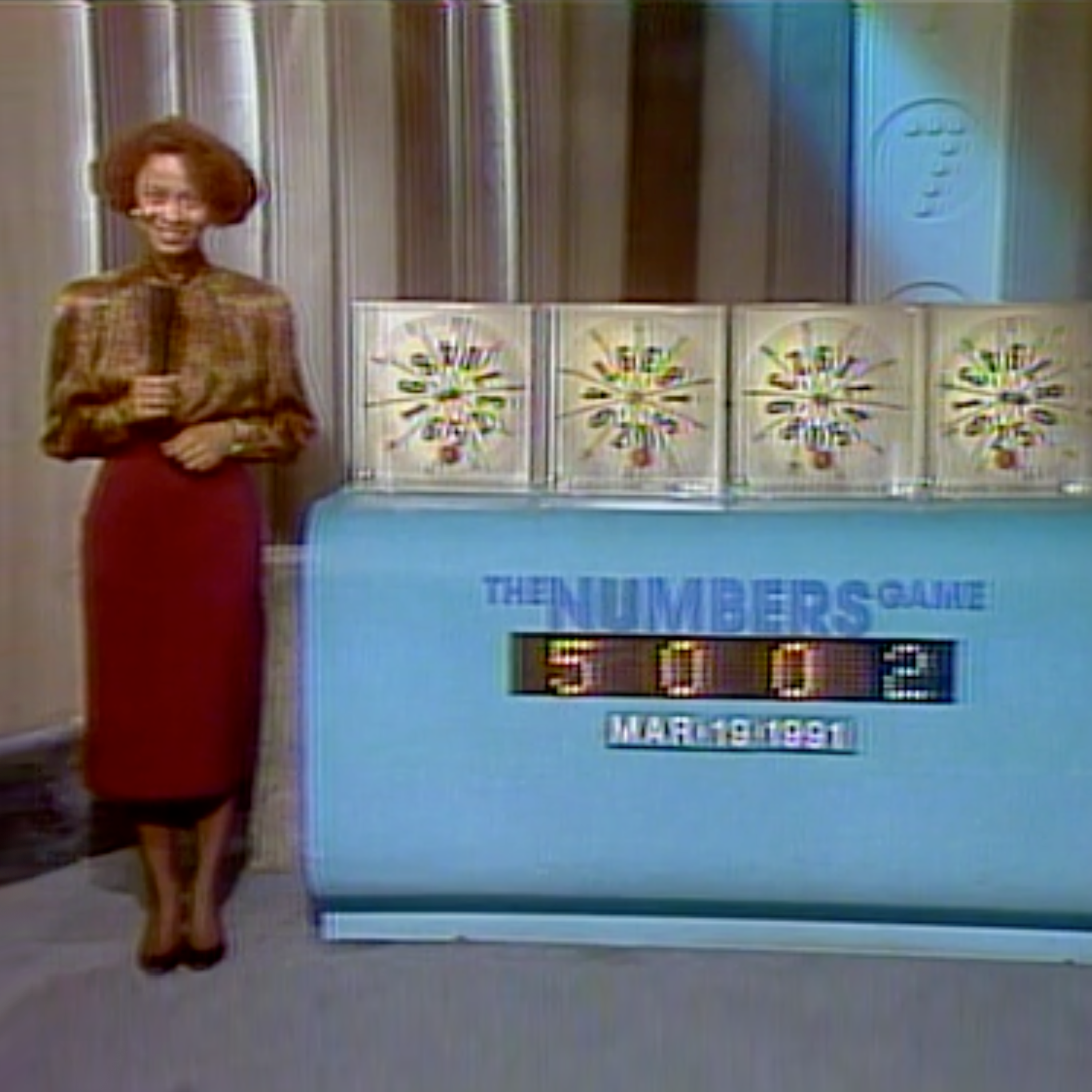
Channel 7 had built a special set for each type of lottery drawing. There was the big tumbler of lottery balls, of course. And as the six balls came down the chute, the numbers appeared on a digital display, just like the Scores on Jeopardy.
- [34:08]
Don Hayes
So it looks slick. It didn't look like local tv. You. You can tell a local commercial from a national commercial, right? This show looked great. It was just like money, money, money, money. Now let's see what the wheels have to say tonight. We're gonna start with two. I fill in. You know, it's a Cinderella story.
- [34:25]
Kylie Lowe
It didn't click for the pageant winner, but it did click for Dawn Hayes.
- [34:30]
Don Hayes
It was really amazing that people took to me that they didn't take to her, that, yeah, I was the face of the lottery on Channel 7. Stay tuned for this is America, Charlie Brown, followed by Hurricane Sam Jake and the Fat Man.
- [34:43]
Jack Connors
Time Cops.
- [34:48]
Kylie Lowe
Dawn Hayes rode the crest of the megamania wave. She did those nightly drawings for 16 years, from the 80s through the 90s and into the 2000s, longer than anyone else in the lottery's history.
- [35:02]
Don Hayes
I'd be someplace and someone would hear my voice. My back would be to them, and they would be, you're Don Hayes to this day. I've had kids, I've had grown. People say that they learned to count with me. I mean, this is a gambling thing. Do you know what I mean? And like, oh, I learned to count with you.
- [35:17]
Kylie Lowe
It's amazing, all those little short installments. You know, you're there for a minute or two, but it's so consistent. It's such a part of the rhythm of life.
- [35:27]
Don Hayes
Yeah. And that felt really good.
- [35:39]
Kylie Lowe
In 1980, the American Psychiatric association published the third edition of its massive and always anticipated Diagnostic and Statistical Manual of Mental Disorders, usually called the dsm. The DSM is a snapshot of psychiatry's ever changing understanding of the human mind. And that year it featured a new diagnosis never included before. Pathological gambling. It was now a diagnosable condition alongside kleptomania and pyromania, defined as chronically and progressively unable to resist impulses to gamble. A lot of the research on problem gambling up to that point had focused on horse racing, sports betting, and casinos. But in the 1980s, state lotteries entered that conversation, too.
- [36:36]
Jonathan Cohen
No other division, department, or section of.
- [36:39]
Don Hayes
State government is constructed to make losers out of its people.
- [36:43]
Kylie Lowe
And for critics of state lotteries, promotion was always the thorniest part of the whole endeavor. That's when the state crosses over from serving the public demand to creating that demand with a lottery.
- [36:57]
Jonathan Cohen
You have the government out promoting gambling. You have the government encouraging its citizens to gamble. And I don't think that's a proper role.
- [37:04]
Kylie Lowe
The way I see it, lotteries have always had to walk a narrow path. They have to be competitive to survive, but they also have to be respectable to survive. They are, after all, government operations. They can't offend the public, so they're always in search of that sweet spot. Addictive but not too addictive. Pushy, but not too pushy. At one point in the 80s, the Connecticut legislature ordered its lottery to pull an especially aggressive ad from the air for, quote, promoting sloth in the land of steady habits. Clearly, they had crossed a line. And you would think that Massachusetts, with all its liberal professors and vaunted medical institutions, would be wary of the risks of gambling, that we wouldn't want our state fueling what was now a diagnosable pathology. But for all the reasons we've covered in the last few episodes, it was the opposite. This week's estimated megabucks jackpot is in the middle. By 1985, the state lottery's advertising budget was over $10 million a year, more than double that of New Jersey, which has a similar population and second only to New York, which has a much larger population. Massachusetts is also one of the most urbanized states, period, with the vast majority of the population concentrated in a single metro area, meaning in a single media market and easy to reach. So we in the bay state were immersed in lottery media probably more than any other part of the country.
- [38:49]
Jonathan Cohen
If she's one in a million this mother's day, why not give her a shot at it?
- [38:56]
Kylie Lowe
So there's always been criticism of the lottery, and please don't take this as a value judgment from me, but I'm curious. Did you ever have personal reservations about selling the lottery to the public?
- [39:11]
Don Hayes
Sarah, are you asking if I had concerns about, as, in terms of, like, promoting gambling and promoting gambling and people using their, you know, wic check to buy lottery tickets? Of course I thought about that. I am a believer that I can't make you do anything. I can encourage you, but I really didn't have an issue with that. My job was to present the numbers and to be, you know, a cordial, warm, welcoming face to the lottery. Like my partner says, he's like, you would get people to go out and get a ticket in the snow. You would say, it's snowing out, but go out and get that ticket. That was my job, you know, and to smile and make people feel good about it, you know, and I took that to heart.
- [40:02]
Kylie Lowe
Did you ever have any reservations about aggressively marketing the lottery?
- [40:09]
Jonathan Cohen
Not one day in my life.
- [40:11]
Kylie Lowe
I put more or less the same question to Jack Connors of The ad agency, Hill Holiday.
- [40:17]
Jonathan Cohen
Never. I. We weren't advertising cocaine or cigarettes or alcohol. The lottery, it was a family sporting event and everybody knew the chances were slim, but it was. We viewed it as being in the entertainment business.
- [40:39]
Kylie Lowe
Yeah, I actually give Jack Connors a lot of credit for sitting down with me. He passed away a few months after this interview from pancreatic cancer. And he was a big figure in this town, in business, politics, philanthropy. Making ads for the lottery will not define his legacy. I don't think he'd want it to, but he was willing to answer all my questions about it. Part of the reason I ask is because any good admin has to know who's your customer, who is your market? And for the lottery, historically, it has always been the working class and working poor who make up the majority of lottery sales. And so was that a deliberate part of the marketing plan? It's like, well, we're not going to advertise in Wellesley and Weston, we're going to advertise in Lawrence and Lowell.
- [41:32]
Jonathan Cohen
Well, of course, most of the advertising was on television, so you didn't make decisions about Lawrence and Lowell or Wellesley because they're in the same market. We knew that as income went up, usage went down. We're not unaware, we were not innocent. But we didn't stand outside homeless shelters trying to peddle lottery tickets.
- [42:00]
Kylie Lowe
I was just thinking about the arc of your career. You're in some ways best known now as a philanthropist and you're known as a master of getting rich people to part with their money for public welfare and public good. I'm curious how you reflect on the lottery as a source of money for public goods. Is this the best way to pay for our fire engines and water taps?
- [42:26]
Jonathan Cohen
Yeah, I guess you could say I've looked at life from both sides now, but I, when I was in the advertising business, I was all in. I loved it, but I'm not keeping anything from you. There wasn't any. I wasn't ashamed to go home to my family and say, she goes, you know, we broke the record in the lottery. It was part of the economic mix in the Commonwealth and we were proud to be part of it. Regrets I've had a few, but then again, too few to mention.
- [43:12]
Kylie Lowe
This world that Bob Crane and Jack Connors and Don Hayes created, it is in effect, exactly what we, the state, asked for. When we created the lottery, we wanted it to be run effectively like a business. We wanted it to out compete the illegal operators. And more than anything, we wanted it to bring in money. Crane's lottery did all that by any means necessary. We asked for it, he delivered. Now it was time to reckon with the lottery Crane had built. Massachusetts has the most powerful democratic machine.
- [43:51]
Don Hayes
In the country, and if I win.
- [43:53]
Kylie Lowe
I'm going to root out the corruption.
- [43:54]
Jonathan Cohen
And cronyism that exists in the state treasurer's office.
- [43:57]
Kylie Lowe
Just as the megabucks wave reached its absolute peak, and just as Crane was driving the mafia bookmakers out of business, he and the lottery faced an unexpected challenger.
- [44:10]
Don Hayes
Accusing him of doing things that are illegal.
- [44:13]
Kylie Lowe
I am accusing him of doing things that are unethical. Yes, a challenger who said that Crane himself was the real crook and it was time to bring him down.
- [44:23]
Don Hayes
Let's see the facts, Mr. Crane.
- [44:25]
Kylie Lowe
Let's throw away the ads and let's.
- [44:27]
Don Hayes
Set the record straight.
- [44:29]
Kylie Lowe
That's next time. You made me love you I didn't.
- [44:38]
Jonathan Cohen
Want to do it I didn't want to do it you made me want you and all the time you knew.
- [44:49]
Kylie Lowe
It I guess you always knew it.
- [44:52]
Jonathan Cohen
You made me happy sometimes you made me sad but there were times, dear you made me feel so bad.
- [45:11]
Kylie Lowe
The series is produced by Isabel Hibbard and myself, Ian Coss. It's edited by Lacey Roberts. The editorial Supervisor is Jennifer McKim, with support from Ryan Alderman. Mae Lei is the project manager, and the executive producer is Devin Maverick Robbins. I had a chance to speak with a number of staff at the ad agency Hill Holiday, who you don't hear in the episode. Dick Pantano, Bob Curry, and Jim Reilly. I'm grateful for their time and insights. For more info on the series and full Transcripts, go to gbhnews.org scratchandwin. You can also find videos of the episodes on the GBH YouTube channel with incredible archival footage. The artwork is by Bill Miller and Mami Hawa Bao. Our closing song is yous Made Me Love youe, performed by Massachusetts State Treasurer Bob Crane. Scratch and Win is a production of GBH News and distributed by prx Me.
- [46:30]
Jonathan Cohen
You know you made me love you and all the time you knew it. Thank you.
- [46:54]
Kylie Lowe
Hey, I want to make sure that you know this series you're listening to right now is part of an ongoing feed telling stories from the past to help us understand our present. Our first season is all about infrastructure. The second season is about gambling. And we've got more seasons planned. So if you want to stay on top of what the team and I are doing, go ahead and follow or subscribe to this podcast wherever you listen. We've got some really exciting stories coming up, and I hope you'll stay with us. Thanks. From prx.