← Second in Command: The Chief Behind the Chief with Cameron Herold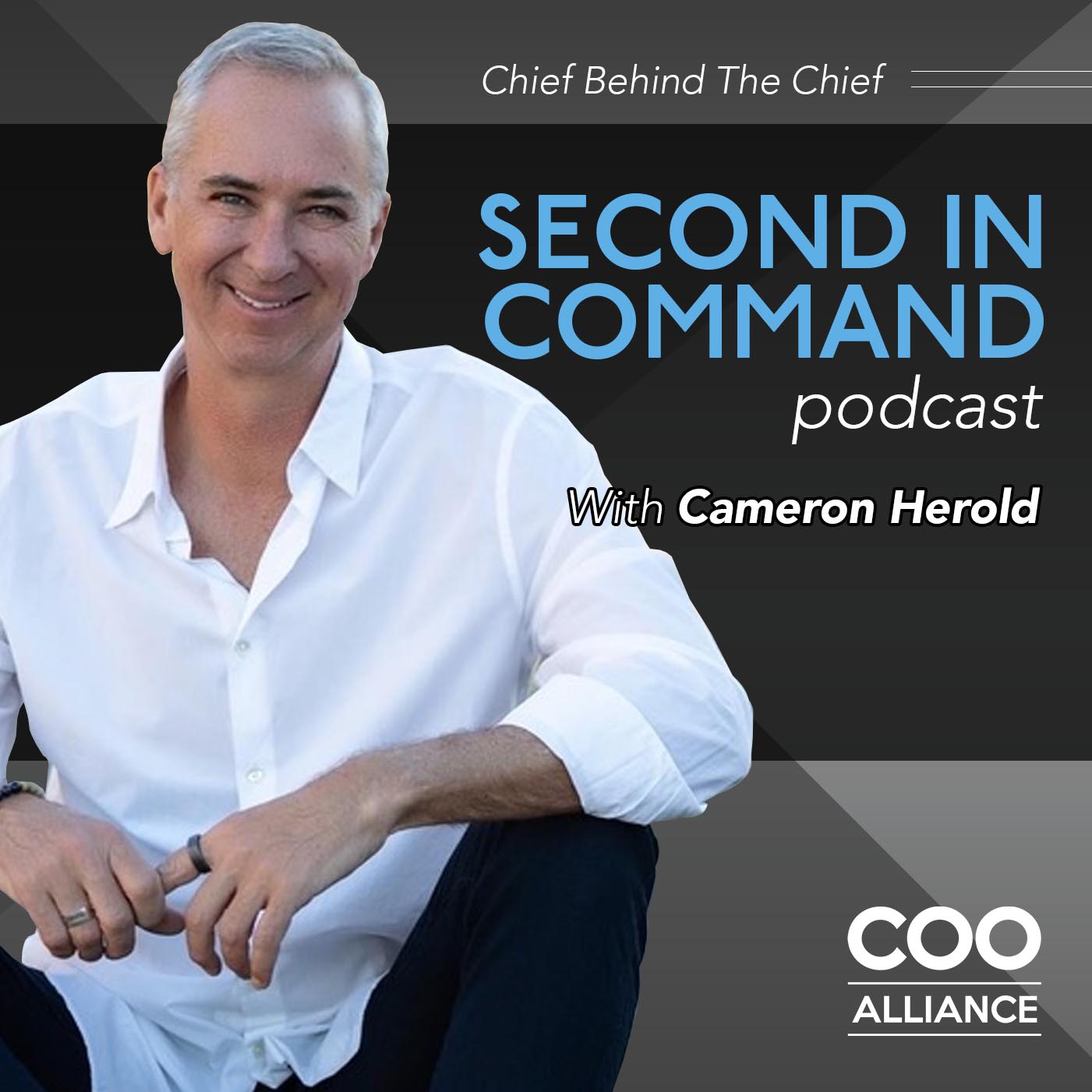
Second in Command: The Chief Behind the Chief with Cameron Herold
Ep. 426 - Pyramid Foods COO, Rob Marsh
00:51:21
Loading summary
Transcript104 lines
- [00:00]
Cameron Herold
Hey, it's Cameron Herald, the host of.
- [00:02]
Rob Marsh
The Second in Command podcast.
- [00:03]
Cameron Herold
Before we dive in, there's something you need to know. If you're a coo, VP Operations, or you're in any role where you're the second in command to the CEO, the COO alliance is the place for you. If you're the integrator to the visionary, you're going to want to join us. The COO alliance is the world's leading community for the second in command. We've had over 500 members like you join from 17 countries to grow their skills, connections and confidence. You'll get the tools, friendships, and a 10x guarantee to ensure that you get your money's worth. Go to COO alliance.com to learn more and see if you qualify. You can even book a free call with our team to ask questions. Now, let's jump into this week's episode.
- [00:44]
Rob Marsh
We're constantly looking for, you know, in the store level wise of and the now even more so of a personality. You know, it's like if, if I can find a guy or a lady with a great personality, then we'll teach you the business, you know, and because like I said, the, the culture and the leadership now inside the store is so important. So now myself looking, like I said, I'm looking for more personalities. Like I said, we can teach you the nuts and bolts, but I'd rather have that because I think the more the people in the store are going to follow them more in today's world than what they would have 30 years ago.
- [01:25]
Cameron Herold
Welcome to the Second in Command podcast produced by the COO alliance and brought to you by its founder, Cameron Herold. In the second in command podcast, we talk to top COOs who share the insights, strategies and tactics that made them the chief behind the chief. And now here's your host, Cameron Herald.
- [01:50]
Rob Marsh
All right, our guest today is Pyramid Food COO Rob Marsh. Rob and I had a really incredible conversation a couple days ago. You're really going to love this episode. He is a very unique, human centric, authentic leader, supportive leader and really has grown through his last 20 years in the one company. Moving to the COO role of a 35ish location grocery store chain. So a big business operating across three states. Each of the locations has about a million and a half dollars just in invent story and Rob started at the front line in a grocery store, worked his way through every single role imaginable in this grocery chain and is now the COO of this business. He's a results driven Chief Operating Officer drives performance improvements, leads strategic initiatives. He's a skilled manager of cross departmental activities. He's got strong communication and organizational skills and really focuses on those objectives internally. And then he also works at developing and executing innovative strategies for growth and service across the organization. You'll love this episode. You can also watch this episode and all of our other second crime podcast episodes on our YouTube channel. Share this one like this one? Subscribe to this one and we'll see you on the inside. So Rob, welcome to the Second In Command podcast.
- [03:09]
Cameron, Very, very glad to be here. Looking forward to talking to you. I've learned so much through your previous podcast and how you know various COOs think. And I don't know that I've caught anyone in my industry yet on your podcast, but I'll keep looking.
- [03:28]
Well then let's, let's get a few, a few referrals from your industry for sure. I mean it's funny, back in the, in the days when I was The COO at 1-800-got junk, I ended up doing some, some work with GM and Isuzu. We were one of their biggest truck customers and there were a couple of food groups so I might have to reach out to them. But one was, oh shoot, now I'm not even remember what their name. Schwann or Schwinn. Some ice cream company. Schwann's. Yeah. And there was another, another one was an ice cream business. But I'll have to get, get some referrals for you for some good food brands or some people in your industry that we should talk about. And then there was also one that we did interview. They make all the big industrial coffee machines that go into a lot of the, the business stuff. But yeah, let's, let's get some from your industry for sure.
- [04:11]
Yeah, I'd be. Because you know, the independent a supermarket chain is not what it used to be as you can imagine with, with the rise of, of Amazon with the rise, you know, the, the Walmart invasion so to speak, and the super target selling groceries. So it's, it's a, definitely a tough industry to be in in today's world and not like what it was obviously 30 and 40 years ago before the rise of the super centers, you know, and the others that I mentioned.
- [04:43]
So I'll bet. You know, I'm curious. I'm actually over in Italy right now and I, I went out this morning to go to the grocery and they don't have grocery stores over here, at least not in the smaller cities in Italy. I'm in a city right now of 50, 000 people and all they have are these little neighborhood grocers where you kind of pop in and you grab kind of what you're looking for and off you go. So I don't think they're ever facing that kind of a threat. Do you guys operate or does anybody even operate with those, the big chains of small, little independent grocers anymore? Or is it more the typical, you know, larger format independent grocers where you're, you know, still competing and still operating in.
- [05:24]
Yeah, you know, and like I said alluded to, you know, 20, 30 years ago, the lot of these independent supermarkets were building the 50, 60, 70,000 square foot stores and tried to, you know, incorporate all the bells and whistles in it. And now that the market share has changed so, you know, changed so much, the, the typical size now where we want to be and obviously numerous other independents across the country want to be in that 25 to 30,000 square foot that with the cost of inventory, I mean there's all kinds of various reasons and rent and, and, or you know, the cost to build. But so that, that's one thing that's definitely changed is just this, the smaller format and then making sure in those smaller formats that we operate and do better of things that the big box chains cannot do.
- [06:19]
Well, and it's interesting, even when you're talking about the smaller format of 20,000 square foot, I'm talking about the 1500 square foots, you know, like they're really almost like what we would see in North America is like a corner store that tends to be the groceries over here. Can you tell me. I was talking to a couple of entrepreneurs last week at an event over in Europe and I was talking about a number that. And I'll tell you what it is after I ask you the question, but it was a number related to inventory and gross margin that I was taught 20 years ago that companies should use as kind of a target number for how fast they turn their inventory and how much inventory they need to keep. Is there a ratio or a number or a couple of metrics that your industry looks at that I guess other industries could look at that they could learn from?
- [07:05]
Well, the biggest difference in our, in our turns in most other industries, that is the perishable product.
- [07:14]
Right.
- [07:14]
You know, if you know, Walmart or anybody else that's got all, you know, the, the TVs and, and the clothes and all that, we've got a, you know, cases of salad mix that Go out of, you know, you've got to get them in and out in four days. So that's how quick that you do have to turn. And if you don't turn or you don't manage your inventory, you know, and we're also in an industry that operates on about a 2% net profit, 3% net profit. So the margins are very, extremely tight. So you, you've got to constantly keep an eye on your inventory and keep that turn. And you know, we've got very various, you know, best practices and dating coolers and make sure the first in, first out. And, and like I said, when you operate on that type of margins, it'll just kill you if you're not constantly turning it. In an art industry.
- [08:04]
Yeah, you wouldn't, you wouldn't be able to succeed at all. So I guess the products that are easier then for you are the ones that are inside the store, right? The, the outside aisle where everything is fresh is probably the, the stuff that has to turn quickly. And then the stuff that's on all the shelves from, from aisle two to aisle nine, you know, the packaged good stuff, you get a little longer shelf life. Is that right?
- [08:25]
Yeah, yeah, absolutely. And then obviously, you know, when you get in to what we call a center store, when you get into that, you know, your detergents and, and pet food and all that, you know, have obviously a longer shelf life. But then also you get on the other side and the salad dressings, you know, that, you know, you've got to be turning within a few weeks, you know that. And then also watch your dates from the, you know, the manufacturer that, that you're getting good dates, you know, day one, because the clock starts ticking, you know, as soon as you take delivery and, and get it on your shelf. So even the center store, like I said, it's not as, not as critical as you pointed out on the, on the perimeter. But, but you still got to keep an eye on it. And like I said, with the rise, you know, the constant inflation we've had lately and a little bit of deflation now, you know, you don't want to load up on a bunch of inventory at a high inflation time and then deflation rolls in and then you've got to mark it down, you know, sometimes cheaper than what you paid for it to be competitive.
- [09:27]
So your, your inventory managers or your supply chain inventory, I guess people or systems has got to be the entire crux of the business, doesn't it? Like, other than your, you know, your, your checkout people got to be friendly and the store's got to look nice. But it is all about inventory and those controls then.
- [09:44]
It absolutely is, yes.
- [09:45]
Do you outsource that? Do you, where do you hire those people? And the reason I'm asking is I've got a couple of companies that I've coached. One from 4 million up to 52 million. They sell only on Amazon. They sell, you know, supplements, stuff that doesn't even really compete with you guys. Another one that sells, you know, products like journals. So again, they don't compete with you guys, but their inventory is killing them. Right. They're running with way too much inventory versus their gross margins. Where do you guys, where, where does your industry even hire these people?
- [10:16]
You know, just, it's mostly training internally of, you know, like I said, our standard operating procedures of you know what to look for and, and the rotation factor and, but it's, you know, with the turnover the way it is in today's world, you know, you're constantly, you know, reinvesting and training and that they do understand the importance of, of first in, first out, only ordering what you need, you know. And we try to get as many trucks as we can, you know, each period, each week to, so we don't have to keep a lot of that inventory on hand and we can get fresher product constantly. And. But it's, it's a non stop daily training and then we have platforms in place that we're constantly recording what we call our no loss shrink, that of stuff that we do that we did lose and then take those reports and, and then our category managers up here are, you know, constantly reviewing those reports and sometimes you just have an item that, you know, if you're shrinking across the company, it just wasn't a good item or we didn't have it priced right or. But we've got to come out with a different strategy to get that shrink number down.
- [11:26]
That's amazing. Like I can't even picture what the back office must look like to the independent stores and these grocery stores. I mean can imagine the big chains, it's, it's easier because they've, you know, they can spread out this overhead of people over these multiple chains. Do you use freelance people on this stuff to manage it or are these all in house? You know, in the store employees or you.
- [11:48]
100% in house? Yes.
- [11:51]
Wow.
- [11:51]
Yep.
- [11:53]
So it has to be then training, it has to be kind of growing people from within because you can't afford to go out and hire this. Like this would probably be pretty Expensive talent. If you were hiring it from the outside world.
- [12:02]
Correct.
- [12:03]
To specialize.
- [12:04]
No. And as recent as yesterday, you know, we were, we were talking about zoom earlier. We had zoom calls weekly and every period with our perishable managers out in the stores. And yesterday's call was exactly that of, you know, pounding it in their head of the importance of turns. And that was the whole topic of yesterday. And Tom. And like I said, I'm really watching it in today's world of, you know, the inflation, deflation and what is going to go on with our economy. As you know, I think we're headed obviously from the past election of, of a lot of change and, and then what does that mean to the consumer? So I know myself and other industry, you know, guys in the supermarket industry are watching it very close of, you know, how do we stay alive? You know, our minimum wage in Missouri just got approved to go up again. And, and that's a substantial expense increase starting for us for the next two years. That, that I've got to make up somehow, as, you know, how it works. And, and then still compete and be competitive on the shelf. So the grocery business, Cameron, is not as fun as it used to be 20, 30 years ago, for sure.
- [13:16]
I'll bet. How much waste is there in the business? And I don't mean waste in it, like how much product expires.
- [13:25]
Millions of dollars a year.
- [13:27]
It's crazy.
- [13:28]
Yes. And, and obviously, you know, our company makes sure that we have outlets to various food banks that we, you know, that we, we put it to good use. That we don't just.
- [13:41]
Yeah, you're not throwing it in the dumpster.
- [13:42]
Dumpster. And, and, but that's, that's obviously a, you know, a number that I measure daily and weekly to, because in our industry, you're always going to have some.
- [13:54]
Right.
- [13:54]
You know, and we look at it, if, if your shrink percentage, as we call it, is too low, then you're probably missing out on sales because you don't have enough inventory.
- [14:02]
Yeah, that's, that's the optimization of the inventory.
- [14:04]
Right.
- [14:05]
If you don't want people coming in and realizing that there's none of what they're looking for on the shelf, but.
- [14:09]
Correct.
- [14:10]
Like today I went into the grocery store and I had to buy some lettuce. So I kind of went to the bags that were further back, expecting the ones at the front of the ones they want to sell, and the ones that are further back are probably the freshest. So around and grab one at the back. But like, so you're always optimizing for that. So at Pyramid Foods, what would the. I'm just asking some curious. Some questions. I've always been curious, like how much inventory is even sitting in a store? Like, what would the cost of. If we went into a normal grocery store, you know, everywhere, or even a normal Pyramid food store, how much inventory is sitting on those shelves?
- [14:43]
A typical for us is about a million to a million. Three.
- [14:47]
Okay. Million to a million three. And is that a cost or is that of retail? Is that what you would sell for?
- [14:53]
That's at retail.
- [14:54]
That's a retail. Okay.
- [14:56]
Okay.
- [14:56]
So I don't have to go into your margins on what that would be, but that's still a lot of inventory sitting out there. And yeah, as you mentioned, I think we're going into a period of stagflation where we've got inflation and then, you know, recession. Are people cutting back on organic produce and buying regular?
- [15:11]
Yeah, good question. We have definitely seen on what we call private label, our penetration of private label is running higher. I've been with, with pyramid foods almost 27 years now, and I have never seen percentages of private label as high as they are today that people are trading down and trying to stretch that dollar as far as they can. To your point of maybe they bought a green Giant green bean and now they're buying the. Which are our private labels called Best Choice, that they're trading down to the best Choice, which, you know, in retail sales, that equates to less retail dollars because that can of green beans may have been $0.89, where the other private label now is $0.59.
- [15:59]
It's interesting. I strangely know a lot about private label. One of my roommates in college was the one who was one of the first, very, very first employees ever with President's Choice out of Canada. And then he was flown down to the United States to set up the. I think it's called Sam's America's Choice or something for Walmart. And he was supposed, he was supposed to go to Bentonville for six months. This is like the typical yuppie kid in 1991 who has flown to Bentonville, Arkansas, and they gave him a pickup truck and a pair of Wranglers. And then after six months, they said, oh, by the way, you're staying for another 12. He's like, what? Yeah, that was like when. When the whole private label thing started. All right, so Pyramid Foods, walk us through some of the complexities of running the day to day. We've talked a little bit about the inventory. What's some of the other stuff that you have to manage as COO?
- [16:46]
Well, it's, we're a 37. We have 37 stores in three different states here in the Midwest and we are an employee owned company in ESOP, which I'm sure you're Cameron, you're familiar with ESOP. So we became that in 2007. You know, my, my day to day is I've. Our company has got a lot of young talent coming up and we've got a, we've got a few of our senior executives that are, that have been around a long time and, and near the retirement age. So right now my, my constant has been training and getting people to, you know, the supermarket industry has been a, a good industry for people that typically college is not a option for them. So they're looking for some kind of profession that they can make a decent living. And you know, and we're lucky in the Midwest we have a very good cost of living. And so that seems to be something most of the, the talent that we attract is, you know, they don't, they don't have that option but they're looking for something in a career, you know, that if you do work hard, you can end up having a, you know, pretty decent life, a good living for around here and. But it is a lot of hard work as you can imagine. You know, it's, it's, it's very labor intensive. It's like I said to mention all the, all the competition just where we're at, you know, what it used to be. And now there's I think Dollar General, like I said, worldwide. I think it's up to 22,000 stores and, and you know, the super centers, the neighborhood markets and everybody seems to want to sell groceries. And I can't quite figure that out because the margins are so tight. So it's just like I kind of laugh, like go find something else, some other sandbox to go play in, you know that. But my day to day, you know, is. And then another challenge in today's world is, you know, how do you market. There's so many marketing platforms. How do you get, how do you get your sales in front of the consumer in today's world? You know, 20 years ago everybody was printing an ad and then mailing it, you know, and then they would. But now is it Facebook, is it, is it Twitter, is it Tick Tock? Is it Instagram, is it direct mail? You know, and I still don't know that anybody knows that answer of you know, what demographic and I think it's all across the board depending on what I was getting ready to say on what demographic are you trying to reach, you know, and then what demographic and age is our typical consumer versus what Walmart's doing and what's Target's doing and, and all these. And, and I, and Cameron, I still don't know that I have that answer of what is the best vehicle to.
- [19:38]
Use when it's interesting you just said that final part of the question. What is the best vehicle to use? I've always been curious. One of the things that we did at 1-800-got junk and then also at college Pro Painters was we leveraged vehicles. We actually took vehicles and we wrapped them in our brand and I'm wondering if there was ever a way that you could have, you know, a bunch of 10 year old depreciated minis or a bunch of Tesla RE's that are wrapped and just driving around your neighborhood all day long and just literally pay somebody who's you know, X years old to just drive 12 hours a day up and down streets and around neighborhoods and constantly being in people's face like a moving billboard and whether that would ever work within, I don't know. That's very gorilla. It doesn't necessarily scale but curious whether vehicles ever would. Both of my kids had their first jobs at grocery stores so they, they both worked. One worked for an independent grocery store in Vancouver and one worked for one of the big brands. And it was interesting the one that worked for the independent grocery store tended to have I think more pride in the day to day of what he was doing. The one that worked for the larger brands. It was a job. There was something about that local owned feel and now this was, this was an independent that only had three total locations too. But you know, they definitely worked there. What was the transit?
- [20:58]
Cameron, it's, it's. Sorry to interrupt you but you make, you make a good point. So what I have seen as in, you know, when I look at the difference between somebody that's worked for an independent and somebody, you know, that we've had, we've had guys come over from the big box store, so to speak and then when they work alongside an independent, you know, we don't have the, the huge corporation that's handing down, you know, everything that, that's supposed to be done for that day, you know, everything's kind of manufactured, so to speak. The independent, it literally has to think on their feet and, and do a whole lot more. You Know, we're, we're in various, we have stores from 80,000 square feet to 10,000 square feet. You know, we've grown through acquisition. So that means none of our stores are alike, you know, so merchandising is, it's constantly a challenge, you know, being across three different states. It's, it's a challenge because we have, you know, obviously stores and a widespread of demographics. And so what sells even in, in our local town here, what sells on one side of town doesn't sell on the other side of town. So the independent has really got to, when I always say think on their feet and adjust and adapt to guys that's been brought up in a big box that just have a different, just a different set of rules and a train, you know, training of how they, how they go to market and how they, how these big box stores do things compared to the independent.
- [22:35]
Yeah, I guess that makes it a little bit more challenging in terms of the day to day operations, but it probably makes it a little bit more exciting when you can sell that part of the, of the experience or the, the, you know, in the recruiting of talent too. What was it like in making the transition over to the esop? What were those changes? I mean, I know you're rolling back 17 years, which is when I left 1, 800 got junk. So a long time back. But what were the changes like when you went through the ESOP process?
- [23:00]
You know, it was, it was all positive and it continues to be today that everyone in the company now had a, for lack of better terms, a piece of the pie that what they can do can truly make a difference. Now if back to what we were talking about earlier, if they pay a little bit more attention to that inventory, you know, things like that, and then that can, you know, end up showing up in their, in their stock, you know, the more profitable the company becomes. So that was the more positive that I thought thing for us was, you know, that our employees really understood and that we constantly got to do a better job of training on what that means and what that can mean for them at, you know, once they hit the retirement age.
- [23:46]
We did a profit sharing program back in our days at 1-800-got junk. And we followed Jack Stack's model from the great game of business and a stake in the outcome. Has your company looked at either of those books at all as, you know, reference material on ESOPs?
- [24:02]
Yeah, you know, yeah, there's been people in our company that has and obviously we're very familiar with Jack Stack and Src got a substantial footprint here in Springfield as well.
- [24:14]
Yeah, I thought he was from that. From that same region. One of the things that went sideways for us in kind of running and we weren't in esop, so we. That's probably part of the problem is we were running it as a profit sharing was when things got rough. And this was just the year after I left, they went through the global financial crisis. So I left in the middle of 2007. 0809, the wheels kind of fell off the truck and revenue dropped from 107 million to 70 million. And all of a sudden there wasn't profit to be shared. Have you had to navigate any of those times with people when the profit or the distributions become almost an entitlement and then. Then they forget that, you know, wow, this is a business. And the business is having a tough time, which means we go through that tough time together. It's kind of easy when things are going well. But how do you navigate that with people? How do you train them in that? How do you help manage some of those mindset issues? I guess.
- [25:14]
Cameron Herold
Hey, it's Cameron. I hope you're loving today's episode. Quick question for you. Does your company have a strong leadership training program in place to grow the skills of everyone who manages people? If you want to help yourself and your company grow, get everyone who manages people learning from my invest in your leaders online training program.
- [25:32]
Rob Marsh
There are 12 core leadership skills that.
- [25:34]
Cameron Herold
I cover online, and for only 650 per person, they're all going to really grow. CEOs pay me $78,000 a year to coach them one on one. And now you can all benefit for 1% of what they pay me.
- [25:47]
Rob Marsh
These are the same leadership skills that.
- [25:49]
Cameron Herold
I created and certified everyone in at 1-800-got junk when I was there as COO. Go to investinyourleaders.com today and use promo code podcast10 before the end of the month to get 10% off each manager you sign up. Now back to the show.
- [26:12]
Rob Marsh
Well, you know, like I said, we go back 17, you know, 17 years, and there has been those ups and downs and, and I think, you know, when. When you have those downs, that's the most important piece that you can do is reiterate how, how important that is to watch, you know, extra close to those pennies and that inventory and, and when times get tough, you know, like I said, the COVID era was very good for the, for the independent. And right before, COVID was extremely tough. And then I think we're, you Know, the last couple years have been tougher. Like we talked about, you know, the difference in, and the market share and how that's changing and how Amazon's changed that so much. But, you know, and be transparent, you know, I, I've got to do a better job at that. That they do understand and what that could mean to their stock and their retirement and, and you know, back to the, you're just constantly training. You know, the industry has a high turnover rate, you know, so those people come and go and then some people, you know, they don't have any idea what the ESOP means. So it's just an ongoing and never stop, you know, the education to the employees of how every single employee can make that difference. It doesn't, doesn't really matter what your title is. You're touching inventory or you're dealing with consumers and, and in some way or another you can make a positive or a negative impact on that.
- [27:41]
Yeah, I guess that is kind of part of the ongoing too. So I'm curious, with the onboarding of talent and then the retention, are there any systems or I guess areas that you work on with new talent that you're constantly, you know, focusing on in terms of grow? Because you're really in the business of growing people and growing leaders. Right. You probably bring them into more entry level roles and then your job is to retain them and grow them, grow their capacity so they can become leaders of people and leaders of leaders of people within the organization. So what skills do you work on with, with growing these people? Or are you, are you bringing in external people that have already got skill set as well?
- [28:20]
Well, you know, like I was to mention earlier, you know, depending on where the ex. External people come from, they, a lot of them typically struggle in the independent environment. You know, they're, they're used to, if they come from a big box, they're used to having an army of people to delegate to. Right. You know, we don't have an army of people to delegate to. So, you know, most of it is brought up, brought, you know, internally. And, and the things that I've learned and that I constantly learn is, you know, that the whole training is different than what it was 30 years ago. You know, back then you were, you were kind of ruled by fear, so to speak, of, you know, you, you never wanted to be in trouble or, you know, lose my job or you were threatened constantly. Yeah, you do that today and they'll, they'll hand you the keys and walk next door.
- [29:11]
You know, it's my Way or the highway, right? Yeah, yeah. The classic 1980s leadership by fear.
- [29:18]
But a lot of the, A lot of the same things that I, that I, you know, that I struggle with, with people that. I don't understand it. It is true. Just treat people with respect and like you want to be treated. I mean, that's, that's a, you know, back since day one, that's, that's constantly, always worked and, and, and make sure that they understand what your expectation is. You know, you cannot have any accountability unless you lay out an expectation. And, and I think that's what a lot of people, you know, they want to do a good job, they want to do the right job, but do they really know what that right job is? And then are they trained and give all the tools to do that job properly? You know, and, and then again, after they do the job, make sure to thank and recognize them. I mean, it's, it's not complicated, but it is.
- [30:06]
Well, it's. Yeah, we over complicated actually. It's, it's sad. I was talking to a CEO yesterday and, and talking about just praising and showing gratitude and celebrating the wins, and she's like, wow, I don't do anywhere near enough of that. And I said, most companies don't. Like most companies forget the basics. Right. So walk me through some of your growth in the organization. Did you used. You've been in the organization now for five years and what was.
- [30:29]
No, I, I am 52 years old. I started when I was 15.
- [30:34]
Why did I think it was only five years? That's weird. Have you been in the COO role for five years then?
- [30:40]
No, about. Probably a year and a half to two years now.
- [30:44]
Okay.
- [30:45]
Total.
- [30:45]
So what's your, what's your career trajectory, your growth? Been inside the organization then? Because that's unusual for someone to be in there for so long. What's your growth been like? What do you think has helped you?
- [30:56]
Well, like I said, I, I started out, you know, 15 years old, unloading produce trucks at a local grocery store. And, and my older brother is. Was working for that company at the time. And, and back to, you know, what we were talking about earlier, you know, college at the time was not, not a option for me, so I was looking for something that, you know, that I could get into. And I knew that, you know, from watching him and my, my father was in the industry that on the vendor side that, you know, it was a lot of hours and it was a lot of work, but you can make a pretty good living out of it. So I kind of worked my way, you know, through initially up through, done. You know, started as the cart pusher and the, and the sacker and the stalker. And then I came on to this company back in 1998 and was hired as an assistant manager at the time. And so I worked, worked through that and became a store manager and then became a district manager and continued obviously to learn and I, you know, you still learn every day as you, as you know. And then Eric, our CEO came to me, I think it was in 2007 and wanted me to learn the construction and refrigeration and maintenance side of the business. So I came up and did that and, and learned AutoCAD and how to draw stores and. Wow. And it's funny, I actually went to, when he offered that to me, I went to a Barnes and Noble that night and bought every book they had on AutoCAD and got on the program and did a self taught myself AutoCAD and how to draw stores and remodels. And so that, that's been beneficial. You know, anytime you can learn everything about the business or what goes on in the four walls is going to make you a better, a better employee for the company. You know, that you, that you understand and how things work, how things don't work. And then we joke and do a lot that he's taught me on the value engineering of how can we get that same look and, and save a lot of cost and do that and, and, and the flow of supermarkets and what are the best practices. And so I did that for a while and then I came back to the operation side and, and, and then he gave me the opportunity, you know, for this and you know, I'm constantly learning. I, I'm built to, every, every morning I listen to some type of podcast now for leadership and, and always trying to learn something. That's just how I, I always dive in and sometimes I dive in too much and you know, lose focus on a little bit of things that, because I get too determined that I'm going to figure this out, you know. And our company's invested in technology a substantial amount in the last couple years and we've had different, you know, AI pricing and, and all things like that to dive in and learn again because we work on such tight margins. So where can I make up things and where can, what expenses can we cut? It's, it's just a non, non stop ongoing struggle. So I, I'm new to the role but I, I'm constantly learning and trying to be Better for sure.
- [34:22]
Well, and it's interesting the you just kind of answered my question which was around learning and it is that you're a self driven learner who's constantly, you're not waiting for someone to delegate learning to you. And I think that's the big lesson that anybody in leadership today needs to remember is that, you know, 20 years ago we'd get into a management job and you pretty much did that same job for five years and business didn't really change. But right now business is changing every quarter massively. And it's kind of like if the rate of change outside your business is greater than the rate of change inside your business, you're out of business Business, it's almost the same for people, right? If you're going to be managing people, you can't wait for your boss or the CEO to hand you more information for you to learn. You need to be doing that yourself and need to be, be looking for that. Do you recruit to try to recruit those kinds of people, People that are looking to grow themselves? What are the things that you try to look for?
- [35:15]
They obviously have to have a work ethic to be, to be in this industry. We don't, you know, we don't have the liberty or the luxury of walking around so to speak with a clipboard in our hand and, and delegating everything. They've, we've, everybody's got a, gotta pull their own weight. And so you know, we're constantly looking for, you know, in the store level wise of and the now even more so of a personality. You know, it's like if, if I can find a guy or a lady with a great personality, then we'll teach you the business, you know, and because like I said, the, the culture and the leadership now inside the store is so important. So now myself looking, like I said, I'm looking for more personalities. Like I said, we can teach you the nuts and bolts, but I'd rather have that because I think the more the people in the store are going to follow them more in today's world than what they would have 30 years ago.
- [36:10]
Right, I agree. It used to be that whole hire for attitude, train for skill. Now I think we're hiring for that attitude, that cultural fit and we are still training for skills. Do you find that it's better to bring in people who don't have the industry experience and train them in your way and in the kind of way of pyramid foods versus bringing people from other grocery store chains or does that depend?
- [36:34]
Well, it depends Like I said, the success. We haven't had a lot of success from guys transitioning from big box to independence. And so in that world I would rather, you know, train somebody that's wanting to learn the business. But guys that's been in the other independent world understand it and they fit into the mold, you know that, that we operate and most other independents do. But now corporate wise, you obviously look, you know, a little bit different as far as the.
- [37:11]
Sure.
- [37:11]
You know, marketing, marketing expertise, advertising expertise and.
- [37:15]
Sure. And, but skill set there too.
- [37:20]
Right, right, correct.
- [37:22]
Do you. I've always said that my R D used to stand for ripoff and duplicate. I would try to find the best companies out there and do what they're doing. Does Pyramid Foods kind of look across, you know, not just in the grocery industry, but I call it ideas having sex. You kind of look for, for ideas in three or four different industries and those, those ideas all have a little idea baby. What industries or what businesses do you look at or, or do you just keep your eye open through all of your learning for what's happening best Eric.
- [37:50]
Our CEO, he's, he's been very generous to me that I'm, I'm involved in several share groups across the country that you know, it's a non competing group of guys that, that get together via zoom or via in person certain times of year and talk about what's working and what's not working because to your point, you know, we steal a bunch of stuff all the time, so to speak because I'm not sure that wheel can be reinvented too many more times, you know, and, and all the, all of us independents are facing the same battles across the country everywhere. So the share groups have been extremely important. And then you know, visiting other stores and, and when we do meet with those share groups, we meet in different parts of the country and we do store tours. And then he's obviously in a, in a large share group too that, that we all share our numbers together and, and what is. So we have a good, you know, average of what the independence doing anywhere from the produce department to the specialty food department and what labor costs are here, you know, what productivity standards that, that they're getting and we all share information together. So that's been a positive for I think for both him and I.
- [39:10]
Okay, that makes sense for sure. All right. If you were to think about your growth, what are the one or two areas that you've worked on the most to become a really solid CEO?
- [39:21]
Technology for sure. You know, the changing of how that can move the needle in our company and, and utilizing that more because I know my competition is, and they were, you know, obviously ahead of the game the big box retailers on the technology side. And you know, that's because I think on the, on the operation side that like I said, it's not a complicated business and, and we make it complicated. But you know, so my personal growth has been more on the people. The, the, the people and, and then learning all the. Well, there's a tons of technology out there, but what, what do we really need? And then he's gave me that, you know, allocated the funds that we, we think that what we have now is what we need and now we've just got to become masters of it and utilize it for what's it's, you know, was intended for. So. But back on the marketing piece we've, we've still got a lot to learn on the, on the marketing piece, what we talked about earlier of how do you, how do you reach the consumer in today's world and, and what is the best avenue? And, and you know, all the data recently has shown us that people are, are shopping two and three different grocery stores on one trip.
- [40:40]
I agree. That's, I was just about to ask that question because I feel like a lot of the grocery stores you mentioned earlier are the very kind of transactional. Nothing matters. But I know that for my produce and my cheese and my meats and flowers I want to pick up like I'm always going to the one store and then it's. But if I just needed to go grab like a couple of box goods and some bottles of water, whatever, I'm going to go to whatever store is quickly close to me. How are you marketing yourself and differentiating? Is it based on the staff that you've got? Is it based on the look and feel? Is it based on, you know, connecting with the customer? Is it because it's not price? You can't, you don't want to try to win on price.
- [41:21]
Right? Well and price wise, you know, we, we obviously watch our key items and stay within a certain percentage and, but the independent, you know, that we hang our hat on. This company has always had a tremendous reputation in the meat and seafood department and that we still have, you know, the butchers that cut meat every day. And so that's what this company is known for and has done extremely well throughout the years of that we have those cutters in the store every day cutting the, you know, cutting the fresh beef and, and that our Produce and everything that we, you, the independents have got to focus and win on the perishable side, because to your point, on the other side, with the price and, and the dollar generals and everything else that are around, you know, a can of green beans is a can of green beans, but your, your quality of your ground beef and your quality of your T bones can vary quite a bit. And that's how you can attract that customer.
- [42:22]
I think there's something that Pyramid Foods is doing that would connect me to the brand more than any of the others. And it's your focus around community and charity work. You and I started briefly about that before we went live. Can you walk us through, you know, what it is that you do around the charity and community? And I think there's a lot that you do around the kids in your communities too. What are some of the things that you're doing? And so that I guess anybody listening will even remember that and talk about that because I think there's, there's a reason that you want to support someone like you. The one that I always used in Vancouver, Canada was Stong's Grocers. They were the independent grocer. They sponsored the kids baseball teams and the kids rugby teams and the kids hockey teams and they were the neighborhood grocer. And we avoided the big brands, the brands that still exist in the U.S. we just didn't go there because they weren't the community. Even though they had stores in the community, they weren't the community. So walk us through what you guys do around community and charity.
- [43:17]
Well, our biggest vehicle that we do is called the Price Cutter Charity Championship. And it is a, the Korn Ferry Tour, which is the step below the PGA Tour that you know that most of the players go through the Korn Ferry Tour to get their card to play in the pga. So they come in around July of every year and we have this tournament and all the funds that we've that are raised through this tournament goes back to local children's charities. So in the 20 some years that we've been involved in that, we're up to around $22 million that have been given back to local children's charities. And as we were talking about earlier, one of the, one of the native stories, I mean, there's countless stories that how, you know, the different kids have benefited. But Shriners that are local here constantly bus children from here up to St. Louis to the various hospitals for care up in St. Louis. And there are their entire fleet that they use now to transport these Kids were. They were able to purchase from the Ben, you know, from the Price Cutter charity Championship. So, you know, and, and we've constantly, and Eric, our leader, has constantly pushed us and the stores to be involved in your town, you know, be involved in the chamber, go to, you know, go to the high school games. Make sure that we have signage at the high school games that we're supporting them. And then a couple years ago, I started an initiative too, that we started putting team stores into the, into our supermarkets that sell the local football, basketball, track, all the various sports shirts. And then we get back 20% of every bit of those sales back to the schools. And that's been a huge deal for us. And. But we are constantly involved in our communities. We all live in our communities. We go to school here, our kids go to school here. And the managers all, you know, we, we push them to be involved. And. But like I said, we're, we're. We're over surpassed almost $22 million now that. For children's charities on top. Like I said, we do so many other things, but that's definitely what we hang our hat on. We're, we, we. Our tagline is keeping it local since 1967. So we, we definitely practice what we preach on that piece of it.
- [45:52]
It's a pretty good, pretty good coat rack to hang your hat on. Question for you. You're operating in 27 or 37 stores? 27 stores.
- [45:58]
37, you say 37, yes.
- [46:01]
You got 37 stores across three states. You're kind of local, but you're kind of, you know, a regional brand now too. How do you straddle that? You know, how do you straddle that from a marketing and messaging perspective?
- [46:16]
Well, majority of our is located obviously around this Springfield area, but. Okay, but you're absolutely right. You know, when we get out to Kansas and some of our stores, there's no doubt that you lose a little bit of that local, that local feel. But you know, the things that those that we do push them and support them on is to make sure that when the school calls or a charity calls or the chamber calls that you're. That they know that you're the first person they should call and that they know that you'll support them. You know, that's, that's the thing that we push to them is, is make sure we're involved in your school and, and you just gotta be that local contact to that anybody knows if they need something, that's who they're gonna call. That. That pyramid will Be there for them.
- [47:05]
Well, it's interesting, I remember back in the day I was being mentored by the incoming COO at Starbucks around 2005, 2006. So going back 18, 19 years ago, they had a huge saying inside of their head office and it said grow big, act small. And I kind of love that idea of like, it's almost like grow regional but act local. Right. Where you're trying to stay connected to the community but you're building a really strong brand. Rob Marsh, if we had to go back and give the 21 year old Rob some advice, what advice would you lean back and give yourself that maybe you know, true to be today but you, you wish you'd known earlier?
- [47:41]
That is a great question. Some days I would say should have went to another industry and done something else with your but I couldn't be more transparent and honest that I've been extremely blessed for the company that I've worked for, that have given me the opportunity that I've, you know, worked hard for, that, you know, that I've been rewarded, that I, I thought this would be an industry that if I worked hard that I could become something. And it has been that. I don't know that, Cameron. I don't know that I have that answer. That's funny.
- [48:19]
But, but I think, I think there's some advice in there. If I was to kind of take what you've just said and wrap it, I would, I'd almost say that, you know, when you're starting out in your career is find a great company, be appreciative of the chance that you have there, work really, really hard and know that, that it will turn into something big for you and that's kind of what's happened for you.
- [48:41]
Yeah. And, and I'd say, you know, obviously everybody, you stumble here and there but like I said, it's hard to say you change anything because that's, it makes you who you are today. And, and I was just telling him the other day, you know, tough times don't last, but tough people do, you know, and sometimes you do just want to. Man, it's like, man, it's like I said, it's not as fun as it used to be, but it just, you know, you just got to dig in deeper and, and to me that's more rewarding that if you can come out and still survive and you know, being in this role that you know, you have so many people that depend on you to make the right decision and, and you've, and you know, that weighs on you because one wrong decision can ripple through a company as you know, pretty quick. So and, and I say that all the time. Sometimes you hit all around home run and sometimes you strike out but you know, keep swinging.
- [49:38]
Well, I think, I think you're doing a pretty darn good job. I, I wish there was a Pyramid Foods over here in Siena, Italy. I'd have some nice rotisserie chicken and some good food at the corner grocer. Rob Marsh, the COO from Pyramid Foods, thanks so much for sharing with us on the Second Command podcast. Very appreciative of the time.
- [49:56]
Thank you Cameron. Enjoyed it.
- [49:58]
Appreciate it.
- [50:02]
Cameron Herold
You've been listening to Second in Command brought to you by COO alliance founder Cameron Herold. If you enjoyed this episode, please be sure to like, share and subscribe to us on Apple Podcasts, Spotify and our other podcast streaming platforms. For more best practices from industry leading COOs, visit COOAlliance.com.