← Second in Command: The Chief Behind the Chief with Cameron Herold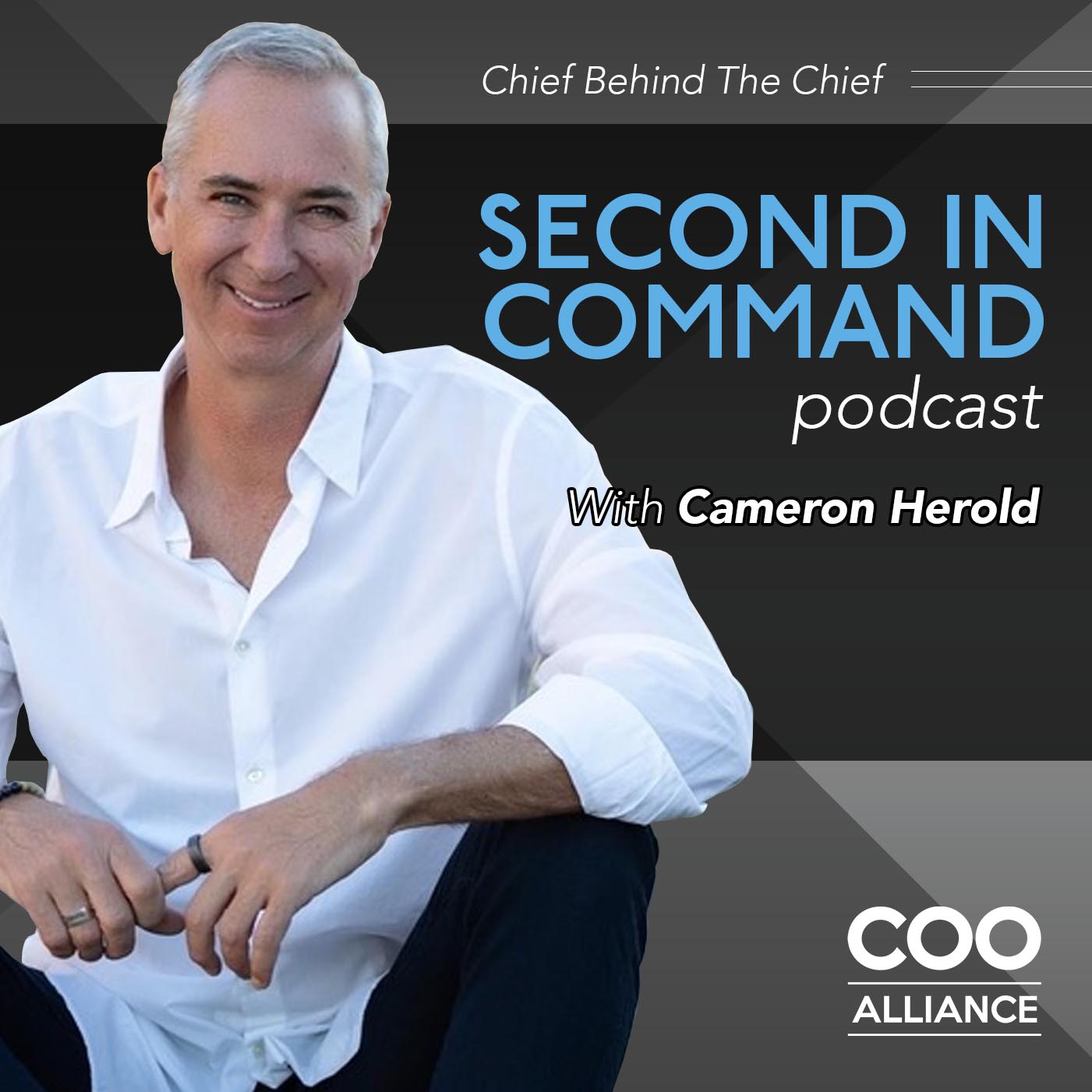
Second in Command: The Chief Behind the Chief with Cameron Herold
Ep. 431 - Vision Driven Founder, Jennifer Hudye
00:31:35
Loading summary
Transcript53 lines
- [00:00]
Cameron Harold
I'm Cameron Harold, the founder of the Second in Command podcast. Really quick before we jump into today's episode, you need to know about two important ways that we can help you and your company grow. Number one, check out the COO Alliance. It's for COOs, presidents, VP ops, or whoever is your company's second in command to the CEO. The COO alliance is the world's leading community for the Second in command and it gives coos the tools and connections to grow themselves and the company. Head over to coolalliance.com to learn more about our members and the results, the program and our 10x guarantee. If you qualify for membership, you can set up a complimentary call with our team to discuss if it's right for you. I'll tell you about number two in a bit, but first, let's start this week's episode.
- [00:44]
Jen Hudi
I'm always conservative with it. I think we're probably around 650 at this point. One on one that we've written for companies and then we've helped thousands of other companies through our Vivid Vision Retreats workshops online course. We call it our Vision Driven Quest, so also showing them how to write it on their own.
- [01:13]
Cameron Harold
Welcome to the Second in Command podcast, produced by the COO alliance and brought to you by its founder, Cameron Harold. In the second in command podcast, we talk to top COOs who share the insights, strategies and tactics that made him the Chief behind the Chief. And now, here's your host, Cameron Herald.
- [01:37]
Jen Hudi
In today's episode, I'm joined by Jen Hudi, the founder and CEO of Vision Driven. As we explore the transformative power of the Vivid Vision concept and its impact on entrepreneurs and their businesses, Jen shares her personal journey of creating a Vivid vision in 2016. Inspired by a conversation we had, this practice helped her clarify her goals, align her team and build a thriving business while collaborating with top thought leaders. Today, Vision Driven has helped craft vivid visions for over 650 companies and guided thousands more. Through workshops and online courses, we'll dive into the common challenges CEOs face when crafting a vivid vision, including vagueness, overemphasis on strategy and indecision. Jen provides actionable insights on overcoming these hurdles, focusing on clarity and specificity to inspire and align teams. You'll also learn about the practical process Vision Driven offers completing vivid visions in less than six weeks and the real world ROI of having a clear and inspiring roadmap for the future. Whether you're an entrepreneur, a CEO or a leader striving for alignment, this conversation will equip you with powerful tools to create and maintain a vivid vision.
- [02:58]
Cameron Harold
Jennifer, good to see you.
- [02:59]
Jen Hudi
What's up?
- [03:00]
Cameron Harold
Thank you for being on the Second in Command podcast and also our YouTube channel. I am super excited to talk to you about vivid vision stuff. You've been cranking these things out for years, and as I've described you for, God, the better part of five years now, you've been my partner on all things vivid vision. So nice to see you and thank you for doing it all.
- [03:19]
Jen Hudi
I absolutely love our partnership and collaboration, so thank you.
- [03:24]
Cameron Harold
Yeah, yeah. What was it originally, do you think, that grabbed you about the vivid vision concept? Because when you started this, it's probably more than five years. Gosh, would it be like seven years? Eight years? So what was it that grabbed you about the vivid vision concept that had you say, I wanted to start writing these for entrepreneurs?
- [03:42]
Jen Hudi
Two things. One, in my own experience of creating a vivid vision in 2016, and I'll never forget the conversation you and I had where we were at culinary dropout with a few other entrepreneurs, and you told me to write a vivid vision. And at that time, I was bootstrapping my little copywriting business, had no team, wasn't really known in the industry. And by going through the vivid vision process, I got so much more clear of what I wanted the future to look like for my business. And specifically, it broadened my focus. Instead of just focusing on how the hell am I going to make money in the next 30 days, it really had me ask the bigger questions. And then through a series of amazing synchronicities and then a whole lot of hard work, as you saw. I mean, that vision came to life literally in the matter of, like, 18 months where I was working with some of the top thought leaders in the online business space. You, Joe Polish, Dan Sullivan, Tony Robbins, Brendan Bouchard, Dave Asbury, all which were names that I put on my vivid vision that I wanted to work with that I had no idea how I was going to make happen. And then also building an awesome team and building great company culture and building the million dollar business and all of these things that seemed like a total pipe dream when I first started writing that very first Vivid Vision. So I was really bought into it.
- [05:14]
Cameron Harold
Yeah. So you saw the concept work for you then, and that was what kind of decided, or had you decided to start crafting it for others?
- [05:22]
Jen Hudi
Yeah. And then the second piece was with our copywriting agency. The work that we were doing in the world at that time was helping companies package their message in a way that inspired Their prospects to take action. And I saw the Vivid Vision as being in complete parallel with that. But instead of writing a sales page for a product, we were writing a sales page for the company's future so that everybody on the team, as well as vendors, partners, were bought in to bringing this vision to life.
- [05:58]
Cameron Harold
That's a really good example or description of what the Vivid Vision is. Is that sales page or sales copy for the vision of the company? I love that I've actually heard you say that before. So in writing all of these, how many of you and your company crafted now for entrepreneurs around the world? Is it like 800 or.
- [06:15]
Jen Hudi
I'm always conservative with it. I think we're probably around 650 at this point. One on one that we've written for companies and then we've helped thousands of other companies through our Vivid Vision retreats, workshops, online course. We call it our Vision Driven Quest. So also showing them how to write it on their own.
- [06:39]
Cameron Harold
Yeah. I'll tell you, my book, Vivid Vision would never have sold half as many copies as what it has because of you. So you buying a bunch and sending them out, but also the number of people that you've exposed to the concept. So thank you. So if a CEO is writing a Vivid Vision, right, they're going to craft this five page description of what their company looks like, acts like and feels like in the future. Where do you think they struggle in gaining clarity on that? What are their pitfalls that they're struggling with when they show up at your door?
- [07:07]
Jen Hudi
One thing they struggle with is not knowing what to include in the Vivid Vision and whatnot. And so many CEOs get really caught up in the how sometimes they think the Vivid Vision is a business plan and they got to include the strategy in there. And depending on the personality type of the CEO, on one side of the spectrum, they'll be very metrics driven and they got a spreadsheet with them. And then on the other side there's some that they, it's just too vague and they're not boldly standing for what is the problem that we're solving or that we have solved in the future. And what does the company, what does our community, what does the world look like as a result of that? So I think they struggle with those few things and sometimes they'll get lost in the areas that they're not clear up. So one of the tips I always give is start with what you know for sure and let's really focus in on that. What do you know for sure when it comes to what you want your company culture to look like and feel like, what do you know for sure when it comes to what your team looks like or what the media is saying about you? And then I'll sometimes have them just write out, okay, what are the things that you're confused on or you don't know? And oftentimes those are related to the how.
- [08:29]
Cameron Harold
That's got to be a pretty big blank or I guess, a missing piece that you fill in for a lot of these CEOs is they don't even see their gaps. When they come to you with a draft, do they know they're missing some areas or do they kind of think that it's pretty good? Can you just pop it through some copywriting? Is that where they come to you?
- [08:47]
Jen Hudi
Yeah. I'm not just saying this because we write vivid visions, but most CEOs that come to us overestimate thinking that they'll usually come saying, like, it's pretty much done right. And then by the time I see it, it's still in a mind map form and they feel like it's done because it's probably the first time in a long time they dumped all of their ideas onto a page.
- [09:12]
Cameron Harold
Sure.
- [09:13]
Jen Hudi
But by no means is it in complete form that is going to go and rally a team member that they've never met before to get bought into the vision. So a big part of our role at Vision Driven is helping to organize all of those thoughts of the CEO. But then also, how do we articulate them in a cohesive way where there's a clear through line and that it is going to inspire, inspire those around them? Specifically, how do we invoke emotion, how do we tell the future of their story, and how do we really paint the picture of exactly what it looks like? And that's the piece that I think a lot of them struggle with the most is being able to paint that vivid picture.
- [10:01]
Cameron Harold
I know you and I get this. That vivid vision is that future state. Right. It's almost like we travel in a time machine three years out to the future to December 31st, let's say 2027. And we're going to walk around our business. If we're describing it in the future, we don't know how we got there. We don't know what the plan is because we can just see the finished state. How do you get the CEO to wrap their head around the fact that this is not the business plan, this is just the description of where they're going to go and the business plan is separate from that. How do you get them to understand that?
- [10:33]
Jen Hudi
The analogy I usually give is if you were to go on any airline site right now and you decide you're going to book a trip, there's three questions that you're going to be asked in order for that airline site to be useful. One is where are you currently? Or where do you want to leave from? 2, where do you want to go to and when? So with the three year Vivid Vision, we've already answered one of those questions. When? And then they got to be really honest with where they're at now. But specifically, where do you want to go to? Until you plug that in, the airline site cannot be useful in helping narrow down options on how to get there. And the same thing is true when it comes to the vivid vision is if we don't have a crystal clear destination in mind, then there's infinite amount of how to be able to get there. And then you just start looping and you really waste time and energy and.
- [11:37]
Cameron Harold
Momentum when they come to you or when these CEOs come to you with a vivid vision that you're going to, then you know, Vision Driven is going to help them craft their, their final vision and even add some of the design elements to it. So it's ready to go to press and email out to everybody and put on their website. What are some of the areas that they commonly are missing or are they missing everywhere? It just depends on who's showing up.
- [12:00]
Jen Hudi
Yeah, it depends. A few areas that I consistently see, though is one of the main reasons why our clients will come to us, is the ultimate result that they want is to really align and focus their team around a shared vision for the future. And so that Culture section, which is one of the 12 sections that we cover in the Vivid Vision, it's really important to highlight specifics on what you see the culture looking like. And particularly I'll see in vivid visions that come in. It'll say like, our culture is awesome and the team loves each other and we're crushing it. But that is objective, it's general. And so a question my team and I always ask is, how will we know if we're both in that vision right now? Show me what is happening in a snapshot so that you and I both know that your team is crushing it. What does that look like?
- [13:11]
Cameron Harold
So we're winning awards and the press is writing about us and our team has lunches together four days a week. It's because they want to. Is that the Kind of stuff you're including.
- [13:19]
Jen Hudi
Exactly. Yeah. So the team is having lunches, they're consistently when we leave a meeting, we feel more satisfied than we do frustrated both with each other and the solutions that we came up with. Our team, our self leaders, each person that's on our team is proactively investing in their own growth and their own development. But the company also supports them in that by sending them to trainings and workshops and events to constantly level up their skills, but also level up their mindset. So now that's something tangible that can be reverse engineered, but crushing it, that's not clear enough.
- [14:06]
Cameron Harold
How long does it take a CEO when they come to vision driven? How long does it take them to go from, you know, we're engaged with you now to okay, the output is ready to go and you can start sharing this with your team. And I guess let's give that as dependent on if they're showing up with meetings as frequently or as often as you guys can schedule them, I guess. How long should it take and how long can it take?
- [14:29]
Jen Hudi
Yeah, so our team right now can get a vivid vision done in a little less than six weeks. But I'm constantly seeing if we can cut that in half. And I believe over the next few months we're going to be able to, if someone's really clear of their vision, we'll be able to get that whole process, start to finish, done in less than two weeks if they're clear. Now the biggest caveat, and I always say this to our clients, is the one thing that is going to push off the timelines we're going to show up on our end is they sometimes will get stuck in paralysis by analysis and a lot of their shit will come up. Starting to question, is this the vision that I want? And I think that's actually a healthy part of the process. But usually if they sit in that too long, then they.
- [15:22]
Cameron Harold
Hey there, Cameron here.
- [15:24]
Are you enjoying the show thus far? We're going to get right back to it in a sec, but just let me ask you a quick question. Are you a COO or a second in command tasked with helping the company hit and exceed its growth goals? Having spent many decades of my life dedicated to this role, I know one of the secrets of growth is to surround yourself with like minded people also pushing and striving to go where you want to go. It's why as a listener to this podcast, I want to officially invite you to the COO Alliance. It's for COOs, presidents, VPOps or whoever is your company's second in command to the CEO. We're the world's leading community for the second in command and it gives COOs the tools and connections to grow themselves and the company. When you're a part of this peer group, you'll get access to unprecedented support, guidance and resources to grow your company's bottom line, improve your ability to streamline processes, connect with other top seconds in command to assist you and bring out your greatest potential and so much more. Go to www.cooalliance.com to see if you qualify. It's where you can also see other members and the results of the program, as well as our 10x guarantee. If you qualify for membership, you can set up a complimentary call with our team to discuss if the group can be the right fit for you. Once again, it's www.coalliance.com use promo code podcast10 before the end of the month for 10% off. That is P O D C A S T 10 before the end of the month for ten percent off. Now back to the show.
- [17:02]
Jen Hudi
An indecision. And then it can take months because we won't hear back from them. And then we're like a crazy ex and we're like calling them and texting them and trying to get a hold of them so we can finish their vivid vision.
- [17:15]
Cameron Harold
Is there a price point that they should be cognizant of if they're approaching you guys? Is there a range of what a vivid vision is going to cost to get done?
- [17:25]
Jen Hudi
Yeah, so they start at 6,500 and that's also our team interviewing and facilitating them through a process of extracting the vivid vision from their mind. And then our team of writers writing it from scratch, doing several iterations, designing it all custom to the company, several iterations, and then also sharing with them best practices on exactly how to roll it out. And then this is a tool that they're going to be able to use for the next three years over and over and over again. We do have other packages where if they want either myself or one of our vision facilitators to come in and facilitate a full day of if they're really not clear or they're in the middle of a big transition and they need more time and support in flushing this out, then we can help with that too.
- [18:21]
Cameron Harold
Okay, yeah, that makes sense. So it's interesting. I spoke to the CEO about a year ago and they said, you know, wow, like $6,500 to craft a vivid vision is a lot of money and I said, not really. And you and I are familiar with the term coi, right? The cost of inaction. And I think there's, you know, what's the ROI of spending $6,500, but then what's the cost of not doing it? What's the cost of having all of your employees scattered and not being clear? What's the cost of having none of your customers being clear on where you're going? What's the cost of having none of your suppliers pulling in the same direction? And what's the opportunity of actually finally getting that done? So I don't think companies should look at this as a cost of getting a five page document copywritten and design elements added to it. That's not what they're building. What they're really crafting here is an alignment tool for all of their shareholders, their customers, their suppliers, their employees, potential employees. To have everyone pulling in the same direction and the cost of not doing it is far outweighs the cost of paying to have it done. Would you any comments around that?
- [19:26]
Jen Hudi
Yeah, I'll tell just a short story with a specific example around this. So there was an entrepreneur and CEO that came to us. I had a conversation with him about six months ago. We went through the process. He said, you know, I'm going to think about it, I'll get back to you. Followed up with him a few times. Didn't hear from him for about six months until he booked another call. And on that next call he said, we're having a lot of issues with turnover right now. We just, we hired the company to for recruiting, brought on some leaders. Two of the leaders recently left and they specifically told me it was because they're not clear about where they really fit in this whole picture of things and that they need more certainty and confidence around the direction of the company's future because they're getting a little bit older and they want to know, can I settle in here for the next 10 years? But because they weren't clear of the vision, they ended up leaving. He said, my team is scattered. We're not all on the same page. And it's so frustrating to me. I love this analogy he gave. He's like, every business book I read talks about the importance of vision and it's kind of like talking about the importance of like numb chucks. And he's like, so you understand, like, okay, this is important, but nobody teaches you how to use it or the process to actually go through crafting a vision. So he's like, so I'm back. And I was like, what did that cost you? And he was like, it costed us six months and two leaders that I invested highly in a recruiting company for.
- [21:03]
Cameron Harold
Well, and you guys are actually starting to do some work with companies to help them put their vivid vision in place, is that right?
- [21:09]
Jen Hudi
We're not so much. We are finding potentially collab partners that we can introduce them to. But yeah, truthfully, that's an area where I'm not. I just really want to focus in on the, like, being best in the world at. And to your point of what you've shared years ago. And we really adopted this in our new Vivid Visions is really replacing vision statements with Vivid Visions worldwide.
- [21:33]
Cameron Harold
Yeah, well, I think if we continue on that focus, we will too. I know behind you you've got your Vivid vision up on the wall. I can ask if you would share that Vivid Vision document as a PDF and then maybe three or four vivid visions of clients that you've helped craft them for that vision driven have crafted their vivid visions. We'll share those in the links and in the show notes for everybody. And then I know before we wrap, you had a few questions for me that kind of tie into this discussion too, around Vivid Vision. Do you want to go through those?
- [22:00]
Jen Hudi
Yeah. So a lot of the CEOs that I've talked to who buy into the Vivid Vision process, they want to incorporate their leadership team in the discovery process and the creation process of the Vivid Vision. And the reason for it is they want to foster a sense of more ownership and buy in from their leadership team that they're not just handing them this document saying, this is what we're going to build. So do you think this is a good idea? Why or why not?
- [22:28]
Cameron Harold
Love that. All right, so I'm going to use this analogy. You're in Austin, Texas. I first saw this when I was in Austin. For anybody listening, you can't see it. I'm showing the iPhone. I was sitting in Austin and I saw my first iPhone. And I remember leaning over and watching the guy with it. I said, is that the iPhone? I said, yeah. And I said, can you show me how the keyboard works? Because when it came out, there was no keyboard, Right? And everyone was used to the blackberries and the Palm Trios. And every device in the world had a keyboard. And Steve Jobs had this vision for a product that was going to be completely different. And if he had got all of his leadership team together, they would have all wanted a keyboard on that phone. It was absolutely crazy to create something Different. And as soon as this guy handed me his phone and I started typing on it, I was like, whoa, I get it. This is unbelievable. I got it right. Like, the vision to execution was instant. And I think if Steve Jobs had tried to get everyone to inclusive, it would become a little bit too watered down. That kind of. I call it a bit of a Kumbaya group hug. So I think any group leader or any CEO is pretty cognizant of their business area. They're very cognizant of the competitive landscape. They're very cognizant of the skillset and the capacity and the desires of the leadership team. But the leader has to lead so that others will follow. So they're not going to turn their computer software company into a pizza parlor. Like, that would just be a vision that they'd lose everybody. Like, they're not that crazy, right? But I think the leader has to actually just take what they already know and work with someone like you to craft the Vivid Vision so that other people are so inspired or they're actually willing to say, you know what? This is the wrong time or wrong company. I think it's time for me to go. Years ago, I was teaching the concept of the Vivid Vision to a group out of Vancouver, Canada. And the CEO, his name was Dean Gagnon. He was president of the EO chapter in Vancouver. His company was called citymax. And we rolled out the Vivid Vision to Dean's entire company, 85 employees. We were off site for the day. And after rolling out the Vivid Vision, Dean started to show photos of a new office. And he said, oh, by the way, tomorrow when you go to work, go to this office address. Today, while we were off site, we moved the entire company. Welcome to the future. And he said, About 85% of you love the Vivid Vision and where we're going, and about 15% of you hate it. And for the 15% of you that don't like the Vivid Vision, today is the right time for you to quit. And I'll offer any of you $3,000 if you leave by next Friday. Within two weeks, 15% of his company did quit. Within a year, Dean's company ranked as the number two company to work for in all of Canada. And the number one company was another client of mine, nurse next door. So when the CEO is so clear on the vision that they're willing to lose some people, that's what really drives the alignment and the inspiration and the follow. And again. Right. Like the original iPhone.
- [25:26]
Jen Hudi
Just a quick follow up on that what if the CEO is someone who they're not the founder visionary and they just recently came into a company? That's a situation that we've run into a few times.
- [25:41]
Cameron Harold
Yeah. If you're a hired gun CEO and you're being brought in by a PE firm or you're being brought in by a founder to become the new CEO of a company, you're probably again going to distill down some information from people, but they're putting you in place to drive vision, to drive culture, to drive strategy. More often than not, the CEO does still need to be in charge of that kind of vision landscape. Right. So again, you're going to talk to people, but you don't want to get everybody's opinion on every single thing, to get everyone to vote on it all, because then it just becomes this kind of nobody really cares, you know, iPhone with a keyboard.
- [26:19]
Jen Hudi
Another question many CEOs will ask me, if they should refresh their vivid vision every year so there's always a three year timeline to look forward to or should they stick to those three years and complete it? But for example, say their vivid vision is coming up at the end of 2024. They bring on some new team members, they show them the 2024 vision.
- [26:40]
Cameron Harold
Right.
- [26:41]
Jen Hudi
How do you ensure that those team members also understand the longer term vision?
- [26:44]
Cameron Harold
Yeah, so I think the key is to always craft a three year vivid vision, lock and load it for that three year period and don't touch it until the next three year period is starting. So as an example, my personal vivid vision for Cameron Harold as a person expires December 31, 2024. I wrote it three years ago and in middle of December I'm going to be in Bali at an eight day men's retreat by myself for eight days and I'm crafting my 2027 vivid vision for me and I'm excited to actually work through it and roll it out and actually have you and the team work with me on the copy to craft it again because you've done my last two and I'll be able to share that with the world. And I just tell people now, the vivid vision that you're reading is one that I wrote three years ago. Right. So as I start coming to the end of it, I just explained this is one I wrote three years ago. We're coming to completion with that and I'm excited about rolling out the next one. Same thing with your company. So what I like to do is start working on your next three year vivid vision in October, kind of get it all copywritten in December, lock and load it with your design elements, roll it out to your leadership team in December, and then start rolling it out to your employees and shareholders and everyone in January. You're locked in for three years, and your team will then put the one year plan in place to make the first year of that vivid vision come true. Right. And then you'll do that for the next two consecutive years. But, yeah, you really need to resist the urge to keep changing it. If you keep changing it, the team never feels that sense of completion. And it always feels like, oh, we can always just keep kind of pushing it down the road a little bit. The other exercise I like to do at the end of the third year period is turn your PDF back into a Word document. And then I go through the Word document and I highlight every sentence that has come true in green, and I leave any of the sentences that have not come true in just white and black. And then it shows me the areas that I can either decide, do I want to include those in my next three years again, or did stuff just completely change over the time that I can delete those from my world. An example in my personal one, it talks about me drinking, and I don't drink very much. Now, in my new painted picture or vivid vision, I'm just going to say I don't drink because I stopped drinking 18 months ago. So that statement is now completely different.
- [28:55]
Jen Hudi
Super helpful. What are other ways that you recommend rolling out and infusing the vivid vision so that it really becomes part of the company's way of being? Say you do the rollout session, share it with the whole team. What after that? Especially for remote cultures.
- [29:11]
Cameron Harold
Sure. So first, it's shared with the leadership team. Get the leadership team to buy in. Then it's sharing it with the entire company. Get all of your employees to buy in. Then you're sharing it with all of your stakeholders, like your suppliers, your partners, your accountant and your lawyer, the people that are part of the company, your marketing, suppliers, et cetera, because they're the ones helping to drive it forward. Then you're going to start sharing it with your current customers. And last, you'll share it with your potential employees and your potential customers. The other thing I like to do is every quarter, have all of my employees and shareholders reread it again. So I'll simply send it out to everybody, ask them to reread it at our leadership team quarterly meetings, like when you and Alex, your husband, have your quarterly retreats for you as a couple, you'd be rereading your Vivid Vision to anchor yourself in the future and then you put the plans in place for that quarter. So I like rereading the Vivid Vision every quarter and having our employees and shareholders do the same. And then the last thing is whenever an employee applies to work for the company or if a customer is looking to join us, I send them a copy of the Vivid Vision before we sign them as a customer and before we sign them as an employee so that they're excited about where we're going, they're excited about being a part of that journey, and they're not so focused on just today.
- [30:24]
Jen Hudi
Yeah, I oftentimes say I'm so bold in our job descriptions that I'll say by the end of reading the Vivid Vision, if it doesn't totally excite you to be part of a bringing this to life, don't even apply.
- [30:38]
Cameron Harold
Don't do it. All right, Jennifer Huday, the CEO and founder of Vision Driven and my partner of all things Vivid Vision, thanks so much for sharing with us on the Second Command podcast and on our YouTube channel. Really appreciate those insights on Vivid Vision.
- [30:51]
Jen Hudi
Thanks for having me, Cameron.
- [30:53]
Cameron Harold
That was awesome.
- [30:59]
You've been listening to Second in Command, brought to you by COO alliance founder Cameron Harrison. If you enjoyed this episode, please be sure to like, share and subscribe to us on Apple Podcasts, Spotify and our other podcast streaming platforms. For more best practices from industry leading COOs, visit coolalliance.com.