← Second in Command: The Chief Behind the Chief with Cameron Herold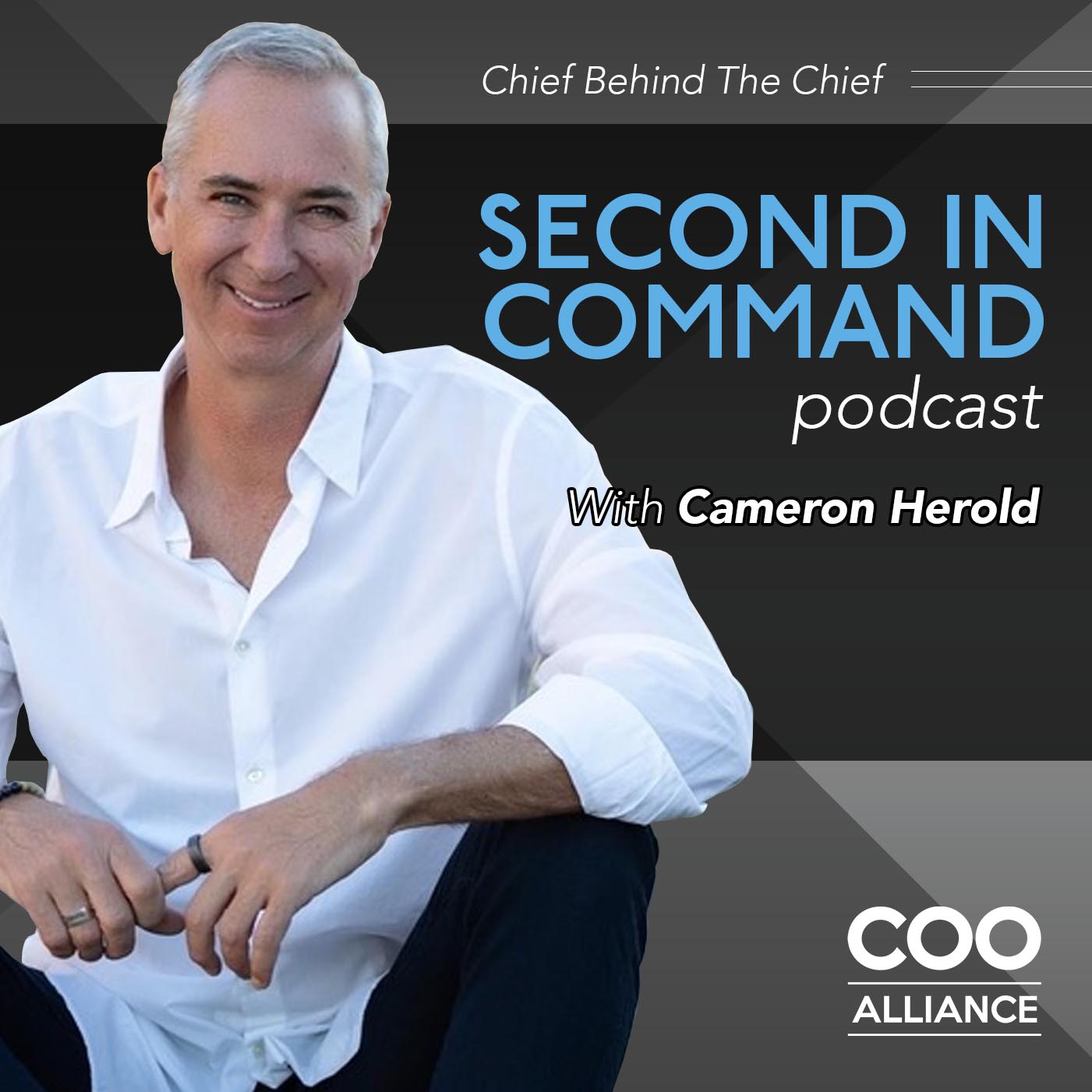
Second in Command: The Chief Behind the Chief with Cameron Herold
Ep. 433 - Beyond the Hustle: How to Craft a Life of Purpose
00:13:13
Loading summary
Transcript18 lines
- [00:00]
Cameron Herold
Cameron I'm Cameron Herald, the founder of the Second in Command podcast.
- [00:03]
Doug
Really quick.
- [00:04]
Cameron Herold
Before we jump into today's episode, you need to know about two important ways that we can help you and your company grow. Number one, check out the COO Alliance. It's for COOs, presidents, BPOps, or whoever is your company second in command to the CEO. The COO alliance is the world's leading community for the second in command and it gives coos the tools and connections to grow themselves and the company. Head over to cooalliance.com to learn more about our members and their results, the program, and our 10x guarantee. If you qualify for membership, you can set up a complimentary call with our team to discuss if it's right for you. I'll tell you about number two in a bit, but first, let's start this week's episode.
- [00:44]
Doug
We only build a company for one out of three reasons. Either to put a kind of stake in the ground or a flag in the ground to say that we've accomplished something, right? We're trying to get praise. Finally, we're trying to prove that we're not stupid because we were told we were stupid in school. We're trying to do something and say that we accomplished it. So that's number one. Number two is to give us money, right? And at some point we've built it big enough that we've got enough money coming in. And number three is to give us free time, right? To allow us to do what we want, when we want, wherever we want.
- [01:16]
Cameron Herold
Welcome to the Second in Command podcast, produced by the COO alliance and brought to you by its founder, Cameron Herold. In the second in command podcast, we talk to top COOs who share the insights, strategy and tactics that made them the chief behind the Chief. And now, here's your host, Cameron Herald.
- [01:42]
In this episode, I share my transformative journey and the lessons I've learned from my global experiences that have reshaped my understanding of success, work and personal fulfillment. Coming from a family deeply rooted in entrepreneurship, I'll take you through my story of building businesses, scaling organizations, and prioritizing leadership development. From co founding Impactful Ventures to creating a mastermind community for Second in Command leaders, I reflect on the highs and the challenges that come with scaling ambitious projects. Along the way, I discuss the common pitfalls many entrepreneurs face, losing sight of hobbies, relationships and personal growth While chasing work success, I also dive into the importance of stepping away from material excess and embracing experiences, relationships and personal growth, which led to a shift from work obsession to a more holistic approach to life. Whether you're an entrepreneur, a leader, or someone seeking more balance, this episode will inspire you to reflect on what truly matters in both work and life.
- [02:45]
Doug
I was groomed as an entrepreneur. I was raised by a father who was an entrepreneur and two sets of grandparents that were entrepreneurs. So my brother, my sister and myself have all run our own companies for between 17 and 25 years. I had always kind of thought of entrepreneurship as a journey that I really should be going after and that we were always taught that having a job was really a bad idea. I'm a dad. I'm a global nomad. My wife and I have been traveling around the world for the last three years and I run an organization called the COO alliance, which is a large mastermind community for the second in command. I have a course that I launched called Invest in youn Leaders, which is how youw Grow youw Leadership Team skills. I've written six books and I've also been paid to speak in 28 countries, soon to be 29. And I've been paid to speak on every continent, including Antarctica. I opened the west coast of the United States for College Pro Painters. In fact, I was just down there, opened up Washington and Oregon for College Pro Painters. Did some recruiting in Idaho as well. I was then a partner in the franchising group for what is now called Gerber Auto Collision in the United States and was Boyd Auto Body in Canada. We built that company up and took it public. And then I was also hired as the president of a private currency company that we built and sold back in 2000. And then I joined my best friend, Brian. He was building up what was called the Rubbish Boys. I joined him and he called the name, changed the name over to 1-800-GOTJUNK. And I joined him as employee number 14. I was the second in command, his chief operating officer. And we grew the company out to $106 million in revenue in six and a half years. 3100 employees system wide. We were operating in four countries, 330 cities. But I left that company 17 years ago. So I've been working behind the scenes with clients now in about 25, 26 countries all over the world. I'll give you a funny story on this. The current COO, Eric Church, has been with them now as the COO for 13 years. Eric and I started a fraternity together in Ottawa, Canada in 1987. I was president the year one. Eric was president the second year. And now here we are 35 years later and he's the COO of 1-800-GOT junk. And I was there in the early days. What's amazing is he would have been horrible in the first seven years and I would have been horrible from the 100 million to the 450 million. We were really there with the right CEO match, but we were there for the right season of the organization, for our skill sets to match up. We only build a company for one out of three reasons. Either to put a kind of stake in the ground or a flag in the ground to say that we've accomplished something, right? We're trying to get praise finally. We're trying to prove that we're not stupid because we were told we were stupid in school. We're trying to do something and say that we accomplished it. So that's number one. Number two is to give us money, right? And at some point we've built it big enough that we've got enough money coming in. And number three is to give us free time, right? To allow us to do what we want, when we want, wherever we want. That was actually the core reason for me starting a company was so that I could control my time. It was a lesson my dad taught me at a very young age. What happens to most entrepreneurs, or many entrepreneurs, is they lose sight of who they are as a person, right? They don't have any hobbies, they don't have any things that they're chasing, they're not trying to learn anything and they keep telling themselves, oh, my business is my hobby. Well, then your hobby sucks because I don't want to hear about your hobby, you know, no more. Would you want to hear about my hobby if I was lawyer or a dentist or an accountant or an insurance salesman. You wouldn't want to hear what I do to make money. I don't want to hear about what you do to make money. But because many entrepreneurs lose sight of their hobbies, lose sight of self, lose sight of their relationships with themselves, their spouse, their kids, their friends, they.
- [06:11]
Cameron Herold
Hey there, Cameron here. Are you enjoying the show thus far? We're going to get right back to it in a sec, but just let me ask you a quick question. Are you a COO or a second in command tasked with helping the company hit and exceed its growth goals? Having spent many decades of my life dedicated to this role, I know one of the secrets of growth is to surround yourself with like minded people, also pushing and striving to go where you want to go. It's why, as a listener to this podcast, I want to Officially invite you to the COO Alliance. It's for COOs, presidents, BPOps or whoever is your company's second in command to the CEO. We're the world's leading community for the second in command and it gives COOs the tools and connections to grow themselves and the company. When you're a part of this peer group, you'll get access to unprecedented support, guidance and resources to grow your company's bottom line, improve your ability to streamline processes, connect with other top seconds in command to assist you and bring out your greatest potential and so much more. Go to www.cooalliance.com to see if you qualify. It's where you can also see other members and the results of the program, as well as our 10x guarantee. If you qualify for membership, you can set up a complimentary call with our team to discuss if the group can be the right fit for you. Once again, it's www.cooalliance.com use promo code.
- [07:32]
Podcast10 before the end of the month for 10% off.
- [07:35]
That is P O D C A.
- [07:37]
ST before the end of the month for ten percent off.
- [07:41]
Now back to the show.
- [07:51]
Doug
End up having nothing left other than their business, which is sad. So what happens to many is we get to a stage in our career, in our life where we've got the business, it's up and running, we got enough cash. Now we're like, oh shit, if I actually hire a second in command or if I build the company for the right reason, I can have my life back. When they decide to have their life back, their companies often go to the next level very, very quickly because they start delegating everything except genius. They start building out the right teams, they start building the business for the right reason.
- [08:19]
At that point, what is the right reason?
- [08:21]
I think it's the combination of all three, right? I don't think it is for the one thing anymore. You know, at some point you have enough money, right? I had memberships at two amazing golf clubs, an amazing tennis club. I was flying private. I had two unbelievable cars I was having traveling all over the world. How much more money do you really need? So three years ago, we sold everything. Clearly, I didn't need that much money. Now it's like, you know, I only own two pair of jeans and a pair of beige pants where I used to have closets filled with stuff, right? I got rid of the golf club memberships, I got rid of the cars, sold all the furniture. What I need now is experiences. What I crave now is Relationships. What I want now is growth as a person, as a friend, as a husband, as a lover, as a dad. I'm doing those things and I find those much more meaningful and much more satisfying than stuff. And then also, at the end of the day, I even avoid the question when I meet people who say, like, what do you do? I'm like, oh, I hike and I travel and I love cooking. I go to festivals. Like, no, what do you do to make money? I'm like, yeah, I don't talk about that. And it really messes with them. And I'm trying to surround myself with more and more people who don't talk about what they do to make money, who do talk about their hobbies and their passions and what they're learning and what they're working on and what they're involved in. And the, oh, what I do to make money is kind of secondary to that. Even if we love our business, it's not our reason for waking up in the morning. It's just part of what makes us us or part of what we do with our time.
- [09:42]
So why is it important for people to actually define this? Because I can hear some people going, oh, this sounds, you know, great, Doug. Touchy, a little feely, whatever. But why is it so important to understand why the hell we're doing this and put it on paper?
- [09:57]
Because you're going to die and none of this shit actually matters and this is just what you're doing to make money. And at the end of the day, it's kind of like what Ram Dass said, that we're all just walking each other home. At the end of the day, if you don't decide to do other things with your life at some point, it is the end of your life. Like, I'm sorry, Regardless of whether you have a plan or not, you are going to die, right? So not just you, Doug, but you as me, Cameron, and me as anyone listening or watching. So why not decide to have the best possible life that we can? Why not engage in the best hobbies and have the most fun and connect with the best people instead of getting sucked into the day to day of our business or getting sucked into the day to day of social media or, you know, watching reality TV or kind of being bored, right? That was one of the reasons why my wife and I decided to sell everything, was there's so much out there to explore. There's so much out there to see. There's so much out there to be excited about and to try and to experience I would rather go through that as my life's journey. And maybe I'm also finally understanding life. You know, my dad passed away a year and a half ago. My mom died 20 years ago. I was 35 years old and experienced death for the first time. When my mom died, actually, I was 37. So I really didn't have a good understanding of how fragile life is and what life was all about until maybe I was approaching middle age. And, you know, what's interesting is it's very European to spend time with friends and family and hobbies. It's very, sadly, very North American to be so obsessed with working and what we do for work. You know, my wife and I have been to 49 countries in the last three years, and so we have a very global perspective on. On life and what life can mean. And the rest of the world doesn't obsess about what they do. And then they're, by the way, extraordinarily successful in their careers, but they don't obsess about it. It's not their reason for waking up in the morning. It's part of who they are. It's not their reason for being. You know what's really interesting is to observe what a different class or a different group of people, a different cohort of people think of work. And it's kind of the blue collar working class. They don't bring homework with them, they don't work nights, they don't work weekends. They. They go to work, they put in a fair day's work for a fair day's pay. They shut the door and they go and have a life and they spend time with friends, spend time with. With family, with hobbies, with activities or maybe social media, whatever else they're doing after hours. But they're not obsessed with work. And I think this obsession with work and this workaholic thing, I think it's certainly breaking. And I think Covid gave us some of that back where we were forced to be around friends and family a little bit more. And a lot of people liked the taste of that, which I think is really good. And then I think the other part is we're no longer spending time driving to an office and driving back from an office, which for many have given us some of our freedom back, too, some of our time back.
- [12:42]
Cameron Herold
You've been listening to Second In Command, brought to you by COO alliance founder Cameron Herold. If you enjoyed this episode, please be sure to like, share and subscribe to us on Apple Podcasts, Spotify and our other podcast streaming platforms. For more best practices from industry leading COOs, visit COOAlliance.com.