← Second in Command: The Chief Behind the Chief with Cameron Herold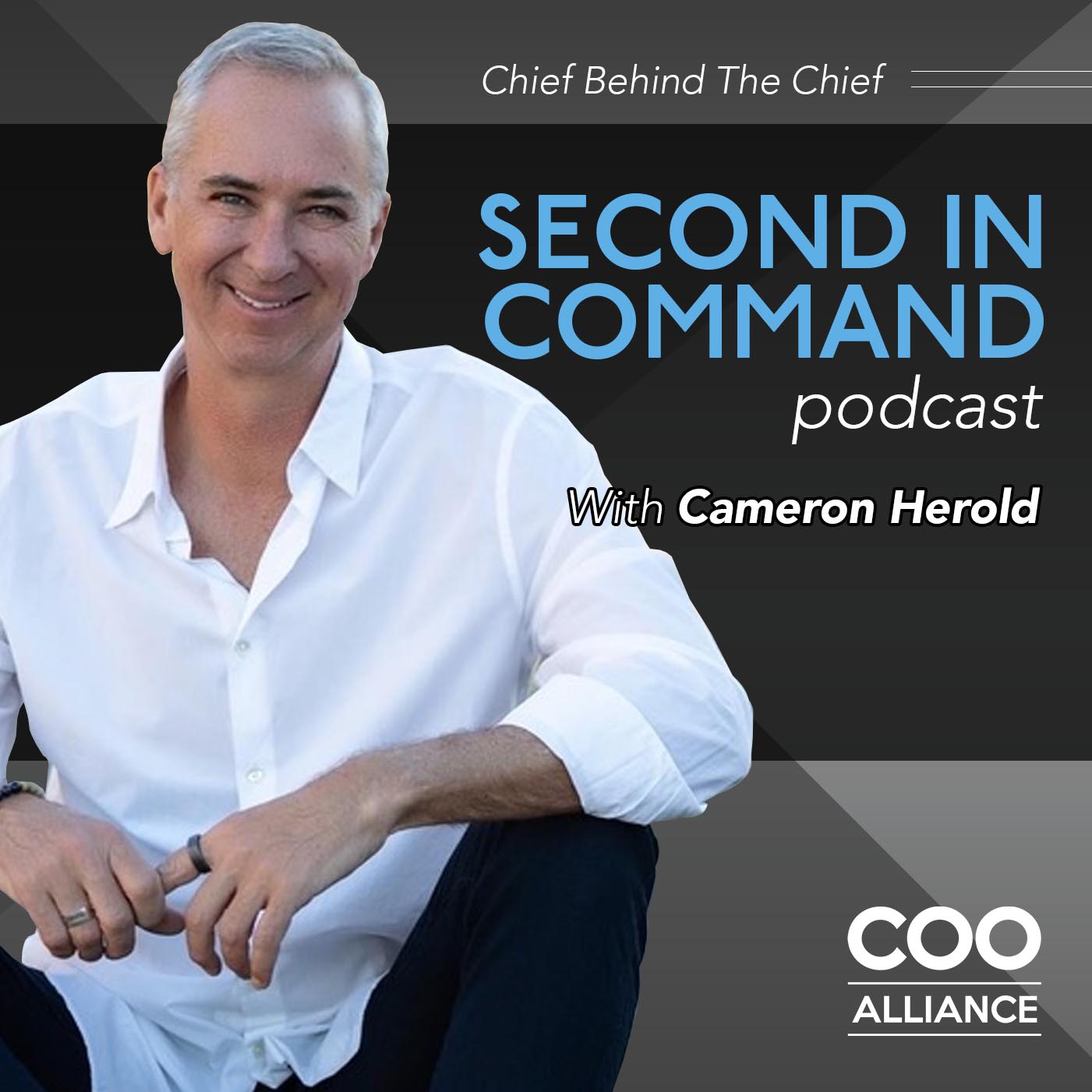
Second in Command: The Chief Behind the Chief with Cameron Herold
Ep. 434 - Trellis COO, Ross Beyeler
00:43:35
Loading summary
Transcript84 lines
- [00:00]
Cameron Herold
Cameron I'm Cameron Herald, the founder of the Second In Command podcast. Really quick. Before we jump into today's episode, you need to know about two important ways that we can help you and your company grow. Number one, check out the COO Alliance. It's for COOs, presidents, BPOps or whoever is your company second in command to the CEO. The COO alliance is the world's leading community for the second in command and it gives COOs the tools and connections to grow themselves and the company. Head over to cooalliance.com to learn more about our members and their results, the program and our 10x guarantee. If you qualify for membership, you can set up a complimentary call with our team to discuss if it's right for you. I'll tell you about number two in a bit, but first, let's start this week's episode.
- [00:44]
Ross Beiler
I think the ones who've done the best, there's probably two traits that stand out the most, right? One is just a natural ability to manage people right, because most leadership roles are going to require management and seeing them being able to relate to others, empathize with others, take their feedback into consideration, being able to communicate, change management. Those who are really effective at those skills tend to do well as leaders, at least within our organization. So that was a big thing that we saw. Welcome to the Second in Command podcast, produced by the COO alliance and brought to you by its founder, Cameron Herold. In the second in command podcast, we talk to top COOs who share the insights, strategies and tactics that made them the chief behind the chief. And now here's your host, Cameron Herald.
- [01:40]
Cameron Herold
All right, we've got a super cool episode today. We have a guy named Ross Beiler. Ross is the COO for a company called Trellis, and they actually have just sold and merged into a company called zlab, where he's now the Vice President of operations. He's going to talk about a couple of major transition points in his organizational growth. He's going to talk about when he first started in operations, working as an intern for one of our very first CEO alliance members, a guy named Matt Wool at Acceleration Partners, working with Bob Glazier. And Ross is going to talk about the end to end digital consultancy, which is 100% focused on helping ambitious B2B companies accelerate revenue growth in digital channels. He's going to talk about a couple of acquisitions. They went through a merger that they went through some of the ways that they actually have leveraged technologies like eos, some of those operating systems, and also some of the lessons that he's gaining from working through his executive MBA program while building these organizations. You're going to love this episode. You can also watch this episode on our Second Command podcast YouTube channel. We'll see you on the inside. So, Ross, welcome to the Second in Command podcast.
- [02:50]
Ross Beiler
Yeah, thanks, Cameron. Excited to be here.
- [02:52]
Cameron Herold
Yeah, I'm looking forward to doing this for a bunch of reasons. The first one, and I think this is such a rare, rare occasion, you actually worked, I think one of your very, very first jobs with a really close friend of mine, Bob Glazier, the founder of Acceleration Partners. And Bob's original COO was a guy named Matt Woll. And Matt and one other guy, Zach Morrison, were the two founding members of the COO alliance, which I started about eight years ago. And we've had 500 COOs from all over the world as members. But you got to work with Bob, so kind of I want to ask you a couple of questions about that.
- [03:28]
Ross Beiler
Yeah, absolutely. Yeah. Formative years for me, so.
- [03:31]
Cameron Herold
Yeah, I'll bet. Wonderful guy. His Friday Forward emails have like hundreds and hundreds of thousands of people reading them. What do you think were a couple of things that you picked up from working with Bob back in those days With Acceleration Partners, they're really well known as being a best company to work for. So what did you pull from that?
- [03:46]
Ross Beiler
Yeah, it's really funny. I don't know if it was intentional or not, but Bob was really good about reinforcing just a couple of key lessons that I think land really well for someone who's in their early 20s. Right. So one thing that he, for whatever reason would say all the time, maybe to control my expectations, but he said, Listen, in your 20s, your goal is to learn, and in your 30s and beyond, your goal is to earn. He's like, you really want to use your first decade of your career just learning as much as you can. Try everything. Don't be focused on maximizing compensation, don't be focused on maximizing upside from a monetary perspective alone. Like, really think about what are the career opportunities, what are the projects, et cetera, that you can jump into that are going to help you expand your skill set. And I really took that to heart. And I think one of the interesting things about the role I had there, you know, again, it was a part time internship while I was in school, but Bob really threw me into a whole bunch of different stuff. We were doing affiliate marketing, we were doing SEO, content creation, website design and development, business plan drafting. I mean, everything you could imagine for A startup. And I think that was really just. I'm very grateful for him giving me that opportunity to expand my skill sets in that.
- [05:01]
Cameron Herold
Yeah, I'll bet. I love that. I love that you actually got to do so much in those early days too. And I love that he kind of did solidify what the 20s are for us to learn. My son just came back from internship over in the UK and he literally showed up in Montreal a week later and opened up his first business at 21 years old. And he's blown the doors off. And it's because of what he's pulled out of two internships and the one that he did a year and a half ago with a company called Grow Rev out of Vancouver. He asked if he could work for them for free for the entire summer, as long as he could work in every business area. So, yeah, I think Bob set you up for some success for sure. So you went on and you kind of co founded a company and then you ended up and landed as the COO for a company called Trellis, and you were there for a bunch of years. Can you walk us through what that was like and what Trellis was doing and what your roles and responsibilities were as coo?
- [05:48]
Ross Beiler
Yeah, absolutely. So, yes, the company I had before was called Growth Spark. We had kind of gone from being a WordPress focused agency to an E Commerce focused agency, specifically focused on Shopify. So very familiar with the provinces up in Canada, having spent time visiting our partners over there, we in 2018 merged with Trellis. So after the merger, because Trellis was also focused on E Commerce, a little bit more on Magento at the time, but between the two of us, we were probably about 35 people or so after the merger. And really the genesis of it was Isaiah and I were both in Boston. We were both running E Commerce agencies. We were doing a lot of events together and a couple of deals together already, and we really saw an opportunity for sort of a one plus one equals three situation. But he had a huge gap in his team. He did not have an operations leader he had at one point, but they had decided to move on. And so when Isaiah and I sat down to really think about whether this deal could make sense, the first thing we focused on wasn't necessarily numbers and deal value, but what does the team look like? Who do you have? Who do I have? Where are your strengths? Where are our strengths? Where are your weaknesses? Where ours? And we just saw a tremendous amount of overlap, and that gave us a lot of confidence to decide to move forward. With the deal because we knew that we'd be building this stronger core, the stronger leadership team that we could use as a platform to kind of grow trellis over the next couple of years, which we grew quite a bit from that point.
- [07:16]
Cameron Herold
Yeah, it's interesting. So when you did the merge, how many employees in the combined company?
- [07:21]
Ross Beiler
There's about 35 people. 30, 35 people.
- [07:25]
Cameron Herold
And what were some of the lessons from that? I mean, it's tough to do those acquisitions and the roll ups and the mergers. What are some of the lessons that you pulled from that?
- [07:33]
Ross Beiler
I think with the deal with our, with our first deal, when we did that, you know, we neither of us had really had much M and A experience, if anything, just observational from other companies and friends, businesses who had gone through it. And so, you know, it was very much learning on the fly. I think we had a lot of good initial instincts, but we definitely made some mistakes. I think the things that we got right were really trying to just focus on defining who owns what, you know, what roles, what responsibilities. And I think very early on we sort of said, okay, anything, you know, sales and marketing, that's going to be in Isaiah's territory, anything, operations and delivery is going to be in my territory. And we had two other business partners as well who helped with sales and with delivery. And I think that was key for us. I think where we probably made a couple mistakes was not moving quick enough on some of the systems integration. You know, we kind of dragged our feet a bit on combining all the tools we were using to run the business. We were dragging our feet on transitioning some of the clients over. And I think a lot of that is from fear. You know, you're afraid of change, you're afraid of making, you know, making the team upset with learning new things. But it's like ripping off a band aid. You just kind of have to do it.
- [08:43]
Cameron Herold
Yeah. With some of those transition points and with some of the, as you identified some of the software or the tech stack that you need to merge your systems, which ones do you think were most critical that you should have started earlier?
- [08:55]
Ross Beiler
I think for us, you know, we're a professional services company and I think, you know, my perspective on professional services everything is about how much capacity do you have, how much demand do you have? And I think that the issue we had is not having a clear view of our capacity. So we had, you know, two sets of teams in a sense, right when we first merged and we had two sets of clients so we couldn't see Our demand. And so we were in the situation where we had all of our Growth Spark projects running and we had data around those in Asana at the time. And then Trellis had all of its team members and all of its client data in jira. And so we were trying to make these sort of global decisions without actually having a sort of coherent, consistent view across the organization. And I think that caused us to face underutilization, keep on smaller clients, that we probably should have gotten rid of missed opportunities and optimizing our resources. I think that's, that's the biggest issue is that it's hard to operate a services business if you don't have a very clear global understanding of where you are on capacity and demand.
- [09:57]
Cameron Herold
How do you manage the fear curve? Like the, the employees who are in there going, oh, now what happens? Like, what happens to me? Or I used to get to report to Ross and now I get to report to this other guy like Isaiah, like, how did you manage some of that stuff? Some of the soft and the people side of that transition or the integration?
- [10:14]
Ross Beiler
Yeah, it's, it's definitely the biggest challenge. I think, you know, all my experience with it, the most important thing is understanding the why, making sure people really understand, you know, why are we doing this? Not just why are we doing a merger. You know, there's going to be clear motivations for that, but you do have to sell that vision. But after that, then you have to really sell the vision of each individual change. Why are we merging this process? Why are we getting rid of the system? Why are we adding this person to the team? And a lot of it is really taking the time to sit down with them, explain that vision, but then really more importantly, answer questions and make sure that they're part of designing that change as much as you can. Because we find that people tend to adopt change better when they are kind of co designers in the process. You know, if they're just being told, here's what you're doing, don't ask questions, people are going to be pretty resistant. But if it's a, here's the objective, why don't you sit with us, explain your concerns and allow us to kind of take your feedback into consideration. People seem to be a little bit more willing to embrace change.
- [11:15]
Cameron Herold
You know, Jim Collins talked about communicating to the point that your team starts making fun of you, and only when they're making fun of you have the ideas started to stick. Did you find that there were some points in the process of the merger, the integration, where God you think I've told you guys all this stuff already. How come you're not getting it? Were there any points that you had to communicate over and over again or you found that you should have maybe communicated more often or more frequently?
- [11:39]
Ross Beiler
Yeah, I think. I mean, definitely, right. There's always instances of us not communicating enough. I think the one thing that I tried to do early on, kind of tongue in cheek, was name absolutely everything and kind of come up with ridiculous names. So every tool we were building, you know, it had a specific name for it. You know, every process time, every time we had a big process change, we'd actually come up with a name for the process change. And that kind of gave a certain identity and a shared language for the team. And because it was trying to bring two teams together by kind of creating that language at that moment, it helps kind of create a new identity and a new buy in for both the kind of Trellis and Growth Spark team members. And I would get made fun of all the time. But what that I get made fun of all the time for the names I came up with. But not.
- [12:27]
Cameron Herold
No, but it's really interesting and I have not heard very many people speak of that aspect of culture very often, very, very rarely is it ever spoken about. But when you brand systems and you come up with kind of the vernacular and you come up with acronyms that only your insiders understand, it creates that bond and that camaraderie. It's like the outsiders don't know these terms. Like it's not even. You're not doing it. So they don't know, but it's. It just becomes kind of the way that we do things and the phrases. And so I think that branding is more critical. And as you said, pulling two different groups together with this new dictionary, the new lexicon that they all seem to use, it does become that common bond. Where were the two offices? Or were you guys all remote hybrid? Where was that also? What was that set up like?
- [13:12]
Ross Beiler
Yeah, so in 2018, most. Most of the Growth Spark team was in Boston. We had a couple remote folks, and then I'd say half of the Trellis team was in Boston as well, but then the rest were rem. Honestly, Covid just radically changed that. So early and early in the merger, mostly in 2019, most of our recruitment was focused on Boston area employees as much as we could. But once Covid happened, then it was a full embrace of going remote. We still had the office, but we said, you know what, let's not constrain ourselves from recruiting perspective, we had team members moving all over the place. We really kind of went full in on the virtual first kind of remote first culture.
- [13:49]
Cameron Herold
And do you think that was part of the stuff that you did well, was getting the different cultures to merge together in different offices to merge together? Would you have changed anything up there?
- [13:58]
Ross Beiler
I think there were a couple things that we did early on culturally that helped. So very literally within a month of the merger we had, we call it Winter Summit. So it's our sort of winter celebration, usually in December, where we bring the whole team together and we did that one in person both in 2018 and 2019. And obviously 2020 was a little harder. But that really helps because it got everyone in person, got everyone meeting, gave everyone that opportunity to get to know each other. And I will say it's amazing how different it is relating to someone that you've had a drink with or had a meal with versus some anonymous name on Slack. It's much harder to build a strong connection that way.
- [14:35]
Cameron Herold
Yeah, it's like the on sites are the new off sites, right?
- [14:38]
Ross Beiler
Yeah, yeah, yeah, exactly.
- [14:40]
Cameron Herold
Okay, so interesting on that. Now talking about the grow up from there, what were some of the, not the lessons but the hurdles or road bumps that you hit in scaling up the company after you've merged the two together and now you're going to be kind of growing the organization. Can you walk us through some of the lessons and some of the road bumps along the way?
- [14:58]
Ross Beiler
Yeah, yeah. I actually, I like to think of, you know, this is kind of a commonly shared view, but I like to think of professional service organizations as really three core areas. You know, growth, delivery and operations. And if I think about each of those three areas, my business partners Isaiah and Jared really did a tremendous job maintaining momentum on the growth side. I mean we had top line growth 25, 30% year over year for probably all the way up through 2022. I would say 2023, when we finally kind of hit our wall on that, they did a great job driving demand. I think where we ran into some challenges was in the sort of step function that all service companies are right where you basically are selling people's time and or the more work you have, the more people you hire. At some point you have so many people that you've hired that you have to put in managers. Those managers typically are non billable. So now you have additional overhead, which means you need to sell more time in order to make up for it, which means you have to hire more people and then you Kind of get these profitability steps in the business that can be really bumpy. And for us, we had the mindset of, you know what, we want to grow this thing. And we're not as focused on short term profit optimization. We want to really focus for long term growth. And while sales is growing 25 to 30%. That's a great thesis. The moment you hit a wall on that growth and you're carrying this huge overhead and you're not really necessarily leaned as much as you can on the operations side, that lack of profitability can absolutely destroy your business. And that was, that was a thing.
- [16:32]
Cameron Herold
We ran into and it happened. It can happen really fast too, right?
- [16:36]
Ross Beiler
Very fast. Incredibly fast. One quarter can totally change your entire business.
- [16:40]
Cameron Herold
When it's interesting that you touched on the whole part of these managers and bringing in that next layer of kind of management, not only does it bring in the overhead, but it brings in the additional complexity around communications. And often that first layer of management team, that new management team, their solution to every problem is hire more people. And that's often not the solution. I mean, now that we've got AI coming in and the tech stack has become more so, so much more relevant. But can you walk us through some of the ways that you as a leader have been able to identify that no people isn't necessarily the solution and hiring more isn't necessarily the goal?
- [17:17]
Ross Beiler
Yeah, I think it was definitely our default solution for much of 2021 and 2022. Those were probably our fastest growth years. I remember one quarter we hired 25 people and part of that you're doing some backfill and things like that. But I remember we were just on a rampage, just trying to keep up with the spike in E commerce growth. And I think the issue was that there was, there was really a disconnect between what sales thought was going to land, what delivery was actually able to do and what operations was sort of modeling. You know, from a, from a capacity perspective. You know, there wasn't quite enough of a direct connection between all three of those. And this is super common, right? You create silos and organizations especially as you get bigger and bigger. And so, you know, when we, when we started to really think about that and said, okay, you know, we're slowing down here, what's going on? We started to try and remove some of that siloization, right. Whether that was through meetings, whether that was through redistributing responsibilities and that that helped quite a bit.
- [18:19]
Cameron Herold
How many employees were there roughly at that point?
- [18:22]
Ross Beiler
Probably around 90 I think at that point, it's interesting.
- [18:24]
Cameron Herold
I talk about the ones and the threes that every company goes through a transition, you know, from 1 to 3, 3 to 10, 10 to 30, 30 to 100, 100 to 300. And that hundred mark where you guys were at is when the politics, silos and turf wars start coming into play, where some of the communication starts to break down and you start hiring the real true seasoned leadership team. So did you get to that stage where you were hiring the really solid, proven. They've done it a couple times, senior people and bringing them into the company? And can you speak to how to do that properly?
- [18:55]
Ross Beiler
Yeah, that's a great question. I would say we were trying to do as much as we could to promote from within. That was sort of the ethos of the company, you know, And I think it worked out really well for some of our roles. Right.
- [19:06]
Cameron Herold
We had some people, but we definitely.
- [19:10]
Ross Beiler
Had some that didn't land. I think that was. That was a big struggle for us. You know, I think we, you know, part of that was for retention. Part of that was for creating a sense of career mobility and excitement within the organization. And some of it was worked out really, really well. But I think for us, if we had maybe taken a little bit longer to hire some of those more senior roles instead of promoting one or two people, it could have really changed the trajectory of the company.
- [19:38]
Cameron Herold
And it's interesting. I mean, it's hard to be fair to yourself back then because you are doing the best as a company. You are trying to build a good culture. It does make sense to promote from within. Often it's kind of like somebody who says marriages don't work, so open marriage. Well, then open marriages don't work. So then marriage, it's like, you know what, relationships are hard regardless of if you're in a marriage or an open marriage. So just work at your relationship regard. Right. It's like hiring somebody is hard. Promoting from within is hard. Hiring from somebody from the outside is hard. It's just hard. Right. So even if you'd hired everybody from the outside, you probably would have had a 50% success rate.
- [20:16]
Ross Beiler
Yeah.
- [20:17]
Cameron Herold
Knowing what you know now in terms of the promoting from within, how do you identify which are the right people to promote from within? Which ones are the right to bet on versus all of them? Because sometimes you just know it's the wrong one.
- [20:29]
Ross Beiler
Yeah. I think the ones who've done the best. There's probably two traits that stand out the most. Right. One is a just a natural ability to manage people right. Because most leadership roles are going to require management and seeing them being able to relate to others, empathize with others, take their feedback into consideration, being able to communicate, change management. Those who are really effective at those skills tend to do well as leaders. At least within our organization. That was a big thing that we, that we saw. I think the other thing is vision, right? There were, there were some folks that we promoted because they had a very clear vision of, of the department. Hey, we should be doing X, Y, Z. We should be going into this market, we should be adding this tool. We should be, you know, servicing clients differently. So I think for folks who can come in with a clear vision for the department, even if they haven't.
- [21:22]
Cameron Herold
Hey there, Cameron here. Are you enjoying the show thus far? We're going to get right back to it in a sec, but just let me ask you a quick question. Are you a COO or a second in command tasked with helping the company hit and exceed its growth goals? Having spent many decades of my life dedicated to this role, I know one of the secrets of growth is to surround yourself with like minded people also pushing and striving to go where you want to go. It's why as a listener to this podcast, I want to officially invite you to the COO Alliance. It's for COOs, presidents, VP ops or whoever is your company's second in command to the CEO. We're the world's leading community for the second in command and it gives COOs the tools and connections to grow themselves and the company. When you're a part of this peer group, you'll get access to unprecedented support, guidance and resources to grow your company's bottom line, improve your ability to streamline processes, connect with other top seconds in command to assist you and bring out your greatest potential and so much more. Go to www.cooalliance.com to see if you qualify. It's where you can also see other members and the results of the program as well as our 10x guarantee. If you qualify for membership, you can set up a complimentary call with our team to discuss if the group can be the right fit for you. Once again, it's www.cooalliance.com use promo code podcast10 before the end of the month for 10% off. That is P O D C A S T 10 before the end of the month for ten percent off. Now back to the show.
- [23:02]
Ross Beiler
Been, you know, asked to come up with that vision. I think that's encouraging.
- [23:08]
Cameron Herold
Well, it shows that they're coming in with a level of strategic insight, often a level of autonomy, and then sometimes even a level of P and L responsibility because they're seeing it from that level versus needing everything to be delegated to them, which shows that there's still more at that more junior level. Right. So absolutely.
- [23:23]
Ross Beiler
Yeah.
- [23:24]
Cameron Herold
All right, so. So you go from there, you're building out the organization really successfully, and then all of a sudden Covid hits.
- [23:30]
Ross Beiler
Yeah.
- [23:32]
Cameron Herold
What was that like? What were the big. Sorry to bring back the PTSD of like being an entrepreneur in Covid.
- [23:39]
Ross Beiler
It was, it was a very weird experience, I think for folks in the e commerce world. Right. March came. There was an all of a sudden massive slowdown. Every one of our clients was putting their retainers on pause, projects on pause. They were pushing out deals and we're canceling retainers. And so we went, I think from March through probably June, May or June, we saw, I mean, a massive reduction in sales opportunities and even actual revenue. And we really started to panic. And honestly, if it wasn't for the CARES Act, I don't know what we would have done. That gave us at least a little bit of a lifeline there. As soon as the world realized, oh shit, people are going to be ordering things from home and they need to deliver to them and the only way to do that is commerce that just instantly change the trajectory for the company. So, you know, that first March, April, May was really dark. But then as soon as June hit, it was just all upside.
- [24:32]
Cameron Herold
From there it got good again. Can you talk about what? Was your company already fully remote at that point or mostly remote?
- [24:39]
Ross Beiler
Yeah, we were, I mean, we were very remote friendly. Right. We had more people in the Boston area, so people would often come into the office, but it was usually only two days a week, three days a week, just for the social side. So it was a very seamless transition for us. Yeah.
- [24:50]
Cameron Herold
So no big hiccups there. No big transition point. Do you guys still believe in remote cultures?
- [24:55]
Ross Beiler
I do, I do. I. I really been pretty. Probably because of Bob Laser. Right. He was very remote friendly early on. I mean, even an internship. Yeah, he still is.
- [25:05]
Cameron Herold
Yeah.
- [25:06]
Ross Beiler
I thought it was amazing, right. As a, you know, 19 year old. Be like, what? I can work from my classroom if I need to. Like, it's amazing.
- [25:14]
Cameron Herold
So, yeah, he. He actually scared me when he was building Acceleration Partners and asked me to start coaching him. They had about 40 or 50 employees at the time. And my whole world was building world class company cultures. I'd been the COO at 1,800 Thunder Got Junk. We ranked number two in Canada. You know, I'd coached the CEO of Sprint. Like, I'd coach these real companies with real moving parts, but with offices. And then I meet this guy who's got like everybody remote. I'm like, dude, you're crazy. You can't. How do you as a company wrap your head around metrics and deliverables and know that you're getting a return on investment for the people? Or do you worry about it? Is do you based on like, do, do you run the business just based on kind of okrs? Like, how do you know?
- [25:55]
Ross Beiler
Yeah, you know, I admire Bob's kind of foresight into making that culture, you know, possible. I think for, for us, sort of the things we tried to employ is, you know, as a service company, all of our, all of our revenue is based on selling people's time. And so we really put a lot of emphasis on time tracking, which, you know, people can say good things and bad things about it. But I think, I think for us it worked. It really gave us a lens into, okay, how are we doing from a utilization perspective? How are we doing with excess capacity? Are we under over targets? It gave us a way to measure the business in a very meaningful manner and I think that that helped build some confidence. You know, did we over index on, on utilization in certain instances? Absolutely. I think there's big trade offs when you optimize the business around utilization. But it was sort of the yard stick we chose and we, we stuck with it.
- [26:46]
Cameron Herold
Interesting. All right, so you guys have been building out a successful business, hits 2003, and then all of a sudden you're going to do or you're being acquired or is it a merger with a company called zlab? What's the story there? What happened?
- [26:58]
Ross Beiler
Yeah, yeah. So we, you know, very early on in my partnership with Isaiah and Jared and John, our other partners at Trellis, we knew we wanted to sell the business at some point, you know, for, for a lot of different reasons. And it's something we had always had in the back of our heads. We float. You know, the E Commerce Agency world is relatively small. There's, you know, there's only a few really, really great players in the space. And we were lucky enough to be in touch with Evan, the CEO of zlab already. And so we had had a relationship and just kept an open conversation going over the years. And at some point he kind of expressed his vision for zlab and really wanting to kind of build the market leading digital Consultancy for manufacturers and distributors. And we actually happened to have a lot of B2B E commerce experience. And when we saw his vision for what he think could be accomplished through zlab, we got really excited. Not just because it was an opportunity to engage in a potential exit, but. But really because it was an opportunity to double down and to build something massive. And so most conversations we had had prior to that had all just been, yeah, what do you think? Kind of flirtatious, you know, and then you get a real number and you walk away. But in this situation, it wasn't even just a number. It was an opportunity to really join something that had some, some momentum.
- [28:13]
Cameron Herold
Yeah, I want you to speak to that because there was something there. And I talk about selling the sizzle, not the steak. And he kind of sold you guys on, on the other concept I created called the vivid vision. He talked to you about the vision of where he was taking his company. I think Bob probably had the painted picture back when you might have worked with him. That was a concept that I talked. I taught Bob. We now changed the term from painted picture to vivid vision. But he sold you on the vision of what was going to be coming for the organization. You guys liked that idea, and so that's what got you excited. The numbers were. They weren't secondary. But I think if it was just numbers, it might not have been a deal. Right. So what do you think it was that spoke to you when you, when you liked that vision? How did he articulate that vision? And why do you think that kind of, I guess, made sense or was. Was such a reason for wanting to sell or want to join him?
- [29:06]
Ross Beiler
Yeah, I think there were. There were probably three big things that stood out for me. You know, I can't speak on behalf of the rest of my partners, but I think for me there was, number one, his focus. Evan was just relentlessly focused on, you know, who. Who is our target audience? What do they need? What do they care about, what's going to create a great experience for them, what's going to create value for them. And even early early in our conversations around potentially doing a deal and talking about how things could come together, he was very consistent about coming back to that vision for the customer. And that, to me, was great. I think that level of discipline and focus is essential if you really want to scale an organization. And it was something that we were struggling with at our size before the acquisition. I think the second thing is that not only was it clear what his focus was, but it was clear to me that there was a big opportunity. So if you look at the E commerce landscape and you kind of look at it as B2B versus B2C and it's not necessarily that black and white, there's omni channels, all sorts of nuance. But if you generally think about what's happened in the kind of CPG retail space, what Shopify has done for these huge cosmetic brands and apparel brands and all these folks, I mean they have revolutionized the way that people shop online, the experience that customers have and that's happening in the B2B space. But there's still so much room, there's so much white space for people to come in and create a world class agency that can really do manufacturing, distributing life sciences well in online. And I think the fact that Evan was dialed in on that and the fact that we saw a huge open space in that market got us really, really excited of saying this is where we want to plant our flag.
- [30:42]
Cameron Herold
All right, so I think this makes sense to talk to us about where the flag is planted then. So explain to us what is zlab, what is your, you know, the reason for being and what's your typical customer, the avatar, like who do you look for as a good customer?
- [30:57]
Ross Beiler
Yeah, yeah. So you know, again, our vision is kind of becoming the world's leading digital consultancy for manufacturers and distributors. So that's sort of the industrial space that we're playing within. We're targeting folks that are in that sort of half billion, billion dollar revenue level and higher. We certainly work with smaller organizations if they have ambitious e commerce goals. But generally we find that the organizations that can benefit the most from the types of services we provide, design, development, marketing, integration, are those that have large, complex challenges. I think the other theme too is really helping these brands think about modernizing your selling experience. Really thinking about how do you go from, you know, very old school EDI order placement, you know, to somewhat modern, you know, e commerce portals that were built 20 years ago to actual modern day, you know, customization, product engines, cpq, things like that. Like really kind of pushing the selling experience to do what it's capable of doing now.
- [32:04]
Cameron Herold
And is this all direct to consumer work that you're doing or are you helping these brands sell on Amazon as well?
- [32:10]
Ross Beiler
There's, there's certainly a channel strategy, right, that has to kind of come into the foray of any of these engagements that we have. So if you think about any business, you know, whether it's as a, as a means of distributing a direct sales channel, fulfillment Partnerships. You know, there's a huge role that Amazon, Walmart, all these other channels play.
- [32:31]
Cameron Herold
Strategy, but yours is more direct, yours is more direct to consumer than.
- [32:35]
Ross Beiler
Yeah, yeah, yeah. And B2B too. So the consumer oftentimes is business placing the order. Yeah.
- [32:40]
Cameron Herold
One of our CEO alliance members and again, a company that I've coached for a couple of years is called wishing you well and they help establish brands that just do already pretty good job. Direct consumer, do a good job with retail, but they don't do a good job yet at selling on Amazon and they help these brands crush it on Amazon and they do Clif Bar and Dr. Bonners and some really cool stuff. So, yeah, if you guys ever want an intro to a good possible partner, I'll do an intro to them. So with that acquisition then from, from Zaylab, what was that like? What was it like kind of joining that bigger organization and merging in with them? What were some of the lessons? What do you think would have made it easier now that you're in that role? And then your role changed. You went from a CEO role to a VP Ops role. Can you speak to kind of those couple of different points?
- [33:26]
Ross Beiler
Yeah, I will say, you know, so we started, you know, the due diligence process probably in August. And so, you know, we had been pretty aggressive in trying to close within about eight to 10 weeks. And so for us, for me in particular, it was, it was a whirlwind. It was a crash course on everything M and A from a legal perspective, from a finance perspective, from an administrative perspective. I mean, there, there are countless lessons, you know, around M and A that I kind of walked away from in that, in that first, first eight weeks. Then you close and it's the most anticlimactic experience you'll ever have in your life. You get on a zoom call, a couple of lawyers say, yeah, the docs are done, let's release them. You get a wire transfer, which is nice, but generally that's, that's sort of it. Right. This whole build up is now, is now done. You shift to an entirely different phase of M and A and then you're in the integration phase, which is honestly where we're still at. Right. We're just in the first five weeks here, six weeks. So this is super, super fresh for us. So I'm still learning the lessons. Real time.
- [34:26]
Cameron Herold
What are some of the lessons? What are some of those real, real time lessons? What has been frustrating that that has been hard? And what, what have you found that's like, oh, phew, that went well.
- [34:34]
Ross Beiler
Yeah, I think it's, you know, surprisingly not surprisingly, actually some things are revisiting some of the lessons that Isaiah and I had in the initial merger between Growth Spark and Trellis. Right. You got to sell the vision. You got to sell the why? I think one thing that Evan has done really well is using eos. Right. The entrepreneurial operating system. He's put a lot of emphasis on being clear with our core values, clear with our vision, clear with our purpose, has built a really robust VTO is very early into the integration process, involves the Trellis leadership team in the EOS planning process. And I think that made a huge difference for us. It was probably within not even a month that we were doing an off site, 2 days deep analysis of the business and really trying to put pen to paper. And I think that was key. I probably would have wished that in the merger between GrowthSpark and Trellis, we'd done a little bit more of that kind of deep thinking, strategic, because we got too tactical too fast in that first one.
- [35:38]
Cameron Herold
How many employees in the merged company now in the total combined ZLAB?
- [35:43]
Ross Beiler
Yeah, there's about 225 team members.
- [35:45]
Cameron Herold
Wow. So EOS typically kind of breaks down at the 100 person mark. You guys are doing a great job with actually utilizing that. What part of eos, and I know Gino Wickman really well, who created it, wrote the book Traction. What parts of the EOS system do you really like? What have you seen as kind of the big early wins?
- [36:03]
Ross Beiler
Yeah, I think the two big ones for me, and these are probably pretty commonly cited. The first is the A chart, the accountability chart, I think, particularly in an acquisition, kind of like what we had with Trellis, where you have to be clear on the leadership roles within the organization, who owns what, and I think the HR in particular, because the focus is on what is the actual accountability, what is the outcome, what is the metric, et cetera, that a particular role is responsible for. I think that focus is very clarifying and we're still going through some of the exercises associated with that. But having a blueprint that we can follow or that we can build and follow is really helpful. And the other honestly is the L10 meeting. So level 10 meeting. You know, it's a weekly kind of depart or not departmental, but like, you know, senior leadership and then departmental level meeting between your, your key leaders. And it's an opportunity to come together and really focus on the issues associated with the business. And I think what's, what's most useful about that is really to capture all the BS that comes up throughout the week and just give it a place to live and not get distracted Monday through Friday, you know, other than that one 90 minute period.
- [37:12]
Cameron Herold
Yeah, it's key. I used to try to do that a lot at 1-800-got junk I'd get, you know, all those random notes from everybody or me sending random questions out to everybody. Most of that solves itself by the time you get to that weekly meeting. Right. It's great that you guys are using it. I love the EOS system. I'd say probably 40 or 50% of our CO alliance members use EOs. We even have a Slack channel just for the members who use EOS for them to continue to chat with each other. So part of your growth right now is you're doing your executive mba, you're at mit, which is, you know, not, not a shabby school to be going to, and you're running a business. What's it like going and doing your, your mba, executive MBA while you're running a business? And what do you think you're pulling from that, that you're using? And then third is what have you noticed that is kind of theoretical in the business world in an MBA program versus you're really there running a business day to day and you're like, yeah, it doesn't really work that way. It's like not textbook.
- [38:05]
Ross Beiler
Yeah, totally, totally. Yeah. I mean, in terms of the, you know, the experience, you just have to say goodbye to work, life, bounce. And in some ways, if you're just mentally prepared to say, okay, this is, this is just how I need to operate for X number of months or years, you know, you can, you can do it. I think that was, that was something I was very focused on early on. And you know, you kind of work with your family and your friends to kind of set expectations and really kind of build your schedule around how to get all this work done. So that's, that's step one, I think for me, you know, the experience at mit. So actually I went to Babson College undergrad and Babson is very focused on entrepreneurship. MIT is also focused on entrepreneurship, but they actually have two very, very different perspectives from my experience of entrepreneurship. Yeah, I think, I think Babson does a really good job helping equip you with the skills to get out there and just start selling shit. And I know that sounds kind of crass, but like really getting to the point where you're very action oriented, you're able to actually get things done and you're able to be a very flexible, hands on, sort of builder of companies. I think what MIT does really well is providing you sort of an understanding of what are the actual underlying behaviors that are going on within an organization that allow you to do things like innovate, handle change management, build deep partnerships at a global level. Like MIT is a very kind of global ecosystem driven perspective on entrepreneurship. And for me, I think there's plenty of unbelievable classes and professors and things I've learned, but the two most impactful things I'd say I've experienced so far are one, this notion of what they call the three lenses framework. So thinking about an organization as three distinct, distinct systems. There's a design or strategic system, there's a political system, and then there's a cultural system. So that strategic or designed system that is all focused on hard controls, so metrics and tools and processes, things that you can kind of build and put in place to run and manage a company. The political lens or perspective is focused on what are the power dynamics, what are the relationships, how do incentives drive behavior? And then the cultural lens is all about the habits. You know, how, how, how the way you communicate, the things on your walls, quote, unquote, how do those things kind of inform the way that your people behave? So if you think about each one of those as an influence on behavior, when you then look at your company and you're facing some problem, you can use those lenses to actually better understand, like, is this an incentive issue, is this a control issue, is this a cultural issue? And I think that's really changed the way that I think about problems in the company.
- [40:46]
Cameron Herold
Super interesting. I love the lens that it gives you. It also feels like it's the right time for you to be learning this. I think if you were learning this back when you were a 50 person company or in the early 30, 40 is too early, right? Like the lens was just too big. Not corporate, but it feels like it's the right time in the right place at this. All right, I want Ross Baylor to go back and give Ross Beiler some advice. I want you to go back to the 21 or 22 year old. You know, you're just coming out of Babson, you're just getting started, maybe at Acceleration Partners as an intern. What advice would you give your younger you that you know to be true today?
- [41:21]
Ross Beiler
A couple things I'd say one, you know, spend more time working with Bob. Probably, there were probably more lessons I could have, could have captured, captured from him. But I really value the time I had there. You know, I think the, the second thing is, I know this might sound funny, but I don't think I was ambitious enough. We Grow spark early on. You know, I think, I think for a while I was looking at it as, hey, this is great. I work for myself, I can work remotely, I can make a decent living 40 hours a week, work with some people I like. And that's all great. I had a wonderful experience. But I think if I had pushed myself more early on and really tried to create a clearer vision for what I wanted to accomplish with Growth Spark, I probably could have taken it further. And so I think kind of going back to what Bob had said, you know, your 20s is about learning and I learned a lot, but I think if I had pushed a little bit harder, there was probably more lessons to capture.
- [42:15]
Cameron Herold
I love that I'm going to link to Matt Wol's episode. Matt was Bob's coo. One of the very early episodes back at like number 30. We're at like 4:30 right now. 430. But I will also link to the episode where we had Bob Glazier on and he's the only CEO I have interviewed on the podcast and I interviewed him about 50 episodes ago or so as a I wanted to know what's it like to take a COO and move them into the CEO role so you can become chairman. So Bob Glazer's episode. I'll link to both of those in the show. Notes from your episode and Ross Beiler, the VP Ops from zalab, former COO from Trellis. Thank you so much for sharing with us on the Second Command podcast. Really appreciate the time.
- [42:59]
Ross Beiler
Awesome. Thanks Cameron.
- [43:00]
Cameron Herold
Appreciate it, Appreciate it.
- [43:04]
Ross Beiler
You've been listening to Second in Command, brought to you by COO alliance founder Cameron Herald. If you enjoyed this episode, please be sure to like share and subscribe to us on Apple Podcasts, Spotify and our other podcast streaming platforms. For more best practices from industry leading COOs, visit COOAlliance.com SA.