← Second in Command: The Chief Behind the Chief with Cameron Herold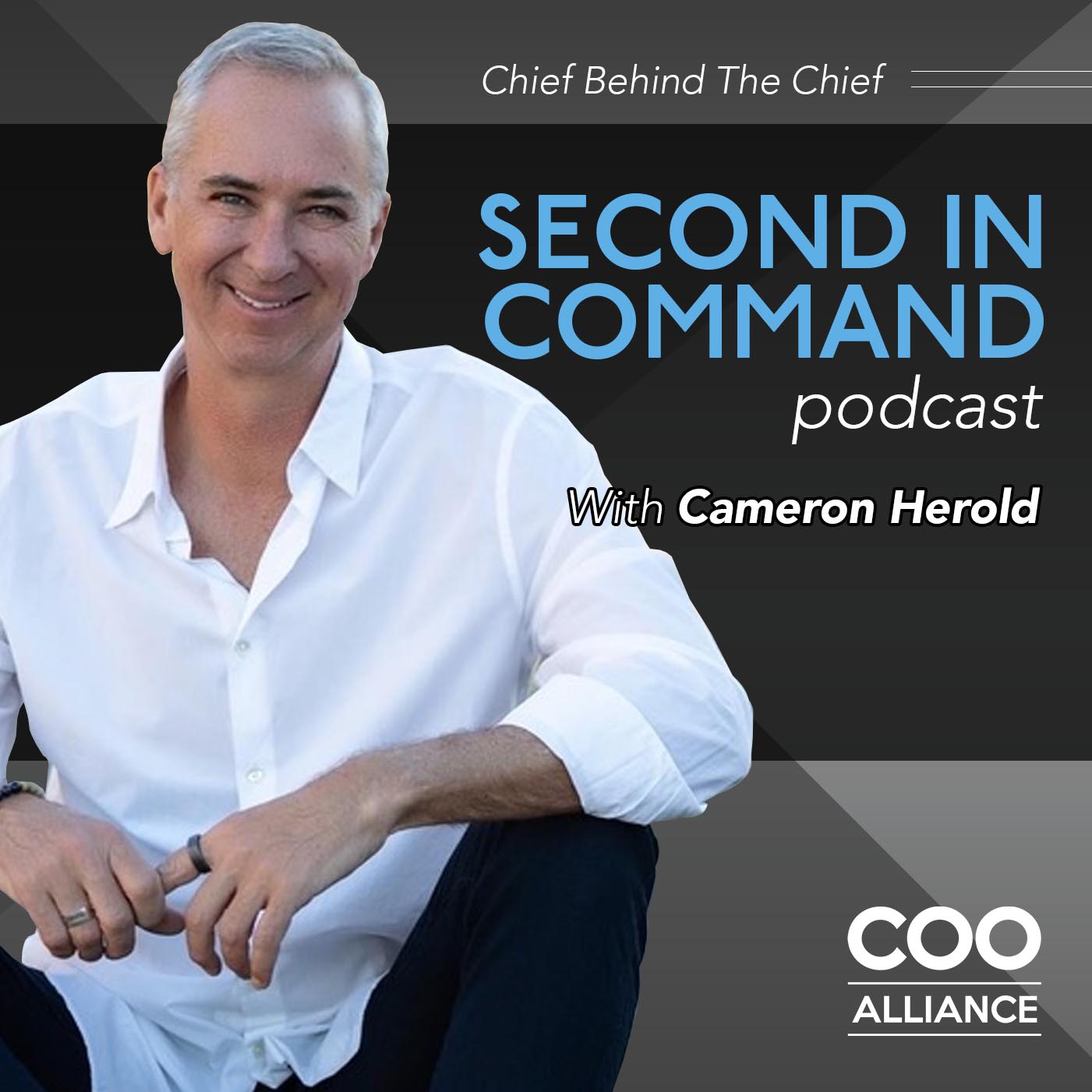
Second in Command: The Chief Behind the Chief with Cameron Herold
Ep. 437 - Rethinking Your Life Priorities
00:12:47
Loading summary
Transcript18 lines
- [00:00]
Cameron Herold
Hey, it's Cameron Herald, the host of the Second in Command podcast. Before we dive in, there's something you need to know. If you're a coo, VP Operations, or you're in any role where you're the second in command to the CEO, the.
- [00:12]
Unknown Speaker
COO alliance is the place for you.
- [00:15]
Cameron Herold
If you're the integrator to the visionary, you're going to want to join us. The COO alliance is the world's leading community for the second in command. We've had over 500 members like you join from 17 countries to grow their skills, connections and confidence. You'll get the tools, friendships and a 10x guarantee to ensure that you get your money's worth. Go to cooalliance.com to learn more and.
- [00:38]
Unknown Speaker
See if you qualify.
- [00:39]
Cameron Herold
You can even book a free call with our team to ask questions. Now, let's jump into this week's episode.
- [00:44]
Unknown Speaker
If you're always trying to get to the horizon, if you're only going to be happy when you get to the horizon, you forget to look in the rearview mirror to see how far you've come. You forget to enjoy the drive. Because you're never going to get to the horizon. It's going to keep moving. It's always going to go further ahead. So if it's always like, I'm going to wait until I'm retired, you've missed 60 years of being retired. You missed 60 years of having a great life. You've also missed 60 years of being able to delegate to people and grow them and see them excited about their career because they're able to work on bigger stuff so you can have a better life.
- [01:19]
Welcome to the Second in Command podcast, produced by the COO alliance and brought brought to you by its founder, Cameron Herold. In the second in command podcast, we talk to top COOs who share the insights, strategies and tactics that made them the Chief behind the Chief. And now, here's your host, Cameron Herold.
- [01:44]
In this episode, we're diving into the challenge of balancing ambition with personal well being in a world increasingly driven by technology and productivity. I'll share insights from my own journey, reflecting on how the early pursuit of business success often came at the cost of deeper connections and self care. Drawing on lessons from past habits and generational wisdom, I'll unpack the impact of modern distractions and discuss the importance of reclaiming space for leisure and meaningful relationships. We'll also explore actionable strategies for crafting a fulfilling life amidst the demands of leadership and work. This episode invites you to rethink your definitions of success and satisfaction. Shifting from chasing endless goals to truly appreciating the journey.
- [02:32]
I think we can learn a lot of the lessons if we're open to learning at a younger age. I had the younger age lessons of having balance When I was 20 years old, I had 12 full time employees. I was running my own company at 20 and my dad got me to re engage with some of my hobbies and activities. When I was 22, the third year of running my business, I started playing more golf and windsurfing and spending more time out in the lake and with friends and a little more time of delegating and getting the business to run itself. But I also developed some very bad habits of becoming and getting more energy from work. I found that having connections with friends was hard. So instead of learning that and working on that, I defaulted back to work. So I think I've gone through those migrations and I think I told myself some of the lies earlier on that you know, I needed to work hard. I had a stage in my career in business when I was building companies. In fact, it was even in the, in the first couple of years of 1-800-got junk. And the three companies prior where I was playing a lot of intramural sports, I was playing rollerblade hockey, ultimate frisbee on a couple of teams, beach volleyball, I was playing sports a few days a week. I was running more, I was hiking more. I think I was definitely more engaged in activities. But that was pre Internet, pre cell phone, pre kind of being tethered to our business. And I think we're having to relearn some of that. I think the true addictive nature of technology has pulled some of us even back further into that abyss or into that dark hole more than we even are aware. I remember both my grandfathers were entrepreneurs and they were able to go play golf, but they didn't have a cell phone to check in on work. So they disconnected for five hours and hung out with their friends and they were very present. I think we're lying to ourselves about the work hard part. You know, we can go back a generation and they certainly worked hard, but I think they had more balanced lives than we do now, probably because of technology. So we need to learn that skill. And I think, I think that's something. It's one of the reasons why we run companies is to give ourselves that free time. But we forget that it's then about us taking that free time, right? It's about allowing our employees to run the company for us and delegating everything except genius and, you know, giving them the freedom to actually scale and to work on themselves and even to delegate more to them and spend time growing their skills and growing their confidence so that we don't feel we need to be as involved in the day to day. I wrote a four page description of my life three years from now. I called it my personal vivid vision. And then my wife and I wrote a four or five page description of our relationship together, every aspect of how we wanted to show up three years from now. So reverse engineering that. I think employees need to do that as well. Employees need to decide who do they want to be as a dad, as a friend, as a lover, as a person, as what kind of hobbies do they want to be engaged in and really start thinking about their lives more intentionally. I think we're often going through this journey and we kind of wake up one day and go, oh shit, I got old. But no one's forcing you to do that, right? No, I think if we can slow it down and say, like, begin with that end in mind, as Stephen Covey talked about. Right. Decide where we're going and reverse engineer that I was shown at a very young age to build your plan and work your plan. So. Or plan your work and work your plan. It's kind of the same thing. It's like plan your life and then reverse engineer that and figure out how to make that come true. And it's also more exciting to be.
- [05:47]
Cameron Herold
Able to do that.
- [05:48]
Unknown Speaker
It also allows you to really be much more focused and much more intentional foreign.
- [05:58]
Cameron Herold
Hey there, Cameron here. Are you enjoying the show thus far? We're going to get right back to it in a sec, but just let me ask you a quick question. Are you a COO or a second in command tasked with helping the company hit and exceed its growth goals? Having spent many decades of my life dedicated to this role, I know one of the secrets of growth is to surround yourself with like minded people. Also pushing and striving to go where you want to go. It's why, as a listener to this podcast, I want to officially invite you to the COO alliance. It's for COOs, presidents, VP ops, or whoever is your company's second in command to the CEO. We're the world's leading community for the second in command and it gives coos the tools and connections to grow themselves and the company. When you're a part of this peer group, you'll get access to unprecedented support, guidance and resources to grow your company's bottom line, improve your ability to streamline processes, connect with other top seconds in command to assist you and bring out your greatest potential and so much more. Go to www.cooalliance.com to see if you qualify. It's where you can also see other members and the results of the program, as well as our 10x guarantee. If you qualify for membership, you can set up a complimentary call with our team to discuss if the group can be the right fit for you. Once again, it's www.cooalliance.com use promo code.
- [07:19]
Unknown Speaker
Podcast10 before the end of the month for 10% off.
- [07:22]
That is P O D C A.
- [07:24]
S T 10 before the end of the month for ten percent off.
- [07:28]
Cameron Herold
Now back to the show.
- [07:38]
Unknown Speaker
In your work, if you don't give yourself 80 hours a week to do it, you can only sit on one toilet at a time. And if you try to sit on more than one toilet, it gets kind of messy. There's actually some systems in place to run multiple companies and if entrepreneurs would follow those core systems, you can have multiple companies up and running and run them successfully. But you need to make sure that you have that systematic approach for each of them. Yeah, again, a lot of entrepreneurs are so focused on, you know, oh, I got 13 operating companies, great. But how's your relationship with your wife? How's your relationship with your kids? What are your hobbies? What are you doing for fun? What are you doing as charity? What are you doing to build your city, your country that you live in? What are you doing to enjoy life? And their eyes will glaze over. They've completely lost sight of that. I think it's the rare, rare individuals who are highly successful and running companies and have balanced lives. And it's the same of anyone who's highly successful in their career. If that's all you do, you're going to miss out. I talked to my son about this just a couple days ago and I said, you know that someone living in Vancouver can have a very, very good life with no money. You can go hiking for free and go to tons and tons of great hikes. I mean, you can take the bus there or you can drive there. Like you have a base money to cover basic needs. But, you know, you don't need to have millions of dollars to go traveling around the world. You can go travel around British Columbia. You can go explore in your own city. You can go go to the galleries and the museums and theater and go watch the performances and go check out all the street Art and you know, you can go explore the food in different parts of the city. You can go check out all of the street food in different parts of the city. Like you can go take a class. You can. There's so much that you can learn on YouTube and on Google and on Wikipedia that you can actually decide to learn hobbies and. But again, most people don't do that. They end up getting sucked back into the day to day or they get sucked back into social media. I think we have to decide what we want our life to be like. We have to go make that happen. And then also try to find people that are already doing it that you're inspired by. It's kind of like a person who says, oh, I can't climb Mount Everest. Well what about the guy that just climbed Mount Everest, had one leg, right? Or I can't do that. What about the guy that has no arms and no legs and is traveling around the world speaking like, what about that guy? Or well, I can't do that. What about the blind person that just ran? We give ourselves all these excuses and then we just don't try. So yeah, I think it's a real cop out to say, well it's easy for Cameron because he has money. I was traveling around the world in 1991. I did 18 countries by myself in 1991 with a backpack and I stayed in youth hostels. And I see parents now traveling with kids under 8 years old staying in hostels and doing it on a budget. I think it's an excuse, just as it was an excuse when I used to say I have to work tonight to catch up. That was bullshit. I had nothing to catch up. Whatever work I got done, I was going to have more work tomorrow. I was going to set more goals, buy another company sp off a division growth. I always had more to do. What I was doing was avoiding relationships, avoiding pain, avoiding insecurity, avoiding the problems. And I was surrounding myself with the one thing that gave me satisfaction, which was the dopamine rush at working. You need to enjoy the journey, right? So there's a concept that a friend of mine, Dan Sullivan and another friend of mine, Ben Hardy, wrote about, or I think it was just Dan did, about the Gap, called the Gap in the game. Ben might have been a co author on the Gap in the game with Dan, with Dan Sullivan. But the concept is if you're always trying to get to the horizon, if you're only going to be happy when you get to the horizon, you forget to look in the rearview mirror to see how far you've come. You forget to enjoy the drive because you're never going to get to the horizon. It's going to keep moving. It's always going to go further ahead. So if it's always like, I'm going to wait until I'm retired, you've missed 60 years of being retired. You missed 60 years of having a great life. You've also missed 60 years of being able to delegate to people and grow them and see them excited about their career because they're able to work on bigger stuff so you can have a better life. I'm not saying to put stuff on hold, but I'm saying that you can enjoy the journey as well as much as you enjoy the destination. If you were to write down at the end of your life the most important things that you did that gave you joy, or the things that you did that made your life worth living, or the things that you did that made you happy, that you lived this life, is it being on TikTok or being on Facebook or being on Insta? It's probably not. Is it being at the office? No, it's probably not. So again, you are going to die. Like with absolute 1000% certainty you're gonna die. Whoever's listening watching you will die. So it's up to you to decide what are you going to do with this time that you've got so that you feel good about the time that you've got, not so that anyone else will.
- [12:11]
You'Ve been listening to Second In Command, brought to you by COO alliance founder Cameron Herold. If you enjoyed this episode, please be sure to like, share and subscribe to us on Apple Podcasts, Spotify and our other podcast streaming platform. For more best practices from industry leading COOs, visit COOAlliance.com.