← Second in Command: The Chief Behind the Chief with Cameron Herold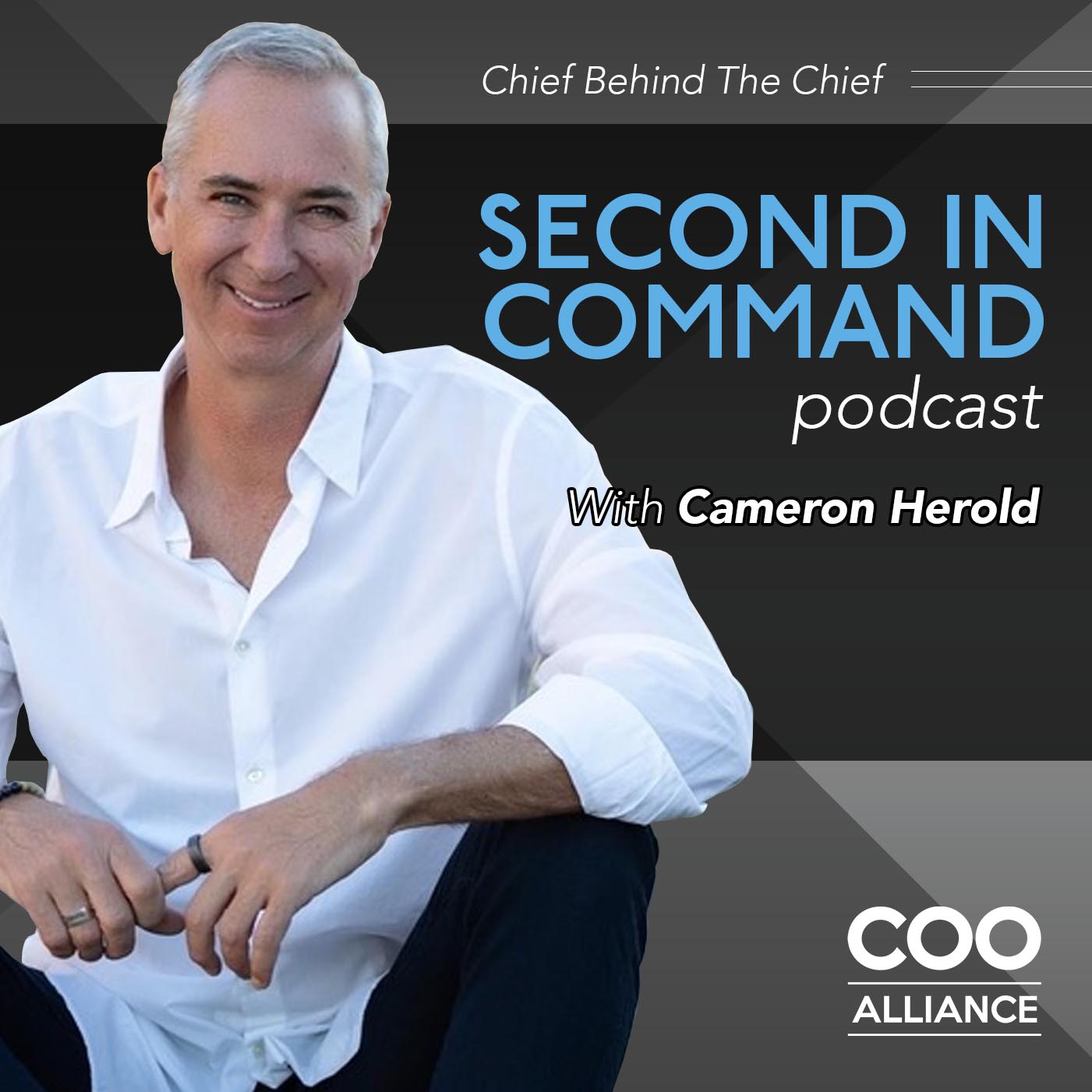
Second in Command: The Chief Behind the Chief with Cameron Herold
Ep. 441 - Outsource Access Founder & CEO, Brad Stevens
00:21:56
Loading summary
Transcript40 lines
- [00:00]
Cameron Herold
Hey, it's Cameron Herald, the host of the Second in Command podcast. Before we dive in, there's something you need to know. If you're a coo, VP Operations, or you're in any role where you're the second in command to the CEO, the COO alliance is the place for you. If you're the integrator to the visionary, you're going to want to join us. The COO alliance is the world's leading community for the second in command. We've had over 500 members like you join from 17 countries to grow their skills, connections and confidence. You'll get the tools, friendships, and a 10x guarantee to ensure that you get your money's worth. Go to COO alliance.com to learn more and see if you qualify. You can even book a free call with our team to ask questions. Now, let's jump into this week's episode.
- [00:44]
Brad Stevens
For some reason, some businesses have this perception that's like, well, these are these people in another country that just kind of come out of the womb knowing how to do all the work for me, right, For a very low cost per hour. They don't think they need to put, you know, the same kind of effort of understanding and communicating what the needs and requirements are in the process. So, you know, some of the failure happens when they're not invested in working, collaborating. You know, with us, we have a super granular process of how we unpack their constraints and help get their hands on the wheel with staff. And another big differentiator I'd say that we do is we provide a strategic advisor instead of just like, hey, here's your low cost staff, Good luck, and you got to how to figure out how to manage them and what they're going to do and how to communicate with them. We have a granular onboarding process that teaches our clients, like, how to use these resources, how to communicate with them. And we're working side by side with them to kind of put their hands on the wheel to create success. You know, kind of around it, there's a lot of people, they just, they're not sure how to manage or how to work with these individuals and how to integrate them in. So that is when the failure points, when people are willing to put their effort in, to kind of collaborate with us to make this be a success. Welcome to the Second in Command podcast produced by the COO alliance and brought to you by its founder, Cameron Herold. In the second in command podcast, we talk to top COOs who share the insights, strategies and tactics that made them the chief behind the chief. And now here's your host, Cameron Herald.
- [02:13]
Cameron Herold
In today's episode, I sit down with Brad Stevens, CEO of Outsource Access, to uncover the potential of leveraging global talent to transform businesses. Brad shares the story behind Outsource Access, a company specializing in providing highly skilled virtual employees from the Philippines to support businesses worldwide. We dive into how his team integrates into both their own culture and their clients organizations, creating a win win for everyone involved. From the innovative use of AI tools like Scribe to the untapped potential of hiring top tier talent at a fraction of traditional costs, this conversation is packed with actionable insights. Brad also explores the cultural adaptability and drive of Filipino professionals and how they can level up in ways many businesses never expect. So Brad, thank you very much for coming on, really appreciate you coming on to share with us. I have had some experience over the years at using some outsourced providers, outsourced service providers, outsourced recruiting firms, but you guys seem to be very different. So walk us through what outsourced access is so that our listeners understand and then also want to explain why we've actually selected you to be one of our partners for the CEO alliance.
- [03:26]
Brad Stevens
Oh, thanks man. Appreciate it Cameron, and thanks for all the great work and content you're putting out there. I always see great, great feedback from everybody. So appreciate the opportunity to be on and share with you. So yeah, I mean as we've seen this whole world of offshoring, outsourcing, virtual assistants, there's a lot of vocabulary, different ways to describe it is kind of growing rather pervasively and becoming more of a mainstream, particularly for the small to medium business community as well, you know, not just the big, big companies, they think that are just for, it's just for them and call centers and so forth. When I decided to launch, having having used offshoring and outsourcing myself for years before I launched my own business, I got a chance to see a cross section of using different countries doing, using different firms, how they operate, how they structure and kind of took what I saw were failure points of some of those to kind of create outsource access to, to address and make it a truly sustainable experience for businesses that want to dip their toe in the water and not get burned. So you know, I'd say in summary, the key things we've done at Outsource Access is first of all is I fully incorporated in the Philippines, right? So I have a full corporate entity there. So we employ everybody fully, provide their health insurance, provide Their, you know, have an employment agreement. So first of all it's attracting people that want to pursue this as a career path and not there on just a one off, you know, gig economy type of thing. Because we're providing people that are integrating into people's businesses. So people that want to pursue this as a career path, not just short term, is one key element.
- [04:39]
Cameron Herold
Yeah. So you're not losing people then. You've got actually some, some good kind of tenure with people and you can actually get them to. Will they get promoted in these kinds of roles too? If they're starting with you in an organization, are they going to be able to move up into other types of roles over the next 10 years?
- [04:53]
Brad Stevens
Sure. We actually have a whole, we have a whole career path conversation when they onboard with us and we show where they're starting the organization, you know, as a, as a virtual assistant. That's where their entry point is with us. And we show their career path, you know, when we have some that just want to stay in that role and servicing their clients, have others that exploring, you know, leadership and growth opportunities. But that kind of brings me to the second point of, you know, what we do from the beginning is, is we create detailed, detailed playbooks for our clients. So when we work with them, we plug staff.
- [05:19]
Cameron Herold
Don't tell me about the playbooks yet. I want to ask you a couple questions before we go into playbooks. So I think when got exposed to this offshoring or hiring, you know, remote talent globally, originally it was the call centers. Maybe it was some back office processing people doing paperwork and sending stuff back over digitally. You know, then we got the, the, yeah, the call center, the telemarketers. But you guys have got people doing all kinds of roles. So what are some of the other roles that companies are now using that you guys are able to staff for? And then we'll go into some of the processes that you put in place for them.
- [05:52]
Brad Stevens
Sure. And I was just referencing that in terms of career path because a lot of clients are like, well if my person gets promoted, what do I do? Right. And those playbooks are part of what creates redundancy. So we can easily plug someone in if they do get promoted, kind of tying that point to it. But yeah, it's the nature of what we do. We, you know, we grew to, you know, 500 employees in four and a half years servicing 75 different industries. Everything from manufacturing to marketing services to personal injury law firms. In our process we kind of have this two question exercise which I shared with you that we do with clients that helps us identify where are their growth constraints. Right. So I didn't want to just be a call center or just a bookkeeping firm. I really wanted to be a growth partner for small to medium businesses to address the pain, the growth pain and profitability pain that they have. And so in terms of what we do for clients, you know, we do this two question that says, hey, you and your key staff tell us what are the things that you're doing that aren't the best use of your time and you want off your plate. And then what are the things that you want to be doing as a business that you are not getting to typically due to time, money or knowledge constraints? So we asked those two open ended questions. We send it to clients when we work with them in our discovery process. And Cameron, it's amazing like the laundry list that uncomes, you know. You know, owners are like, Jane, you've been with me for five years and you came up with 72 items. Well, you never really asked me that question. So that ended up creating kind of a. It unpacks things across operations, marketing, sales, customer service. So a lot of what we do is, is figuring out where that business's constraints are to, to take things off the plate of some of their existing employees and a custom solution. And then we're doing more standard, straight out of the box types of things like LinkedIn management or graphic design or CRM administration or bookkeeping and QuickBooks. So it's kind of a blend of some more standard activities. But a lot of it's kind of bespoke as we understand what their constraint points are and what's going to move the lever most for them. So we're doing things across customer service, operations, HR recruiting, CRM administration, kind of across the board.
- [07:41]
Cameron Herold
So here I hear this weird kind of commentary around this in the United States specifically, I don't hear it from Canada, I certainly don't hear it in Europe. And it's, I think it feels very much around this protectionist like bring the jobs back to America, we don't want to outsource to the rest of the world kind of thing. Or they're worried that the quality is not going to be there or they're going to get compromised on, you know, security. Can you speak to some of those issues as to why they're kind of false objectives or just not worth worrying about?
- [08:10]
Brad Stevens
Sure. When I speak on this, I speak to hundreds of organizations globally, EO and ypo, which you and I are familiar with. And actually have a slides on this about preconceived notions, right, about outsourcing and offshoring. And one of those is, you know, we're shipping jobs, you know, overseas. And I tell you the grand irony around this is which I've observed in building this business is I'd say that 95% plus of what we do, it actually creates jobs, more jobs in the US for you know, for our US clients and in other countries that we serve because a lot of the growth that they need in their business, right, they have an existing employee, right? And so they basically tell this one existing employee, hey, I need, you need to wear five more hats for us to get X done. And so by giving them a release valve of a staff that plugs in side by side with them, that person can now focus on higher value activities, which drives revenue growth for the business, which drives demand for more of their local employee, you know, kind of needs. It's really a staff augmentation. So you take a business and you figure out where their constraints are and you take an $80,000, you know, VP of or director of Sales, right, or Director of Ops and you plug them with a full time VA where much substantially lower kind of rates, you know, anywhere from, you know, 10 to $15 an hour. And it's like one plus one equals, is four. So it actually creates augmentation. And the other real irony though is I have one client of ours named Chip, he's got a home health services business, got 160 employees in the United States. He has eight staff with us. And after being with us for now four years, he said, Brad, the grand irony is this is actually a retention tool for my US employees because none of them can go work for any other company where the, the CEO has a vision to pair them with an offshore staff that makes their life easier. So they're not going to leave me. So it actually creates retention for their W2 employees. So there's some interesting ironies around that point.
- [09:51]
Cameron Herold
When a company's looking to hire a group like you to find these staff for them offshore, what do they do wrong in that process of helping you to help them? Like clear on the roles? Are they not clear on responsibilities, they're not clear on the training. Can you walk us through some of that where most companies or some companies kind of mess that up?
- [10:13]
Brad Stevens
It's another one of my slides on preconceived notions that this, it's not a novelty, right? And so I kind of referenced, you know, Tim Ferriss four hour work week that was like 20 hours, you know, 20 years ago that, like this. For some reason, some businesses have this perception that's like, well, these are these people in another country that just kind of come out of the womb knowing how to do all the work for me, right, for a very low cost per hour. They don't think they need to put, you know, the same kind of effort of understanding and communicating what the needs and requirements are in the process. So, you know, some of the failure happens when they're not invested in working, collaborating, you know, with us now we, we have a super granular process of how we unpack their constraints and help get their hands.
- [10:53]
Cameron Herold
Hey, it's Cameron. I hope you're loving today's episode. Quick question for you. Does your company have a strong leadership training program in place to grow the skills of everyone who manages people? If you want to help yourself and your company grow, get everyone who manages people learning from my invest in your leaders online training program. There are 12 core leadership skills that I cover online and for only 650 per person, they're all going to really grow. CEOs pay me $78,000 a year to coach them one on one and now you can all benefit for 1% of what they pay me. These are the same leadership skills that I created and certified everyone in at 1-800-got junk when I was there as COO. Go to investinyourleaders.com today and use promo code podcast10 before the end of the month to get 10% off each manager you sign up. Now back to the show.
- [11:51]
Brad Stevens
On the wheel with staff and another big differentiator I'd say that we do is we provide a strategic advisor instead of just like, hey, here's your low cost staff. Good luck. And you got to how to figure out how to manage them and what they're going to do and how to communicate with them. We have a granular onboarding process that teaches our clients, like how to use these resources, how to communicate with them. And we're working side by side with them to kind of put their hands in the wheel to create success, you know, kind of around it because a lot of people, they just, they're not sure how to manage or how to work with these individuals and how to integrate them in. So that means when the failure points, when people are willing to put their effort in to kind of collaborate with us to make this be a success.
- [12:30]
Cameron Herold
And I think if you treat them like the ugly stepsister, they're just not going to be the right fit. They're not going to give you the right result. But if you actually do integrate them in, if you, if you send them over your swag, you treat them as you're part of your brand, you incorporate them in your team, you, you make them feel pride in being a part of your company and your company being a part of their lives. Like that's really where, where you're going to get the results, is it?
- [12:52]
Brad Stevens
Not totally. That's part of what we do in onboarding is we, we want to be a growth partner in alignment. If you ask any of our clients, they feel like their staff they have with us is a part of their organization. You know, we get to know their mission, their core values from day one and we coach them to invest in, in that with, with us and our team together. So we're collaborating and I think I share with you. I just did a, I do a series where I go take a flight where I'll go fly to one of our clients in the U.S. i call it Outsource Access on the road. I'll kind of do a little video and hire a video firm there and go interview one of our clients. And I just visited a commercial and residential painting business up in, in Philadelphia and, and you know, their staff, they hired one staff with us two years ago, just began the journey. Right. A traditional kind of service based type business and Rico was her name, started in their business, started documenting all their processes was one of the biggest things in most small businesses that scenario they don't have. So they document all their processes. Then she started doing CRM administration, then she started doing graphic design and she started doing sales support and logistics had such an impact and they're so thankful for her that all of their employees, local employees in the United States rated her their VA in the Philippines their MVP employee of the entire year and are funding to fly her over from the Philippines to visit their office in appreciation for her contribution.
- [14:06]
Cameron Herold
So it's amazing.
- [14:07]
Brad Stevens
That's a micro story of like how this journey goes. That's hard to describe to people sometimes.
- [14:12]
Cameron Herold
Well, and I like that your company so outsource access. Not only do you help these companies hire and staff their people, but you also ensure that the people that they're hiring document all the processes and SOPs. So if there's turnover the new person can just step right into that playbook. Is that right?
- [14:29]
Brad Stevens
Sure. I mean that's, that is a number one thing from day one. That and I didn't realize like a lot of companies in this space, in our space don't, don't do that. I can't imagine being in this business and not doing that.
- [14:39]
Cameron Herold
And not doing it.
- [14:39]
Brad Stevens
Yeah. But yeah, day one, we create a very granular playbook that's clarity about exactly the roles and time zones and which we can talk about as well. You know, role and function. And then every single task that we're doing for that client from day one, we're documenting it in detail, both in written and also to like screencasting, you know, with like loom or Screen Pal. People are familiar with that. So it creates this running playbook so that it's a value for that client. Right. And we don't do long term contracts. I mean, we kind of let our actions speak to our performance, but if we ever part ways, they own that from day one. Right. And so we're documenting all their processes. And I've had clients tell us like, Brad, I love our staff that we have with you, but I tell you another huge value. I mean, I had Companies quote me 10 or 15 grand just to document my processes. And you guys have done that for me as part of what you're, you know, what you're doing.
- [15:23]
Cameron Herold
So there's an AI tool called Scribe. How? Have you seen Scribe how yet? It's a video of the person doing the role and then it documents it after they've done it. So it literally is this an AI tool that kind of creates the SOP while it's being worked on. It's kind of crazy.
- [15:41]
Brad Stevens
So I'll have to send that to my team. Right now.
- [15:44]
Cameron Herold
You guys are like a Mormon matchmaker. Because. Because these people, not they work for your company. These are full time employees of Outsource Access and they're then a part of this brand and they're kind of, they're kind of like an employee for them too. Right. So how do you get the employee to be loyal to those two wives or husbands or whatever the hell it is? Because that's kind of what it is. Right? They got to be two separate sets of core values and cultures. Or do you worry about them being so tied to Outsource Access that you really want them to be more thinking of and focused on the, the company? Like you're hiring two of our people for us right now. Are they going to be more our employees or are they going to be yours or both?
- [16:27]
Brad Stevens
Yeah, it's an interesting business to be in where, where our staff are part of two organizations. Right. As you noted. So yes. And that's when we first started this business, you know, we did like model of some other companies where we would just find the staff for you, right. And then kind of hand them over and then, then you kind of managed and worked with them. What we found was that for the majority that ended up being a failing model because they weren't a part of a culture and a company on the Philippine side. Right. And if they were kind of on their own on an island, right. Working directly with a client and that client didn't know how to manage and they weren't providing support and that person may drift. Right. And go find other opportunities and what have you. So I chose if I was going to get in this business and my reputation was going to be behind it, then I need to go through try incorporating in the Philippines during COVID That was a blast. But going through that journey of incorporating so that we could hire people as full time employees, pay their benefits or health insurance. We actually have the best health insurance in the Philippines. Actually takes care of them and their families because it's a multi generational type of culture. They take care of their, their parents and so forth. But it allows us to track the right people. We're fanatical about our core values. We actually have our own magazine in the Philippines called Virtual Success that we publish all over the nation to help us attract talent. We have our own podcast to showcase our talent. So they feel very appreciated, supported and engaged as part of outsource access in our culture. But yes, in parallel. Right. They are part of our clients culture and we want to know their mission and core values because they got, they kind of live in, in both worlds. So yes, it is important for both.
- [17:47]
Cameron Herold
And here's something else that you're doing that I didn't think was happening at all. But you also can hire very senior talent like vice president operations, kind of $250,000 a year in the US person. You're hiring them out of the Philippines for 80 grand. Is that not. Is that true? Did I make that up?
- [18:07]
Brad Stevens
No. I mean there's, there's a whole range of talent that we can source and some of it's more limited in terms of supply in terms of where we're sourcing from. But yes, there is higher level types of talent. We, we haven't typically done sort of like C suite VP type of placements.
- [18:22]
Cameron Herold
So like director, manager level.
- [18:25]
Brad Stevens
Yeah, I mean we've, we've definitely. We had one client that was up to 85 staff with us and we actually staffed not only Frontline and they were in the financial services space. We Thought we were doing, you know, loan documentation processing for them. So we had Frontline and then we also staff management for that Frontline as well. So we had two tier teams that we staffed for them. But yeah, a lot of our staff. And as you've learned, I think, I mean, you know, you've seen in the Philippines they, the hunger and desire that they have to learn and to grow, right? And people have seen our story. I mean, my very first personal va I hired off a job board in the Philippines, was able to become my COO over, you know, nearly 500 employees, right? So their ability to learn and grow. So an individual that starts, even if they don't have a ton of experience, the voraciousness of which they learn and grow. I got this one staff of ours that she was a teacher, she was an educator. 4 year degree as an educator in the Philippines. I just did an interview when I was just over there for 10 days and she's now working with a personal injury law firm and had never done that before, but within like 60 days she had learned their entire platform, Litify, which is the software that they use, became expert in such a way that she's actually training his U.S. employees that they hire now to come on, to come on board, right? So that's cool. Their ability to level up and to absorb and take on more and it becomes a snowball, you know, and once a client gets confidence in their capability of what they can do and then our strategic advisors working with them, they can absorb and learn and learn and just that's a big feedback we get is like, I had no idea. Their ability to take on this level of stuff from the beginning.
- [19:52]
Cameron Herold
Well, I don't think that a company is going to be able to compete doing business in North America in the next five to 10 years. Really, three to five years. Unless they are hiring 15% to 20% of their workforce globally, I just don't think you can find that talent or should be trying to find that talent and overpaying for what we've got. You know, there's an old saying that if the rate of change outside your business is greater than the rate of change inside your business, you're out of business. And I have a feeling like outsourced access is kind of the silver bullet that a lot of these clients are looking for.
- [20:22]
Brad Stevens
So I'm going to add that quote to Slide 15. That is a great quote, that one. But that's, that's precisely. I mean, I kind of Share like, look, I'm just the messenger here and I got this cartoon on this slide that says, well, what if we do nothing and something magically happens? This is groups, you know, a board table. But it's. Yeah, this is where everything is going. Right. This isn't a short term tip or trick. Everything's moving. I mean, work is becoming much more liquid and global globalization. And so yeah, and look, look at.
- [20:47]
Cameron Herold
You and I, we're sitting talking over video with laptops. I'm in a hotel room in Dubai. You're where? Are you in Miami or something right now? I live in Atlanta, South Carolina. Yeah.
- [20:57]
Brad Stevens
As of recording, I'm in December in Atlanta here with my Christmas tree behind.
- [20:59]
Cameron Herold
And it's here, it's 9, it's 9pm like, the fact is the world is flat. The world is connected. And I think you're, you're one of those silver bullets.
- [21:06]
Brad Stevens
So.
- [21:06]
Cameron Herold
Brad Stevens, coo, or sorry, CEO of Outsource Access, thanks very much for sharing with us. Really appreciate it today.
- [21:13]
Brad Stevens
Thanks, Cameron. I appreciate it. Look forward to working with you guys future.
- [21:17]
Cameron Herold
Thank you.
- [21:20]
Brad Stevens
You've been listening to Second in Command, brought to you by COO alliance founder, Cameron Herald. If you enjoyed this episode, please be sure to like, share and subscribe to us on Apple Podcasts, Spotify and our other podcast streaming platforms. For more best practices from industry leading COOs, visit COOAlliance.com.