← Second in Command: The Chief Behind the Chief with Cameron Herold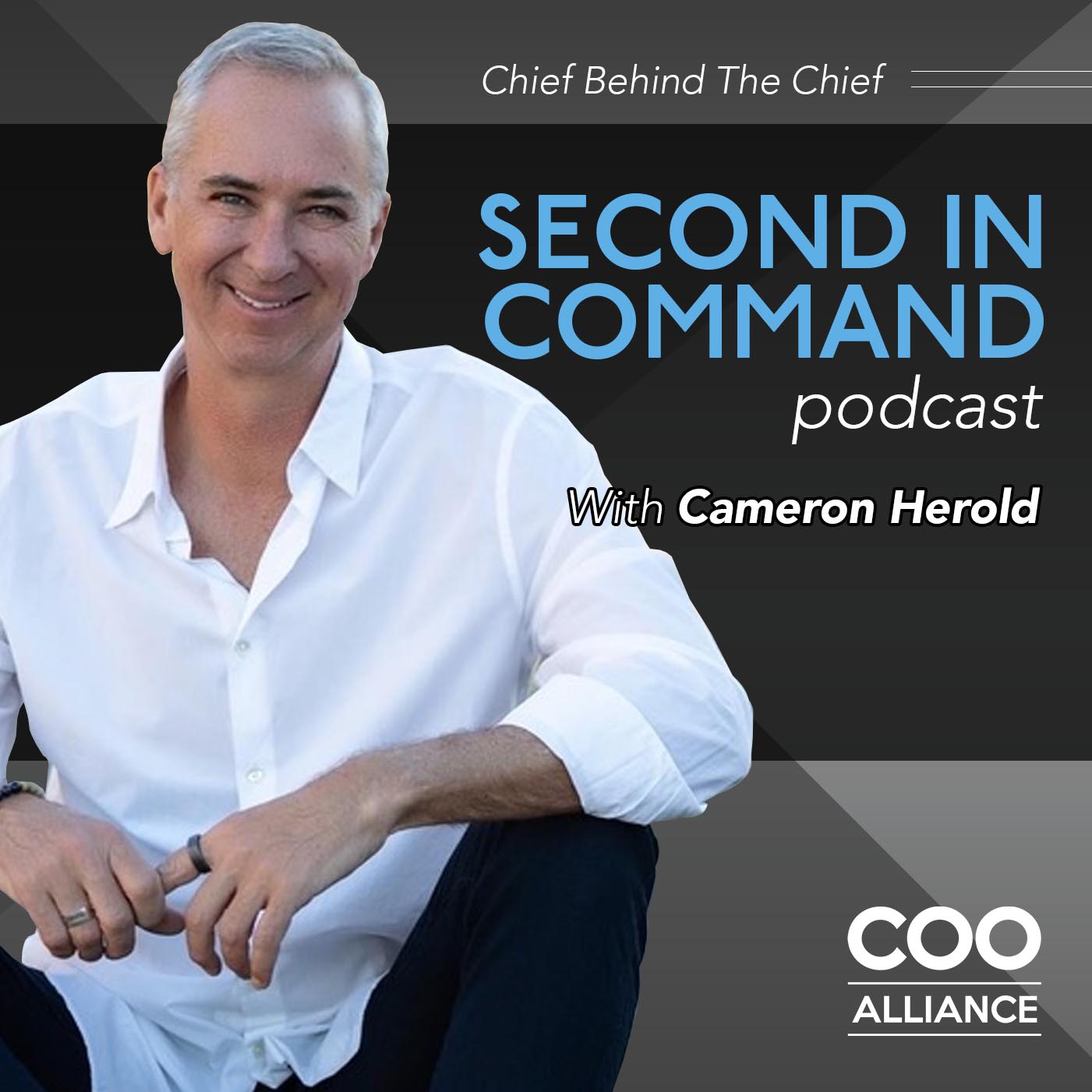
Second in Command: The Chief Behind the Chief with Cameron Herold
Ep. 443 - Beyond the Bonus: Crafting Reward Systems That Inspire
00:08:18
Loading summary
Transcript13 lines
- [00:00]
Cameron Herold
Hey, it's Cameron Herald, the host of the Second in Command podcast. Before we dive in, there's something you need to know. If you're a coo, VP Operations, or you're in any role where you're the second in command to the CEO, the COO alliance is the place for you. If you're the integrator to the visionary, you're going to want to join us. The COO alliance is the world's leading community for the second in command. We've had over 500 members like you join from 17 countries to grow their skills, connections and confidence. You'll get the tools, friendships, and a 10x guarantee to ensure that you get your money's worth. Go to cooalliance.com to learn more and see if you qualify. You can even book a free call with our team to ask questions. Now, let's jump into this week's episode.
- [00:44]
Unnamed Speaker 1
In terms of it driving performance. The data shows that the really strong A players are going to perform the way they're always going to perform, right? They're going to show up and give it their best. They're going to always be driving towards results. They're going to always be living the core values. So a bonus for them is like, well, I'm not working any harder than I was already working. Like, why are you trying to make this an incentive?
- [01:11]
Unnamed Speaker 2
Welcome to the Second in Command podcast, produced by the COO alliance and brought to you by its founder, Cameron Herold. In the second in command podcast, we talk to top COOs who share the insights, strategies and tactics that made him the Chief behind the Chief. And now, here's your host, Cameron Herold.
- [01:35]
Unnamed Speaker 3
In today's episode, I dive into an essential, yet often overlooked aspect of leadership. Recognizing and celebrating team achievement. In the pursuit of ambitious goals, it's easy to forget the transformative power of expressing gratitude for what has already been accomplished. I explore how thoughtful acknowledgment of success can rejuvenate workplace energy and set the stage for sustained growth. I also tackle the challenge of structuring performance bonuses, breaking down the pitfalls of traditional systems that may unintentionally demotivate your team.
- [02:13]
Unnamed Speaker 1
I think it's really important that all of US as entrepreneurs, CEOs, or even as COOs, really do stay very present and focused on the wins that our team are having, projects that we're completing, core values that are being lived or demonstrated. Because we're often so focused on setting the next goal, hitting the next project, driving towards the next growth.
- [02:32]
Unnamed Speaker 4
Great.
- [02:32]
Unnamed Speaker 1
We just Did a hundred, you know, 100 growth. Let's do it again. And we often forget to say thank you and praise people for all of those projects that just happened. Like, if Nels was to sit back and look at all the reasons why we had 100 revenue growth in the last 12 months, he'd have 50 different things to be praising people on and thanking them for. And the energy that transfers from that. When we actually focus on praise and gratitude and saying thanks more than we do of giving them the next project, they'll find the next projects on their own. So I think it's important that it's not hard for us to come up with those. But go ahead, what's your question?
- [03:05]
Unnamed Speaker 5
Yeah, thanks for saying that. I've actually been reading Gap and gain or gain and Gap and I should have that a little bit more in my front of mind. So thank you for reminding me of that. So I think my question kind of tags on to really in. In terms of performance bonus, I have been struggling with this for months. As far as how to put in an effective performance bonus. I've got, we've got some metrics. I'm not 100 sure they're exactly the right metrics. We're always kind of moving those around, but I'm not sure even like where to start. Like, how am I going to keep those people motivated, the A players motivated.
- [03:41]
Unnamed Speaker 3
Yeah.
- [03:41]
Unnamed Speaker 1
So there's, there's some data that says that the bonuses can become more of a demotivator than a motivator and I'll explain why and then we'll talk about, you know, where we need to have or can have incentive packages or not. So for an owner, we already take enough money out.
- [04:04]
Cameron Herold
Hey, it's Cameron. I hope you're loving today's episode. Quick question for you. Does your company have a strong leadership training program in place to grow the skills of everyone who manages people? If you want to help yourself and your company grows, get everyone who manages people learning from my invest in your leaders online training program. There are 12 core leadership skills that I cover online and for only 650 per person, they're all going to really grow. CEOs pay me $78,000 a year to coach them one on one. And now you can all benefit for 1% of what they pay me. These are the same leadership skills that I created and certified everyone in at 1-800-got junk when I was there as COO. Go to investinyourleaders.com today and use promo code podcast10 before the end of the month to get 10% off each manager you sign up. Now back to the show.
- [05:02]
Unnamed Speaker 1
The business on a day to day basis to be satisfied, right? If we need more money, we take more money out. If we want to pay for something personally through the business, we tend to we're kind of already taken care of and everything. The upside is kind of our bonus and we're chasing it for the good of the game and the good of all what we're building, etc. But for the average employee or the general employee, they're really often kind of struggling to make ends meet all the time. And to create some kind of a year end bonus means that they're really happy for one or two weeks of the year, but then for 50 weeks of the year they feel like they're stretched. So it's often in my mind better to pay people very fairly, pay them very fairly for 52 weeks out of the year, make sure that they're satisfied and happy for 52 weeks out of the year. And any bonus that comes along should almost be a discretionary one that the owner decides to share the wealth or share because we hit something big and we want to say thanks and a way to really inject some energy and positivity into the group. But in terms of it driving performance, the data shows that the really strong A players are going to perform the way they're always going to perform, right? They're going to show up and give it their best. They're going to always be driving towards, you know, results are going to always be living the core values. So a bonus for them is like, well, I'm not working any harder than I was already working. Like why are you trying to make this an incentive? So that's something to consider. And then for a lot of people as well, they don't really have full control over anything that you might be trying to tie a bonus to, right? It's hard. Especially like think creatives, right? People that are in marketing, people that are in copywriting, like what are you going to tie the bonus to? Me writing good copy, like I'm always writing good copy or me putting out good creative, like unless you're going to pay me a percentage of revenue. So I think the only people that should have performance based pay are either a, the salespeople that are really in kind of more of that eat what you kill environment. And this is more outbound sales versus inbound sales. And then the second one is people that are like more project based where you're giving them a project for a defined base of time and if they achieve it faster or they get better results, there can be a bonus or an incentive tied to that, but it's more like a result thing. And then the lastly is more people that are on piecework, people that are doing a job that let's say that you're painting a house. If you were out there and you're going to paint a house that I think is going to take you 40 hours to paint it and you paint it in 30, I'll pay you for 40. But if I think it's going to take you 40 and it takes you 50, I'm still going to pay you for 40 with a minimum base of minimum wage. So the incentive is there to, to really work hard, you know, and then they can get more done. And basically what I'm doing is I'm getting more gross margin per hour. Her labor hour worked. So that's where a performance based pay can work. But for most roles, it doesn't tend to make sense.
- [07:47]
Unnamed Speaker 2
You've been listening to Second In Command, brought to you by COO alliance founder Cameron Herald. If you enjoyed this episode, please be sure to like, share and subscribe to us on Apple Podcasts, Spotify and our other podcast streaming platforms. For more best practices from industry leading leading COOs, visit cooalliance.com.