← Second in Command: The Chief Behind the Chief with Cameron Herold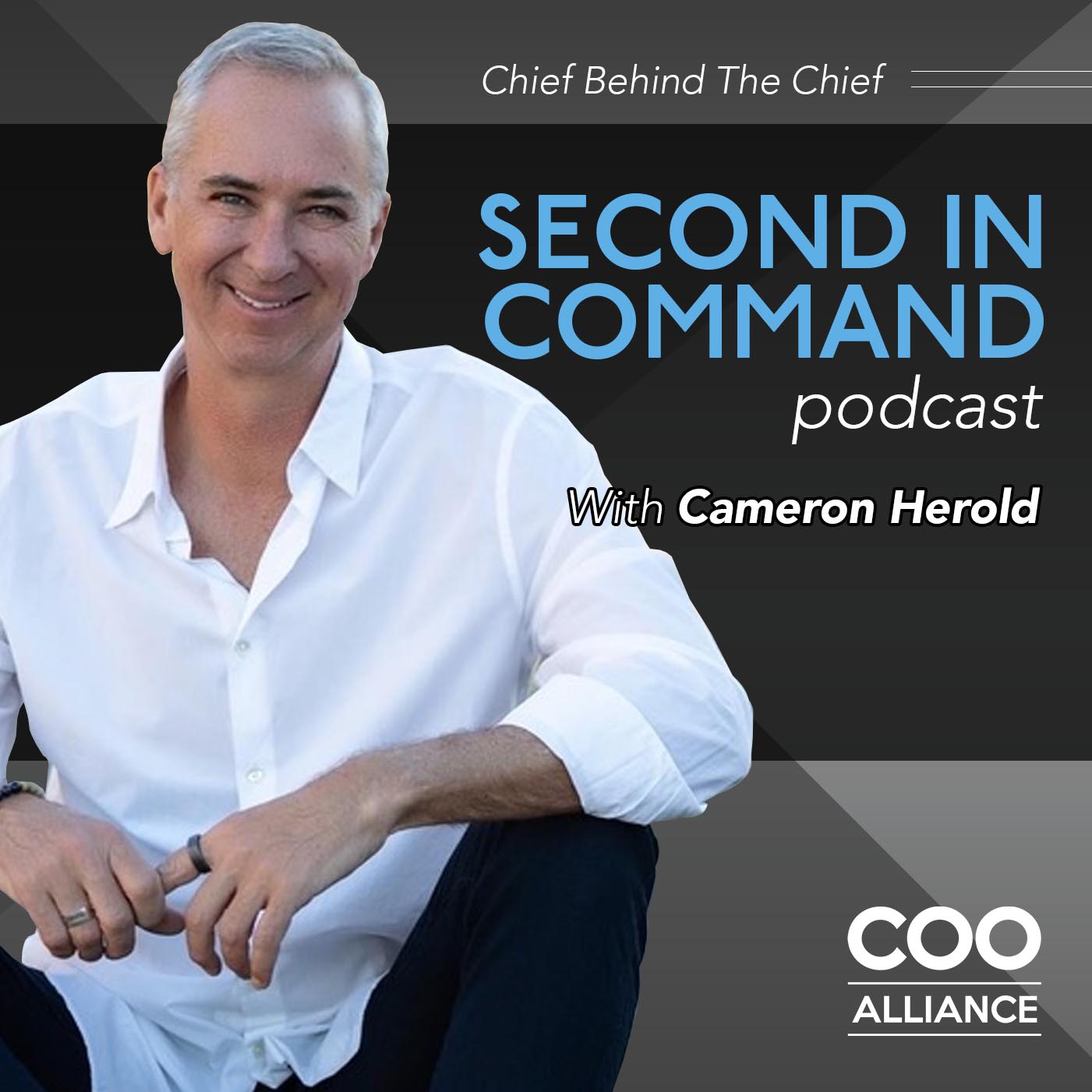
Second in Command: The Chief Behind the Chief with Cameron Herold
Ep. 444 - Mawer Capital LLC COO, Mike Wisner
00:42:07
Loading summary
Transcript65 lines
- [00:00]
Cameron Herold
Hey, it's Cameron Herald, the host of the Second in Command podcast. Before we dive in, there's something you need to know. If you're a coo, VP Operations, or you're in any role where you're the second in command to the CEO, the COO alliance is the place for you. If you're the integrator to the visionary, you're going to want to join us. The COO alliance is the world's leading community for the second in command. We've had over 500 members like you join from 17 countries to grow their skills, connections and confidence. You'll get the tools, friendships and a 10x guarantee to ensure that you get your money's worth. Go to cooalliance.com to learn more and see if you qualify. You can even book a free call with our team to ask questions. Now, let's jump into this week's episode.
- [00:44]
Mike Wesner
It wasn't to say let's cut all the staff because we're going to go broke, because that wasn't the situation. What we were trying to do is optimize what everybody was doing and within that became a natural reduction of people. So what we did is looked at the different departments, looked at the systems that were currently in place and how many people it took to do those, and just tried to look at technology and how we could utilize that better in order to execute more efficiently. We looked at different, different systems that we could use to implement to get the same productivity with greater accuracy, with not needing as many people.
- [01:32]
Cameron Herold
Welcome to the Second in Command podcast produced by the COO alliance and brought to you by its founder, Cameron Herold. In the second in command podcast, we talk to top COOs who share the insights, strategies and tactics that made them the chief behind the chief. And now here's your host, Cameron Herald.
- [01:57]
All right, we've got another great episode for you today. We have Mike Wesner who is the COO for Mar Ventures. You have probably seen Rudy Mar, the guy who is always dressed in red, even his hair is red. They run a very dynamic marketing agency and Mike has been with him for the last five years. Mike's career has spanned variety of dynamic industries including sport, charity and digital marketing, where he's taken on responsibilities across all sectors of senior operational management. His expertise lies in key areas such as sales, marketing, human resources, finance and system optimization. Over the years, he's successfully overseen seven figure monthly income generation and led the creation, implementation and execution of frameworks that have driven optimized business and team performance. They're building A very awesome digital marketing agency doing some stuff with celebrities, building out some TV shows. You're going to love the information that he shares. He's also going to talk about some of the major speed bumps that they've had along the way in some of their growth and how they had to pair back some of the over expansion and how they actually brought their company around through doing that. You'll love the episode. You can also watch this episode on our Second in Command podcast YouTube channel. We'll see you on the inside. So Mike, welcome to the Second in Command podcast.
- [03:13]
Mike Wesner
Thanks Cameron. Cameron, thanks for having me.
- [03:15]
Cameron Herold
Yeah, really looking forward to this. You work with a guy who I met, gosh, seven or eight years ago, Rudy Mar. Rudy and I were at a war room event, an event that Perry Bell Belcher and Roland Fraser and Ryan Dice were holding. They've now kind of split up as partners but it was an amazing business event, marketing event for business leaders. And Rudy walked into the room and I saw this guy walk in. I'm like, wow, this kid is young but he looks like he's successful. He's got the energy of somebody who's successful. And he walked in, he sat down beside me and he said, are you Cameron? I said, yeah. And he goes, I'm supposed to meet you. I'm like, well, I noticed you in a room of 200 people and we're sitting beside each other. I guess we're going to get to know each other and became friends. But he was running a small business back then. But you guys have become a pretty, a pretty good sized digital agency. Can you talk to us a little bit about what you and Rudy are putting together with, with the MAR Group and there's a couple of different brands around the company. Can you speak to those two? And then I want to go back into some of how you got to working with him.
- [04:20]
Mike Wesner
Yeah, sure. Cameron. Yeah. Great. It doesn't surprise me that you, you met Rudy that way. Actually he is, he's in there and I need to find this person to speak to that person. Yeah. That doesn't surprise me that it happened that way. Yeah. So more capital. We have a lot of different sort of businesses and different objectives and goals that we're trying to achieve and a couple of those through our digital marketing done with you services for clients where we have varying different levels of connection on that. We also have our done for you digital marketing agency which is called ROI Machines and we also have our now more partners where we work with celebrities to help grow and monetize their, their brands. Yeah, through partnerships and, and through working together in, in different ways. So they, they're sort of the three main businesses that we work with, all that we have, and then inside more capital itself. We have a new Legacy makers program, which is what we're working on at the moment, which gives entrepreneurs and businesses and people, celebrities an opportunity to so their story on a TV platform to help, you know, tell their story, to inspire other entrepreneurs, other business owners and just other people in general about how they got to where they are in their businesses at the stage and the process that they went through. So, so that's where, where our big focus is at the moment, as well as those, those other sort of nuggets that we've got going at the same time. So probably gives you a good little overview.
- [06:01]
Cameron Herold
Yeah, it's a good overview of the, of the business and the brand. You've been with Rudy now for about five years. You told me just before we kind of went live. What was it that attracted you to working with him? Because you've come out of a pretty professional sector. You've got a little bit of background. You know, you're not old by any stretch, but you're not as young as Rudy is. Is Rudy even 30 yet?
- [06:24]
Mike Wesner
I think he's 31, but he might deny that. But I met Rudy and it's a, it's quite a funny story. I met Rud through, when he came for an interview at a. At a private health club that I was working at and he was applying as a personal trainer. So I met him originally through there. He was one of our top candidates. And, you know, he got the job straight away. He was like, well, and above everybody else. And then we got to know each other through, you know, a boss relationship, a boss and team member relationship. And then after that he moved on to do bigger things in the uk. And then I used to go and get some personal training for him at that time. And then. And then he moved to the US and we kept in contact backwards and forwards. And I saw him and then I reached out to him just to see he was looking for a CEO to come and join the team. And I said, oh, what, you know, what's involved? You know, what are you looking for? And he said, oh, he'd already filled the position. I said, no problems, great, I hope it works out. We kept in contact and then I just asked him one day whether or not he'd, you know, how it was, how it was all going and whether he still had the person with him and he said that he didn't, it didn't work out and did I want to jump on a call. And then literally two weeks later I was onboarding, finding my way through more capital and helping to, you know, create systems, processes. So it sort of happened like that.
- [07:48]
Cameron Herold
Now, when you join Mark Capital, I'm guessing was there only about 14 or 15 employees?
- [07:55]
Mike Wesner
Yes. Yeah. 100%. Yeah. 100. Small team. Yeah.
- [07:59]
Cameron Herold
What are you at today?
- [08:00]
Mike Wesner
Ballpark, we're probably at around 35, but we did go as big as 110.
- [08:08]
Cameron Herold
Yeah, I wanted to ask about that because I knew that there had been some pretty rapid growth, some pretty big growth. And I think it's one of the moves that many entrepreneurs make in the early stages is they believe that headcount should be a goal and it's actually should never be a goal in my mind. What happened with that, with that kind of growth and then you're also operating. I think you've got an office in Miami. You also have an office in the UK, correct?
- [08:34]
Mike Wesner
Yes, we do, yeah.
- [08:35]
Cameron Herold
What's the breakup of 35 people? How many are working in the UK, how many are in Miami and then how many are global?
- [08:41]
Mike Wesner
Just a small team in the uk, so three to five. So not anything crazy in the uk. We, we tend to use the UK office as just a good connection with Europe and the European guys because we've got some guys over there, so it's easy for them to come over for a few days for an event or, or just, you know, a bit of team building in the office in Miami. Again, not, not a massive team in there, you know, three to five. So you could say 10 in 10 in office. 10, 12 maybe in office. And then the rest are spread around, you know, globally, remote basis. And that's in the US that's in Europe and that's in UK as well.
- [09:21]
Cameron Herold
Okay, what happened with the growth? Why. Why did the growth happen? Where you got up to the 110 and then how have you. And why have you pulled back to the 35? Because I know you're continuing to grow as a brand and, and as a size of an organization. What happened with that growth and why Pullback?
- [09:37]
Mike Wesner
You know, Rudy's vision was exactly what you mentioned, Cameron, was to try and grow the team and build, build a bigger, you know, team organization, you know, having our own, you know, our own sort of company building. And what we found is that when we started to recruit more, that we didn't necessarily scale to that same, to the same size as what the people we had in the team. So what it did is it increased, you know, obviously a greater cost to the business and it, and we weren't getting the return back on that. So. And we, we grew very quickly. You know, I think we did 10 million in the first 12 to 18 months. So it was pretty, pretty quick growth and we felt like we needed more people. But we later discovered that we did it and then we had to pivot very quickly and make some quick changes and realign positions and we had an org chart that Apple would be happy to have. It was that big with different positions all over the place. So we scaled that all back, flatlined a little bit on the, on the team and really sort of had a real flat structure with, you know, me, Rudy and, and you know, maybe HR sitting above those things. So, so yeah, we, it didn't just give it, it didn't give us what we wanted, Cameron. It didn't, it didn't, you know, give us the additional revenue. It didn't create anything beneficial for the business and it just drained a little bit of our costs. So that was the main reason we scaled back and we scaled back to probably 50 and then scaled back again and again. We're now looking at more a players that can do multiple roles or can oversee multiple roles, that they can wear different hats. So that's where we're focusing at the moment.
- [11:32]
Cameron Herold
It's interesting. I've always called the zone from 30 to 100 employees as the death zone. I think the transitions happen between the ones and threes. You go from 1 to 3, 3 to 10, 10 to 30, 30 to 100 and then 100 to 300. And that death zone of 30 to 100, it tends to be that every early stage manager, their solution to every problem tends to be hire more people and that. So you end up building all this complexity into the business, then you end up having to work harder to. But as you said, you're not making any more money at it. Is that kind of what happened?
- [12:04]
Mike Wesner
Yeah, worked harder, but all you, you know, work harder for no extra real revenues. You're just getting, you're just being busy, being busy. You know what I mean? Anything, any ROI on the end of it? Yeah, definitely. You know, we, we had some, you know, challenging times for the business where we, you know, we had to really scale and on down on what we were, we were doing, what we were spending, the people we had in the team, you know, we had to really recalculate, recalibrate all of those things to set Us up again to, you know, to go again, which is where we are and what we're doing right now. So I would definitely, definitely agree with that. And, and what we've learned and, and that's what the entrepreneurial journey is about is ongoing learning is, is that, you know, it's more about systems, processes and then having people in there who can just check audit to make sure those things are being executed on. And you don't need an A player, you don't want an A player doing that. You know, you want an A player who's driving the team, motivating you, sharing the vision, create, you know, being innovative, all of those type of things. You don them in there. Checking whether or not all the sales reps have, you know, sent their pre call texts and emails. Do you.
- [13:18]
Cameron Herold
So you. We rarely talk to people about this, you know, right. Sizing of the organization and pulling back for the reasons that you did, which were the right reasons. I think often we hear about a reduction in force because a company isn't doing well, or a reduction in force because, you know, the competition has decided to eat our lunch, or a reduction in force because, you know, Covid came along and changed everything. You guys actually reduced because you realized you didn't need it all. Can you walk us through some of those steps? What did you start to realize? How did you start to make those decisions? And then how did you go about firing, you know, laying off half of a company and dealing with the survivor guilt and working with the people that were staying. Can you kind of walk us through some of that? Because there's some really good lessons in there that, you know, we don't really talk about very often.
- [14:11]
Mike Wesner
Yeah, I, I think, yeah, you're absolutely right on that. We looked more about how do we optimize what we do in order to be more efficient. It wasn't to say let's cut all the stuff because we're going to go broke, because that wasn't the situation. What we were trying to do is optimize what everybody was doing and within that became a natural reduction of people. So what we did is looked at the different departments, looked at the systems that were currently in place and how many people it took to do those and just tried to look at technology and how we could utilize that better in order to execute more efficiently. We looked at different, different systems that we could use to implement to get the same productivity with greater accuracy, with not needing as many people. Yeah, so that was one of the big things that we, that we looked at we did that on each individual department. We broke it all down. We broke down, you know, what the, you know, what the old chart was inside that, that, that part of the business and really had a, you know, a really good, deep, deep dive into it about, you know, do they really need to be doing that? How can we do that and how can that be done without them? Who else, you know, or who else could we, we could, we get in that can do that? It's a mundane, it's a, it's a simple task that, that doesn't need, you know, two people to do, you know. And then what we also did, Cameron, was we looked at the value of the task or the value of the action because we had to do a bit of a. Well, is that, do we really need that or how important is that? How much does that even need to.
- [15:54]
Cameron Herold
Be done at all?
- [15:55]
Mike Wesner
Right, correct. Correct, exactly. And if it did and what we found at value because, you know, we're, we're very driven on our data and Rudy's, you know, very big on that. You know, is it going to give us data or information that we're going to be able to use to grow the business? And if it doesn't, then let's, let's not have it, let's not just have it for the sake of it. You know, the, the reduction of team is a very difficult situation where you, you know, I remember having a conversation with somebody who was doing some outbound dialing for us and I had to arrange a meeting with them and they were all excited to see me, you know, Mike, I get to meet Mike the coo and I'm there having to sort of talk to them and explain, to say, sorry, you know, we're refocusing, we're not going to use that area. And, you know, so it's very difficult. But I do find that, you know, empathy and honesty go well together and directness and people can appreciate that. So I was very, you know, very conscious about that with some of the, you know, less senior positions of people in the business because sometimes matters a lot more to those type of people than it does to some of the more senior people in the business. So, yeah, so that was a really different, you know, a difficult time. And, you know, I remember it back and I hate to say I felt like the grim reaper at one stage there that I was, you know, it's not.
- [17:25]
Cameron Herold
One last question around this and then I'll transition because I know this part of, the painful part of business. But the other question is, did you look at any of the products or services that you were selling as a company and slash those. You know, were there any unprofitable or low gross margin products or services? Kind of like when Steve Jobs came back to Apple after the John Scully era and he just got rid of 80% of the products. Did you cut that way at all or was it more overhead and bloat that needed to be cut versus products?
- [17:51]
Mike Wesner
We didn't cut anything specifically any of our products. We had like a big, you know, four or five core strong products that we were selling. So we didn't really cut anything. I would say that we more prioritized certain products above others. We had a greater focus on the, the bigger ROI products than some of the other ones. So, you know, we still had the other ones with us and there, but we, we just didn't focus on those as much because of the, the return or the previous performance. So probably just refined our offering a little bit more, I'd say, Cameron, in that, in that sort of situation, we didn't, we didn't do a big products or services, we just refined it and we did our best to, you know, continue all of our, you know, ongoing client services and all of those type of things. So we stuck with everything we had and we just refined on what we continued to sell.
- [18:46]
Cameron Herold
So you guys are in an industry that's, that's really being changed right now with AI in terms of some incredible tools that are coming in. And I, in fact, I'm doing a speaking event in two days to 1500 people. And I'm saying that AI is not going to replace you. People using AI will replace you. And I think that's kind of the way that I'm at least thinking about it for the next two to three years at least, that your industry isn't going to get replaced with AI. But you guys have got to be adapting and adopting these technology tools. How do you approach that in a digital marketing world and in the marketing and advertising arena? How do you approach AI? How do you adopt AI? How do you bring it in? And also how do you keep the fear down with your 35 employees so that they're not nervous about getting replaced?
- [19:37]
Mike Wesner
Yeah, really good question, Cameron. I think the only way with that you have to embrace AI and you have to be like, we're very open and transparent with our clients about how it's used, what we do, and we run programs on AI as well for clients as well to help them maximize what they're doing. So we're very much, using it a lot, just to help speed things up and get to places quicker. There's still a lot, as you would know. There's still a lot of nurturing involved in AI and, and processing and, and what you want it to do for you. But I guess it's not like the, what do they say in Harry Potter? Don't talk about that guy's name. Don't say the name. It's not, it's not like that. Voldemort, I think it is, where he says, you know, don't say the name. But we're very transparent. We've got the guys using it, the team using it as much as possible. And like you said, the team are embracing the AI in order for them to be experts with it, to be ahead of the game, to be more productive and profitable. And they're aware of it. Hence why we have a more streamlined team and people are able to handle multiple roles at one time because of the use of that.
- [20:58]
Cameron Herold
Hey, it's Cameron. I hope you're loving today's episode. Quick question for you. Does your company have a strong leadership training program in place to grow the skills of everyone who manages people? If you want to help yourself and your company grow, get everyone who manages people learning from my Invest in youn Leaders online training program. There are 12 core leadership skills that I cover online and for only 650 per person, they're all going to really grow. CEOs pay me $78,000 a year to coach them one on one and now you can all benefit for 1% of what they pay me. These are the same leadership skills that I created and certified everyone in at 1-800-got junk when I was there as COO. Go to investinyourleaders.com today and use promo code podcast10 before the end of the month to get 10% off each manager you sign up. Now back to the show. Foreign so one of the things I've often said about the COO is that our job is to make the CEO iconic, right? Our job is to make the CEO look good. Rudy doesn't need any help looking at looking good. He's a good looking guy. And in terms of being iconic, I mean if anybody goes to marcapital.com it's M A W E R capital.com you'll see Rudy front and center, big red coat, red glasses. Like he's always got this big red brand now about him. When did that happen? What was the transition to that? Because I remember him always being very dressy and fashionable. Red all of a sudden became like, he owns that color now. You know, it's. Who. How did you guys come about that?
- [22:40]
Mike Wesner
I take no credit for the redness at all, but I do love it. I think about two. Yeah, two and a half. Two and a half. Maybe three years ago, he just started wearing reds.
- [22:53]
Cameron Herold
We're talking like, red fur coats and red, like everything.
- [22:57]
Mike Wesner
Yeah. Crazy. Check his hair out. His hair has red in it as well as well now. So, yeah, like, I think it's. It was a master. A master stroke because that's what everybody knows him for when he's, you know, when we push him through to events and he's speaking, you know, everybody knows who he is as soon as he walks in, because it's. It's the guy in red.
- [23:17]
Cameron Herold
Yeah.
- [23:17]
Mike Wesner
You know, we've been working with Les Brown, and Les Brown spotted Rudy in red at an event, and then that's how they got together and started chatting and network. And then next thing you know, hey, Les, you know, we've got Les at our events. We got, you know, we're working really close to him. So. So, yeah, it was an iconic thing for him to do to pick out. And he. He liked the color red, and obviously that attracts him and entrepreneurs, and I hope he won't. The entrepreneurs won't. Won't, you know, be annoyed by saying this, but they like the. They like people talking about them and. And, you know, they. They like a bit of that. So I think that it sort of fitted him. It fitted him well, you know, but, yeah, now the whole team's embracing it. The whole company is. Is red. Legacy Makers is, again, something a little bit different, but. But, yeah, it's. Red is what you wear.
- [24:06]
Cameron Herold
And yeah, so the company's made the transition from it being all about Rudy and red to now be. We're all in red. So it is. The whole team now is. Is. That's interesting.
- [24:16]
Mike Wesner
Definitely. If. Oh, yeah, if you see us at events, you. You'll see everybody in red. And we had a couple of the team go with Rudy to a couple of the events that he was speaking at, and every. Everybody's in red. So, yeah, it's a very collaborative approach on the color red. It's not just him, it's the company. So you'll see us, you know, a mile off. When. When we're hosting client events and they're looking for us, then they. They just look for the red. You know what I mean? It's. And then when we're out for dinner, we get all the comments, you know, people saying, oh, who are you? What are you? And all that sort of stuff.
- [24:49]
Cameron Herold
So how do you know what to say yes to and what to say no to in terms of your time and the company's time with, with, you know, working with clients, running the, the mastermind, doing some of the investment stuff, working with celebrities. I know that he's doing a TV show right now. I can't remember who it was. Somebody that is actually working on a TV show with Rudy or, or managing a bunch of the episodes.
- [25:14]
Mike Wesner
60 Day Hustle. Yeah. 60 Day Hustle.
- [25:17]
Cameron Herold
Yeah. How do you know what to say yes to and what to say no to? How do you, how do you decide that stuff? Because there's a lot of opportunities.
- [25:24]
Mike Wesner
Yeah, that's a great question. A lot of it's led by Rudy and around, I think it's around the, the long term potential versus the short term gain. I know that sounds a bit, you know, a bit of a cliche, but that's how we, we look at it. So we might spend a lot of time trying to, you know, create like a slide deck for a new celebrity. What I want to work with and what offers and the potential that we could work with them and that might not, you know, reap the rewards on that till six months down the line, till we get a contract signed and we start working on, on things with them as opposed to like a shorter term where let's do this and we'll generate additional revenue off the back of it. So it is an ongoing challenge, Cameron, that balance between time and the return that you're getting and what that looks like, but a lot of the stuff that we're doing is more about long term now with, and not as much around short term gain. So we're really focused on that and even that with the business roi again, it's a classic one. What's the ROI on it? Why are we spending too much time in it? Why? What, what's the value? You know, we, we work with a team around their optimization of time. You know, we ask them how much time is that going to spend that you want to spend on that and is that a good enough return? No, it's not. Don't do it. Move on to this instead. So it's something where, you know, time is our biggest commodity. So we're very conscious about what our top people are using their time to do. And, and what's, what's the return back for that.
- [27:01]
Cameron Herold
So I'm interested in talking about two things with you. One is the work that you're doing with celebrities and their brands and the marketing and then the second, the work that you're doing with the TV show because I know that's a big kind of focal point for, for the Mar Capital Group. Can you speak first to the celebrities that you're working with or not necessarily naming them, but what are you doing for the celebrities and brands in terms of helping them with their marketing?
- [27:24]
Mike Wesner
Yeah, so with some of the celebrities that we're working with where we're helping them launch different products, so ecom. So how, you know, what do they want to sell that relates back to them. We've helped other celebrities with different types of programs, motivational programs or courses that they can, that people can be part of. We've also worked with some celebrities on co authoring books to help get their stories out there alongside a credible name celebrity. We've also worked with some celebrities where we introduce or provide the opportunity for people to work with that celebrity in a entrepreneurial environment, at their offices, in their business and having that direct access with a celebrity. So we've been doing a lot of those type of connections with celebrities as well. Like I said about E Comm and selling products as well. Well but yeah, they're probably the, they're the ones that we've been doing more of but we've got, we've got a few others in the, in the pipeline. Rudy had a, you know, Rudy had a great conversation with somebody very famous yesterday and went really well, but obviously we're not going to talk about that and they're really interested in working with us to see what we can do. So, so that's really growing and, and the words getting out there in the celebrity world about, about Rudy.
- [28:57]
Cameron Herold
So yeah, so before we, before we talk about the TV then let me just ask a couple questions around that is, is some of that because you as a company have done so well and Rudy has done so well at building his brand with this whole big red machine. Like the is. Is his brand now big enough that the celebrities will actually talk to him? Because the size of the company isn't necessarily right. 35 employees. It's not like it's not like some big name brand is going to go, oh my gosh, we have to go talk. Is it that he's done such a good job and you guys as a company have done such a good job marketing him that these celebrities now, now realize that he can do it for them too?
- [29:37]
Mike Wesner
Yes, definitely. A lot of the celebrity contacts come from via the, the Other celebrities to. Who are recommending or suggesting. And obviously they're not, you know, somebody's not ringing up. Somebody said, guess what? This. But it's going through, you know, the proper channels and, and so on. And, and it's the connections that he's making, especially with his, you know, with the splash on TV with the 60 day hustle and the Amazon show on. On that, you know, that sort of highlighted his brand a little bit. Well, not a little bit, a lot bigger as well, about who he was and what he did and, and who he could help and, and those type of things. So, so yeah, it's definitely through the contact, but the, the big red, like you mentioned earlier, that's the bit that people are sort of seeing more of, and that's how he's becoming sort of well known in that, in that world, if you like.
- [30:31]
Cameron Herold
Because you're not, you're not doing direct sales, are you? You're not out there kind of direct, cold calling these different businesses?
- [30:38]
Mike Wesner
No, no, we're not, we're not cold calling anybody yet. Not especially in the, in. In the celebrity world. We're, we're. We're going through connections. We do have, you know, a different system that we use to, to, to reach different people through others. And Rudy has direct connections as well. That, that's where they tend to come from. Yeah.
- [30:57]
Cameron Herold
All right, talk to me about the TV work that you're doing. What is it that you're doing with. With television? Because I think that's really interesting. You know, there's been such a move away from focus around TV because of digital for the last 20 years. TV is certainly not dead. Far from it. Like, it's just, it's just. Yeah. So what are you doing with tv? You're not doing TV ads for people?
- [31:22]
Mike Wesner
No, no, we're not doing TV ads for people. What we're doing is we're providing people, businesses, celebrities, entrepreneurs and just individuals in general high profile the opportunity to have their own TV episode. So we will work with you to create a TV episode about you, about your story, about your business, about how you got to where you got to and how you did it, so that we can help people grow their brand, their individual brand as well, and their business through a different form of marketing. And things are going, you know, we've only been launched for probably two months, and that second month was over Christmas, and we already have, you know, 130 to 150 people, you know, ready to go, wanting to create their episodes. So again, for those people who who can see it and understand the value of that. You know, it's a no brainer. It's, it's, you know, yes, I need this for my business. Yes, I want to be able to, to send a potential client, new client, a link to my episode on Legacy Makers tv. It's groundbreaking. So what sort of our vision is, without going too much detail on it, is, is about how do we do that even bigger again? You know, how do we become the people to go to, to share, to talk about your business, what you're doing and your company to, you know, blow up your brand and your business.
- [33:08]
Cameron Herold
So it's interesting, I wrote a book years ago called Free PR and I talked about the fact that the, the big value of getting press coverage isn't the press coverage, it's what you do with the press coverage. Right. It's not that, oh, I was on a, you know, written up on a magazine or I was on, on Oprah or I was on a TV show. It's, well, what are you going to do with that? To amplify it, to repurpose it. It's kind of the digital trifecta. So when you help these companies get their own show, are you then helping them leverage that show by sharing it with their audience, taking clips of it, sharing on social, like are you taking, is there a whole marketing machine behind that that you're also doing for them? Because you're not just creating shows for people, are you?
- [33:49]
Mike Wesner
Yeah. So the Legacy Makers is an episode that we create with you and we provide you with the digital assets in order for you to promote that in order for you. So we provide you the website that will have your episode, will provide you with the social media, as in your post, your content that you need. And what we're able to provide, Cameron, for everybody is that content that's reusable so they can reuse that content. If you're on TV these days, you don't own that content. You can't reuse that content without paying a fee. And what we're able to do is include that fee inside what the people, what we charge so that people can use that to repurpose on an ongoing basis. So it doesn't, it doesn't get old, you know, it doesn't, you don't lose it. And what you said is 100% correct. The, the true value in Legacy Makers and having your own episode is it's not really about how many people watch it in the sense of, you know, do they log, go to Apple TV or Roku or whatever to find it. What the, the true value is in what you can do with all of that content, how you can repurpose it, how you can create, you know, all of that sort of stuff. The, the icing on the, on the cake is really the viewership and how many people, you know, end up watching it as well.
- [35:19]
Cameron Herold
Well, a perfect example would be, you know, so the, the episode and Legacy Makers would be one. The other is you're, you're on this podcast, the second command podcast. So you guys will take this podcast, you'll put it on your press page of your website, you'll email it out to your, to your list. You'll share it on Facebook a couple times a year, you'll share it on LinkedIn a couple times a year. You'll take clips of it and share those as well. And then, and that's kind of repurposing it. But then you could even drive traffic to it. Like you could actually buy traffic so that all of a sudden a whole bunch of people see the episode. So are you doing those other services for the clients too or are you teaching them to do that or is that kind of part of the sales pitch as to why they're signing up to do this in the first place?
- [36:02]
Mike Wesner
We don't do that for them initially, Cameron. Initially what we do is we create the episode. We give them the digital assets to start working with. We do create some what sort of, if you'd like, our back end is to Legacy Makers is our done with you digital marketing services that we provide.
- [36:22]
Cameron Herold
Right.
- [36:23]
Mike Wesner
So what we can do is once people have their episode, they've got it, they've got their, they've kick started it. Then what they can do is once they have that, they can then come and join us on our mastermind or our inner circle programs or our legacy programs and then we can teach them how to use it the best way possible as well as all of those other parts. So without giving too much away, it's the back end to Legacy Makers to get people involved in all of our other programs, products and services as well.
- [36:56]
Cameron Herold
Love that. What are people investing to create their own Show?
- [37:00]
Mike Wesner
So the VIP investment is, is $15,000 and that, that gets everybody on the Legacy Makers podcast and Rudy's Red Life podcast, which is, I think it's, it's in the top 10 of marketing podcasts currently. So it gets both of those and it gets all of the social and their, their episode up to, you know, 22, 25 minute episode along with that Launch call, reuse license for all of the content. So it's a really good like I think about it and you know, I have some of the sales reps saying to me, you know, people, you know, 15,000 is not a lot of money. When you think about all of the other platforms that you could spend that amount of money on. You know, you could blow 10, 15,000amonth on Facebook ads, couldn't you? You know, quite easily you could, you know, you could blow it in different other types of SEO searches, you know, old billboard advertising, whatever, different marketing digitals, you know, so to have your own, you know, your own episode to, you know, to pay 15,000 for is, is, is not a lot.
- [38:09]
Cameron Herold
Especially when you can use it 100 different ways. You know, you can, you can share that. Yeah. So I think the real value is the app amplification of it and the digital trifecta use with it. So Mike, I want to ask one, one or two more really quick questions before we wrap. One is that you, you kind of came out of an industry where you weren't running a digital marketing agency. Before joining MAR Capital. You were working with the, you know, the Wimbledon group or the lawn and tennis group. So you were kind of coming out of a, an operations focus. Did it take you a while to learn the digital marketing agency world?
- [38:45]
Mike Wesner
I would say it didn't take me that long because I had some connections with it in the previous role working, you know, for the Lawn Tennis association in Wimbledon. But I, let's just say I was drinking through a fire hose for a good 12 months just around what we do. And because it changes so quickly, Cameron, and because we're always pivoting, the learning was quite, was quite quick because, because of that, because there was so much to get through and because we were pivoting and changing and testing and, and those type of things, I got to understand the way we're doing direct response because that's what we're doing. We're doing the direct response marketing. It's, you know, it's, it's call to action straight away, people on call and then, you know, anti ascension models to get people into, you know, our high ticket programs. So it was, yeah, it was definitely a great learning. It was definitely challenging and disruptive, which I'm thankful for because it enabled me to grow, you know, exponentially at a rapid, rapid fire pace. So yeah, I would say it was, it wasn't, you know, once I got some basics in there around it, then it came quite naturally. So I, you know, know, I I take a lot of coaching calls at the moment with people in the company for clients and talk them through what they should or shouldn't be doing and what they have and haven't done and all those sort of things. But the operational tie works, works nicely with that as well.
- [40:13]
Cameron Herold
Love it. All right, I want you to go back and give yourself some advice. If you were to go back to the 21 or 22 year old Mike, you know, you were just kind of getting started in your career, what advice would you give the younger you that you know to be true today?
- [40:25]
Mike Wesner
That's a really good question. And I've done a lot of crazy cool things in my life with work and life and I. So there's. There's not one thing that sort of really sticks out, but I want to give something. There's, there's definitely. I would actually, I would say be more direct with what it is that I want people to do in my team or myself. Yeah, that I would say that like probably be more direct, more go for it, get it, get it done type of thing where I think maybe when I was going through life and, and work and business, I might have been a little bit more passive, a little bit, you know, feely feely where I should have just, you know, I probably could have grabbed things a bit quicker or faster as opposed to, oh, well, let's just see, you know, that type of thing.
- [41:15]
Cameron Herold
So, yeah, I love it. Mike Wisner, the COO for Mar Capital, thanks very much for sharing with us on the Second Command podcast.
- [41:23]
Mike Wesner
Thanks ever so much, Cameron for having me. You've been really, really enjoyable. Thank you.
- [41:27]
Cameron Herold
Yeah, appreciate it. This is great.
- [41:31]
You've been listening to Second in Command, brought to you by COO alliance founder Cameron Herald. If you enjoyed this episode, please be sure to like share and subscribe to us on Apple Podcasts, Spotify and our other podcast streaming platforms. For more best practices from industry leading COO, visit COOAlliance.com.