← Second in Command: The Chief Behind the Chief with Cameron Herold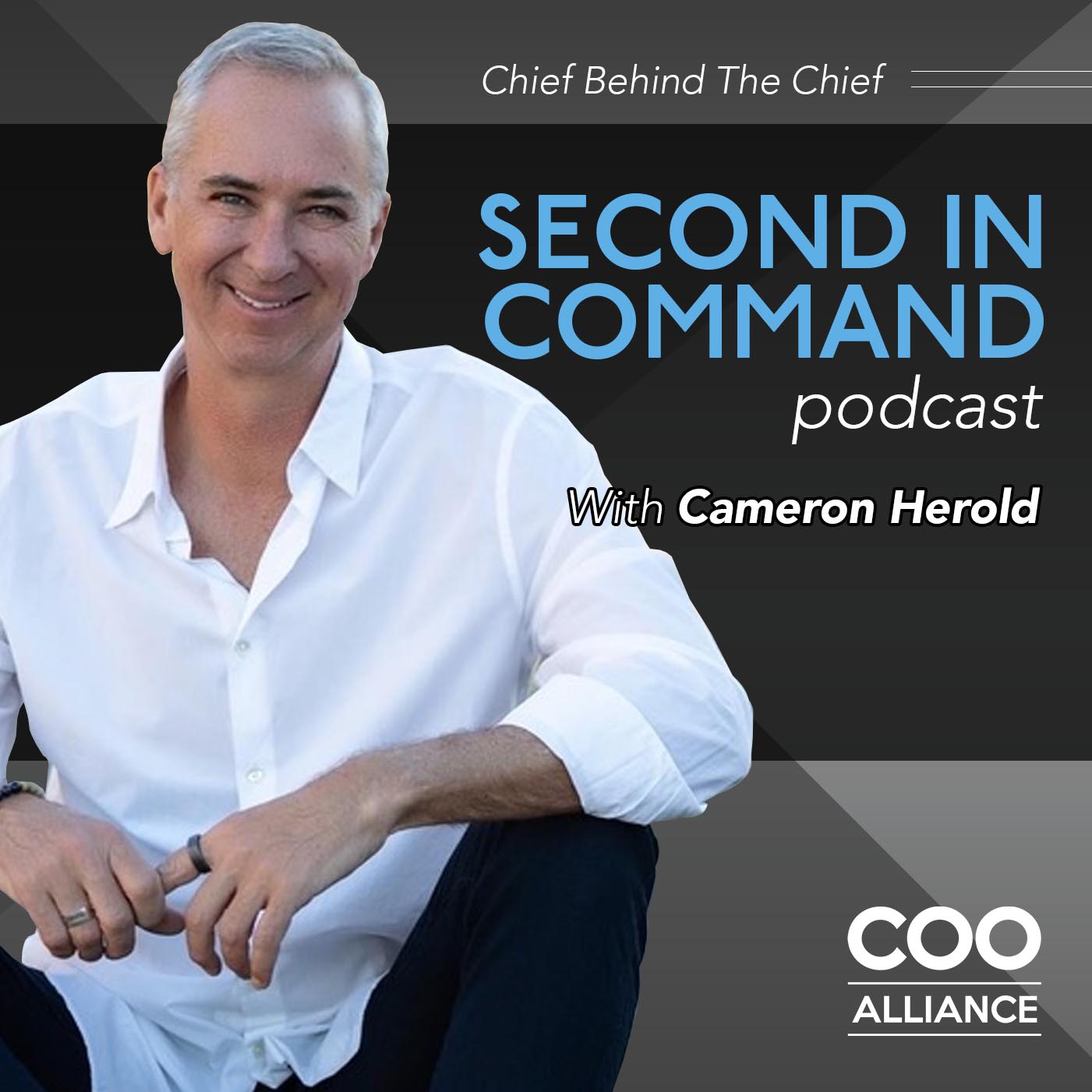
Second in Command: The Chief Behind the Chief with Cameron Herold
Ep. 446 - Team8 COO & CFO, Roy Heldshtein
00:48:19
Loading summary
Transcript84 lines
- [00:00]
Cameron Herold
Hey, it's Cameron Herald, the host of the Second in Command podcast. Before we dive in, there's something you need to know. If you're a coo, VP Operations or you're in any role where you're the second in command to the CEO, the COO alliance is the place for you. If you're the integrator to the visionary, you're going to want to join us. The COO alliance is the world's leading community for the second in command. We've had over 500 members like you join from 17 countries to grow their skills, connections and confidence. You'll get the tools, friendships and a 10x guarantee to ensure that you get your money's worth. Go to cooalliance.com to learn more and see if you qualify. You can even book a free call with our team to ask questions. Now let's jump into this week's episode.
- [00:44]
Roy Heldstein
We are surrounded by industry experts. I'm talking about top notch industry experts that help us to do the validation. Sometimes they help us to do the PoC and even sometimes they are our initial customer, the first customers of our companies. But the third leg is the one that you mentioned. So we are enthused about finding the right entrepreneurs at any, you know, any day, anytime. So I'm using this platform as well to say if anyone hear about, you know, hear our proposal, the way we work and they say we have a great idea we or we are up to hear your ideas and your thesis and want to work together. We are open to get anyone that wants to join the team. Welcome to the Second in Command podcast produced by the COO alliance and brought to you by its founder Cameron Herold. In the second in command podcast we talk to top COOs who share the insights, strategies and tactics that made them the chief behind the Chief. And now here's your host, Cameron Herald.
- [02:00]
Cameron Herold
Today's guest is Roy Heldstein, the COO and CFO of Team8, a leading venture group with nearly $2 billion in exits and over a billion dollars in assets under management. Company is based over in Tel Aviv, Israel, an area that I'm fascinated with and have been to a couple of times. Team 8 partners with top tier investors like Microsoft, Walmart, AT&T and MasterCard to incubate and invest in early stage companies across cybersecurity, AI, Fintech and digital health. As the COO and cfo, Roy oversees finance, HR operations, legal and marketing, ensuring smooth operations and strategic alignment. Before Team 8, he excelled in finance leadership roles at the tech sector and earned an MBA with high distinction from the University of Michigan's Ross School of Business. You're going to love this episode. We will see you on the inside and make sure you share this one too. You can also watch all of our Second In Command podcasts on our Second Command podcast YouTube channel. So, Roy, welcome to the Second in Command podcast.
- [03:01]
Roy Heldstein
Oh, thank you for having me. Great to be here.
- [03:03]
Cameron Herold
Really looking forward to this. I think you are the second or third company that I've interviewed that are based in Tel Aviv and I would love to get more. I'm completely fascinated by the region. I'm fascinated by Tel Aviv itself. I think it's one of the most beautiful and livable cities in the world. But I have been kind of enamored with the Tel Aviv tech scene for 25 years. I was living in Seattle back in 1999 and Tel Aviv was already starting to get a bit of a buzz about it. And I had been to Tel Aviv in 1991 when I was backpacking around the world. I think I was one of the only Catholic kids to end up on a kibbutz at Ian Gedi. And I spent time on kibbutz and got to see Tel Aviv back then. And the people banging around with the rackets out on the beach fell in love with the city. But then I realized that you guys are a massive, massive tech hub. Why is that? Why is Tel Aviv the tech hub that it's known for today?
- [03:56]
Roy Heldstein
I think it's a great question. First of all, let me refer to how fun it is. I think Tel Aviv is one of the cities where the gap between what you think about Tel Aviv and what you feel when you come to Tel Aviv is probably one of the highest in the world. It's really a party city. It's a nice city, great food, great atmosphere, great climate. So all the things that you're looking for in a city, I think that's, that's number one. As for the texting, that's an interesting question because I would refer this not necessarily to how fun is Tel Aviv, but more to the culture of a typical Israeli. So I'm not sure, I'm sure that you probably heard or read the Startup Nation and other books about this, but there is something about the way we're being raised and born that make us more techie and more entrepreneurial in nature. That's. That's how I see it. And we can elaborate on this, but I guess that, you know, the combination now of the, of the vividness of the city and the, and this culture make this more of a techie city.
- [04:57]
Cameron Herold
I think that's interesting. So it's probably more the convergence of the entrepreneurial DNA of the Israeli matched with the coming of age of the computer. You know, the computer was starting to become the Internet was starting to open up. So you have this very, very entrepreneurial Israeli matched with the technology and it just bloomed and blossomed from there. Is that kind of your read on it too?
- [05:18]
Roy Heldstein
It's a great read and in a way I would also connect it to the innovation that we have in the idf. So idf, which is an obligatory place the Israeli Defense Forces. You see that when you work on something in the IDF in the years to come, it's kind of one step ahead of the industry. And then you see a lot of people that are mastering, you know, it used to be chips and then IT security software and now we're talking about AI and in the future maybe quantum. So you actually see the correlation between what we are working on in the industry and this match also supports, I guess, the ecosystem.
- [05:56]
Cameron Herold
Interesting. All right, I'm going to ask you about the brand in a second and the business that you're building. But I'm curious more about your particular COO role. One of the things that I've noticed certainly in the fact that We've interviewed about 430 COOs now for the second in command podcast. And then we have an organization called the COO alliance, which is a global network of COOs. One was called Multiply Me, which is actually from Tel Aviv. Their COO was a member a few years ago. Is that only about 30 or 40% of the COOs tend to have finance report to it and you actually have the CFO rolling up into you. Do you have a finance background or is that kind of like an MBA style acumen? Where you learned it, where did, where does the finance, I guess area fall into your sweet spot?
- [06:44]
Roy Heldstein
Yeah, so the finance falls into my sweet spot. Both based on, you know, my, my academic background. I, I, I have a Bachelor of Econ and strategy and then MBA at the university at the University of Michigan. But I guess that the second part of it is that I based my career on, on the data part. So I'm coming from a data world and the data world is highly connected. It led me to take on financial worlds and from there I actually got to the CEO. So I didn't start as a CEO, I started as a CFO and as a finance guy and I added the capabilities of being a CEO. So I'm Kind of doing it reversely.
- [07:25]
Cameron Herold
Interesting. I love that question for you. On the finance side and on the data and analytics side, do you believe that analytics the data, I used to call it mis Management information systems. Do you believe that the data side of the business should roll up through finance or should it rol up through operations?
- [07:41]
Roy Heldstein
Wow, that's, that's a great question. I, I, I really see the pros and cons to each. I'm coming from. It really depends on how you define the finance role and the CEO role in each, each one of the organizations.
- [07:54]
Cameron Herold
Yeah.
- [07:54]
Roy Heldstein
The advantage of having the data sits under finance and operations is the objectiveness of the data. So you can come to a room and when the product guys and the sales guys are debating now about what's the truth, you have one source of truth. And I find, at least in my career, I found that this, having one source of truth saves a lot of time because now you start talking about the real problems and about strategy and you stop the conversation about who's got it right.
- [08:28]
Cameron Herold
Yeah.
- [08:29]
Roy Heldstein
One of the sides, it may, it may be more problematic.
- [08:33]
Cameron Herold
That makes a lot of sense. I think I heard a saying years ago, I believe it was from Google, and they said, you know, when they're in a meeting and somebody says, I think something, they said, I don't care what you think. What's the data say? And I believe you're right, that operations needs, it's hard because many operational CEOs don't have the acumen of the finance side of the business. But I believe that finance is better capable of at overseeing the metrics and analytics side of the business. The fact that you actually can speak both removes that bridge between the two. Is that kind of right for your.
- [09:06]
Roy Heldstein
It's totally right. And when you're bringing this Google story, it reminds me, you know, my CHECKPOINT story, I spent big chunk of my career at Checkpoint, almost 13 years. And in Checkpoint, they called it Gil Shwe, the founder and former CEO and many others, they call it just translate. Translating from Hebrew, they called it waving hands. So they said when someone came and said something about what they think, they said, stop waving hands. Let's talk about data. So I can totally refer to this, this concept.
- [09:37]
Cameron Herold
I love that. What do you think has made you a good CEO? Because you're running a real business, legit. We're going to talk about it again in a second. What do you think has made you a good CEO? Is it your mba? Is it your finance background? Is it just some of the operational skills you've learned along the years.
- [09:54]
Roy Heldstein
You know, it's very hard for me to talk about myself but I guess the easy answer to say it's a combination of all things, but I'll do give you an answer. I think that after you accumulate the academics and the experience and the knowledge about what you do, I think that the most important things, the most important thing after you have the basics is the people.
- [10:20]
Cameron Herold
Yeah.
- [10:21]
Roy Heldstein
So once you are able to look at the people in front of you and I mean you know your customers as well as your employees, as well as your colleagues as well as your managers if you have that's I guess what makes a good CEO more than another CEO, if you will.
- [10:38]
Cameron Herold
I like it. Yeah, I would agree. I think, I think the people side is so, so critical. It's one of the reasons why I believe that, you know, the COO role is almost one of the last that could get replaced by AI is because there is some soft skill there that I mean currently maybe we're out of a job in six months because AI is improving so quickly. But yeah, it feels like I would agree with you on that. Tell us about team 8. What's the core of the business and I'm going to talk to you about how you got into the role of COO there.
- [11:05]
Roy Heldstein
Sure. So Team 8 is a very unique beast in the. In the venture world. Team 80 is now a 1.2 billion dollar venture entity and I'm trying not to say venture capital because venture capital is only part of the deal. So teammate is a venture creation as well as a venture capital vehicle. And venture capital is pretty straightforward. We know what it is. We take money, we invest it in things that we, we know and in companies that we believe in. But Teammates started as a very unique idea of venture creation. Venture creation from the concept of actually taking, looking at the world, trying to estimate and to look how the world will look like in five to 10 years and start to create Thesis in the plays and in the areas that we work in. After we have Thesis now we see which products can meet these market thesis and once we have a good idea for a product then we move these through a real validation processes, both technological and market verifications and only then at this point and it's totally counterintuitive to the guys who are working in the VC world only at the point that we are convinced about the thesis, about the product validity from a technological point and about the market potential only there we take, we found the right founders and we build up a company around this idea. So That's, I'm giving you it in a very, very brief. But that's, that's the idea behind the venture creation of tme.
- [12:54]
Cameron Herold
It sounds like you're operating almost like a hybrid of an incubator with a venture capital firm. Then would that be accurate? Are you operating as an incubator where you're taking the idea and kind of building it out and looking for the team?
- [13:04]
Roy Heldstein
I, I fully agree. That's, that's a very easy way to, to explain it. But if you go into the details, you'll see that it's a lot more than any incubator. Just to give you a glimpse of how big we are. Yeah, we are. You can, you can say a one billion dollar fund, you can say if it's small or big. But 100 people working in a $1 billion fund, that's a very untypical and unorthodox thing. So we have 100 people internally intimate that are doing this venture creation process. And I haven't talked about what happens once we build a company, because once we build a company, this route isn't over yet because then you have the marketing people that helps you to build your, to tell your story. You have the business development people that help you get the first leads for your company, and you have HR people that are bringing you the talent and finance people and legal and ops. So this is a very, very extensive play in the areas we work in.
- [14:09]
Cameron Herold
What areas do you like? And I was just thinking, I'm going to turn to Rachel from your team later after we get off our interview and get some introductions to some of the companies that, that you, I guess, have built out on the venture creation side because we should get their CEOs, a few of the good ones, onto the podcast later too, and hear their story almost from that early embryonic stage to where they are today and how they've worked with a group like yours. Tell me about the industries that you like, the products that you like, what's the space that you are, I guess, as a company, most interested in.
- [14:40]
Roy Heldstein
So first of all, great idea of all the CEOs of our companies in terms of the fields that we work on. We have to remember teammates started with three people coming from the 8200 unit in the IDF. So 82 unit is the parallel to the NSA in the United States. And they brought the attacker perspective from the cyber world. And they said, we're not going to do any more attack work, but we know how attackers are thinking, so we will do the defense work. So Teammates started as a cyber of venture creation vehicle. And the first few companies that we built were only in cyber. But the interesting thing that happened was that once we realized that we have some sort of a recipe or a machine that knows how to replicate this process that I just described, we said, why should we limit ourselves only to the cyber world? We know how to do it in the cyber world. We have. We already did it, I don't know, 5, 10, 15 times. Let's try to do it now in the fintech world. And then we built a fintech vehicle that does exactly the same. We did also the same play in data and the same play in digital health. So today we're working in these fields of cyber data, fintech and digital health. We are building companies on these fields. And from a certain point of time we also realized that since we have so many good ideas, but we're only able to build one to two companies a year, you know, building a company, it's a hard thing to do. So once we realize that we have more ideas than ability to build, we also created a regular plain vanilla, if you will, VC that actually invest in these ideas but have the muscle that can allow them to validate the idea in a better way. So that's how these are the things.
- [16:35]
Cameron Herold
That we do in general, super interesting on the cyber side. Is this kind of like the hacking side of the, of the industry? Is that what the cyber was or.
- [16:42]
Roy Heldstein
What cyber actually, on the contrary. So this is the side that blocks hackers from entering your company. And we do it in many, many different ways and in many different verticals. So we do it on the cloud, we do it in remote places. So it depends what vector do you look at? But since we know how the hacker will address a hacking task, we believe that we have the capability to build companies, will know how to defend in the best way.
- [17:16]
Cameron Herold
I love that. So another core part of your business then is, is the finding of people. I think most venture capital firms tend to wait for the ideas to come to them. They vet all the ideas, they bet on the ones that they like, and at best they might be trying to put a few of their E executives into it or board seats into it. Are you looking for these early stage leaders of businesses too? Are you that kind of early stage or Definitely, Definitely.
- [17:45]
Roy Heldstein
If I think about the three things that makes us successful and just between you and I, no one, no one will listen. It's not recorded. Right. But we are so far pretty successful relative to the industry. We just, you know, when we Summarize. And we look at ourselves, we think that it happens because of three reasons. One is definitely what I just described. It's what we call the platform. So the teammate platform, the way we do things, et cetera, the replication, the machine, what we call the machine. Then you have the village, which is hundreds of professionals that surrounding us in each one of the vectors that I just described. So in the cyber world, These are the CISOs. In the FinTech world, these are fintech experts. Same for Digital Health, same for data. So we are surrounded by industry experts, I'm talking about top notch industry experts that help us to do the validation. Sometimes they help us to do the poc and even sometimes they are our initial customers, the first customers of our companies. But the third leg is the one that you mentioned. So we are enthused about finding the right entrepreneurs at any, you know, any day, anytime. So, and I'm using this platform as well to say if anyone hear about, you know, hear our proposal, the way we work and they say we have a great idea or we are up to hear your ideas and your thesis and want to work together. We are open to get anyone that wants to join the, join the team.
- [19:19]
Cameron Herold
I love that. What's your, what's your kind of process for building companies? If you were, I guess, you know, advising a group of people that maybe had an idea, they had funding, they had some people, what would you give them as the top three to five things to do kind of foundationally, like building a home? What are the foundational things that you would have them start with or do you approach it that way?
- [19:40]
Roy Heldstein
Yeah, of course, that's exactly the way we approach it. After we have, you know, a good idea, we have a sanity check about the, you know, the market and about the technology and we have founders, the exact thing that you just described. We are going with our founders through several, we call them milestones, but we go through several milestones in this process. So the first milestone will just be, you know, a first conviction that we have something to work about. Like the idea works well, the this is work well, etc. Then the second milestone will be a technological milestone where we will have our founders meeting this village, the people on the industry and our partners, which the majority of our partners are people who really build companies. So unlike other VCs, when you see most of the partners will be investors, in our case, most of the partners will be people that actually built unicorns, built companies that went through IPOs, so they know the drill of how to go through this cycle and the first milestone will be about technology. We will want to make sure that the product can work, the technology is valid. And don't get me wrong, when I'm saying a milestone, you probably hear two hours discussion where you come to present what you have and everyone clapping hands and telling you how great you are. Not at all. Our milestone is a bludgeon. It's like if, if you don't get out of the milestone at least 5, 10, 15 problems that are crucial and your company will not be successful if they remain. We didn't have a good milestone. Yeah, because that's my belief. Our belief is that when you do the fine tuning at the beginning, at the first few years, when you only have 5, 10 employees, you can change, you can revisit, you can do a turnaround. But when you do it, when you're already with 200, 300 employees and you have customers and you have obligations, then it becomes tricky. So we are trying to do the beginning. So the first one is the technology, the second one is product market fit. It's a PMF milestone. Same drill, same bloodshed. But when you go in from these two, you are ready to go and then it's becoming easier for you and we truly believe that then your chances to have a successful startup are increasingly higher.
- [22:15]
Cameron Herold
Then I guess it comes down to kind of the operational milestones in the P L Like the budgeting and cash flow stuff, right?
- [22:22]
Roy Heldstein
Correct.
- [22:23]
Cameron Herold
It's interesting. I love that approach. I also love that we used to do that years ago, 20 odd years ago I was part of a tech company in Seattle and we were part of nine companies that were acquired as this public company. And every quarter we would have to meet and present our plan and our numbers and our milestones to the group. And man, we prepped for that thing and we got shredded. And we all had to present the same idea. But we loved it because it raised our bar every. So we called it our bar meeting because it had to raise our bar. You know, it was a business area review. But I like that. I think A players like that, right. I think C players run away. Right. The average employee thinks that's a horrible environment. They hate that. But a players like give me that all day long, right? It raises their game.
- [23:04]
Roy Heldstein
I hear you and I ask you a question, Cameron. When you prepare for these quarterly meetings, at least that's what I'm hearing from our founders. They are telling me the preparation for this meeting was worth at least 50% of the benefit of the meeting itself, for sure.
- [23:23]
Cameron Herold
Especially because they gave us a format to present in that we had to review the numbers, we had to review our goals, had to review our milestones, had to review our people. We had to go in with our. Our kind of plan, and we had to think of it from different perspectives and be there, ready, and also be willing to go. Huh? Never thought of it that way. So we never took any of their critiques as against us. We just took that feedback as opportunities to grow. So we used to say that feedback was the breakfast of champions, right? That we wanted that feedback every morning. And then as Jim Collins in Good to Great said, it's about confronting the brutal facts. So sometimes you need to have somebody hold up the mirror and make. Hey, it's Cameron. I hope you're loving today's episode. Quick question for you. Does your company have a strong leadership training program in place to grow the skills of everyone who manages people? If you want to help yourself and your company grow, get everyone who manages people learning from my invest in your leaders online training program. There are 12 core leadership skills that I cover online, and for only 650 per person, they're all going to really grow. CEOs pay me $78,000 a year to coach them one on one, and now you can all benefit for 1% of what they pay me. These are the same leadership skills that I created and certified everyone in at 1-800-got junk when I was there as COO. Go to investinyourleaders.com today and use promo code podcast10 before the end of the month to get 10% off each manager you sign up. Now back to the show. You look into it too, right?
- [25:04]
Roy Heldstein
I can't agree more. As, you know, as an FPNA guy, it's, that's how I started. It's, it's definitely. I love both boats.
- [25:12]
Cameron Herold
Talk to me about the. The internal operations at Teammates. So you're on the leadership team. You're coo, you work with the C suite, you work directly and I guess report to the CEO. How do you and the CEO interact day to day and how do you debate them or, you know, argue for the good of the company? But how do you argue and debate? I don't imagine you show up saying, okay, yeah, I'll do it your way all the time. Can you walk us through that?
- [25:38]
Roy Heldstein
Sure. So intimate is slightly different because it's, it's a partnership, but so every time someone else wears the CEO hat in a way because they lead a project or an initiative and then I'm acting as the coo. But I can, I can tell you about these interactions and also my interactions in Back in Checkpoint, which, you know, I was the VP Finance. I was in many, many situations like this. I think that the CEO, in my role as a CEO and cfo, needs to provide some sort of a pocket if I'm taking a turn from the football world. A pocket to the CEO. If the CEO is the quarterback, I think we need to give them the ability to take a decision with, you know, in a specific way to let them, you know, give them the time to think, give them the data and information and the recommendation of what we think is the right thing based on data, but not less important. What shouldn't they do from, you know, a legal perspective or technical perspective. So, you know, just giving some sort of a rails, if I can use that term, to the CEO to take decisions. I guess that's, that's the best way I can describe it.
- [26:50]
Cameron Herold
Makes a lot of sense. It's funny that you're using an American football analogy. And then I remembered that you actually went to the University of Michigan. What years were you at the U of m?
- [26:57]
Roy Heldstein
It was 2007 to 2009.
- [27:01]
Cameron Herold
Okay, so maybe a little bit late, but did you ever know the name Jay Feely, the kicker for the University of Michigan? Do you ever know that name?
- [27:08]
Roy Heldstein
I know the name, unfortunately. I was in the, in the years of Chad Henney and others that I saw on the field, but I think.
- [27:17]
Cameron Herold
Jay was a little bit before you. Jay was a family friend of ours back when I was living in Scottsdale or Arizona, and we stayed at his place up in the Upper peninsula of U of M. I was always enamored as a Canadian with the University of Michigan. What a great opportunity to go to a. What was that like? What was it like for an Israeli kid to like, go to school at one of the biggest culture football colleges in the US Mind blowing.
- [27:39]
Roy Heldstein
It was a mind blowing experience. I would lie to you if I would tell you that starting day one, I realized everything. I understood everything. I came a bit from Israel with some lack of cultural knowledge and some lack in other things. But the great things about the University of Michigan community is that they know how to digest people like me and how to get us realize things fast. And believe it or not, football was one of the first things that helped me to realize and understand the, the American culture. You know, just take me through one tailgate and I can tell you everything afterwards.
- [28:20]
Cameron Herold
One tailgate. I almost. I was going to ask you about culture In a company. Do you think you picked up anything from the culture of being at the University of Michigan culture that you bring into the business culture today?
- [28:34]
Roy Heldstein
No doubt at all. Even the, even the question you asked me before about what makes a CEO better than others and me using the term of people. Yeah, that's one of the greatest thing that I learned about the university in University of Michigan. It's all about, you know, group work, it's all about collaboration, it's all about being together. It's a great. So you don't see anything about one competing with the other. Of course there is some competition when you want to, you know, get your summer internship or your full time position, but it's really on the sides. I think the main thing about being a U of M guy is, is being a teamwork player and I love it.
- [29:14]
Cameron Herold
Curious about MBAs for a second. This is a bit of a side question, but we're in an era right now where it feels like universities are being massively disrupted. My youngest son is finishing his fourth year of university. He decided to go and do an exchange in Singapore to get more global experience. But he's like, dad, I'm making so much money running my own business right now, it's pointless to be in university. And I told, yeah, it kind of is, but you're almost done, you may as well get it. Do you have a bias against or for MBAs these days? Knowing that you, you have one, knowing that you grew up in it, do you have a bias for and against now?
- [29:54]
Roy Heldstein
It's, it's, it's a very, it's a very hard question to answer. But I'll tell you this in my story, I could not have sit in front of you now without going to University of Michigan. I think University of Michigan, not only from the academic perspective, like taking a young kid from Israel, talented or not, people will say, but going to a top notch university opened so many opportunities for me that I can't see any other way that would have been open for me. At the same time, the reason I'm saying this is a very hard question to answer. The world is changing. The world is changing. So expecting what will happen in five to 10 years, it may not be necessary. Maybe someone from Israel can just apply or from any other country for the sake of discussion, can just apply to a work and their AI will meet the other AI and they will speak and that will be enough to say they have enough talent and potential and we'll send you a training, an AI training to your computer Just let's see how you are after two weeks. We'll send you an exam and then we'll be it. I don't know. It's a real. The world. One thing that we both can agree on, the world is changing dramatically over in the past few years.
- [31:11]
Cameron Herold
I just had lunch today with the COO of an AI company. I will not use their name because it's not quite public yet. It will be by the time this comes out, but just in case Sequoia knocked on their door a month ago and said, we want to invest in your company. And three weeks later is a $15 million Series A, like, AI is crazy and exploding. Are you guys looking at that space? It wasn't something that came up when you said, you know, cyber and fintech and data. Is AI. Is AI just going to be everywhere now? Like, exactly, exactly.
- [31:42]
Roy Heldstein
I think that someone who says, I'm investing in AI, it's okay, but basically it's almost redundant because, by the way, four years ago when you looked at our lpa, we said cyber, data and AI. So we talked about AI exactly as we should as a fund. We looked into the future and saw that today it's such a, you know, it's such a commonality.
- [32:04]
Cameron Herold
Yeah.
- [32:06]
Roy Heldstein
Companies. It's in our cyber companies to defend from, you know, malicious things that you can do in AI. It's in our fintech companies to know how to work with AI to make the software better. So of course, in the digital health, it's everywhere.
- [32:20]
Cameron Herold
Yeah. It's Almost like in 2000 you said you were in digital marketing and now you're like, that's just marketing. Now it's just marketing.
- [32:26]
Roy Heldstein
Exactly, Exactly. Same. Exact.
- [32:29]
Cameron Herold
What do you think has been your area of growth as a CEO? What have you focused on in growing your skill set over the years?
- [32:36]
Roy Heldstein
I think that the main thing that I try to grow on and I still have a room to go, is to take a hairy problem. And it may be hairy because it's complicated. It's maybe hairy because it's very urgent and there is a need to act fast and as a coo, to formalize this problem, to make it a process and to act fast upon it. I guess the best CEOs I worked with were very, very good on this. So react fast and in a very, very methodological way. And I'm trying to be as good as I can in this, but that's my growth area.
- [33:19]
Cameron Herold
Interesting. What area are you growing on today? Is there an area that you're still working at?
- [33:24]
Roy Heldstein
So other than this one. I made a big career switch about three years ago, coming from the cyber world, working at Checkpoint Software as their VP of finance, becoming the CEO and CFO for Team A. So moving from a big public company to a fundamental, it's a big change. So for me, the growth area now is to keep learning the language, understanding the big challenges, preparing for the future. I'll even describe it to you. When I came in, teammate was only, not only, but it was big, but it was $500 million size of a fund. And my partners that gave me the offer told me, look, in two years we will be more than $1 billion fund. And this is like a complicated play. We have a bunch of venture creation, venture capital and a lot of partners, a lot of employees. So it's a big company also. And you know what? We are running very, very fast. It's a great ride, but we feel that the wheels are kind of shaky. And if we keep riding in that velocity and we'll get to the 1 billion in the same place, the world will just fall apart. So we won't be able to keep everything, all the reports and all the people and all the processes as is. And please, if you want to join the ride, that's number one. Number two, that's your role, try to help us with this. So I guess that's a great analogy or explanation of what I did over the past three years with my teams, of course, and with my great people who work with me, is to make sure that these wheels are keeping intact, the machine or the vehicle is slamming and keep, keep riding as it is. And, and that's, I enjoy doing that. And that's probably what I'm going to, to do in the next three years.
- [35:17]
Cameron Herold
My guess, and I am going to say that I'm, I'm almost, I would put almost 100% certainty that my guess is going to be correct on this. My guess is that your answer is going to be yes. When you came in and started to put all those operational systems and processes and stuff in place, my guess is that you continued to go just as fast as you were going. You didn't try to slow it down, did you?
- [35:40]
Roy Heldstein
No, not at all. So your guess was correct. Even the entire fight that a good, I think a good COO will have is how to fix all the things without adding two more layers. And I'm cautious here. Too many layers of bureaucracy or things that holding so, you know, in one way, process and rules, it's something that helps keep things together. But this is A very delicate. You can testify for yourself. I know your background. You did things like this in your past. But the delicate play between putting too many rules and hold the horses and putting too less lacking rules and having a mess, this is the play of the CEO in my opinion.
- [36:31]
Cameron Herold
I think it's one of the biggest plays for sure. We used to say that if you feel like you're going too fast, step on the gas. That was from a race car driver, Mario Andretti. And then we also used to say that it's more important to focus on outcome over processed that we built. And I'm a big systems process guy, I built franchise organizations so we had to have systems that all of the franchisees could execute on. But if I was so worried about the minutiae, I was missing the big picture. So how do you get yourself to stay focused on that big picture versus majoring in the minors?
- [37:04]
Roy Heldstein
Wonderful question. We call it the North Star. That's how we call it in Team eight. We actually have a term for that. So our North Star is very, very clear. And I hope that if I ask any of my colleagues or managers or employees and teammates, wake them up at night and ask them what is our North Star, they will say what I'm going to say now. The North Star is making our companies successful. That's it. So now talking about processes and everything, no press on the gas. But make sure, no matter if you go this way or that way, make sure that the way that you go improved the way one or many of your companies will look like tomorrow. That's the way we think about it. And now people will know if they have a consideration. Do I work on a lead to one of our companies or do I know work now on something in the. As you said, the minutiae on the back burner, you will go and help the company 10 times before you'll do anything else.
- [38:06]
Cameron Herold
Yeah, I learned this lesson the hard way. Years ago, one of our franchisees came to me and he said, cameron, you major in the minors. And I said, what do you mean? He said, well, you've been all over us that our email signatures aren't the right format for all the franchisees. He said, you're right, but you're missing the point that we have a hundred franchisees who don't even have a marketing plan or a marketing calendar, a marketing budget. You're worried about something so tactical. I'm like, whoa, what a massive mindset shift for me. How do you prevent yourself from getting sucked into the day to day when you could be in on every meeting, in on every decision, involved in so much. How do you know what to stay focused on in that COO CFO role and what to not get pulled into and not let them put the monkey on your back.
- [38:52]
Roy Heldstein
I would say that I don't always know that that will be my first reaction because that's a daily, if not an hourly challenge to know how to divide and conquer. But I do few things that help me out. First of all, I keep myself with specific times in the week when I know that I can work for myself. So working either the Excel, if it's relevant for, you know, the finance world, or the, the Word document that I'm working on, or the process that I'm kind of fleshing out. So first of all, I'm leaving, you know, a few timeslots. Second, I'm trying always to look ahead and look at my calendar and make sure that there is a healthy balance between, you know, high level things that I'm involved in and the day to day. So I'm very into the day to day because that's my role and I want to have weeklies with my people and make sure that people are happy at the office and they don't have problems. But at the same time, I have to be out there. So I have to be, you know, in conventions, I have to meet, you know, industry people and I have to also, you know, be in podcasts like this one. So I'm really trying to keep it balanced.
- [40:02]
Cameron Herold
I'm going to ask you in a second about the business life balance and how you kind of keep that work life integration. But you just said something about your weeklies with your team and I want to ask you about that directly. How does your weekly one on ones with your direct reports work? And how is your weekly team meeting with your direct reports work? Can you walk us through kind of the overall agenda or system that you use to run each of those?
- [40:26]
Roy Heldstein
Yeah. So we are trying as the meeting, first of all, we're trying to keep a limited amount of meetings with a limited number of people in each one of the meetings. We're not always successful, but that's at least what we're aiming for now as the meeting is wider, we're trying to have an agenda before the meeting, send, to the extent possible, send materials before so people can be educated, read them and be opinionated when they sit in the room. It's never the same when people are coming to the room and learning about the topic as we go. It's Always less effective.
- [41:01]
Cameron Herold
Yeah.
- [41:02]
Roy Heldstein
So. And as meeting is becoming more, you know, towards a one on one meeting, then I'm trying not to interrupt too much between meetings to the people. I let them work. But as topics are being, are being accumulated, I'm just keeping them. For each one of my reports I keep a list of things that are coming are totally live. It's a live list. Some of them are moving from one week to another, some of them are new. And then when we meet, we know that each one of us. I always start with my managers, they start, I always go second. But they ask me all the questions and all the open items that they have for me. So they know that they have at least one hour every week that all theirs. And then they don't wait for things during the week. They know that they have this time and they keep everything. And I do the same.
- [41:51]
Cameron Herold
That really folds into the exact format that I outlined. One of my books was called Meetings Suck. And I wrote a book about the reason meetings suck is we suck at running meetings. So I talked about how to run meetings, how to attend meetings, how to get people to participate, and one of the meeting styles I talked about is our one on one meetings with direct reports. And that's the way I used to do it too. I'd keep that running list of all the stuff to talk about. I let them go first and then I'd get to my list. I'm like, well, that was stupid. I don't need to ask you about this one. This one solved itself. Instead of messaging them all day long and every day and all week, by the time that that meeting actually happened, most of the stuff was either stupid or redundant or it solved itself and them doing the same. So do you try to kind of orbit the giant hairball of Slack and get more done in Those highly effective FaceTime meetings with your team, or do you work with both?
- [42:40]
Roy Heldstein
Believe it or not, I don't know. If I may say so, we're not using Slack. That gives you the answer. I'm trying to keep the schedule of my people as free as possible because I know that they have their own meetings and their own tasks and their own fire drills and I'm trying not to add to those fire drills into their pot. I'm trying to do it only once a week and when there's a, you know, an urgent thing, it happens from time to time. But that shouldn't be the regular course of business.
- [43:12]
Cameron Herold
Yep, I'm seeing, I'm actually seeing a shift for companies right now starting to pull away from Slack. And I'm really curious if this is a bit of a canary in the coal mine, whether companies have found that there's just too much miscellaneous all over the place. It's too much busy work and too much distraction versus working on the critical few things. Talk to me about, about business and like work life integration, work life balance. I always say it's like an elephant on a teeter totter. It can never be perfectly balanced. You kind of go back and forth a little bit. But how do you manage this stuff?
- [43:44]
Roy Heldstein
It's always a challenge, definitely for finance people and CEOs, I guess, that say no. These are very intensive roles and things are urgent and you get things that, you know. When you're a product guy, you have some highs and lows, but you can plan ahead. When is the release, what you need to do? Of course, there is a stretch towards the release here. It's kind of on a day to day basis. But I am trying to be as, you know, flexible as I can. I think that since COVID I think life for many of us have changed. Actually taking this podcast right now, this is Thursday. I'm taking Thursday from home and I'm working remotely. I'm coming four days a week to work. That's how usually most of our people are coming three to four days a week to the office and working from home on the other time. So that's a big change because you save traffic in and out and it saves you three hours of magic time every week. But other than this, I think you need to be attentive to the things that are crucial to your family. And I will say this. When there's something that is crucial for my wife or for my kids, no matter what, I'll apologize, but I'll be there and I'll work hard before or maybe wake up before or maybe work after. But I will really try to make myself available. It's not always successful, but I'm trying to make myself available for things that are crucial and also, you know, try to keep weekends out. But that's. I. I don't think I'll tell. I'll say anything that you haven't thought about before.
- [45:22]
Cameron Herold
No, but it's, it's also for the audience, for the person listening right now. You know, I've always said that the to do list that we have does not have our name on it. You know, your to do list doesn't say Roy's to do list. And even if you've got, even if you got the Whole list done. You're going to add to it tomorrow or next week anyway, that working nights and working weekends to catch up is a lie. So I, I think you've got that.
- [45:44]
Roy Heldstein
I hear you, I hear you.
- [45:46]
Cameron Herold
But it's hard at times too, right? Roy, I want you to go back and give the, the 21 or 22 year old some advice. What advice would you give the younger you that you know to be true today?
- [45:56]
Roy Heldstein
I would say, I would say be, be, be real, work hard. You know, it's. I, I know I can't give advice that won't be generic, but I have to say that because I think, you know, sometimes generic things are, actually works. So I think the work hard, play hard thing is true. And invest in education. I think these are the years when you set up your foundations. I don't know. I'm trying very hard to keep learning all the time, but when I compare the amount of things I learned today versus what I learned when I was 21, 22, that was the real thing. So 21, 22. Run as much as you can. Don't look back. I know, you know, these years are, I'm always saying, you know, being 25, being 30, these are the hardest years in your life. Having, you know, young kids at home usually and trying to make sure that you do well at work. But the thing is that's when you have to use your, the sentence you said before when, when you're, it's getting faster, you know, push the, the paddle. You said it put on a gas. So that's the best thing I can recommend. Don't look, don't look back. Don't try out. Understand that it will be painful. Understand that it will be hard. But remember, when it's painful, that's when you are growing up. When you are, when it's not painful, you are not growing. And that's, I guess, the best thing I can say to them.
- [47:28]
Cameron Herold
I love it. We've got Roy Holstein, the COO for Team 8. Thanks so much for sharing with us on the Second in Command podcast. Really appreciate you.
- [47:36]
Roy Heldstein
Thank you so much, Cameron. It was a great conversation. Thank you for having me.
- [47:39]
Cameron Herold
Of course. Appreciate it.
- [47:43]
Roy Heldstein
You've been listening to Second in Command, brought to you by COO alliance founder Cameron Herald. If you enjoyed this episode, please be sure to like, share and subscribe to us on Apple Podcasts, Spotify and our other podcast streaming platforms. For more best practices from industry leading COOs, visit COOAlliance.com.