← Second in Command: The Chief Behind the Chief with Cameron Herold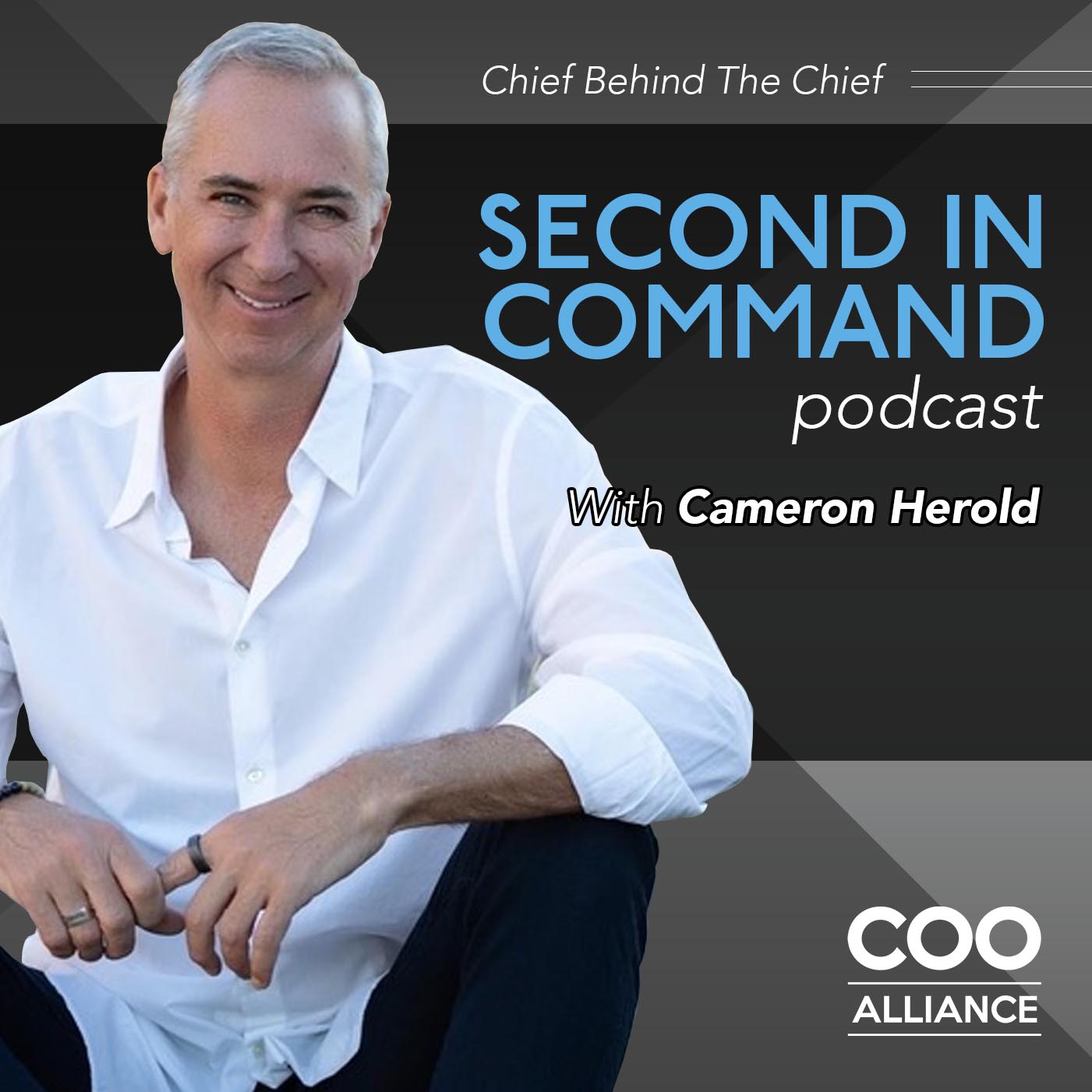
Second in Command: The Chief Behind the Chief with Cameron Herold
Ep. 458 - Mindvalley CHRO and COO, Alex Dogliotti
00:43:18
Loading summary
Transcript57 lines
- [00:00]
Cameron Herold
Hey, it's Cameron Herald, the host of the Second in Command podcast. Before we dive in, there's something you need to know. If you're a coo, VP Operations, or you're in any role where you're the second in command to the CEO, the COO alliance is the place for you. If you're the integrator to the visionary, you're going to want to join us. The COO alliance is the world's leading community for the second in command. We've had over 500 members like you join from 17 countries to grow their skills, connections and confidence. You'll get the tools, friendships, and a 10x guarantee to ensure that you get your money's worth. Go to cooalliance.com to learn more and see if you qualify. You can even book a free call with our team to ask questions. Now, let's jump into this week's episode.
- [00:44]
Alex Dagliotti
I really took, took, took a, took a turn for the best. And initially we encouraged our employees to use it and embrace it, you know, at individual level. But now we realize that if you want to do the real jump with AI, you got to embrace it and integrate it at institutional level, like organizational level. And so it's not enough that Cameron uses ChatGPT, but it's about how do you design all your work and in a way that works with AI, and so we started doing so. We recently actually announced that we're going to spend a lot of money on AI training for all employees. And the idea is this, with a gentic AI, each employee can literally have a team on their own that they can build around the work they do and making them 10 times more efficient and more productive.
- [01:45]
Cameron Herold
Welcome to the Second in Command podcast, produced by the COO alliance and brought to you by its founder, Cameron Herald. In the second in command podcast, we talk to top COOs who share the insights, strategies and tactics that made them the chief behind the chief. And now here's your host, Cameron Herold.
- [02:10]
All right, our guest today is Mindvalley COO and Chro Alex Dagliotti. You're going to get some incredible insights as to what it's like to build a global organization in mindvalley. Their app is actually pre installed on every Apple phone sold globally Now. And their MindValley app is also on airlines like Emirates. You're going to get some insights as to what it's like to lead an organization like mindvalley as the COO and also get some incredible insights and how they're leveraging AI and becoming a very AI driven organization and it is not ChatGPT. We'll see on the inside. This will be an episode to share with your leadership team, with your management team and you can watch all of our Second Command podcast episodes on our Second Grand Podcast YouTube channel. So Alex, welcome to the Second Command podcast.
- [02:58]
Alex Dagliotti
Thank you for having me. Love it, love it, love being here.
- [03:02]
Cameron Herold
Well, the thank you is actually from me to you. Thank you to Mindvalley for having me out as a speaker and being on your platform and doing a quest. I've really, really enjoyed working with Mindvalley over the last bunch of years and getting to know your organization. So I'm really excited to get to know you. So how did you learn about mindvalley? And maybe even before we go, because there's going to be some people that don't even know what mindvalley is. Can you tell us what mindvalley is? Kind of what the genesis of the organization is, what you're becoming because it's much bigger than people perceive.
- [03:32]
Alex Dagliotti
Yeah, sure. Look, the company is 20 years old. It's originally based in Malaysia. Now we are incorporated in different countries originally mindvalley and it's always been like that for a number of years. Always been known for being an educational platform essentially for personal transformation. Now though, we are entering the second phase of growth of the company and we are gearing to towards a complete transformation into an AI driven data company. AI would play a bigger and bigger role in our lives. Enabled us to, to make our vision come true much faster than, than, than we ever thought. And now the idea is to embed AI in the lives of our customers for hyper personalized transformation. So essentially imagine you wake up and you have an AI companion that reads your health data, your emotions, your goals, knows your goals and designs every day just for you, for Cameron. And that day will never be like you know, anybody else's. And it guides you through that as a, as a human being. It becomes your best friend. So that's the second phase of mindvalley. That's what we are working on right now.
- [04:55]
Cameron Herold
Wow. Okay, so Mindvalley up until now has also been a platform where I think originally it was really vision. Vision was kind of the mind, the guru that people would learn from. And then he started bringing in all of these incredible thought leaders from around the world. You know, you're Reagan Hellier and you've got Eric Edmeads and you've got Marie diamond and like the names of the people that they've brought in as thought leaders and as speakers and on your platform doing quest is huge. Is the idea to bring the AI versions of those people to your clients or to weave together the expertise of those people for your clients. Can you, can you walk us through the thoughts?
- [05:34]
Alex Dagliotti
Yeah, absolutely. Look, right now if you think of how people consume content, the vast majority is still a kind of short format, bite sized format. That's how people consume content now and social media. Right. But we are very rapidly moving towards a direct access sort of model where you don't even have to go through a three week course on manifesting with Reagan because you will have the, the digital version of Reagan answering your questions and talking while you talk about your problems. Reagan will be able to tell you how to practical exercises to solve right there. Right. And that's what we're working on right now. Vishen obviously is being the visionary and not being scared of any experiment. He's like, I want to clothe myself. And so he already jumped on it. And we have a number of other authors that, that lined up for you know, to be next and, and that's where we're going, you know, direct access and, and, and having a conversational conversations that make you grow in a way.
- [06:50]
Cameron Herold
I want to speak to a couple things around, around AI and I just want to kind of link on what you just mentioned about vision. Vishen definitely is a forward thinking, idea generating entrepreneur, very classic entrepreneur, but he has a lot of ideas. He also is proudly stated recently that he's kind of running the business or doing his role from WhatsApp. To me, that scares the shit out of me. How, how do you, as his coo, as his yin and yang, keep organized with, with what must feel like a flood of information? Can you walk us through the mind of working with an entrepreneur like that and how you kind of help to organize that information? Because it's like, it's like Google's organizing the world's information. You're organizing vision's brain in.
- [07:36]
Alex Dagliotti
It's very true. WhatsApp plays a key role in our organization. And when I joined I came from telco, okay. I've been here four years. I came from telecommunication, which is the most traditional industry that you can possibly think about. And I walk in and everything on what's up. But there's a reason, there are two main reasons that I think, you know, one wouldn't say but it works. The first reason is we embraced remote work and asynchronous work very, very quickly during the pandemic, right. And people liked it and you know, before that Everybody was in our beautiful office in Malaysia. But then because of the pandemic, everybody went home, spread around the world. And so we needed a very fast, a quick way to communicate with each other and in our phones without the noise of a million groups and communications, blah, blah, blah. And then WhatsApp was there, and I think we adopted it that way. And now there is the great thing about WhatsApp is that you're always in the loop. You can create a group, you know, blah, blah, blah, put people in, everybody's always in the loop. But it does force you to change the way you work because you wake up. I mean, the anxiety was one of the major effects that people felt at the beginning. You wake up and there's 150 messages in there, different groups from different people. And then there we understood we gotta eat our own food here and we gotta come up with strategies so that our mindset does not get overwhelmed with the constant flow of messages. And so everybody came up with different techniques. We always tell people like, you know, forget the noise, deactivate notifications, set times in which you go WhatsApp and you check the messages, switch it off in the night. You know, all of that, you know, they are small strategies that help me a lot. I get about four or five hundred messages a day right now. How do you organize the information? Information is paradoxically very well organized because there are, we go, we laser focus on different groups. There are different groups that don't chat. They have action driven content in there. It's like to tell somebody, do this, do that. I'm going to take care of this, you're going to take care of that. And so that flow is constant. Day and night you sleep, there's somebody else that works somewhere in the world. You wake up, that work gets done and goes on to you. And so the organization is not the problem. The problem has been more how do you manage the overwhelming information that you get at all times?
- [10:33]
Cameron Herold
Yeah, okay. So part of it was, I guess, working with the team and getting them to get comfortable with this and to calm them and give them a system to work the tool, which makes a lot of sense. Right. A shovel doesn't dig a hole. So you got to teach people how to use the shovel. You're teaching them how to use the tool. How do you also work with the entrepreneur to say either no or not now to the ideas?
- [10:57]
Alex Dagliotti
So I don't think the job.
- [11:00]
Cameron Herold
There's a skill to that.
- [11:03]
Alex Dagliotti
Yeah, look, I think Vishen and I work really well because in a way I'm the opposite of Vishen. I am the risk averse person. I am the number driven person. If I always tell my team if it's not an Excel, it doesn't exist for me. I need, I need that my icon. I develop safety and security and confidence when I see it in the numbers. Vision is the opposite Vision. Vision is a person that sees 20 years in the future and acts like if that future what's already here right now. And so I don't. I see my job as the, the person who takes that vision and builds it and builds. Builds a path to that which needs to be fast, sustainable and scalable. And we work really well for that because I don't say no, I say let's do it this way or Vishal, let's do it that way. And so I come up with. I helped his vision come true in a way that builds my confidence that we can make it true by numbers and data and financials and all that. But what, what I think is impressed me the most revision at the beginning was the fact that he was his comfort zone is when you don't have the data, when you don't have the data, he creates the future to right. And so there is no path. He creates the path and that's where his comfort zone is. And it wouldn't be mine.
- [12:44]
Cameron Herold
Well and it's interesting, that's actually how Vishen and I originally met was he was enamored or loved the idea of my vivid vision concept where you create the vision in the future and then you reverse engineer it and make it come true. And he wrote about that in his book the Buddha and the Badass. And I think that is very much the way he operates. And my question was less about saying no to a very like he is a genius entrepreneur but every once in a while they need someone to say they're naked, you know, they aren't like the emperor's new suit. They need someone to be able to do it in a safe way. And it sounds like what you do is you try to take those ideas and figure out a way to make them happen. And it is more artful around saying perhaps not now. It's like we need a new feature on the iPhone. Well we can't put all the features into version 12. We need to wait some version 13 some will get there, but some will come later. Is that part of how you manage some of this as well is there's a timeline around the ideas? Do you work well? Does the company work off those kinds of project plans 100%.
- [13:49]
Alex Dagliotti
100% timelines and roadmaps is what, setting up the right okrs per quarter is part of how we organize information, how we organize goals. Right. So that's part of my role. The, I guess the, the part that I, when I, when I say that, I don't say no, it's. I say yes, but let's do it this way. And I do it personally, not judging the merit of things, but rather showing how we can do that with numbers and data. And with numbers and data you can decide which path you can get to get to the same result. Which road are you going to take? And I do it all the time by two things. The product roadmap. How fast you can do it, you know, what do you score, how fast you can do it, what, what's the effort? What's the ROI of every single thing you do? And then the financials, those two areas, the prod, how quickly you can reach their product wise and now and what the impact would be on the financials by doing that. I understand.
- [14:58]
Cameron Herold
Yeah, it makes sense. And do you visualize the organization by product or by business area? And what I mean by that is my understanding of mindvalley is that you have the events that you run. You know, we have Mindvalley University coming up in August in Amsterdam that I'm excited to be at. An amazing event by the way. Anyone listening and watching? Absolutely. Sign up to go to mindvalley University. It will be game changing for you in your life and your relationships. Then you have your app where you have all these different thought leaders and, and then you have other content. What, what are the different products and services that Mindvalley manages?
- [15:36]
Alex Dagliotti
So we're doing. So we do have both product, you know, what we call business units and, and divisions. Right. And so we built essentially a matrix organization where we have managing director for different, different business units. We have membership which, you know, the app you mentioned. We have our B2B division now we have our new line of supplements which is called States. And, and we have our premium programs which we divide into the masteries programs and the certifications. So each of these are responsible for their own P and L. And then we have the service divisions that essentially allocate people to all of these business units. You know, marketing, human resources, finance, blah blah, blah.
- [16:24]
Cameron Herold
Got it.
- [16:24]
Alex Dagliotti
Now we do that because we're bootstrapped. Right. We never got. So we are, for us being profitable and having high EBITDA and being very lean and maximizing the revenue per employee is fundamental. So that's why we adopt this method.
- [16:40]
Cameron Herold
Okay, you just said something that was really intriguing to me and I hate the term double click, but we are going to double click on this one. The perception from the members at mindvalley is that you're not very lean, that there's a lot of overhead, a lot of people. But it sounds like that's just because we're not aware of all of the. Well, we're certainly not aware of the P and L, which is large. You're a big business. How many employees do you have globally right now? What's the right now?
- [17:07]
Alex Dagliotti
Less than 300 to 270, something like that.
- [17:11]
Cameron Herold
And revenue? Can you speak to revenue or do you disclose that?
- [17:15]
Alex Dagliotti
Let's say over 100 million.
- [17:17]
Cameron Herold
Yeah, well, I think you're well over 100 million. The, you know, your app was just put on the Apple phones worldwide, which is. It means, you know, you're not a tiny little startup company. Mindvalley is on a bunch of airplanes right now and you're on planes. What airlines are you on where you can listen to mindvalley content?
- [17:34]
Alex Dagliotti
We were Emirates, we're on Finnair, we're like a bunch.
- [17:38]
Cameron Herold
Yeah, there's a. Yeah, the small, the small little Emirates airline that, you know, like. Yeah, so your best, your best of breed. You're a really good sized company. Vishen said something at the mindvalley Future human event in Dubai that I was at back in January, which was interesting that I think if I understood him. He said the goal of Mind Valley is to continue to grow while not adding more people. And it was by leveraging AI to continue to grow versus adding bodies to continue to grow. Can you speak to that?
- [18:12]
Alex Dagliotti
Sure. Oh, yes, true. I mean, consider this. In the last four years we tripled our revenue and we decreased our headcount already. So four years ago we had 20% more people and all that is. And now in this last few months, year, let's say AI really took a turn for the best. And initially we encouraged our employees to use it and embrace it at individual level. But now we realize that if you want to do the real jump with AI, you got to embrace it and integrate it at institutional level, like organizational level. And so it's not enough that Cameron uses ChatGPT, but it's about how do you design all your work in a way that works with AI. And so we started doing so. We recently actually announced that we're going to spend a lot of money on AI training for all employees. And the idea is this With a gentic AI, each employee can literally have a team on their own that they can build around the work they do and making them 10 times more efficient and more productive. And so it's absolutely possible. I share this with Vishen, it's entirely possible to have very few people running a massive company. And I'm quite convinced in the next five to seven years we're going to see a lot of companies that are going to be one, two people with significant revenue.
- [19:53]
Cameron Herold
I think it's going to be less than five to seven years. I think you're going to be more like two to three or two to four years. So the idea around, I'm going to have you speak to agentic AI in a second. I just heard of a concept the other day which was really intriguing because my. I'm working with a company called Delphi, which is a sponsor of Mindvalley, to work on my avatar. It's done. We're doing a next generation of it right now where people globally can ask the video version of me questions and I can answer based on my six books, based on hundreds of my videos. All that content is inside of my avatar. But what this concept that I heard was quite interesting was we're going to get these AI tools or AI agents that are doing work for us like a chat GPT right now that we currently are asking questions. It will become a named thing. We'll have an AI agent called Fred, we'll have an AI agent called Alex, and I'll be running a meeting with three or four of my AI agents as I'm running a meeting with people and they'll all be talking to each other. That's what you're talking about, right?
- [20:55]
Alex Dagliotti
Like 100. But I've done it myself. I've already done it for myself when I write my. Yeah, when I write my articles in. On. On LinkedIn or. I created a team of people. I created a researcher, I created a writer, I created an ideal reader to check the ideas are right and interesting and valuable for my readers. And I created, I created an editor to check the first version and then I re. I all of them work together and then there's another writer that writes the last version before submitted to the critic and it's 10 people. And then I have my marketing team, I have the social media team that one that creates comes up with a post, the other one with the title and they all talk to each other, they all feed into each other until they spit out the best version of the article they think they wrote. Then I give feedback and they restart. And I'm not a technical person. This is the most.
- [21:56]
Cameron Herold
If you're the COO or second command to the CEO of a company doing minimum 2 million in revenue, come check us out@cooalliance.com and welcome home.
- [22:07]
Alex Dagliotti
Incredible thing in my mind the other day I was addressing the whole company and I was telling them one thing. There's two skills that you gotta have and you gotta develop. And if you're not, you're making a huge mistake right now. Number one, you gotta be very comfortable working with AI, not using AI. AI is not a tool. AI learns. You work with AI, you gotta consider a colleague that just started. So the more you work with a colleague, the better colleague gets. Right. And the second thing you gotta do is you gotta focus on using and you've gotta learn to use automation tools. No code automation tools. Like, you know, I use make.com. i don't know if I can mention it's not advertisement, but I'm not associated. But it's a great simple tool. And you put AI, an AI team, a team of AI agents and automation tools together, man, you're not, you don't need it, you know, you don't need a team. But if you have a team, what do you do? You teach them. And they have their own teams.
- [23:13]
Cameron Herold
Yeah. So the speaking event that I did at Mindvalley at Future Human, I said that AI is not going to replace people, but someone using AI is going to replace people. Again, it's not my quote. It's been said now by hundreds of people, I'm sure, over the last two years. That's kind of what you're talking about, is people need to be very comfortable with working with AI. As a colleague and then working with automations, I completely agree. And in that there's also the natural fear that humans have, right? People wake up, they have insecurity, they're not the COO of a company, they're three layers below you. They're in a role. They don't have any access to the leadership team or the CEO. How do you calm them? How do you educate them? How do you show them that they're going to be okay? So that when they show up day to day, they can be productive, they can learn this stuff versus spending half of their day worried.
- [24:06]
Alex Dagliotti
Look, let me, let me just mention one thing first. The narrative, I think is a little politically correct in a way because I heard the same quote many times. But the bottom line is when you go out to your employees and you say you're gonna be okay. You don't know if they're gonna be okay really, because there's two sides here, right? There's my side and there's your side. And you know, your responsibility is to embrace these tools and these new technology immediately, like go. My responsibility is to give you the best opportunity to do so. So what we did, obviously we're in the same situation. And by the way you mentioned you're, you're not. Our employees are not maybe the CEO, but you know, I mean, I'm in the same bunch, right? The knowledge industry is kind of over. You gotta question yourself and understand where do you, what, what's your value beyond what you know? Because give it two years, ChatGPT is gonna know more than you. And so what we did is we, we organized several different layers of AI AI training for our employees. We partnered up with LinkedIn Learning, who built a great curriculum for us for all the AI courses. Obviously all our employees have access to our AI mastery, which is really practical, really, really high level, really great quality. And then on top of that, we also engaged one AI author and twice a month does live calls, ongoing live calls with all our employees to bring them up to speed with new stuff that is coming out, how to use certain tools and so on.
- [26:00]
Cameron Herold
I'm doing exactly the same for our CEO alliance members. We normally do two hour calls every month and then we have two in person events every year for all the CEOs who are members. We now have a monthly AI expert call and we have every single month. We started that in January. We've done a couple of them over the last years, but now we're doing it every month. I think that's very smart. Mindvalley was one of the first companies that really kind of embraced culture. I think you really understood culture and, and culture so much that I've always said that to build an amazing company, it has to be a little bit more than a business, a little bit less than a religion. It has to be in that zone of a cult. And Mindvalley is absolutely a good cult. Right? And as was the company that I was known for building, 1, 800 got junk. We were for sure that culty organization. Can you speak to what happens when you build that strong culture? What, what kind of, how that impacts employees, how it impacts work results, and what would the two or three things be that you think mindvalley does? Well, that leads to that really strong company culture. And one that I've identified and seen over the years is you just have an unbelievable ability to attract and retain fantastic human beings, like really, really great people.
- [27:15]
Alex Dagliotti
I think the, you know, the culture, there's a, I, I like to think that there was a, like, it's not that I like or not. I think that there was pre Covid culture and a post Covid culture because the pre Covid culture was built physically in the same location, right in the same office. People seen it, you know, seen each other every day and that, I wasn't part of that. But that was beautiful. You know, when I see like videos and pictures and stuff, it was, it was incredible. It was harder post Covid because we became fully remote and therefore you didn't have, you no longer had the team building, every day sort of interaction. Right. But at the same time people, the type of people changed. We had some turnover and so on and we paid attention to the one thing which is get people who believe in your mission. When, when, when you do that, whether you're remote, not remote, blah, blah, blah, you, you have different, of course, you have different challenges. But when you have people believing in the mission, you will always have driven people, laser focused people. And you, I swear you will not have to issue a single instruction. Instead you just tell them. There's a quote that I like a lot and, and I always say, and it's this, if you want your team to build the ship, don't teach them how to build the ship. Teach them to love the open sea. And it's very true. And it's something that I found true my whole life. Talk about the mission, talk about the mission. AI right now is a mission, it's part of our mission and our people are jumping on it. They are coming up with all sort of things that you wouldn't believe. We, we built an entire AI driven internal system as a passion project starting from two people. It's incredible. They connected that AI system, which is similar to ChatGPT, to all our internal knowledge base. So anything you ask, it knows everything you wrote, Cameron knows everything Reagan wrote, you know, and you can ask that, ask AI. Hey, I need to find the lesson in which I don't know Marissa Pierce talking about this. They know. And then Allies is comparing, you know, it's as a passion project. Nobody told them to do it. Right, right. And, but, but you see how this is.
- [29:47]
Cameron Herold
Well, it probably, it probably made their work easier. It's probably something they were having to do all the time. So then they just write an agent to do that. It's great.
- [29:55]
Alex Dagliotti
100 but you see how this changes one thing, it changes the way you walk work because it becomes boundary less. Suddenly these two guys are two person is in it. The other one is a head of engineering. But the point is that they are now going into the content side. They're going into copywriting and they're going into. And that's why I'm saying the knowledge industry is dead. Because if you know how to work with AI, the knowledge is provided by AI, you need to provide the problem. So you shift from problem solving, which is what you do today. You know when I talk to you about a problem, your brain goes into how do I solve it? But your brain should go into okay, this is a problem. How do I break it down in such a way that when I explain that to AI, AI will give me the best results and much better result than I could possibly have. And that is goes the mindset goes from problem solving to problem framing. That is changing the way in which we work because we are not about the output anymore, we are more about the input.
- [31:10]
Cameron Herold
Yeah, and I guess that was kind of what was being called prompt engineering for a while, but that makes it. So you called it problem. What was it? Framing problem framing, like framing the problem to AI so AI can figure it out. Makes sense. That's kind of the problem. Yeah. I love this. All right, you, you joined Mindvalley when it was already a 16 year old organization and it was in a lot of change where I think it was bringing in the current senior leadership team. A lot of you all came in around the same year. Can you speak to what that was like with that kind of change when a lot of senior people came in? And how did you navigate that? How did you personally navigate that change coming in? And did you come in as coo? Was that your initial entry role?
- [31:55]
Alex Dagliotti
I got, I joined as a chro and then I moved into a CEO role about a year and a half later. So I was the first, I was the first external exec, let's say to join, join the company. Part of my role was to hire all the other execs, which I did. Now at the time we were flirting with one investor that said, look, I think if you want to do the big jump, you need to get a solid executive team. And that's where Vishal and I met. And then ultimately I joined the company and one of the first things I wanted to do was to build the executive team. As I said. Look, I think to be honest, it wasn't particularly hard. We had a couple of mishires, but it was more about. It wasn't that they were bad. It was probably the company wasn't. Was. We made a couple of mistakes thinking higher from big companies because they know and you know, I'm sure, I'm sure you know, and you heard many stories about it. But you know, when you hire maybe from. Let's hire from Amazon, you know, because Amazon, in reality, Amazon is super well structured with super. You know, there's so much foundation there that it's really hard to, to, to go wrong. While we needed to buy, to hire doers and builders, so it wasn't a particularly different difficult thing. You know, you, you hire builders so you test for building skills. Builder skills means you get people who are very good at managing people and. But at the same time, they show, they don't tell. Show, don't tell has always been, you know, if you, when you look at a new exec, if they're doing some of the work themselves and show their team, it's always a good indicator.
- [33:58]
Cameron Herold
How long did you wait coming into the organization before you started making some big decisions? Like did you give yourself some time to understand the lay of the land and the people and the business before, or did you come in guns a blazing?
- [34:10]
Alex Dagliotti
No, I tend to be very respectful of the work that's been done before. Also because you don't understand the context drives decision making. Right. So if you don't understand why things are in a certain way, you may make the wrong decision just because you think it's right. But I want to say I cleaned up a couple of situations quickly in the first two to three months, but it was something that was typically HR was governance and compliance on certain things driven by Covid. So that was a big thing because it created a little bit of a shake in the company because it was the very first time that somebody was actually looking constantly at the governance and compliance. But then I integrated myself gradually. It's just my personality. But I do think it's the. I heard you talking about the COO as the last thing, the last role to hire. You gave a whole. In one of your talks when you were saying if you need a functional head, hire functional head, don't hire CO. If you need a CEO, hire fractional CEO before you hire CO. I do think that CEO's main job is to feel the empty spaces and being the glue that keeps the other, the other pieces together. Right? Yeah. And to be the glue you need to fit well within the rest. You can't go too strong because otherwise the glue becomes the piece becomes the main material and it's not supposed to be that way, in my opinion. So a lot of the other archives call me the politician and I think I am have to be, you know. Yeah, I think that's my number one skill is the negotiation. Finding common ground even with conflicting agendas. Find common ground. Take step back. Do we agree to go that direction? What are we going to do together? So yeah, I didn't go guns blazing at all. Slowly build step by step.
- [36:24]
Cameron Herold
Can. Can you speak to then kind of what your role is daytoday, what do you stay focused on dayto day inside of Mind Valley? And how do you. Part two would be how do you kind of orbit that giant hairball? How do you not get so into the weeds when you could be in so many meetings and in so many spreadsheets and. Yeah, so can you speak to both of those?
- [36:47]
Alex Dagliotti
Well, I am in all of those. Too many meetings, too many expressions. For sure. I try. Look, right now I am directly under me. I have still hr, I have operations, I have events, and I have customer service. And so those areas are directly under me. On top of it, I function as the glue for the rest of the executive team. How do you stay focused? I think at different points in time, you, you need to have a North Star. And right now for us, the North Star is the AI transformation of the company, creating that AI driven ecosystem that I mentioned before. So it's all about, it's all about getting the product right. So supporting product and engineering to achieve that and making sure that we do profitably and so supporting our CFO in achieving that. So that's, that's what I do. That's my North Star right now. Everything else will be important and you will feel guilty when you don't do it. But you got to choose your pain. And a lot of it is noise. Right? Everything, I always remind myself, everything that is not related to the AI transformation and the financials is noise.
- [38:14]
Cameron Herold
Okay. I love that. Everything that's not related to AI and the financials is noise. So staying hyper focused, your growth, I mean, as a leader, you can't just show up and rely on the fact that you've been doing this for years and all your past experience and obviously you're continuing to learn on the AI side of things. What's a second area that you're focusing on getting better at as a leader, as a CEO?
- [38:35]
Alex Dagliotti
I think I gotta. It's gonna sound fluffy, but it's true. I, I focus a lot on making others successful and I always, and I think this is also, it's also my, my approach at work, it's always been, but especially in the position where I am today is I always ask myself, how do I make you successful? How do I make you, you know, Chief Product Officer successful? How make you, you know, Marisha cmo how do I make you successful? And by doing that, it's always about giving rather than taking. And I, I, I always give and sometimes and so I focus on that in my, in my growth. I'm focused on, on making somebody successful because it never happened to me that I made somebody else successful and they didn't pay back totally. And, and that, you know, that I think it's time well spent, it's more worth it. And probably the growth is really in keeping my focus on it. It's easy to get distracted.
- [39:44]
Cameron Herold
It's very easy to get distracted. It's very easy to forget. I've always believed that a leader's core job is to grow people and it's about growing their skills, their confidence and their connections. The more that we can grow them, the more that we can get results through them. And then, yeah, it just feels good. It's even why I called my online training that I launched three years ago, invest in your leaders is, it's about investing in their skill set so that they then, you know, can go off and do more and feel, feel better. All right, wrapping question. If you were to go back and give the 21 year old Alex some advice, what advice would you give the younger you that you know to be true today?
- [40:17]
Alex Dagliotti
Million dollar question. I think, I think maybe I, I would say trust yourself now. You know, the, the, the you, you have the I'm not good enough. A lot of people have, have this thing I do, I have the I'm not good enough kind of story, you know, imposter syndrome almost in my head when I was younger, more than now because I had less concrete, concrete elements to say, no, it's not true. But I, I would say that to my younger self. Trust yourself more, go there, do it. And yeah, that's it. Now, at the same time, you know, your imposter syndrome is also the one thing that probably made me successful because I had to prove to myself that I could do it. And so every time, you know, I always tell that my guys, I always say I built an entire career just by saying yes to opportunities. Because they said, they always ask me, what was your goal? What was your objective? I had none. No goals. No objective. Zero. Zero. But every time Somebody said to me, hey, why don't you try? Or do you want to do. Yes. Yes. Yes. I. That's it. And that's how it is. Say yes. You know what? I want to change my answer. My younger self. Just say yes.
- [41:55]
Cameron Herold
I love it. Alex. Alex Dagliotti, the CEO for Mindvalley. Thanks so much for sharing with us on the Second Command podcast. Really appreciate all the time and the insights today.
- [42:05]
Alex Dagliotti
Thank you so much, Cameron, for having me. I hope it was good. And I'll meet you. I'll meet you in Dubai. I mean, the pro. Yeah. Remember you told me, you told me about your. Your golden visa. I'm in the same process.
- [42:20]
Cameron Herold
Oh, nice. Yeah, my golden visa got. Got completed. Right. The same couple of days that I was at Future Human the Mind.
- [42:26]
Alex Dagliotti
Yeah, I remember, I remember.
- [42:28]
Cameron Herold
Well, thanks again. I appreciate it. We'll see you and we'll see in Amsterdam at Mind Valley University too.
- [42:33]
Alex Dagliotti
Absolutely. Absolutely. Thank you so much for having me. Have a great night.
- [42:37]
Cameron Herold
Bye. Bye.
- [42:42]
You've been listening to Second In Command, brought to you by COO alliance founder Cameron Herold. If you enjoyed this episode, please be sure to like, share and subscribe to us on Apple Podcasts, Spotify and our other podcast streaming platforms. For more best practices from industry leading COOs, visit COOAlliance.com SA.