← Second in Command: The Chief Behind the Chief with Cameron Herold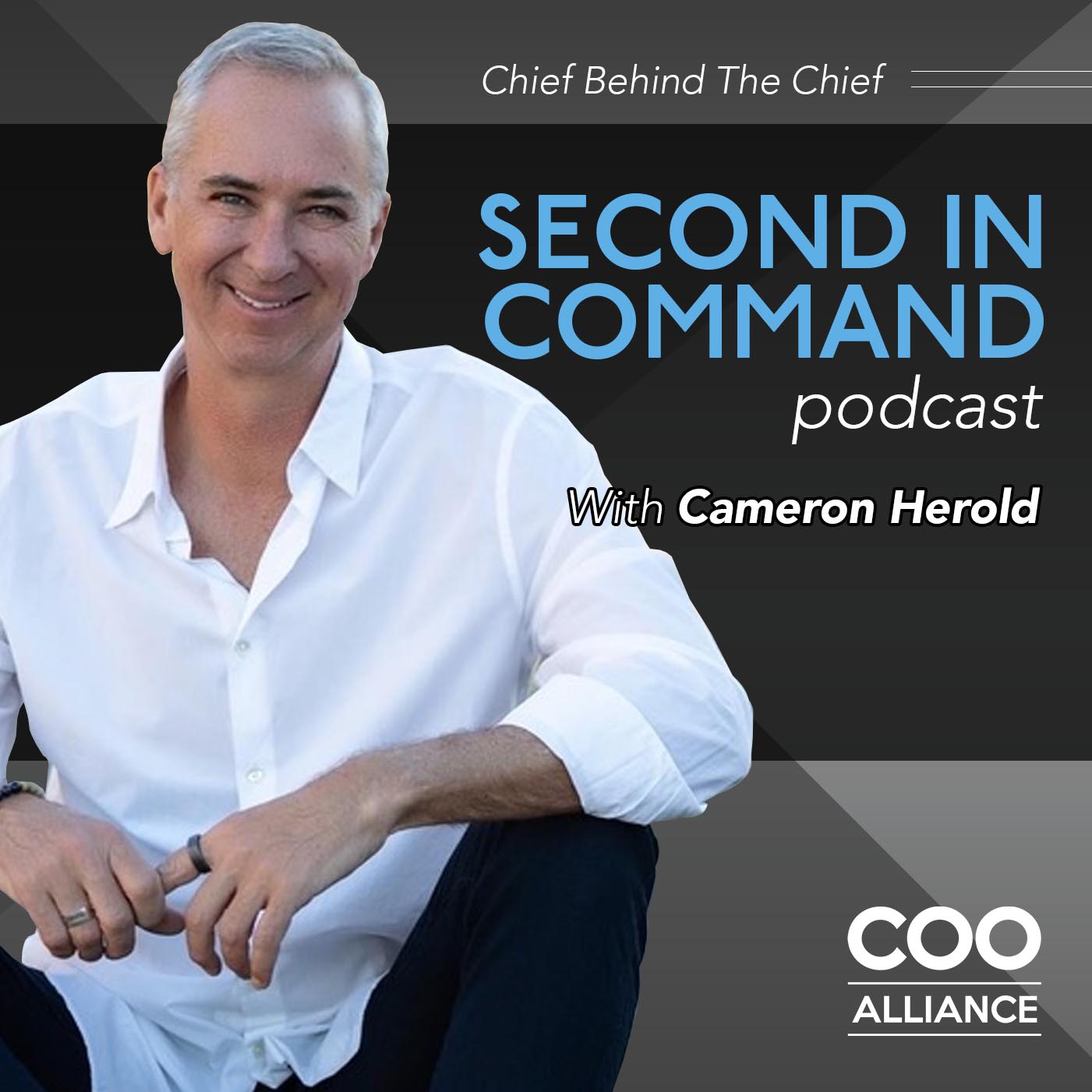
Second in Command: The Chief Behind the Chief with Cameron Herold
Ep. 461 - Driving Change: A New Era for Executives in Partnership
00:38:23
Loading summary
Transcript4 lines
- [00:00]
A
Hey, it's Cameron Herald, the host of the Second in Command podcast. Before we dive in, there's something you need to know. If you're a coo, VP Operations, or you're in any role where you're the second in command to the CEO, the COO alliance is the place for you. If you're the integrator to the visionary, you're going to want to join us. The COO alliance is the world's leading community for the second in command. We've had over 500 members like you join from 17 countries to grow their skills, connections and confidence. You'll get the tools, friendships, and a 10x guarantee to ensure that you get your money's worth. Go to cooalliance.com to learn more and see if you qualify. You can even book a free call with our team to ask questions. Now, let's jump into this week's episode.
- [00:50]
B
Welcome to the Second in Command podcast, produced by the COO alliance and brought to you by its founder, Cameron Herold. In the second in command podcast, we talk to top COOs who share the insights, strategies and tactics that made them the chief behind the chief. And now, here's your host, Cameron Herold.
- [01:14]
A
Okay, on today's episode, we're going to talk about onboarding the coo. How do you bring them into your organization in the most effective way? What are the first 90 days like, what should that COO or second in command be doing in the first month that they're with you? What should they be doing in the second month? What should they be doing in that third month? How are you going to bring them into the organization so that you get the highest return on investment, so that you create the last pain in the ass. I call it the pita factor. And so that they don't upset that apple cart, because they're going to come in with lots of ideas and really want to get the ball rolling. There's a really great system that I'm going to talk about so that you can make sure that onboarding is perfect and you get the highest leverage off. Bring them in. And if you miss this point, you're going to massively mess up that whole onboarding process and the person that you've hired. So we'll see you on the inside. You're going to get some great details on this one. A new COO arrives in a business like a boulder being dropped in a pond. There are ripples everywhere. Some employees will feel frustrated because they'll wish they'd been given the job, and others will feel excited to report to this new person and grow their careers. Some suppliers won't want to start a relationship with a new contact, while others will appreciate the support and enhanced systems. Done well the COO's arrival could free up the CEO to galvanize the company culture as the Chief Energizing Officer or to focus on whatever they've identified as their unique abilities. Done badly, the ripples create disruption throughout the business. If you've hired the right person and onboard them well, the COO will settle in perfectly if you rush to get them into the business. Without an internal onboarding process, however, you run the risk of any CEO's greatest nightmare. Unintended consequences the CEO doesn't get to step back the day a COO arrives, even if that's the ultimate aim. The CEO has a responsibility to remain engaged and ensure any transition is successful. Your business is like your child. Imagine if one parent left the other to raise the kids and didn't check back in for months. Your kids are going to get pissed off at you for being absent and you might realize they've drifted off the course that you would have chosen. But you can't say shit because you weren't around. Raising a company is the same as raising kids. The parents need to be involved first 90 days before your COO ever starts, you need a clear onboarding plan for their first 90 days and beyond. Their first priority is to learn about the history and the culture of the company, the core values and how you got where you are, the team dynamics, the people, the industry, the customers, the suppliers, and the operating manual of how to deal with you and with each of the others on the leadership team. They have a lot to take on board, but they need the foundation in place before they start making decisions. Don't expect them to do too much within the first few weeks. In fact, you should positively discourage them from taking action. Don't make the mistake of handing over the reins too early. That will only screw up the transition. I divide onboarding of senior leaders into three parts. Month 1 this period is about understanding. Everyone should understand that the COO isn't making any decisions at this stage. They simply observe, sit in on meetings, get to know people, take lots of notes, lots of notes. I tell new hires to keep a notebook with a running list of all their ideas and observations regarding what they'd like to do. Month 2 the next period is about looking for opportunities to change systems and processes and potentially people. The COO should go back and reassess or stress test previous ideas in their notebook to see if they're still relevant. They can dig in with the team regarding their observations and assumptions to see if they have an accurate picture. After two months of bedding in, the COO can start making changes based on everything they've learned. This is when they can start executing, because the best apparent course of action will have changed as they've learned more about the details, dynamics, and people. It's dangerous to execute on too much too early because a new hire can't have the necessary information and insights. It can be frustrating for COOs to restrain themselves, given that they've usually been hired to make changes and they'll want to get going. But what seems to make sense in the first week can look very different three weeks later. Coming out swinging makes everyone nervous and can damage important relationships in the long term. Any changes should flow from observation and tested hypotheses. Even if the COO thinks people need to be swapped out for new personnel, they should first understand what led to the current configuration. They should identify gaps. COOs often want to recruit by bringing others with them, but they first need to get to know and understand the existing team and to establish a mutually positive working relationship. In the early stage, the CEO should also stay relatively hands off and give the COO room to observe. As long as they're purely observing and not trying to execute, there's little concern about having them sit in on any meeting they want, taking people to lunch or coffee, conducting informational interviews across the organization, attending functional and project meetings, and generally riding shotgun in as many areas of the business as possible. Maybe The COO notices 15 different areas for improvement before acting. They should rank their improvement areas by greatest impact to create a firm foundation for their changes. If they simply start changing things, the effort will be scattered. After 60 days, they'll have a firm enough understanding to build at a project map based on their own observations and can begin executing in an organized, orderly fashion. It's slowing down to go fast or learning to walk before they can run. Shawn Vagenis, president and COO of ypo, the Young Presidents Organization, describes the dynamic in this I would not rush any type of communication or interaction with key employees. I learned to take my time. What happens with that is you lose connectivity and you don't establish relationships. My brother uses an interesting illustration. He says, you've got to make deposits in order to make withdrawals. I think of that statement ten times a week. The more you put into individuals, the more you'll be able to have them respect, trust, or forgive you. Whether The COO needs permission from the CEO to take action depends on the actual role and responsibilities, but the aim of the onboarding process is to get buy in from the team. In the movie Taps, Timothy Hutton plays a top military cadet whose father is an army general. The general tells his son that the men will respect a title, but they also need to respect the individual who holds it. In business, people will respect a CO's authority by virtue of their being the COO, but those people still need to respect the individual behind the desk. It takes at least 30 to 60 days to achieve that by building trust and working relationships. That way when the COO starts to make decisions, they don't piss people off. If they start acting too early without the full view of the team, they'll create ripple effects, back channel communication or avoidable tension Hitting Every Benchmark Onboarding is finished when the COO has met every benchmark in the process. If I were the CEO, I'd want them to meet one on one with every VP and director. Have lunch or coffee with each of them, sit in on each of the business area meetings to observe, sit in on some job interviews to observe. Review the last 90 days project plan, fully understand the vivid vision, talk to suppliers and customers, understand the whole sales cycle, go through the trainings the other staff go through and be fully up to speed. I've written five books and new employees read all of them in addition to going through my Invest in youn Leaders course as part of their onboarding process. If your company has written books or offers courses, new hires should read them and attend them. Well executed onboarding builds trust and understanding with teams before the COO fully takes over direction of projects. In Five Dysfunctions of a Team, Pat Lencioni talks about artificial harmony and the absence of trust if you can build good harmony with others and the foundation of trust and respect in which you know people's roles and responsibilities and what's happening in their physical lives, you'll have a strong foundation to get more work done later. CEOs have a cheerleading component to their role. If the COO is also a cheerleader but hasn't developed a level of trust and understanding with the team, their cheerleading can come off as patronizing or misplaced. Cheerleading should focus on those of a person's activities that require cheering on. If the COO cheerleads, a function that everyone has already mastered, it seems tone deaf. The incoming COO should read the resume of every single person on the leadership team to get to know them and understand what they're doing. And have done, they should look at everyone's LinkedIn and social media profiles as well. The COO needs to take the time to truly understand the organization and not jump to conclusions. Understand the people and the relationships so they don't cause unnecessary ripple effects and build trust so people can feel secure under their leadership and come to them with problems. Moving too quickly with decisions causes damage. There's no need to rush at the start. It's better to let something continue at 70% efficiency than to make the situation worse. The COO will learn the ropes as they go. Once they have more clarity, they can make decisions with confidence. The team will align behind them and support them. If they make decisions too quickly. Even if they're making the right decisions, they jeopardize communication and the foundational security of the team. Operating Manual when you buy a TV, Sonos, iPhone or any other piece of electronic equipment, you get an operating manual. Rippling COO Matt McGinnis created an operating manual for himself that he gives to every employee. You can read the full text in this book's appendix. If he starts in a new company, he gives it to the entire company. When new employees join the company and start reporting to him as coo, he sends it to them. It summarizes how he operates, how he ticks, what drives him crazy, what pisses him off, what turns him on, and how he makes decisions. His interview with me on the Second in Command podcast outlined his process beautifully. Onboarding serves to bring people into the company in the most efficient way, get them up to speed, make them feel comfortable and ready to do their job, and makes others feel good about working with them without causing too much disruption. Matt's operating manual helps prevent some of the ripple effects of dropping the boulder into the middle of the organization's pond. Can you imagine if everyone on the team created their own operating manual so they all knew how to work better with each other? A COO wants to maintain their authority while also remaining approachable. People need to understand the COO and get up to speed as quickly as possible, getting to know each other so they can hit the ground running with sufficient trust and respect. Explicitly sharing guidelines for engaging with the COO is a great way to make sure everyone is on the same page. COO Alliance Onboarding a COO gets them into the organization, but but things don't stop there. No CEO can afford to let their COO stop growing their skills. Some COOs read thought leadership books constantly, taking notes and comparing them with colleagues. Others employ coaches. Whitney bach, COO of HelloSign would advise young COOs be opportunistic. Build your network and keep looking for new opportunities to learn. Surround yourself with people who can teach you things. Those opportunities will present themselves and teach you what you love to do and therefore what you're best at. I started the COO alliance because no other strong networks for COOs even exist. And I strongly believe that traditional business models teach the wrong person how to grow a company. We shouldn't be teaching the CEO how to grow a business, build teams, run meetings, plan and market. As CEO you should know about these areas, but the COO should receive the training and build the skills needed to actually handle them for you. Entrepreneurial CEOs tend to tune out after five minutes, whereas the COO will stay engaged for an entire training course. They actually give a shit and they need to. The COO alliance filled a gap in the business world. A thought leadership group exclusively for seconds in command, with membership limited to those working for an organization making at least 5 million in revenue. It doesn't matter whether the people's title is Director of Operations, GM or coo. These are essentially the people who would be running the company if the CEO weren't there. Like CEO, COO can be a lonely job, but at the COO Alliance, COOs can talk to their peers. We're the world's leading community for seconds in Command, connecting them with ops minded professionals to learn new strategies and develop revenue generating ideas with some of the best business experts in the world. It's a trusted community of executives from 17 countries as of the time of this writing. Members join a vetted peer group of COOs who speak their language and the COO alliance gives them the tools and connections they need to grow themselves and their business. We also give members a 10x guarantee after completing their annual membership. If they don't get 10 times the value of their investment back in savings or potential profits, we give them their money back. No questions asked, no catch. All we ask is that they jump in with both feet, actively participate and give it a genuine go. It's a true alliance. COOs must be willing to share, not just take each other's ideas. We only look for members who want to contribute and grow in equal measure. They need a willingness to be vulnerable and to help others. For CEOs, getting their COO involved with the COO alliance is hugely powerful. It gives them an unfair advantage because it gives their COO access to resources that other companies don't have. Broadening perspective and recognizing commonality. CEO and COO share the same box. And like the CEO, the COO often doesn't see outside the box unless they make an effort to expand their horizons. Imagine two executives tasked with clear cutting a forest. They might be cutting down all the trees perfectly, but it's only when they climb to the top of the tallest tree that they realize they're cutting in the wrong forest. That's why it's so important to have a larger perspective about the role and business landscape than what happens within your own C suite. It's hard to get that perspective from anywhere, but belonging to the COO alliance can provide it. COO alliance members range in age from 26 to 62, and at the time of this writing, 41% of our members are women. COO is a vastly varied role, but the COO alliance community has revealed commonalities across the diversity first, members learn that everyone has imposter syndrome and feels like they're likely doing the biggest thing they've ever done. They all feel a little bit nervous that they might screw up. That realization alone that everyone is in the same boat helps give members confidence to temper the imposter syndrome and create a stronger foundation for their work. They also gain connections with a network of peers to go with the questions and concerns, which make them feel less alone and helps them solve problems. They realize they don't have to know how to do everything. Just who would solve a problem? Members leverage our Slack workgroup to ask questions and share resources. Another commonality among members is thinking that their CEO or visionary is a little bit crazy or a lot crazy. That's not a negative judgment. Most of our members are in awe of the vision and energy of their CEO, but an acknowledgment that knowing how to leverage an unconventional CEO requires special support. COOs in the alliance learn to accept that they're constitutionally different from their entrepreneurial CEOs and that it's okay and normal to have that difference. COOs also learn they need to outsource more, and the network's shared resource pool can help them find the best freelancers and shortcuts. Many of them use the executive search firms and fractional CFOs and CMOs that I recommend. At the time of this writing, three or four are working with the same MA group to help them sell the company. Despite all its members having different roles, titles, and organizations, the COO alliance transcends the differences. They learn there's no one system that they can use to grow their company. It's not like the recipe for a Manhattan cocktail. There's no recipe you can google for how to grow a company. Our members learn about everyone's systems and might pick up on two or three different areas and use them to make something better for themselves. I call it ideas Having Sex Keep bringing in new ideas New ideas come into an organization in multiple ways. Often they come in through the CEO because CEOs tend to belong to mastermind communities and entrepreneurial organizations where they have the greatest exposure to best practices and thought leadership. Because the COO is in charge of figuring out how to make it all happen, they should also be looking for new tools and resources to grow the skills of the people. They should be reading books, looking for courses and mentoring opportunities for their team and continuing to find new systems to incorporate best practices. Just as you belong to networking and mastermind groups, make sure you get your COO into a mastermind group like the COO alliance as well so that they're building a network. The COO doesn't have to know how to do everything, but they do have to know how to find the answers they need and the best place to start is with the dedicated, sharing Community coo coaching to CEOs who don't like execution and can barely listen to an hour long talk without losing interest, a COO is something of a miracle. A one person band who can play every instrument in the business at the same time. But that multitasking can be deceptive. Your second in command has strengths and weaknesses and your job is to identify their unique abilities and coach them to become world class and to inject their rocket fuel into your organization. But remember, you coach what they're good at. If they suck at something, screw it, they can delegate it to somebody else who's good at it. There's no critical mass of COO specific coaches, so coaching for COOs tend to come from CEO coaches who are former seasoned senior executives and who concentrate on different aspects, skills, mindset, leadership or a specific domain such as interviewing and finance. Over time, best practices in some areas become fairly stable, but others shift rapidly and represent logical areas for coaching. The CEO's vision has a longer trajectory, but the COO needs to respond to externals that can be extremely trying a pandemic, a mass resignation or another dynamic. Marketing and technology are constantly changing. Automation, optimization, offshoring, outsourcing. Yes, I have a group coaching program for CEOs and the beauty of my group coaching calls is you actually get to ask me questions on every call. You're not just listening to other CEOs. Drop me an email. Cameronameronherald.com for more information. Even running effective meetings in hybrid work situations can present challenges and areas for growth. Even though I've always been a people person, I benefited from coaching around maintaining relationships. I used to take criticism way too personally. I was okay with giving others constructive criticism, but I needed to improve on how I received it. Through mentoring and coaching from the likes of Joan Mara and Greg Johnson, I improved my ability to maintain openness, respect, and mutual affinity with the employees. I had monthly calls with Greg and then met with him in person every quarter and that deep work paid off. In my role and at building teams, Greg was very operational and engineering, enterprise and scale focused, but that's not what I needed from him. What I needed was pure leadership development. Removing blind spots, showing me how a real leader of a company works, helping me with my freaking email overload. I was getting 200 emails a day and I thought that was a lot, but he was getting thousands a day. How did he deal with it? When I was at college Propainters, the leader's skill set was exemplary because the company invested time in growing the soft skills of the leadership team to a level not ordinarily seen in business. Other companies I've worked with had leaders with strong functional skills but little cross training, so there were inconsistencies on how they delegated, dealt with, conflict coached, and so on. I launched the Invest in youn leaders course for COOs and even key managers because leaders needed to know how to grow people's skills and confidence as they climb the ladder within an organization. COOs should continually assess the best ways to facilitate growth in all business areas. COO Survey when determining coaching needs Coalliance's COO survey can help CEOs rate their COOs, or it can help COOs rate themselves. I learned this scorecard concept from Dan Sullivan's awesome strategic coach program, which I believe all entrepreneurs need to join. Regarding this COO scorecard, it's important to start from the understanding that no one's perfect. No matter how skilled we are at our role, we all have room to grow. As Ray Kroc, who built McDonald's, put it, when you're green, you're growing. When you're ripe, you're rotting. This survey provides a good starting point to think about that growth and how to become better in a role. Below are a few of the areas covered on the COO survey showing the possibilities COOs have for growing in their capabilities. Effective COOs rate 7 and above and exemplary COOs rate 10 and above. In these areas, you can take the full assessment to rate your coo@cooalliance.com CEOsurvey there's also a survey for COOs to rate themselves and identify areas where they could improve by reading, coaching, or signing up to the coalliance. They can find it here@cooalliance.com Survey Capability 1 Vision Alignment the first area of the scorecard rates COOs on how aligned they are with the CEO's vision. In poorly run companies, it's not clear whether the COO knows what the CEO wants. You're always arguing or there's frustration over which direction to go. In marginally better run companies, there are occasional problems between the CEO and COO regarding vision. You may have disagreements over direction in front of employees. The COO does not know how to prioritize work to hit the vision. Sometimes the COO seems to be on the same page as the CEO. There are occasional bumps in the road, but the team sees you aligned. In the best run companies, the COO and CEO have complete trust in each other because they're on the same page. The COO refers to the CEO's vivid vision frequently, and employees and customers and suppliers also understand that vision. In the case of vision alignment, when the COO doesn't know what the CEO wants to do or where the company is going, it's often because the CEO has never shared that vision. Your responsibility as a CEO is to sit down with the COO and spell it out. My vivid vision for the COO alliance, for example, is a four page description of the company's trajectory projected three years into the future. Here it is. COO Alliance 2025 Vivid Vision the following is our COO Alliance 2025 Vivid Vision creating a vivid vision brings the future into the present so everyone has clarity on what we're building now. It's a detailed overview of what the COO alliance will look like, act like, and feel like three years out by December 31, 2025. Sharing it with others helps it become reality. Our Members the COO alliance is the only truly global network of its kind in the world. For those who are second in command, the quality of our members continues to grow. Our average member is doing upward of 50 million with 75 to 7,500 employees and our minimum criteria for membership is $5 million in revenue or capital raised. We have a pure Facebook only group for seconds in command where we allow smaller companies doing a minimum of 1 million to join all full time. 500 COO alliance members are active participants with a strong desire to learn a willingness to share and the vulnerability to never be the smartest person in the room. They recognize that their growth as COOs come from learning from each other, conversations with peers and teaching COO's at smaller companies. Our online only membership has 5,000 members with access to recorded content and their own private Facebook group. Through monthly live Q&As via Zoom meetings with other members and myself, they receive hands on personal attention to support them with their challenges and celebrate their successes so they can continue to grow themselves and their company. What it Looks like We host online events every month and members can also elect to attend any of our two optional in person events as well. Members interact with each other in between meetings via our coalliance portal, our private Slack channel and Zoom to continue supporting each other in their growth. Location Our 12 monthly events are held via Zoom. Our two in person events are held at amazing properties in sunny Scottsdale, Arizona, Dubai, Europe and the mountainous oceanside city of Vancouver, Canada. I host opening night cocktail parties at amazing locations. The perfect weather allows us to do many of our breakout sessions and meals outdoors and we incorporate morning yoga, bike rides, hikes and fun into our events. World Class Content the content from the CEO alliance comes from a variety of forms, member to member learning breakouts, small group workshops, informal time 10 minute talks given by members on their own area of expertise, expert guest speakers who come in to share with us. We operate the meetings in a confidential environment that allows everyone to feel comfortable in truly sharing and opening up with each other. Members give presentations to the group on areas where they feel stuck and they receive in depth feedback and experience sharing from other members. We work through a variety of forms, worksheets and exercises to encourage members to be introspective, to grow themselves as leaders and grow their company's revenue, profitability, customer engagement and employee culture. We have amazingly deep discussions as a group at all events and we frequently share tips for members in their private Slack group as well as we upload 10 minute talks into our private members app so they can share the content with their company's employees and never miss a beat. Members also share video content with their company's employees. We also share all our 450/2nd in command podcast episodes with members and frequently interview their companies on the podcast as well. This gives them a unique opportunity to showcase their expertise, broaden exposure and achieve influencer status and increased traffic to their business. The content from the CEO alliance covers a variety of core CEO co relationship building an unbreakable bond amongst rapid change, strategic thinking and planning, gaining clarity around vision, operations and execution Transforming ideas into reality People in process Recruiting, interviewing, selection top grading, onboarding, handcuffing a players and off boarding World class culture Cultivating an amazing workplace culture that attracts employees and clients like a magnet. Technology tools Leveraging and streamlining people and processes Leadership and skill development Increasing confidence and capabilities Meetings that don't suck Running highly effective impactful meetings Coaching and delegation Attracting and growing a unique ability team and more Connect and Recharge at all monthly events we members really get to know each other and we often have super fun social components. At each in person event we do a fun activity with a group such as topgolf escape rooms, camelback hikes, cycling, golf, morning runs or yoga. This serves as a reminder to disconnect and have some fun in addition to providing an opportunity to connect with each other on a deeper level outside the meeting space Benefits and Community since day one, we've told members that after a year of attending, they'll leave with ideas that are worth 10x their investment in either savings or new revenue or we give them their money back. No one has ever taken us up on it. Our member NPS hovers around 70% at each event. We have more than 50 accountability groups with 75% of our members participating. So now members push each other throughout the year to put their ideas into action. They finally feel like they have their tribe to learn from. Members get value from working one on one with me at these events, but they find the greatest advantage in learning from each other. Plus they no longer need to waste time attending CEO events where there's little information targeted specifically to them. This is their tribe. The culture. Members greatly appreciate the time to slow down, think, plan and work both on themselves and their company without the day to day distractions of business. Our on site film and audio crews capture content throughout all the meetings for offline and online COO alliance members to learn from and review between events. The culture we're building in this mastermind is one of focused personal growth and business growth. We're all in this to grow ourselves and our companies in an open and trusting environment. We've created a culture where we can be vulnerable with each other and comfortably share our fears, insecurities, weaknesses, dreams, desires and goals. And we finally feel like we have support from our peers for the first time. As COOs, we aren't here to goof off, but we still have fun. While we work, we assist each other with our growth initiatives between meetings, providing an extra level of accountability and support. Marketing We've done a Great job marketing the COO alliance to find new Members all of our leads go into a sales funnel so we can not only market to potential members, but we can also add value to them as COOs before and after they join. Our website shows the statistics of our current member companies and includes profiles of members and their raving testimonials. We have marketing set up on Autopilot through Facebook, other social media platforms, magazine ads, direct mail and LinkedIn and we've retargeting in place so that prospects consistently see us even before they've decided to join. Our second in command Podcast and magazine columns build credibility and we leverage that into signing up stronger and stronger members and companies into the CEO Alliance. We're getting a ton of exposure in the press about the program, our members and our team. Referrals from CEOs encouraging each other to have their co's join account for 30% of our signed new members. Our Team We're a fast growing, high energy team of self starters and doers with a high level of passion for and pride in our mission. Our COO handles all the key parts of the company allowing everyone to focus on their areas of unique ability. We have fantastic people in place to head up marketing, sales, social media, operations, technology and finance. We still leverage freelancers globally too. We have productive and fun team meetings to align everyone quarterly, monthly and weekly. Our dashboards keep us focused on the critical areas of the business so we continue to attract new members, curate world class content and help millions of CEOs grow their people, culture and profits. When people read that vivid vision, they're completely clear on what I'm building. Most CEOs have never clarified their vision with their employees and internal leaders. There might be a mission statement or a one sentence direction, but not enough information for everyone involved to know what the company will look like, act like and feel like three years in the future. Sharing your vivid vision with your COO is no different from the collaboration required to raising a family. If you don't discuss and coordinate your actions, you're guaranteed to have miscommunications. If you plan a family vacation but don't agree on what you'll do, than one person might envision lying by the pool while the other envisions engaging in activities all day, every day, conflict and disorganization will ensue. CEOs often fall into the trap of thinking. The COO is always able to be a mind reader. For a COO to execute effectively, they need to have a strategic plan in place to hit the CEO'S vision, clarity and shared mission always allows you to have a yin and yang partnership. You can't wing it and expect positive results. Capability 3 systems for recruiting, interviewing and hiring this capability rates COOs on the extent that they've established systems for recruiting, interviewing and hiring. Poorly run Companies and bad COOs employ only C and B level talent. Managers are not trained in interviewing and they use Craigslist for most job postings. Employees frequently quit marginally. Better run companies and COOs always promote from within and feel like it's a hard labor market to find good people. Things start improving when the COO ensures that your company has solid B's on the team. Managers have some basic interviewing skills, you're hopeful that your C's will improve or quit, and the COO and managers occasionally do reference checks on new hires. The best COOs do in person 360 group feedback reviews, top grade all staff every six months and have a virtual bench of hires in place. They also make sure that all managers are trained and certified in interviewing and they've likely put all their managers through the Invest in youn Leaders course or self guided skills training. In most companies, it's common for the CEO to delegate hiring to the COO and the COO must do the hiring for roles within the business areas reporting to them. To maintain clear communication, the COO needs to ensure they are recruiting, interviewing, hiring and onboarding systems in place for the whole company. Such systems serve as guardrails so particular business areas don't veer off course in hiring people who clash with the culture. Cross departmental interviews can facilitate hiring better people. Staffing plans allow the finance team to plan budgets. It's also one of the core modules in my Invest in youn Leaders course. In fact, it's critical that any managers doing any interviewing go through this content to avoid making hiring mistakes. Capability 5 financial systems part of the scorecard rates COOs on the financial systems they've established to stay in Sync with the CEO's goals and to ensure the leadership team has the data needed to make planning decisions for growth. Poorly run companies have no budget to work from. Their financial statements are produced occasionally but not regularly. The COO isn't even sure what to look at when they have them. Middle ranking companies may have a rough company budget that shows that numbers are okay, but the COO or CEO worries there are mistakes, financials aren't timely and the COO isn't sure how to read them. Sometimes financials are timely and accurate and cash flow is good. The COO might occasionally review the KPIs in better run companies, the COO has rolling past and future 12 month budgets produced to manage by the CEO and COO have a good eye on cash flow and the COO with the CFO manages open book financials for all employees. Some CEOs want to keep a tighter handle on financials, but the COO must have access to all the financial information, both restrictions and opportunities in order to make strategic decisions in the best interest of the company, including which hires they can make, which projects to initiate and how to continue making progress toward the CEO's overall vision. The only time there might not be full information sharing would be in the very early initial stages if you're thinking of selling a company capability 6 COO skill set this capability reflects how a COO stacks up at possessing and improving the skills for the job. Poorly performing COOs have no idea how they compare to other COOs and nor do they know how to improve. At times the COO feels stuck, overwhelmed and useless, in way over their head and with no idea where to turn. Many COOs in this category worry they will get replaced or made redundant. They thought they were smart until now. They know that they have a lot to learn, but they aren't sure where to start. The next rung of COOs sometimes turn to books for learning, have sporadic training sessions in house and attend occasional conferences or courses. But often this COO does not have a formal personal growth plan. The best coos are always growing as leaders and focus their learning on 6 to 12 month objectives. The COO is part of a mastermind group like the COO alliance and they're constantly improving on their skills. They see growth as an opportunity for themselves. The goal of any leader is to grow their people. The more we focus on growing people, the more they'll grow the company. If you have mutual trust, alignment and excitement about the vision, then you can feel confident your COO will continue using their growth in service of your company rather than looking elsewhere. Of course, even when you have an effective COO in place, it's essential to keep working on your own growth as well. I've frequently seen CEOs make the mistake of abdicating responsibility once they install a coo. You want to avoid the situation of handing over too much responsibility, especially before fully vetting and training someone. At the end of the day, it's still your company. The results rest on your choices.
- [37:48]
B
You'Ve been listening to Second in Command, brought to you by COO Alliance Founder Cameron Herold. If you enjoyed this episode. Please be sure to like, share and subscribe to us on Apple Podcasts, Spotify and our other podcast streaming platforms. For more best practices from industry leading COOs, visit COOAlliance.com.