← Second in Command: The Chief Behind the Chief with Cameron Herold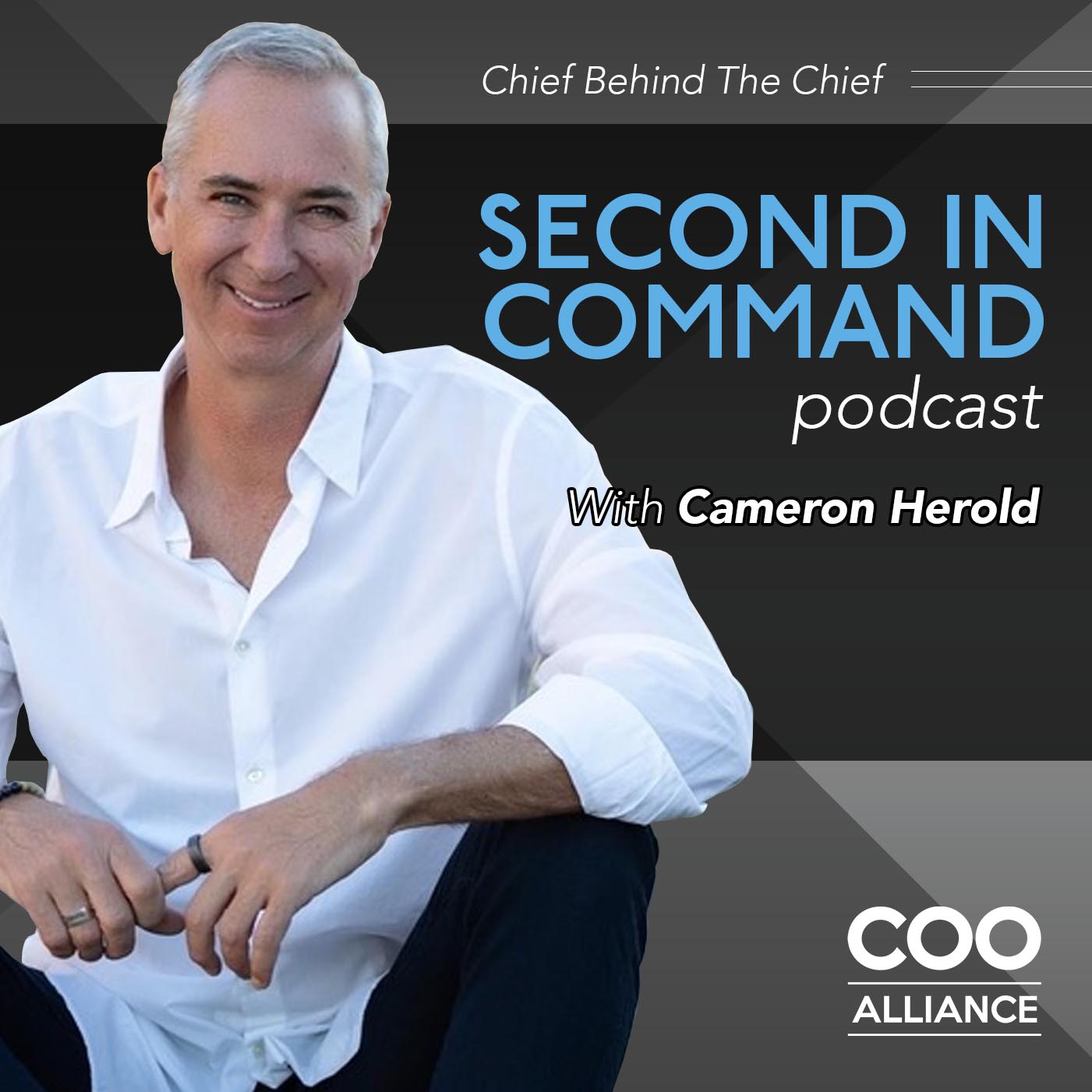
Second in Command: The Chief Behind the Chief with Cameron Herold
Ep. 463 - The Art of Transition: Guiding Growth Through Empowered Teams
00:11:37
Loading summary
Transcript18 lines
- [00:00]
Cameron Herold
Hey, it's Cameron Herald, the host of the Second in Command podcast. Before we dive in, there's something you need to know. If you're a coo, VP Operations, or you're in any role where you're the second in command to the CEO, the COO alliance is the place for you. If you're the integrator to the visionary, you're going to want to join us. The COO alliance is the world's leading community for the second in command. We've had over 500 members like you join from 17 countries to grow their skills, connections and confidence. You'll get the tools, friendships and a 10x guarantee to ensure that you get your money's worth. Go to COO alliance.com to learn more and see if you qualify. You can even book a free call with our team to ask questions. Now, let's jump into this week's episode. So you need to start to kind of quantify and codify what it is that you do that is no big deal. That actually drives energy. That is an anchor and a. So I would start to think about those things and then start to train them in that so that more of them can pick that up so that it isn't just a pure reliance on you. That would be one, one key starting point for sure. There's also something, you know, when you move into this area that you really want to be careful with. Delegation versus abdication. Right. That we can often drop stuff on people's plates where we are kind of walking away from it and running away from it without really knowing what their skills and their competence on each of those areas of the business. So really spending time in the next two months making sure that you're pretty aware as to their skill level and confidence level, really having the deep kind of dives and discussions with them.
- [01:37]
Podcast Announcer
Welcome to the Second in Command podcast produced by the COO alliance and brought to you by its founder, Cameron Herald. In the second in command podcast, we talk to top COOs who share the insights, strategies and tactics that that made him the Chief behind the Chief. And now, here's your host, Cameron Herold.
- [02:02]
Cameron Herold
In today's episode, we're diving into transitioning from CEO to owner with a guest who's preparing for a six month sabbatical. Together we explore how to build a strong executive team, create a vivid vision for long term success, and foster leadership energy that drives results even in your absence. We'll also discuss practical strategies for delegation, mentoring and leveraging. Skip level meetings to maintain, align and momentum. Tune in for Valuable tips on taking time off your business.
- [02:33]
Anonymous Guest
Well, I'm getting ready to take a six month sabbatical starting October 15th and when I come back, I want to be more, much more owner and less operator. So my COO is in COO alliance. He's doing a great job. I pretty much want my executive team to run the company for me. So I'm just thinking ahead, Cameron, and what I would like is your thoughts on how to make that shift. I'm still going to hold the title of CEO, but how to make that long term shift to owner, not operator.
- [03:05]
Cameron Herold
Okay. How many employees in the company right now?
- [03:09]
Anonymous Guest
140.
- [03:10]
Cameron Herold
140. And revenue?
- [03:12]
Anonymous Guest
$10 million.
- [03:13]
Cameron Herold
Okay, so real business, real moving parts and you want to move all the way into the founder role. Do you want anything to do with the day to day at all?
- [03:21]
Anonymous Guest
I want to spend when I come back from six months off, I'll come back in April, I want to spend one day a week on it.
- [03:28]
Cameron Herold
So basically working with my executive. Sorry, for the six months off. What is it you're doing to do that?
- [03:34]
Anonymous Guest
Well, I gave them a year's notice. They're already, they've been planning for it. So we have an annual one year plan, a three year plan, ten year plan. So they've got all that, you know, we're running on eos. So like they know the vision, they know what, where we need to go. They've got scorecards in place, all of that. So it's going to be very clear what they need to do and what I'm expecting to see when I come back.
- [03:57]
Cameron Herold
So then for you, is it more about what roles and responsibilities you want to get off your plate or how to get those off your plate? If you're doing it for six months, what's the difference for longer term?
- [04:06]
Anonymous Guest
Well, the difference is like there's a feeling when I'm there, like I bring a certain feeling and a certain that founder energy, that founder direction and clarity that they're used to. Right. So I'm kind of their anchor and I want to shift that in a way that doesn't erode all the value that's been created with my leadership.
- [04:27]
Cameron Herold
Totally. So yeah. So what you're going into is kind of less of the founder mode to manager mode and more founder to chairman mode. So it is about having a really strong, vivid vision in place so that they have a strong vision for where the organization is going over three years. Kind of on top of the, the one year, three year, ten year goals and plan. Like a really crafted, well crafted four to five page vision that articulates all aspects of the organization. Really making sure that the team all understands kind of core values and, and then even for you starting to give them some coaching and development around the fact that your part of your role has been that chief energizing officer and now they need to show up with that energy, right? How do they, what is it you need to do so that they will start showing up with that energy? What does that energy kind of transference mean? What are the little things that you've done that either were kind of the. You know, at times we undermine our own strengths. Like we're like oh that's no big deal. Well it is for everybody else. Like it's. It's no big deal to you because it's unique ability. So you need to start to kind of quantify and codify what it is that you do that is no big deal. That actually drives energy. That is an anchor and a. So I would start to think about those things and then start to train them in that so that more of them can pick that up so that it isn't just a pure reliance on you. That would be one key starting point for sure. There's also something when you move into this area that you really want to be careful with. Delegation versus abdication. That we can often drop stuff on people's plates where we are kind of walking away from it and running away from it without really knowing what. If you're the COO or second command to the CEO of a company doing minimum million in revenue, come check us out@cooalliance.com and welcome home. Their skills and their confidence are on on each of those areas of the business. So really spending time in the next two months making sure that you're pretty aware as to their skill level and confidence level. Really having the deep kind of dives and discussions with them and then even making sure that they have things like the CO alliance for them or mentoring for them so that they have places they can turn where you're not going to be there as often even when you come back. You know, when we were building 1-800-got- junk we made sure that every member of the leadership team was a part of a couple of different communities that they were learning from. So they had a peer group and we made sure that they each had a formal mentor that they were being mentored by. So I had the second incoming CEO at Starbucks mentoring me. We were doing one hour calls every month. We were doing full day in person Meetings every quarter. Brian had had a mentor. Roman, the head of it was being mentored by the head of AT from Abe Books. Our head of finance was being mentored by the head of finance at Business Objects. Head of the call center is being ventured by the head of the call center at WestJet call center. So we all had really strong kind of mentoring systems in place and that might be something you can plug into. And then the other part is just ensuring that as long as they build the organization, I think of it like an inverted pyramid that you've got the vivid vision that they're all driving towards and then they build the business inside the core purpose and the core values. And as long as they're making decisions towards that, the path that they take should start to matter less and less to you. And then lastly there's a system that's really important which is around the skip level meetings, right? The ability for you to inspect what you expect. And I think that's something that the one day a month, you know, when you are back in the business, really good, solid understanding of how to run a skip level meeting. And there's two ways that you can run a skip level. Skip level is you're going to skip over your direct report. Let's say you skip over the head of finance, you meet with everybody in finance or you skip over the head of marketing, you meet with everybody in marketing and you're going to be presenting them with your ideas, your vision, where you want the organization to go and asking them how they think it's going, how's it going with the team, how's it going with the direction, what support do you need? If this is where we're headed, how are we doing towards that? And just getting their thoughts. And then you're merely saying thank you, that's important, or thank you, I appreciate that, or you're talking to them and just asking them what they think can happen. That's better, right? What's broken, what's not working, what are their needs that they're not getting supported on. And then for you it's you saying thank you for that. The key is to not, not connect. It's not engage. You know, if they give you a problem, you can't engage and say, oh, we'll fix that. And I'm glad you're mentioning it, let's start digging in. Because you don't know the rest of the story, right? You only know that. So it's just saying, saying thank you, I appreciate it and then I'll take that back to their VP or back to their CMO or whatever and chatting to get the rest of the stories. But those skip level meetings are important. And then in conjunction with that, it's really the whole inspect what you expect. So it's looking at the key metrics in each of the business areas, just being aware of the projects that people are working on to make sure that they're working on the right stuff until you know so much as the team, you know, your leadership team really has them going in that right direction. Is that helpful?
- [09:30]
Anonymous Guest
That's all incredibly helpful, yeah. Would you add anything about using equity? You know, I have an equity incentive plan. Would you add anything about that?
- [09:39]
Cameron Herold
Not necessarily, no. I mean equity is something that's really new from Gen Y to Gen Z. It's really never existed for Gen X and baby boomers. So I don't think we've learned how to say no as artfully as we need to. Prior to 1997, 98, you had to buy equity in the company. You know, you didn't, nobody, no companies were giving away equity. And then it became a Trend up until 2000 where people were giving equity in lieu of compensation. So the dot coms didn't have enough money to go around, so they started giving people equity as an incentive. But also it was in lieu of compensation when the dot com era blew up and the Nasdaq crashed by 78%, all of a sudden everybody still wanted their equity, but they wanted to be paid as well. And what's happened since kind of 2001 through 2007 was now they wanted equity and they wanted pay and they wanted big titles and we started just giving it away. It doesn't necessarily need to be there. For most people, they're going to be motivated like they're motivated every day. It's key is to you to decide if it's something you want to satisfy them with, if it's bonuses you want to give out, if it's. But in terms of driving performance, there's a lot of data that says that bonuses and even often equity doesn't necessarily drive performance. It can also drive shorter term thinking than longer term thinking.
- [11:01]
Podcast Announcer
You've been listening to Second in Command, brought to you by COO alliance founder Cameron Herald. If you enjoyed this episode, please be sure to like, share and subscribe to us on Apple Podcasts, Spotify and our other podcast streaming platforms. For more best practices from industry leaders COOs, visit COOAlliance. Com.