← Second in Command: The Chief Behind the Chief with Cameron Herold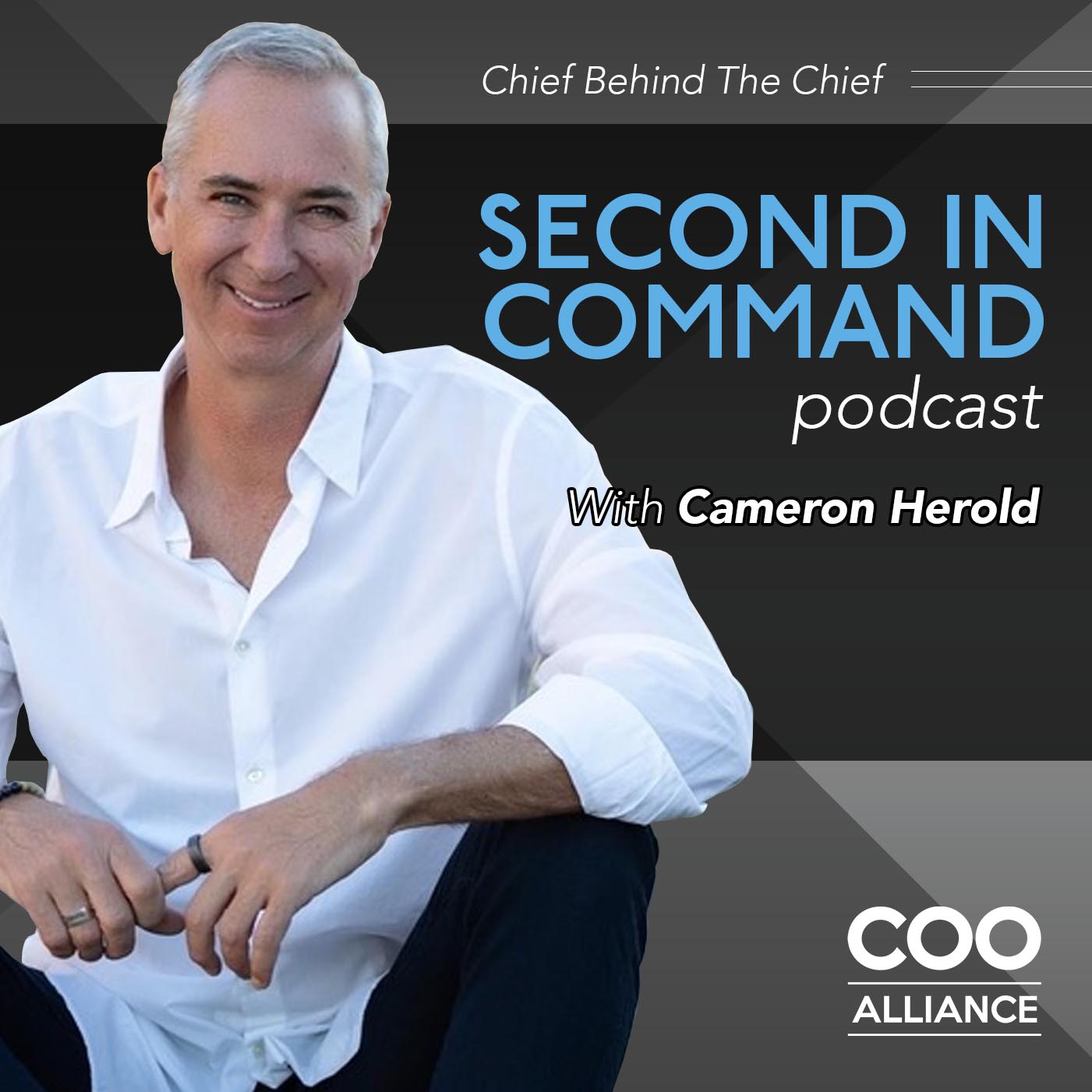
Second in Command: The Chief Behind the Chief with Cameron Herold
Ep. 470 - Environmental Incentives COO, Andrew Alexandrovich
00:37:52
Loading summary
Transcript70 lines
- [00:00]
Cameron Herald
Hey, it's Cameron Herald, the host of the Second in Command podcast. Before we dive in, there's something you need to know. If you're a coo, VP Operations or you're in any role where you're the second in command to the CEO, the COO alliance is the place for you. If you're the integrator to the visionary, you're going to want to join us. The COO alliance is the world's leading community for the second in command. We've had over 500 members like you join from 17 countries to grow their skills, connections and confidence. You'll get the tools, friendships and a 10x guarantee to ensure that you get your money's worth. Go to COO alliance.com to learn more and see if you qualify. You can even book a free call with our team to ask questions. Now let's jump into this week's episode.
- [00:44]
Andrew Alexandrovich
As the CEO, I'll take I'll kind of understand where our executive team and the annual strategy is, thinking big picture and then build an annual strategy around that. I'm using that to work with our program teams and ops teams and all our internal teams to really guide our quarterly and monthly goals and make sure we're tracking towards progress. And that does give me the kind of long term vision and the day to day kind of managing workflow project management needs.
- [01:19]
Savannah Brewer
Welcome to the Second in Command podcast produced by the COO alliance and brought to you by its founder, Cameron Herald. In the second in command podcast we talk to top COOs who share the insights, strategies and tactics that made them the chief behind the chief. And now here's your co host, former COO of a multi 8 figure remote company and alumni member of the COO Alliance, Savannah Brewer. Our guest today is Andrew Alexandrovich, the CEO of Environmental Incentives, a mission driven organization that has grown from 40 employees to over 135 employees under his leadership. With a background in environmental management and a sharp focus on strategic operations, Andrew has helped secure over $400 million in funding while transforming core systems across HR, Finance and Enterprise technology. In this episode specifically today we dive into the realities of leading growth through change. Andrew shares how he's helped transition teams from in person to remote to kind of a hybrid while keeping company culture alive, the role of annual retreats and keeping engagement happening with team while running a remote company and how he keeps the executive team aligned through every phase of expansion. He also offers thoughtful insights on team restructuring and change management both during the highs and the lows, inevitable lows of scaling a company. So if you are navigating growth or thinking about how to evolve your leadership team and company culture, this conversation is definitely for you. All right, here we go. We are here with Andrew Alexandrovich. Welcome to the show.
- [03:07]
Andrew Alexandrovich
Hey, thank you. Thanks for having me.
- [03:09]
Savannah Brewer
Of course. I am really excited about this episode. Andrew is currently working with Environmental Incentives. Why don't you just give us a little bit of a background on yourself and the company that you're with?
- [03:21]
Andrew Alexandrovich
Sure. So I started working with environmental incentives about 15 years ago. When I started company was very much in startup mode. I was one of three employees, I think, at the time, plus the two founding partners. And we've kind of just grown over the past 15 years and through the company's growth, I've grown through different operational roles and most recently becoming the COO of environmental incentives in 2020. And at that point we were really looking ahead to scaling up to be a mid sized company working throughout the US and overseas. And my role was to build up our systems to get us ready for that growth.
- [04:05]
Savannah Brewer
Amazing. Okay, and what led you? So 15 years ago you were one of the kind of founding team members. What led you to joining?
- [04:12]
Andrew Alexandrovich
So I started actually outside after my undergrad. So my background's in environmental studies and I found Environmental Incentives shortly after I graduated. Started, you know, in a entry level role and kind of went from there. And as I grew through the years, I kind of played all the internal functions and building up the internal infrastructure of the company. Until about 2015, I decided to pursue my master's and at that point I decided to do the Duke Environmental Leadership Program and master's Environmental Management, which is a professional program, working full time, doing grad school kind of on the side. And did that because I wanted to kind of get the exposure to the more exposure to the technical work that the company was doing so I could kind of have that well rounded leadership skill set of understanding the work and then also how to function and run the business.
- [05:11]
Savannah Brewer
So you were doing that in combination at the same time?
- [05:14]
Andrew Alexandrovich
Yeah, so I. It was a remote kind of hybrid program. So I remained working full time at Environmental Incentives and, you know, still, you know, managing a lot of the internal operations, but then also doing a grad program kind of nights and weekends sort of thing for a couple years.
- [05:31]
Savannah Brewer
Okay, sweet. I would love to hear how you feel that contributed or benefited your role. And we'll circle back to that in a second. But could you tell us, what does Environmental Incentives do as a company?
- [05:41]
Andrew Alexandrovich
We're essentially A management consulting firm that works with different organizations that want to design environmental programs. So we started in actually South Lake Tahoe, California with the program to help some of the agencies there to achieve water quality goals for Lake Tahoe. So essentially our role was to understand what the goal that they were going for and then help the agencies develop a program to track and monitor and report progress for that environmental program. So since then we've kind of built through working, applying similar concepts with state agencies, local and municipalities, and even with some nonprofits and foundations. And then our biggest client being usaid. So kind of applying similar concepts of working at the intersection of environment and international development.
- [06:43]
Savannah Brewer
Okay, awesome. Yeah. So I imagine that the operational piece of this company, there's probably some really important things that get to be measured and managed properly.
- [06:54]
Andrew Alexandrovich
Yeah, and we're, you know, from the operations standpoint we're a service based company, so we are consultants. So you know, big part of my role was developing systems and you know, part of my leadership style was really developing systems that work for the users to be able to go and deliver our work. So you know, that was a lot of the, a lot of the challenge. And then, you know, within the federal contracting space and just some having lots of different donors from federal government to state governments to private NGOs and foundations, just you know, a lot of complex compliance requirements that don't always lend to efficiency. And so, you know, finding that balance of having that people centered, like user focused while maintaining the compliance side was always a fun challenge.
- [07:45]
Savannah Brewer
Yeah, I mean, let's talk about that. The compliance piece with the people. Tell me like what were some of the challenges with team and then also doing that that you encountered.
- [07:55]
Andrew Alexandrovich
One of the great things about environmental incentives, it's a very focus on the person like rich culture of learning, adaptability and continual improvement. So one of the things that we really focused on a lot with my team and as we were building the internal systems and the infrastructure is change management practices. So really like understanding, you know, there's of course there's compliance requirements that we have to make sure we're following and then there's the delivering the work that we are hired to do. And so you know what that means when you're rolling out a new system or process, whether it's related to just operations or HR or finance or whatever it is, program management, you know, really just engaging the users and the vision and the definition and you know, drafting that system or policy or process and then going through beta test and refinement period with the users so that when we end with the final product, it's not a product that's kind of been developed by the operations team and then put out there. And we find, you know, 10 different snags along the way and we're not able to deliver the work on time or efficiently, but instead it's, you know, it's something that's been sort of co created and people understand it by the time it's rolled out because they've been engaged and they're more bought in and, you know, able to use it efficiently and still deliver their work on time and you know, within the regulations, whatever it is that relates to that process.
- [09:31]
Savannah Brewer
It sounds like there's a lot of different pieces to kind of navigate from a leadership standpoint, but then also strategically. I'm curious for you, in being at this company for 15 years and it sounds like you've gone through a few different transitions or key roles, what are the reasons why you were chosen to be the COO recently?
- [09:52]
Andrew Alexandrovich
Well, I think the reason that I was chosen is I had kind of like grown with the company through multiple stages of growth. So, you know, I became the COO in 2020 and I think at that point we were about 40 employees and to our peak, which was about 135 employees. And so at that point when we were 40 employees, we were really like, we were looking ahead to being a mid sized business still like had a lot of foundational systems, but they were really set up to be a small business. But I had, you know, grown with the company at that point. I guess this was eight or nine years into my time there. And so I really understood all the interconnections of how our different systems from like program delivery to HR and the finance and the operations systems that, you know, help us deliver that work. I just had a really deep understanding of that and also the company culture and the regulations, because I had spent even that time up until that point getting the company's infrastructure set up to be that scale of a business and be compliant and efficient and all that. So cool.
- [11:06]
Savannah Brewer
I think that anyone who's listening, we have people who are already COOs and we have people who listen who are, you know, that's kind of their trajectory of where they're wanting to go. And I think it's so important where even if your role says that this is only what you're focusing on, asking leadership and seeing if there's anything else that you can take on or can you understand other parts of the company so that you can have that like you said, super well rounded kind of knowledge of what's happening. And then when you step into a role like you have, I'm sure it was probably way less of a transition than maybe the title says. What was that stepping into the actual title did a lot shift for you? Or was it kind of just the title? Like what were some of those things that were different, if there was?
- [11:47]
Andrew Alexandrovich
Yeah, well, before I got the title was officially named coo, I was effectively running the internal functions of the business. I think the difference was kind of two main things. The quality that we were doing it. Like I said, one was built for a small business, the other was a mid sized business operating globally, multiple director kind of VP level positions with teams underneath them. So multiple verticals throughout the company. So the quality needed to be, you know, much more instead of small business, you know, scaled for that size, like best in class, kind of like industry standard systems and processes. So just quality and the approach and kind of maintaining the culture was one difference. As I stepped into that role and then, you know, kind of like I just said, but the magnitude. So since we had more managers, more program managers, more program directors, more clients, just needing that quality to kind of match that magnitude and to be able to do it at scale.
- [12:56]
Savannah Brewer
Right. Two questions from that. You said maintaining the culture, making that transition, how did you manage the culture when you guys were making that shift? And so many things sounds like it was changing. Were there any specific meetings or processes? What did that look like?
- [13:13]
Andrew Alexandrovich
Yeah, well, we've always been a very people focused organization. And so one thing I didn't mention too is, you know, as I became CEO was right as Covid started too. So we were going from, not only were we going from like all the changes that everybody was experiencing like on site to a fully remote company, we're now operating as a hybrid company. We were looking at this kind of doubling in size at that point. So what we did to maintain the culture is just, you know, different engagement techniques, annual culture survey where we were polling staff around the time of our annual planning cycle to see what was working, what we could improve on. From everything from compensation to our systems to equipment and our softwares we're using. So doing that kind of annual pulse check with the company and building that into our annual planning cycle every year was one way that we maintained culture. Another was just we have a great team of staff that are really good at doing fun events for the company. We have annual retreats that, you know, always has some kind of team building. Then we've Been really good about having kind of like internal team building encouraging things. Like we have something called the Sunshine Fund that just, you know, it makes it easy for staff to send a little gift like flowers to a team member to recognize good work. So just kind of like little things like that. That especially being kind of a dispersed team going to remote more really important to help us stay connected and maintain that kind of small business like really mission driven feel, but at a larger scale.
- [15:03]
Savannah Brewer
Nice. On the annual retreats, how many of those have you guys done so far?
- [15:08]
Andrew Alexandrovich
Oh, we've done them every year since the company's beginning. They've looked different in times like in past years. There's been times that they've always been everybody together in one location. To having fully remote during some of the COVID years to kind of more recently it's been like every few years doing everybody together. I think the last one we did was 22 or 3. 2023 where everybody was together. But then in most recently for example was kind of a hybrid arrangement where the concentration of staff that were together were together but then some remote participants. But every year we all. We do them every year.
- [15:53]
Savannah Brewer
Awesome. Yeah. I feel like now that things are so remote, there is such an important difference when you actually get in person something. You know, one of the companies that I was with when we started doing the retreats, one we were shocked at how expensive they were. I mean compared with. Right. But also like we were shocked at just the to get a nice venue to feed everyone well and have them have a good experience. And then also the activities. It was quite a substantial amount. And so then we were like, okay, how actually valuable is this and are we getting a return on this? What's the difference? And for us we found that it was absolutely a non negotiable and needed to happen. And so for you, I'm curious, what were some of the positive effects of doing those? And then is there anything that someone should think about if someone's on the edge of if they should roll that out for their company or not? Maybe. Is there anything that is like a decision matrix that you would have them go through?
- [16:51]
Andrew Alexandrovich
Yeah, well, one thing I'll say as well is we encouraged for our remote staff. Kind of like the main expectation as we got back to hybrid was we're a hybrid company. So you know, if you don't live in the in an area where one of our main offices is located, then you're a remote employee and we have a different pay scale for remote employees. And then that you Report into the office approximately once a quarter one of the headquartered offices or one of the main offices where your team is located. So kind of, I guess I just say that as a side note that that was a really important thing for that in person connection. But to your original question, I think just for us, the non negotiable is we're a service based company and that means working together across teams to come up with solutions and collaborate to deliver something excellent that no one of us can deliver on our own. So the non negotiable was just that we was the kind of foundational belief that we do that better when we are, you know, have a strong connection to one another and can collaborate with one another. So again, while it wasn't every day, even for the hybrid employees we're in two days a week, it wasn't every day that we're doing that, but some regular amount of time to work together, build connection, understand the full person that you're working with and just kind of have that team morale to sprint when we need to sprint and solve hard problems together. Was the real driver awesome?
- [18:32]
Savannah Brewer
Cool. And kind of bridging off of that.
- [18:39]
Cameron Herald
Hey, it's Cameron. I hope you're loving today's episode. Quick question for you. Does your company have a strong leadership training program in place to grow the skills of everyone who manages people? If you want to help yourself and your company grow, get everyone who manages people learning from my invest in your leaders online training program. There are 12 core leadership skills that I cover online and for only 650 per person, they're all going to really grow. CEOs pay me $78,000 a year to coach them one on one and now you can all benefit for 1% of what they pay me. These are the same leadership skills that I created and certified everyone in at 1-800-got junk when I was there as CEO. Go to investinyourleaders.com today and use promo code podcast10 before the end of the month to get 10% off each manager you sign up. Now back to the show.
- [19:34]
Savannah Brewer
Foreign.
- [19:39]
Andrew Alexandrovich
If.
- [19:39]
Cameron Herald
You haven't already signed up for my online training where I cover the 12 essential leadership skills for anyone who manages people. Go check out investinyourleaders.com ch and you can use promo code Cameron10 for 10% off before the end of the month. Close to 5,000 leaders are already going through my content.
- [20:02]
Savannah Brewer
I'm sure when you get together there's this momentum and there's the energy and then you go back and it's like okay, cool. Now we're back into work and strategic thinking for you and the role of coo, managing the excitement and the culture of people and kind of being in the day to day of that. How did you or how do you manage both that piece and the long term strategic thinking? Because that's kind of the unique position of a CEO often is you're in the weeds, but then you're also working with the CEO or the other visionaries in the company and thinking, where are we going? Is there any sort of structure that you found that's been supportive for you in that.
- [20:42]
Andrew Alexandrovich
Yeah, I think on the team side, just having a really connected and solid executive team that works well together has been crucial. And our CEO has been great at helping us come together as a group and kind of build out our long term arc. So we do two things. We do a five year strategy. So it's kind of like, let's look at the long term arc on a five year scale and then do the annual strategy where we're really coming together every year and saying like, what are we doing this year? And kind of it's not like we're looking at the five year strategy at all to set our annual strategies, but it is like a compass that we're looking at, you know, we're in year three, how are we doing towards our five year strategy? So it helps, it's a helpful compass. But then really using that strategy framework to then get down into the details of day to day work. Because then as a CEO, I'll take, I'll kind of understand where our executive team and the annual strategy is thinking big picture and then build an annual strategy around that. And then I'm using that to work with our program teams and ops teams and all our internal teams to really guide our quarterly and monthly goals and make sure we're tracking towards progress. And that does give me the kind of long term vision and the day to day kind of managing workflow program. Project management needs a day to day basis.
- [22:14]
Savannah Brewer
It sounds like you've got this bigger long term vision picture of what we want the company to look like and then you're honing back into, okay, actually what can we do this year, this quarter, today to get closer to that? Has there been any moments in time and the company looked at that five year vision and was thinking, man, is this actually what we want? And you guys, do you revisit that and change it or do you really stick with moving through the challenges to make that happen? Has there been any points like that?
- [22:46]
Andrew Alexandrovich
Definitely. I mean we have as a company we're really kind of like learning, focused and adaptively manage. So we're always looking for like, you know, is this still right and are we on track and do we need to make any pivots? Kind of surprisingly like our five year strategies, they're very high level, kind of like what kind of impact we want to be making in the world, what does our client base look like, what's our revenue and staff count look like? So we've the last five year strategy, it was amazing. We were like, you know, it didn't look like we were going to hit all the targets we wanted to hit. And then just a bunch of stuff happened. Like we got some new contracts, we got traction in different areas of work and we kind of made it happen. In the last like years four and five, I kind of see a similar trajectory right now. But you know, the pivots kind of are happening at that annual scale. So that's the nice thing about this framework is. And then you know, the annual planning, even the pivots are happening at the quarterly scale. So we're always looking to adaptively manage it and change course and aren't super wedded to that if the context changes.
- [23:55]
Savannah Brewer
One of the key things that you mentioned that stands out to me is also just how maybe you didn't think some of those things would happen, but then certain things start coming in. Have you read Cameron's book Vivid Vision?
- [24:07]
Andrew Alexandrovich
I did a while ago when I first started the CEO alliance. Yeah.
- [24:10]
Savannah Brewer
Okay, awesome. We were kind of just talking a little bit before the episode, but I'm working with Jen Houdy who is partnered with Cameron on some Vivid vision stuff. So I work with her company and I was watching some these testimonial videos of people who got their vivid visions done, which are on a three year time frame. But one of the women, she was saying like, man is like the last six months of my three year chapter. And there was all these things that hadn't happened yet, but then in just the final kind of quarter of that, all these things started to happen. And she's like, when I look back at my vivid vision, all of these things have come true and there's now like studies that are coming out of seeing pictures and reading things every day of how much it actually trains your brain to be in alignment with the energy and the actions and bringing those types of opportunities to you. So even if there's things that shift or change, having some sort of, you know, because I think that's where people get stuck is they're like, well, I don't know what it's going to be and what if I write it and then it needs to change? I don't. I don't know. Like, we're needing absolute certainty, but at the end of the day, things are going to shift and evolve. But if you at least have some sort of an idea of where you're going, you can kind of steer the airplane with some sort of coordinates and at least get. What's the quote? Shoot for the moon and land amongst the stars.
- [25:28]
Andrew Alexandrovich
I love that part of Vivid Vision book. And I think, yeah, you're exactly right. Just having that compass to kind of guide you, even if the specific strategies or the timing or the highs and lows along the way are different and so helpful just to have that. That vision ahead of you.
- [25:49]
Savannah Brewer
Yeah. Speaking of lows, are you open to sharing with us what has been maybe one or two lows or challenges in the role that you've been in?
- [25:58]
Andrew Alexandrovich
Well, I think it was about the beginning of 2024, just the way our funding works. We kind of get these large contracts, but then the client buys into them. So we'll get a ceiling, you know, $90 million ceiling over five years, but then different offices within our client's agency buys in up to that amount. So we were looking, you know, we have several of these types of contracts and we're looking ahead of kind of like making staffing and resource decisions around those with assumptions of a certain amount of buy in. Coming into our contracts, we kind of were getting towards the, you know, through our quarterly forecasting and coming up to our annual cycle, just realizing that we weren't getting the buy in as quickly and it was just taking longer. So we had like a bridge that we were coming up on. You know, we have all these great staff. We do think the funding is going to come through, but, you know, it might be three months later, it might be six months later. So what do we do? So what we did is we kind of managed that transition to have like a staff bridging initiative where we just, you know, we're really transparent. Like, part of our culture is open and honest, so we're really transparent with our staff and said, this is the challenge ahead. And we really looked at kind of like key contributors and where people's skills were most aligned to the work that is already secured. And we expect to come through and essentially had to make some staff retention, but also staff reduction decisions within that context.
- [27:38]
Savannah Brewer
That's tough.
- [27:39]
Andrew Alexandrovich
Yeah.
- [27:40]
Savannah Brewer
Were you responsible for those conversations or.
- [27:43]
Andrew Alexandrovich
I was part of a team of people. So the executive team led that and I was working really closely with our CFO and our chief people officer and then of course, kind of as a group reporting up and collaborating with our CEO.
- [27:58]
Savannah Brewer
Gotcha. Was there any learning lesson in that of something that, you know, making the best of a situation that may not feel the best in the moment, anything that you would say was helpful that you did, or anything that you would recommend avoiding in the future?
- [28:14]
Andrew Alexandrovich
Honestly, I think we made the best of a situation given the context that we were in. And I say this a little cautiously, but it was almost like we wanted to communicate, we wanted to be very transparent. And I think we may be communicated almost to the point of, you know, not widespread, but some confusion and uncertainty when, you know, when we were actually going for kind of the opposite to be really transparent so people know that this is coming. But then there, you know, some people I think felt, you know, a little in the dark or unsure, created uncertainty because they weren't sure, well, am I going to be one of the staff that bridges over to the other side or am I not? And you know, that was exactly what we were managing. But there was, you know, some, of course, feeling uneasy feelings within that.
- [29:09]
Savannah Brewer
Yeah, that's challenging because you're wanting to be transparent and clear. And also there's still probably things that you guys are unclear about and so I totally could see that. It sounds like a few times in this conversation there's been mention of. Really, it sounds like your executive team coming together and being pretty cohesive. Would you say that's the case?
- [29:29]
Andrew Alexandrovich
Yes, I will.
- [29:30]
Savannah Brewer
Okay, cool. What are some of the, maybe like more tactical things that you guys have done to ensure that your executive team is on the same page, especially through some of the higher growth seasons that you guys have had?
- [29:42]
Andrew Alexandrovich
Yeah, well, I mean, just, I mean, some of the tactical things comes down to, you know, having regular check ins with a clear agenda that were really harvesting. Like what? It's kind of like the bringing together that the ears to the ground kind of what are we hearing? What are the issues that are arising so tactically having regular check ins and having a clear agenda and venue for those to rise up. And then even down to having good knowledge management and past delegation across us so that we're really clear about who's driving what thing forward, because everything we do is pretty intertwined. So I think those are some of the tactical things and then just making sure that we're consulting with one another on opportunities for sure. But also challenges that we're seeing throughout the company so that we don't move too far forward and realize that's kind of in conflict to something else, that there's some other important context or initiative the executive team is for.
- [30:50]
Savannah Brewer
Get in, stay in sync is yes. Value from a previous company. I was with that when I first heard it. I was like, you didn't stay in sync. Like that's a core value. It didn't really register with me until seeing how crucial being in sync across departments, it really makes such a big difference when people are isolated on their own islands, man, the amount of things that can come up. So being in sync with each other is so important. And the, the meetings, like you said, having an agenda being clear about what are we actually talking about today? There's like two things with meetings. Is one meetings like you're gonna go to the constraint of time. So if we have an hour for this meeting but there's no agenda, you're probably gonna spend a whole hour talking about a whole lot of circles. But if you have a really clear agenda and you've got a 20 minute meeting, it can be amazing at how quickly you can get through some really significant things. Reading Cameron's book Meetings suck.
- [31:50]
Andrew Alexandrovich
I don't know if you've read that.
- [31:50]
Savannah Brewer
One, but that book, I was like, wow, I am not doing meetings properly. So yeah, having an agenda, having someone to take note of the action items is so important.
- [32:01]
Andrew Alexandrovich
Yeah. Well one of our main job competencies at Environmental Incentives is meeting management. So we take it really seriously and even definitely hold ourselves as the executive team, really accountable to that. But yeah, I think the other thing that maybe seems obvious is but for the executive team is being really, really open and honest and both comfortable giving but also receiving feedback. So crucial in us being able to work together and truly be effective. And that's been something that, that's part of the company culture that has helped. But you know, it's us practicing it with ourselves and outside of with our teams as well.
- [32:43]
Savannah Brewer
Love it. What would. This is kind of a fun question, but what would your fellow executives, what do you think if I asked them what it's like to work with Andrew, what would they say?
- [32:53]
Andrew Alexandrovich
Hope they would say fun and collaborative. You know, I think I'm a problem solver. You know, my role is. And the executive team, executive team at large, but specifically mine is kind of connecting the delivery of our programs across the internal functions of the company. So very much a connector and you know, problem solving and bringing solutions to any snags or things I see as able to be improved across the company.
- [33:25]
Savannah Brewer
Nice. Have there ever been any bigger tension points or disagreements across the executive team or with CEO? Sometimes, you know, CEO and CEO, there can be some tension there. Has there been any like really clear, big obstacles for you guys in that?
- [33:41]
Andrew Alexandrovich
I think the nothing that's like the that I would say this one thing was a big obstacle for us. I think the balance is always balancing quality with quantity of what we can do. So, you know, we're a professional services organization and one of the things that we expect of ourselves as the executive team is to put out things to the company that are as high quality as we would expect our staff to put out to our clients. So I think there's a lot of good in that and I truly believe that that's the right approach. But it does. When you're going from scaling to doubling and then doubling again in size, you've just got to be realistic of then if we want to have that quality and that's, you know, really careful change management and rollout and just even the quality of whatever the product is that we're putting out there, just being realistic and really good at prioritizing what we can accomplish in a certain amount of time.
- [34:44]
Savannah Brewer
Do you guys as an executive team have any processes you go through for prioritizing where the company is focusing or is it just collaboration?
- [34:55]
Andrew Alexandrovich
Yeah, I mean, it's kind of like our planning cycle is the annual strategy and then we have monthly planning and quarterly performance checks and then we have those regular check ins. That's the weekly kind of reprioritizing. That's the infrastructure that kind of helps us do all that prioritizing and reallocating the resources.
- [35:14]
Savannah Brewer
Okay, cool. And you guys do that all together as an executive team. Do you have any one on ones just with the CEO or what is that relationship structure?
- [35:25]
Andrew Alexandrovich
Yeah, yeah. So one on ones with the CEO and also our chief strategy officer, who's a close partner to our CEO, and then also executive checks with our their directors in our organization. But they'd be similar to a vice president in some organizations. And those are like of our. Our verticals, our portfolios of CL work.
- [35:47]
Savannah Brewer
Okay, very cool. Well, all in all, there's a couple last questions here that I would love to close up with. Which one would be if you were to give advice to someone that's stepping into their first COO role. Anything that comes up as someone that's kind of 15 years been with this company and risen through the ranks what advice would you give someone you know.
- [36:07]
Andrew Alexandrovich
Really, as you're rolling out processes, make sure you're engaging users and understanding their perspectives and taking the time. It feels like more time as you're going through it to engage them and test it with them and make sure that what you're developing suits their needs. It feels like more time to roll it out. But then the time that if you don't do that to then come back and fix things and adjust it and the time lost with that works wonders. Yeah, I think that would be kind of the main thing.
- [36:38]
Savannah Brewer
Okay, awesome. And last question here. I love to ask, what are you most excited about? Could be business or personal. I would love to hear something personal, maybe from you. What are you really excited about in the next quarter?
- [36:52]
Andrew Alexandrovich
Yeah, I'm really excited about just seeing changes in the company that we have coming up and just how we can adjust and manage our processes to meet what we're seeing as the upcoming client landscape ahead of us.
- [37:08]
Savannah Brewer
Well, Andrew, that is all on my side. Thank you so much for your time. Really appreciate it.
- [37:13]
Andrew Alexandrovich
All right, thank you.
- [37:17]
Savannah Brewer
You've been listening to Second In Command, brought to you by COO alliance founder Cameron Herald. If you enjoyed this episode, please be sure to like, share and subscribe to us on Apple Podcasts, Spotify and our other podcast streaming platforms. For more best practices from industry leading COOs, visit COOAlliance.com.