← Second in Command: The Chief Behind the Chief with Cameron Herold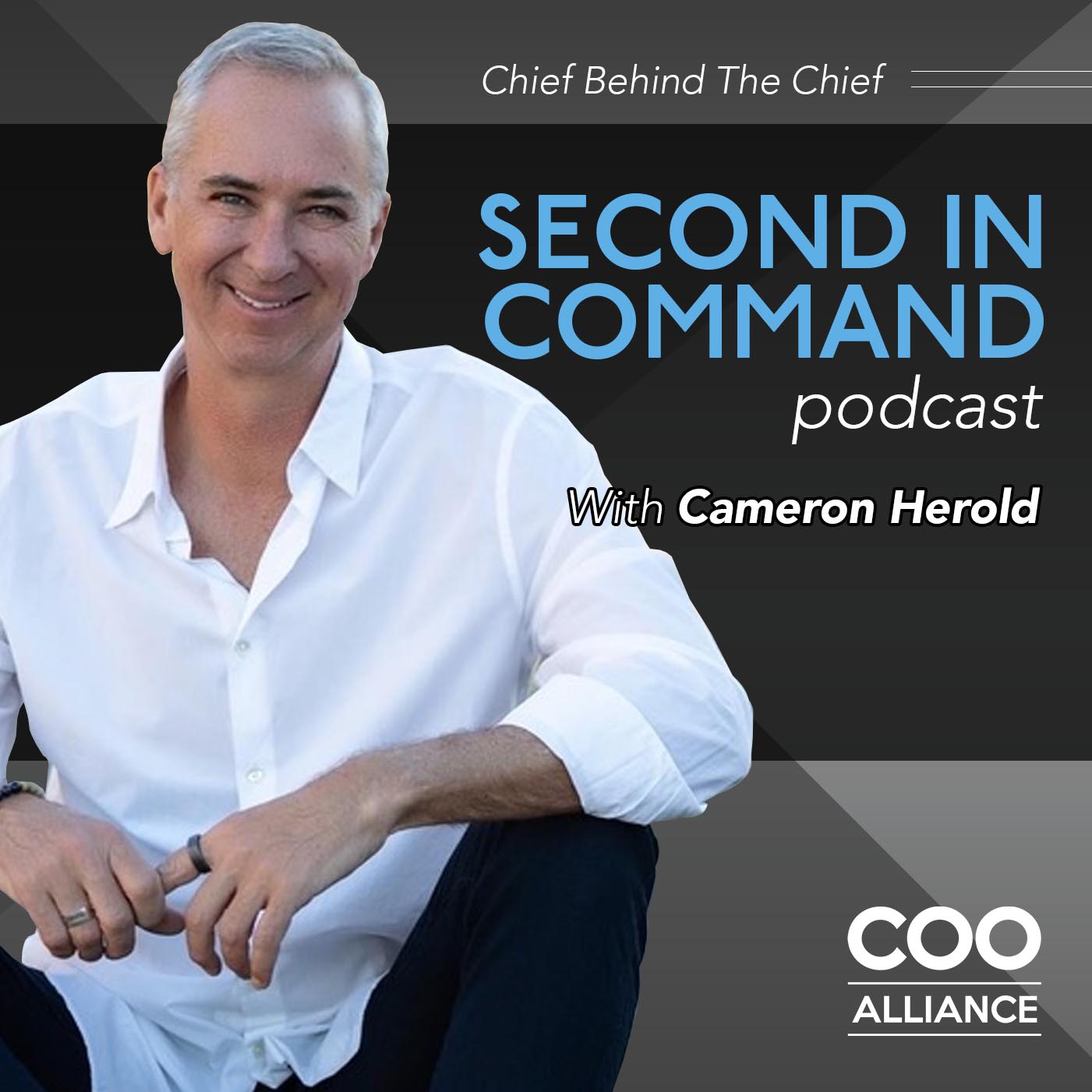
Second in Command: The Chief Behind the Chief with Cameron Herold
Ep. 474 - The Pickle Juice Company Executive Vice President, Filip Keuppens
00:56:06
Loading summary
Transcript77 lines
- [00:00]
Cameron Herald
Hey, it's Cameron Herald, the host of the Second in Command podcast. Before we dive in, there's something you need to know. If you're a coo, VP Operations, or you're in any role where you're the second in command to the CEO, the COO alliance is the place for you. If you're the integrator to the visionary, you're going to want to join us. The COO alliance is the world's leading community for the second in command. We've had over 500 members like you join from 17 countries to grow their skills, connections and confidence. You'll get the tools, friendships, and a 10x guarantee to ensure that you get your money's worth. Go to cooalliance.com to learn more and see if you qualify. You can even book a free call with our team to ask questions. Now, let's jump into this week's episode.
- [00:44]
Philip Few Fins
We want this Pickle Juice. And it's interesting because we now have to spend more time educating people on the fact that there's no such thing as air quote Pickle Juice in the wild. Nobody's out there juicing pickles, right? The stuff in the jar is the brine. So sort of our popularity, if you will, and our science has, I guess, leapfrogged a bit past our brand itself. But really that only affects us in the US market. So it's sort of like a. It's a good problem to have, but kind of a problem nonetheless. So it's, it's been wild. It's humbling to have grown so big that we're now often confused as a category rather than a product. But it's, it's not something we're really going to complain about. It's been awesome to grow from a couple hundred thousand dollars in gross sales to being this like international brand with distribution all over the world.
- [01:44]
Savannah Brewer
Welcome to the Second In Command podcast produced by the COO alliance and brought to you by its founder, Cameron Herald. In the second In Comm podcast, we talk to top COOs who share the insights, strategies and tactics that made them the chief behind the Chief. And now, here's your co host, former COO of a multi eight figure remote company and alumni member of the COO Alliance, Savannah Brewer.
- [02:13]
Philip Few Fins
Today's episode is a super fun one. Our guest name is Philip Few Fins. At the time of recording this episode, he was the executive Vice president of the Pickle Juice company. But now, after being acquired, he is the current CEO. But this conversation is one of my favorites so far. So much fun and his incredible leadership principles and wisdom was absolutely amazing to dive into. He's the CEO of the Pickle Juice Company. They are the only scientifically proven solution to prevent muscle cramps. Despite the name though, there are no pickles involved. So instead, Philip has led the charge in bringing this innovative, research backed product to the market. With a unique blend of science, storytelling and performance. With a background in entertainment, sales and leadership, and USA Club Rugby, Philip blends creativity, strategic thinking and a deep understanding of the athlete's mindset into business. Specifically, in this conversation, we dive into how he markets pickle juice through unexpected expected storytelling, how he builds high performing teams aligned around the mission and his personal journey, managing mindset shifts and imposter syndrome as the company evolves and as he continues to elevate more and more into each new role that he steps into. So if you are interested in the intersection of innovation, leadership, fun, marketing, brand authenticity, this one is a must. Listen. All right, we are here with the current executive vice president of the Pickle Juice Company. Welcome to the show. Philippe.
- [04:01]
Hi. Thanks so much for having me.
- [04:04]
Absolutely. Well, I am really excited about this conversation. We've already had a few minutes here chatting beforehand and we've had some fun conversations. So I'm feeling pretty good about this one.
- [04:15]
Yeah. Well, I hope I deliver.
- [04:17]
It's going to be great. Okay, well, first of all, I'm sure if you heard the intro already, the Pickle Juice Company, it may have piqued your interest, as it did me when I, when I saw who I was going to be talking to today. So let's start with the obvious. What exactly is the Pickle Juice Company?
- [04:34]
Yeah. So the Pickle Juice Company has nothing to do with pickles. Pickle juice is a trade name like Band Aid, Xerox, Kleenex, etcetera, Sharpie, et cetera. We call it that because we developed a proprietary grain of acetic acid that blocks the nerve receptors that cause muscle cramping. It happens that the function ingredients taste a little bit like pickles. So we leaned into it, thinking we had the choice to either call it what it tasted like or what it does. And I figure a bottle of Cramp Stopper 9000, you'd probably be a little reluctant. So we went with pickle juice. And it's interesting because we now have to spend more time educating people on the fact that there's no such thing as air quote, pickle juice. In the wild. Nobody's out there juicing pickles, right? The stuff in the jar is the brine. So Sort of our popularity, if you will, and our science has, I guess, leapfrogged a bit past our brand itself. But really that only affects us in the US market. So it's sort of like a, it's a good problem to have, but kind of a problem nonetheless. So it's, it's been wild. It's humbling to have grown so big that we're now often confused as a category rather than a product. But it's, it's not something we're really going to complain about. It's been awesome to grow from a couple hundred thousand dollars in gross sales to being this like international brand with distribution all over the world.
- [05:59]
Very cool. So to clarify, it's not actually pickles?
- [06:04]
It's not pickles. No pickles are harmed in making this product.
- [06:07]
No pickles are harmed. Okay, so it's. You said it's apple cider vinegar or something?
- [06:12]
No, no, it's a proprietary grain of vinegar. So vinegar, much like alcohol, has a broad range. So on the low end you'll have like apple cider vinegar. On the high end you have glacial acid, which you can't even buy without a commercial license and stuff. But we identified a very proprietary grain and blend that interacts with the exact same nerve receptors that cause muscle cramping. So, okay, we're sort of on the forefront of this like what we're calling hyper functional beverages where these things work within like a minute. It's 100% natural ingredients USD organic certified. So we've kind of took the concept of functional food and bev and moved it to like in interacting internally with the central nervous system and operating in like, rather than a general better for you fashion, like in an acute way. So we're also messing around with vasodilation recovery, things like that. So it's pretty exciting stuff.
- [07:12]
Yeah, amazing. Well, and every time I walk into Sprouts or Whole Foods, there is a different beverage brand that I'm seeing with some sort of different unique blend. But this is probably the most unique that I've heard of. Who's the target market? Who's. Who's buying? Who's buying this?
- [07:34]
Yeah, we're also really fortunate in that regard. I mean we have sort of what we call our like high profile users, which would be like pro athletes and stuff like that. So we're very lucky in that we'll see our product and its retail packaging on TVs all over the place a lot in Australian rugby or footy cricket, but domestically in the NFL, NBA, mlb, it's Pretty wild. I've been in CPG for my whole career and very. It's very rare to see a branded item that's purchased off the shelf just like you and anybody else can buy it being used on in these pro sports games. But so that's kind of our proof of concept, if you will. But really a big portion of our, our consumers are people who get nighttime blood cramps. People get exercise induced cramping. About 50% of the US population suffers from cramps of some sort. And they're all our customers, they're all our demo. And so it's everything from like high level athletes to weekend warriors to outdoor labor people, people who get nighttime leg cramps and then moms who are looking for a more healthy alternative for junior who doesn't want to consume products full of sugar and artificial food coloring and stuff like that. And I'll reluctantly admit that there's probably a niche social consumer as well that may or may not use it with adult beverages.
- [09:11]
I see. Okay, fair. Well, I heard that there's what I read that there is like a 10 to 15x versus like the normal electrolyte powder that you might buy.
- [09:21]
That's right. Yeah. Our products have about 10 to 12 times the amount of electrolytes of common sports drinks, but none of the sugar, artificial ingredients or any of that stuff. That's not good for you.
- [09:32]
Yeah, it's fascinating to me. Like I'll go and I'll see people buying Gatorade for their kids. And it's just the lack of education. I mean, I grew up with gushers and ice cream for breakfast and there was no education around what was actually going into my body and the effects of that. But like Gatorade, it's got all this food coloring, it's illegal in other countries, and that's what we're giving our kids. So I think anyone doing anything in the food and beverage space that is helping more than it's harming, I am all for. So I love this. This is great.
- [10:08]
Thanks.
- [10:09]
Yeah. What about the brand or this role drew you to the company in the first place? Because you've been with them for about a decade and seen a lot, navigated a lot, and I'm sure we're going to get into that. But back in the early days, Pickle Juice company, what was it about that that was like, this is where I'm going.
- [10:25]
I've always been really passionate about branding and unique brands. I've always kind of been driven by challenges and creating things in the marketplace that others haven't really thought of or tried or succeeded with. So part of it was to challenge myself. I always had the good fortune of representing some really, really big brands. I started my career with Kraft Heinz, then I was selling home entertainment DVDs and Blu Rays for Warner Brothers and then 20th Century Fox. So those are some pretty powerful items to sell. And then with this, it was kind of sort of the ground floor. It was a big opportunity. I mean, I think 10 years ago we did less than a million, significantly less than a million dollars in annual gross sales. Didn't really have much of a CPG infrastructure. So it was really cool being part of a project that was just getting going and a really cool concept. I love that we were ahead of where the industry was going as far as healthier trends. Like you said, the consumers just getting more and more aware, more conscious, more educated. So I really felt this brand had a lot of legs for future growth and that was attractive to me.
- [11:42]
Cool. How has your role evolved over the last 10 years to now being executive vice president? What does that look like?
- [11:49]
Yeah, it's. It was really been wild where it started as three partners. Well, two partners and the one had a manufacturing background in the pickle industry. Actually he used to own a pickle factory. And then the other partner was kind of what you traditionally call your, your financial back backer. He made big strategic spending decisions, but at the time was very busy running his other business, which was in telecommunications. So he was involved at the strategic level. And then I was asked to come in and build up their front, what we call front of the house, I guess so the sales and marketing component. So I really started building a basic infrastructure, some simple things like SRPs and UPCs, consistent pricing models, stuff like that, creating distribution infrastructure and then trying to build the brand. So it was a lot of grassroots bootstrapping type stuff where we started partnering with events that aligned with our consumer demographic and built up and scaled from there. And then that kind of evolved into the building a sales and marketing team as we were growing. And then the operations partner retired. By that time I had met some metrics that we put forward for me to become the third partner. Then the operations guy retired. So I took over the day to day as the evp, then brought in an operations team as well. We then built a second facility, vertically integrated all of our manufacturing. And now 10 years later, we're now on the next stage of our evolution, being acquired by a very large private equity firm.
- [13:39]
Yes. We're so excited about this. Okay. There's a few different pieces I would love to dive into from just that alone.
- [13:48]
Let's do it.
- [13:48]
First. When I think about. Okay, was the whole company bootstrapped or did you guys ever take any funding?
- [13:55]
Yeah, it was entirely internally funded. It was self funded by the partner who was running his other business and we didn't really have any external debt at all. And that was pretty unique. We were also able to turn that into becoming profitable very quickly. So we've been running at a profit thus allowing us to reinvest in capex and pay off the internal loans to become self sustaining probably about four or five years now. So about halfway into our brand relaunch we become sort of self sufficient and standing on our on our own enough so that we could reinvest into the organization to maintain our hyper rapid growth.
- [14:40]
Cool. With the type of niche that you're in and just the uniqueness of the brand. What are some of the things that you mentioned? Events. But like were there any other creative marketing, you know? Yeah. What did you guys do to be able to get it to this point when there's so many companies that are trying to get on the shelves? What worked for you guys?
- [15:08]
Yeah, it's kind of like necessity or desperation is the mother of all invention. Right. So we didn't have a robust marketing budget. I mean today still we are operating about 25% lower than the industry average for an emerging company. We have a mid single digit percentage of gross that we use for marketing. So what we did because our product is so unique in that it's immediately efficacious. So within 60 seconds your cramp goes away completely. So what we thought of kind of in the early days was let's find consumers and engage them when they need the product the most. So we started partnering with cycling rallies with ultramarathon running and stuff like that and took elements of the traditional cpg. The mission based and the experiential go to market and kind of squished them all together. So a lot of like mission based and experiential companies are more focused on the D2C distribution infrastructure, whereas we really wanted to focus on a distributor based B2B infrastructure which allowed scaling and growth while getting that like grassroots true testimonial type of consumer. And that led to probably a slower adoption rate at retail. But we also don't get discontinued. I think in the 10 years that we've been here we're now at about 15,000 doors. We'll be at 20,000 doors by the end of the year, and I've only heard of us being discontinued twice. One was where the revenue didn't exceed their sort of marketing funding needs, so we don't do any paid advertising. And the other one was that we. We put it in the wrong section and it just didn't turn. But other than that, we don't see as much attrition as most other companies. So it was really creating a culture and a passion behind the product, having fun with the product, identifying brand ambassadors that were genuine and true, passionate users about the product and believed in what we stood for. So we were careful not to just go with whoever had the most followers. We wanted to find people that aligned with our. Our values, our vision, the values of our customer base. The biggest piece was just being who we want to be, rather than just kind of creating a narrative. We got comfortable with releasing the narrative and acting the part before we started stating the part. And as such, we've been really, really lucky to have a ton of editorial coverage. And when I say a ton, I mean we've had over 500 pieces of editorial coverage just this year alone. And that's in Q1 alone. We had 500 pieces of separate coverage and about 3 billion potential eyeballs on it. So we're getting a lot of really true and genuine exposure. And I think it's because not just our product is unique, but the way we go to market is unique. We use 100% recycled materials. We sort of. You alluded to it earlier. You know, other companies are using what they're allowed to use, and we use what we feel we should use.
- [18:35]
Powerful. I love it. And I'm sure that probably helps with team retention, too. Like how it sounds like there's such a strong focus around the product and really serving people. And like you said, being. I wrote it down. And being who we want to be versus maybe, like, what you think we should make decisions based off of how the market's done it before. But really staying unique to what's important to you guys is really powerful.
- [19:03]
Yeah, we've been really lucky. We have an amazing team, and we don't get any voluntary turnover. It's. And we. We almost like, scare people during the interview process. I'm like, it's like a cult.
- [19:15]
Like, you might get a pickle tattoo on you.
- [19:18]
Cameron Herald
Yeah.
- [19:18]
Philip Few Fins
You'll be identified as the pickle person wherever you go. It's weird. We can't explain it. It's a thing. People will come up to you and they're like, hey, you're the pickle person. That's a thing. You know, we ask everybody in this company to, to go to events and work these events because we think it's important to communic and be in front of our customers. Because at the end of the day, that's who we have to understand. We have to understand our consumers. We have to understand sort of what's going on and not just staring at spreadsheets all day. So that's kind of a unique environment. Right. And I tell people, like, you'll either love working here or you'll hate working here. And there's no in between. Like, if you are genuinely passionate about something, this is a lot of fun. And we do treat everybody like actual human beings and not just cogs in the wheel. But with that, we're really demanding because we have a very sort of positive culture, but it's also very fragile. Like one person could take advantage of it. So we're quite protective of that. If somebody isn't sort of contributing at the same level of everybody else or, you know, sometimes people just want a paycheck and they want to really create a strong delineation between their professional and their personal lives. We tell people, like here, you can't really do that. It's just if you believe in what we believe in and you're, you're part of this whole thing, you don't mind your brand, your personal identity, sort of being associated with this, you'll love it. If you need that firm delineation, you're not going to have fun here.
- [20:51]
I could see that.
- [20:53]
So we try to be self aware.
- [20:54]
Yeah. It sounds though, I feel like I'm getting the impression that if I was to get on a team meeting or kind of go in, like everyone's probably just amped about what you guys are doing because it sounds like, like you said, you're really protecting the culture. And then when you do that on the front end in the hiring process, what's really cool is your team just starts to become your own HR department because a players only want to work with other A players. And so then you start having this whole team that's like, I don't know if like Jane Doe, who just joined the team is really in full alignment. So you have this really big organization that's all flowing on the same principles. Is there anything else in your hiring process besides kind of the conversation around, like, do you want to be the pickle guy on the weekends? Is there anything in that hiring process in terms of the actual system or the flow that's worked really well for you guys and weeding out maybe some of the people that are not the high performers that you're looking for.
- [21:49]
Yeah. I think we hire for culture more than experience. We try to promote from within whenever possible. So we look for ceiling rather than floor. We aren't afraid to take risks on people. I mean, we have one person who went to art school that's about to be heading up a department and that has nothing to do with art school. But she's an incredible leader and incredible talent. Her vision is totally aligned. She's implemented some really, really cool programs. She came up with this whole save the Pickles campaign, which is like we sort of make fun of our completely unique, definitely not ripped off Save the pick campaign that has nothing to do with a certain, you know, chicken fast food restaurant that encouraged people to eat more chicken. And our merch definitely is not ripped off from 80s campaigns. You know, like a pickle with a patrol hat that says only you can save the pickles. Or another one's.
- [22:55]
I saw there's like a Pete and Piper pickle.
- [22:58]
Yeah. Peter and Piper, they, they're the mascots. Their slogan is of their mission statement is that every year millions of pickles sacrifice their lives because careless human beings are drinking their habitat. So save the pickles drink pickled juice, not pickle brine. So that's a lot of fun we have with our sort of differentiation campaign. You know, our, our April 1st left handed pickle press release went over pretty well. Not. It wasn't as funny as the go pickle yourself pickle bath bomb campaign a few years ago where people actually called and tried to order.
- [23:37]
Wow, that's amazing.
- [23:39]
Yeah, we, we tell people here we take our jobs very seriously. We just don't take ourselves very seriously.
- [23:46]
Love it. I mean, this is reminding me of a video from Rory Sutherland that I watched a couple years ago where he just talked about. He actually encourages his team to have like dumb ideas.
- [23:57]
Yeah.
- [23:58]
How wild and creative can you get? Because in most of these, you know, companies that have a wild trajectory or a turning point, there's something that if someone would have brought it to a meeting and said, this is what I think we should do, most people probably were like, that seems like a crazy idea. But you actually roll out some of these wild ideas. It's. It's crazy cool how magic can happen on the other side of it. So I love all of the, the fun, playful marketing techniques you guys are using.
- [24:31]
Yeah. At the end of the day, if you're, if you're going to spend as much time as people spend working. I find you're going to get a lot more out of people if you make it rewarding for them. Right. And if you create an environment that, where they're passionate. One thing really sticks with me in leadership is that people rarely quit over money. They quit over culture, feeling valued, feeling like they have a voice, feeling like they're part of the process. And we try to be really genuine about that. You know, I tell, I say things like, nobody here works for anybody else. We all work for an organization. We just have different roles and different responsibilities. But at the end of the day we're all, we all report to the same boss and that's the company and we need to help each other out. I believe in collaborative environments. I believe in coaching style leadership where our jobs are to make everybody else better at their job, enjoy their job. You know, we, we say we always want to, want you to have at least two projects that are resume worthy going on at any given point in time that you're passionate about. And it's our job that you never use that resume, that you never want to use that resume. So that's the culture we're trying to pursue here.
- [25:50]
Is there a structure that you have for managing your teams and the people under you to keep being in sync with them on the things that are important to them, how they're feeling in their role? Is it weekly meetings? What is your kind of day to day structure for managing your teams?
- [26:08]
Yeah, we have an all hands meeting every, every Monday. And it's funny because especially when people are kind of new to the organization and newer to that meeting, I have to remind them that this is not an accountability meeting because people tend to default to like saying what they're doing. And, and I said, I trust you're spending your time. You don't have to tell me how you're spending your days. Tell me about your wins, tell me about your successes. The, the things you're excited about. Don't tell me like, I don't, this isn't a gotcha culture, right? This is a, you know, let's celebrate each other's successes. And this morning we had one of those things where it's a dialogue and somebody mentioned something and then somebody else chimed in and they contributed to that and they're like, oh, that's a great idea. Let me add that to this. Thanks so much. So that's, that's really what we're trying to, trying to do. And I think it really is about creating a collaborative culture where it feels like people take point on projects that other people contribute to. I'm a, I'm a huge believer in, in delegating and that the more senior the leaders are, the less they should touch the downline. Meaning they should just sort of influence and guide rather than dictate and mandate. Because if you're having to dictate a mandate, you probably went wrong somewhere way before that because that's, that feels to me like corrective, not directive, action. And when you follow your find yourself in corrective action territory, that's on you. That's not on. That's not on the people.
- [27:50]
Cameron Herald
Hey, it's Cameron. I hope you're loving today's episode. Quick question for you. Does your company have a strong leadership training program in place to grow the skills of everyone who manages people? If you want to help yourself and your company grow, get everyone who manages people learning from my invest in your leaders online training program. There are 12 core leadership skills that I cover online and they're all going to really grow. CEOs pay me $78,000 a year to coach them one on one. And now you can all benefit for 1% of what they pay me. These are the same leadership skills that I created and certified everyone in at 1-800-got junk when I was there as COO. Go to investinyourleaders.com today and use promo code podcast10 before the end of the month to get 10% off each manager you sign up. Now back to the show. Yes, I have a group coaching program for CEOs. And the beauty of my group coaching calls is you actually get to ask me questions on every call. You're not just listening to other CEOs. Drop me an email cameronameronherald.com for more information.
- [29:04]
Philip Few Fins
Put that in the downline.
- [29:06]
Where did you learn some of the your leadership principles? Was that before you came into this company and I know you worked for some pretty big organizations or have there been leadership events you've gone to books that you're a big fan of? What's helped you create? Or has it just been, you know, by. What's the term? Trial and fire?
- [29:27]
You know, error and failure?
- [29:29]
Yeah, something like that.
- [29:31]
So, I mean, there's certainly a piece of that as well. But I think it's two things. One, I have a background in sports playing and coaching. And the graduate program I went to at the Rochester Institute of Technology was an executive leadership course, which was sort of like an MBA that focuses on the people rather than the widgets and that gave me some insight early on on how to look at things. And then really it boiled down to how I wanted to. How I felt when I was being managed, what I felt like was poorly versus how I felt like when I was being managed well. And the sort of consistent element in all of that was that when I felt valued and treated like an equal and my ideas mattered, where it didn't feel hierarchical, that's when I felt I was at my best, that's when I performed the best. That's when I was happiest versus the sort of 80s assertive style talk down to you leader or the people that would just throw money at problems. And even. And that includes employee contentment. Right. I can't tell you how many times I've seen people be like, they wait for somebody to be on the verge of quitting or putting in their notice and then they throw money at them. And I go, you're not. Say you're not making that person happier. You're paying them to shut up. You're not paying. You're like, money doesn't fix the problem. Money just shuts the person up because you've shifted their motivation, right? They're like, okay, you've paid for my silence, but you haven't fixed the problem. So I would rather. Obviously we want to compensate people fairly, but I don't want to hide problems because if they're there, let's uncover them, let's fix them. Sometimes they're our fault. Sometimes it's just not a good fit. You know, we don't like to get to the point where we're being exploited or people taking advantage of us. And I think if you hire the right people and seek that out, I mean, we would rather have a, A wreck, stay open for a year than put the wrong person in that. Which is probably why we work more than we want to.
- [31:53]
But, yeah, I, I understand. You know, when you're growing really, really fast, it's that balance of, well, we need someone and we need the right person. There's something you said earlier that maybe. Remember this quote? I think I've shared it on here before, but it's, it's a, it's, it feels a little intense, but B, players are like cancer cells to the body and they must be removed because otherwise it just, it goes into the fabric of the company and the conversations that start happening behind this door and this door. And it's. It's wild how in my own experience, I had one team where I was like, what has happened to the culture of this team, like something is off here. And once I was able to identify the kind of root cause which was coming from one person removing that, it was wild how quickly that team started performing again. Being able to like protect the, the cleanliness of the energy. Yeah, yeah.
- [32:54]
And that's. And we found that too because we seek people that are collaborative and empathetic, which means that those people do and should have a very difficult time removing those things and making those decisions. And, and that should be the worst part of their job. That should be part of the 20% that you don't like. Right. Because I think it was Theo Epstein who said that the secrets of success and managing up is identify the 20% of your boss's job that he or she doesn't like and do that for them. And it's true and it works really well. But the senior leadership team here has identified exactly what you're talking about because we try to sort of save, if you will, somebody too long and then other damage is done. And we've seen there's a prime example that we lost a really good person because they were being sort of brought onboarded by one of these people you describe. So they're just getting a very bad energy. And these people who are just kind of checked out, you know, and they're, they're not really into it, they're not focused, whatever it is that's distracting them or their, their mindset shifted because, you know, during their interview, everybody, everybody wants to feel of themselves as an a player and somebody that wants to embrace this culture because they also see the energy and they see us out in public and they're like, wow, that company's really cool. And they want to believe that to be true. And they're not. I don't think they're being misleading in the interview because I think everybody want views out of themselves and it's very hard to be self aware enough to say like, yeah, I'm a clock puncher and, and that's okay. There are places for that. This ain't that.
- [34:46]
Yeah, yeah. And I think communicating that up front is super important because you're right there. And I do, I do think this is in, in my experience with the company that I was running, there was a point where some of those roles, it was a little bit more, it actually was in the best interest of the company to happy people that were, yes, aligned on core values, but did want a little bit more of the check in, check out the type of position. And that was just like once we got to a certain size. There are roles that, because what I found was like, when we were smaller, bringing on all these a players and people who want to work really hard, it's because they want to grow, they, they want more money, they want a different title, they want more responsibility. But then you get to this point where you kind of have these certain positions that are a little bit more structured, they're not as big in variety, and you need people who can kind of do the more systematic routine work every day and be okay. And that's just what they want in their life. And I think that that's also super valuable. But it depends on the needs of the company and where you're at. And if you guys are in hypergrowth or any company that's listening, if you're in hyper growth, bringing in people who want that clock in, clock out job and not communicating up front that you're going to need to be on, you know, for the, the startup life for a little bit, you know, it can cause issues if you don't have the right team alignment.
- [36:09]
You're. Yeah, you're absolutely right. And, and, and that's true. I don't, I don't want to discount to the, the need for stability. Right. Because getting all those hungry, ambitious people gets difficult when you can't create the jobs for them anymore. And at some point you can't create those jobs. And we're getting closer to being there as we grow. And we are probably at a point now where we can't exclusively promote from within because we need certain skill sets as the level of our complexity increases. And sometimes we have to be really honest with ourselves and the people that are ambitious for certain roles and recognize that if we put them in certain roles, even though they want them, we'd be setting them up to fail. And we have a responsibility as well to make sure that we don't do that to people. Because if somebody's like, oh, I want to be an X, Y or Z and they think they, that job is based on the responsibility of it today. But people, you know, some of us that have worked at really big companies, like, it's, it gets a lot more complicated really quick.
- [37:21]
Yeah, totally. Have you experienced. Or maybe a different question would be for someone that's in a position right now of leadership where they maybe have a team member who wants to grow and they're feeling like, man, I don't know, if we don't open up this position, are they gonna stay? They're getting kind of antsy. But you Just know they're not ready for it. Any advice on how to best lead a person in that scenario where you're telling them you're not ready, but you also don't want to lose them?
- [37:51]
I think honesty and transparency is the best remedy there. I think it's, it's telling them why and what we think and giving them a pathway to get there. And some of them won't, won't accept that. And then you have to let them pursue that dream elsewhere. And I think, and that's okay, but if they're not ready, they're not ready. And I think we need to not get emotionally attached to certain people that have kind of been here through a certain thing because when you're smaller, you do, you do bond on a more personal level with people and, and you're aware of their dreams and you know what their family stuff's going on. You kind of know a lot of stuff. And you know, we had somebody that was in that situation probably a year and a half ago and we worked with that person and, and moved change roles based on their, their, their desires and their ambitions. And then they got to a point where they wanted more and were like, hey, you freeze received a lot of compensation increases. We've given you every change in responsibility that you've wanted. The role you want just doesn't exist yet. But if you wait, it will. We just don't know when that time is. And their timeline and our timeline didn't align unfortunately, so they, they chose to go somewhere else and, and that's okay. But most of the time I find that people can be very, very patient as long as you're honest with them. And that requires having, having established credibility with the downline and, and being a genuine person with them and, and treating them the way they want to be treated. So you can't just do that if you're sort of a micromanaging jerk all the time. So you have to build that credibility to be able to do that. But yeah, hyper transparency and honesty always works better than any other, any other approach, in my opinion.
- [39:57]
Awesome. Thanks for sharing that. I'd love to take a little bit of a different, a different angle in terms of your kind of day to day outside of managing people. We talked a good bit about culture and people. What about like the long term thinking especially, you know, we've had a little bit of conversation around you guys being in the acquisition process and so being able to be in the weeds. What has that balance been like for you? Of sounds like you're really strong in, in leadership and in culture but also the long term thinking and being in the weeds. How do you balance both of those things?
- [40:35]
Yeah, it's, it's difficult right, because when we can get caught working the business and rather than working on the business a lot and we sometimes have to make a conscious decision to sort of step away from the fires if you will and, and really think about what's the future of the organization look like because we have that responsibility to our staff, to the brand, to the consumers even. We have forecasted out about six years already of where we want to be. That's, it's our, our forecasts are living working documents that are shared by all the department heads. We look at them weekly. We kind of keep track of where we are, where we're going. The good news is we're in an industry that has really long selling cycles, especially in like large scale cpg. So we are, we don't have a choice but to look like two years ahead. So that helps a little bit. We're not like transactional contract based so it allows us to kind of look further and further and we know that to hit the numbers this year. That pipeline started two years ago so it's sort of easy to see what's going on. And staying on top of that we also have a really robust like third party partnership with in a lot of spaces that creates that underlying stability. So that day to day is being handled like by brokers, by agencies, by a lot of other people. Because if you have to recruit, hire and train, you can't really deploy your assets as quickly. So most of the folks here are managing external teams that are for the time being contracted, whether it's on the retail broker side or the PR side or you know, the event side or whatever.
- [42:29]
Mm, awesome. And one of the, the differences that's kind of shifting for you is at the time of this recording we're kind of before the acquisition time and so things are going to be shifting for you. One of the things that Cameron said at his CO lines event that I went to a few years ago, everyone's in a room and he asked if you've ever felt or if you currently feel like an imposter in your position, raise your hand. And everyone raised their hand. I don't know, are you in the CO alliance by any chance?
- [43:02]
Well, I do have a massive case of imposter syndrome. So I actually have a big joke about that. I said, you know, I believe that it's very healthy to be self aware and work on ourselves. And I think the old way of thinking of, you know, never admit fall, show no fear, project strength, that's nonsense. I think people who have to mask their weaknesses are weaker than the people who are self aware and able to present who they really are. Because at the end of the day, we're all the same flawed human beings. I mean, let's be honest here. And if we're not willing to admit that, we're not willing to allow our company and ourself to grow. So I kind of joke like, yeah, I'm very self aware and I always try to improve on certain aspects except my imposter syndrome, because that paranoia is kind of driven my success. So we're going to leave that in place till we retire.
- [43:54]
Yeah, I think it just shows that you're, you're playing a big game and you're stretching into areas that feel uncomfy. Like if you're, if you're not feeling any imposter syndrome feels like, okay, there might be just some disillusionment happening and, or like you should be maybe stepping into something that feels a little bit more stretchy. So on that note, are you open to sharing anything, like what is currently in Philippe's mind about maybe roadblocks or limiting beliefs going into this next chapter? Things that you're aware of that you're wanting to work on?
- [44:27]
Yeah, I think for most of my career I was being, I was very comfortable being like a lieutenant because I am sort of a change agent minded person. I do like to like move fast and aggressively in spaces. I like to challenge myself, the boundaries of sort of what's acceptable, obviously in an ethical and moral way. But it's, I've always been comfortable doing that with sort of some kind of cloud cover, if you will, and to not be able to pivot away from decisions when you're going from sort of a lieutenant role into, you know, leading an organization and reporting to an external board where you're personally accountable to those decisions. And you can't just sort of pivot or be protected by somebody above you, that's a big weight. And I think the people that have success in that space recognize that as a big weight. And I think as long as we maintain that our obligation is to the long term sustainability of the organization and to protect its assets, including probably first and foremost, the people that are contributing to the success and realizing that they don't work for us, we work for them and we work for the brand. And as long as we keep that in mind, then I think we're okay. I also, I always treat the next title, next job as the starting line, not the finish line. And that's another piece of advice I would give people. I've seen the leaders I've seen fail are usually the ones that get into a leadership role and believe that now they can do less work. And they sort of over delegate and, and they're very, they kind of stop contributing themselves and, and it's obvious. And I think, you know, I tell people I'm very out output centric when it comes to my downline, but when it comes to myself, I want to make sure that I'm doing as much or more than anybody else, that my input level of contribution meets or exceeds what I'm asking anybody else to do all the time. And I think, I don't know, that's served me pretty well and hopefully it continues to do so.
- [46:53]
Yes, I love that and I agree. I've had actually the company I was alluding to that I worked with a couple years ago, how I came into the COO role is we had a head of operations. We ended up having to let her go. And then we brought in a coo, a title coo, like a guy who had had COO experience, had done this and that and had the whole resume. And we bring him in and I'm watching, I'm just observing and I'm hearing the things from the team members about what's happening. And it was just a lot of talk about what needed to get done and my team being told kind of what to do, but nothing was actually getting done. And there was a lot of confusion. And our experience was he's not willing to go back in the weeds because it's like, oh, well, I'm, I'm coo and that's what we're being hired for. And we ended up moving him out. And that's how I, I ended up. I was already swamped with my departments, but I took on a whole other department and that's how I elevated into the COO position. But it was just that like you, you gotta be willing. Even now I do some fractional CO work and I go in and it's this, it's the, the balance of kind of consulting and leading people and what are the things that just, I get to put my hands back in, in the weeds and, and allow myself to let go of. I shouldn't be doing this because just, I mean, that's something that I experience. Like, man, I don't know, like, I can't believe I'm doing this again, but here I am, you know, typing in a Google Google sheet and making zaps and I'm like, we're starting. But there's so much value in that of one. Like you get to see what's really going on when you're willing to go in and it shows team, hey, I'm willing to do it. And if I'm going to do it at this level, you know, your, your team that's in those roles under support and they step into that. So yeah, I have my own very personal experience with that. All that being said, I agree.
- [48:54]
I have a very direct example of when I first experienced that. I was probably, it was my first leadership experience. I was, I was in the US army, promoted to sergeant at a very, very young age. I was, I was like 20 when I got promoted to essentially a squad leader. And I had a soldier in my squad that had served in Vietnam and I'm not as old as that statement would imply. He had just been in there forever and you know, being candid, I think he was probably being protected a little bit because he saw a lot of trauma in the past. But that's not the point. The point is that they were very uncomfortable reporting to this like 20 year old punk kid, if you will. And then I remember this one specific exercise and we're putting up these big huge burlap tents. I don't know if you've seen these army tents. They're big, they're cumbersome, they're bulky. And I was like, hey guys, we need to put this tent up. And they're just kind of like, no. And so I crawled under this thing and there's this huge wooden stake that holds up the middle of it. And I just kind of put this thing up on myself and it was wild because by the time I could see everybody else had come around and just started working, not a word was exchanged. And that moment really taught me a lot about leading from the front and getting your hands in the weeds. And it also reminds you of what they're doing, what those people are doing. And the insight you get from being in the weeds is often so valuable when you get out of them to direct people. A lot of process improvement stuff I've learned is from doing a job, filling in for somebody, and especially on the operations side, where you identify an efficiency because you're doing a task and that person may not think there's another way to do that task because they're more task centric rather than purpose. Centric because they weren't part of the strategic decision that led to that task. You're like, hey, I could save this person X amount of time if we just do this. Well, there's no way I would know that unless I learned it. So I'm all for staying in the weeds. Well, not staying there, but getting in there once in a while.
- [51:19]
Yeah, for sure. Well, and, and just that I feel like we could. That could be a whole separate episode on itself is in terms of processes as well. Like, I've heard a few different ways of doing it, but one is like, if you're going to go on vacation, that's what I personally do with my teams. If you're going to go on vacation, all of your SOPs need to be completely updated because if anyone needs to come into your role, we need to be able to see actually what you're doing. But it's wild how when people start stepping into other people's positions, the collaboration that happens. The other thing that we do on our monthly. So any company that I'm stepping into, we do a monthly all hands on deck that's just focused on what works last month and what didn't work, what worked, what didn't work, and future forecasting for the next month. And we talk department by department what the plan is. And then there's this space where I open up. Does anyone have any skills or experience in any of these things that we're doing that we may not know about? And what you'll find is people will start stepping up. Like, if you're, you know, we're going to start promoting on LinkedIn, you may have someone that's like, oh, I actually did some LinkedIn marketing at this other company I was at, and you would have no idea. Unless you're willing to kind of shift over some of the responsibilities and have that collaboration be in the weeds of other departments? See, I think there's a lot of truth there and certainly something that's really valuable. Wrapping all of this together. There's a lot that we said you're kind of shifting and new responsibility that's coming your way. What for you in the next 90 days are you most excited about? Give us maybe one thing business, one thing personal.
- [52:56]
What is that for you professionally? I mean, pivoting this company into kind of a more formally structured organization that's, that's aligned with what a traditional org would look like with more defined metrics, if you will. That's really exciting to me. It sort of feels like validating our efforts of the past 10 years that another group is coming in and letting us take this thing to the next level. That's awesome. I was already warned by the person who's going to chair the new board that the right before close and the first 45 days after are the most angst inducing days ever. But after that becomes a lot of fun. So I'm really looking forward to that challenge, looking forward to doing my best to deliver meet those expectations. And I guess in my personal life I'm very involved in rugby as a coach and administrator and we just won our first playoff game of the season last weekend and so we go play the next round of the playoffs and it's really cool of watching these men that I'm coaching and these guys all played in college. It's pretty high level and just kind of. I saw this photo last weekend that after the game that they won, that a lot of people thought they were supposed to lose and just the sheer joy in all of their faces was amazing. And to be able to be a part of that in a space where the motivation is nothing more than sharing joy and success and being part of a goal, that's a lot of fun. So I want to see how well we do that. So yeah, there's two things and I'm trying to learn how to sail today and that's having more questionable success rates.
- [54:57]
More how to sail? Yeah, like the boat behind you. Oh, amazing.
- [55:03]
Yeah, not the boat behind me, a much, much smaller one.
- [55:08]
Because you're in Dall. Where, where do you do that?
- [55:10]
I happen to live right by White Rock Lake, so I have a little day sailboat on the lake that I'm trying to learn how to navigate better.
- [55:18]
Awesome. Well, I believe in you. You got this. And thanks so much for sharing all of your amazing wisdom today. This was amazing. So thank you so much for being on the show.
- [55:26]
Thanks Stefana.
- [55:30]
Savannah Brewer
You've been listening to Second in Command, brought to you by COO Alignment founder Cameron Herald. If you enjoyed this episode, please be sure to like share and subscribe to us on Apple Podcasts, Spotify and our other podcast streaming platforms. For more best practices from industry leading COOs, visit COOAlliance.com.