← Second in Command: The Chief Behind the Chief with Cameron Herold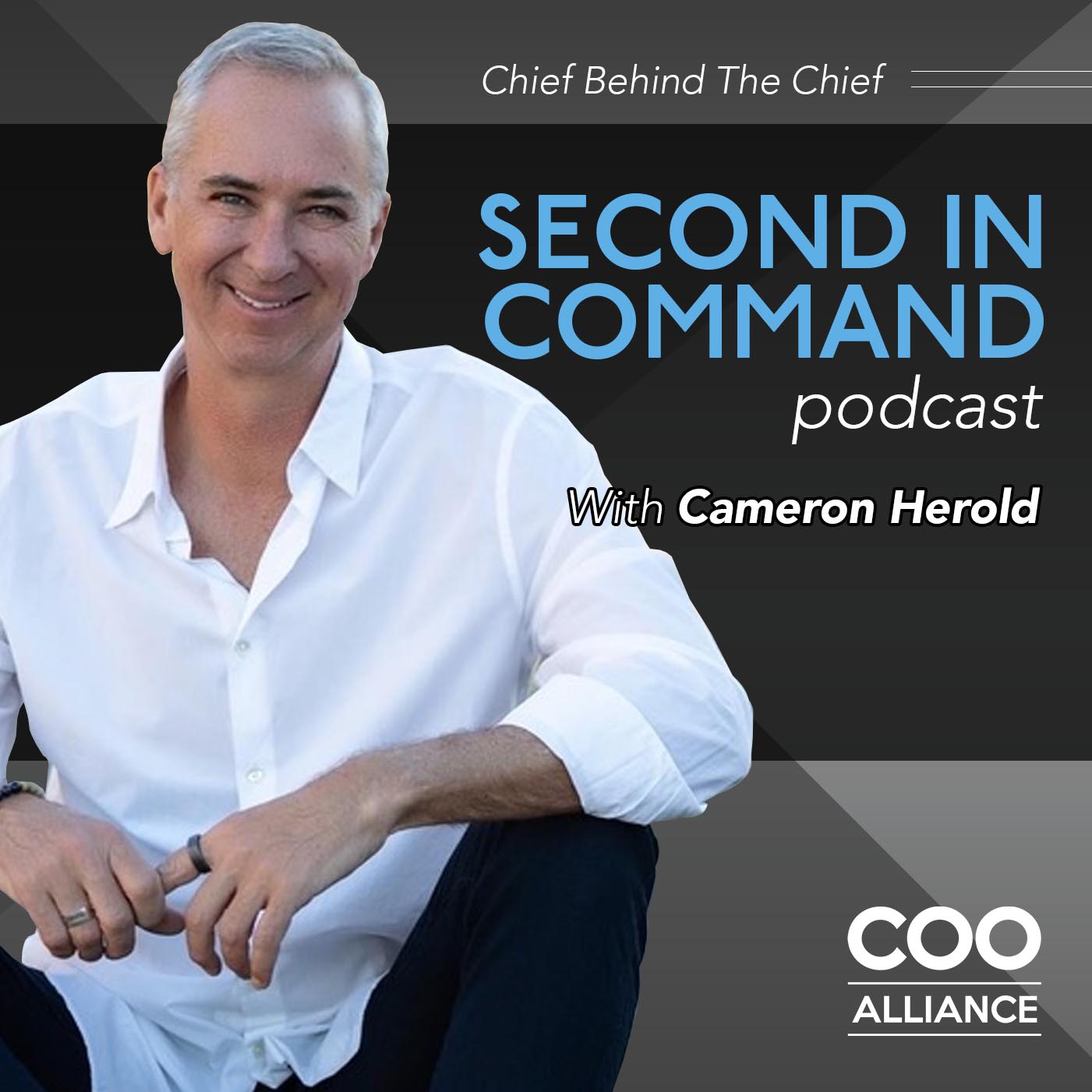
Second in Command: The Chief Behind the Chief with Cameron Herold
Ep. 478 - Blaze PR President and Lead Strategist, Matthew Kovacs
00:47:12
Loading summary
Transcript74 lines
- [00:00]
Cameron Herold
Hey, it's Cameron Herald, the host of the Second In Command podcast. Before we dive in, there's something you need to know. If you're a coo, VP Operations, or you're in any role where you're the second in command to the CEO, the COO alliance is the place for you. If you're the integrator to the visionary, you're going to want to join us. The COO alliance is the world's leading community for the second in command. We've had over 500 members like you join from 17 countries to grow their skills, connections and confidence. You'll get the tools, friendships, and a 10x guarantee to ensure that you get your money's worth. Go to cooalliance.com to learn more and see if you qualify. You can even book a free call with our team to ask questions. Now, let's jump into this week's episode.
- [00:44]
Matthew Kovacs
The other thing we do, and I think you touched on it, but it's really the media training, I think, is really important as well. And we did, we just said one last week where it's getting broader now, where it's not just their spokesperson or not like the CEO and a spokesperson. They brought in sales teams, they brought in other people to be experienced about it, to understand everyone has a voice and everyone. You know, you might be talking to a guy on the sales floor that's selling your product. You should sound just like, you know, in your own words what the CEO is saying. You know, you shouldn't be making up things or trying to, you know, buddy up to someone like, you want to make sure the story really carries on the sales floor, is going to speak to a customer.
- [01:25]
Cameron Herold
Welcome to the Second in Command podcast, produced by the the COO alliance and brought to you by its founder, Cameron Herold. In the Second In Command podcast, we Talk to top COOs who share the insights, strategies and tactics that made them the chief behind the chief. And now here's your host, Cameron Herold.
- [01:54]
Matthew Kovacs
All right, we've got a great episode with you today. We have Blaze PR's president, Matthew Kovacs as the president and lead strategist at Blaze pr, Matt is focused on partnering with lifestyle brands, consumer packaged goods companies that are ready to elevate their market presence and stand out from the competition. Blaze PR is dedicated to uncovering and amplifying each of their brand's most compelling stories, delivering it with precision to key influencers and audiences that drive lasting success. They've worked behind the scenes with a bunch of brands that have had Huge exits. Some of their clients they've actually done PR for for up to 14 years. He has got a huge boutique agency, values, personal strategic approaches. He puts an emphasis on real strategy and putting that back into public relations, crafting great campaigns and then also teaching the clients how to actually be media ready, how to work with the media and how to leverage the press coverage that you're getting. You'll love this episode. You can also watch all of our episodes on our Second in Command podcast YouTube channel. You can can listen to us on Spotify, Apple podcasts, and anywhere that you devour content, this will be one that you'll want to share. We'll see you on the inside. So, Matt, welcome to the Second In Command podcast.
- [03:08]
Thanks for having me. I'm excited to talk to you.
- [03:09]
Yeah, very much looking forward to this. I have got a fairly broad background in pr. I landed my first press about myself when I was 19 years old. I was running a, a house painting company up in Canada and called the newspaper one day and about a half hour later a reporter was standing at a job site taking pictures and writing a story. I'm like, wow, it's so easy to get press. And, and all of my years in building all the companies, I found it very easy to get press. And I'm amazed at the number of companies out there that don't understand it. But then at some point it also gets complicated. Can you walk us through kind of what Blaze PR does, the kind of companies you work with and, and how you uncomplicate it? These types of brands?
- [03:53]
Yeah, I think really how we look at it, we're, you know, lifestyle agencies. We work with a number of brands through different categories. So it could be beverages, cpg, retail, home builders. You know, it really is something that we pride ourselves on that we're not a linear shop, you know, only restaurants and you only know like those 20 media. And that's it. We're much broader and I think that the value proposition for clients is that they're getting, you know, more thoughtful and strategic approach to pr. So that's your point. The business reporter can come out to a job site and see it and film it and talk about it. You know, you could have. Your trades are important. So we make sure that, you know, we're growing your, you know, that expert positioning and thought leadership in that way. And I think there are, you know, how we try and differentiate. There are a number of shops that they are very linear. We only do restaurants. When we talk to restaurants, it's all we care about. And it feels like, you know, that can be very limiting in your approach, your types of clients, types of media. I think we look at it too is our jobs is to also educate to your point is teach the clients a lot of the elements as to how it works. Because yeah, they think in many ways, you know, they'll think, you know, the CEO said we have to hire a PR agency. I don't know what to do now. Like I hired you and I like you, but like what do we do? So we build our strategic plans and timelines and really try and walk clients through the process as well as what assets they have. So do they have a press kit? Do they have, you know, information? What is their timelines as well, you know, what are their key trade shows, what are their key times a year, you know, they have launches happening. So all these things we try and help the internal team to understand what can be a PR moment and what could really help them as well. And I think that's where we've had success being that partner and that really extension of the team staff to really look at it from that perspective of this is what PR can do for you.
- [05:35]
I'm going to ask you a question in a second about, you know, teaching your clients to be PR ready so that they're ready for that interview, whether it's TV or broadcast or what it is. But because there's a huge rabbit hole we can go down there. But I want you to talk to me a little bit about. You mentioned the strategic side of pr. Can you speak to what that means as it relates to, you know, where PR fits with marketing and sales and I guess your whole and even recruiting culture outside of the business too.
- [06:01]
I think what's interesting is as you look at how the economy is, the pendulum's shifting a little bit more to pr. It's more cost effective, it's more you can do elements around it versus the budgets and the elements around, be it traditional ads, tv, all those elements. So I think for us, how we really look at it from a strategy standpoint, we come on board, we do a really intense onboarding, spend a couple days either at the companies really understand what they're doing and what the key people that will be dealing with, what their roles are. So we understand how the internal workings are. Then we do a thing called the media perception audit where we steal from our parent company on the things they do from a with focused interviews. So we flip the script on media and we interview media. We have a series of questions that the client approves. We interview the media to understand, you know, because they're the gatekeepers. They're getting spammed and pitched and hit up all the time. So we want to know what stories are you working on, what drives your interest? What do you want to work on? You know, what are things that we can come to the table. We may or may not tell them the client behind it, but, you know, it's a good way for them to have it. It really in many ways breaks down the walls of defense of the reporter. They enjoy having the chance to talk, and we compensate for their time. These days, an Amazon gift card goes a long way and it's a way for them to tell us information we need. Now, it's a little bit of a Trojan horse because we're going to be going back to them in a few months anyway pitching them. But they really, they enjoy the process and many of them want to have, hey, can I see the results? I'd love to hear what other people think. As you walk them through it, they're really intrigued by it. The natural journalists that are really, you know, with the capital J that really are into it. And then from that standpoint, we're able to go back to our client and say, okay, you know, you're in the bubble. Here's what you think your brand is, here's what you think consumers, you know, need to know or you're trying to achieve. Here's what the reporters are telling us. And these are the gatekeepers. These are the people from TV producers, you know, radio station hosts, whatever daily, daily print people. It could be, you know, in their trades. It's a good variety. You get goals between 20 and 30 is a good sample size. You know, it is a qualitative approach. Should we look at it and then from that standpoint, we have, you know, our download, we have our plan, we have our timeline, and then we have this data. So it's a way that we look at it from a strategic standpoint versus there's other, you know, agencies. Obviously they're just brain pray they just pitch publicist name here. Hey, we got this. It's more about, you know, how are we helping to build those narratives for the client to understand. Okay, this is cool. We're in the right places. We're showing up and so much of it too. To your point about the social side, it's content that becomes part of that currency in LinkedIn. And then, you know, not only your brand LinkedIn, but then the personal LinkedIn and they're able to show this in a way. Then in the past the interview might happen and they might get like a nice little splash and everyone claps and everyone feels good and pats each other's back and then it's like, what's next? But you know, the LinkedIn and even their, you know, for some of it it could be on the, you know, the Instagram or Facebook or whatever, but really it's how they want to promote in that universe because so much of it is the home building client. Well, they don't care. Yes, they want to get, sell more homes, but they want to reach bankers, they want to reach VC people. So that's how you're going to get them through LinkedIn.
- [09:05]
Totally.
- [09:06]
The CPG people, they want to talk to the retailers, the buyers and that's the way, you know, on LinkedIn so you're able to tag people. And so yeah, that's what we've really helped clients understand that. And especially when we start a brand, we always audit their socials. But it's always, it's funny when you see someone on their LinkedIn for their company page. Their last post was like eight months ago. And like, guys, this is. And they have like 20,000 followers.
- [09:28]
I'm like, this is missing it.
- [09:29]
Valuable. Yeah. You need to be posting here.
- [09:31]
Yeah. I'm going to ask you about this called. I called it the Digital Trifecta. I wrote a book called Free PR about five, six years ago. And when we were building one, 800, got junk. You know, we landed 5,200 stories about our company in six years. And that was prior to Facebook launching. So we didn't have anywhere to share the links. We didn't have any social media to share them on. So we literally got a story and then it was like, well, let's go get another story. But now it's like you get the story, you link it to your press page, you share it on social and maybe you drive traffic to it. So it's about your earned media, your own media and your paid media and the convergence of those. Do you work with clients around that type of strategy too, where you're helping them place it in socials or training them to. Or do you take that over as a, I guess as a, a product or a service that you provide companies.
- [10:18]
We don't do social. So that's something that we just decided, you know, there's better firms and better people that can devote the time to it. I think we look at helping to build up the content and we work with the Social teams to understand because they're looking at, okay, if it's a product, you know, I have a product in the wild, I have a photo, I'm at retail, here's a beautiful person holding it. But we talk about, you know, the abilities with these articles and be able to, you know, from the brand building standpoint, be able to utilize it. And not that you're posting that all the time because consumers at the end of the day are. They'll care maybe once, but they're not going to want to see all your articles. But it's ways that we can work with them and capitalize in those areas so that they're making sure that they're using them and utilizing them in a way and even, even take in their layer in their newsletter. So many of the newsletters now, you know, they're running out of stories or like it looks like the same story from three years ago. Yeah, talk about it, interview the reporter about what they thought about it. Like, there's ways to. These connections we make and we talk about it too. It's not just one and done. Hey, the reporter came to your facility. They toured everything. They did a great cover story. But that's. You have an ally now. You spend a whole day with someone, don't just discard them, you know, reach out to them, send them other articles. Hey, look, thank you again. We got here as well. There's ways to build off of that and build that connection. And with the social teams, start following the reporters like their stories do that because you want to stay top of mind because you had a good experience. And those are things just some of it's the human nature part, I think. So many people, when they get caught in their positions, they're so just in that bubble, in that, you know, the whatever the blinders of, okay, I'm going to post today, I'm going to post tomorrow. I can look at this. I like these. But think about it like, okay, I met, you know, this reporter, Sally Smith. She came, we hung out all day. What can I do to maintain that relationship? And some of that I think gets lost.
- [12:00]
You know, in the old days, I guess PR firms used to tell the clients it's all about the relationships. But at some point you only have so many relationships if you're going to have a client for a long period of time, that then it becomes understanding the journalists, as you mentioned, and connecting with them and knowing what they want to write about or cover so that you can then position your story for them. And it is sometimes A bit of the broad outreach, not the spray and pray. I agree that isn't, you know, as valuable, but can you speak to how it is not as much about the relationships and it is about understanding how to open the doors and get in the doors or the, the balance, I guess, of those two things.
- [12:37]
Yeah, I think the element and to your point, when we first meet them, it's, let's hear what your story is or what do you think your story is from the client standpoint. And then with our audit and then our analysis, we come back and say, okay, here's the story, but here's how we would refine it and really be able to tell and make it broader so that we're not just in these silos of different media. And then also understanding as much as some clients will they open the Komodo and tell you everything. Some you have to really pull from. But it's a way to understand what is their roadmap, where do they see their brand in three to five years? Because that helps us to understand what types of stories and where we need to bring this to life. And that's an element that again, from the CEO's vision. And maybe it gets down to the, you know, the cmo, but eventually down to that maybe the comms person that we're dealing with. We really try and incorporate all these elements and then verify because, you know, we want to make sure we're going down that path. The other thing we do, and I think you touched on it, but it's really the media training, I think is really important as well. And we did, we just did one last week where it's getting broader now where it's not just their spokesperson or not like the CEO and a spokesperson. They brought in sales teams, they brought in other people to be experienced about it, to understand everyone has a voice and everyone. You might be talking to a guy on the sales floor that's selling your product, you should sound just like, you know, in your own words, what the CEO is saying. You know, you shouldn't be making up things or trying to, you know, buddy up to someone. Like, you want to make sure the story really carries on the sales floor is going to speak to a customer.
- [14:05]
In a sound bite story.
- [14:06]
Yeah, it's going to go in a weird way. So I think those are important elements. And when we do that media training, what's interesting, that's the chance where the CEOs are answering questions and then they start to talk about more of a vision, a brand and elements where maybe that doesn't get carried through to the whole team on a regular basis. So I think those are things that we really try and carry through so that we can tap into different relationships. It helps us to build new ones for the brand. And so much of the media now, it's sad. Newspapers are like pamphlets now. They're barely, you know, the reporters are all freelance or they're moving around or they're starting their own blogs or whatever. So we really want to make sure, okay, we're following these people in a way that's valuable, and we're giving them information if it's a way for them to help build, you know, build their stories if they need to sell stories out, you know, freelancing. So it's an important factor of what we do.
- [14:51]
Yeah, it's interesting. I think there's so much more media out there now that companies need to remember. I always say that landing five stories about your company, whether it's two blogs and two magazines and one TV episode, that's like getting five logs. You know, you've got five logs just sitting in a pile. You got to light those logs on fire, and then when those logs are on fire, then you got to pour gas on it. And I think so often companies are chasing the next story, the next story. You know, even when we got 1, 800, got junk on Oprah, that moved the needle for four days. But talking about the fact that we were on Oprah for 22 years, mentioning it to all the other media outlets we spoke to for the last 22 years, that's what's really moved the needle. So is that part of. Can you give me some specific tips that you would give, say, an entrepreneur or a CEO or a leader who's talking to the media? What would two or three things be that you would talk to them about that, you know, most people either miss out on or maybe are the critical few things.
- [15:50]
Yeah, I think, you know, when we have stories that get secured, you know, we just had. Our homebuilder client is going through it. They just announced a new expansion. So that was a big, you know, we had media out, we did the shovel, we did all the stuff you do. But then the CEO is used to thinking, okay, what's my next development? What's my next element? And we talked about, no, now's the time to really capitalize on this and even almost get super local. So let's talk to those local reporters. Yes, we got all the TV stations there, but I think the local dopa reporter will be impressed. Like, wow, look, every TV station in the area came and did this, and they covered the actual event less about the news, and they were able to do a different angle from it because, you know, sleepy little town, and we have all this media coming. So it's ways to get the client to think that way of, okay, there's elements around it that can have other momentum carrying. It's that analogy of, you know, the event was the big, you know, splash in the pond, and then we want to create all those ripples that go out from it. If you look at those other aspects. And then there's the point of view from the families that first purchased, you know, the homes that are starting to, you know, look at it from that standpoint. So then you have the human interest elements and they're looking at it. Then you have. On the banking side, we're able to talk about the rates and everything, and when's the best time to buy. So looking at it from that area, yes, it's there, but we don't want to just watch people drive by and say, oh, look, they bought another one. It's more those stories that we can have in the area that really speaks to what's happening and how it's tied back to, you know, the single brand.
- [17:13]
We used to train our franchisees at both College Pro Painters and then also at One and Tender got junk on actually where to stand when a photographer came in. So they knew how to get the logo in the back. Like. Or we would suggest, like, this could be a good photo spot. Because sometimes they're not thinking, but they're not going to say stand in front of your sign or stand in front of your truck. But if you suggest that, they're apt to just say, oh, I guess, what the hell, I'll shoot the photo. Even things like, you know, wearing proper clothing.
- [17:39]
Like, I was just gonna say that. Yeah. We have a client in the motorcycle industry, the aftermarket retailer. And the CEO showed up in a suit. And I was like, hey, don't, you know, guys, let's get him the shirt with the logo. Let's, you know, big logo, right?
- [17:55]
Bigger one than normal.
- [17:56]
Exactly. And, like, some jeans and like, he needs to look like the. Even though, again, the Rolex riders and people that buy, you know, these parts and these, you know, bikes. Yes, they are the, you know, that element in CEOs. But for the common man or someone that's watching this, they don't want to see any guy in a suit talking about that. You have to really feel and be A part of the brand.
- [18:16]
Well, even the CEO who is running the investment banking firm is not wearing his suit on his Saturday morning. Ride on his bike. Exactly. Yeah. I love that. And it is so important that it's also about speaking in sound bites. Can you speak to that a little bit about training them to speak in the short sound bites and also even to repeat the core things they want to get into the article we talk.
- [18:39]
About, you know, Cal Berkeley did a study probably in the 90s, but it's really that if someone's on TV, it's only 7% of the information that you're saying is what people remember. So that's why you need to repeat it. You know, at least it's that adage of seven times. But it's also the how you're, what you're wearing, how you're standing, how you're engaging with the reporter because you have to exude that confidence. So we really walk through that in the media training, we do one on one and role plays and film it and have people, their peers sit and grade them how they thought they did. So that gets ingrained in them of like, okay, I have to think that when I'm talking to a reporter, it's not just about what I'm saying because the TV station will also cut it up. So you might think you're telling a linear point, but it might have different cuts in it as well. So there's that aspect. And then we do sort of a role play game of the sound bites and with the timer and be like, no, you're too long. And the old story was the elevator speech. It used to be a six floor, you know, by the time you get to the bottom, you can tell your story. And now there was an article about it's really third floor. So if you get on the third floor, you only have that much time to tell that story of who you are, what you do and why you're different. So it's getting in that in people's minds. And then we said, you want to have that really compact, really good sound bites. So someone walks away and understands who and what you guys do. But it can also be expanded if they give you more time. You can go down different paths depending on the questions. But it's really an interesting aspect. And then as you know, when it's a group of people, they all start to pull from each other and you start to have interesting stories of how people explain, be it their roles or be it someone's in house or in the field.
- [20:11]
I Remember being taught that journalists are a very different personality profile to the CEO. The CEOs are often a little bit more gregarious, a little bit more higher energy. They have that sales mentality which can often scare off the journalist who is a little bit more of the, you know, analytical, amiable, quieter. So we were taught to kind of come in and match their energy, but go about, you know, on a scale of 1 to 10, if they have a 7, come in at an 8. If they have a 5, come in at a 6. Because if you come in at a 10 and they're at a 5, you've killed it. Right. Is there, do you talk about that at all?
- [20:46]
We've talked about within that is always show enthusiasm and excitement and not try and become over the top. Like, don't feel like, yes, you're on, the spotlight's on you, but you're not on stage in a big arena. Like you're, you have a spotlight on you, but it's a intimate, like acoustic show. You just need to make sure you're connecting with them. And also we talk a lot about taking those pauses because to your point, a CEO will love to tell stories and go. And you'll take people in different paths and they might not be answering the question right. You can see it in the journalist's face. The pen's not moving. You know, they're waiting, they're waiting for that question to be answered. Yeah, there's ways we've talked. You know, your answer is plus your agenda. You know, you want to make sure you're able to get the aspect out there. But it's also really taking those elements to almost like self check. Okay, am I connecting with this person? And we try and use depending on the moments, like speed dating, like if you're trying to connect with someone, you have like three to five minutes, but you don't want to come across as, you know, creepy guy over the top. Or you just need to really connect and look for ways. And if something's connecting with someone, you know, you'll see it in their face or if they're writing or if they're just really listening, then you can double down but don't keep faster and faster.
- [21:53]
Yeah, I learned that years ago. I was pitching a guy from Bloomberg, the big newswire service, and I was really trying to pitch him about this roll up strategy, the consolidation play that we were doing in the junk removal space. And he kept asking me about the weird junk that we'd hauled away. He asked me three different times about Weird junk. So finally I went, you love this weird junk angle, don't you? He goes, I totally do. So I'm like, let me get you a list. So as we were talking, the call center started handing me post it notes of all the weird jun. The, the Buddha statues and the Elvis statue and the truckload of escargot shells. He's like, this is amazing. This is amazing. Well, the story that he wrote about was the consolidation play and the rollup strategy. But embedded throughout it was the stuff that was going to be like the lead magnets that were going to attract people's attention. But if all I was doing was pitching what I wanted him to cover, he was going to tune out at some point. So it was that, you know, being curious. I have never heard of an agency other than Blaze who's actually done the surveying of journalists just to learn. And I think you mentioned it is a bit of a Trojan horse. But I guess it also is just really interesting to see what is the, what's the pulse. And can you speak a little bit more about that again?
- [23:07]
Yeah, I think what's interesting, we just did one for the company's called Generation Faraday and they have the phone pouches that block the signal for schools.
- [23:15]
Sure.
- [23:16]
And so it's a really sensitive subject and it's that, you know, there's so many different ways you can go about it. And even, you know, as a parent, you know, do you. You always want to have access to your kids, you want to make sure they're safe, but you also want them to learn and knowing how kids get, you know, just addicted to those phones. So we had our questions and it was interesting because you could tell the different reporters we spoke to a, you know, the familiarity with the subject and if they had, you know, if there were any school shootings or anything in their metro area, they also were able, you could tell who was a parent and who wasn't because the way they answer the questions and why they thought through it and then also the interest of how things work. Like there was some that really wanted to understand the science of it. How does it block the signal? How does it, you know, how is it different than the other brands? Because other brands, it's just there's a key and then the teacher has the key and then you gotta unlock it. Versus this is a magnet, but it's at the front. So there was all the. You could see them visualizing and thinking about the situation of their kids and the phones. And I think for us we were able to understand some questions that popped up that we hadn't thought about and that was interesting to go back to the client then and say, hey, they were less interested in about.
- [24:24]
Cameron Herold
Hey, it's Cameron. I hope you're loving today's episode. Quick question for you. Does your company have a strong leadership training program in place to grow the skills of everyone who manages people? If you want to help yourself and your company grow, get everyone who manages people learning from my invest in your leaders online training program.
- [24:42]
Matthew Kovacs
There are 12 core leadership skills that.
- [24:44]
Cameron Herold
I cover online and they're all going to really grow. CEOs pay me $78,000 a year to coach them one on one and now you can all benefit for 1% of what they pay me. These are the same leadership skills that I created and certified everyone in at 1-800-got junk when I was there as COO. Go to investinyourleaders.com today and use promo code podcast10 before the end of the month to get 10% off each manager you sign up. Now back to the show.
- [25:20]
Matthew Kovacs
You know how it works, but it was how are the schools funding it? Which schools want them? Is it just elementary? Is it, you know, probably like 10 year olds when they start to get phones, how is it, you know, in that middle school and that's, you know, the high schools and then how do you police it? And really wanting to then speak to your principals or teachers. So it was able to get that information that so much of the brand is probably just speaking to administrators, going in front of the school boards and pitching and the budget time versus down to the fifth grade teacher and what her thoughts were. And that's where the reporters were going. So it was an interesting play. And they weren't all the education reporters. Some of them were just the TV producer for the local station because they're the ones that are out there covering or sending media to go out their camera guys to cover a school shooting or a suspected shooting. So you're able to get their feedback as to what they were interested in. And we see that when we do this surveying through and it's those focused interviews that you really are able to. Like I said, you break down the defense. It's less, it's more casual. Some of them say, hey, can I email you the answers? Totally. Here's the questions. And they'll write their long missives on their answers, which is great because you're pulling out valuable. Even the language they use of how they talk about it was really interesting to be able to use that. Then and pitch other media in that. Yeah.
- [26:38]
I've often found that often the journalists also work for other outlets. You know, you interview the person that writes for the HR Monthly magazine, but they also are a freelancer for Entrepreneur magazine. Do you speak to that at all when you're working with clients, or is that just more of an insider, you know, your team works on.
- [26:57]
Well, especially to your point on the. When we get the analysis back from the audit, we list out the publications and we tag them. A funny story is that we used to put in the names too. So, you know, Dave Jones works for, you know, Bloomberg. But what. One time, the. When we presented it, the CEO was like, I don't like that answer. And he called Dave Jones and was like, hey, I don't agree with you on this thing. And the reporter called us and was like, hey, I thought this was anonymous. I didn't know. Like, wow. I didn't, you know, it calmed down. It didn't blow up to anything.
- [27:30]
Yeah, yeah.
- [27:31]
So now we talk about it with. Okay, you'll get all the. Who we spoke to, you know, the. The. Whatever HR reporter for LA Times. But we don't give the names now. They sit there and go, okay, I can. They can look up and find out who that is, but at least we're more innocent with it and we have proof that, hey, we didn't give anyone's names out, dude.
- [27:47]
I had. I had one years ago where I was on Breakfast TV in Vancouver and, like, on the 7am slot or whatever, and about an hour later, my phone rings and it was the journalist who had just had me on her show. She's like, what the hell? You left our show and went to a different channel. And I'm like, I didn't give you the exclusive. I was just like, this is a big story. She's like, well, shit you. I'm like, I didn't know that you weren't live. They were running live to tape or something. It wasn't even live. They were going to put it on an hour later, and all of a sudden I was live on a different show. I learned you never say you're giving an exclusive. Yeah, you mentioned that Blaze PR is a lifestyle agency. What does that mean?
- [28:24]
I think for us, I look at it in two ways. One, I look at the types of clients we attract. You know, what they're trying to achieve from a growth standpoint. And it's one of our conversations of, you know, what are your goals? Is it. Are you looking to be acquired? Are you looking to Raise money. Is it just brand building? And then within that, you know, they look at us from our, you know, our existing types of clients and we can speak to the success we've had. And within that, and it's really like as a consumer goes about their day, they'll run into contact with our brands. It could be, you know, a cereal brand, then a granola brand. It could be, you'll go to a lunch spot, they could have, you know, imbibe at night with one of our brands. So it's ways that you look at it through that lifestyle of people's homes and their elements that they're really going to come in contact. And then we look at as, who's your target and how do they consume their media? And then we'll really go after those types of outlets and areas. I think the other thing is internally, you know, I look at it as, you know, and we won Best Places to work for PR Week. It's more funny. It's been every other year, 19, 21 and 23, and then like the local LA Business Journal, best Places to Work. So you have those elements for culturally, I want it to be that lifestyle as well. And that's really, as we've tried to achieve for the team that it's. There is, you know, separation of, you know, obviously the, the work and, you know, the free time. There's not that forced fun that you talk, you know, that people talk about or that, you know, return to work or return to office aspects. We're hybrid, you know, currently. So you have elements that we're listening to our, you know, our teams to say, okay, how would you want to build an agency? What would you want to do? What are the types of brands you want to work on? Not that you can choose your clients, but we can choose, you know, the types of things we go after. And I think that's an element of that feeling of, okay, I'm in pr, but it's more strategic and it's that lifestyle of, you know, the hustle that goes with it.
- [30:06]
You know, you just spoke to something that is really interesting to me that I think companies often feel like, oh, that story's been told. The media won't tell that story again, which is completely not true. The story of, of company culture and what makes a great office culture has been told starting around 1994, when the, the rise of the Internet started to come and culture became a thing. And Herb Kelleher saying, culture trump strategy for breakfast. I mean, that quote and the story of culture has been Told a gazillion times and is probably one of the most strategic things a company can get covered on because it really helps them build a stronger recruiting base and employee base. It drives retention and it also spins off on the customer side where customers want to work with cool companies. How do you work with the companies to get them to understand that they don't need a new story every week? They sometimes need the same story pitch to more outlets or they need to just use the story they've got and share it more often with their clients. Can you talk to that?
- [31:07]
Yeah, I think what we try and do is, and it's really, even from our status calls, those bi weekly calls where we'll highlight different elements from stories and we have our placement tracker in our aspects of here's what's going on. But it's a way that we invest the time with the client so that they're not just like, cool, you got in there. And I forwarded off to the whole company. So everyone got the link. It's like, yeah, but did you read. There were some really good quotes in there. And we have another client that he loves and we learn quickly. We send him an article, he pulls out like his two favorite things and he sends to his group, hey, this is a cool article. Here's what I liked about it. And that was something we stole from him. And now we, you know, as we start to do that with our brands to say, look, this article has, it has, you know, we can get a second bite of the apple. It has legs. We can dig. Go back to the reporter and talk about this element that they invested time in. Let's see if we can get another story on that or go to other reporters and pitch them that concept. And I think that's something that, to your point, where it was like, hey, we got a story. Let's do another one and another one. Let's double down on what this is and see how we can expand it and also learn from it. Because these stories, to your point, there's more media, but that doesn't mean it's better media and it doesn't mean it's better stories. Some of it, it just is, you know, and you can tell who's a real journalist or writer and who's making up quotes and making up things. I've had more of that in the past year. I've never had that before, but this past year I've had more online reporters that just made up quotes. Wow. And attributed them to people that don't even exist. In the companies. So then you've now I have to, you know, spend all this time to track the reporter down again. Reporter say, hey, what? Where did you get this? And they were like, well, I thought that's what he would have said. It's like, this is insane. Like, who does that? So that's where I think, to your point of getting the story, that's that work and that have elements that are important for the brands that you can really push that and go back out.
- [32:56]
Well, it's also interesting around the journalists who really are reporters, who really want to tell a story, that every journalist, every reporter woke up this morning and thought, what the heck am I going to write about today? You know, I gotta, I gotta do four more stories this week. What am I gonna cover? And you're kind of doing them a favor and calling them up and saying, hey, I think I have a great story for you. I understand your audience. Can I just give you a two minute pitch on what this is about? And the good ones will probably listen to that because if it's good, it lands on their desk and they can write about something. Is that part of your approach or part of the way that you think with journalists?
- [33:32]
Yeah, I think that's a big part of it. I think we've learned too, it's a lot more visual. Everyone's used to being on their phones now. So along with the pitch and talking to them so many times, they'll say, you got any photos and images? Can I see what you're thinking, what this is? And so we've tried to be prepared that way so we have more elements to be able to share in. There's. I think the other point is they're so busy now that you have to tell that story so quickly and they're writing, I think it's about four a day. Some of the reporters we deal with that, they literally just have to churn out crazy. So it's getting there in front of them. So it's maybe pitching a little earlier. So there's like key learnings you get that way. They don't really have, you know, by the time you do the afternoon with many of these reporters, they're done.
- [34:15]
They're fried.
- [34:15]
Yeah, they, yeah, they don't want to hear from you, so you save it for the next day. But then I think that's back to the point of the relationships, knowing these reporters so you can have that sort of interplay and be able to understand what they're going through. And they also will tell you straight up, hey, this isn't a story for us. Try, you know, to try that outlet or if you can get me a little bit deeper, if you can give me some numbers, they're at least interacting with it to go back to them in a way that's, to your point, meaningful and that they can build a story around it.
- [34:41]
It sounds like you treat PR the way I do, which is it's more of a sales function than a marketing function. A marketing person, when they hear no from a journalist, will run away and hide, whereas you and I will be like, I just didn't explain myself properly. I teach my kids that no only means no in the bedroom. And you know, in business, it just means you didn't explain yourself very well.
- [35:05]
Yeah, and yeah, exactly.
- [35:07]
We once phoned a photographer and said, hey, we got a great photo op for you. And the photographer told the journalist about the story and it was a done deal because the photographer loved the idea that we. And his name was right beside the photo in the newspaper. So we know who to call.
- [35:20]
Yep.
- [35:20]
So talk to me about the brands that you've worked with over long periods of time. I know you mentioned that you worked with a bunch of brands that you took to very kind of large levels that even were then acquired. Can you speak to some of those brands? Maybe you can either use their names or not, but what Blaze PR was able to do for them, to help them get to an exit or to help them build the business.
- [35:41]
Sure. We had one recently that was acquired, you theory by Jameson Labs out of Toronto. Youtheory is the number one collagen supplement in Costco. So we started with them in 2012 and we went all the way till 2024 which was great. 12 year client able to help them grow and expand. And they grew as well obviously because they were a collagen brand. Then they went into turmeric, then Ashwagandha. All these different supplements that were really. And they were driving that storytelling around them and telling you with turmeric for swelling and healing, Ashwagandha for the stress relief. So you were able to have interesting supplements expanding all throughout the country beyond just Costco and they're in all the health stores. But it was a way to really in the beginning was brand building. Then you know, I'd say in the middle third of our term was probably in that money raise and VC and all those aspects, the types of stories of CEO getting more of the business play. And then the last three, four years were really tied into acquisition. So whilst we're still doing our maintenance of, you know, the new product, being in all the right beauty books, all the health and wellness elements TV segments. It was really helping to build the profiles of the CEO and then and it's family owned, so the CEO and his wife, she was the coo. So being able to build those aspects, making them as not only just health and wellness experts, but really business leaders to be able to build this brand, you know, from them out of their kitchen all the way through. So it's in.
- [37:10]
If you haven't already signed up for my online training where I cover the 12 essential leadership skills for anyone who manages people, go check out investinyourleaders.com channel and you can use promo code Cameron10 for 10% off before the end of the month. Close to 5,000 leaders are already going through my content.
- [37:33]
That aspect, you know, being able to have the lifestyle stories, the business, the interesting human interest of what they did and how they got there and then obviously when they get the acquisition. So it's interesting to really have that. And we've had it before with Kavita, which is the sparkling probiotic drink. Similar story, they started in the kitchen all the way through and Pepsi acquired them and then Honest Tea, you know, same thing, grew them, they came to us, we raised their profile and Coke purchased them and then another brand, Tio Gazpacho Candles, bought them. So you've all these elements where it's. Each one had different stories and different aspects and different goals in the beginning, but then as you grow and expand and then as you get there, it's continuing to build those stories where it doesn't, you know, to your point, we keep, we're able to go back and bring you breathe second life into these stories. And for you theory is a good example for their CEO localized in the Orange county area of California, being able to tell that story of what they're doing and growing then on a national level, then in the trades and making him into really that expert where he could go on panels and speak to it and bring that to life. And then for Costco, they love that stuff because you're able to grow and drive traffic into their stores as they're telling their story about how great their collagen is. So it was interesting. And obviously from a time standpoint, college in 2000 and tens was just starting to happen. People were like, oh, if I take skin, hair and nails, if I start to take this. And then turmeric was the same thing outside of cooking. So they were hitting obviously the right strides of what's going on on a trend standpoint and even just out of retail, but then being able to double down on that with media, for them to be just as curious as to what's this Ashwagandha, tell me more about this. And then they can tell where they get the product from, how it's grown, what it's done.
- [39:12]
So yeah, you know what else is interesting about those five different businesses that you mentioned and probably about every client that you work with and really for every company who's listening, you all have five of the same stories. Every one of these stories, companies has what I call the Genesis story. It's like, how did you start? Right. The owner saw a problem, saw an opportunity or whatever and it was the germ that kind of started into something bigger. That genesis story, the second one they have is that hero's journey where they struggled, they almost lost the business. They overcame adversity, they went through Covid, they went through a recession, whatever problem they had, a theft in the company and they overcame and they came out the other side and now they're successful. They have a story from the customer perspective. It's a story about how their customer loved their product or it changed their life or it made the relationship with their husband better because they had tea dates together, whatever. And you can tell that same story in every city. That same story can be in Boston and Detroit, everywhere. And then you have the technology leverage, which I'm going to ask you about in a second, is how are they leveraging AI? How are they leveraging tech stack? How is that changing their industry that they're in, which is interesting for the trades and the customer and employee side. And then lastly, they have that kind of culture story. Right. If they're in the top quartile of companies, they can talk about company culture in those spaces. Is that a template that you guys work on with your customers too? As you kind of just know that for the most part we can get you a bunch of stories and yes, we can also pitch you because you kind of have to embed buy my product into all of those stories.
- [40:49]
I think a lot of it. And to your point in the genesis story, that's where it can start from, especially in the health and wellness side. How did you. Why and how do you have this. What is that story? One client mother was suffering from different illnesses and got into his own research and left the job on Wall street to go and devote his life this way.
- [41:07]
Yeah.
- [41:07]
Have those stories that then a reporter is like, okay, I have to write about this. Yeah, throughout it becomes, okay, how he's done this and now has this, how's this become his lifestyle? What is he doing now? That is, what is he changing? And then being able to go back to that reporter, but also other reporters to be able to tell it. And then as they grow and you're seeing it more and more and they created a whole new category, you're able to tell different aspects around that. And then I think also the story of, okay, we made it in our kitchen sink. Then we got, you know, the little, the little office that looked like it was in a storage facility. Then we have our manufacturing, then we have a building. So you have all those journeys that happen within the brand.
- [41:45]
And those stories inspire others to start things. They educate. They're also kind of not fluff stories, but they're also stories that can be run on slow days. The journalists can have the story and they can wait and they can run it. And I think companies often dismiss those as, oh, no one's going to want to tell that story. It's like, no, that's actually the story they want to tell. And then it's for you guys being able to pull that story out and craft that in a way and help them tell it. Can you speak to the technology and how tech and AI is changing the PR space? And I'm curious how it is changing the PR space. I have no insights into that.
- [42:23]
I think what you're seeing, at least I'll speak to the agency side and then some of the client stuff. Obviously we're using it and we're seeing it in different ways for fact finding or going through, especially the long corporate backgrounders or these long misses that you write for clients, being able to throw it into the ChatGPT but have them look at it as well and have the AI give you a different perspective. Have we caught interns cheating and trying to create a media list and it's all fake AI media, But it's interesting to see how it's being utilized and not being utilized. So many of our clients today, we'll ask that question, what are you guys doing with AI? And some of it is nothing yet, or we're afraid of AI or I don't, I don't want to use it yet, but it's happening. And so I think that's an element that has been interesting to really speak to. You know, I like to use it for. Again, you sit and you write this, you know, press release and you share with people and you're like, okay, does this make sense and being able to run and have it run through and have that AI sort of point of view on it and get some feedback and does it make sense? Is there different aspects? I think those. That's been an interesting play. I think the clients that are, and again, I don't want to say afraid, I think they're just, they're in that, you know, in their, in their own world where they're not ready to use it or don't understand how they can utilize it. And I think there's enough companies that are offering like, hey, let's take a time out for the day. Let's have, you know, an AI expert come in and speak to what we could or should be doing that's coming. I think it feels like it. But yeah, enough of the brands that we have that are, you know, hundreds of hundreds of people on staff, it's not anything, you know, everyone is sort of in their own little their box and they're doing their spreadsheets and they're doing their emails, but the AI part hasn't hit them yet.
- [44:03]
Yeah, that makes sense. I want to know what it's like running a PR firm in this kind of landscape that we're in right now where employees are worried about AI replacing them and the work from home and now come back to the office and possible economic downturns. How do all of these impact the day to day of running Blaze prior to.
- [44:28]
Yeah, I think it's, you know, obviously within our meetings and our status calls and just that aspect, it's really, I think for ourselves and any of the other leadership is really being open and listening. I think listening is a big part of it. You can tell who's maybe hurting or worried or, you know, they might be dealing with stuff with their boyfriends, partners, you know, parents, whatever that they're in. That aspect of going through this, the economy front, you know, we've been fortunate and I'll knock wood that, you know, our clients are all, especially in the CPG and the home building. They've had their ups and downs, but they're in a spot now where you're seeing the economy sort of come back to life. We're seeing, you know, in their confidence on their investor calls. They've been bullish about, you know, this year and beyond, which is nice to hear because you don't always get to hear that from, you know, the CEO in that aspect. I think on the AI front, I try and look at it and teach, you know, how to utilize it and try. I have we have our team take different webinars, we do lunch and learn. So I can have, you know, five people take different, you know, webinars and then come back and present it to us so we can see how it's being utilized in pr. And I think the more we embrace it and we look at it then the more we can understand and it's all, you know, especially in the PR game, it's about time. How much time can I utilize and where can I get some time savings so I can, you know, obviously for the agency you earn more, but also for the, you know, the team, they're able to use that time or bank it and use it in different ways. So I think there's aspects that as they learn and they're confident and they understand it's not the end all, be all, but it can be a tool. Those are things that I think have really helped us.
- [45:55]
Yeah, we're running a lot of the lunch and learns monthly for our COO alliance members and just bringing different AI experts coming in. And then a bunch of our members in the CEO alliance are also doing kind of what I call the book reports where once or twice a month their employees come in and do a five minute share on. Here's how I used an AI tool this week in my role and everybody's like, fuck, that's really cool because it's such a new technology for everybody to really wrap our minds around. There's something cool. There's. All right, I want you to go Back to the 21, 22 year old Matt Kovacs and give yourself some advice. What advice would you give the younger you that you know to be true today, but maybe you wish you'd known at a younger age.
- [46:32]
I think that an interesting part and it was something that it really kicked in probably about 20 years ago, but networking just really go to every event you can go to and meet people and do that. There aren't as many these days. Everything's either virtual or, you know, there's like one a month where it used to be one a week, I think. And again I, from, for, from 2000 to before the pandemic, I was going to networking, all that stuff. But Those sort of 21 to 30 probably was not as networking savvy as I was. And I think that's something I've seen and I think that would again, I think I'm fine now, but that would have gone a long way in your 20s to really meet and see people. And I lived in Chicago at the time there's just different aspects I think that I missed out on.
- [47:13]
Yeah, if I was running a PR firm today, I would be at the Baby Bathwater events, the summit series events, probably the TED conferences. Like any of the events where entrepreneurs and growth companies are hanging out, I would 1000% agree with that. It's not what you know anymore. It's who you know too, right?
- [47:29]
Yeah. And it's interesting. I taught and I still teach my team. Don't worry about the PRSA and the other PR events. We don't. I don't want to know. You need to go to the Think LA is like a whole ad agency consortium. Go to the ad agency people, the media buyers. PR people are unicorns. Like that. When you meet an ad person, they're like, oh, wait, you do pr. That must be hard. You know, Europe, that opens a door for a conversation versus maybe another PR person because they're looking for a job or they're looking to recruit you or whatever it is. So I think that's an aspect that, to your point, going to those events, entrepreneurs are always looking for, okay, how can PR help me? I'm only, you know, I just got my first run of funding and then, you know, easily we can go down a path of how it would help. But I think that's where I look at it from what I do now. But what you know from a networking standpoint, what, why it's important.
- [48:11]
I also know that every single PR person, if you would tell entrepreneurs how to do it, how to land pr, the entrepreneurs be like, that's amazing. I don't have the skills to do it. I'm just going to hire you. You can literally give them your entire playbook and they'll be like, I can't do this stuff. Can I hire you to do it? Right. So it's not that hard to pitch it because you kind of have that insider special something. Well, Matt Kovacs, The President of BlazePR, thanks very much for sharing with us on the Second Command podcast. Really appreciate your time today.
- [48:40]
Thanks for having me.
- [48:41]
That was great.
- [48:45]
Cameron Herold
You've been listening to Second in Command, brought to you by COO alliance founder Cameron Herald. If you enjoyed this episode, please be sure to like, share and subscribe to us on Apple Podcasts, Spotify and our other podcast streaming platforms. For more best practices from industry leading COOs, visit COOAlliance.com.
- [49:08]
Matthew Kovacs
SAM.