← Second in Command: The Chief Behind the Chief with Cameron Herold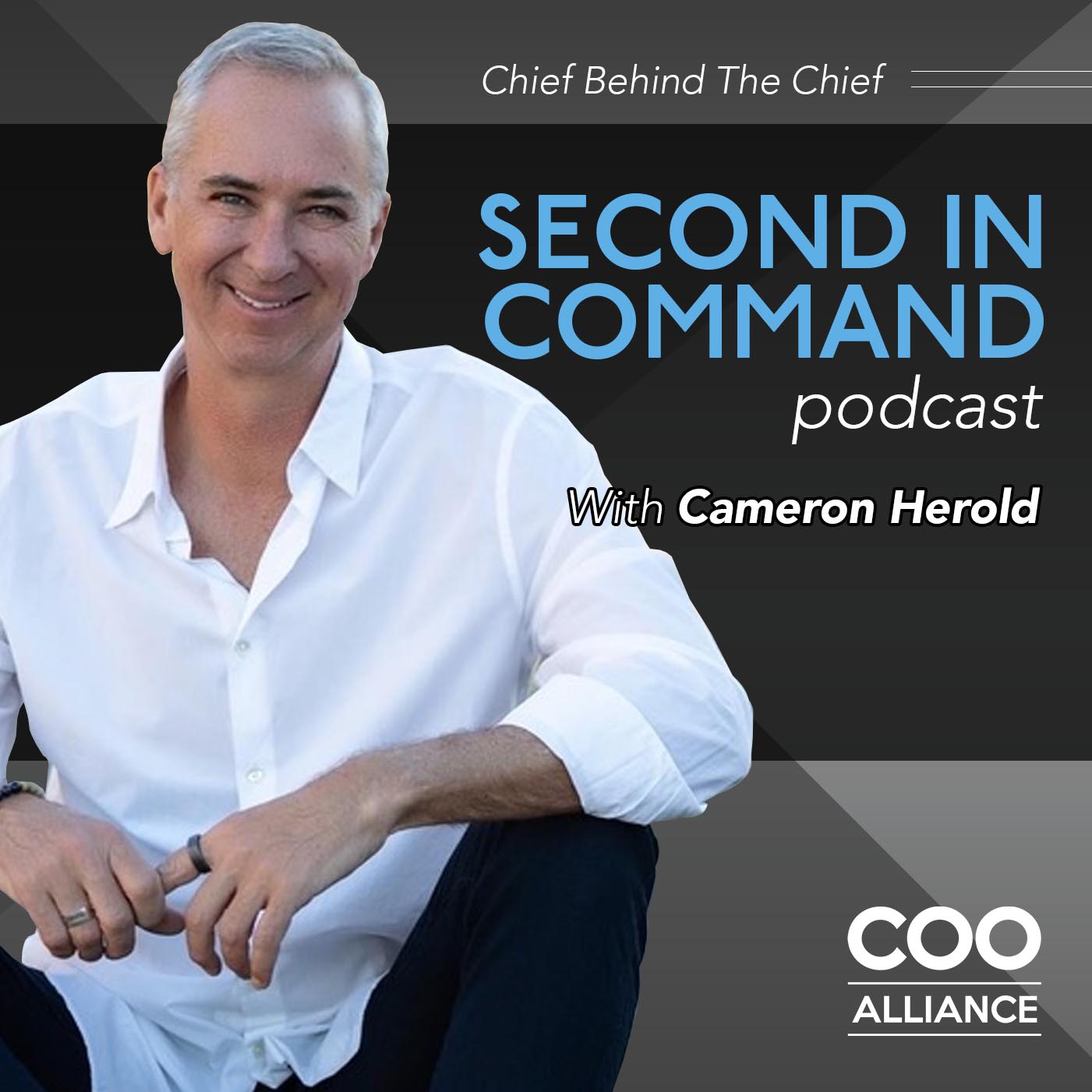
Second in Command: The Chief Behind the Chief with Cameron Herold
Ep. 479 - Recast: The Ryan Hanley Show - Transform Your Leadership: Align Profit with Purpose Now
00:56:58
Loading summary
Transcript52 lines
- [00:00]
Cameron Herold
Hey, it's Cameron Herald, the host of the Second in Command podcast. Before we dive in, there's something you need to know. If you're a coo, VP Operations, or you're in any role where you're the second in command to the CEO, the COO alliance is the place for you. If you're the integrator to the visionary, you're going to want to join us. The COO alliance is the world's leading community for the second in command. We've had over 500 members like you join from 17 countries to grow their skills, connections, and confidence. You'll get the tools, friendships, and a 10x guarantee to ensure that you get your money's worth. Go to COO alliance.com to learn more and see if you qualify. You can even book a free call with our team to ask questions. Now, let's jump into this week's episode. So their business got simpler, their customers were happier, but they spent time on the right stuff instead of just working harder. Most companies would just go out and hire more people and hire more people and hire more people instead of fixing the problem, right? At the end of the day, we only have a customer service problem because one of four. Sorry, customer service department because of four reasons. Either our customer was overset with expectations, right? We promised them more than we can deliver, the product sucks, our service Sucks, or the FAQs on the website aren't clean enough and clear enough for people to solve their own problem.
- [01:22]
Ryan
Welcome to the Second in Command podcast produced by the COO alliance and brought to you by its founder, Cameron Herold. In the Second in Command podcast, we Talk to top COOs who share the insights, strategies and tactics that made them the chief behind the chief. And now, here's your host, Cameron Herald. Cameron, dude, appreciate you taking the time, man. I'm glad we finally got a chance to hook up. I'm so excited to have this conversation.
- [01:53]
Cameron Herold
Thank you, Ryan. Appreciate it. Looking forward to it.
- [01:55]
Ryan
Yeah. So, dude, as it would happen like two hours before we recorded, you put this video out on Instagram. And it's where I want to start, right? Like, break down, break down Doge and, and what is happening and. And kind of just let's. Let's start to go there. I want to start with Doge because I'm so intrigued by this. But there are. If you're a. If you're just a business guy or gal and you're trying to run your business and you occasionally pop your head up into the conversation, there is almost no way to Dissect what's really happening, what's truth, what's not. So let's. Let's start there and help people.
- [02:29]
Cameron Herold
Okay, so there's a couple of interesting points here. One is, you know, I've been following Trump since probably 1989 as a business person and a negotiator, and, you know, the way he operates and works with the press. I think I first read the Art of the deal back in 1988 or 89. And then secondly is Elon Musk. I've known Elon since 1995. Elon Musk's younger brother worked for me in 1993. I was a reference for Elon and Kimball in their first round of funding for Zip2 in January of 95. So I've known him as a business person before. You know, most people on the planet knew that he existed, and it's just because his brother worked for me at college Pro Painters and his cousin Peter rife, who built SolarCity. So I'm particularly interested what Trump is doing right now on the business side of politics. And look, I'm not necessarily a fan of him as a person. I'm Canadian. I'm a little less glossy. I'm a little more G shocked. Canadians, we apologize before we can even hit on a girl. Like, I'm sorry, I think you're beautiful. So I don't like the ego behind a lot of Trump and never did. I don't like the gold faucets. I don't like the fancy, ostentatious. Put all that stuff aside. He's doing something that absolutely needs to be done in politics, and it needs to be done in every business. And there's a lot of waste. And I think a lot of business people miss how much waste there is inside of our company. So when we were building, 1, 800, got junk. I was the COO of 1, 800 got junk. Took them from 14 people to 3,100 employees in six years. We had at the leadership team a financial review meeting every three months, and the leadership team reviewed the general ledger, which is every expense on the P and L. So we looked at every expense in entertainment, every expense in travel, every. We looked at all the credit card bills. And as a team, we discussed stuff that kind of jumped out at us. We looked AT software licenses 24 years ago. So there's so much waste that they're cutting right now that I think both the left and the right have to look at that and go, yeah, it's pretty hard to argue 95% of that waste is really waste. You know, we don't need a new embassy in South Sudan. And I think there's a good lesson in there for entrepreneurs is to be very ruthless and to inspect what you expect. And I think it's very hard for an entrepreneur to go out to their company and keep saying, oh, we need to get more revenue. The only reason you need to get more revenue is to pay for all the stupid expenses that you don't really need in your company and in government to say, we need more taxes. No, we don't need any more taxes. In fact, if we operated properly, if we operated efficiently, we could probably reduce the taxes. So one of the big reasons why I exited Canada 10 years ago and then left the US four years ago, I'm now a resident of Dubai. My company is based in Dubai. Is because the royal family that owns the country doesn't allow for any waste, Right? They don't allow for the frivolous spending. And I think there's something that's really good that's happening there. A rambling answer.
- [05:26]
Ryan
No, no, it's a perfect answer. I. And I. Where I get frustrated is. So I live in New York State, born and raised here. You know, my early years. I'm 44 in a couple days, as I said, early days were George Pataki. It was very much the Empire State still at that time, right? It was. You come to this state regardless of where you are, and everyone discounts Upstate, which is where I live. But, you know, it. The entire state had this mentality of, like, regardless of where you sit, whether it's New York City, Buffalo, Albany, this is. This is a place where. Where people work and grow and things happen. And, you know, it has been. It has been kind of cannibalized by. I'm not going to say Democrats. There's plenty of Democrats that I like. I'm going to say more of a leftist mentality that. That I think has. Has become pervasive. And our current Governor Hochul said something about Doge that I found very intriguing, which was, I'm gonna. I'm gonna. I'm gonna paraphrase because I don't have the exact words. But the essence of her argument was, you are going to pay for these things either way, which was these programs, like, you're either paying them through taxes or we're getting the money from you a different way. You're still paying, right? So, like, these cuts are meaningless because we're still. We still have to have the programs. And I think where people get Misunderstand is that you don't need the programs. Right. Like, it's this, this constant idea that, that we need have our fingers in more things. And I'm interested, from a business perspective, how do we marry if we're in a state like New York? Right. So if you're in Texas or you're in South Carolina, different setup. But let me.
- [07:10]
Cameron Herold
Yeah, let me speak to that. So I, and, and I have a lot of ties to New York State. My grandmother was from Peekskill. I used to go down to Cornell at Ithaca all the time. My school that I was at was in Ottawa, you know, lived across the border from Buffalo. So I have a lot of ties into New York State. Again, I'm going to go back to College Pro Painters, which was the first business that I helped build and scale. It's where I hired Kimball and his Peter, or cousin. Peter, the founder of College Pro Painters, said a leader has to say no more often than they say yes. And it's very difficult to say no. It's very difficult. When we're trying to be inclusive, we're trying to let people's ideas matter. But I think good companies have learned the skill of being able to say no because we can't afford it. No, because it's not attached to our strategy. No because it's not aligned with our core values. No, because it's not aligned with our current cash flow. And we're good at handling conflict. Government has said yes to everything. They've said yes because it's easier to say yes. They don't piss anyone off. It's easier to say yes because they don't have to pay the bills. It's easier to say yes because somebody else is constantly giving them more money. It's easier to say yes because they buy themselves votes. It's easier to say yes. And the top 2% are only making $300,000 a year or more, which means 98% of the people basically are kind of middle class or lower class, like, so it's easy for 98% of people, say, tax the rich. There's not more money to get in a business. You can't say, well, just go get more revenue. It's really hard to get revenue. So business people and homeowners, if you're, if you're a normal homeowner, you can't say, well, let's just go borrow more money the bank won't loan to you. Right. So you have to live within your means. So I've taught my kids to save 50% of all the money they ever make when they're living at home has to get invested. When they move out, 20% of all the money they have to make has to get invested. I'm teaching them that mentality, teaching them as a business, right, Take a portion of your money, invest in growth. Take a portion of your money, invest in savings. Take a portion of your money and decide where to spend it. Use zero based budgeting. So if a business operated the way government does, we'd be bankrupt every single year. So good businesses operate with a level of rigor that is very different. And I think that's why Trump, it's why David Sachs, it's why Elon Musk, these people that are involved now in doge and in the crypto and making big decisions for government are able to identify a lot of the waste is they're not approaching government like typical bureaucrats will. They're approaching it with like, we're bankrupt. We got to make some tough decisions right now. And sadly we're going to go through another period of about 12 to 18 months of stagflation, which is recession plus inflation at the same time. Hasn't happened since 1974. No, the government is not going to be lowering interest rates. You're completely dreaming and on crack thinking that we can keep printing money. We can't keep printing money. It's no different than a business can't go out and say, well, I'll just raise another million dollars in revenue. It's hard to get that revenue. You can't just go out and borrow money from the bank because you got to pay that money back. So I think we're going to go through a period of tough times and I think businesses have to recognize that and have to operate that way. One of the things business people have to do is teach their management team how to say no. And most early stage managers, first time, second time managers, their answer to every problem tends to be hire more people. That's really never the solution to the problem. It's being able to look at the budget and saying, wait, what does this idea do? Does it make our employees happier? Does it make our customers happier? Does it drive more gross margin? Does it drive more revenue? Is it making our vivid vision come true? If it's not, why are we doing it right or why are we doing it now? And I think that's where government has gotten so lazy is they just say yes to everything. They're spending all this money that isn't even theirs. They and then they're Printing more money to pay it all back. And most humans don't even understand the difference between a debt and a deficit. Right? The interest right now on our debt takes up about 40% of the revenue. If you were a homeowner, that means let's say you're paid $100,000 a year, $40,000 a year is just to pay your interest on your credit cards. And then you got to live on this. You'd all be bankrupt. So we need to recognize that these costs that they're cutting in government are very good. And I think we need to go look at our businesses in a very similar way. Right? What are the critical few expenses we need? What are the critical few employees that we need? Most of our Companies can produce 50 to percent of the output with the square root of our number of employees. If you're running with 100 employees, it's really 10 people are producing 50% of your output or even the Pareto principle of 20% of your people. So let's say 20 employees out of the hundred are producing 80% of your output. You can look at that other 80% and go, why are we even doing it? Do we need to do this work? Are we just busy being busy? Are we, are we busy doing work that isn't producing any gross margin? Right? And I think that's the stuff that I've always been really kind of maniacal about.
- [12:08]
Ryan
I've seen it feels to me like many business owners have allowed their feelings on a topic to drive decisions versus the facts. And you know, I, this is a term that's been popularized. You know, you bring the receipts, right? And I, I look at the philosophies of certain individuals. This comes a lot out of the political class, but it is very much, I think, kind of soaked into the business class as well is we start managing on our feelings of, you know, I don't want to be seen as this, or I don't want to hurt these people's feelings or you know, God forbid you let someone go. And, and we've lost this, this end game of like at the end of the day, like we have to make a profit. Like no one has a job if we're not making a profit, you know, at some point here. So how do you, if you've, say you're a leader and you know, you've maybe fallen prey to some of the influence of the last 10 years of say the, the more emotion driven decision making or, or kind of woke philosophy, how do we turn that? Course, if you find yourself in that place and you want to get back. How do you make that transition?
- [13:14]
Cameron Herold
There's a couple parts to that. The first off is it doesn't even have to be the woke kind of part. Bringing into the business world. It can also just be a desire of an entrepreneur to build a great company, right? I want to build a nice place. I want my employees to be happy. I want to live our core values. I want to do good in the environment. That's not woke. That's just being a good human being running a good business. So let's say like we built the number two company in all of Canada to work for 1-800-got junk ranked as number two in the entire country out of 1.4 million companies. We ranked number two. So we were just. It wasn't woke. It was just we were a really good place to work. Now in doing that, it's hard to say no to employees because you don't want to hurt their feelings. You don't want to be an autocratic, dictatorial leader. So the lessons that I learned was to be able to say no because of these things, right? I can say to my child, who's like, when my kids were 7 and 5, no, you can't have cookies right now because we're eating dinner in 20 minutes. After we eat dinner, you can have one cookie. No, you can't have seven cookies because you'll end up fat and obese and then you'll end up with diabetes. And you're like, because we're going to be a healthy family. So our core value. So when you attach a no to a core values or no to a core purpose, or no to your vivid vision, or no to your strategy, or no to your budget, people understand. But if you haven't grown the skills of your employees, right? One of the core skills in my invest in your leaders online training program is managing conflict. If you haven't trained your managers in saying no, they end up saying yes because they feel like they have to be nice to people. Being firm but fair is better than being nice and having to fire people two years later because you've built a company with a lot of waste. That's number one. Number two, you talked about the facts and feelings. I love Google's mentality here. You know, in the last 25 years, I guess 30, because they started around 1997, one of the top companies ever built. Google has a very famous mantra inside of their meetings, and it says, I don't care what you think or I don't care what you feel, show me what the data says. And I think that's really interesting is people that come in with, oh, I think we should do this. Cool, but show me what the data says. Why do you think, what's the ROI going to be of that decision? So I always go back to everything that we want to do as a company. Will it make our employees happier? Will it make our customers happier? Will it increase gross margin? Will it drive revenue? Will it make our vivid vision come true? In that order? By the way, I always build everything with will it make my employees happier? More than profit, more than revenue. Everything else, if I have really happy employees because they don't have to work with the jerks, they don't have to deal with waste. They get to work on important shit. They, they get to work with people that are producing results. They get to work with people that are living core values. If I get to work with those critical few people, they're going to take care of my customers. And if my customers are being taken care of by really happy people, my customers will pay more. So what I end up doing is by obsessing about my employee net promoter score, it drives my customer net promoter score, which allows me to charge more and everybody makes more.
- [16:21]
Ryan
Yeah, we. So I had a startup that I exited from in 2023 and we had our, our internal FL. I completely agree with what you said about happy employees and our, Our internal, An internal philosophy of ours was in service of we are all in service of someone else, right? Like I, as the, as the CEO and founder, I was in service of my employees. My serve, my. My managers were in service of the people that they, that reported to them. The, the, you know, maybe the, the. The entry level layer was in service of the customers that they touched or the processes that they touched. And, and this idea of instead of like I govern what you do or I manage you is. I'm in service of you. Like, it's like these little mindset turns can, can really, can really drive how we interact with each other.
- [17:08]
Cameron Herold
Totally. So I, I've always said that I want to flip the org chart upside down, right? Turn it upside down so the CEOs at the bottom supporting the VPs who are supporting the managers who are supporting the frontline staff who are supporting the customers. Like an inverted pyramid. Everyone can see the vivid vision of where we're going. The customers, suppliers, partners, employees can all see where we're going. And then you build your company inside your core values and your core purpose, right? Then it's very Easy to be in service. Because my job as a leader, I was asked by Fortune magazine 2003 in the actual physical print magazine, how do you hold employees accountable? I said, I don't. I hire accountable people. I hire people who are going to do what we need them to do, who have done what we need them to do already. And, and then my job is to remove obstacles, to coach them, to praise them, to problem solve for them, to help them, to, to care about them, but not to drive them and manage them. Right. If I inspire them and I'm in service of helping them, if I grow their skills, their confidence and their connections, that's all they really need of us.
- [18:09]
Ryan
Yeah, I think of that. I completely agree with your pyramid as well. I think of it as like if you're, if you have the standard pyramid with the CEO on top of. You're trying to. It's almost as if you're trying to pull the team along where if you flip it on its head and now the. Now the CEOs on the bottom and the inverted period, you're actually pushing behind them and working with them. And it's, it, you know, it just philosophically feels like a more supportive role. And it, and it drives the mindset of what we're trying to do.
- [18:36]
Cameron Herold
It's exactly like I bring a lot of analogies back to traditional marriage, like a husband and wife or raising a family. My job as a dad is not to tell my kids what to do. It's not to manage them all the time. It's not to show them what their chores are every day. It's to show them our values as a family. It's to show them and inspire them to become better adults. It's to grow their confidence to be better adults. It's to grow their skills to become adults. It's to help kick them out of the house, to be confident, to make sure they've got hobbies and passions and friends. That's easy. Well, if I grow my kids that way, why would I not grow my team that way? Yeah, same thing. Sadly, most entrepreneurs have never had any training on leading and coaching and delegating and, you know, leveraging situational leadership. So most managers revert to, I'm going to hold people accountable and tell them what to do. It's because they're bad at interviewing, they're bad at hiring, and they're bad at kind of working in support of people. When you're good at that, business gets very easy.
- [19:36]
Ryan
Yeah. I think another part of that. And actually Andy Frisella I'm not sure if you're familiar with him. He's the founder of first form, it's a supplement company. He was talking about this topic and he said, you know, the, the issue, the. One of the problems that entrepreneurs faces, it's their vision, their passion to build this thing. And, you know, they're willing to put 20 hours a day into this business and then they expect and try to drag along and will browbeat and will put pressure on their team to do the exact same thing. And his point was you can't hold someone to the same standard that you, as the founder and the entrepreneur, may be willing to do. Right. You want to get out of there.
- [20:17]
Cameron Herold
Yeah, yeah. Because there's not a single employee has equity in the company, so they're not going to care. Right at the end of the day. In fact, I even have a tattoo in my arm that I got back about four months ago and it says walking each other home in Hindi. And it's just a reminder that none of this shit matters. Like, we're all. I've been joking recently that we're all going to end up as a kebab. We're just meat on a stick, right at the end of the day, we're all going to die. And our employees have lives, they have hobbies, they have insecurities, they have fears, they have families, they're. They're just here to make a paycheck now. They want to do great work, they want to be a part of a cause, they want to build something with meaning. But when you own the company, that's why you have a bigger stake in the outcome than they're going to ever have. You can't expect them to care like you're ever going to care, because you're not giving them the same. And nor am I saying you should. I don't think you should give them equity in a company that you're starting, but you also can't expect them to do that. Now, you also said something else, though. You know, employees, work, or employers, CEOs working like 17 hours a day. I just sat with two very successful entrepreneurs two hours ago for breakfast and I gave them shit for working more than eight hours a day because they're slowly creating problems in their marriage, they're slowly creating habits around their relationship with their kids and that the end up at the end of the day is going to hurt them. And they tell themselves a lie that I'm just doing this to catch up. I'm just doing this to move this Ahead. It's just a stage we're at in the business. No, delegate everything except genius. Find the two or three things that give you energy, that you're amazing at, that you're so good at, and delegate everything else off your plate. And one of them said, well, I can't, I don't have the people can do it. I said, good. Learn how to interview, hire people and then spend your time coaching them and giving them the skills and the confidence and the connections to do what's on your plate. But your to do list does not have your name on it. Right? Your Ryan's to do list doesn't say Ryan's to do list. Even if it does, you don't have to do it. You can delegate 90% of what's on your to do list other people and then grow their skills and confidence and connection so they can do that. That's what really gives us scale.
- [22:20]
Ryan
So I lived that firsthand. The first startup that I was part of, I was the chief marketing officer and I felt like, you know, this being my first true, like just high energy startup business, I went in full stack and was, you know, every minute that I wasn't eating or spending a minimal amount of time with my children, I was working, right? And all hours of the day, all the time. And it just, it not only destroyed my relationship with my spouse, but also destroyed my health, my, my mental health. I had this manic personality that, that was like super highs, super lows. And then ultimately after a period of time, my work product started to be affected. And it wasn't until I pulled the brakes back and started operating like a, in a rational way, much closer to what you said that I, my work product then ramped way back up because now I had the space.
- [23:13]
Cameron Herold
And you know, if you look at a sports team or a professional athlete or the Cirque du Soleil, none of those performers or athletes are performing in their peak, you know, sport, 60 hours a week. There's not a baseball player, a basketball player, a soccer player, an out like football player. There's no professional athlete that is performing in their sport 60 hours a week. You know, they might do four hours and then they're off. They might do 30 minutes and then they're off. You know, like a tennis player playing tennis for three hours. They might be practicing the rest of the week, but that's not high performance. Perform, perform. And when entrepreneurs think that they have to be performing 60 hours a week, they forget that some of their time would be better spent thinking, connecting, praising, People showing up as the chief energizing officer, right, to, to, to bring good energy into the group. But if we're drained and stressed, we're bringing in that drained, stressed, negative energy and that's what we're throwing into our organization. So sometimes it's about doing less, praising people more, showing up with positive energy, more, thinking strategically more. You know, it's about the two guys, you know, they were told to go clear cut forests and you got manager one and manager two and they're both clear cutting the forest and they're both like being super efficient. And the one manager climbs up to the tallest tree and looks around and says, holy shit, we're in the wrong forest. Well, if a leader doesn't have time to be strategic, to be in mastermind communities, to be spending time with coaches, to be just spending time observing, disconnecting, inspecting what you expect, yeah, you might be productive, but you might be productive on the wrong stuff. And I think a lot of businesses are very guilty of that.
- [24:58]
Ryan
I was talking to a founder the other day and he shared with me, you know, we were talking about a similar topic, right? He's stressed out. He was struggling with his board. You know, he's asking me all these questions and he talked to me about how much he was working and I asked him a similar question because, you know, at this point in my career, I've made a lot of these corrections that I, that mistakes that I made early in my career. And I, I was talking to him about this, this, this similar topic. I'm like, how much time do you have baked into your day for, for nothing but just serendipitous activity, right? It could be thought experiments, it could be writing an article that allows you, you know, that's, that, that allows you to get your brain out. It could be, you know, whatever, just random activities associated to your business that aren't a task. Like how much, how much of that time do you have baked in? And he said, zero. And I, and I asked him why and he said, because I want to set the example for how hard I want my team to work.
- [25:54]
Cameron Herold
Stupid. Well, there's two parts to that. Working hard is like a fly trying to get at a window. That fly is working really hard and most of those flies end up dead on the windowsill. If the fly would stop and look around a little bit and go, oh shit, there's a door over here, maybe I'll go out the door. That path is easier. Working hard is kind of a very, kind of 1970s Protestant work ethic. Right? Work hard. Keep your nose to the grindstone instead of saying work smart. Find the cheat sheets, find the hacks, find the shortcuts, find, as two of my friends, Dan Sullivan and Ben Hardy, wrote in their book who, not how, find the people that know how to do that so that you can get them plugged in so that they can actually get your how. But this whole like, work harder, work harder, work harder doesn't scale any company. You know, even Elon Musk said the other day and I thought this was really insightful. If you don't know the one big thing, the one big problem facing your company today, you're the problem. And if leaders are so focused on busy, right? Jim Collins in the book Good to Great said, it's about working on the critical few things versus the important many things. Being busy doesn't necessarily mean being productive. Working hard doesn't necessarily get you the same results of working smart. Taking pause and saying, maybe I can sharpen the saw. Maybe I can work on the flywheel approach. Maybe I can get a little more focused. Maybe I can say no to 80% of our projects that aren't driving gross revenue. I worked with a CEO in Austria a few years ago that I was coaching. They've got a but a $60 million company. They had 960 outstanding customer service requests and she was really nervous because they were going to go from four full time people to eight in customer service over the next 12 months because they were doubling the company. And I said I want you to set a goal that you're going to go from four full time people to one. She goes, that could never happen. I'm like, well, why don't we look at what all the customer service requests are? 90% of them were the same seven problems. So we spent $50,000 and we fixed five of the seven problems, spent another $100,000 and fixed the other two. She was spending $200,000 a year for four people. She went from four down to one. So she's now saving $150,000 a year. And instead of having 900 outstanding requests, they were down to 30. So their business got simpler. Hey, it's Cameron. I hope you're loving today's episode. Quick question for you. Does your company have a strong leadership training program in place to grow the skills of everyone who manages people? If you want to help yourself and your company grow, get everyone who manages people learning from my Invest in youn Leaders online training program. There are 12 core leadership skills that I cover online and they're all going to really grow. CEOs pay me $78,000 a year to coach them one on one. And now you can all benefit for 1% of what they pay me. These are the same leadership skills that I created and certified everyone in at 1-800-got junk when I was there as CEO. Go to investinyourleaders.com today and use promo code podcast10 before the end of the month to get 10% off each manager you sign up. Now back to the show. Customers were happier, but they spent time on the right stuff instead of just working harder. Most companies would just go out and hire more people and hire more people and hire more people instead of fixing the problem. Right? At the end of the day, we only have a customer service problem because one of four, sorry, customer service department because of four reasons. Either our customer was overset with expectations, right? We promised them more than we can deliver, the product sucks, our service Sucks, or the FAQs on the website aren't clean enough and clear enough for people to solve their own problem, right? If you can actually make your FAQs and your website two sentences, each in 20 point font and very visible, with no phone number and no email address. People will solve their problem if you fix the actual problem, if you fix the actual product. If you like. I had a customer that I was coaching and they told all their clients, phone us 24 hours a day. Here's our cell number. I'm like, that's terrible. Like, no, it's great. We're giving them 24 hours. I'm like, you're not going to pick up the phone if you're sleeping, you're not going to pick up the phone if you're going to the bathroom, you're not going to pick up the phone if you're having sex. So you're literally, there's going to be times that you're going to miss that expectation. Why don't you say, here's how to solve your own problem and fix all the problems so they don't have problems. And then maybe say, if you email us, we promise to get back to you within 24 hours, which is pretty darn good. And then live that promise by wowing them and getting back to them within six.
- [30:37]
Ryan
So the industry that I've worked in for the last 20 years is the insurance industry, specifically property casualty on the independent side, both as a agency owner salesman and on the technology side, which is where I live today. And the problem that you just articulated is something that is pervasive in our space, sure. Is that the agency owner, like the core, you know, vision leader, all the things we've just discussed will literally hand out their cell phone number to thousands of clients. And then they become stressed out, overworked, burned out, bitter, resentful, because they're getting tasked with all these things that could easily either be solved on their website or routed to. To an employee. And what I've found is, in speaking to so many of them is usually I find it to be one of two things. It's either ego or insecurity. Right? They're either. So, you know, I want to handle all these things. I'm the one that knows the answer. These are my clients. My name is on the box. Or they're so insecure that they're going to lose people that they want that. So if I'm sitting here and I'm listening to this, and I found myself in a place that you just described, right, My cell phone number, I'm getting pinged all hours of the day. I'm starting to become burnout, resentful, bitter. How do we may. Is it awareness? Like, how do we start to. How do we want to rationalize that we're maybe not doing the right thing and that we are in a place that's hurting ourselves? And then what are. What's the path to start to fix that?
- [32:01]
Cameron Herold
One is to. To recognize that more often than not, entrepreneurs that are saying that my business is my hobby, they don't actually have any hobbies. And the reality is no one wants to hear about your hobby. You know, if you went to a. A cocktail party and somebody who's a lawyer says, well, being a lawyer is my hobby. I don't want to hear them talk about law. I don't want to hear an insurance guy that happens to love insurance talk about insurance. No one wants to hear about whatever your business is either. So it isn't a hobby, it's a business. It's what you do to make money. Hobbies are hobbies. More often than not, most of the people that have business as their hobby are getting a dopamine rush. They're getting a hit. They're getting a boost from that because they have nothing else in their life that they're getting it from. Their relationships aren't very strong. The relationship with the spouse isn't very strong. They don't have any really good hobbies or relationships with their kids. They don't have any good kind of spiritual relationship with themselves. So what they end up doing is defaulting to the One thing that gives them energy in a rush, it's something that they're in control in. So recognizing that that's a problem is part of the solution. And then the second part is just kind of saying, well, we only start a company for one of three reasons. To give us money, to give us free time, and to have that feeling of accomplishment that we did something. Well, once your business is up and running and it's successful, okay, you've got the accomplishment. At some point you've got enough money. I mean, you can have FU money, you can have generational wealth, whatever, but at some point you got enough money, you can go on all the trips, you can buy the nice cars. Like, the rest is just bonus. The third one is to buying your time, right? Really good friend of mine, Dan Martel, I've been friends for 15 years, wrote a book called buy back your time. And it's all about identifying the stuff that is within your business that is below your effective hourly rate that you can actually hire someone else to do to give you time. But if you have no hobbies and friends and relationships, you have no incentive to want to do that. So what I like people to do is to write a bucket list. Write a personal vivid vision for what they want their life to look like and feel like three years from now, and start living that and then realizing that business is something to serve us. I was very lucky. I grew up in an entrepreneurial family. My dad was an entrepreneur. Both sets of grandparents were entrepreneurs. My dad took me to the golf club when I was 15 and showed me all these people coming in to play golf at 12 o' clock on a Wednesday, which is when we were playing. And he's like, that guy owns a car dealership. He owns a clothing store. I remember the people like Bruce McCullough owns a car dealership. Jim Wilkinson owns a clothing store. Freddie owns this other accounting place. So he was showing me all these entrepreneurs and we went out and played golf. You know, five o' clock, we're sitting on the balcony eating our fries and gravy. I'm drinking my cherry Coke. And he's like, see that guy? He's a teacher. He works for the mine. He works for the car dealership. He works for Freddie. He said, do you notice the difference between who played golf at 12 o' clock and who plays golf at 5 o' clock? And I said, yeah, entrepreneurs play golf in the middle of the day. He said, entrepreneurs can do whatever they want whenever they want. And when you're an employee, you have to work for somebody else. So for me, being an entrepreneur was about having the free time. And I've never lost sight of that. That I've always wanted to have my business to be there to serve me versus me being there to serve it. Right. If I'm working 18 hours a day, I have a shitty boss. Well. And if I'm the entrepreneur, I'm a shitty entrepreneur.
- [35:12]
Ryan
I want to come back to. We're going to go all the way back to stagflation. You gave a very brief definition, but I'd love for you to dig into it a little more. And then I'd like to spend some time talking about how we position our businesses and what we need to be thinking about as leaders or entrepreneurs with this, you know, with this idea coming down the pipe.
- [35:34]
Cameron Herold
Okay, so stagflation has. The last time it happened was 1974. And it happened up until around 1982. It was a painful eight period, eight year period. It was a recession plus inflation at the same time, which is exactly what's happening right now. We're pretending we're not in a recession, but the reality is because the government kept printing money, it gave companies a boost. With all the COVID spending that happened, individuals getting money, it happened low interest rates, people kind of lived beyond their means. We lived with money that we didn't really even have. 1974, most people weren't living off credit cards. MasterCharge, which was now our Chargex, which became MasterCard and Visa were just starting around then. So the whole debt cycle and borrowing and living beyond your means started in that period of time. Right. Now, companies have been so used to over the last 15 years, low interest rates, those were artificially low, 6.5% to 7% as a normal interest rate for a company to borrow money was normal. In 82, 83, it was 18% interest rates. So where we're facing right now is interest rates are probably going to stay where they are. Government cannot afford to lower interest rates anymore because if they do, they continue to cause more inflation. Right. If they're printing more money, they're devaluing the currency. Everything just starts costing more because there's more. So they can't afford to do that. What they have to do is get rid of waste. They have to get rid of some of the jobs. And we have AI coming in way faster than we're anticipating. And anybody who's out there saying, oh well, you know, the jobs are going to get absorbed. No, it's happening way faster than it did when we went from farming to industry and from industry to computers, you know, it didn't happen overnight. We're going to lose in a period of about the next four years, five years, we're going to lose every taxi driver, every limo driver, every car driver, every shuttle driver, every bus driver, all the parking lots, insurance companies, auto body, none of that. When, when autonomous vehicles come in, all that stuff is gone. When right now, 14% of the workforce in Korea is robots, right? When AI and robotics come in, that replaces stuff too quickly. So I think what's coming right now is we're going to have more inflation, we're going to have more layoffs, we're going to have companies cutting back, we've got taxation right now happening globally with these Trump tariffs coming in, which there's arguments for it being good, but most of it is going to be bad for the individual because companies are just going to charge more. When we have to import all of our goods and services, we're going to have to charge more. So yeah, we might bring back manufacturing to North America, but not fast enough to make a difference where costs are ever going to go down. So inflation is going to continue, recession is going to happen, which means for companies, be very careful. Debt is good when interest rates are really low. But if you can't keep borrowing money to pay for your business, that means your business have to pay for your business. So you've got to make your cuts, you've got to get rid of the waste. You've got to say no more often than you say yes. You've got to work on the critical few projects with the critical few people. You've got to stay focused on strategy. You've got to grow your leadership team skills and your management team skills so they can get more done with less people. So it's the better run companies that will do well. But if you're the average company who is able to borrow money to get there, or you're working on thin margins, you're pretty much out of business. You know, there was a saying that I heard years ago, if the rate of change outside your business is greater than the rate of change inside your business, you're out of business. And I think for many businesses we're going to go through that pain, but that's okay because the good ones are going to be able to do very, very well. So I think it's right now about making sure that we right size organization, get rid of the wrong people, stay focused on the right stuff, make sure that we raise our Prices where we can keep our margins under control and business can be very good.
- [39:34]
Ryan
So it's, this is a time for operational leadership to really shine versus say, your wartime growth generals that you might bring in. You know, this is, this is, this is operational leadership. This is where, this is where those individuals who have the ability to say no, who can look at these projects and, and, and determine where, you know, the one thing. Right. Another Dan Sullivan, Ben Hardy book is 10x is easier and 2x, which was, you know, incredible for the idea of focus, et cetera. This is, this is their time to shine. This is what you need to be working on.
- [40:08]
Cameron Herold
Yeah. And it's about being ruthless. Like, you need to come in and be a leader who's willing to make the cuts and say, I need to. Like, we can't afford it. You know, when Elon went into Twitter, he did it in the wrong way. He didn't, shouldn't go in with this callous, kind of jokingly firing 80% of the people, fuck them attitude. But yes, fire 80% of the people. They're not needed. They weren't doing any work. They weren't doing anything meaningful. But you have to remember these are human beings with lives and families. You can do it in a nicer way. Government getting rid of the waste. Yes, we should be getting rid of the waste we can't afford. Nor should we be spending $780 million to build a new embassy in South Sudan. What the fuck? We don't need a new embassy in South Sudan. $780 million. What are you building? So stop that insanity inside of your businesses saying no, being more ruthless, focusing on the core projects that drive ROI and your business will be very good. But if you have a management team whose answer to every problem is hire more people. If you're a leader who's trying to be very inclusive and make sure what he's liked, you're going to be out of business. And that's happening faster than we think. And then if you're an employee is worried about AI, AI is not going to replace you, but an employee who uses AI will replace you. So you as an employee need to be really good at AI. You need to be learning AI. Even our COO alliance members, any of the COOs who are members of the CO alliance, not only do they get the normal two hour call every month with a different thought leader, we also have a one hour AI expert call every month. We have a different AI expert every single month presenting to our COO alliance members so they can actually get more skills to bring into their company and to grow themselves. Those are the companies that are going to do well or that are the ones that are investing in their leaders, growing their people, getting rid of the waste, making the tough decisions. They'll do quite well or they'll certainly survive this tougher time. But the ones that are expecting stuff to go back to artificially low rates, you're going to get a wake up call. It ain't happening, it ain't coming.
- [42:08]
Ryan
And sometimes there are seasons of your business where survival is the best path, right? You just have to weather the storm well.
- [42:14]
Cameron Herold
This is maybe where some of the wisdom of age comes in as well. It's very hard for a 35 year old to understand that interest rates are not going to drop again because in their lifetime interest rates have always been low. So now that interest rates are going up, they're like scared. Interest rates are going back to very normal, right? I went through three major economic downturns. I was running a company during the 0809 financial crisis. I was building a big company when the 2000 stock market crashed and the NASDAQ crashed by 78%. I was running another company just before I hired Kimbal Musk when the stock market crashed in 1991 and 92 and we had a major recession. So I built. If you haven't read my newest book, the Second in Command, go grab a copy right now on Amazon and you'll learn how to unleash the power of a coo. And if you already are a CEO, you'll learn how to really build an incredible partnership with your CEO. Companies in these slow times already, right? When you've done that already, you understand that there's, there's, it's a different way. It is kind of what you mentioned, the wartime versus peacetime CEOs, you need to operate a little bit differently. And the companies that are willing to do that and ready to do that will do well. The ones that are fearful and kind of restricted will or that don't cut fast enough and don't focus on the critical few things are going to find a wake up call is coming. It's like anybody in North America who right now is saying, I'm only going to hire people that are based in the United States, you're out of business. You literally can't compete. When my entire team right now, I've got two people based in the Philippines, two people based in Argentina, one person based in Pakistan, one person based in Ukraine, one in Texas and one in Oklahoma That's a pretty good global team. Right. But if I was to say no, they all have to be in the United states. I'm paying 80% more, 70% more or 60% more than I need to be, which is profit or gross margin. That could be mine. So be very careful with how you're thinking about your business and the decisions you're making around overhead and margins.
- [44:22]
Ryan
I also think that when you limit yourself to any geographical region, be it community, state, country, you're also limiting the talent pool. You can.
- [44:30]
Cameron Herold
Oh, for sure. Are you telling me the absolute best people happen to live within 20 minute drive of your office? Because nobody great wants to drive 40 minutes to come to you and 40 minutes back. So it's about 20 minutes. So draw a 20 minute grid around your office. 20 minutes away from you is your talent pool and you're going to find the absolute best people who line up with your culture and skill set and behavioral traits and AI expertise. Good luck. It ain't going to happen. We noticed that at 1-800-got-JUNK, it was tough to find the great people. And we were that. We were the number two company in all of Canada. There were only three companies that anyone in Vancouver wanted to work for us, Lululemon, because this was their head office and the Vancouver Olympics. Those are the only three businesses anyone wanted to work for. But it's hard to find people a 20 minute drive away.
- [45:15]
Ryan
Yeah. Do you think what Doge is doing is going to stick, do you think?
- [45:22]
Cameron Herold
Yeah, I hope so. I hope that the cuts that they're identifying, that both sides realize that 90% of those cuts are good. You know, look, they looked at all these software licenses that there was. I have to make up some numbers, but 15,000 licenses and only 300 were being used. It's very hard for a Democrat, a Republican, a Libertarian. No one can say, oh, let's keep the 15,000 licenses. Right. That's just waste. So all of those cuts should be okay with. Like, I can't comprehend why we should build an embassy in South Sudan. So I think 90% or 95% of the waste we're identifying, everybody should just see that as wasteful. Let's argue about the 5%, that maybe there's some philosophical differences that no, we should take care of, you know, single moms living in wherever. Yeah, we probably should more. Right. Let's take care of, I don't know, even some of the gender issues maybe. Sure. But let's be more ruthless about that decision making instead of saying yes to everything and I love, I love that they are posting all the waste that they're seeing because then we can really look at it in front of God and our grandmother. We can really look at it in the mirror and go, yeah, it's kind of hard to argue that one. That's pretty wasteful, right?
- [46:44]
Ryan
I think, you know, I tend to be fiscally and, you know, conservative, but in truth, I believe in what, you know, my, my, my belief in what the original American dream was. This you get to do whatever the hell you want and I get to do whatever the hell I want. As long as my doesn't go on you and your doesn't come on me, it's all good. Right? And I think that's the way most Americans want to believe in. And the way that I've looked at this from like the gender issues and some of the different things that we see is like, nobody would fight economic development money going into disaffective communities that have not been given the opportunity if they weren't also seeing that money being spent on 780 million being spent on Sudan and another 900 million. You know what I mean? So it's like, if it's. I do believe, I do honestly believe that the argument for some of these things that are actually good, that, that, that do help the social and moral fabric of our, of our communities and of our country, that if we, if this waste is gone there, no one gives a shit if you spend them. They want you to spend the money there. That's where the money, you know, if you told me $800 million was going into, you know, whatever south, you know, east, east Detroit, to make sure that that community is starting to get propped up. Who's going to fight that? They certainly don't want it being sent to some other country. And I think, I think I'm hoping that this is a wake up call and it sticks because.
- [48:06]
Cameron Herold
And it's no different, it's no different than in our normal household. Right. If you're a mom and dad and you're raising three kids, you want to make sure that you donate to some of the causes that are important to you. Absolutely. And you want to make sure your kids have food and your kids have clothes and your kids have a good education, your kids are taken care of. So we kind of want to do both. But you don't want to be wasting food at home. I don't want to be buying a refrigerator full of food and throwing it out every four days because it's going bad. Nor do I want to be donating money to charity and having my kids go starving. So we just have to run the government a little bit more like a business. And there was always this argument that you can't. Well, I think we have to. I think we have to find a way that the bureaucrats don't actually get to stay in control. Because when all of this waste is being so uncovered and so glaringly brutal, that's where all the costs are. Right. If we get rid of the waste, we don't have to raise taxes for anybody. For the, for the, for the working class, the middle class, the upper class. Nobody has to pay more. And why should anybody say tax the rich more before we say get rid of the waste? First, let's get rid of the obvious waste. And then if we need to tax some people more, sure, let's. Let's look at that. But let's not go out as a family and say, let's go get three jobs when we can get rid of some of the waste at home. Maybe we don't need three jobs. Right?
- [49:28]
Ryan
Yeah. I want to finish with one. One more topic that you briefly mentioned and take this as further as you want. Crypto is a major topic. Right. Companies are starting to think about putting on their balance sheet. For many companies, that's probably not even something they should consider. Or maybe I'm interested in your take. But then, you know, we're in kind of a tumultuous time. Where do you kind of sit and on crypto and should. Should companies that will say, gotten past escape velocity? Right. Is it. Is it a place they should think about storing some value during a time like this, if they have the ability to do so?
- [50:02]
Cameron Herold
Okay, so this is what a lot of people don't know about me. So 1-800-got-Junk was the fourth company that I'd built. The third company that I built was a private currency company. So we did what bitcoin is doing today. Back in 1998-2000, we had 30,000 companies buying and selling in the United States using our digital currency instead of the US Dollar. We had Starwood Hotels, the Olympics, Avis, Rent a Car, Bose Stereo, Hard Rock Cafe, all using our digital currency. It was backed by nothing other than the promise that other people would accept it. So I understood alternative forms of payment very early on in 2014. And all of my posts are still on Facebook today. You can look up bitcoin and then look up posts by Cameron Herald. You'll see all my posts, 2014, 2015, that I started accepting payment for Bitcoin back in 2014. I started accepting payment with Ethereum in 2017, and I started acquiring Ethereum and Bitcoin both in 2017. I've been buying more almost every single week since 2017. I bought more three times in the last couple of days because it came Bitcoin came back down to 78,000. I've been buying. I can show you my transactions. Every every week I have an auto buy on Bitcoin and every time there's a big crash, I do another tranche of bitcoin. I still only own two coins. I only own Ethereum and Bitcoin. I'm slowly converting most of my Ethereum off. The reason I even got into Ethereum was I'm friends with Vitalik's mom and dad, Dimitri and Maria. We're part of a mastermind community together. So I got introduced to Ethereum when it was $200 a coin. But, yeah, I've been. I've been in Bitcoin since when my first post it was $450 a coin. So my kids both buy bitcoin. All my clients are engaged in bitcoin every single week. I think you should be buying some. But I now have a substantial portion of my net worth in bitcoin and it's one of the reasons why I'm also now based in the Emirates. I'm a resident of Dubai. My company's based in Dubai is they have very favorable tax strategies for a Canadian living overseas. So that's one of the reasons why I'm based there now too.
- [52:10]
Ryan
Yeah.
- [52:10]
Cameron Herold
Do you think as a company.
- [52:11]
Ryan
Yeah.
- [52:12]
Cameron Herold
Yeah. If your company has a lot of cash, then yes, you should put some of your cash into Bitcoin as a strategic reserve and hold there and hold for five years. Just buy and hold. Buy and hold. Keep some there and then invest in other things too. That's great. I don't think a lot of the countries that are talking about buying bitcoin should be talking about buying it because they should be paying down their debt first. Like, the United States is effectively bankrupt. When you're sitting on $30 trillion in debt, you don't have any money to be buying as a reserve. You should be paying off some of your debt and getting rid of some of your deficit so you're not adding to your debt every year. But if you don't have any money, like, it's like as a homeowner, if I don't have any cash, how can I go buy something? So I think the countries that should be Buying and they will be buying are the Saudi Arabia, the Dubai is the countries that are actually living within their means. They're going to do well. I think if you can somehow get away with sadly issuing currency and buying Bitcoin with it, yes, it'll work well for you, but it's still going to screw the actual, you know, citizens of your country because you're creating more debt.
- [53:20]
Ryan
I'm with you. I do the same thing. I invest in Bitcoin every week. The I do not invest in Ethereum. The only other coin that I have besides Bitcoin is xrp, which is more of, we'll call that more of a bet. Have my own theories on it, but that's not, that's not a primary holding. That's more of a, you know, speculative double double zero on the roulette table kind of play. Yeah, for a couple different reasons.
- [53:45]
Cameron Herold
But I don't do any of that. I don't do any gambling with anything. So I'll tell you what my 10 core stocks are. And I buy more of these almost every month for sure. Every two months. Some of them I've been buying now for 20 years. So back in 2003, my dad told me Amazon was too expensive. So almost every one or two months for 20 years I've been buying Amazon, but I buy Nvidia stock. I've been buying it for 49, 50 months. So over four years I've been buying Nvidia stock almost every month. Meta, Microsoft, Netflix, Apple, Amazon, Google, Shopify, Tesla and Uber. Those are my core. I bought two tranches of those of five of the 10 in the last week. I converted some of my safer equity stuff over to those. But almost every one to two months I buy more of those 10. Buy and hold. Buy and hold. And those stocks are down 20, 30% right now. Awesome. They're on sale. Those are good quality companies that aren't going away. Very similar to what Warren Buffett did back in kind of the 70s, 80s, 90s with Gillette and the Amazons and Coca Colas. They're good, stolid companies that are always going to be there. Those companies that I just rattled off, if you're a business person, I think you have to have a portion of your money saved. It's very dangerous for an entrepreneur to keep rolling their money over and betting on more growth. Right. I mean a bet on my company, better my company at some point the house always wins. So I think it's dangerous.
- [55:07]
Ryan
I think that's a wonderful place to put a pin in our conversation, which has been absolutely phenomenal, you have the CEO Alliance. Tell us a little bit about how people get deeper into your world.
- [55:17]
Cameron Herold
Sure.
- [55:18]
Ryan
Because obviously I know people are going to be jacked up to get involved as they're not already.
- [55:23]
Cameron Herold
Yeah, I'll go. The. The main website is Cameron Herald.com and it's H E R O L d. So Cameron herald.com that has links to my six books which we didn't talk about, has links to my invest in your leaders course, the CEO Alliance. I have a podcast where I've interviewed 475 CEOs. It's called the Second in Command podcast. And we've had the CEOs of Shopify and Bumble and name it. We've interviewed most of them on our podcast. But yeah, it's all there. And then a couple of good YouTube channels too. A lot of free content shared.
- [55:52]
Ryan
Tremendous. And guys, I'll have all those links, whether you're watching on YouTube or listening on Spotify, Apple, wherever, just scroll down in the description and I'll have all that stuff linked up. Cameron, appreciate you, man. Tremendous time. Insights are wonderful and I appreciate your perspective.
- [56:06]
Cameron Herold
Thank you. Yeah, if anybody watching listening have got comments and questions, drop them down into the notes. If there's a lot of questions, maybe we do a part two and you know, we can answer a lot of the questions from your listeners and viewers too.
- [56:16]
Ryan
That would be tremendous.
- [56:17]
Cameron Herold
Cool.
- [56:18]
Ryan
Thank you so much.
- [56:18]
Cameron Herold
All right.
- [56:22]
Ryan
You'Ve been listening to Second in Command brought to you by COO alliance founder, Cameron Herald. If you enjoyed this episode, please be sure to like, share and subscribe to us on Apple Podcasts, Spotify and our other podcast streaming platforms. For more best practices from industry leading COOs, visit COOAlliance.com SA.