← Second in Command: The Chief Behind the Chief with Cameron Herold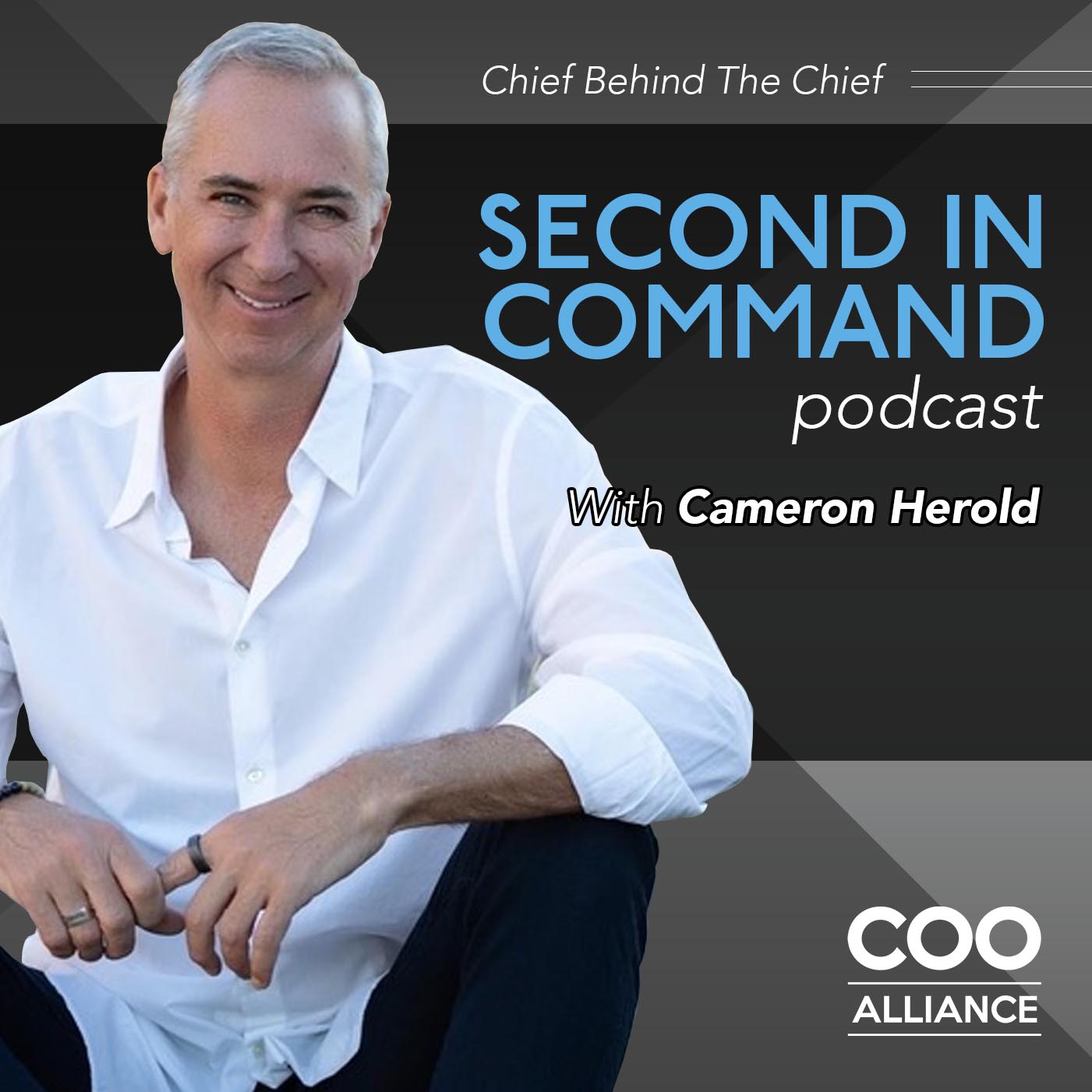
Second in Command: The Chief Behind the Chief with Cameron Herold
Ep. 481 - Empower Pharmacy COO, Jonathan Abrarpour
00:41:38
Loading summary
Transcript76 lines
- [00:00]
Cameron Herold
Hey, it's Cameron Herald, the host of the Second in Command podcast. Before we dive in, there's something you need to know. If you're a coo, VP Operations, or you're in any role where you're the second in command to the CEO, the COO alliance is the place for you. If you're the integrator to the visionary, you're going to want to join us. The COO alliance is the world's leading community for the second in command. We've had over 500 members like you join from 17 countries to grow their skills, connections and confidence. You'll get the tools, friendships and a 10x guarantee to ensure that you get your money's worth. Go to cooalliance.com to learn more and see if you qualify. You can even book a free call with our team to ask questions. Now, let's jump into this week's episode.
- [00:44]
Jonathan Abrapour
You know, the traditional model of going through, you know, what a urologist would have, you know, eventually when you made your way to urologist as a patient, right? Let's say you're a male. It takes a long time to go to general doctor to eventually point you to a urologist and the urologist could take a panel of your blood and kind of figure out everything all at once. But really as a patient, you're only really going for one use. The way the healthcare system works is the practitioner, in this case, urologist, can only do one indication at a time where they could see a whole list of what the problems really were. Welcome to the Second in Command podcast produced by the COO alliance and brought to you by its founder, Cameron Herold. In the second In Command podcast podcast, we talk to top COOs who share the insights, strategies and tactics that made them the chief behind the chief. And now, here's your host, Cameron Herold.
- [01:45]
Cameron Herold
Our guest today is COO alliance member and Empower Pharmacy COO Jonathan Abrapour. Jonathan earned his Bachelor of Science in Mechanical Engineering from Texas Tech University and began his career as a completion engineer in the oil and gas industry, which has nothing to do with what they're working on today. In 2015, he transitioned to a small company in the compounding industry which had just 35 employees, where he gained hands on experience and learned the business from the ground up. And over the last 10 years, he's taken the company from 35 people to 1200 people. His expertise centers on manufacturing, engineering and fostering personal growth. He's built an incredible culture inside of Empower Pharmacy and they've navigated Some unbelievable growth issues that they're going to talk about in our podcast today. You will also be able to view this episode on our Second Command podcast YouTube channel. We'll see you on the inside. So, Jonathan, welcome to the Second in Command podcast.
- [02:42]
Jonathan Abrapour
Thanks. Glad to be here, Cameron.
- [02:44]
Cameron Herold
Yeah, looking forward to this. I mean, for a couple of reasons. One, you've been a COO alliance member for a bunch of years and you've been a great member, but we also have not had you on the pod. And then secondly, you're also Canadian, so there's something kind of. You are Canadian, aren't you?
- [02:57]
Jonathan Abrapour
I'm not Canadian. Right. You may think I have a Canadian accent. Is that it? No.
- [03:01]
Cameron Herold
I don't know why I always. Where are you based out of?
- [03:04]
Jonathan Abrapour
Texas.
- [03:05]
Cameron Herold
Why did I think you were out of Victoria? I'm going to restart this and do another.
- [03:09]
Jonathan Abrapour
Oh, it's probably because I was visiting Vancouver. Yeah, my grandma, she lived in Vancouver. I think I was telling you that.
- [03:16]
Cameron Herold
Okay. That's what it was.
- [03:17]
Jonathan Abrapour
Yeah. Yeah.
- [03:17]
Cameron Herold
Okay, let me start this again. Not as excited as I was. All right, so, Jonathan, welcome to the Second Command podcast.
- [03:28]
Jonathan Abrapour
Thanks, Cameron. Super happy to be here.
- [03:30]
Cameron Herold
Looking forward to this. I mean, you and I last saw each other up in Vancouver, Canada, and before we went live, I was actually thinking you were somehow from Vancouver, but you've been a CEO alliance member for a bunch of years and we have not had you on the show yet. And you're one of our larger size companies too. Can you give us a guess? Kind of a lay of the land of Empower Pharmacy and what the size of the organization is.
- [03:50]
Jonathan Abrapour
Yeah, I'd love to. So Empower pharmacy started in 2009. Sorry, 2013. I'm getting these. 2009. Yeah. So it's a little over 15 years old. And it's just like any entrepreneur, this founder, CEO Sean started this in the back closet of a pharmacy, essentially. And just like. Like any entrepreneur founder does. Does. He just built this company block after block. And even when I joined about nine years ago, the company was pretty small. It was a storefront pharmacy. You've probably passed millions of these by and you haven't even like realized what they are. Right. They're the little corner store that says pharmacy that's probably connected to some other strip center. Right. And that's where we started or when I started. Right. And at that time it was 32 people, which is pretty big for a compounding pharmacy. Today we sit at right around 1200 employees. We're across three different two different states, three different facilities. And we're on our, you know, on a ways to even expand that too and the different business areas. But our two facilities in Houston, like one's 40,000 square feet, the other one's about 170,000. And we just built another or we just acquired another one in New Jersey that's 170,000 square feet. And so just lay the land wise and power Pharmacy really supports integrative health and wellness areas. So we really focus on life, more health span than lifespan medication. Right. So it's a little bit of dose on what makes you feel better every single day is kind of what we think. Right. And yes. So that's what our kind of our product network is as well as our, as our staffing.
- [05:30]
Cameron Herold
That's insane, insane growth. I mean to go from 30 people to 1200 people in 15 year period. Can you explain to me, let's go back a step, what a compounding pharmacy is versus what a normal pharmacy is?
- [05:44]
Jonathan Abrapour
Yeah, yeah. So compounding is the act of mixing two ingredients. That's really what it is. And so compounding has been around since the beginning of time. That's really where medication came from. Right. It's like back in the day there was apothecaries, they were making medicine and it's, you know, you get one material with another and you know, in the most remote areas of the world you see compounding happen. Right. Whether that's herbal or not, through the industrial revolution of medicine. Right. This is really where big pharma came in, as well as the other regulatory jurisdictions like the FDA and so forth, which did a lot of great work. Right. They were focused on the safety and efficacy of drugs. But with that came a one size fits all. Because there had to be such a scientific way and such a regulatory way of managing this mass amount of drug production that was existing. And so that's where we know big Pharma to be. And so really kind of go into the realm of that. You know, compounding is again the mix of two drugs, which, you know, big Pharma technically does, and every other pharmaceutical company where compounding pharmacies are different is we make those drugs to be uniquely dosed to what a provider may want, what a patient may need. Right. And so it's not product that's generally available that's out there. Right. So if it's in a different drug form. So like let's say there's some drugs that someone can't take orally or they can't they compliance wise, they can't inject. It has to be transdermal. Like we're, we're part of that solution. There are some drugs where it could be a controlled substance, right. You can't. A prescriber can't literally prescribe because it could be diversion unless it's made in smaller quantities. And that's where compounding pharmacies come in. So we're kind of that one avenue that can provide the source that's just not generally available in the market.
- [07:34]
Cameron Herold
And are you all direct to consumer or are you selling to other pharmacies then as well?
- [07:38]
Jonathan Abrapour
Great question. So our end, our end user is always a patient. And so often so in our two different say business lines, in the world of compounding jargon, it's called a 503A and a 503B, right? That's a compounding jargon, but it's two different regulatory areas. On our 503A side, every shipment that goes out is pursuant to a script, right? So if we made that, if we made a unit, we anticipated that production of that unit or we anticipated that stock, or it's just half the time it's made to stop me to order. Right. So that that order comes in that day, which is a script and we make that compound and it gets sent out so that all that's us to a patient. But of course there's a prescriber in there, right. Even there's always a doctor, clinic or something that's in the middle that needs a. That we need to be connected with. Right. Obviously we need to make sure the script is compliant. On the other side, this kind of A side and the B side, this, this 503B, it's a CEL business. And that business will then work to get it administered to the patient. And most recently about a year and a half ago, the FDA actually clarified who we could sell to because it's kind of a new industry came is the FDA kind of came in around 2013 and had a lot more jurisdict jurisdiction over how this is. The compounding community can really help. And they saw there's a good opportunity when it came to shortages. And so they said about a year ago, right. That we can as well sell to pharmacies. And that sell to pharmacies became a whole nother customer type. Right. So where the pharmacies, you can call them our previous competitors. Right. Overnight. Right. Every pharmacy that had a competitor in this B space also now had new potential customers too. So you know, that is one avenue is the pharmacy area. And I'll say we are mainly not that today. Right. Our customer base are many clinics, institutions on the B side that we sent to.
- [09:31]
Cameron Herold
Okay, so you, you're mostly a B2B marketing. That's where like you'll be marketing to other businesses versus direct to the consumer then, correct?
- [09:41]
Jonathan Abrapour
Right, right, yeah. And because at the end of the day, if you're a patient, like, you really don't know what's their like most like. Oftentimes, you know, patients are taking compound medication and they have no idea that they're actually taking compound medication because the prescriber, right, the doctor, the clinic really has to know that that exists as a solution. And so, yeah, it's usually always the business itself.
- [10:04]
Cameron Herold
Can you speak to some of the economics of this? Is it more profitable for these clinics and businesses to prescribe this or use this or is there, is it easier? What are some of the reasons for them going around or is it just because their customer needs it?
- [10:18]
Jonathan Abrapour
Yeah, yeah. So, so cost, I would say is always a factor, but it's really down to root cause, problem solving. So the main clinicians that were pioneering the forefront of what was in the world of compounding were urologists. Right. You know, the traditional model of going through, you know, what a urologist would have, you know, eventually when you made your way to urologist as a patient, right. Let's say you're a male, it takes a long time to go to a general doctor to eventually point you to a urologist and the urologist could take a panel. Right. Of your blood and kind of figure out everything all at once. But really as a patient, you're only really going for one use. The way the healthcare system works is the practitioner, in this case urologist, can only do one indication at a time where they could see a whole list of what the problems really were. Oftentimes it was a spout. Right. What does the patient want that can treat the symptoms? But it would take several visits for them to actually fix the root cause. And sometimes the patient would never make their way through. Urologists ended up working with compounding pharmacies to get these non, these non commercially available forms of medicine to really get down to the root cause. Right. Oftentimes they were hormone based. Right. And those hormone solutions weren't really there and so kind of so entered really the, let's say, not the life of compounding, but that's kind of when it started becoming back up and more available. And you know, we've seen this whole area of medicine, even in the big pharmaceutical World where, you know, it's no longer the big machines are being purchased, it's no longer all about big product. It's this customized form. Right. And that's to the heart, really what compounding is. Right. It's a customized form of medicine. Yeah.
- [11:58]
Cameron Herold
Okay. I want to, I want to ask about something that I've always been curious about. And it's, you know, marketing in an industry that is so highly regulated. I think that you've got pharma and probably financial services are probably the two kind of most highly regulated industries. From if you want to put out any ads, it has to go through some screening or if we want to set, it has to go through some screening. How does your company make sure that you stay on side with that kind of stuff? How, what's the process to go through, especially when you're growing so quickly and stuff can go unnoticed? How do you, how do you systemize that?
- [12:32]
Jonathan Abrapour
Yeah, so that's a really good question. And so, right. There's like two extremes. One like no risk, don't do anything. And the other extreme is do everything and then be very risky. And so somewhere there in the middle is the right way. And like you said, how do you systematize that? So it really requires all of the leadership to have a good understanding, understanding of the regulatory environment. Right. Without understanding what the regulatory world is, the mistakes are much higher. So whatever the decision factor is, system wise, has to go to, to the, really, to the, the most senior regulatory person. So in our world, we have a compliance team that takes care of that. Right. And then we have other, other levels amongst the compliance team. So in our marketing area, we have a compliance focused person. Right. We have tons of, I mean, pretty much every pharmacist is a regulatory person in general, but we'll, we'll find people that, that's what. Right. Like that part of compliance. Right. Mixed with the business portion is really their passion. And then they'll be really embedded in those areas to help grow and really, really protect the organization.
- [13:32]
Cameron Herold
Okay, talk to me about some of the growth. I mean, to go. And how long have you been with. With Empower?
- [13:38]
Jonathan Abrapour
Yeah, so about nine years.
- [13:40]
Cameron Herold
Okay, so you've been there for nine years. When you came into the company, what was there at the time? Maybe 150 people. 200 people?
- [13:46]
Jonathan Abrapour
Yeah, so it was like 32 people.
- [13:48]
Cameron Herold
I was still at 32. When you joined?
- [13:50]
Jonathan Abrapour
Yeah, when I joined it was 32. So I kind of stumbled earlier. Yeah, 32 people. When I joined nine years ago, I joined six years after it was. It started. Yeah.
- [13:59]
Cameron Herold
Okay. That's insane.
- [14:00]
Jonathan Abrapour
Yeah.
- [14:00]
Cameron Herold
So to go from 32 people to 1200 people, it's not even the same company. I mean, it's like a completely different organization. Can you talk to us about some of the growth challenges that you had along the way?
- [14:12]
Jonathan Abrapour
Yeah, I mean, so growth challenges are stretch marks for sure. Yeah. You know, I would say like the. There's the fun stuff, right? It's. I say fun stuff. It's like, where are we going in the future? Well, I'll take this a step back, right. Nine years ago, eight years ago, whatever. They're at the very beginning of my career with empower, when we just had our first form of leadership team, which, mind you, at that time we didn't even have outlook. Right. We didn't have a calendar. That's where I started. Right. Like there was just like ish personal emails almost. Right. We took a personality test. We were into Gallup, the strengths finder at the time, and we realized we were all futuristic. Like that was the top five on everyone's core. On the core. Top five strengths was which one? Futuristic. Like, like futuristic was top. So I think what that meant was, I mean, it was not to. No surprise, right. We were all really focused on the future, but with that came for sure it's problems, right. Because you know, if you have one step in the future and then one step in the present, right. You're not completely in the present really building. And we were all one step in each direction. So I think what that really caused was still to this day that we feel like a lot of systems aren't there. It's kind of like the Swiss cheese analogy, right? But like as you build and you have holes from a systems perspective and you have that hypergrowth where, where you're growing, you know, 10x every few years, right. There's just going to be some errors that lack. Right. This could be administrative. They're typically not your core functions. But whether they be administrative or whatnot, within six years, you know you're talking about two companies different, right. Like it could be 100x like those that. If those areas didn't, you know, which again, there's still things that we deal with today. There are things that we're very open about. Right. You're coming into an area that the area that the department is not as well developed. It's going to feel like it's in the negative because the reality is it's more than likely is from a starting standpoint. Now, what we try to overall say is, you know, it's going to be up to all of us to really make that change. Now going to it. I mean, I can talk about like we had one time, like when I first joined, just one restroom, like we had one, like one, one toilet, 40 people. And, and I use that analogy pretty often because like, I don't know, like, you know, Sean at the time, he was already building the next facility. You know, classic construction was like six months late, right? And so like he was trying to manage all these things all by himself, right? And so like there was, there was literally a sign in log for the restroom, right, to go. And you know, like sometimes you can't write, you can't, you can't, you can't time it that well. But, but fast forward, right? Like eight years later we go and we acquire the facility in New Jersey, right? And they have one set of restrooms. And I was like, I know exactly what that culture is like, right? Because if you can endure the whole working strength of just being able to manage everything you do in your day, you kind of know, behaviorally, mission wise, people are a lot more focused, right? For the future. Because if you start taking away the basic requirement, I mean, go to the restroom, that also takes away the ability to eat when you want, drink when you want, and everything else just at the, at your own free leisure. You know, talk to us about some.
- [17:21]
Cameron Herold
Of the differences of what you looked for in people in the early days and what you're looking for kind of midway along. Like, what were you looking for when you were going from thirty to a hundred? What were you looking for from the 100 to 300? And then what were you looking for from the 300 to a thousand?
- [17:36]
Jonathan Abrapour
Okay, yeah, so 30 to 100. We were looking for highly technical and capable people. Highly technical and capable, right. It wasn't as behavior based. Our behavior assessment was really customer focus, right? I mean, which is still to say one of our, it's one of our core behaviors. Are you, are you customer focused, right? And are you adaptable? Right? But we, we kind of needed the jack of all trades everywhere, right? So like if we were hiring because, you know, especially at that time, we didn't have as many departments, right? So you had one person that was really doing what, you know, today's three, four different departments do. You can think of it pretty simplistically, right? Like if you were to go to CVSL or Walgreens, you ask one technician to do one thing, you'll see them, they'll do all three jobs in one, right? When you. When. When you're at scale, right? Those three jobs, those three different tasks kind of become three different jobs, right? And then we find people that really like and can grow with each one of those jobs. Right? So, you know, say that's the 30 to 100, right? That 100 to 300 realm that was, I would say, trial and error realm. Right. That's when we started bringing our first round of management system. So we were going from, like, what we. I would say, like, super not structured to trying to create some sort of structure. Like whether that was like weekly reports. I mean, yeah, those were the first weekly reports. First weekly staff meetings, right. That were coming around in multiple levels, should I say, right. And first sets of, like, you know, company goals. Right. The type of people that we're trying to get was also experienced, but, like, we started putting a lot more emphasis on behavior. That's when we started getting our talent acquisition team. Before that, it's like, you know, like, each manager does their own, right? And then I would say those behaviors were. Were they adaptable? Right. Were they resourceful and were they hardworking? Those were pretty much the three core things, right? Take it to 300 to, you know, a thousand today, right. Somewhere in the middle of that, we actually started developing what we call empowered behaviors, which are pretty much core competencies. And what I love about that is we surveyed the senior leadership team on what are the eight, basically, what are the things that are most important? Korn Ferry, in this case, helped us go through this exercise and said big, you know, had like, I think, 36 different behaviors and whatever resonated most, we pretty much tallied them up in multiple different sessions and said, these are the most eight defining behaviors, right? And so to this day, that's what we now do performance management on. That's. This is what we do. Our kudos on. This is what we interview on, right? Literally we have a scorecard that shows, do they meet these behaviors? Right? And like I said, one of them is customer focus, right? Behaviorally, right? Its status. Are they adaptable or can they manage complexity? Are they customer focused? Are they resourceful? Those four are still in there. Plus or more.
- [20:39]
Cameron Herold
Hey, it's Cameron. I hope you're loving today's episode. Quick question for you. Does your company have a strong leadership training program in place to grow the skills of everyone who manages people? If you want to help yourself and your company grow, get everyone who manages people learning from my invest in your leaders online training program. There are 12 core leadership skills that I cover online and they're all going to really grow. CEOs pay me $78,000 a year to coach them one on one. And now you can all benefit for 1% of what they pay me. These are the same leadership skills that I created and certified. Everyone in at 1, 800 got junk when I was there as COO. Go to investinyourleaders.com today and use promo code podcast10 before the end of the month to get 10% off each manager you sign up. Now back to the show. Makes sense. Did you have to or I guess you would have? Tell me about the first couple times you had to bring in a senior person from the outside over top of an existing team. And how did you work through that transition? It's always hard when you're hiring that outside, more seasoned senior leader. And there's current people that are a little pissed off. You know, they wanted the job, they wanted the promotion, you know, the culture shifting. Can you talk us through some of that stuff? Because to go from 30 people to 1200, you've had to do that.
- [22:04]
Jonathan Abrapour
Yeah, all the time. We just did that like this last month too. We just put in a whole another. Another level too. Yeah. So I think going back to that behavior on being adaptable, it's really important and folks being adaptable and, and it's really. It's a conversation before. Right. And during. Right. Through the whole process. Of course, when there's lines that open like that, people want to know if that's them. In some cases we open up like a channel, like a level, and it's not readily available, although the individual may feel like it's readily available if we did our job right. Like we're kind of coaching the entire way to say what that level looks like and if they're ready or not. Right. So it's not a surprise. But yeah, I mean, like I would say I'm going to bring somebody in. Right. Under which I do. You know, let's say over the last year, seven VPs have been added and those VPs all have had previous management reporting up to them.
- [22:55]
Cameron Herold
And were they all from the outside?
- [22:58]
Jonathan Abrapour
One of them was. One of them was promoted. All the other seven were. All the other six were all from the outside.
- [23:08]
Cameron Herold
Yeah. So talk about when you're bringing somebody in from the outside, what's the process of, of integrating them, of getting the new people to know like, and trust them, of kind of getting those people up to speed. Can you walk us through that? And then I want to talk about the one about the promotion from Internal too.
- [23:23]
Jonathan Abrapour
Yeah. Okay. So it's a ton of interviewing. So like they're with a single candidate probably I interview about three hours before I'm ready to take them on to the next level, right? And like I said next level. And I said by next level, I mean in the case if I'm. If I'm doing VPs and I have enough VPs, it's their peers. If there's not enough peers, it's going to be. The level would be right below them, right? In this case, our case is directors. But really find the core group of people that you know are there behaviorally and understand the business and really look for what the future can be and can take themselves out. There's tons of people that I can name off the top of my head that are like that, right. That just see what empowers vision is for the future and don't want anything but excellent people part of that team. Okay, so I'll turn it on top because, you know, the evolution of that hiring process got easier as I'm more. More VPs, right? But let's say the very, very, very first couple, right? I'll say like the first, the first couple that I hired, right? One you couldn't stay, right. For over a year. And so in that year process, he knew this about the last month or so, right? And so he kind of came to me and said, hey, like I'm basically going to have to go back. He's like, but I want to support a transition process and whatever time you need, but I have this date and so forth. And so, right. When you have really good leaders like that can, that can connect the dots, right? But giving you well enough time. He was really the building block to make sure that the next line of VPs were really there. So that was one of the promotions came in. We kind of talked this through. We said, hey, maybe we promote one individual in particular, right? And give him that extra challenge. And then the next part was he was going to be the interview process to begin with. So people that were talking to him already knew the person leaving. I mean, it's full transparency. Like this is you have nothing to overall lose, right? And so, and he, the one, the person I was also leaving also gave another VP over right. From his network, which again was really great to have those connections. So through that whole process is how do the t. How does the team really recruit each other and really elevate each other is really what it came down to, right? So pretty much Every single person that came on afterwards. Right. It was almost the same story. Right. I would interview for quite a bit. Right. And then handed to the rest of the team that would be his peers that he'd be working, he or she would be working with. And then the interview process happened with the rest of the C suite. But by that point we had a good understanding. Earlier on we had presentations, which was great to understand. I would say it's a presentation so it would challenge the individual in the context of just like what the environment was on a specific topic. Right. And we'd understand pretty well what their presentation skills were. I would say probably not super fruitful. Right at the end. Higher levels, like we ended up taking that away just because most folks can present. But nonetheless, you know, some people may, some companies will still decide to do that. It just didn't seem to be the best use of our time because we had just ended up adding other, other ways of interviewing, like, you know, top grading.
- [26:18]
Cameron Herold
Do you ever incorporate the current team in interviewing their new potential boss?
- [26:24]
Jonathan Abrapour
Yeah. Oh yeah. And yeah, all the time. Yeah.
- [26:27]
Cameron Herold
Can you walk us through what a traditional interview process is for you and kind of going with these senior people?
- [26:32]
Jonathan Abrapour
Yeah. So like at that point it's an on site interview. You know, nowadays we do like mostly everything, you know, virtual to begin with. That's either the first or second on site interview. And at the point of meeting with the team, it's usually at a lunch or something of that fashion. Right. Or it could be like a tour. There are some people that love that tour of a facility because you can get in the weeds real quick. Right. You really understand the mentality that the person has and I guess the level. So it's a level like the breadth and depth of communication, right. That the individual has. And so, yeah, it happens all the time. Right. So like, good example, one of our managers are, is our engineering manager here. Right. He loves to give tours and he is really personal and so he can very quickly. I mean he's. There's almost one hire I was a yes for and he was a no for. So I mean, we didn't hire him. And the reasons why he gave a no were, oh, we're on the tour. Right. And so they were all credible answers. So yeah, I mean when you add people to that, you have to listen and usually they come with good. With a good reason. Now obviously every person is different, but you know, hopefully by that point you kind of know who you're really trusting.
- [27:44]
Cameron Herold
So when at the size that you're at now and you guys were at like a few hundred employees when Covid kind of hit. Were you all location based or were you. Were you partially like a hybrid organization by that point?
- [27:56]
Jonathan Abrapour
Yeah, we had an area at that time that was able to be remote. So we did go remote. It's really our call center and what we call data entry. Basically the process of typing a script. Right. And some of the SGNA functions, they were able to go remote. We had split into two facilities like before COVID Anyhow, that was like our first branching off. We just grew out of size and we needed like another facility just for like again like pretty much SGA functions. So the ability to go remote wasn't as difficult. Right. We had already been like stretched thin from a facility perspective. So we had to do it here and there the day, the day it happened. Not hard. Now when it came to production and fulfillment, right. So like the, the act of producing the finished goods all the way through leaving the facility, those had to stay on site. So definitely some very interesting. Right. It's pretty interesting to see. You see the clean room environment, right? Never had a Covid outbreak. Obviously they're very concerned on sanitization, right. They're like completely masked when things started loosening up, right. In the organization. The first Covid outbreak that we heard of was like when people were out and about, right. Having fun. And it was just like it was not the, you know, years, right? No outbreak. Right. And then as soon as like, you know, things got lifted up a little bit, right. Socialization happened and you know, even, even if it was the same team, right. They, you know, after work, right, when.
- [29:17]
Cameron Herold
You know, everyone gets sick.
- [29:20]
Jonathan Abrapour
Yeah.
- [29:20]
Cameron Herold
Are you hiring remote staff now? Are you trying to hire in offices now, like 1200 people. I'm curious where you are culturally there.
- [29:27]
Jonathan Abrapour
Yeah. Say like 400. 400 is probably like remote and hybrid. So yeah, so yeah, we definitely. There's definitely some roles that are just going to stay hybrid and remote and then there's some that are full time.
- [29:41]
Cameron Herold
How do you manage when those people are remote? How do you. Do you monitor their performance? Do you monitor their output? Do you measure that? Do you screen track? What do you guys do?
- [29:50]
Jonathan Abrapour
Yeah, so. So no screen tracking. I would say everything is a function of performance. Right. So like there's weekly performance and there's daily performance and there's hourly. Right. And there's individual and there's team based. Right. And so like I think we often see aggregates. Right. But it's really a function to have for you can drive that down below. So like, you know. Yes. To say that it's like kind of like different cohorts, right. We'll have. It'll eventually get down to the individual. But we don't only look at the individual basis. We'll also take a look at how is that matching with the leader. So like think of it, pods of supervisors, pods of frontline managers, however you want to say, think of it, how is each one, how is each one of them driving their team? Right. And we look at quality delivery costs in most of the operational areas and so they have to do well really in all three of those to really, to keep the company really going. So yeah, it's really driven down to the individual basis one way or another. But no screen monitoring.
- [30:46]
Cameron Herold
And just a strange question around growth. It's a bit of a side question, but is all of your growth us? Are you? US and Canada, are you outside of the North American continent or like I guess outside of Canada? U.S. yeah.
- [30:59]
Jonathan Abrapour
Yeah. So we're currently all domestic today. Like we are able to go outside. It's called an export license. We have the capability. You know, there's just so much untapped capabilities here in the States right now. It's just our major focus. But yeah, down, down in the future it's, you know, there's, there are some plans here and there.
- [31:17]
Cameron Herold
Well, it's a distraction right now it's your point. Like when, when I was talking to someone the other day and you know, he's only operating in Alberta, Canada. He's not even operating the rest of Canada now he wants to go to California. I'm like, dude, you're crazy. Like there's no reason to go outside of where you're like, grow. If you want more leadership tips and systems from me, they're free at YouTube, forward slash amronherald. And that's H E R O L D where you're planted. Right. And stay where you're kind of. So I understand how you can say no to some of the international growth and some of the opportunities around international growth. How does the team say no to projects and opportunities and. Because the company could get very big. What is. But. But it could get even kind of bigger. How do you say no to stuff that's a distraction. What's your process for saying yes or no?
- [32:05]
Jonathan Abrapour
Yeah, so I'll say in like if saying no was like an 80 year old lifelong lesson. We're still in our adolescence. We're like teenagers still. Right. Part of that is because we try to Find an entrepreneur spirit and like everyone that we hire, right. And we are focused a lot on opportunity. So you just add those two and you get a lot of opportunity and just a lot of things can be just not done. So I'd say over the last couple years we've got the best in terms of refining against adolescent. Yeah. I mean, basically, right, we have. Once we kind of got the goals clear on what we wanted it to do, right. We broke that up. Basically our management system is, you know, you have your top goals and you have the different departments and they each have their goals broken up and it's really getting into sets of threes of threes. On that note, right, about six, about a year ago, we had a coach, Bob Irwin, join and eventually actually four months ago, joined in as president, Right. So he went from coaching us to really leading and building this management system amongst everything else. Right. But really he got all this worksheet, all this extra stuff down to breaking it down to threes of threes. I mean, that's his, his way of doing it, which is, which has been really helpful. So it kind of doesn't line up in the sets of threes of threes as in what are your top three tasks, top three things that you're really focused on within your department that should be lined up with the top three things of the company. Right. And with your top three things, what are the three individual actions that you're doing? That's not lining up with that, that's on you, you know, and so you should have the capability of saying yes or no. But like at the end of the day that's totally on you. So. Yeah, I mean, sometimes the ideas come from every direction, right. Sometimes they're us, ourselves, sometimes they're up from. Obviously we have a founder CEO who is really in tune with your. Where the market is going. Right. And what other competitors do. And so it's just constant communication. Like you can't, you cannot communicate enough there and really value exercise each one of those ideas.
- [34:07]
Cameron Herold
Is there an approval process then that, you know, you have people go through where you, you know, where the leadership team, I guess says yes to certain projects or initiatives or do you just let people choose on their own?
- [34:20]
Jonathan Abrapour
Yeah. So we have that when it comes to call it basic capital requests. Right. So there's like there which is most all projects that have require some form of capital. Right. So pretty much they're all streamlining to that. I mean now individual tasks, projects. No, we don't. Right. So like it's not Cost based and it's you know, focus based. That's not yet going through a charter. That's just say that's more decentralized, that's not centralized. Right. Or like a capex charter has really every, every leader of the organization. We meet once a week. Right. We send, you know, we have a format like a form, right. Someone's supposed to fill out. Right. We review it, see if it makes sense. Is it in line? Do we want to push it back in budget? Xyz, we all talk it through and then we just do the round of signatures. Right. Everything else that's site based or to call it think more department based. It's really up to that facility or that department to manage.
- [35:13]
Cameron Herold
Interesting. Okay, so I've always felt like every early stage manager's solution to every problem is hire more people, right. They tend to, you know, we got a problem, we need to hire somebody got a problem. How do you prevent that kind of bloat in an organization? How do you know like, you know that kind of growth that you have? You know, Elon walks into Twitter and fires 80% of the staff. How does an organization with 1200 people know that you're getting results for what you're paying? How do you manage to that.
- [35:39]
Jonathan Abrapour
Yeah, so. So the reality is there's a lot of room for improvement. Right. Always will be. Right. So like our productivity goal last year was 40 and within the operations area, I. It's another 40 this year. Right. I think our in terms around efficiency and what we can do, you know, I think or say I, and, and really the team right below me really thinks it's, it's all around the mindset. So kind of earlier what I said that is, you know, our main three functions, the operations there it's just like the lean six sigma weight, quality, delivery costs. Right. You know, there's people and serve, you know, people in safety and the true five, right. But those are the top three things and quality being the first and foremost. And so really there's, there's a quality way to do everything. There's a quality service, right. If you're on your customer service rep, there's a quality operations, right. If you're producing a unit. And that's, you know, all of that comes down to the mentality of first time, right. And so that's really what we try to go through is really a first time right mentality. That's something that we echo through the entire organization because that's really where reprocessing happens. That's where it's just like, hey, just pass it. I'm going to pass it to call to another person because that button's available. Right. But that's not actually a first time, right, or first time resolution. We're just really building work when we do that, right. Anytime, like in the case of our world, right? Anytime an order goes through the system and it has to go backtrack for whatever reason, right. Whether we think that's our, in our control or not, we probably could figure out a better solution to make that within our control, right? So like I say, it's 40, you know, this year, right. That's a combination of technological solutions as well as just pure management solutions. Right. Some areas are just not all the way there yet. So, yeah, I mean, it's a struggle, right? It's all around frontline management and the alignment all the way really to the top. It's everything, right. You know, I think and sometimes people say it's 100% frontline management. It's not the case, right. If managers above them are not giving the same message, right. It's, it's everything there in between. But yeah, I mean, for sure, frontline managers have a huge impact.
- [37:42]
Cameron Herold
Can you speak? Kind of the last, last question I've got is, can you speak to your growth? How have you had to grow as a leader over the nine years and what have you done to try to make sure that you've kind of stayed relevant as the organization scales around you?
- [37:55]
Jonathan Abrapour
Yeah. So I would say AI never expected. I mean, I don't think any of us really expected the organization to grow as it's had. I think, you know, earlier in your career you kind of think a lot more around skill sets. And I mean, maybe not everyone does, but at least I did, right? Around skill sets to build skill sets to build skill sets to build. It can't. I think it was like the book who, right? Or so like it just like clicked, right? Like it was all around who you hired and everything else around you is all about who you hired. And so then I realized, right, like my calendar needed to be booked with trying to find the right people. So pretty much for years, right. 20% of my time was all around trying to find the right people. Literally like 10 hours plus a week, you name it. I mean, if it was an hour, like one of our, you know, VP Manufacturing here, it was a one hour interview. He had more time. We talked for three hours. The very first phone call, there was really no extra time or no, no, no little amount of time. And so, you know, my leadership, you know, we're beginning with skill, you know, and I, I worked in, right. I worked for like corporate America before. Right. Like we're at Conical Phillips. So I could understand really what the structure looked like. And so when I, when I came back to, when I came to Empower a very small company, I was like, whoa, you have to take out the trash. Like, this is like super, super into like there's no one else to take the trash. Like I can't even go to the restroom. Right. And so all that stuff, it was like, all right, save that for the future. Right. Like maybe there's a time and place where that will exist. But really it was really trying to understand what the company needed. And I would say, like talk. I've told this to everyone, but you know, the next two years are going to be the biggest two years from power. It wasn't the last, any of the last two years.
- [39:36]
Cameron Herold
And you've been saying that for nine years in a row now too, I imagine.
- [39:39]
Jonathan Abrapour
Yeah, yeah. You know, yeah, probably right. Because every couple years we've had a couple. I mean, I haven't really said that much but like I can see it. Right?
- [39:46]
Cameron Herold
Yeah, of course.
- [39:47]
Jonathan Abrapour
You know. Yeah. I think, I think getting structured and really getting to the point to where I do less, I think that's the next stage of growth. Right. Is really doing less.
- [39:55]
Cameron Herold
I love that. All right, I want you to go Back to the 21 or 22 year old Jonathan and give yourself some advice. What advice do you wish the younger you knew?
- [40:02]
Jonathan Abrapour
Yeah, you know what, you asked this pretty often and I think I always stumble with this question, which is probably advice for myself. Right. Man, it's like, I guess responsibility always grows, right? And you know, just enjoy what you have right now because it is probably the least amount of responsibility that you have for, for things stacking up because like, you know, you always look in the past and it seems like things are great and you know, like, if you ask me, right. What's the best time professional career, it's like literally right now. So somehow when they're right, don't let those times of like really tough, tough responsibility weigh you down because like it just, it'll, it'll get better. Right?
- [40:45]
Cameron Herold
I love that. Well, it'll get better and also get tougher at the same time. It's strange, but it always works out. Jonathan Aberpour, the COO for Empower Pharmacy. Thanks so much for sharing with us on the second Command podcast. Really appreciate the time today.
- [40:57]
Jonathan Abrapour
Likewise. Thanks. Cameron.
- [40:58]
Cameron Herold
Amazing. Thank you.
- [41:02]
Jonathan Abrapour
You've been listening to Second In Command, brought to you by COO alliance founder Cameron Herald. If you enjoyed this episode, please be sure to like like, share and subscribe to us on Apple Podcasts, Spotify and our other podcast streaming platforms. For more best practices from industry leading COOs, visit COOAlliance.com.