← Second in Command: The Chief Behind the Chief with Cameron Herold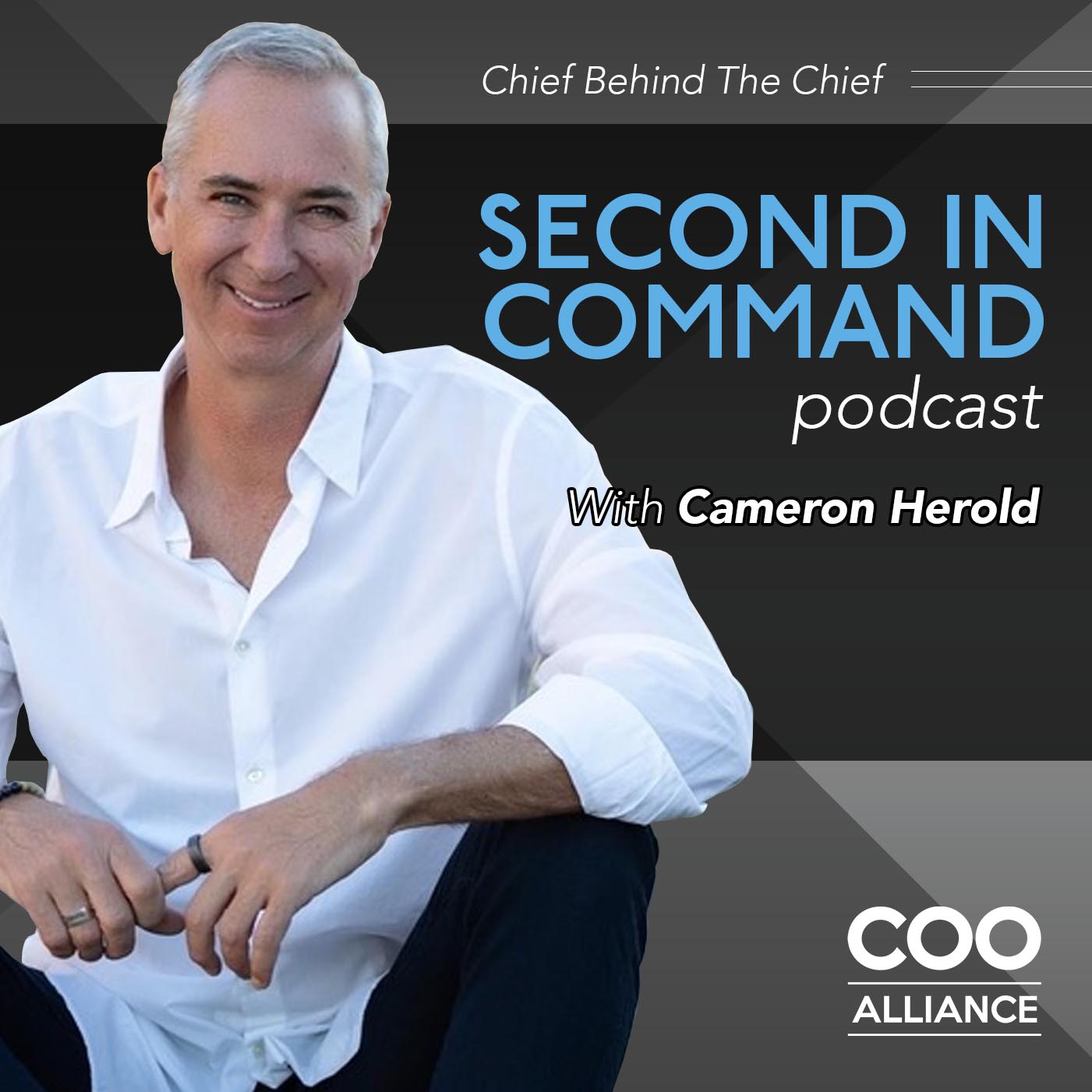
Second in Command: The Chief Behind the Chief with Cameron Herold
Ep. 483 - Aligning Dreams with Reality: How to Find Your Next Right-Hand Leader
00:40:46
Loading summary
Transcript8 lines
- [00:00]
Cameron Herold
Hey, it's Cameron Herald, the host of the Second in Command podcast. Before we dive in, there's something you need to know. If you're a coo, VP Operations, or you're in any role where you're the second in command to the CEO, the COO alliance is the place for you. If you're the integrator to the visionary, you're going to want to join us. The COO alliance is the world's leading community for the second in command. We've had over 500 members like you join from 17 countries to grow their skills, connections and confidence. You'll get the tools, friendships, and a 10x guarantee to ensure that you get your money's worth. Go to cooalliance.com to learn more and see if you qualify. You can even book a free call with our team to ask questions. Now, let's jump into this week's episode.
- [00:50]
Welcome to the Second in Command podcast, produced by the COO alliance and brought to you by its founder, Cameron Herold. In the second in command podcast, we talk to top COOs who share the insights, strategies and tactics that made them the chief behind the chief. And now, here's your host, Cameron Herold.
- [01:14]
Okay, on today's episode, we're going to talk about how do you hire the coo? How do you actually interview them? How do you recruit them? What are the types of questions that you want to be asking these COO candidates or second in command candidates? What are the kinds of questions that you're going to ask to not scare them away? And sometimes you're going to scare them away by selling and overselling? The really best candidates want to be challenged in the interview process. And we're going to go deep into how do you actually interview them, how do you hire them? How do you bring them into your organization? We'll see you on the inside. Because COOs are not transferable from one organization to another, finding them isn't always easy. There's no central casting where you can hire the perfect fit, so it's usually a tough recruitment search. In addition, the top level people you need are rarely unemployed. Only 5% of them are ever out of work, and they're likely not looking for a new post. That means you have to poach them. The right search firm can help with that. In addition to the usual online job postings and engaging your external network to help in the hunt. Internal versus External hires. The first decision you have to make is whether you want to promote from within or hire from outside. An internal hire can make sense when a company requires deep technical knowledge or industry focus. Moving from one company to another within an industry can also work, although it's harder to transfer COO skills across industries. So if your organization inhabits a specific niche and you have strong talent, then promoting from within can be a good choice. However, internal hires can go wrong. When employees feel that there's nepotism at work or that the CEO is playing favorites, hurt feelings can inhibit productivity. An internal COO needs the preparation and skill set to manage their former peers. Hiring internally also means obviously that you're limiting the pool of candidates and might miss out on better fits that you would have found outside. Going with the easy hire feels better than doing the work. It's the devil you know. But settling for a mediocre COO is a mistake. If you hire from within, make sure you fully know the person so there are no doubts about whether they can live up to the role. Don't just think we'll give them a try. You would never hire an external candidate and let them try. That's just another way of saying that you're going to give them a chance to potentially wreak havoc on your teams. There's data that shows the cost of having the wrong person is 15 times their annual salary. So if you're paying them $250,000 a year, it's going to cost you three to four million dollars a year to have them there. In terms of the other employees not joining you, opportunity costs, time lag, misinformation, bad decisions being made by the wrong person, a board that won't invest because they don't trust that person, and relationship issues between you and them that everyone else in the company is seeing. It's kind of like mom and dad fighting the kids. Just don't want to be around them. If you can hire well from within your company, good for you. If you can't, bear in mind what I've said before, that the best outside candidates already have jobs and will need to be poached. Both approaches have their pros and cons. Whether a COO needs to come from a specific industry depends on both the industry and what the business needs. Many companies don't require strong technical skills, so a COO doesn't necessarily need expertise in the exact business space. In my case, I knew nothing about junk removal, but lots about customer engagement and franchising. I excelled at promoting franchise partner success and people bought franchises because they could see my passion. That probably means I could franchise any business in the home services space, but it doesn't mean that I have the skills to build, say, a technology company. I also fit the brand and the CEO. In the past, you used to hear the whole adage hire for attitude, train for skill. That approach won't work anymore. Now you have to hire for both cultural fit and skill. If you hire for just one or the other, they'll both fail. CO alliance member Scott Srum says this of his transition to COO at Hennessy Digital. My previous job was president of a small, privately held company that was about the same size as the stage of Hennessy Digital was when I joined. Even though that company was in a different industry, my experience of leading it through a decade of growth made me a good fit for the role. Someone with a background in apparel who doesn't know the car industry can't be the COO of a car company. There's just too much subject matter expertise missing. However, it's easy for the CEO of a restaurant chain to go to another restaurant chain regardless of the type of cuisine. In the same way, someone who's built a technology company could probably build another one. Prepare for challenges Bringing in an external hire to oversee existing employees is like an advanced chess move. You need to be thinking three or four moves ahead. You need to notify the employees of the process before it starts and persuade them to feel excited to work for this new leader. You may need to show some of them that they would have not been the right person for the role. You should also be transparent about compensation because it's a big issue and because everyone will soon find out what the COO earns anyway. Plan and have all those discussions before the issues come up. Bringing in an outsider as a second in command creates an inherent challenge. The newcomer hasn't witnessed the history of the company, how its DNA was formed, how its idiosyncrasies developed, or how the different leadership styles work together. There are thousands of elements that insiders take for granted that no outsider can hope to understand in the beginning. However, coming in with the right core values, strong technical skills can set them up for success if they have the aptitude to learn the cultural side of the business. It only works to bring someone from the outside if they have the strength and depth in industry ip. On the other hand, a COO who grows up inside of the business and understands the culture and history deeply might lack the same technical depth of expertise as someone who has been working elsewhere. A COO by any other name. It might seem a minor consideration, but a CEO looking for a second in command should consider what to call them in any job posting. I actually prefer the term second in command over coo, partly because it gives definition, clarity and flexibility in hiring, and partly because the options can be misleading. A chief operating officer, for example, might not have anything to do with operations in the same way. Although you can be a CEO of a company, Whether you lead one person or 5,000 people, you likely wouldn't call a second in command a COO. In a 20 or 30 person company, a better title for that second in command might be Director or VP of Operations. Company searches can get sloppy or expensive if they start giving out titles too early. The job title has to match both the responsibilities of the role and the compensation you're willing to pay, which are both linked to the size of the business. In a 50 person company, say you might be hiring a Director of Operations, a General Manager, an Operations Manager, or a VP of Operations. The bigger the title you give away, the more responsibilities a person should have because they'll expect their compensation to be based on their title. For instance, at the time of this writing, Salary.com says the average COO salary is $464,000 a year, while the average director of operations makes 180,000. I take those figures with a pinch of salt because I feel like recruiting sites inflate them to raise people's expectations and get attention. Realistically, I'd expect to have to pay about $300,000 for a COO and 130,000 for a director of operations. And for a VP of operations, it might be more like 180,000. Someone with any of those titles could be the head of Operations, so ensure the title you give the role aligns with what you're looking for. People will base their salary expectations on the title, not necessarily on the details of their roles and responsibilities. Smaller companies can get lazy about giving out titles and letting people call themselves what they want, but again, they should be aware that the different titles come with different salaries attached. Be very clear with any executive search firm whether you're truly hiring a coo, a VP Operations, a Director of Operations, or something else. Recruiters will look at different talent pools depending on the answer. Scorecard and Job Description the first requirement for your job search is a scorecard for your coo. Once you know what you're looking for, create a scorecard for the role. There's a sample one in the appendix that you can use as a launch point. But remember, there's no such thing as a template scorecard because there's no such thing as a template COO sometimes CEOs ask me, can you send me a COO scorecard so I can copy it and start recruiting? No, that's like them saying, can you send me your description of your perfect partner so I know who to go out and start dating? My idea of a perfect partner is likely very different from yours. A CEO can have as much help as they need in the search process, but as a leader, it comes down to them to define what they're looking for. Don't get married to someone else's idea of a perfect spouse. Base the scorecard on asking yourself what are the top five things the COO would have to get done in their first year for the hire to be a success? You can rate your prospects using the CO Alliance's eight core Vision, Strategic Plan, People Systems, Meetings, Financial Systems, Job Related Skills, Mentors, and Company Culture. The scorecard lays out whether a hire will fit the organization and how you'll measure success. This part of the process requires your thoughtful vision and full engagement. Don't phone it in. Use the steps from the previous chapter to make sure you know your own needs and temperament as well as the unique abilities and temperament that would complement yours. Otherwise, you're unlikely to find a good candidate. Technology means you have a wider reach in your search than ever before, but preparation, self knowledge and leaning into the future can't be automated. The goal is to recruit, interview and hire someone who doesn't just know how to do the work on the scorecard, but has actually done it before. To use a left field analogy, pretend you are hiring a swimmer. Why? Who knows? Do you want someone who knows all four strokes, how to win an Olympic gold medal and how to break a world record? Or do you want someone who has won a gold medal in even just one stroke? You go for the experience. In theory, most people know how to win a gold medal in swimming, but they suck at doing it. You'll need to dig deeply enough to make sure that the candidate has truly done the work, not just that they know how to do it from school or books. Once you've established your scorecard, you need to write your job description. It has to be written in such a way that when your perfect COO reads it, they think, fuck yeah, I'm all in. If you swear in real life, swear in your job description, say quote, I'm a CEO who's slightly manic and who fucking swears a little bit too much. That way, if somebody comes in and goes, I don't like that you swore. It's cool. See ya I don't love that. I swear either. But if you're going to work with me, we have to at least gel for a starting point. Write your first draft or your job description like you're telling your best friend about the role. Then hand it to a marketing person or a copywriter. A really good one. Pay 1000 bucks to have a copywriter make that job description pop off the page like the best sales copy you've ever written in your life. We would never write our own website copy or landing pages without using a copywriter, so why would we use a job description that HR wrote? Hr. They suck at marketing. They're process people. They're all about policies and procedures. You need a copywriter to write your job description so that the right people will look at it and go, hell yeah, I want that role. And the wrong people will look at it and think, not if it was the last job on earth. Now it's a question of getting the job description in front of as many people as possible. Share a link to it with your entire network, including on LinkedIn and Facebook. Ask your employees to do the same. Contact any business or mastermind groups you belong to and send it to them. Share it with your entire email list. If you've clearly described the role, people will immediately have a sense of who the perfect fit is and start likely directing people towards you. Differences by Business Size your search for a second in command depends somewhat on the size of your business. For small under 50 employees, the CEO is often looking for someone who can simply get work done because they're often too busy or need someone who knows how to scale. The COO generally comes in to build the first management team followed by the first leadership team. Those COO roles tend to be for a jack of all trades, someone who can handle a wide variety of work, project manage and stay on top of all the moving parts as the company scales. At this size, the COO is telling everyone what to do. For medium sized companies, 50 to 200 employees. These firms generally need someone who can build a strong leadership team who can recognize the different needs between a leadership team and a management team and bring domain expertise. They can think strategically, but this role may be the biggest thing they've ever done. They must be good at developing people and growing skills of the team and they probably need strong financial acumen the bigger the business gets. For large 200 to 500 person companies, these businesses need an increasingly seasoned COO and the role no longer involves telling people what to do. Instead, the COO is collaborating problem solving, removing obstacles and thinking in an increasingly strategic way. For enterprise level organizations with 500 plus employees, this is beyond my sweet spot. All bets are off, but thanks for reading and once you hire them, your COO can join the COO alliance too. Search Firms Given that external hires usually means poaching, an executive search firm can help you identify and approach a list Candidates Most A players are never out looking for a job. They're not scouring LinkedIn or industry job boards.
- [15:00]
They're not.
- [15:01]
They don't have a resume to hand to you. Unless someone puts your posting in front of them, they won't see it. Qualified search firms know where these people are and they can reach out to see if they're interested. Expect a recruiter to set up a conversation but not send along a resume. I haven't had a resume since 1989 because I haven't needed one. Many eight players don't have resumes either because they don't need them. Don't focus on what's on paper. Focus on what the candidates say and how they say it. Just talk to them about what they've been doing, their experience, and how their current company poached them and why they left the company they were at before that. Understand their motivators and incentives, not just so you can bring them on board, but also that you can prevent them from leaving in the future. To reach the right people, the executive recruiter needs a scorecard and job description for the role. The scorecard should give full clarity on what the person will be responsible for and how their success will be measured. The job posting should be at least 90% perfect. If you haven't had it copyedited, the recruiter might have a copy editor polish it, but they can't fill big gaps around compensation, possible titles, or reporting structure. Because of the diversity of COOs, there aren't any One Stop Shop COO recruitment firms. However, there are qualified firms that recruit for COOs in addition to other C level roles. I refer senior searches to four great executive search firms all the time. They're not names you'll already know, so if you'd like an introduction, email me infoameronherald.com the first firm that I work with specializes in the $200,000 to $350,000 range and is amazing at finding good, solid, seasoned COO's or VP operations. I've referred 30 clients to them over the last 10 years. They have an intense attention to culture and are careful not to disclose information to the candidates they don't think are the right cultural fit. I also have a firm that only recruits virtual assistants and executive assistants. If you're not yet ready for a second in command and want to buy some time and free up some of yours, I categorize the rest according to compensation level. One only recruits for $500,000 plus roles for very seasoned executives. Another works in the $120,000 to $180,000 range for more junior people. Again, simply email me for an intro. I'm happy to help you out. When you're doing job postings, be sure to include the compensation in the job posting itself because it'll help attract the right people and make the recruiter's job easier. The right firm can do a great job referring qualified candidates, but only in their own range. If they only recruit from the most senior people, you might want someone mid level. You're fishing in the wrong pond and you won't get the right catch. You need to do the work on the front end to establish where you need to get to. Remember the wisdom of the Cheshire Cat. If you don't know where you're going, any road will take you there. If you don't know what you're looking for, any executive search firm will do until you realize you've just agreed to pay $420,000 for what should have been a $200,000 job. If you use an executive search firm, don't just jump on the candidates they send right away. Some firms are more interested in getting you to choose one of their candidates. It's how they get paid than in finding the absolute best person available. This is why I love the firms I introduce my clients to. They know they're sending us great prospects, but they also know we're really going to interview them hard too. Stress test them. Tell them thank you for sending all these amazing candidates, but I still want to do our process. They might insist that they've already run their own process and the candidates they've sent you are plug and play. Making a decision based on their assessment alone is like picking someone to marry from three possible blind dates lined up by a stranger. Complete your own process as well. You're interviewing your work spouse, so do your own reference checks. Screen the resumes and check for culture fit. A search firm will send you good, solid, qualified leads, but you can't just accept them without doing your own legwork. To have the highest chance of success, make sure you fully educate the search firm on the vivid vision for the company, what you're building, and the scorecard for the role Spend the time on the front end to ensure that they fully understand the leads they're generating and will only send you the best fit candidates. If they're crystal clear on the role, the company, the culture fit, and who you are as a CEO, they'll do a much better job. You're not their only client, so it's important to train them on exactly what you need and which candidates will make a good fit. That requires far more than simply handing them a job description and telling them to go find your princess or prince. Have multiple members of your team brief them so they get the whole picture. Networking in the past, becoming a CEO was about capabilities and connections. You might remember how every city or town had business clubs, mostly for men in jackets and ties, as a way for the power elite to pay for access to the closed community. They were members of golf clubs and tennis clubs for the same reason. Education might have been democratized, but networking remained the preserve of the elite. A CEO who needed to recruit a COO had a small pool to fish in. Today the pool is much larger and technology, the Internet and social media makes it easy to cast a wide net. CEOs still tend to need to be smart and capable, but the role is more democratic and they can leverage the strength of a.
- [20:13]
Hey, it's Cameron. I hope you're loving today's episode. Quick question for you. Does your company have a strong leadership training program in place to grow the skills of everyone who manages people? If you want to help yourself and your company grow, get everyone who manages people learning from my Invest in your leaders online training program. There are 12 core leadership skills that I cover online and they're all going to really grow. CEOs pay me $78,000 a year to coach them one on one and now you can all benefit for 1% of what they pay me. These are the same leadership skills that I created and certified everyone in at 1-800-got junk when I was there as COO. Go to investinyourleaders.com today and use promo code podcast10 before the end of the month to get 10% off each manager you sign up. Now back to the show.
- [21:08]
Far greater group of candidates, including men and women who would never have been allowed in the old business clubs 20 years ago. Recruiting required a newspaper ad, search firms, employee referrals, asking around at the club and keeping your fingers crossed that someone lived nearby. Today you can post a job on Facebook or LinkedIn and fight great candidates who will compensate for your weaknesses even though they live in another city or state or even another country. Especially when you have really strong job postings written to magnetize the talent that you want to hire. In the past, work almost exclusively happened in person, so candidates for posts had to be within commuting distance or be willing to move. Now they can come from virtually anywhere, depending on the scope of the job. I spoke with the coo of a 310 person company on our second in command podcast about this. Despite being the second in command, she's the only employee who lives in Seattle. Her team is spread over six countries and the majority live in New York City. As long as talent can be integrated, fits culturally, and can get the job done and is willing to work for what you're willing to pay, it doesn't matter where they live. That expands your choices exponentially. When Brian needed a COO for 1, 800, got junk. He had to rely on his own network. The entire face of business would have been different if he didn't happen to know me. I know the other candidate he considered, and I know that without me, the company would have never reached even $10 million. I recruited somebody who became our first franchisee and remains the biggest franchisee to this day, doing gross revenue already exceeding $25 million. Brian didn't know me entirely by chance. He knew me because he was okay with learning from others and not always being the most knowledgeable person in the room. He had set out deliberately to cultivate his network of other CEOs. We met through the Entrepreneurs Organization EO and today there are far more of these mastermind communities. I would strongly recommend that every CEO should get involved with at least one thought leadership community such as eo, Young Presidents Organization, vistage, Genius Network, Baby Bathwater, War Room, Mastermind Talks, or Strategic Coach. I've been a member of all of them, some for seven years. It's a CEO's responsibility to cultivate their network for the benefit of the company. CEO networks are much stronger in the United States and Canada than anywhere else in the world. In other countries there's almost no entrepreneurial support system. Italy is one example. There is some global reach with YPO and EO, but whereas there might be 50 different communities for entrepreneurs in North America, the UK only might have a handful. In any case, CEOs should join one and the COO alliance was created so second in command can grow their network skills and confidence as well. Networking and the democratization of knowledge are powerful tools, but only if you use them. A shovel doesn't dig a hole on its own. It just sits in a corner unless someone picks it up and uses it. Leverage the tools Collaboration, democratization, access to information, outsourcing. Because the alternative is to fall into the same trap as the many CEOs who still defer to the smartest person in the room. Or hire the MBA who knows it all. They need to take their heads out of their asses, grab the shovel and start digging Virtual Bench I once had dinner with a talented executive and told him, I know I'll hire you one day, but it's not now. I told him I'd keep his resume on file. Six months later, when I was recruiting, I reached out to him. Christopher Bennett was surprised I'd kept my word, but I hired him. He worked for us for years. He's a close personal friend to this day, and he was an iconic part of our growth. Even when I'm not actively recruiting, I constantly keep my eye open for people who could work well in my company and whom I could contact in the future. I call it my virtual bench. I keep my eyes and ears open regarding potential positions that might open up in an organization as well as potential fits for those future roles. I'm keenly aware that the best people probably already have jobs, of course, but I'm okay with taking them away from an average company and bringing them to a great one. In my mind, it's no different from taking a great soccer player and moving them to a better team. The best teams are always trying to recruit players and the best players are always trying to play for the best teams. Recruiting employees from other companies is like sport. I do it on weekends for fun and it's a full contact activity. Your CEO is working somewhere today. They work for one of the top companies to work for one of the best managed and fastest growing companies. They work for a client like yours and you go and poach those people. You have to look to recruit and bring those people into your organization, not just as coos, but across your organization. Some of you already know your COO candidates. You likely met them years ago. The Interview Process Hiring a capable COO will test the interviewing, recruiting and hiring competency of any organization. I devote a whole core module of my invest in your leaders course to interviewing and doing the reference checks because those steps are so crucial to finding and vetting the best candidate. Don't rely on hr. That might sound counterintuitive, but HR are not the best folks to interview and recruit a coo. Their role is to support the search by getting the job, posting in front of as many eyes as possible, soliciting video submissions and setting up the first round of group interviews, but the actual interview should be conducted by the board, the leadership team and the CEO. They're the only people who can hire a coo. HR doesn't have that level of capacity to do senior level hiring. The actual interviews can be held over zoom or in person, but they must be rigorous and the process should involve more people than just the CEO and should possibly include outside advisors. I've been called in numerous times to interview COOs on behalf of different CEOs. Any of the new COO's potential direct reports should participate in the interviews because they'll be best placed to figure out the cultural fit and any energy issues of the new leaders. If they interview candidates in a panel format of around three people, they can have a more lively, less threatening discussion than a one on one interview and gain more insight. The candidate will also get a better sense of the kind of teams that they'll be leading. Video Submissions the interview process starts with HR gathering as many resumes as possible from great people. Send the candidates the vivid vision from your company along with a recent article about the company and the media and ask them to send a three to four minute video of why and how they think they can help make the vivid vision come true. I don't even read the resumes until I receive that video submission which I use as an initial screening. It doesn't matter what skills they have unless they feel like the right culture fit. If they're not excited about the vivid vision or where the company is going, any interview will be a waste of time. A total of 10 videos is an ideal starting point. 10 resumes aren't enough however, because half of them will be from people who are playing the odds and sending their resumes out everywhere. They don't know enough about your company, haven't visualized themselves in the role, so they're another waste of time. If you're using recruiters, tell them to share the vivid vision and get video submissions before you start considering the candidates. If a candidate won't take the time to submit a video, don't take the time to interview them. By screening the videos for Culture Fit before reviewing the resumes, you'll interview fewer people and in a more throw way because you'll already know they're solid. You end up with a high quality shortlist with whom you can do a deep dive on actual skills and experience. In the initial interview, probe each candidate's culture fit first to make sure they already live the organization's core values. Have the behavioral traits you're looking for and truly only want to work in the areas of business that the CEO does not. That last is critical. You don't want to hire someone with a burning desire to run marketing, for example, if it's the CEO's wheelhouse. That candidate could be extremely skilled, but they'd be a poor fit for the COO given what you need. Or maybe they're an extrovert when you need an inward facing analytical coo or they've always worked in big corporate jobs but you need someone more entrepreneurial Skill Interview Use the basic criteria culture fit, behavioral traits, core values, and compatibility with the CEO to narrow down the candidate pool to four or five strong candidates with the right culture fit. Then give each a skills interview to find out if they have the sufficient experience with the core projects that would be on their plate. Sometimes the CEO doesn't have the aptitude to do the skills based interview, such as when the second in command needs to oversee engineering or finance because those areas are not the CEO's strengths, the reason for hiring a COO in the first place. In those cases, the CEO has to be honest with themselves and have advisors or department leads interview for the skill components. The danger is that the CEO may otherwise end up hiring a person simply because they like them and not necessarily because the person has the skills to do the job. Interviewing to hire a COO uses all the same skills that I cover in the people and interviewing sections of my first book, Double Double and in my Invest in youn Leaders course. Both have great content on interviewing and should be reviewed by you and anyone assisting you in the interview process for COO or any key hires. Top Grading References this isn't a book about interviewing. If you need one, I'd suggest Jeff Smart's book who or Bradford Smart's Top Grading. But I want to make a particular point about interviewing. In the course of your interviews, each candidate is likely to mention 10 or so people they've worked with and reported to or have reported to them. At the end of the second interview, ask them to provide email addresses and phone numbers for at least 8 of those 10 people. Explain that you're not going to call the three references they provided, but may call 7 or 8 of the 10 people they've mentioned. If you're the COO or second command to the CEO of a company doing minimum 2 million in revenue, come check us out@cooalliance.com and welcome home. The A players will return all 10. The B players will give about 8 and the C players will run away. They're out of there in the next interview. Spend about 90 minutes or a couple of hours asking what each of those references would say about the candidate. Would they confirm that the candidate lives by the core values? Would they confirm the skills presented? This thread of reference check or TORC provides the basis for you to ask very probing questions. In that time, you learn a great deal about the true character and skill set of the person. The strong candidates would love it if you called their auxiliary references, while the weak ones won't even show up. When I do reference checks, they go something like this. Look Ben, I'm calling about Bob. I'm thinking about bringing him on as my coo. I know there's some bad stuff in there that I'm going to find out later, but I need you to tell me what it is. And please don't make me chase you down the street and beat you up with a baseball bat when I find it out later. Tell me the bad shit now. I will keep pushing and pushing and keep pushing until you tell me the bad stuff. I call up to 10 people to do reference checks on key hires because the day they start, I need to know everything about them. I've worked way too hard to get to this stage to allow somebody to come in whom I don't know enough about. You too. You're not looking for a players on Craigslist. You have to poach them and you have to know them. Know your candidate in advance. Some CEOs, too many tell me that it takes 30 to 90 days after a person starts working for them to know if they've made the right decision. I tell them that's because you suck at interviewing. If you do the interview process properly, you'll know everything there is to know about the person. The day they start working for you, there'll be nothing left to learn. Imagine getting married to someone and waiting to see how the first three months turn out to know that you should marry someone you date. You see if you're physically compatible, you ensure you fit together, then you get married. If you start by getting married and seeing if the rest falls into place, you're taking an enormous risk with your life. It's the same with business. A three month trial period is a horrible way to approach hiring, especially for such a pivotal position as a second in command. Leaving things up to chance sets you up for failure and is potentially very harmful for your organization. Hiring the wrong senior executive can be incredibly disruptive. It's also very time consuming. If you Go through the recruiting and interviewing process, then have the person for three months before you start the process again. You'll have wasted almost a year. I've recruited and interviewed on a large scale with repeatedly excellent results. At College Pro Painters, we had to go out and get 800 brand new franchisees every year. Between May 1 and August 31, those 800 franchisees hired 8,000 painters who were also college students, and we went from 60 to 9,000 employees and produced $64 million in revenue in four months. On August 31, all 8,800 kids quit and went back to school. On September 1, we woke up and said, oh shit, we have to do it all again. And we did, year after year. I was part of that very senior leadership team for four years. Fun fact, one of my key hires was Kimbal Musk, Elon's brother. In that scenario, you soon become operationally world class at recruiting, interviewing, selection, training and onboarding. In such a short window, you don't have the luxury of waiting 90 days to see if someone is the right fit. To be perfectly honest, you don't have that luxury in any industry. If you interview and hire properly from a position of knowing who it is you're looking for, you can save yourself a lot of pain. Take it on Trust it all comes down to trust. Before you hire your new second in command, I want you to know so much about them and be so confident in them that on the day they start, you'd be happy to give them your master password, your bank account information, and the keys to your house. You'd let them take your kids and travel with your spouse for a week. If that complete, implicit trust isn't there, then don't make the offer. It's as simple as that. What to Offer I've explained how search firms specialize in filling posts within particular salary ranges and how salary expectations are so closely linked to job titles. So let's spend a little more time on practicalities. What should you offer a second in command? The answer depends on where your business is right now, what you need, and how much you can pay. If I wanted to hire the best Chief marketing officer in the country, for example, I guess it would be the CMO for Apple. That might be possible, but it would likely cost me $10 million a year. That's not realistic for me or for most other businesses. If you run a small, early stage venture capital funded operation, you're competing with bigger blue chip names. You'll need to offer equity or a long term incentive package because candidates won't risk working with a startup unless there's a big upside. In some cases, however, it's too risky to give out equity, particularly if you've never given it to any other team member. Introducing the practice in order to get the COO you want can open you up to potential conflict. If you've grown a team internally and then give an outsider something that they haven't received, compensation that's poorly thought out really pisses people off, as it should. Salary Only My preference is to pay executives a fair salary based on their role and responsibilities, and that's it. I don't think bonuses incentivize strong senior executives to work harder than normal people. People will work as hard as they've always worked hard, so pay them fairly based on the role and then fire them if they don't meet expectations. Bonus systems are unnecessarily complicated Most professional sports teams don't pay bonuses to individual athletes for scoring goals, points or runs. If the athlete is an offensive player, scoring is their job. Teams recruit good people and expect them to score goals because they're goal driven players. That's it. It doesn't make sense to hire someone for a base salary and then pay per goal scored. The same goes for seasoned executives. There's actually some data to show that bonuses demotivate more than they motivate. In Dan Pink's TEDx talk the puzzle of Motivation, he talks about bonuses not making sense except in true eat what you kill sales rules. Real professionals are already doing their best possible work, so just pay them very fairly for doing it. Bonuses can also leave people feeling unhappy all year except for the two weeks when their check is bigger and they spend wildly. It's better to raise their base pay so they can have a somewhat better lifestyle all year long. Profit sharing based on outcomes is different from a bonus based on effort. However, it makes sense to include the COO in all senior executives, managers, and so on in profit sharing structures if you're putting them in place. When you have a solid recruiting process, conduct meaningful interviews, use torque, and do the proper reference checks, you can feel confident that you're bringing on a great person. In that scenario, you don't need performance based pay to compensate for a lack of vetting, which is generally what's happening with bonuses. Role and Title as we discussed, the exact role and title depends on the needs and size of the business. A second in command might be titled coo, President, VP of Operations, General Manager, Director of Operations, or Operations Manager. The precise title depends on the responsibilities associated with the job description, the value the role brings to the organization and what you'll pay for that value. The bigger the title you give the person, the more it can skew their expectations of their responsibilities reach and the accompanying salary. They may also be less inclined to roll up their sleeves and get dirty. Given the role that you've outlined and what you can pay, what would you call it? Be cautious with giving out titles that are too big too early, especially coo, because some can come with a significant amount of power. Remember that you're not looking for a COO per se, you're looking for someone to do the work in the job description, be it a COO or not. And if you do give out bigger titles too early, they have no title left to strive for as they grow. Ginny Lee, COO of Khan Academy, explained how she learned to be less interested in her title than in the work she was doing. A business school professor of mine named Jim Collins said, don't pay attention to the title. Don't pay attention to adjectives that you think will get your confidence from Focus on the company, its values, and making sure it's aligned with your core values. Whatever title you land on, the org chart needs to clarify roles, responsibilities and reporting structure. If IT and finance report to the COO and the COO just show up at their meetings. If marketing reports to the second in command, is it appropriate for the COO to drop in unannounced? Of course as a leader you can, but sitting in different business areas and meetings requires a certain finesse, especially when those people don't report directly to you. The COO might be responsible for aligning, growing and understanding all parts of the organization, but they also need to respect the various area leaders and avoid stepping on their toes or getting in their way. Having a clear org chart sets expectations, after which you can decide when or whether it is ever appropriate to deviate from the structure. Just because the COO can show up doesn't mean that they should, because it can leave unintended consequences. Their focus should be on removing obstacles for people rather than bossing them around.
- [40:10]
You've been listening to Second in Command, brought to you by COO alliance founder Cameron Herald. If you enjoyed this episode, please be sure to like, share and subscribe to us on Apple Podcasts, Spotify and our other podcast streaming platforms. For more best practices from industry leading COOs, visit COOAlliance.com.