← Second in Command: The Chief Behind the Chief with Cameron Herold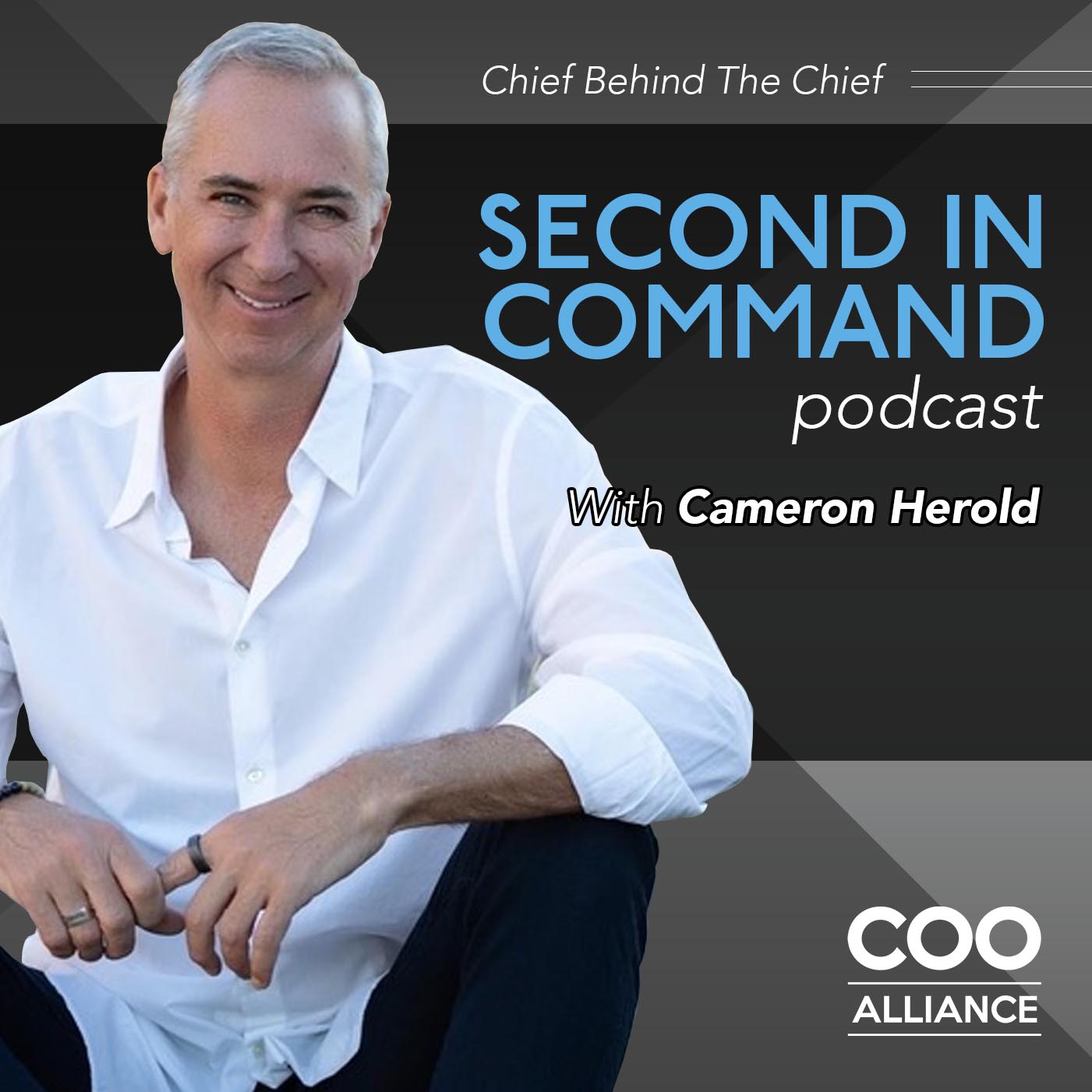
Second in Command: The Chief Behind the Chief with Cameron Herold
Ep. 484 - Forensic Psychiatric Associates (FPAMED) COO, Ted Collins
00:41:54
Loading summary
Transcript50 lines
- [00:00]
Cameron Herold
Hey, it's Cameron Herald, the host of the Second in Command podcast. Before we dive in, there's something you need to know. If you're a coo, VP Operations or you're in any role where you're the second in command to the CEO, the COO alliance is the place for you. If you're the integrator to the visionary, you're going to want to join us. The COO alliance is the world's leading community for the second in command. We've had over 500 members like you join from 17 countries to grow their skills, connections and confidence. You'll get the tools, friendships and a 10x guarantee to ensure that you get your money's worth. Go to cooalliance.com to learn more and see if you qualify. You can even book a free call with our team to ask questions. Now, let's jump into this week's episode.
- [00:44]
Ted Collins
So FPA Med stands for Forensic Psychiatric Associates and We are a 17 year old practice of forensic psychiatrists and forensic psychologists who get hired by litigants or actually by litigating attorneys seeking help with cases at the intersection of mental health and the law.
- [01:09]
Savannah Brewer
Welcome to the Second in Command podcast produced by the COO alliance and brought to you by its founder, Cameron Herold. In the second in command podcast, we talk to top COOs who share the insights, strategies and tactics that made them the chief behind the Chief. And now here's your co host, former COO of a multi eight figure remote company and alumni member of the COO Alliance, Savannah Brewer.
- [01:41]
Ted Collins
Our guest today is Ted Collins, the Chief Operating Officer at FPA Med, a company at the intersection of law and mental health, Ted plays a unique role leading the team that supports their network of psychological experts and legal clients through intake, contracting, paralegal services, billing and more. With a background in healthcare and telemedicine expansion, including launching national platforms like Psych Connect and scaling Bright heart health across 40 plus states, Ted brings a deep operational lens to complex service delivery. In this conversation, we explore what it's like to be the middleman between attorneys and psychological experts, the systems that he's built in order to support mass cases, and how he helped FPA Med scale without losing the culture and client experience that made it special. If you're interested in what it takes to grow a specialized service business without selling out or burning out, this one is for you. We are live with Ted Collins. Welcome to the show.
- [02:45]
Thank you very much. It's great to be here.
- [02:47]
Yeah, we've been doing a little chit chat before and there's a couple things that we are super interested in diving into because you're kind of in a little bit of a niche sector that I personally have not yet talked to anyone in. So this is going to be just as educational for me as hopefully everyone else. But why don't we just kind of start off with, tell us a little bit about what you do and who do you serve at the company. FPA Med, of course.
- [03:13]
FPA Med stands for Forensic Psychiatric Associates. And we are a 17 year old practice of forensic psychiatrists and forensic psychologists who get hired by litigants or actually by litigating attorneys seeking help with cases at the intersection of mental health and the law. And what that means is, for example, if there's a case that involves PTSD or emotional distress or some type of traumatic brain injury, sometimes it's child custody hearings to see whether or not there's a, you know, parental fitness, fitness for duty, all of these different things where somebody's mental condition is in question, either in a criminal context, for example, if there's competency to stand trial, or even the juicy stuff like not guilty by reason of insanity, or civil things where people are trying to sue one another and they put their own mental health condition in question by bringing the lawsuit. Then our group goes and does a very evidence based process that involves psychological testing and record review and a very deep psychiatric evaluation followed typically by a report. And we will often be deposed and asked to go in and testify at trial. And I'm sure that you guys have seen on multiple TV shows examples of forensic experts getting up there and talking about brain or their childhood and how that might have impacted the way that they're acting in certain scenarios, et cetera. So it's really super interesting stuff. And you know, I as an mba had never heard of this stuff before. And it is interesting because within the context of the law also it's only a very specific group of lawyers and cases that that would call upon us.
- [05:06]
Okay, and how did you find yourself in this position after, like you said, not being in this world at all? How did you land here?
- [05:16]
Prior to joining FPA Med, I was the chief development officer at a nationwide telepsychiatry company. And we were growing inorganically looking at practices, psychiatric practices to acquire. This was during the pandemic. Dr. Levy and I have known each other since the 1980s. I knew that he was a very successful psychiatrist and I reached out to him to see whether or not he had a, a group that he wanted to assemble to potentially Sell to us. And this could be potentially a retirement vehicle for him. He said, no, Well, I actually only spend a small percentage of my time in clinical practice, which is what the telepsychiatry platform was looking to acquire. He said, I spend the majority of my time doing forensic psychiatry, which is not clinical practice, which is more focused on having the people that he serves are the triers of fact. So the jury, the judges, etc. Trying to find out what the truth is, versus a clinical practice, which is to try to help alleviate the suffering of whoever it is that he's. He's treating. So we kind of kept in touch about that. And there came a time when he was looking to retire or try to figure out what his pathway towards retirement was. And given my background in business strategy, he asked me to come on as a consultant to figure out how he might be able to package this practice, which at that point was 17 forensic psychiatrists and psychologists for potential sale. So I jumped in and I looked at this beautiful company and this niche that he had developed and the culture that he had developed where, you know, all of these experts who typically operate by themselves in silos, and it's kind of lonely for them to be able to work in a team and to feed off of one another and type of environment made it so that they wanted to be part of a group. All of them could, if they wanted to, just go and hang their own shingle and market for themselves and build for themselves and do all of that stuff. But being part of this team, it's more than a sum of its parts. And I figured that, you know, based on my own experience working at a company that had been acquired by a private equity firm. The risk of that is the private equity company would come in and change the culture and really focus on things that would potentially make the assets, which are the people, decide that it's no longer worth being part of that. So that's a long winded way of saying that. I convinced Dr. Levy to allow me to kind of improve the operation, grow the company, double down on the culture, and allow him to kind of ride off into the sunset while I was continuing to run the company and generate profits that would support his lifestyle and he could work as much or as little as he wanted to.
- [08:08]
That's amazing. And that was three years ago. Right. So you came in, kind of found a way to position yourself, it sounded like in the middle. Could you tell us a little bit about what does your role look like between, I think you said, the psychologist and the Lawyers?
- [08:26]
Yes. So we have a combination of psychiatrists and psychologists who work together in a team. And I have an operating team that includes folks who do intakes once the intake is concluded and the matter is open. I have a paralegal who supports the experts while they are working on an open case. I also have a financial administrator that helps with all of the retainer collections, the invoice collections and billing, paying all of our experts and just basically doing all of the reporting to make sure that we're remaining financially healthy. And then I also have a business development person that helps me with advertising, getting our folks in front of potential hiring lawyers, including doing CLE webinars, going on podcasts, and, you know, speaking at industry events. And then also she helps with a lot of the licensing that we do because we get approached by law firms across the country and they might need something very specific. And that particular lawyer, sorry, that particular expert might not yet be licensed in the state where that lawyer is looking for it. So if they say, I need a female child and adolescent psychiatrist in North Carolina, we say, okay, well, we have one that's licensed in Kentucky. We're going to need to get her licensed. And here's the process. Can you spare three months while we get that done? We'll do the record review, review, et cetera, et cetera. So there's a lot of kind of operational stuff that needs to happen in order for the experts to be able to do the work and to deliver on the work. And so, you know, we're running all of that interference for the experts while at the same time helping the lawyers, the attorneys, to, to assemble the right team that will be able to help them with the specific issue that they're trying to resolve?
- [10:19]
Gotcha. And was that. Were those teams already set up when you came in three years ago, or was there kind of a different direction that you started going with the operational build outs, with a different direction of selling it versus kind of stabilizing it and growing it with you stepping in.
- [10:35]
Yeah, so when I came in, we had a part time intake person, a part time paralegal, and an outsourced financial administrator. And we didn't really have anybody that was focused on the business development who is really founder led. And Dr. Levy was doing pretty much all of the intakes himself. You know, the intake person was doing screening to make sure that people who are pro se or who are actively psychotic weren't getting a chance to talk to Dr. Levy. But Dr. Levy would do all of the intakes and then he would be responsible for assembling the specific team of experts that would address a particular need. Now I've improved the process where he can come in. You know, if, if it's a more complex intake or a more complex issue where the lawyers need a consultation in order to better understand what the specific needs need is. Because I know my lane, right. And my team, we know our lane. We are there to help facilitate a marriage, so to speak, between our experts or a team of experts and the specific attorney. And you know, there's a certain amount that we can do without necessarily having to pull in Dr. Levy. But in the times when we need like the special sauce, then we'll bring him in. But I'm really happy that we're able to create a process. We have been able to create a process that takes a lot of the administrative hassle off of him and the rest of the experts so that they can really focus on the forensic work.
- [12:03]
Love that. Could you give us kind of a glimpse into any of those processes or systems or habits that have really allowed you guys to be so specialized and keep the experts focused on what they're best at?
- [12:20]
Sure. The person that I have doing the intakes right now has a psychology degree and then she's also a licensed paralegal. And so we had trained her a lot to understand how to speak to people and to get the information that's needed up front. You know, not only get the complaint, which is normally written in a multi page document, but to ask questions. For example, what state is this in? Is it a civil or criminal matter? How many pages of records are there going to be? What are the deadlines? Do you know the name of the opposing counsel and are there opposing expert records that need to be reviewed, Et cetera, et cetera. Just kind of building a dossier so that when the time comes to do the expert matching or the expert selection, we can go and kind of cast a line out to the experts and say, okay, this is what we're looking for. This is what the case is about, this is the timeline. Does that, that interest you and are you available? So we're just really trying to make it so that the intake person takes a lot of the load off of sometimes Dr. Levy, but also just the experts themselves so that they can make a pretty quick and informed decision about whether or not this is something they're interested in. So it's just, you know, coming up with a really good set of questions. Sometimes the attorneys don't necessarily have answers to them immediately, but I think we get them thinking about these things and then in terms of the systems for a case that's actually in process, our paralegal is able to kind of be the interface for record management. And often we'll get thousands, if not tens of thousands of pages of records and hundreds of documents that need to be organized in a way that can be efficiently reviewed by our experts. And so she's a whiz at doing that. But sometimes we need to get the help of external vendors that do medical chronologies and summaries. So trying to figure out when that is needed and trying to negotiate the turnaround of that so that we can make our experts more efficient is a really big deal. Actually, it saves money for our, for our clients as well because you can imagine someone reviewing what was 10,000 pages and it's now been reduced, you know, to a quarter of that with summaries that are, you know, clickable and cross referenceable. So you can jump to the part of the document that helps to prove a certain point or provides the information that's needed. It's really a game changer.
- [14:55]
Speaking of game changers, I'm curious, is ChatGPT or AI? I know I've heard that there are certain industries that are, are not allowing ChatGPT to be used. Is there anything in this space where you're not allowed to use it for summaries on things like that?
- [15:11]
Well, the way I'll answer that is this. Our experts, their reputations are on the line. If they get up on, on a, you know, they're being asked to testify at trial and if they're being cross examined and they haven't done thorough review of the records and they've missed something because they've asked ChatGPT to create a summary, that's a really bad look for them. So I know that my experts are very wary of using AI or you know, for example, they'll use AI, for example, for something that is a digital document and they'll be able to scan that more, more quickly and more usefully. But you know, optical character recognition is not great when you're looking at handwritten notes by doctors or by psychologists. Both of my parents are doctors, so I can say that they have terrible handwriting. And you know, just there is a certain amount of, of responsibility that they need to take for actually like looking at the documents themselves and going over everything so that they feel secure and being able to represent the information that's been presented to them in the correct way. I'm saying all of this because I have tried to bring AI generated summaries or medical. Medical chronology products to my experts. They reviewed them and said, this isn't ready yet. No, I'm not going to use this. I'm going to do this myself. Or yes, I'll use this. This is helpful that it helped me to organize all of these records chronologically. But I'm not going to rely on any of the summaries that have been generated, because I need to figure that out myself as time goes on this. I believe that as these models are tuned, they will get more. Become more and more reliable. But I just know for my experts, they're not going to put their reputations on the line at this point.
- [17:03]
But that makes total sense. Yeah, I totally. I totally could see that. And I'm wondering from a kind of culture standpoint, because you're talking about the culture being really amazing. And often these experts, they're kind of running their own ship, but here they have kind of sounds like they. They're supported in many ways. What is the relationship like? Are they on team meetings with you guys? Or is it more of like a kind of contracted type of relationship? Could you go into what that looks like?
- [17:33]
Absolutely. So all of our experts are contractors, and they are able to control the workflow. You know, we will try to get them as much work as possible. And they might have their own clinical practice, their professors and, you know, academic institutions. They may run state institutions for, you know, helping with mental health or, you know, be involved in correctional psychiatry, et cetera. And so we will say, hey, you know, do you want some extra work? You want some extra money? It pays really well. So oftentimes, if they're available, they will take it. What we've tried to do to make this a more kind of sticky and kind of familial environment is to create multiple touch points where people will, for example, consult with one another if there's a case that they may not necessarily be the full expert on. An example would be, there's a case that involves a child and adolescent psychiatrist who's dealing with an adult survivor of childhood sexual assault who knows a lot about how to think about how the child would process that. But they're not necessarily an expert in addiction medicine. And if this person has developed a substance use disorder, they'll want to consult with the forensic addiction medicine psychiatrist. And so that ability to just kind of call somebody up, say, hey, can you help me to think about how to deal with this? That's one thing. We also do pair our psychiatrists and psychologists as a kind of matter of routine, which isn't an industry standard, but we think it's much more rigorous and evidence based to have these psychiatric, sorry, the psychological testing done by, by a forensic psychologist and to have the kind of the evaluation done by the psychiatrist. And the way that we think about it is that an orthopedist will rely on a radiologist for getting the X rays done. They're not going to be the ones that are taking the X ray, but they will be the one that are using it in order to do their job. That separation of labor makes a lot of sense and it makes it so that the doctors get to work with colleagues much more frequently. And then finally, I have taken on creating a monthly brown bag lunch series, which, yeah, it's super fun because each of our Experts, we have 37 at this point. So, you know, every month I'm like, hey, you who may be focused on psychometric testing and traumatic brain injuries, tell the rest of the group about the latest developments that you've, that you've been exposed to, etc. Etc. And there'll be a great discussion. And you know, I send out these voucher links to Ubereats or postmates and people are sitting there eating their lunches while we're, while they're learning. It's like a lunch and learn type of opportunity. But it really does promote a very collegial atmosphere. Even though everybody is connecting virtually, they just feel.
- [20:41]
Cameron Herold
Hey, it's Cameron. I hope you're loving today's episode. Quick question for you. Does your company have a strong leadership training program in place to grow the skills of everyone who manages people? If you want to help yourself and your company grow, get everyone who manages people learning from my Invest in youn Leaders online training program. There are 12 core leadership skills that I cover online and they're all going to really grow. CEOs pay me $78,000 a year to coach them one on one and now you can all benefit for 1% of what they pay me. These are the same leadership skills that I created and certified everyone in at 1-800-got junk when I was there as COO. Go to investinyourleaders.com today and use promo code podcast10 before the end of the month to get 10% off each manager you sign up. Now back to the show.
- [21:37]
Ted Collins
It feels like there's a real team bonding aspect to it.
- [21:41]
Beautiful. What I heard in that is it sounds like there is kind of collaboration that you really built in because I know that there are a Lot of companies that have contractors, you know, as a large part of their team and trying to keep them bought in and keep everybody together can sometimes be a struggle. And I think you're right. Like when you can find those opportunities where you're offering value to them and not just giving extra things because it's supportive to the business, but how do you make it. This win all around is really important.
- [22:12]
One more thing.
- [22:13]
Yeah, please.
- [22:14]
So one of the other real big focuses for me has been taking advantage of this team that we have to offer services within the context of a multi plaintiff or mass tort case. So an example is that we were approached by a law firm that was helping with the assessment of 46 Navy sailors that were claiming PTSD after that sea collision. And we needed to figure out pretty quickly how to think about these 46 plaintiffs to address them, see which ones needed help, see which ones might be actually just chasing a dollar, come up with a plan to help the people that needed help and to hopefully, you know, kind of have a reasonable settlement approach. And we had a team of eight psychiatrists and seven psychologists that were paired based on, you know, geography and, you know, the specific needs of the particular case. And we would have weekly meetings to kind of make sure that we were all on track with, with regard to what the deliverables were, what the schedules were, etcetera, Et et cetera. So there's a lot of collaboration that took place in that scenario. And it was very rewarding to me because, you know, I, in my lane as the business guy, don't really get involved in, or I'm not a billable resource until there's a multi plaintiff opportunity where I have the opportunity to take a whole bunch of the administrative headache off of the client who would, you know, without us have to deal with all of the issues of scheduling and staffing and invoicing and all of these things that I'm now able to take off of their plate. And it turns me into a billable resource. So that's. That ends up making me feel a lot more like, like I'm, I'm a member of the team that's actually contributing to the bottom line. Totally.
- [24:16]
Yeah. Could you maybe touch on some metrics or key indicators that you're personally using to track the health of the business or health of your role or the team that you're working with? What are those?
- [24:31]
That's a great question. And I'll start by saying that we are a company that, that tries to work primarily on retainer. And when we open a new case, we get an initial retainer. And my hope is that we'll get to work on it immediately. Often we will have a lag between the case opening and when work actually starts. So before I started, they were really focused on kind of cash as it came in and not necessarily on the operating health of the company. And so I made the change, I kind of got them to focus more on operating profit as opposed to net income. And you know, we do still do cash based books, but I make sure that part of the reporting focuses on what the actual operating income is, which shows us the number of hours that have been worked in a particular month. And that helps me to understand how we're doing from month to month, what the utilization is of our experts, you know, how much of the retainer balance that we, that we've been holding onto has been been kind of converted during that month. And all of those things that help me to understand better the specific operating health as opposed to just looking at the bank account and saying, oh, we're rich, you know, yeah, for sure. And then the other thing that, that's important for me in terms of the intake process is looking at how long it typically takes for a case to go from initial inquiry to opening. And so that's a big one. And then finally, obviously, since we're retainer based, we try not to get into a position where we're invoicing and arrears for services. But sometimes the retainer gets depleted before we're able to, or you know, that more work needs to take place before we're able to replenish the retainer. And so one of the big things that I've been focused on is trying to maintain as low possible of receivables. And to the extent that we have receivables to keep them all current. And so that's a really big, we have, you know, all of our receivables right now are current as opposed to like when I first came in, there are some that were, you know, 60, 90, 120 days ago.
- [26:52]
So yeah, what, what have you done to be able to improve that? Because I know there's a lot of companies that are chasing down clients to get money. What has helped you guys be able to move to that?
- [27:04]
Well, we were talking about this before and when I put on my hat of COO and you know, I know that my responsibility is to make sure that my, my team gets paid. I can advocate for them even in the face of lawyers who are, who negotiate, you know, for you Know, that's. That's their business and they can sometimes be bullies. But I just need to hold fast and, like, just be secure in my role by saying, well, you signed this contract, sir or ma' am, that said that if you don't maintain a positive retainer balance, if it gets depleted, we'll stop work until you're able to replenish it. You know, stomping up and down and having a tantrum say, I understand, but, you know, if, you know, please, you can pay with a credit card if you need to. You can advance the money for your carrier. But, you know, we, we sent this out to you 45 days ago, and we really need to get paid.
- [28:03]
But we.
- [28:04]
It's like, I understand. So those types of conversations are never pleasant to have. And chasing down people to make sure that they are not their own worst enemies, meaning that, like, you need to pay us so that we can do our job. And I think they're used to being able to push around some of these experts more than they're able to when they have someone like me who's able to run into interference for them.
- [28:29]
Are you getting them actually on a phone call?
- [28:31]
Sometimes? Yeah.
- [28:32]
Yeah. I think that's a big key thing, is people are often sometimes just scared of making the call. But when you get someone on a phone, it's so much easier than blasting people with text messages or emails. And like you said, just holding to the agreement and something that I found and I've implemented a couple companies that I've been at, is this kind of the principle of under promise over deliver? What are some things that maybe you can bake into something? I'll try to give an example without talking about a direct company. Maybe you're a design agency and you tell them that you're gonna get this done in 45 days. But your team, you. Your goal is 30 days. And so you're going to get it down to 30 days. And then if for some reason you don't, the client is still thinking 45 days. And so finding where you can bake these areas into your team where maybe there's these common kind of like constriction points between clients and finding a way that you actually phrase it differently up front. And your team is always having that little bit of buffer zone. And this is one of those areas that I think, you know, there's opportunities to do that in agreements and content contracts. Like, hey, your agreement actually states that you should have paid this by this date. We've given you a couple extra Days. Can we go ahead to the original agreement? But those are some things that I think are really helpful to speed up processes with clients where maybe there's, there can be that, you know, that kind of conflict point, the tension there.
- [30:05]
So the answer is that I really focus on creating budget estimates up front so that there's no sticker shock. Sometimes there will be sticker shock and they'll say, no, we can't afford that. But that's better to know up front than not. And so when I create the budget estimates, there are all, all of these different levers that can be pulled in order to try to reduce the cost. For example, do you want the plaintiff to fly to the expert or is the expert going to have to fly to the plaintiff? Obviously, if it's the latter, then there's, you know, there's a flight and there's hotel and there's, et cetera, et cetera, all of that. So that's one of the things that they can do to kind of bring down the cost associated with it. There's a question of whether or not do you want to have a written report or do you want verbal impressions after the psychiatric evaluation, do you want us to include deposition and trial testimony in the budget, which you will then submit to your carrier knowing full well that you might actually come to a settlement, but you've already gotten this much approval or for a budget and you might actually only end up using a smaller percentage of it.
- [31:22]
Yeah, I see that.
- [31:23]
And then, you know, I also sometimes in order to get things started more quickly, especially if it's a larger case, we our typical initial retainer.
- [31:34]
Cameron Herold
If you haven't already signed up for my online training where I cover the 12 essential leadership skills for anyone who manages people, go check out investinyourleaders.com ch and you can use promo code Cameron10 for 10% off before the end of the month. Close to 5,000 leaders are already going through my content.
- [31:58]
Ted Collins
It's a non refundable initial retainer of 10 hours per expert, per plaintiff. And if they want to, for example, have a refundable retainer that covers the first 50 hours, then that actually helps things so that we don't have to worry about doing the multiple invoices in the process of getting to the 50. So, you know, we show flexibility in terms of how we can get to a place where it is easy for them to proceed with the forensic work without having to get caught up in the administrative stuff. I want to make it easy for everybody involved, both the clients and for our experts, the problem comes when the experts, for example, do a whole bunch of work over a weekend and there's like maybe five hours worth of retainer left. But then at the end of the weekend they've worked 10 hours and you know, we have. That's, that's just a communication thing that I really need to get my experts to be aware of. I'm not like a school teacher. I'm not going to go in and chastise them. But every time this happens, I need to somehow communicate to them that they need to do better. There's management on both sides that needs to take.
- [33:18]
Sure. Yeah, I could imagine something like that could be tricky because I've been in hourly type retainer positions before and it's like, well, I know I've got this much to do and these were the expectations that were set on the things that were going to get done. And we're at time so finding that middle ground. Yeah, it can be really challenging. One kind of just like a pivot that I want to take is, you know, sounds like an interesting relationship that you may have with Dr. Levy, who is a semi retired. Could you give us a glimpse into that relationship dynamic with him? Like, are you pretty much running the whole company? Is he involved in any way or what does that relationship look like?
- [33:59]
So he has the final say on everything, but he just kind of trusts a lot of it. To me, for example, you know, I, along with his co medical director who, you know, is taking more and more of the intake responsibility off of the, the initial consultation, like the detailed initial consultation, Dr. Saldana, who is the co director, is trying to step up more and more so Dr. Levy doesn't have to take more, you know, can spend more time, you know, running off into the sunset, so to speak. And so a lot of the administrative stuff in terms of, of paying our experts and you know, chasing down delinquent payments, et cetera, et cetera. He leaves all of that stuff to me. When it comes to doing some business development, for example, he gets really excited about going and speaking and doing these continuing legal education webinars in front of large groups of attorneys at events or online where he gets to really sell our services. And it's not a direct sales job. It's just like, look, this is how smart we are. These are the types of problems we can help you to resolve. And this is what you can learn about forensic psychiatry or about thinking about traumatic brain injuries or employment litigation, whatever it might be. So he gets to talk and kind of reflect on a long career of experience and share that with people who will then call us and then we'll assign the team. We'll assign a team from within the group based on the work that Dr. Levy has done up front to build up our reputation. And so he really enjoys that type of thing. And we have weekly management calls and we bring all of the kind of new business and escalation items and kind of things that are in process to him so that he's aware. But my job is to try to minimize the amount of day to day activity he needs to take and he can just decide whether or not he wants to take on more roles. He can make himself available for more intake consultations. He can make himself available for more forensic work if he wants to. And you know, otherwise I want him to be able to enjoy the fruits of what he's built here.
- [36:28]
Awesome. I'm sure he's super grateful for you. And, and the, the thinking of how do I kind of what I heard in that was like, how do I shield him from the things that he doesn't need to be involved with? And with those management calls, do you have a process before those calls to make sure that you're only bringing to him things that are aligned and maybe the decision matrix of what gets brought to him or do you have any processes for keeping his. I know that that's obviously the main role of the CEO is to support the CEO or the visionary and kind of be that shield. And sometimes people often struggle with, well, I feel like I need to bring them into this. And then the owner's like, I don't want to be involved in that. So have you guys found a way to only bring the necessary items to him?
- [37:15]
Yes. So we have a weekly admin call on Tuesdays and so during that call I'm able to filter out some of the things and make decisions that, that he doesn't need to be involved in. But if something needs to be escalated, we'll bring it to the Thursday management call. And then, you know, I had a call with him this morning for example. He was on his, on his bike. He answered the phone and you know, he, we talked for five minutes and he helped me to resolve something. Was a relationship issue with a CL that's been problematic. I was like, my instinct was to do something and he confirmed and added to the approach that I wanted to take. And then he was able to keep riding his bike and I was able to handle it and execute it. So that's an example of how I want to be the person that's doing the legwork. But if a consultation is needed, I'll make it really easy for him to weigh in.
- [38:09]
Beautiful. That reminds me of something that I've, I used with my CEO and then also I've now taught my teams, which is the I intend to principle, which is instead of bringing me the problem with no solution, come to me with it. Hey, here's the problem very clearly. This is the root issue is I intend to do this. They come with a solution. What do you think before just like moving on something big and then the owner being like, I wasn't, I would not have done that. But you're not asking them to use their brain power for solving that. So if you create a culture where everyone's like, sounds like this five minute call you had, you called him and you're like, hey, here's what I'm thinking of doing. And he kind of just added a little bit of extra flair to it. That's you can cut the brain power down and improve the efficiency between teams. So I love, that's a beautiful example. Last question here. I love to ask people to kind of tie these together. What are you most excited about in the next six months, both personally and professionally?
- [39:08]
That's a great question. We have a whole bunch and actually have a call right after this. A whole bunch of multi plaintiff cases that are out there. They, you know, we've been working on them for months and they are exciting because they give us opportunities to work together as a team. And also, you know, in one fell swoop we can get, you know, 25, 50 evaluations going through our team. Then that's going to be a really great year. So I'm really hoping that some of these multi plaintiff cases will land and that we'll be able to, that I'll become available resource more frequently and that our team will be just as busy as they want to be. So that's, that's the thing that I'm most excited about from that perspective. And then, you know, from a personal perspective, you know, I had, you know, times in my career, earlier in my career when I was working as a management consultant or when I was working at a, you know, a Fortune 100 company that I worked, you know, 80 hours a week and I didn't have time for anything. The way that my life works right now is that, you know, I work from my home office and I'm working at different times of the day, but I do have time to go and grab a workout or to meet somebody for lunch or to walk my dogs. So there's a certain amount of flow in my personal and my professional life that I'm really grateful to have found at this stage in my career because I did not feel like I had control over my schedule before.
- [40:40]
Oh, this is so important. Really, really important. I love that for you. Well, thank you so much for sharing all of your wisdom and the uniqueness of what you do. This is really fascinating for me. I learned a lot. If someone's wanting to reach out to you or find you, where's the best place for them to do that?
- [40:57]
So they can write me an email. It's T C O L L I n s@fpamed.com and yeah, they can also find me on LinkedIn. Ted Collins.
- [41:10]
Okay, perfect. Well, Ted, thank you so much for your time.
- [41:13]
Absolutely. Thank you for having me.
- [41:18]
Savannah Brewer
You've been listening to Second in Command, brought to you by COO alliance founder Cameron Herald. If you enjoyed this episode, please be sure to, like, share and subscribe to us on Apple Podcasts, Spotify and our other podcast streaming platforms. For more best practices from industry leading COOs, visit COOAlliance.com.