← Second in Command: The Chief Behind the Chief with Cameron Herold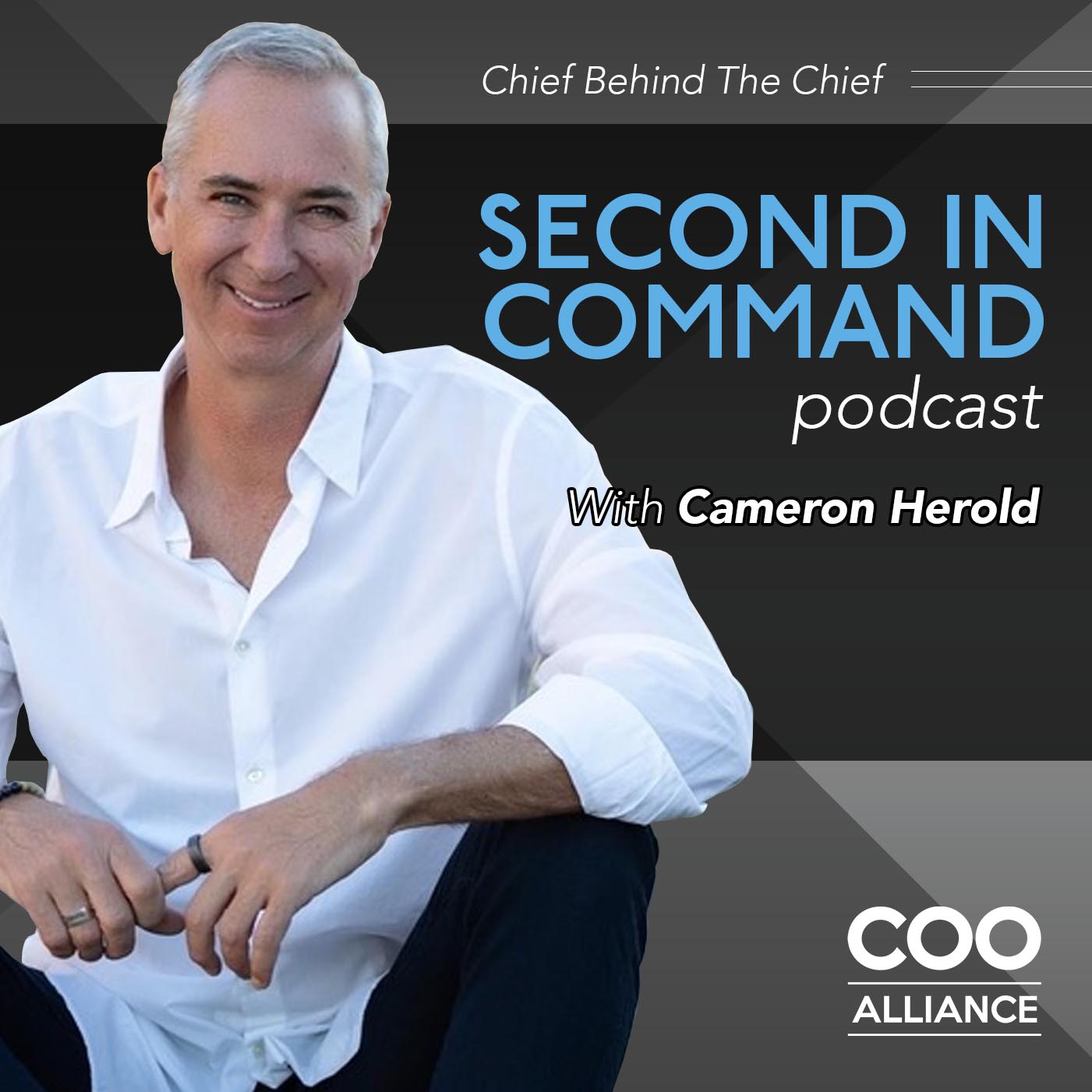
Second in Command: The Chief Behind the Chief with Cameron Herold
Ep. 488 - TNG Private Wealth COO, Jeana-Rae Kendall
00:35:15
Loading summary
Transcript96 lines
- [00:00]
Cameron Herold
Hey, it's Cameron Herald, the host of the Second in Command podcast. Before we dive in, there's something you need to know. If you're a coo, VP Operations, or you're in any role where you're the second in command to the CEO, the COO alliance is the place for you. If you're the integrator to the visionary, you're going to want to join us. The COO alliance is the world's leading community for the second in command. We've had over 500 members like you join from 17 countries to grow their skills, connections, and confidence. You'll get the tools, friendships, and a 10x guarantee to ensure that you get your money's worth. Go to cooalliance.com to learn more and see if you qualify. You can even book a free call with our team to ask questions. Now, let's jump into this week's episode.
- [00:44]
Gina Rae Kendall
I started my career at a different brokerage firm in corporate America. I learned so much and have nothing but great things to say about that company. But I got to a point in my life and in my career where I was ready to make a significant change. Take a pause. Travel for three months. My husband and I were moving across the country. I was like, right in the midst of COVID And I was like, I'm just gonna quit. I'm gonna figure it out. We're gonna figure it out together. The day I put my resignation in, I got connected to Carolyn, who is our CEO through a random connection. A person that John, my husband, knew. So very random. The day I put my notice in, she just wanted to have, like, a conversation. And I was like, okay, I'm packing my house up. I'm traveling for the next three months. And she was like, well, what do you want to do? What do you want to do with your life next? And I was like, that's a great question. That's why I have the next three months to reflect and reset my career. And I was like, but I know these. I love. I love working and leading people. I love being able to execute strategy. I love being able to just kind of figure out hard ways to solve problems. Or not hard ways to solve, but easy ways to solve hard problems, if that makes sense. Welcome to the Second in Command podcast, produced by the COO alliance and brought to you by its founder, Cameron Herold. In the second in command podcast, we talk to top COOs who share the insights, strategies, and tactics that made them the chief behind the chief. And now here's your host, Cameron Herald.
- [02:13]
Cameron Herold
All Right. Our guest today is TNG Private Wealth's COO and integrator, Jana Rae Kendall. And Gina Rae is actually the COO for two friends of mine who are the co owners of TNG Private Wealth. I've actually done a lot of trips with their CEOs and so it's really interesting to get the inside scoop because as the COO and integrator of a woman led advisory practice, wealth advisory Practice, Ameriprise Financial Group, Gina Rae serves as the essential counterbalance between the firm's visionary leadership and then also making sure that their ideas get placed into actionable strategies while keeping that whole broader vision and focus. So she runs a great team, amazing people, processes and priorities across the organization. She's a talent for driving momentum. And Jean Ray believes that success hinges on having the right people in the right roles, which makes everything else solvable. She takes pride in the remote and hybrid team that they built nationwide. You'll love the lessons that she shares and how they're building this team and how she has been the CEO and integrator as a full remote role during her entire four years with the organization. We'll see you on the inside. You can also watch and listen to all of our podcasts on our YouTube channels and then also Spotify and Apple podcasts.
- [03:26]
Gina Rae Kendall
Foreign.
- [03:31]
Cameron Herold
Welcome to the Second in Command podcast.
- [03:33]
Gina Rae Kendall
Thanks. Thanks so much for having me. I'm looking forward to our conversation.
- [03:36]
Cameron Herold
And me as well. I have had the privilege over the last couple of years getting to know your two co founders. I've been on a couple of crazy trips with them to, let's see, Uganda, Laos, in Vietnam, I think maybe even Bhutan. So I've done these like crazy trips kind of off in the depths of the jungle and I've gotten to know them as leaders and they kept talking about you. And over the years I've wanted to get to know who's this kind of Gina Ray that is the. The brains behind the two crazy and amazing co CEOs. So can you just tell us about, first off, how did you get involved in the organization? What's TNG Private wealth do? And then I want to talk a little bit about the co founders and we'll start there.
- [04:19]
Gina Rae Kendall
Yeah, that sounds great. They're amazing and they love travel and I'm so glad you got to know them on that level. It's something that we all three actually have in common, although we've kind of gotten to explore different parts of the world separately. So how I got introduced to TNG Private wealth is a Little more of a roundabout question, but I'll start with what we do and who we are, and then I'll answer that piece.
- [04:38]
Cameron Herold
Great.
- [04:39]
Gina Rae Kendall
So we are a private wealth advisory practice. We franchise through a company called Ameriprise. We really specialize in helping people simplify the complexity of their financial lives. We're oftentimes working with people who face a lot of, a lot of moving parts, whether they're entrepreneurs, business owners, executives, or people who just come into wealth later in their lives. We're really the kind of their quarterback in life to kind of help them put all the pieces together. So that's what we do and kind of who we serve. What's unique about us is that we're a woman led. We're a woman led team, which is very different in our space, which is one that's historically been one with a lot of uniformity. So that's a little bit about our team. And that's also what really attracted me to the team. I started my career at a different brokerage firm in corporate America. I learned so much and have nothing but great things to say about that company. But I got to a point in my life and in my career where I was ready to make a significant change. Take a pause. Travel for three months. My husband and I were moving across the country. I was like, right in the midst of COVID And I was like, I'm just going to quit. I'm going to figure it out. We're going to figure it out together. The day I put my resignation in, I got connected to Carolyn, who is our CEO through a random connection of person that John, my husband, knew. So very random. The day I put my notice in, she just wanted to have like a conversation. And I was like, okay, I'm packing my house up. I'm traveling for the next three months. And she was like, well, what do you want to do? What do you want to do with your life next? And I was like, that's a great question. That's why I have the next three months to reflect and reset my career. And I was like, but I know these are the things I love. I love working and leading people. I love being able to execute strategy. I love being able to just kind of figure out hard ways to solve problems. Or not hard ways to solve, but easy ways to solve hard problems, if that makes sense. And she was like, well, I'm looking to hire an integrator. And I was like, well, I'm traveling for the next three months. So like, hang on, I didn't know that this was a job interviewer, that she was even looking to hire someone. So we kept in contact for several months, and I learned a lot more about the company and where they were and what they were wanting to build and where they were at as well, which was kind of about this influx of taking on a whole bunch of growth. And I traveled, we kept in touch, and then eventually I was like, well, I'm starting to settle down from my travels. Maybe we should get together and just meet each other and see if this is something that could work and if we are a good fit. And so I met her in person, which was a blast. She has a place down in South Carolina, and my in laws have a place down there too, which was close by. So I just popped over and we spent the day together, just kind of getting to know each other. And fast forward a few weeks. I was hired. Little did I know, however, she hired me without telling her business partner, Jen. So your face does it all.
- [07:38]
Cameron Herold
That's a big. Yeah, I just kind of paused and went in shock. I'll ask about that, but go ahead.
- [07:43]
Gina Rae Kendall
Yeah. So thankfully, Jen and I are actually very similar in a lot of ways, and we hit it off right away. So one of the first things I did was put together a hiring procedure. Right. Because that clearly wasn't something that was in place with the company at the time. And she went into Jen's office and was just like, jen, I did something bad. She's like, well, what did you do? And I, of course, learn all of this. Like, when I go to start, she's like, I hired an integrator. And Jen was like, what? So that's kind of the backstory and how I got connected. Kind of a very unique. And that just speaks to. To our CEO. Carolyn is a quick start.
- [08:18]
Cameron Herold
She's very quick start.
- [08:19]
Gina Rae Kendall
Yeah, very high. She's 10. 10 out of 10 on that scale. And Jen's a 2, I believe. So I kind of strike the balance in the middle there at out of six.
- [08:29]
Cameron Herold
And what you're talking about is a Colby profile. So the Colby A profile has four different numbers. Your profile is a 7463. So you're a high fact finder, which means that you ask a lot of questions or you ask a fair amount of questions before you start things. And then you're a six. Is your secondary number six? Quick start, Meaning that you're pretty quick at starting stuff. But when someone's at 10, that means they start now, they plan later, they're shooting from the Hip. They're winging it. So how did she socialize this with her partner, Jen, and how did someone like Jen, who's not a quick start. What's Jen's Colby profile? Do you know what her four numbers are?
- [09:04]
Gina Rae Kendall
Off the top of my head, I believe she is a four. She's either a seven or an eight. Two and then probably like a three.
- [09:12]
Cameron Herold
So she's. She's high in systems. So she puts in place all the systems. She's called a. A follow through, which has nothing to do with following through. It has to do with putting systems or playbooks or kind of a process in place before she hires. So was she confused by the fact that there was no process hired, or did she trust the quick start or how did she get up to speed?
- [09:32]
Gina Rae Kendall
I think one of the core pieces of what makes Jen and Carolyn work so well and also kind of myself then integrating into that is there is a deep level of trust at the kind of base of the relationship. And Jen also knew that if it didn't work out, she would. Carolyn would just let her fire the person. So thankfully, here I am four years later, I didn't get fired.
- [09:55]
Cameron Herold
And you mentioned, you mentioned the term integrator a couple times. That was a term popularized by Gino Wickman and Mark Winters in their book Traction and the second book Rocket Fuel. It means that the second in command to a visionary entrepreneur. Did you know what the term integrator was? Or is that something you learned later as you kind of came on board?
- [10:11]
Gina Rae Kendall
No idea. Had no idea. So I learned that term kind of through my fact finding phase of the three months. And I was like, this does sound a lot like what I want to do and where I want to go. And that was definitely solidified as I kind of got my arms into what the role really was. And.
- [10:27]
Cameron Herold
And do you guys, as a company, does TNG private wealth? Do you use the traction, the EOS tools inside the organization, or do you use.
- [10:36]
Gina Rae Kendall
We do things. We follow the EOS cadence cycle. I think everything about our team, though, is a little bit. We, what we call tng, everything a little bit. So we put our own little flair, really make it work for our team. So it's those subtle nuance changes.
- [10:49]
Cameron Herold
So someone like Carolyn, one of the co founders, who's a high quick start, she would believe that systems are important for everybody else, but God forbid she has to follow them. So how does that. Or have you somehow wrangled her in a way that she follows most of the system some of the time or do you just let her kind of play to her own kind of fiddle?
- [11:10]
Gina Rae Kendall
Carolyn is actually probably one of the most organized people I've ever met. She is a quick start, but she is highly, highly organized because there are so many moving parts in her life. She has to have systems in place, but they have to be ones that are very easy for her to follow and they have to be like, you don't even have to think about them. Okay, so she actually does a lot of systems. When it comes to the systems within the team and the organization, she tends to play at a higher level. She needs to know that everything's happening for all of our clients, that all the work behind the scenes is getting done. And she's going to ask if she doesn't feel like it's all connecting, she's going to ask questions until she gets what she needs to feel confident that they're there. But she doesn't want to know the details. You only give her enough details in those situations. So she tends to play more in the visionary space. So we all have created systems. If there's something that we need to get her into the weeds on and get done with her, we'll set that time for her and we'll sit down and make sure that she's, she has what she needs in order to kind of push things forward.
- [12:15]
Cameron Herold
That makes sense.
- [12:16]
Gina Rae Kendall
She's not super integrated into the day to day where she's getting in and messing with all of our systems. So it works out.
- [12:23]
Cameron Herold
Now you mentioned the woman led organization. I just wanted to kind of ask a little bit about that. What does that mean to you that is different from either male led or a hybrid male and female led. What does a woman led organization bring to the table that is different?
- [12:38]
Gina Rae Kendall
That's a great question. I think women have a different perspective to bring. They bring a different sense of leadership and one that's really grounded in empathy, one that's really grounded in real hard conversations, but that are done with care. So that's kind of, I think, the differentiator as well. And I think too from a financial perspective, women tend to feel less secure in their finances than men. That's just some studies that have been done in the industry. And so I think too, coming from the place of also needing to meet the needs, of making sure that you understand how everything fits together. It's, it's not in. Let me tell you how it's done. Let me understand, let me understand really where you're at so I can meet you where you are.
- [13:22]
Cameron Herold
That makes A lot of sense. And I completely agree that women are much more empathetic as leaders. I'd never heard the whole thing around the having hard conversations, but I completely agree. It's really interesting watching how women interact with each other where they just really throw the facts and feelings on the table almost without, I shouldn't say without regard to the other person. Like, they know that. They know that by having the hard conversation, the relationship is either going to get very, very strong or it'll fall apart. Because that hard conversation needed to be had anyway. But they won't avoid it. Whereas guys kind of like bullshit around it. We kind of just like, you know, use sarcasm and, and kind of sweep stuff under the table. But then we kind of have that, I guess, ongoing, almost passive aggressive side of things. It's interesting.
- [14:12]
Gina Rae Kendall
I think there's definitely in our team in particular, it's this kind of no ego sense, this base vulnerability and trust that has to be there first. And then, don't get me wrong, we hash it out. We have a lot.
- [14:25]
Cameron Herold
No, no, no, I know. Yeah, I see that. That's what's good is women do hash it out. They hash it out as teenage girls. They have to like, that's actually something that women have learned that skill and guys just go off and, I don't know, drink beer and avoid it. Stupid.
- [14:39]
Gina Rae Kendall
Yeah. And then we just, and then we get to the right conclusion. We're like, okay, I can totally see where that's coming from. And then we move on and we make things better.
- [14:45]
Cameron Herold
When the CEO or COO is, is kind of running an organization with a CEO, there is that kind of dance that has to happen between the CEO and the coo. In your cases, you're playing it with two. You have two kind of co founders or co owners of the organization. Does your style adapt differently with each of them? Do you have similar systems or different systems in place with each of them? Can you speak to that?
- [15:08]
Gina Rae Kendall
Yeah, I'm happy to. So the way that we're currently structured is Carolyn is our CEO, our visionary, and Jen actually leads our financial advice team. So she's leading all of our advisors day to day and really in the nitty gritty of the systems from an advice perspective. So my conversations with Carolyn tend to be higher level. How do we actually bring this big idea to the whole team? And then Jen really helps me integrate it into the financial advice department and team. We have monthly meetings with the three of us, four hours every first Monday of the month. And that's where all of Us get a chance to get on the same page and have the conversations that actually have to be held at like the owner, top leader level. And then throughout the rest of the month, I'm always meeting with Jen and Carolyn separately, but it's once a month. The three of us are all together.
- [15:56]
Cameron Herold
So they have very clear swim lanes and kind of roles and responsibilities as well.
- [16:00]
Gina Rae Kendall
Then there are decisions, though, that have to be made by all three of us and we've aligned in what those are.
- [16:08]
Cameron Herold
So when kids are growing up in a traditional family, you know mom and dad and, you know, Bobby wants to get something and he asks mom and mom says no. Bobby goes over and asks dad, but he doesn't really tell dad that he's asked Mom. How do you avoid playing them off against each other if Carolyn says no? How do you avoid going to Jen to seeing what she thinks? Or do you go to get both perspectives?
- [16:29]
Gina Rae Kendall
No. If there's something that needs to be talked about at that level, we'll just put it on our list of things that we want to talk about. We call that our issues list and we'll call it out and hash it out all together. That's not really how I roll, going from one to the other. I think that we come to a better solution ultimately if we can all hear each other's thoughts. Sometimes I'll start the conversation with one and then start the conversation separately just because we don't have the time. All together. And then by the time we all come together, everyone's had a chance to actually think about how we want to solve something.
- [16:56]
Cameron Herold
Yeah, I think it's pretty dangerous that if you do kind of break them apart. Right. It doesn't. It just doesn't scale. It doesn't work. So you're in an industry, wealth management is in an industry that's heavily regulated. You've got your. Is it finsbar or something like there's some finra. Finra. You've got these regulations that you have to operate under and then you're also in a franchise network or are you still in a franchise network or were you?
- [17:20]
Gina Rae Kendall
We are.
- [17:25]
Cameron Herold
Hey, it's Cameron. I hope you're loving today's episode. Quick question for you. Does your company have a strong leadership training program in place to grow the skills of everyone who manages people? If you want to help yourself and your company grow, get everyone who manages people learning from my invest in your leaders online training program. There are 12 core leadership skills that I cover online and they're all going to really grow. CEOs pay me $78,000 a year to coach them one on one. And now you can all benefit for 1% of what they pay me. These are the same leadership skills that I created and certified everyone in at 1-800-got junk when I was there as CEO. Go to investinyourleaders.com today and use promo code podcast10 before the end of the month to get 10% off each manager you sign up. Now back to the show.
- [18:21]
Gina Rae Kendall
All right, so we are an independent advisory practice under the umbrella of Ameriprise. Ameriprise is fantastic. They help us really navigate the compliance and the legal landscape within our industry of what we can, what we can't do. They help make sure that everyone's operating with the highest of intent with all of our clients.
- [18:40]
Cameron Herold
It feels like some of the regulations that are most restrictive, or probably the only regulations that are restrictive at all are related to marketing and what you can say to the media and what you can use in your sales copy, et cetera. The rest of the regulations feel like it's the same for everybody. So it doesn't matter. Is that true or just some of the regulations? Do some of the regulations get burdensome regardless?
- [19:05]
Gina Rae Kendall
I wouldn't say any regulations are burdensome. They're there for a reason. They're ultimately there to protect clients at the end of the day. But there are. There. There are a lot of things that we have to kind of keep straight, and that's why we lean on Ameriprise as a partner for that.
- [19:20]
Cameron Herold
Is it hard to work within those systems or do you find them beneficial? Or do you just. Have you just decided that they are what they are and we'll. We'll kind of take the best that we can and not worry about the worst, like, control the controllables.
- [19:30]
Gina Rae Kendall
I think that just knowing and having a partner that we can lean on, of what we can, what we can't do is really important. We just work within. Within the boundaries of what we can do, and we tend to focus on that.
- [19:43]
Cameron Herold
Yeah, it's interesting. Like, as someone who is a rule breaker, I look at rules as guidelines. You know, if there's a stop sign, but there's no cars, I go across the street. I don't know how I could do that in the business world, but I think you guys have kind of found that the line is there and you just stay within those lines. There's enough kind of leeway to work around as a friend working with a franchisor, how much interaction do you have with the franchisor on a, you know, ongoing basis. Is it rarely or is it, you know, frequently? As frequently as, like, weekly.
- [20:14]
Gina Rae Kendall
And by franchisor, you're meaning the parent company?
- [20:17]
Cameron Herold
Yeah, the parent company, yeah.
- [20:19]
Gina Rae Kendall
Every day.
- [20:21]
Cameron Herold
Wow. What kind of interaction and how. How do you find it helpful? How do you, I guess, draw on the best that you can from them and use that to your advantage?
- [20:29]
Gina Rae Kendall
So it's not always me that's working with them. Our team heavily relies on the expertise and the knowledge of the systems. Kind of behind the scenes. We really rely on mere price for a lot of our technology, for our compliance, for how we. A lot of our tools ultimately. So we're constantly partnering with them on a day to day, and then we always have different resources within the. Within the company we can lean on.
- [20:59]
Cameron Herold
Do you find that, you know, being in the wealth advisory space that. Is there a bit of the cobbler's kids scenario at all, where, you know, the cobbler's kids, the cobbler's one that makes all the shoes, but the kids run around barefoot. How are your employees set up for wealth management? Are they educated or are they just in the dark as most people are? Do you make sure that they're set up as kind of a fringe benefit of being inside the organization, or are they as ignored as everybody else that seems to be in their companies?
- [21:28]
Gina Rae Kendall
What we want for our clients is something that we want for our team members as well. We want them to be able to say what they want for their lives and be able to go out there and do that. From a team perspective, we have a robust benefits package which does include a subsidy for financial planning. So if they're going out, whether it's with our team, whether it's another team, we want to support them in that. And we do offer our employees a subsidy benefit to be able to go out there and have somebody help them.
- [21:54]
Cameron Herold
What do you think about bitcoin? No advice. Candid. Give advice. All right. I want to talk about your role in the organization and when you join tng. You joined during COVID is that correct? Or was it the tail end of.
- [22:06]
Gina Rae Kendall
COVID It was a tail end, yeah.
- [22:09]
Cameron Herold
So did you. Did you join in an office or were you working remote when you joined?
- [22:14]
Gina Rae Kendall
I have always been a 100% remote employee.
- [22:17]
Cameron Herold
Interesting. Okay, speak to that.
- [22:21]
Gina Rae Kendall
So, yeah, I'm happy to. Our team, we have a. Of our team, I would say probably about 60% are remote. The other 40% is hybrid. I started when I was living in New Hampshire. At the time my husband was doing Getting a graduate degree out there and we are headquartered in Winchester, Massachusetts. So it's about a two and a half hour drive, so it's not that far. I made a lot of frequent trips down to the office to begin with. But what we found is if you build a system and a team and like a culture where you're building your relationships consistently, then it doesn't really matter if you're in person or remote. I actually find that I'm very productive when I'm not constantly wanting to go and like pop in and have a conversation with somebody. And there's plenty of that back and forth or oh, I need to pick your brain on this. Let me just give you a quick call. Our team also has a great culture of when we call somebody, our cameras are on all the time. So we actually get to see and interact with those non verbal cues, if you will, which makes up so much of our language.
- [23:31]
Cameron Herold
There's a pendulum that feels like it's starting to swing back a little bit to more of an in office environment. Again, companies are looking to bring people back a few days a week or hybrid. What are your thoughts around that right now?
- [23:43]
Gina Rae Kendall
I think a fully remote company doesn't work for everyone. You have to have a team and a culture that's committed to that. So I think there's a lot of different ways to run your business and if hybrid works for your company, great. If in person is a better fit, that's fine. What we found is that we are able to afford the freedom and we're also able to hire the right person regardless of geographical location for the team.
- [24:08]
Cameron Herold
So when you're looking for these team members and you know they're going to be working in a fully remote environment, what do you look for? How do you know that it works for them versus the, you know, the horror stories of the person that's paid 40 hours a week and they're working for or they're working paying 40 hours a week and they're working for three companies. How do you avoid that? Or, or even know that they're going to work well or they're not going to be around people all the time and it is up to themselves to be a self starter.
- [24:35]
Gina Rae Kendall
We only hire people who have actually worked remote before. If you have, you know, if it works for you or not. We also want people who have a life outside of work too. Right. So people who are connected in other ways to a community or just have other things happening in their lives from an accountability perspective, I mean you just have to hire good people, take your time asking questions like you can't, can't motivate somebody who doesn't want to be working. You have to just hire a self motivated, self disciplined person. And so what I'm saying is remote doesn't work for everybody. It does not, but it works for the right people. And those are the people that we hire under our team.
- [25:20]
Cameron Herold
Yeah, you're speaking to the stuff that I think so many companies actually really don't get. And it's so simple what you just said, but you can't motivate people. You know, hire people that are self motivated, that are accountable. Already Fortune magazine asked me 20 years ago, how do you hold your employees accountable? And I said, I don't. I hire accountable people. So you're just kind of hiring those people that have worked in that environment before. How do you onboard them? There's something there though around the onboarding of new employees. So I think there's, there's something that is still to be learned around really onboarding and integrating and getting people to know like, and trust and, and know the systems that they don't get to do as often or as easily as if they're in a full office environment. I'm by the way, very much a fan of remote. I've worked remote for 18 years, so I get it. But how, how do you, or how does your company tend to onboard people?
- [26:10]
Gina Rae Kendall
We have an onboarding structure where every single person coming into the team has the exact same first week, no matter what role you're going into, no matter what department you're going into. Everyone has the same first week. And it's really to give you that thousand foot view of how the company works and how everything fits together. So you're meeting with, and we stack it so that you're meeting with different people and different things every single day. You're doing kind of a rotational onboarding and everything's over. Teams.
- [26:41]
Cameron Herold
Yes, I have a group coaching program for CEOs. And the beauty of my group coaching calls is you actually get to ask me questions on every call. You're not just listening to other CEOs. Drop me an email cameronameronherrell.com for more information.
- [26:56]
Gina Rae Kendall
With videos. Again, the screen share is really helpful and we started to, then once we kind of get through that first week, then we kind of break it into a much more of a department specific type of onboarding experience. But the key there is they've had kind of that exposure to all the different people, all the different departments, the different resources to lean on. And we have created a system within our team where everything is designed to be easily retrievable. It's all designed for async communication across different time zones. So you can always find what it is that you're looking for or get pointed in the right direction to be a self starter.
- [27:33]
Cameron Herold
Does your industry have any regs around remote employees at all where it comes down to like customer data? Or is that, are we past that now because of A, because of COVID and B, because I guess the Internet is just so ubiquitous.
- [27:47]
Gina Rae Kendall
There are a lot of protections in place from a security perspective even with remote workers and also disclosing remote work locations. So yes, there is a lot of regulate. There is still a lot of.
- [28:00]
Cameron Herold
What do you mean disclosing remote work locations? What's that mean?
- [28:03]
Gina Rae Kendall
So where you work has to be like what? Where I work from home, it has to be recorded with our broker. So I can't be working from clients homes for example. I'm working, it's. I don't see clients, I'm behind the scenes and so I'm working in my home office ultimately.
- [28:24]
Cameron Herold
That's interesting. I'm not even sure what, what like are you allowed to go work from a coffee shop? Are you allowed to work from the living room? Like what do you mean disclose?
- [28:32]
Gina Rae Kendall
I can work from my living room, that's fine. You have to spend like a certain. And again, I'm not the compliance person on this. This is why we lean on Ameriprise. They keep us in line in all of our regulations here. So can I access my teams and my emails and do things that are not like client sensitive while I'm out and about? Absolutely. But we do take security seriously, so we follow and abide by all of our regulations.
- [28:59]
Cameron Herold
Cool. All right. Your skill set, running a coo, being an integrator for an organization, I mean one, you had to learn the EOS systems, the OS tools, but what about the rest of the skills? I mean you'd already been in the financial industry. Was that, do you think somebody could come in and run a financial services firm had they not been in the industry? Or is there just way too much kind of industry IP to understand to even make that possible?
- [29:21]
Gina Rae Kendall
Not for what this team needed, no. I think you really need to have a sense of the overall landscape of what it is that you're, what kind of service you're really providing people in order to understand how the different moving parts of the business connect back together. And I don't think you can do that without the prior industry experience.
- [29:42]
Cameron Herold
How about your skill set? What are you working on today, and what have you had to work on over the years to grow as a leader?
- [29:48]
Gina Rae Kendall
It's evolved. When I first started with tng, everything was kind of about putting systems in place, driving accountability, which, like we said before, you have tire accountable people, and that involved letting some people who weren't accountable go and bringing in people who were. So my role, role has really evolved as the company's evolved. Right now, I'm learning to flex a different muscle. It's really more on the growth. We've built a great foundation over the last several years, and now it's really learning and developing how to really drive the. The sales part of the organization.
- [30:23]
Cameron Herold
And the sales and marketing report to you as well. Is that. Yes. What part of the business do you not run, or does it all flow through you?
- [30:31]
Gina Rae Kendall
My team, our leadership team, is incredible. They're very autonomous. I tend to have a pulse on everything that's happening within each of the departments, but I'm not necessarily doing all the nitty gritties. If there's something that they're stuck on, I'm coming in and I'm helping them, like, get unstuck and find a path forward. But I'm not necessarily the doer of all the nitty gritty. If they need me to jump in and do something, I'll give it my best shot.
- [30:55]
Cameron Herold
Okay. With personality profiles, I'm just curious, do you guys use Colby with the rest of your team, or is it something that just you and the two founders used?
- [31:04]
Gina Rae Kendall
Our entire team, we use have it for our entire team. We use that, and then we also use what's called working genius. Are you familiar with working?
- [31:12]
Cameron Herold
No. I was going to ask, do you use any others? That's curious.
- [31:14]
Gina Rae Kendall
Yeah. So Colby is something that we have every person on our team complete, and we have a team of very low fact finders, so. Or low. Very, very high fact finders. Very low quick starts. Yeah, High fact finders, high follow through, which is a great balance to our visionary. Right. And then my profile tends to be a little bit more of a moderator, kind of bringing those pieces together. The other assessment that we tend to use is called working genius. So if you think about a project from start to finish, there are all these different phases. There's like this ideation, the what if phase, the brainstorm. How do we kind of figure out what we want to do? Then there's the is this a good idea or is this not a good idea? And then it's how do we rally the people to get behind this idea and put things in motion? How do we give them what they need to get it done? And then kind of that check the box at the end, getting it over the finish line. So that one really analyzes. Where do you like to operate on that scale?
- [32:14]
Cameron Herold
I love it. Something I just tried recently that worked out quite well is I took my Colby profile and I said, I'm the CEO of a company, here's my Colby profile. And then I took my second in command and I said, here's my COO's Colby profile. Can you teach us how to work better together, how to communicate together, how to collaborate, what will drive each other crazy? And it was like I had a psychologist come back to me with this ChatGPT report. It was really, really cool. So now we're getting all of our. So we have an organization called the COO alliance where we have all these COOs who are members and we have all of our CEOs or all of our members. CEOs do the Colby profile too. So now I'm trying to get them to use ChatGPT to learn how to work together. It's a pretty cool tool.
- [32:56]
Gina Rae Kendall
Oh, it's, it's super fun. Yeah.
- [32:58]
Cameron Herold
Yeah, it's powerful stuff. All right, I want you to go back and give your 22 year old self some advice. What advice would you give the younger Gina Ray that you know to be true today, but you wish you'd known when you were just starting out?
- [33:10]
Gina Rae Kendall
Oh, this is a good question. I love this question. I would say when you're starting your career, you think everyone has it all figured out, but I think there's a point in your career where you get to a level and you just kind of get that curtain pulled back and you're like, oh, everyone in business, everyone in the world is just a whole bunch of people who are just trying to figure out how to make things better and how to solve things. And I think once you unlock that, it's like you have the power to actually be able to go out there and have an impact, make decisions. That's pretty powerful. So that happened way later in my career.
- [33:47]
Cameron Herold
What do you mean happened way later in your career? Way later that you identified that or.
- [33:51]
Gina Rae Kendall
Yeah, I think it was when I got into the entrepreneurial space, I think having started my career in corporate America, there's all of these. This or it's just a different feel. And when I went into onto the entrepreneurial side, I was like, whoa, all these people out here are just figuring it out day by day. They don't know how to solve this problem. There's a problem there that just needs to get solved. So that was pretty cool.
- [34:14]
Cameron Herold
I love that you've identified two parts. One is this is always the biggest thing we've ever done. So we're all still trying to figure this out. And we don't have to be the smartest person in the room. We just have to know all the smart people in the room.
- [34:24]
Gina Rae Kendall
Yeah. And how to use the smart people to get something accomplished.
- [34:28]
Cameron Herold
I love it. Gina Ray is COO for TNG Private Wealth. Thanks very much for sharing with us on the Second Command podcast.
- [34:34]
Gina Rae Kendall
Thanks for having me.
- [34:35]
Cameron Herold
Really appreciate it.
- [34:39]
Gina Rae Kendall
You've been listening to Second in Command, brought to you by COO alliance founder Cameron Herold. If you enjoyed this episode, please be sure to like, share and subscribe. Subscribe to us on Apple Podcasts, Spotify and our other podcast streaming platforms. For more best practices from industry leading COOs, visit COOAlliance.com.