← Second in Command: The Chief Behind the Chief with Cameron Herold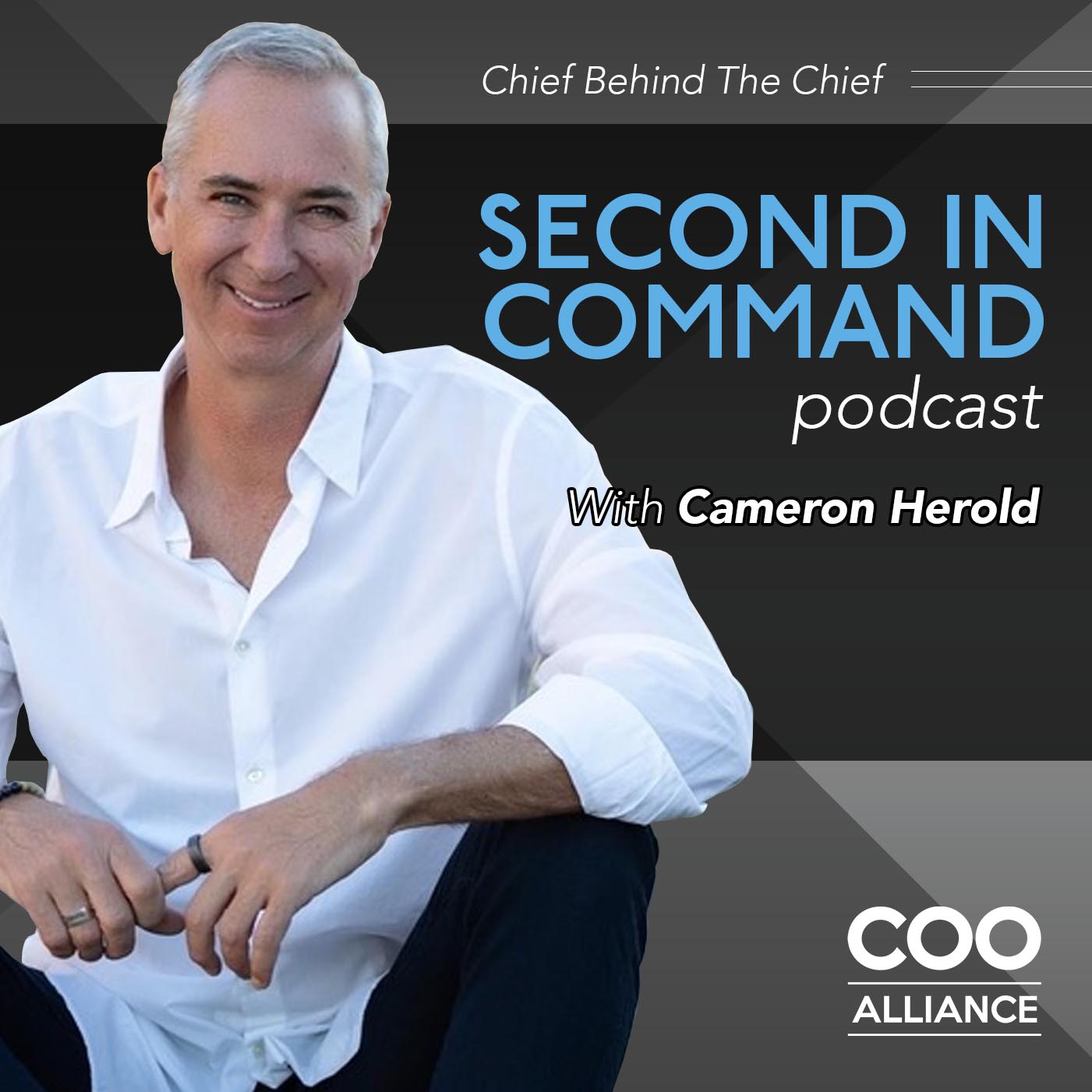
Second in Command: The Chief Behind the Chief with Cameron Herold
Ep. 497 - Beyond Business: Finding Meaning, Empathy, and a Balanced Perspective
00:08:56
Loading summary
Transcript20 lines
- [00:00]
Sean Stevenson
I've always think, like, what would Shawn do? What would Dave do? Because these guys were just both incredible humans in spite of living in, you know, these. This life that I could not imagine. And so the credo was, things are seldom as bleak as they seem when they're going wrong or seldom as great as they seem when they're going, well, lighten up, you'll live longer. And he's like, you know, just, things are going to be awesome in life. Don't let yourself get so caught up in it, you think it's going to last forever and things are going to suck at times. They're going to be horrible. Don't think that's going to last forever.
- [00:38]
Cameron Harold
Welcome to the Second in Command podcast, produced by the COO alliance and brought to you by its founder, Cameron Herold. In the Second in Command podcast, we Talk to top COOs who share the insights, strategies and tactics that made them the chief behind the chief. And now, here's your host, Cameron Harold.
- [01:03]
Dave Kekich
Today, I'm shifting gears to a deeper, more philosophical conversation. I'll share the meaning behind my walking each other home tattoo, a powerful reminder that the tactical aspects of business don't actually fucking matter in the grand scheme. True significance, I believe, lies in human connection, caring about others, dreams, fears and passions. I'll share a poignant anecdote about Dave Kekage and his Kek Kritos particularly. Things are seldom as bleak as they seem when they're going wrong or seldom as great as they seem when they're going. Well, lighten up, you'll live longer. It's about perspective and resilience.
- [01:41]
Sean Stevenson
Is there anything I didn't ask you that I should have? What?
- [01:45]
Dave Kekich
My new tattoo is.
- [01:46]
Sean Stevenson
Let's just walk each other home from Ram Dass. Yeah. Good for you.
- [01:50]
Dave Kekich
So, yeah, so the Ram Dass quote about walking each other home. I got this tattoo back in November to remind me that none of this shit matters. Like, none of what I talked about.
- [02:00]
Sean Stevenson
Today actually fucking matters.
- [02:02]
Dave Kekich
The death rate is still 100% right? We're all gonna die. This is just what we're doing to make money. What really matters is connecting with each other as humans, caring with each other as about humans caring about our dreams and our fears and our insecurities and our bucket list and our joys and our cautions. That's what matters. I just talk to you about a bunch of shit that doesn't matter.
- [02:22]
Sean Stevenson
Well, you know, we're meaning makers and what matters is how much emphasis we put on it. So I, you know, I Say that with some light of serious. No, that's why I'm gonna say this. So yesterday was Dave Kekich's birthday, and he died a few years ago. And Dave Kekich had all of these. Those of you that don't know Dave Ketch, he wrote Ketich credos. And I've done my best to keep those out there, popularize them. And I'm gonna eventually finish a book about those credos because it's halfway lit. And Dave, when he was in his mid-30s, he was multimillionaire, had a house in Huntington Beach. He was in great physical shape. Explained to me he had all the external trappings of wealth. Beautiful girlfriend, convertible Mercedes. I always remember that he would tell me that back in the 70s, he was always running and exercising. He was very much into fitness, but he said back in the 70s, people didn't really jog. And he could run down the strand for like a couple of miles. You'd be lucky if you see one or two other person even running in the 70s. And he was lifting weights and he had some pain in his. In his back, and he. Like a severe pain, and he stopped. It was just really severe. By the time he got home, his girlfriend at the time, he lost consciousness of being aware. He was in such a physical pain that he said she described him as on the ground screaming like a rabied animal. Just like, you know, like just, you know, saliva pouring out, like he was just in excruciating pain. He ended up having a slow bleed, the spinal cord. He became paralyzed from the chest down. And he traveled the world for two years after that trying to find a cure in a wheelchair.
- [04:15]
Dave Kekich
He.
- [04:16]
Sean Stevenson
They didn't have the technology back then to fix it. His business partner ended up stealing most of his money. His girlfriend left him. And here he was left in a wheelchair, never to walk again, never to be able to have sex again. It would take him an hour to two hours every day just to get his body to be able to use the restroom.
- [04:40]
Dave Kekich
Hey, it's Cameron. I hope you're loving today's episode. Quick question for you. Does your company have a strong leadership training program in place to grow the skills of everyone who manages people? If you want to help yourself and your company grow, get everyone who manages people learning from my invest in your leaders online training program. There are 12 core leadership skills that I cover online, and they're all going to really grow. CEOs pay me $78,000 a year to coach them one on one. And now you can all benefit for 1% of what they pay me. These are the same leadership skills that I created and certified everyone in at 1-800-got junk when I was there as COO. Go to investinyourleaders.com today and use promo code podcast10 before the end of the month to get 10% off each manager you sign up. Now back to the show.
- [05:39]
Sean Stevenson
In spite of that, he was, he developed himself into this just funny, smart, incredible guy that spent the rest of his life, you know, pursuing life extension. And he died at 78 years old from a malpractice thing. Basically, when a surgery that, that went wrong, in spite of the fact that he was paralyzed, he would have phantom pain. And he was, you know, and he. And so. But he wrote these hundred credos and he just developed them and I used to help them, help him tweak it. One of them that actually went in there was life gives to the giver and takes from the taker. And he has one that says that I always remember. And I gave you that whole setup about Dave because of what you're saying about the tattoo. None of this matters coming from him. This credo is so meaningful because I knew Dave and his life and all of the challenges that he had and, you know, because I couldn't fathom having to go through what he went through. And still he was such a great person. And part of it is he just developed a great attitude in spite of the circumstances, like you can make the most out of life. And if you take anything too seriously, you're just.
- [06:48]
Dave Kekich
Sean Stevenson's a great example of that.
- [06:50]
Sean Stevenson
The funniest thing is I introduced Sean and Dave and I was like, I really want you guys. And you know how much of a smart ass Shaw always. Oh, so you got to introduce your two friends in the wheelchair now. You know, I'm just like, jesus Christ, John, shut up. Yeah, and they totally hit it off. They came, they became great friends. And I've always think, like, what would Sean do? What would Dave do? Because these guys were just both incredible humans in spite of living in, you know, this life that I could not imagine. And so the credo was, things are seldom as bleak as they seem when they're going wrong or seldom as great as they seem when they're going, well, lighten up, you'll live longer. And he's like, you know, just, things are going to be awesome in life. Don't let yourself get so caught up in it you think it's going to last forever and things are going to suck at times. They're going to be horrible. Don't think that's going to last forever. Just lighten up. How is it? Oh, is that it? Yeah. And by the way, well, you know, let's give everyone a catch and scrito. But yeah, I think the way you ended it. Did you ever see the video I did where I ended that video with the quote from Ron Dass that you now have tattooed on your. Yeah, it's a thing on trauma that I did.
- [07:57]
Dave Kekich
Well, I may have actually misspelled it too, so I may not say exactly walking each other home. I may say lighting each other's houses on fire too.
- [08:05]
Sean Stevenson
I don't know. Yeah, it could be a. They could have punked you with that all day. Oh, let's see how seriously you think this know that this shit matters. So thank you, man. I appreciate it. Thanks, Cameron. Harold.
- [08:21]
Cameron Harold
You've been listening to Second In Command, brought to you by COO alliance founder Cameron Herald. If you enjoyed this episode, please be sure to, like, share and subscribe to us on Apple Podcasts, Spotify and our other podcast streaming platforms. For more best practices from industry leading COOs, visit COOAlliance.com.
- [08:46]
Dave Kekich
SAM.