← Second in Command: The Chief Behind the Chief with Cameron Herold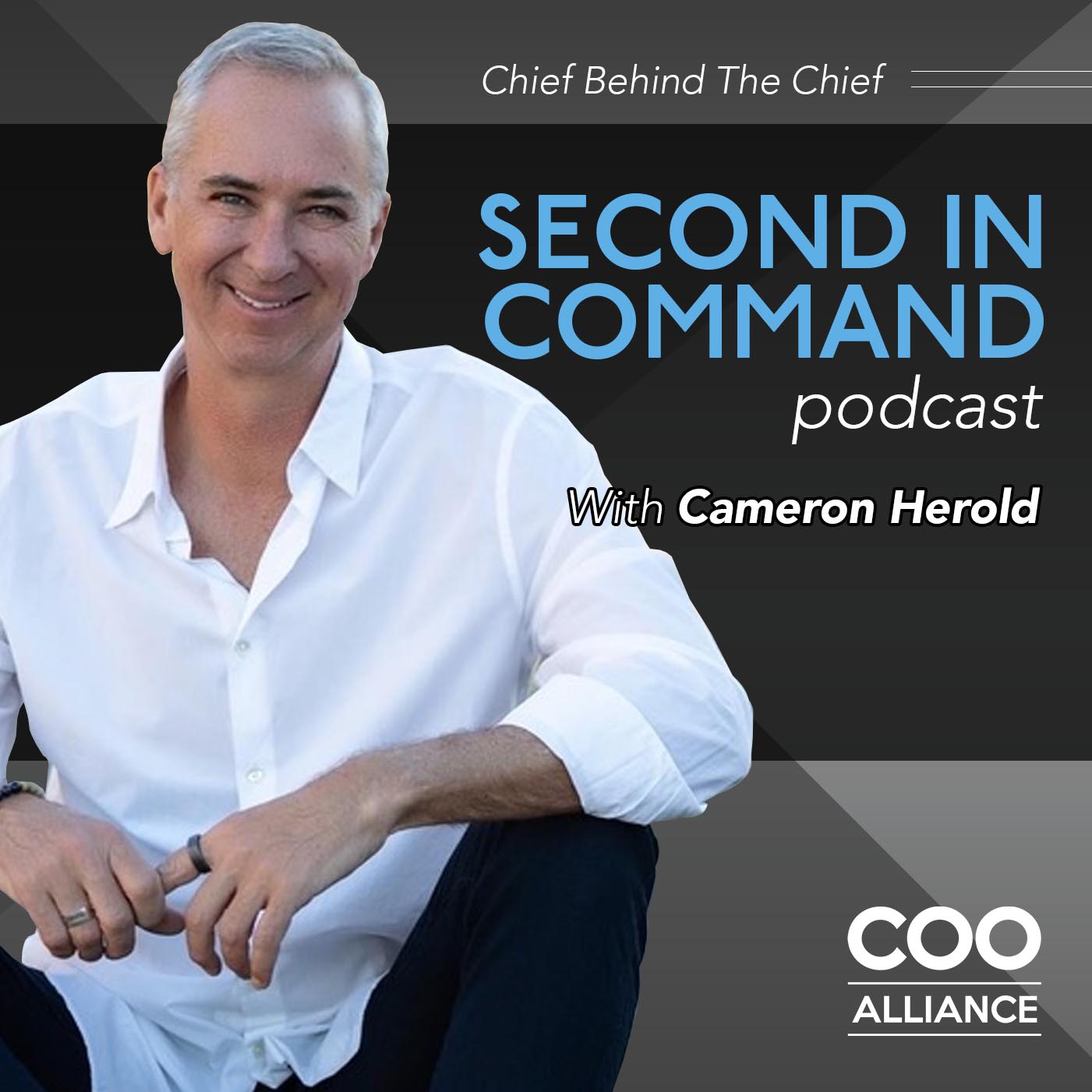
Second in Command: The Chief Behind the Chief with Cameron Herold
Ep. 498 - Shanaz Hemmati - How a Tech-Savvy COO Turbocharged Growth with Smart Operations
00:37:10
Loading summary
Transcript49 lines
- [00:00]
Shehnaz Hemadi
One thing I can say, and this is my advice when younger people ask me, and by the way, I do mentorship. I love doing that because I feel like if I just answer one question for someone that can expedite their journey by even a couple of weeks, that I feel like I've paid my dues. Right. My advice usually is if I knew better, if somebody had actually told me at that time, I would have tried to build a kind of a network, a small network of mentors and advisors, somebody who I could like call or email quickly and talk through stuff. But I didn't know any better. Welcome to the Second in Command Podcast produced by the COO alliance and brought to you by its founder, Cameron Herold. In the second in command podcast, we talk to top COOs who share the insights, strategies and tactics that made them the Chief behind the Chief. And now here's your host, Cameron Herald.
- [01:16]
Cameron Herold
Today I'm thrilled to be speaking with Shehnaz Hemadi, the Chief operating officer of ZenBusiness. ZenBusiness is an incredible small business platform, a one stop shop designed to help entrepreneurs easily start, manage and grow their companies. We'll dive deep into their journey, discussing how they've scaled and optimized their operations over the years. Before we went live, Shenaz shared some fascinating insights about Zen Business's remote work model and how they successfully navigated the changes brought by Covid. We'll weave those valuable lessons into our conversation. Get ready to learn about their growth strategies, client types and how they maintain world class customer support. Let's jump in. So Shenaz, welcome to the Second in Command podcast.
- [02:04]
Shehnaz Hemadi
Hello Cameron. Thank you. I'm excited to be here. Thanks for having me.
- [02:10]
Cameron Herold
Of course. Looking forward to learning from you. I know before we went live you were telling me a little bit about being a remote company and how those changes worked during COVID So I'm going to take some of that content and we will weave it in to the episode today because there are some great sound bites that you were able to deliver on there. But why don't you tell us a little bit about ZenBusiness? What's the business do you who's your core customer? And then I want to dive in to some of the growth opportunity or the growth lessons that you've had over the years in scaling it.
- [02:38]
Shehnaz Hemadi
So ZenBusiness, we are a small business platform. Our idea from the beginning was how can we make this a one stop shop for entrepreneurs who are just thinking about starting their journey and building their company, creating their corporation and as a part of Their journey make it so that they easily come back to us as soon as they need the next next product or service to manage and grow their company. Our idea also always was like, keep it as simple and as easy as possible because some of these processes are pretty complex or complicated. And the entrepreneurs who are just starting they want, they are really good at something. That's their focus, that's what they want to build. And how can we take a lot of these back office actions off their plate and be able to help them out? We serve anybody and everybody would like to say that we serve people from all walks of life. That has been our goal all along. It's also great in some of our research to see the diversity across our customers and people as we have gone through the years. We also see the growth of people and that's related to age ranges as far as who all are starting their companies. And it's just like great to see all of that. We've been seeing like a growth on people who are like less than 35 years old is more and more of that category and that group that are starting their companies.
- [04:13]
Cameron Herold
So in helping people in starting to grow their business, you've got a lot of different products and services that you now provide. What were the products that you started with and then how did you decide on what the expansion was going to be going forward? Because you literally do everything from like setting up a company, registering your company, you even have partners in lining people up with bookkeeping. How did you decide where to start? Where did you start?
- [04:38]
Shehnaz Hemadi
Now we did a lot of research. So we started our company in 2017 and we spent almost like a whole year talking to different entrepreneurs, talking to people who already had small businesses, people who were thinking about starting one. We went through some iterations of like, what is it that we really want to build? And then we narrowed it down. Or we decided that we really want to get to these entrepreneurs at the beginning of their journey when they're just thinking about starting their company, which is like at the top of the funnel. And what that meant was helping them creating their LLC across the US in any state. So by creating an llc, you know, of course we learned all the other requirements that the states require and what are those? Because we much preferred offer that as a package rather than just creating their LLC and then have them to take on the additional requirements from the states. One of those examples is like registered agent service that all states require. And that is how we started by offering the core like entity formation products and services and then from there, it's always been, what is it that our customers want? You know, we could have always, like, guessed or assumed. But a big part of what we regularly and constantly do is market research and surveys, you know, to our customers, to our existing customers, or to just like general population out there. And that really helps us determine what is the next service that's most valuable to our customers that we need to be thinking about. That's how we've decided over time, you know, what is the next product or service. And there is like, mass amount of them. There's so many of them. I remember one time we put this slide together as far as a roadmap on products and services, and it's pretty much like unlimited, but it's hard to decide what's the next one. And again, that's how we make those decisions of the most valuable ones that we can work on and offer as the next product.
- [06:47]
Cameron Herold
What about killing off products? Do you ever look across the different SKUs or the different products that you have or services you've got, and do you ever decide to kind of sunset some of those at all?
- [06:59]
Shehnaz Hemadi
Yes, we do, or we have in the past, and there's been times where we did offer a product, we had take rates. But then over time, as we look holistically across all of our products and all of our offerings, we always have to make the decision of where, you know, we have a better roi, where we're having higher take rates, which products really will take a lot more from us to be able to support a big part of the community. And does that make sense for us to still own it, or does it make sense to partner with someone else? So again, we have done that in the past and we continuously, regularly, like, look at all of our products and services and see what we. Is there anything that we much prefer not to be spending time on and how can we move that over, transfer to someone else, or just stop offering it? But I can tell you it always becomes really hard to just stop offering a product when you already have customers on it. And that there are times that we decide that we're just going to continue with it. Almost like in the maintenance mode, we're going to continue with it to, to learn more over time.
- [08:19]
Cameron Herold
Well, and your customers only have a wallet that is so big. And if you're selling products to them, services to them that are low gross margin, it's still their money going out the door. They have less money to spend on the higher gross margin. So there's got to be a Trade off for you of how much money you're able to gain from a client. And then I guess there's also then the upside of the lifetime value you might do if some of your. Do you have any products that are loss leaders, like any products that you use to try to gain and get you in with the clients so that then you can keep selling to them later.
- [08:52]
Shehnaz Hemadi
So basically the products that the, you know, we get with the customers, again that's like at the top of the funnel acquiring them. The first one is registered agent, it's a subscription product and that's what's keeping our customers with us. And again it's a requirement everybody needs to have that is a compliance type product with this day. So that is, I would say that is the entry point of our customers staying with us. And then through that process and through their journey, it's just offering them and keeping them aware about the other products and services that we have so that as they're growing, you know, we're along the way with them in their journey and they can decide whether they want to come back and use us for other products. We also offer different packages. So day one, you know, some customers are further along their journey, right? It's possible that they've already had started their business. Maybe they already have revenue, they already have customers, but now they just decided to formalize it, right? And as a part of like formalizing their business, they want to create an llc. And because they've already have, you know, further along their journey, it's possible that they want. They're signing up for bigger packages than someone who's just starting.
- [10:10]
Cameron Herold
Do you have a pretty strong customer service department or have you tried to build the business without having a customer service department? Can you speak to that?
- [10:19]
Shehnaz Hemadi
So this is like one of our, I would say criteria from early on was like we really need to make sure whatever we're building again that our customers want and you're building what they love and how can we give them the best support so that they're happy with it and they continue using us and they get part of that idea was if you are just doing their entity formation with them, how can you provide such a service where as they need the other products along their journey that we are top of mind for them, right? Because they had such a great experience with us. And so with that also we knew there was going to be a lot of learning with it. And because things grow, things might fall through the cracks like anything could happen. So how can we learn about it sooner than later. And that was by making sure that we started running like NPS with our customers and also reviews rating. And we constantly learned a lot through that. And customer support for us at our company is always been pretty major part of like what we do and how can we provide an excellent world class service. Basically I would say a world class service to our customers. And then our reviews, review ratings online should say all about that. Like after eight years we're at 4.8, which we're all like really proud of. And the constant very high see. Yes. We constantly see all these amazing reviews about the type of the support our team provided to the customers. And we pretty much like read most of these reviews because they're also a great motivator for us. And we also pay a lot of attention to anything anywhere that a customer might not have the best experience on. And we immediately think about, okay, what is it that we need to do differently? Was it like truly an issue that we need to go pay attention to? Was it this like one case where maybe we could have handled differently? So in summary, we pay a lot of attention to the support that we provide for our customers.
- [12:43]
Cameron Herold
Hey, it's Cameron. I hope you're loving today's episode. Quick question for you. Does your company have a strong leadership training program in place to grow the skills of everyone who manages people? If you want to help yourself and your company grow, get everyone who manages people learning from my Invest in youn Leaders online training program. There are 12 core leadership skills that I cover online and they're all going to really grow. CEOs pay me $78,000 a year to coach them one on one and now you can all benefit for 1% of what they pay me. These are the same leadership skills that I created and certified everyone in at 1, 800 got junk when I was there as COO. Go to investinyourleaders.com today and use promo code podcast10 before the end of the month to get 10% off each manager you sign up. Now back to the show. Yeah, it's extraordinary. You have 22,000 reviews on Trustpilot and only and with a 4.8 rating and only a handful of them are low rated. How do you handle as a company the lower rated customer service review? When you know you're a great company, you know you've got a 4.8. It can be very easy to dismiss the one star rating. But I have a feeling like you don't.
- [14:06]
Shehnaz Hemadi
We don't. Because you know how many of the four or five star Ratings does it take to really get to a better score compared to the one star ratings? Right. A one star rating can really impact your numbers. And then you have to work really hard to get to the point again that you have enough four or fives that that give you the score that you're looking for. So again we read like when we respond to, in a lot of cases we respond, we might just, we like email that customer if we know like who that is, email them, respond to them, call them to really again learn more. Because there could be also times where it wasn't necessarily a mess on our part. Like we've had cases in the past where people said, well, I was never communicated, nobody ever emailed me, nobody. And that had happened. But maybe there was like, oh, it went to your spam folder, maybe that's what you need to like check for. Or maybe you missed a call that we did. So there could be different reasons, but we always try to figure out what was the reason and is this something that we need to take action on? As I said, we pay a lot of attention to the 1 stars because it only take a few of them to mess up your score versus we have to have so many of the high score ones to make up for that.
- [15:31]
Cameron Herold
Do you work as an organization to remove the necessity for customer service at all? Like do you work to try to fix the product and fix the service and fix the FAQs just to make it really easy? Or do you have much thought or do you spend much time on that?
- [15:47]
Shehnaz Hemadi
Yeah, it's a constant effort for us as well. Lots of automation. Like one area is just the whole Iran state filing and as you probably know, every state is different. So there has to be like the filing, some of the information each state asks for is different. And how can we automate as much of that as possible so that our customer support team can really focus on the level of support they're providing to the customer rather than the time they're spending on doing each of these filings. So automation is also always been big for us because we all come from a technology background. And of course the first thing we want to do is oh, what are all the manual processes that we can apply technology to and we can automate? And then on top of that, you know, automation of like, like chatbots right now with AI is like, oh my God, like what are all the things they can do to, to be, to provide a faster response to the customers where they don't necessarily have to wait or they don't necessarily have to call someone at our company. But it's just like an ongoing work. You know, you constantly have to expand. It. It doesn't stop. As far as I'm concerned, that work never. You just make progress over time.
- [17:12]
Cameron Herold
You know, in the growth of Zen business, you know, you're an eight year old company, very, very fast growth. How have you avoided adding employees unnecessarily? It feels to me like often small to mid sized companies go through a huge hurdle where the mid level team keeps wanting to hire people because they don't know how to say no. They don't know how to optimize, they don't know how to automate work. It feels like you guys have done a really good job controlling that. But can you speak to that?
- [17:38]
Shehnaz Hemadi
We are very mindful. I think part of it is maybe at the leadership level and all of our journeys through our careers and what were all of our learnings. So we are very mindful. We pay a lot of attention. We know how those things could happen. But I'm not saying that it never happens. Right. It still happens. We're constantly learning as well. It's not like we know everything. But then we have our own criteria as we decide to expand is okay, what are we expanding for? What are we trying to accomplish by this? How is it going to impact our model, financial model, like business model, and where are the gaps that we need to be filling for? But again, I'm not saying that that has never gotten us to a place where we feel like, oh my God, maybe we hired too many. The thing is like the growth of our company has been so amazing. We've been, you know, in a great growing path and are always our problem, always been. We have a lot that we want to get done that we don't have enough capacity for. So we have never gotten to the point where we say, oh my God, we have too many people for what we want to get done. That's never been the case. And I think the reverse is like having a lot that you want to get done but not enough capacity is a good challenge to have. That means you still, there is still a lot that the company can work on and can do.
- [19:11]
Cameron Herold
Yeah. Now you've been in tech for a long time. You were back in the day with Excite.com, which was. That was early stage tech. What years were you? I remember doing banner ads with them in 1998. When were you with Excite?
- [19:25]
Shehnaz Hemadi
I started there in 1999.
- [19:29]
Cameron Herold
Wow. Yeah. Right before the dot com era blew up. And Steve Ballmer said there was an Internet bubble and there was. What did you learn from those kind of crazy early days in tech? And then I guess post Nasdaq crash of 78% where we all had to rebuild again for the next seven or eight years. What were some of the lessons from the early days of tech that you have carried with you today?
- [19:52]
Shehnaz Hemadi
Yeah, some of my lessons were around. What we were just talking about is how companies grow massively. Just because they think that the more people they have or the bigger they are or faster they grow, it shows the success of the company, which to me that's not the case. Right. And then there is like no limit into spend. There is no oversight across the company of what all we're doing. You know, is, is it all toward the same goal? Are we moving in different directions? So that is like some big learnings for me and my co founders. So that's why we pay a lot of attention to those so we don't get into such a sit situations. But that was like a huge learning is. And a lot of those companies, they were really growing at a massive rate without being profitable, without having a good. Like there was a lot. I mean I wasn't at those levels where I could like get into all the details, but every time like I thought about it, I'm like, oh my God. And they were like already so many offices, so many people and losing money.
- [21:02]
Cameron Herold
Profitability wasn't even discussed.
- [21:04]
Shehnaz Hemadi
I know.
- [21:07]
Cameron Herold
We were acquired by a company called Shop now in Seattle and right at the height of the dot com boom. And it was an insane time. Insane time. So your growth as an executive as well, you know, you were the co founder of this company and then you and the CEO co founder decided to. How did you decide to split roles and who does what?
- [21:27]
Shehnaz Hemadi
We decided to divide and conquer based on our expertise and what areas one of us was maybe better at. And that's how we decided to split our responsibilities. But at the same time, always being in conversations of, you know, where is it that we need? We can be helping each other as well.
- [21:53]
Cameron Herold
Have you shifted those over time? Do they. Do you kind of iterate where it's like you or do you stay pretty true to those swim lanes?
- [22:00]
Shehnaz Hemadi
Yeah, we stayed pretty much to that. I would say like the only difference, for example, was before we had a cfo. Finance was reporting up to me. But then we were also at the stage of the company that we, we needed to kind of because of our goals and longer term goals. It was time for us to Hire a cfo. And it just made sense to make to take that out and have the CFO report directly to my co founder.
- [22:35]
Cameron Herold
If you want more leadership tips and systems from me, they're free at YouTube amronherald and that's H E R O L D. When you're hiring a senior person like a cfo, you know, often, especially in a mid sized company, the leadership team doesn't have the competency or the acumen in that functional area to interview that person on skill set. Like we don't know how to be a cfo. Like, you know, you might know how to manage a controller, but we don't know how to manage a cfo. We don't know what that area. How do you interview someone for skill set when they're just so much stronger then, then the leadership team will ever be in that area?
- [23:17]
Shehnaz Hemadi
For me, regardless of like, role and level, it's always been the, the passion, the excitement and how much somebody loves what they do. Right. I think that makes a huge difference because regardless, nobody knows everything. I don't know everything. Nobody. Regardless of their level or their background, they don't know everything. But is it just something that they truly love doing and then that they can go learn as soon as they want or however, you know, they go about that? So we kind of been new enough to be able to, you know, do that interview and we also, you know, we went through a firm that is specialized in, you know, finding the right CFOs. So they also helped me some of the work. We also got involved, for example, a board member who has a great background on financials and compliance. So we tried everything we could to make sure. And of course that person's background and experience says a lot too. Right. What has their journey been like, what companies they've worked at, what stages of the companies they were when they first started and then as they grew through the company. So we, we also kept a lot of that in mind. And the personality fit I think is pretty important as well. The culture fit.
- [24:49]
Cameron Herold
Yeah, that's an easier one to interview for for sure. We've often reached out to advisors or to similar companies to ask their CFO to come and interview CFOs or CTO interview CTOs to at least assist us on the skill side. But I like your, your approach there. How about yourself and your skills as a coo? What have you been working on over the last few years to continue to grow as you've been, you know, growing the business?
- [25:16]
Shehnaz Hemadi
For me, I've never been A CEO. It was just, oh, I love it. I'm willing to learn what does this mean? You know, but operationally, you know, my co founder always said because him And I, our CEO and myself, we first met@excite.com that's how we first met each other. So we worked at different companies over the last 25 years. So anytime he went to any company, he called me, called me up and he asked me to go join. For me then it was, you know, when we first started and we were deciding of like roles and responsibilities again, we were dividing and conquer and it just made sense for me to be the CEO. That being a CEO is always, I personally think when somebody asks me, oh, I'm looking for a CEO, what do you think I should look for in that person? My answer is someone who's very detail oriented, who really understands data and is a good executor. And I think those are what my co founder already knew about me and he actually told me that you're good at these things so I would want you to be serving this role. But even then I was like, oh my God, what am I getting to. But with me and my personality, it's always been about, you know, I'm going to take a risk, you know, I'm not going to lose anything, I'm just going to see how much I'm going to like it or not. So my learning is basically been, you know, over time, what is the next problem I need to go solve or I need to go pay attention to? Do I know enough about it? Who do I need to go talk to to learn more? How do I go online? And you know, as you know, you said Google it, you know, now these days it's like chatgpt no where, what are places can I learn from? And for me again, it's always about learning and how much you love doing something. And I truly like been enjoying being in this role and kind of having to do so many different things and pay attention to so many different things, that's also been really challenging for me and that's what gets me going.
- [27:27]
Cameron Herold
Well, and you also, what you've also spoken to there is the, I call it just in time learning versus just in case learning. Right. You're actually thinking about what's something I'm working on right now and how can I learn more about that versus just reading a business book about something and hoping that sometime in the future you'll be able to use that, which is, you know, almost, it's almost a fool's Game to just keep learning and learning for the sake of learning versus you know, learning about something that's more applicable. How about in terms of your direct reports, what do you focus on day to day? Where do you spend your time?
- [28:01]
Shehnaz Hemadi
So first I participate in a lot of meetings. I have weekly one on one with all my direct reports and I am in all of our like skr we call it Strategic Objectives and KR meetings. We have a weekly basis. I'm involved in all of those and of course meetings with the C team. All hands, the company, all hands, our leadership meeting. There's a lot of those meetings happening and every one of them is a little bit different. Which then you know, that's where you know there are different subjects at different time depending on, you know, what we're working on. And you know, for example HR reports up to me. So my meetings is usually a lot of like HR related issues. And if, and you know, as you grow as a company, you're going to have more and more of those issues that you need to pay attention to sometimes. It could be that something came up very unexpectedly. How do we want to go about it? How we want to solve for it? On the objective side, it's like, how are we progressing? Let's look at the numbers. Where is it that we might have a blocker or issue? How can I help in that? Of course as the team grows, the responsibilities are more on the teams are all more on the leaders you hire and less on you. But then I, I was like made myself so much like really available to see if there is anything that I can enable anyone with, I can help move the needle. And just being in that mode, you know, I get pulled in and I get pinged a lot in different, you know, with different subjects and different things.
- [29:46]
Cameron Herold
I was going to ask you about that is how do you avoid getting pulled into all of the meetings? How do you avoid getting, you know, sucked into all of the things that should be someone else's job or that is nice to know but not a need to know or nice to be involved in but not need. How do you avoid that?
- [30:06]
Shehnaz Hemadi
I try to decide of like, well, what is being discussed in this meeting, what is the agenda? And then whether I need to just be attending because I need to know like what's happening, what decisions are made because I need to leverage that for another decision making. But then in so many cases, you know, I actually ask like, do I need to be in this meeting if I need to? There are meetings where I am on the list. But then as an optional, I'm like, you tell me when you actually need me in this meeting, because there are cases where something needs to be discussed in that meeting that maybe the team members feel like they need to have me. But other than that, it's like I don't need to be there unless you ask me to be there. That's how I try to do it, with my direct reports. Even if something comes up that is related to the piece of the puzzle that they own, my first approach is just like redirecting to them and asking them whether they need my help on that.
- [31:13]
Cameron Herold
How has ZenBusiness been funded, VRVC backed and can you speak to how much you've raised or what that's been like?
- [31:21]
Shehnaz Hemadi
Yeah, so far we've raised about 275 million. Our last round was a C round back in October of 2021, which was also a great time to be raising. And that was at 205 million at 1.7 billion valuation. And that is really what enabled us at that time to be growing much bigger and to be able to put a lot of focus on building out our platform and a lot more like expanding in our technology team.
- [31:56]
Cameron Herold
Yeah, you raised money at a $1.7 billion valuation, so that's a serious raise. Well done. What's the plan? Are you taking the company public at some point? I mean, I know you're really driving profitability and growth. What's the plan for the future?
- [32:12]
Shehnaz Hemadi
I would say the plan is no different than all the other companies similar to us. It's like whatever that looks like, whether it's going ipo, which by looking at the market is this. I'm not sure if many people are looking at that option, but also it could be that, oh, are we going to be a big complement to another big company? In the case of an acquisition or a merger, we're always open to ideas. We definitely are working toward getting this company to a next phase and we'll see what the market dictates, you know, what our company dictates and then what we, you know, how, then we decide how we go about it.
- [33:01]
Cameron Herold
Well, I've just added you to my angel list watch list, so I'll keep an eye on you for secondaries. So I want you to go back and give yourself some advice. What advice would you give the younger you? The 21 year old Shenaz, starting out in your business career? What advice would you give the younger you that you know to be true today?
- [33:18]
Shehnaz Hemadi
So me, I started a long time ago, right? I, you Know, this past last month was actually my 40th anniversary from my graduation date from college, so. So I've been around for a long time. I can. One thing I can say, and this is my advice when younger people ask me, and by the way, I do mentorship, I love doing that because I feel like if I just answer one question for someone that can expedite their journey by even a couple of weeks, that I feel like I've paid my dues. Right. My advice usually is if I knew better, if somebody had actually told me at that time, I would have tried to build a kind of a network, a small network of mentors and advisors, somebody who I could like, call or email quickly and, you know, talk through stuff. But I didn't know any better and nobody ever told me that that was an option. Right. And some of the things you just have to learn as you go through journey and other people should share, other people should tell you. That's why I try to, as much as possible, I try to tell people, like, what all did I experience, you know, and what all maybe I would have done differently? So I would say that was like, that was one of the major things because I think you also learn a lot through talking to others who've been through the journeys, who've had the experience, and they can always give you advice on something that you might not even be thinking about. You might not even know, oh, I need to go maybe do this take this class or do this training. Because from like where I'm sitting or what I'm doing or maybe the environment I'm in or the cases I have to deal with that this training is going to be super helpful to me. So that I would say, I wish I knew more.
- [35:17]
Cameron Herold
I love that. I love it a lot. It's interesting. When we were scaling 1-800-got junk, I was the COO and Brian the CEO. Brian used to have what he called his MBA, which stood for his mentor, board of advisors. And anyone smart that he ever met, in the note of their contact, he would put MBA and then what they were strong at. So when he was then like, oh, I need to find somebody about M and A, he'd look up MBA, M&A, and he'd have four names would pop up or somebody who's PR, MBA, PR. So over the years, every single smart person he met went into his contact manager with MBA and then whatever they were strong at. And it was like, that's a really genius, little elegant solution.
- [36:02]
Shehnaz Hemadi
I love that. That's awesome. Thanks for sharing that, I'll share it.
- [36:07]
Cameron Herold
Well, now we got to, now we got to rewind 30, 40 years, both of us, and do it for all the people we've met, forgotten about. She knows. Thank you so much for sharing with us today. Really, really appreciate the time, Appreciate all the ideas we got. Shahaz Hamadi, who is the COO of Zen Business, thanks for sharing with us on the Second in Command podcast.
- [36:26]
Shehnaz Hemadi
My pleasure. Thank you so much. It was great talking to you, Cameron.
- [36:31]
Cameron Herold
Thank you so much.
- [36:34]
Shehnaz Hemadi
You've been listening to Second in Command, brought to you by COO alliance founder Cameron Herald. If you enjoyed this episode, please be sure to like, share and subscribe to us on Apple Podcasts, Spotify and our other podcast streaming platforms. For more best practices from industry leading Cisco COOs, visit cooalliance.com.