← Second in Command: The Chief Behind the Chief with Cameron Herold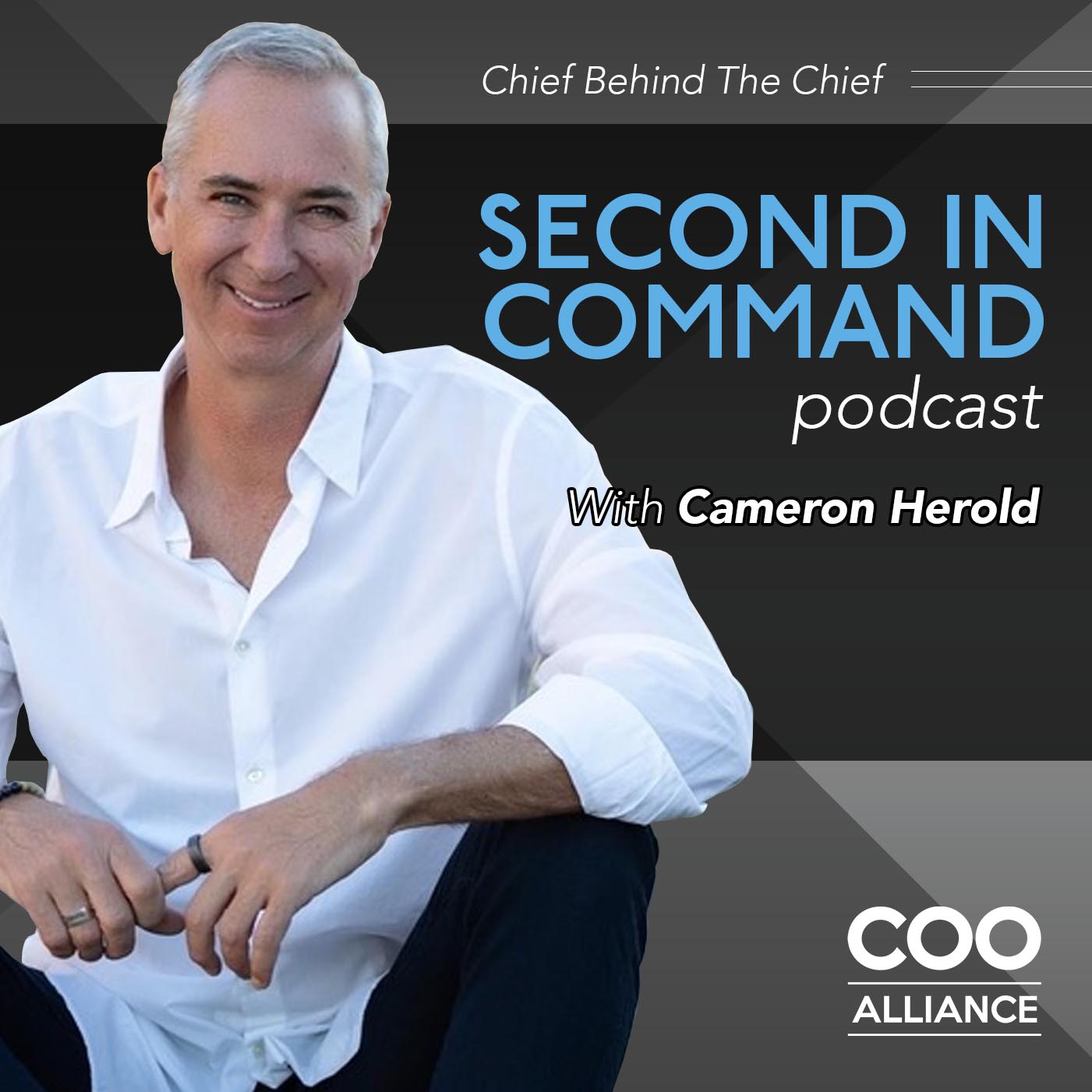
Second in Command: The Chief Behind the Chief with Cameron Herold
Ep. 502 - Anthony Petitte - Thriving in the Digital Age: How to Empower Remote Teams with Heart
00:51:41
Loading summary
Transcript50 lines
- [00:00]
Anthony Petit
The AI, there's so much different. AI 1, 2. AI has only been a buzzword for two years, but really, AI has always been there. I was actually reading a book. Joe Huttega is the author and I think the title is AI Revolution. And there's a little insert that says we've only been really so hyped up about AI the last two years, but when you really look at things, AI has been living and breathing for so long.
- [00:32]
Savannah Brewer
Welcome to the Second in Command podcast produced by the COO alliance and brought to you by its founder, Cameron Herold. In the second in command podcast, we talk to top COOs who share the insights, strategies and tactics that made them the chief behind the chief. And now here's your co host, former COO of a multi eight figure remote company and alumni member of the COO Alliance, Savannah Brewer. On today's episode of the Second in Command podcast, I'm joined by Anthony Petit, the Chief Operating Officer at Fin park, which is a division of the $400 million transportation finance firm Finlock 2000. Anthony is a seasoned entrepreneur and operator with over 14 years of experience across logistics, transportation and finance. At Fin park, he leads operations, marketing, partnerships and strategy for a growing pay to park marketplace built for commercial drivers and fleets. In this conversation, we dive into what it really looks like to be the chief behind the chief, the grit, the behind the scenes reality, and why the CEO role isn't all about the glory, but mostly about the impact on the business. Anthony shares how he builds a connected and accountable remote team, the role of relationships and the importance of them in scaling a business, and how he supports team members through burnout while also navigating the evolving role of AI in operations. If you're building in logistics or leading from the second seat, this one is for you. We are live with Anthony. Welcome to the show.
- [02:08]
Anthony Petit
Hey, thank you for having me on.
- [02:11]
Savannah Brewer
Absolutely. We were just connecting. You're in Bentonville, Arkansas. We went to Fayetteville University of Arkansas for a bit, so we've got a little bit of that Southern connection.
- [02:21]
Anthony Petit
Southern connection as well, but actually originally from Chicago, so I'm probably the least Southern. You can ask all my neighbors, like, wow, you really are from Chicago. And all your mannerisms.
- [02:31]
Savannah Brewer
Amazing. Well, I'm excited to dive in here. Let's go ahead and just start off. Give us a little bit of an overview about what you do and your role at the company you're with.
- [02:41]
Anthony Petit
So I have been in this particular role as Chief Operating officer for two years with a company called Finlock, Finlock is or has been around for about, about 45, 46 years, since the late 70s. And they are a transportation logistics company, but they specialize in financial equipment. So if you're a carrier, like a trucking company or you are a driver and you need to, you know, buy a new trailer or cab of your truck, then typically you get it financed, otherwise you pay, you know, the retail price, which is kind of difficult, especially in today's economy. So we're just a financing company, the middleman, if you will. But we, we have seen a lot of successes and we've also have two divisions, one called Fin park, which is a truck parking platform that connects the truck drivers with safe and available parking. And also for fleets, we also offer a couple products. One of the products is a tool that allows them to manage payments and manage inventory of their own sites. These are for property owners and for the fleet themselves. And then we have another company called vhub, and vhub has been around for about seven years. And vhub is a tool for the transportation logistics industry for moving and repositioning trailers from point A to point B. So if a trailer is, is or transported to a specific warehouse and, and it's essentially idle there and needs to get back to its origin, we work with companies that are running reverse logistic routes from that B to A and they're bringing a trailer back to its origin. So all three companies are part of the multinational conglomerate of Canadian companies. I should say all three divisions are part of the multinational, but the multinational at the very top. Co company is a manufacturer of steel and distributor in Canada and they have contracts with the NFL and I'm sure they are going through some really tough times as the Trump has raised the terrorists about 30%. So it's been interesting for us, but we've also seen a lot of headwind and a lot of successes all at the same time.
- [04:59]
Savannah Brewer
Okay, cool. And it sounds like you're in charge of multiple of those departments.
- [05:04]
Anthony Petit
Yes.
- [05:05]
Savannah Brewer
Okay. And I imagine there's probably a good bit of operational complexity with just the nature of what you're doing. So could you kind of give us a rundown of what does your day to day look like managing all of those different departments?
- [05:19]
Anthony Petit
Day to day is, you know, for the two start or the two divisions. Excuse me, and the two lower divisions, let's call Finlock as a parent company and the two separate entities. So V Hub and finpar are both, in terms of their growth stage, more of a startup company, whereas Finlog is an established company. Doing about 395 million Canadian in asset under management. So. Yeah, but whereas Pimpark, we're growing or they're growing as fast as possible, I should say we. But we are growing pretty quickly as we are approaching the real estate, industrial, real estate, industrial, outdoor storage markets. But I would say Maybe at about 1 to 2 million in gross, it's only a 2 year old company. And then V Hub has historically altogether been about a five to six, maybe $7 million company. Has some struggles in the last, I would say 12 to 18 months, but definitely looking to progress from there. My day to day then looks like to answer your question directly, I'm managing all three companies. I am, when I say managing, I'm putting together certain processes for the sales teams, for the marketing teams, the operations teams. You know, always looking at corporate excellence. What is our competitors doing? How could we put together certain strategies maybe on the marketing side to be better than our competitors or to you know, look at the benchmark data as well. Like what, you know, what successes are they seeing and if there's something, some way for us to pivot and to be successful just like our competitors. Another thing that I do is I'm writing all the strategies and then this is where the all grit and no glory phrase comes in. Because I put together the strategy on a day to day and then it gets executed by the CEO. So CEO goes out and executes it gets all the glory where it was really much my work at the end of the day. So I'm the behind the scenes guy. It's a great position, a great role. I have quite a few people that report up to me directly. But at the end of the day you don't get the glory that you want.
- [07:34]
Savannah Brewer
Yeah, I could see coming up with all of the strategy and finding the way to actually have the vision come to life can often feel. Yeah, like you said, you're not getting the recognition always or the affirmation of man. I'm like I'm really building this thing and coming up with the pieces to the puzzle here. What have been some of the challenges in that for you?
- [07:57]
Anthony Petit
Challenges would be just because I am, you know, the guy that you put all your cards in for making sure that the strategy is going to, you know, one be actually built out and then also created. The only thing about that is you. It's almost like a. I want to give you like an analogy of a manufacturing facility. Right. Manufacture. The product typically goes through packaging before it goes to the shipping process and it gets shipped out. Right. So I'm going through all the manufacturing, the foundry, the packaging, and then once the box is ready to be shipped out, then I leave the box in the warehouse and CEO comes, grabs the box and he's the one who's going to go ship it out and put it on the airline or the rail or the, or the truck. And I don't get to do any of that because once it gets shipped out, it starts to go through the lifecycle and it's going through all these different stakeholders and people on the team and I'm just, you know, I find that challenging for me because I'm, I have been in a spot where I was a CEO and it allows you to be more customer facing. It's a different Persona and roles and responsibilities. But going back to the CEO too, I mean, there might not be as much affirmation as you want as you're saying, but it's also a good position to be when you're really trying to build up a great company.
- [09:16]
Savannah Brewer
I think it's an important topic to put some light on because sometimes when you're climbing the ranks and you're really wanting this executive position, it may feel like, oh, when I get there, there's going to be this, you know, all these accolades and affirmations. But at the end of the day, the CEO and the coo, they are like they yin and the yang. And your role is there to support the vision of the company and whoever's running that vision. And so there can be sometimes this, ooh, this isn't really maybe what I thought it was going to feel like. What have been maybe some of the highs for you? On the flip side of that, like what is is. Have you found any being in the CEO position different than the CEO, now that you've kind of played both roles, it would be interesting to hear what have been the benefits of not being in the CEO position.
- [10:05]
Anthony Petit
I think, you know, that's a great question. Well one, I don't want have the listeners think that being a CEO, especially if you're at a director VP level and you're climbing the corporate ladder and you get to a CEO role and you're also like, oh, Anthony gave all this information, but it seems to be not the best position. I want to climb higher than CEO and I should completely X that out because being a CEO is great because you're essentially ensuring efficiency and effectiveness and putting together your strategic plans and then your, if you're not as customer facing one, you don't deal with the board directly. Too, which can be intimidating. You don't have to deal necessarily with investors directly. You're still empowering the CEO to be the best that he or she can be. But because you're kind of behind the scenes, behind the curtain, if you will, you're just basically prepping them up, right? So they go, and I mean, they go in strong, they, they bring up the, the PowerPoint, they're going through your cash flow statements. This is what is like we've got increased Aida by, you know, 15%, et cetera, et cetera. All of that really is coming from your COO and potentially, if it's getting into the numericals, your CFO as well. But those, the CEO and a CFO working on those, those day to day, those, you know, certain plans and that strategic process that the CEO is going to go out and show to investors. And it's a really great feeling. This is where I would say the highest high. It's a great feeling when an investor comes back and said, absolutely, I want to move forward with investing X amount of capital because I love what I saw. And they love what they saw because it was the time and effort that myself as well as CFO or anybody else have put in.
- [11:49]
Savannah Brewer
Is there any advice that you would give to a CEO who really wants to affirm their CEO? They want their CEO to feel recognized and appreciated. What, having been in both seats, now that you kind of know, what support or advice would you tell a CEO who wants to build a great relationship with their CEO?
- [12:10]
Anthony Petit
I would definitely say that 1. Building a relationship. It's all about relationships. I was watching a TV show yesterday and one of the lines was relationships run the world. And it's true. And the reason why I say that is because when you're in that specific day to day, right, with the CEO and the CEO, you're basically like best friends. You have to be. If you're not best friends, it's probably not a right environment for you because you'll just be spending a lot of time with each other. And the CEO is going to be relying on the CEO. The CEO is going to be relying on the CEO. So they have to have a established trust. That's one, you know, probably the most best advice that I can give, right? Establish that trust and then secondarily also just build that relationship. Don't also build it strictly internally at the office, but spend some time with that individual outside of the office. Well, get to know them on a personal level because if you know them, who they are at the end of the day. It's not. You're not valued by who you are at the office. You're valued by your character and your personality. And so if you can show that person, that individual and vice versa, that's how you're going to build a successful company.
- [13:25]
Savannah Brewer
Have there been any points of tension, despite having a good relationship with. With your CEO, any points of tension and maybe an example of that and how you guys were able to work through that?
- [13:37]
Anthony Petit
I say the tension is we don't often agree on the same things. We have a different lens on building company and how it's supposed to be, you know, bringing the teams and having cross functionality. And I'm a little bit more of a. Because I'm an entrepreneur or by trade. So when I was at the CEO level, I was relying on my C suite to have a little bit more creativity. And so now as a CEO of this role, I try to push creativity, try to push different strategic plans with marketing team and also having a background in marketing. And I think the CEO of this company doesn't really see that, just more set in his ways. Not necessarily it's a bad thing, but that's how we clash. Because, like, we should do something that's so completely different, that nobody else is doing this. It goes kind of with the corporate excellence. Like, how are we going to stand out against competition? Are we going to create some sort of key differentiator that makes us completely different than everybody else in the industry? And I think that. That colorful, that creativity, that, that thinking outside the box, he doesn't like. So that's. It creates some tension. But we. We figure out at the end of the day how we want to approach certain things. And I like his. His very strict demeanor, and I liked my very creativeness. And I think sometimes it can blend well and you just have to kind of move the Rubik's Cube into the right place.
- [15:06]
Savannah Brewer
Mm. There's a couple questions I want to touch on. This one thing. I also. There's this fly that keeps flying around. I told Cameron, I was like, you know, these podcasts are gonna be like, totally raw. We, like, don't take out any pieces. But for anyone that's watching the YouTube video, I just want to acknowledge, yes, there's a fly flying around. I'm like, squatting it away, and it was not in here when we started this. So anyways, addressing the. The fly in the room, but in terms of creativity and working with your team, when you've got someone that's maybe a little more like set in the ways a little more rigid. Have you found any ways to still? Because I've experienced this before in a position where I really wanted to move forward with something, but the CEO was just like set on it, but ended up later, I was right and the problems that I thought were going to happen ended up happening. And I wish I would have stood a little bit stronger in my stance. So I'm curious what maybe mindset or principles, strategies, processes have helped you really be able to do some of those creative strategies even when you're up against resistance.
- [16:20]
Anthony Petit
I always like to come in a place of facts. So I'm not going to come to a meeting, I'm not going to go to the CEO or have any conversation with anybody, any stakeholder, if I don't have facts. And so I believe if I'm trying to create something that's different, something that's outside the box, out of the norm, I have to come in a place where I have statistics. It's backed by factual evidence. It has if I'm going to put this strategy in place. This is how successful it's been in the past, this is how successful it's been with other companies using it. The probability for us is going to increase for success rate. What does success look like? What are, what is the art of the possible? So yes, I am creative and I come up with these very different strategies, if you will. But again, they come from a place of, you know, they're backed by, by evidence or backed by like actual documented site cited sites and everything. I want to make sure that, you know, just to close with that. I don't do anything that is just spontaneous. It has to be fully documented. And this is how my brain operates. So when that's all coming together, it gives the CEO or any. This goes for any company, right? Maybe it goes to the board, maybe it goes to an investor or maybe whatever situation you're in, it allows that person to go. Well, I can't deny facts. If this is what it is, then I think this is a good opportunity to move forward. Even if it's kind of completely different than what I had originally envisioned.
- [18:02]
Cameron Herold
Hey, it's Cameron Herold, founder of the Second in Command podcast. Are you or your COO struggling to level up? Every CEO or second in command should join our COO alliance. Check out cooalliance.com for just the cost of a few copies a month, you get world class training, 12 monthly mastermind calls, 12 monthly AI expert calls, and two live events a year with top COOs globally. Since 2016, we've been building and growing the COO alliance to put the tools, peer support and strategies in place to help grow COOs and their companies. It's backed by rave reviews from hundreds of COOs and their CEOs who have seen insane growth. We also have a 10x guarantee. It's your time. Check out COOAlliance.com and sign up for a quick call to learn more.
- [18:58]
Savannah Brewer
I love that I talk about data a lot because it's something I have found is such an instrumental, foundational piece of so many different things of how I make decisions, the things we're moving forward with, how to actually measure team's progress and performance. Like if you're not actually collecting data, it's really hard to make the right decisions or go to your CEO and actually make a case for something you want to do. So I totally agree and it sounds like your company is quite remote. You're dealing with people in a lot of different time zones. And I read in some of your answers when you're filling out some of the podcast form that managing team across remote can be a challenge often. Could you tell us a little bit about what is your culture like and how do you. How do you facilitate cohesion with a team that is fully remote?
- [19:49]
Anthony Petit
It's a great question because we are 100% remote. Besides the Canadian teams, so headquartered out of Montreal, also have another headquarter out of St. George's Quebec, which is a small town that's about, I would say maybe an hour or less outside of Jackson, Maine. Right. So we're pretty close to the U.S. border in that regard. But those teams are. The St. George's location has probably between because again, multinational company. There's other companies as well that I didn't name for timing sake. But there's probably around, I would say 50 to 100 employees there. And then on the Montreal side there's probably another 100, 150 employees. And then spread up, spread out. Excuse me, across the US and various states. There's probably about 20 of us. So the culture that I like and you know, it's a little bit different. This goes back to a little bit of tension with our CEO. He sees a different culture. Maybe it's a French Canadian thing. I never want to. They're very, they're more. They're very, very people, but they're more. What's the word? They're. They're very forward and blunt about everything. Their environments are a little bit more old school than I like. I do like the New, you know, kind of the diversity and the very charismatic. And again, going back to the word creative environments. And since we don't have an office, I try to make sure that our, that the employees of the company feel like, that they can feel like they can express themselves. They can feel like they get talks amongst each other. I like to make sure that, you know, if a couple of them are, haven't met each other yet, that they have an environment to meet each other. Right. So maybe we plan like a little event or something somewhere in, let's say Nashville, Tennessee as it's myself here in northwest Arkansas. And we have another sales rep here that reports directly to me. I bring them over to Nashville and we have that, that camaraderie with that other employee of the company who happens to be the director of sales on the V hub side. So now that these employees are having, you know, relations with each other, they're able to discuss all sorts of things, whether it's no personal life or business side. And I think that's the best form of creating that culture. Culture is everything. If you don't have a good culture, you're not going to be successful in your company because you're not going to have employees that want to stay there. It goes back to turnover, goes back to retention, sustainability. And you just want to make sure that everybody feels, you know, okay with each other, happy with each other and you want to create the most friendly environment you possibly can.
- [22:29]
Savannah Brewer
I love that. I'm like, culture is probably one of the things that I geek out about the most. And it's so, so, so important and it can often be overlooked by, I think CEOs are just like, let's just move forward. At least in the companies I've worked at, very fast paced. Let's just, let's just do it. Let's go, go, go. And forgetting that we've got people here with families and kids to feed and problems at home that we're not experiencing. Are there any initiatives or maybe cool things that you guys have played around with that have really allowed some of that to come into fruition more?
- [23:08]
Anthony Petit
Yeah, we've, we have done a couple events where actually we've gone to Canada. So it allows a lot of people there in the US to see the Canadian territories, which is great even for myself. I mean, before this job, I think I've been to Canada once. So now I've been in Canada multiple times and it's been, it's a good experience. It's a, it's a different side of things completely different cultural, completely different experience. You know, when you're, you're in northwest Arkansas, it's a fast growth environment. Kind of like Austin, Texas was five, 10 years ago. But then when you go to Montreal, for example, especially the old side of it, it's, it looks like you're literally France. Like, it's like Europe. It has like cobblestone streets and you know, everything's just very old and graystone. And I think it just, it allows people to experience new things. I think some of the other things that we've done is to, you know, like I said, like pairing people up in certain cities that are near each other so they have a chance to get to know each other more. And I believe that this is a statistic, actually. I think it's going back to, I can't quote who it's by, but employees that are more engaged with each other are. It's like between 23 to 46% of that number. Right? Double. But between that percentage to be even more productive than they were already. Right. So you're adding on to whatever productivity level that employee was and 23 to 46% of that productivity level. And more productive employees are going to be happier and want to sell more and want to build your business and you're going to be more successful in your growth.
- [24:46]
Savannah Brewer
Love that. Yeah, we started doing team off sites because our company, one of the ones that I was full time CEO with and grew from, I was like you first in the company all the way up to pretty big size company in a couple of years. And we noticed as we grew past that like 20 to 25 people being fully remote, it started to become a lot more challenging to keep people connected and knowing everybody. And you just start to have these shifts in the dynamic and the way that everyone feels and the early people are like, things are changing. I liked how it was before and when we started doing in person events two times a year, it was crazy, crazy, crazy. Just how two days of being with your people and being able to talk about life and have fun together and you're even just not talking about work, but like you're playing ping pong and you're seeing people's personalities. Then when you go back into work, we just found this insane, you know, insurgents of energy and excitement and connectedness that it lasts a good bit. And for from a retention standpoint, when everyone's working remotely, when you've got a company that's willing to pay for you to go hang out with your coworkers and you really enjoy that, but you still get to work from home for most of the year. It makes a really, really big difference. And I think that, you know, the ROI is a little bit harder to measure, but from what I've seen and people that I've talked to that have actually rolled those out, it's pretty tremendous, the difference. One thing that I have seen at least in like high performance companies, quickly growing companies, is burnout. And when you're working remotely, you know, sometimes it's a little bit harder to spot versus like when you're in office, you can see someone's. Someone's energy change, you can see how much they're working. But when you're remote, you know, you don't have your eyes on, on your team. Have there been any experiences where you've been noticing team burning out? How do you manage that or keep an eye on it?
- [26:53]
Anthony Petit
That's a really great question only or not really only, because that is a great question overall, but really, because I just got off the phone probably 25 minutes before podcast here with an employee that was actually trying to be as honest and transparent as possible. Just felt a little bit burned out. Felt a little bit that, you know, he believed he would make more money when he came to the company. Now there has been, for those who knows the transportation, logistics space, um, the industry honestly is in a very bad place. That's the best way of putting it. I don't want to give anyway crazy analogies or anything to that. It's just, that's what it is. And so companies have been struggling. You know, we have been prosperous because of the established and longevity of these companies. I think the startup companies that have just been trying to plug away our not. They're feeling the burn. And I think a lot of the carriers, unfortunately, are starting to go bankrupt. It's a really tough industry because of the tariffs and all of that. But that's. That's another conversation. The import going back to the employee just expressed their concern, a couple of their concerns, and also felt like they were not being, I guess because they're remote. And I'm sure this is that kind of lonely feeling. You know, I feel like I'm being neglected. This is the employee talking. I feel like I'm being neglected. I feel like you don't see me. And I said, well, I want. I apologize. I apologize myself. I apologize behalf of the company. I want you to be seen, I want you to be heard. I want to make sure that whatever you're going through right now, that I can help out with, you know, I can't be there and maybe in a therapeutic level, but what I can be there at a professional level is help you with your professionalism, help you grow in the company. Is there areas where you're struggling? Is there areas where you see success? Is there? You know, do you not value certain things? I need to know because all of this data, so to speak, is helpful for me to understand you as an individual. And I want to make sure that you grow. I want to make sure that you know, because this individual is a sales director, I want to make sure that your next move is going to be vp. It's corporate level now. Now you're. You're moving up the ladder and I. And if it's not the right environment here for you, then please let me know because I am very connected to other individuals out there and companies and that could be a better environment for you. So that's how I was helping that individual.
- [29:32]
Cameron Herold
Hey, it's Cameron. I hope you're loving today's episode. Quick question for you. Does your company have a strong leadership training program in place to grow the skills of everyone who manages people? If you want to help yourself and your company grow, get everyone who manages people learning from my invest in your leaders online training program. There are 12 core leadership skills that I cover online and they're all going to really grow. CEOs pay me $78,000 a year to coach them one on one and now you can all benefit for 1% of what they pay me. These are the same leadership skills that I created and certified everyone in at 1-800-got junk when I was there as COO. Go to investinyourleaders.com today and use promo code podcast10 before the end of the month to get 10% off each manager you sign up. Now back to the show.
- [30:28]
Savannah Brewer
It's beautiful your ability to truly want what's best for your team member. Including like, if this isn't the right fit, I'm happy to help you. I actually had a. A recent experience that really, it really impacted me in a fractional role with an owner who. Things with the company just went a little bit different than we kind of initially expected. And I've just brought to the call, like just real. It was one be really transparent with her. Here's where I'm at and I'm looking at other opportunities and I noticed there was a lot of fear for me bringing this up just based on some past experiences that I've had where I've brought things up That I wasn't met with maybe the level of, you know, true, like I hear you and I want what's best for you. And it was more my experience was how can I answer this person so that she stays and helps the company? Like making it more about the company and what they needed versus what was actually best for the individual. And what I found in my experience was when I shared this with this recent owner, her response I was expecting to be something like, well, like what can we do here to make it a better fit? And you know, what about this or that? That's what I was expecting. And instead my, the response I got was so sweet and she just was like, you know, I totally understand and if this isn't the right fit for you, I will do whatever I can to find that. I've got this connection, this connection. And I was just waiting, like waiting for there to be. But you know, and that never came. And I actually we recently did end up splitting paths and we. But we're great friends and we were hanging out and I told her that one moment was so meaningful to me and it actually even more so instilled this man, I really want to be here. I really want this to work out because I felt the genuine care of her wanting what's best for me. So anyways, I just want to acknowledge you and I think that's such an amazing form of leadership that definitely goes a really long way. Is there a way that you keep tabs on those people after when you have a conversation like that? Are you booking more follow up calls? Are you checking in? Or what happens, I think can be easy when you're. There's so much going on. It's like one problem to the next, one problem to the next and making sure that you don't kind of forget about this thing that may have happened a while ago. What's your, what's your approach to making sure that that person actually gets their needs met?
- [32:59]
Anthony Petit
Yeah, I mean I will give them a call again probably in about a week. I want to make sure there's follow up there, especially if they're not in a good place mentally. I mean that's, you know, definitely is something that I want to address. So maybe even less than, less a week, maybe in a couple of days, maybe tomorrow, just to see how they're doing. Hey, you know, we talked yesterday. I know you're not in the best place. There's a couple things that you wanted to see differently. I know that we can't give those to you at the at the moment I wish I could, but we can't as a company, you know, how can I help you personally, maybe. So, yeah, I think there's, there's certain follow ups, there are certain conversations that we'll have along way, but it goes back to, doesn't matter if they're an intern or there is another, you know, appear at a C level position. You know, I'm just built like that. That's how I was raised. I want to make sure that they're okay and I want to make sure that they're, if they're not happy here, they can be transparent, honest with me. I understand the job market's really difficult. You know, I think a lot of people, oh yeah, well, I'm happy they mask it because, you know, you go back out in the world of trying to find a job and it's really tough right now. Employment rate is actually increasing, even the unemployment rate, I should say. And so that being said, I think a lot of them get hesitant, especially with their leader and oh well, everything's totally fine. You know, I'm like, no, no, no, I, I know everything's not fine. Let's, let's dive a little bit deeper. And I think that's where it goes a long way. Because now this individual after the, after a phone call, after we had a probably about a 45 minute conversation, said, you know what, I feel a lot better. I feel more energized. I'm going to go out and I'm going to do my best at it. And I said, there you go. It just, it makes me feel, it's all warm in my heart because I'm like, it's not even about, they're going to go out and they have all this energy and stuff. They just feel better as a, you know, individual. They feel better as a person. And I don't care about the productivity, I don't care if they go out and they sell $4 billion worth of business today. As long as they're happy and they're enjoying what they do, then that's all that matters to me.
- [34:55]
Savannah Brewer
That's really sweet when it comes to the job market and where things are trending and sounds like in your industry specifically, it's like not, it's not even AI it's the tariffs and so many things on that front. But I've been having a lot of conversations with my friends and my friends are between 25 and 40 and there's so much fear about AI. Is that a conversation that you've been hearing with your employees. Is it. Are you guys shining a light on it and talking about it? What's been the kind of overall feel with your company and AI?
- [35:35]
Anthony Petit
So it depends on the AI. There's so much different AI. 1, 2. AI has only been a buzzword for two years. But really, AI has always been there. I was actually writing, reading a book, Gosh, if I can remember, I think it's Joe Hutteka. And it was, yes, Joe Hutteka is the author and I think the title is AI Revolution. And there's a little insert book that says we've only been really so hyped up about AI in the last two years. But when you really look at things, AI has been living and breathing for so long. I mean, think about when you're running a text message, for example, and it fixes the word or it comes up with a word that suggest or suggest a word that you were going to say. And you're like, how did they know? Or how to, you know, intelligent enough to come up with that? That's AI. Another thing is Siri. When they came out with Siri, Siri's AI, Alexa's AI. That's all AI. And there goes my phone right now. They can talk. So yes. So those are all AI. And so, you know, when you really look at things, I think now with all the buzz and AI as a, as a whole, is it going to be impactful to the business? Is it going to be productive to our business? Is there some AIs that might allow buyers intent more customers to find us quicker? Is it intelligent enough to maybe handle a lot of our customer service? And we don't necessarily have to worry about having to offshore customer service and have AI do it. Maybe it, unfortunately, maybe fortunately it, you know, replaces some executive assistants and allows those executive assistant. This is where people get all nervous. Well, it's going to replace a role. Well, what if you allow those executive assistants to take a larger role in the company? Right now they're like more of a. Because they were an executive assistant to the CEO or the coo, they really understand the business. Allow them to be like an account manager, you know, and so there's different ways to, to, to grow and to transform and to transition with all this AI buzzword in the industry. So I think, yes, one, to answer your question, it can be very good. Two can be very bad. It's just how you, how you understand it and then how you can utilize it to be the best in your, how you use it. Excuse me, to be the best in your industry, your company, and also use it as the best practice.
- [38:01]
Savannah Brewer
Yeah, the framing and perspective is so important. And it reminds me, I had an episode a couple of weeks ago with someone who said, we're talking about AI and their team being really nervous about it. And she said, you know, we have no intention of going from a 500 employee company. Oh, this was Life360, the tracking devices, they have like 500 employees. And she's like, we have no intention of having a 500 person company going down to 50 employees. We would rather have 500 employees who are operating like 50,000 employees. And I thought that was such a good just way to think about it. Like, if you're in a role right now where you're worried, it's like, how can you become indispensable? Because in your role, you're using all of these AI tools to, you know, expand your capacity for what you can do in your job. And that's how you become irreplaceable when. When you're the one bringing, hey, we can do this, we can do this. And we don't even need to hire another person because we've got this tool. So, yeah, just trying to channel some of the, you know, they say anxiety and fear, excitement are all the same feelings. So just channeling it into excitement and from a leadership perspective, really sharing that with your team and making them excited about it and feeling safe, I think is really, really important. Are there any other kind of principles of leadership that have been really instrumental to growing your team and also just keeping the grounded and stable energy? While there is a lot of uncertainty, both in your industry and with AI, even for yourself, sounds like you're managing a lot. How do you stay calm and grounded so that that energy transmutes through your team in the same way.
- [39:43]
Anthony Petit
They say calm and grounded. I think it just goes back to making sure that AI or anything is not used too much. Right. You don't want to overuse it. I don't want it to be a distraction to my team. I also want there to be genuinity. I think there could be some false productivity. What I mean BY that is ChatGPT, for example, can pretty much create business plans that can create PowerPoints. It can create anything you tell the system to type in or AI to write for you. And I just want to make sure that if it's overused, then I can already see it. And some of the reports that come back. Right. Maybe there's certain grammatical, not necessarily errors, but the way they use Hyphenated and all that. And I'm like, I want to make sure that when you're generally writing up a report, it's coming from here and it's coming from knowledge. Right? It's not coming from, well, AI can write it in 30 seconds or two and a half seconds or whatever. So I think that could be, for me, even like getting an emotional pattern could be a problem. And I've struggled with it too. You know, you have it right next to, let's say you have another screen next to you and ChatGPT is open and you're just sitting there like, I got to put this strategy in place. But you know, I have a deadline and it's, it's Sunday night at 7 o' clock and I really don't want to do this. My family's in the next room and they're all watching TV and I'm just sitting there looking at my computer. And then you think for yourself, what if I just put it in chat GPT? I could do it in the 30 seconds, I can delete this report. But the problem is, you know, being at my position or anybody at B, in the C level or C level position, you also have a responsibility for your company. Right. And I don't know if that, if I threw in and chatgpt, it could be plagiarism. Right. You could take citations that I haven't thought of before. I could be saying false information. You just have to make sure that what you do is following the utmost respect for the company, but also the. I'm trying to get the word here. Um, you know, you, you have a. Yes. A financial fiduciary operational responsibility to your company to make sure that you do everything the right way, you do the right thing.
- [42:10]
Savannah Brewer
I had this quote says doing the right thing is always the right thing. Yeah, I think we, we. Yeah. And we know it's a, it's a, we really just like feel into it. I mean, I've, I've had this in certain pieces of work I've done where it's like, man, I, I know ChatGPT could write this whole whole ass report, but it's not, it's not even, you know, I can be like, hey, take my tonality and I'll read it. And I'm like, if I was someone else reading this, I would be like, I think chatgpt wrote this. And that is just not how I want to show up in leadership. So there is this interesting. Yeah, like finding. Where is the, yeah, where's the box? That I can play in and use it as a tool but not use it as everything. And man, it's so clear if you're, if you're an employee listening to this, maybe really any role, just so you know, if someone's been watching you show up in your job in Slack for, you know, a few months at least, we know how you write, we know how you communicate. And so when you start sending in things with really insane grammar and language, I'm like, wow, I'm learning words. From your end of day report, it's pretty easy to tell that you're not writing it. Actually I literally just had this conversation with a team member of a company I was working with like two weeks ago. I was like, I can tell the ChatGPT is writing your reports. Thank you for trying to use AI and be more efficient. And I don't trust that this is actually coming from you and it gets to be. Yeah. Oh, fun stuff. Okay, cool. Well, I would love to hear. This is one of the things I always like to ask is like the golden nuggets of maybe a tool or something that you do in your day to day, whether it's for your own productivity or it's a tool that you implemented to manage team. For me, one of the, the monumental dominoes that I always make sure my teams are doing is critical roles. Always have an end of day report. I don't care if you're not a writer, if you're a salesperson, there is something coming in at the end of the day for me to see what activities you did, things that you're struggling with, what your plan is for tomorrow gives me visibility to make sure that my employees are actually on their A game. And it's, it's the one domino that knocks over a lot of things. So I'm curious for you, do you have any of those one dominoes that like if you went into another company, you're like, if this is not happening with the team, I'm going to make sure that it's put in place.
- [44:30]
Anthony Petit
Well, if you're, Are you referring to, let me ask a question before I do jump in. Are you referring to business automation tools?
- [44:37]
Savannah Brewer
It could be, it could be anything. It could be your own personal productivity, team member productivity.
- [44:41]
Anthony Petit
Okay, well I would say if it's my personal productivity, I write everything down. Like I have like literally just notepad, notebooks, you know, old school.
- [44:52]
Savannah Brewer
That page is, that page is full.
- [44:53]
Anthony Petit
Write it down. It helps me because it's a refresh to me. I know that. So in terms of business automation tools, we use HubSpot for example, within our group, which is helpful because now it takes a lot of the data out of the calls that the employees are making, the emails that they're sending out, and it's a dashboard for like up my sea levels. Right. Or any really direct reporter leader in that role and look down in a bird's eye view and have full access to all the data that's going on in the company, all the emails and all the conversations and the, the yeses and the no's and the closes and the loss and all of that, which is a great tool. But I personally need to be transparency better at using the Hubs platform. I'm in this regard even though I love, I'm a creative person going back to that. I love technology, I leverage technology, integrate technology, et cetera. I still go back to the old school write on notebook. But I think this is also a good reminder to not just take CEOs out of the equation. Anybody in a company with a leadership role, you should always be writing things down because cognitively if you write anything down, you're going to remember it better. Right? So that's why I write everything down. And my, if you look at my ledger, it's terrible. It looks like a third grader wrote it, but for me, at least I, I remember what I wrote, you know, a couple hours before and it's, it's almost like stamped on my brain. So I recommend this for any individual. This is what I learned at school. You know, take what you learned at school either it was 15, 20 years ago. Keep on applying it to your life.
- [46:34]
Savannah Brewer
Yeah, take the things that you can. There is something about writing things down. I have on my, my Kindle here, I just have a, one of the notebooks I have open just says brain dump. Because I heard this concept a while ago of open loops and closed loops. And if your brain has, you know, some open loops take more energy than others. Like my open loop, if I, and you know, I need to get groceries today, that loop is a little bit smaller than if taxes are due today or you know, I've got a court date to show up at, like that open loop might be way bigger. And if you've got all these open loops in your head and you're just constantly managing all of these things up here, if you put them down on paper, you don't have to be trying to remember all the things, you know, that you can go back to it. And I find that that's one of the most helpful ways for me to go to sleep on time, for me to let go of some anxiety through the day, it's really. Yeah, it's so simple, but it makes such a big difference. So I completely agree. We'll just wrap up here with one last question. I always ask at the end is what are you most excited about in the next six months, both personally and professionally?
- [47:41]
Anthony Petit
Six months, that's great. I do look at outlooks. I like outlooks. Future outlooks, that's a better word. So six months. Personally, um, I think I want to develop a better, like more of a hobby. I'm so ingrained in my work and my wife always tells me, like, go get a hobby. Like go do something, go, you know what we got pickleball in Florida. Like go to fly to Florida, do some pickleball, hang out with some, you know, people over there and you know, like have some that she also calls a me time. She goes like, maybe need some me time. Like she loves Spain. We all spend a lot of time together, which is a great thing. But like she's like, just go out and do something different. So this next six months I got to figure out my hobby. My hobby can't be my office and it can't be my work and it can't be being on the phone with my former business partner. So I need to. And he's like, basically my second wife. And my wife is like, you're not talking to Joshua after 6 o'. Clock. No more calls with Joshua. Okay, all right, go go out and find something to do. So anyways, bye. Six months for my personal is to find a hobby and then for, for business and professional is I think it's just to continue to navigate the climate of the industry and the geopolitical market for sure. And then also take all of that and then as we're talking just to make sure that my employees are happy and they're growing because that's important. It's all about growth and want to make sure that, you know, it's not just growing in a the stairs of, you know, titles or oh, I want to get more money and make more money. That shouldn't be your focus, it should be your knowledge. How do you grow more in your knowledge capacity? And so that would be my goal in the next six months. On the professional side.
- [49:30]
Savannah Brewer
Amazing. So it sounds like growing, growing professionally, continuing to up level more and more, but then also just having some fun. Which one of Cameron's company core values is have some effing fun. And I went to one of his events one time and he gave everybody animal onesies. And I was like, I have never experienced anything like this in my life. And he's, you know, we've got like some really big companies there and especially CEOs, you know, there's just a little more like sometimes like introverted to ourselves. And it was just so funny seeing these CEOs just like really light up and have some fun. And it makes such. It's such an important thing. Um, I would offer you this book recommendation that really supported me. Is the book Die with Zero. I don't know if you've heard of that.
- [50:15]
Anthony Petit
No, I'm writing it down.
- [50:16]
Savannah Brewer
It's really good. It's just about the whole concept of like, we work so hard to make money and all the things, but at the end of the day, memories and experiences are so meaningful. So, yeah, highly recommend. Anthony, thank you so much for your time. This was amazing and I'm sure anyone who listened walked away with a lot of really valuable insight. So really appreciate your time.
- [50:38]
Anthony Petit
Thank you. I. I really enjoy this show and. Or this podcast. It's been helpful. It made me think. I mean, hey, if I, if I'm challenged, then I, I believe it's the most pro productive opportunity for the. At least for this hour I've been challenged. So thank you so much for, for your time and if I could ever, you know, come back on and maybe talk from a different perspective, then I'd love to.
- [50:59]
Savannah Brewer
Perfect. Thanks so much.
- [51:01]
Anthony Petit
Thank you.
- [51:05]
Savannah Brewer
You've been listening to Second In Command, brought to you by COO alliance founder Cameron Herold. If you enjoyed this episode, please be sure to like, share and subscribe to us on Apple Podcasts, Spotify and our other podcast streaming platforms. For more best practices from industry leading COOs, visit COOAlliance.com SAM.