← Second in Command: The Chief Behind the Chief with Cameron Herold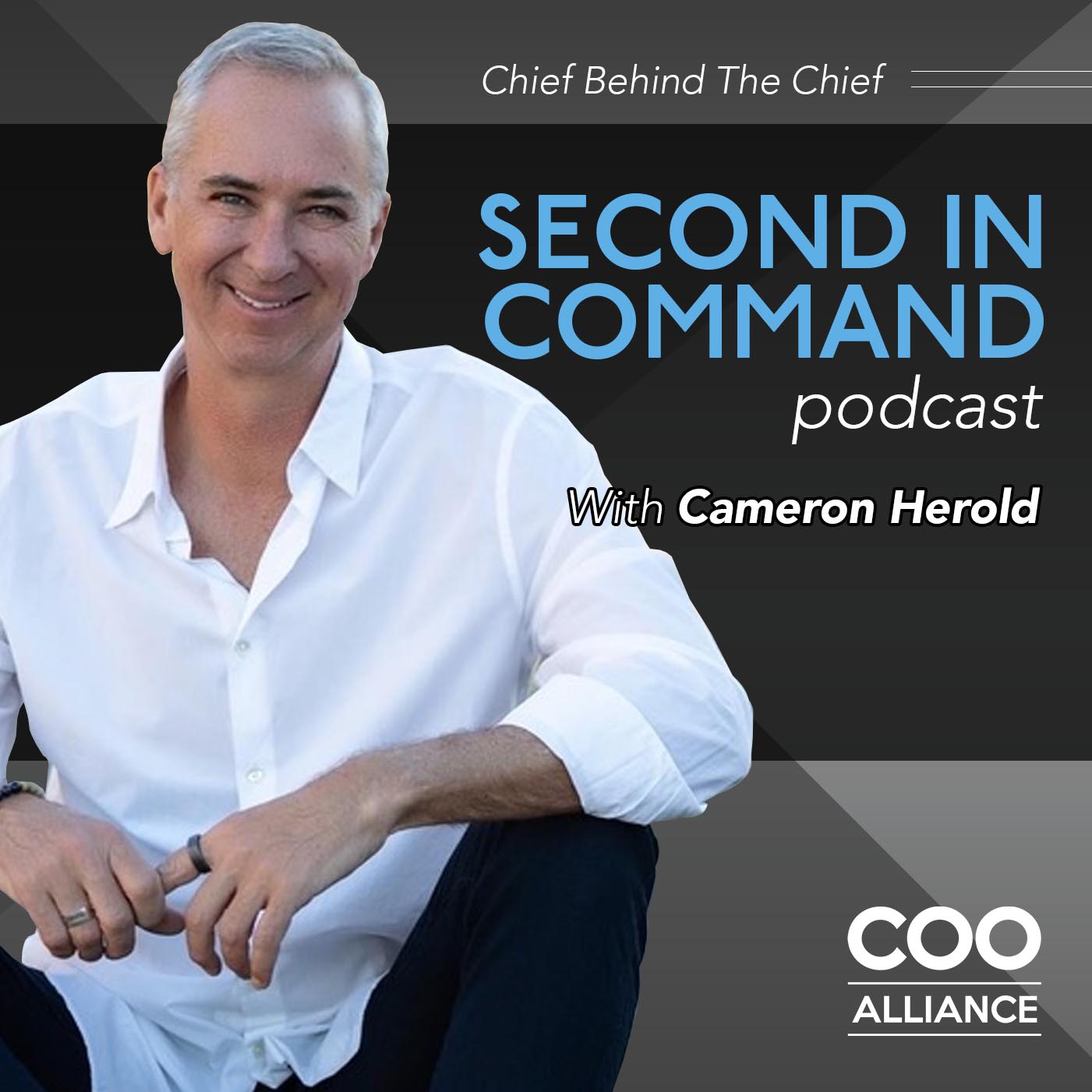
Second in Command: The Chief Behind the Chief with Cameron Herold
Ep. 506 - Roy Jain - How Top CEOs Hack Culture to Skyrocket Growth and Crush
00:45:35
Loading summary
Transcript77 lines
- [00:00]
Cameron Herold
Hey, it's Cameron Herald, the host of the Second in Command podcast. Before we dive in, there's something you need to know. If you're a coo, VP Operations, or you're in any role where you're the second in command to the CEO, the COO alliance is the place for you. If you're the integrator to the visionary, you're going to want to join us. The COO alliance is the world's leading community for the second in command. We've had over 500 members like you join from 17 countries to grow their skills, connections and confidence. You'll get the tools, friendships and a 10x guarantee to ensure that you get your money's worth. Go to cooalliance.com to learn more and see if you qualify. You can even book a free call with our team to ask questions. Now, let's jump into this week's episode.
- [00:44]
Roy Jain
AI has multiple applications. So from a corporate perspective, when we're writing copy for marketing or other manuals and things like that, we can use it. We now have a financial planning and analytics group. They can use AI to kind of evaluate different sets of numbers to find correlations when we run certain programs. What's the impact of those type of things? The most interesting aspect of AI is actually at the practice level. So when you walk into an exam room today, you can click a button on your phone or an iPad or whatever and you can have the entire conversation recorded. It will take out the stuff about the soccer game on Sunday with the kids and that type of thing, but it will take all of the medical notes and it will write those notes into the system.
- [01:40]
Podcast Announcer
Welcome to the Second in Command podcast produced by the COO alliance and brought to you by its founder, Cameron Herold. In the second in command podcast, we talk to top COOs who share the insights, strategies and tactics that made him the chief behind the chief. And now here's your host, Cameron Herold.
- [02:05]
Cameron Herold
All right, our guest today is Blue River Pet Care's co founder and coo, Roy Jain. Roy is the co founder and chief operating officer of Blue River Pet Career, a leading veterinary organization that partners with high quality veterinary practices across the United States. He's got a strong background in finance and business operations. He's been instrumental in shaping Blue River's People first philosophy and their long term growth strategy. His approach emphasizes partnership and not acquisition, building lasting relationships with veterinary professionals who share commitment to quality care. This is a really interesting discussion that we had today. They have 210 locations across North America and I Was really intrigued because they're doing it without branding all of these locations, as I used to do with, you know, Gerber Auto Collision, Boyd Auto Body, College Pro Painters, 1/8 undergot junk. We all have the same brand. Blue river has a very different approach and a very successful approach. You'll love this episode. We'll see you on the inside. So, Roy, welcome to the Second In Command podcast.
- [03:08]
Roy Jain
Thank you for having me. I'm excited to be here.
- [03:10]
Cameron Herold
Yeah. Looking forward to doing this over the years. I've been involved in coaching entrepreneurs and entrepreneurial organizations for a long time. And over the years, I had coached a couple of people that were in the pet care space. But you guys are doing it in a much different way, a much bigger way. The ones that I'd worked with had four locations, three locations, one location. Walk us through the Blue river pet Care model and the scope of the operation.
- [03:36]
Roy Jain
Yeah. So we started the business from scratch in 2009, and big picture today we have 210 individually branded hospitals across the country. Our goal is to preserve the franchise that owners have worked so hard to build and then work with their teams to grow and extend those franchises into the future. Make sure that we're providing the pet care that those local communities want and deserve, a high level of customer service. And we treat our hospitals as our clients to a large extent because we want to make sure that we're keeping the people who are doing the real work happy. So our value proposition to selling owners is again, to make sure that we're preserving their franchise and from a business to consumer perspective, at the local level, making sure that level of service and that level of care for the pets that come in every day doesn't change. And we only try to enhance and add to what the local teams are doing.
- [04:32]
Cameron Herold
And what do you mean that they're individual? The branding? Is the branding the same? If you buy Fred's Pet Care in Wilmington, Delaware, it stays as Fred's Pet Care. Or has it become Fred's Pet Care, a part of Blue River?
- [04:45]
Roy Jain
No, it's Fred's Pet Care. There's no Blue river moniker associated with that practice. There's a small listing on our website that they're affiliated with us. It's not that we're not proud to be associated with any of our practices. We love all of our practices. But quite frankly, the clients don't care about Blue River Pet Care. They care about Dr. Jones, who's taken care of their pet for the last 20 years. A lot of times, these clients used to come in with their parents way back when and have become clients today of the next generation of veterinarian. And so that continuity is very important that we're purchasing the practice. But to the community, there really should feel like there's no change. One of the stories, it's very, I guess, eye opening about how we operate. We bought a practice from a gentleman in Oklahoma and my partner Dan went down for his retirement three years later and he overheard a conversation with a client and the client's like, you know, Dr. Pat, what are you going to do? Are you going to. Are you going to sell your practice? He's like, I sold my practice three years ago and there's a guy I sold it to. So that's the way we like to operate because again, it's about the local team. It's about the provision of great pet care to the pets coming in and great client service. But it's really not about Blue River Pet Care. We do our best to get better deals with our vendors, to get some marketing efficiencies, to bring new ideas to the table, invest in our practices. But it really is about that local team and that continuity.
- [06:18]
Cameron Herold
Okay, so this is where I'm going to go down a couple of really intriguing rabbit holes for me. I was a part of a founding group in the auto body collision repair space. We acquired a group called Gerber Auto Collision out of Chicago, where you're based.
- [06:30]
Roy Jain
Yes, I'm familiar.
- [06:32]
Cameron Herold
And we built Gerber into a massive brand, now a multibillion dollar company, largest collision repair chain in the world. We were, I was part of the Boyd Autobody team in Canada that acquired Gerber 20 years ago, 20 some years ago. So, but in doing that, all of our US Locations are Gerber, all of our Canadian locations were Boyd Auto Body. We got the power of the brand, we got advertising power. You know, people would know the brand because we're in all these different cities. So you don't have that advantage. And it's by design. You don't care to. Don't need to walk me through the mindset around that because I clearly don't understand.
- [07:08]
Roy Jain
Sure. So there is actually probably the largest consolidator in the market, had that philosophy. They bought hospitals, they rebranded the hospital. And to the consumer, what we found and to the, to the veterinarians themselves, it signaled like a McDonald's approach to veterinary care. And having been in this industry, around the industry since the mid-1990s, quite frankly, we learned that medicine is practiced different ways at different hospitals, even within the same city. It may be there may be differences in practices. What heartworm plea tick medication you use, from what practice A to practice B, what their individual experience has been works for them and their clientele. And doing everything one size fits all can be a philosophy that works. But when we started out there were only like 10 companies doing this and the biggest one was a one size fits all philosophy. So we tried to take a different angle to the market and tried to carve out this kind of niche approach of being a little bit more accustomed to the location. Since then, many more competitors have entered the market. I think more of them have taken our approach than the one size fits all.
- [08:29]
Cameron Herold
Yeah, it makes a lot of sense. I mean I also built out a group called College Pro Painters and another group called 1-800-GETJUNK. But nobody really cares if it's, it's junk removal. So the fact that we had a brand new didn't know nobody cared that their junk was being handled differently in a market from somewhere else. But it does make sense of what you're doing. I remember years ago there was a group that was doing a roll up of the funeral home business and they certainly weren't, they weren't all putting the same brand on every funeral home because they had. Nobody wanted to go to the McDonald's of funeral homes for sure. So what is the advantage to the, the veterinarian who's selling you their practice or to the owner of the, the pet care business or the hospitals? What's the benefit for them selling the business to you? What do they get out of the transaction?
- [09:14]
Roy Jain
So obviously it's a financial transaction. So for them they're approaching retirement. We don't like it where, you know, they sell to us and they just leave right away. Unless they've already, they don't participate in the day to day of the business. If that makes sense then in those situations we'll look at it. But typically the veterinarian wants to get their estate in order. They still want to work, they love taking care of animals. But if I give you kind of paint the picture for you of the seller, the seller probably started their practice 25 years ago with their spouse. Maybe they had one employee and now they've grown this business from basically nothing or maybe a small base of revenue because they bought it from another individual proprietor to something like 2, 3, $4 million of revenue. It's a big business for them. They have to close the books and records when they go home. They have to deal with all the HR issues. They have to deal with all the vendors and negotiating deals as best they can. And they do all that stuff in addition to practicing medicine. And what they want to do is really make sure their people are taken care of. So first is a financial transaction to get their estate settled. The second thing is it's a scary thing. What am I going to do tomorrow? How my people are going to be taken care of? They're not, they're not selling a business in the, in the traditional sense of the word, like you know, in big M and A or whatever. They're trying to place their community in trusted hands. And so the value proposition for them is one, we're going to give you an attractive price. Two, we're not changing your brand or your legacy. We're making sure that the ways that you've taken care of your clients, the pets, your community will not change moving forward. And from a staff perspective, you know, we don't change their pay rates or their hours. There's just a lot of continuity there that makes the transition much easier. And we've built a nice integrations function which we didn't have until 2019 that allows that whole uniqueness of that practice, all the different elements of it to be transmitted to all of our go forward operational teams, whether it's operations, accounting, hr, so that all the ways that they do business are, are translated to the future. There are going to be some changes around the edges. Like we have to have a standard benefit plan that's non discriminatory, courtesy of the Affordable Care act and things like that. And they'll get the benefit of the deals that we've cut with the vendors because we have scale. But the core of what they do, taking care of those clients and patients, it won't change. And that's.
- [11:42]
Cameron Herold
And then the benefits, the benefits to Blue river, the benefits to the parent company then is that you have this roll up of businesses, but are you making them more operationally efficient? Are you taking some of the back office off them? Like do you run the accounting for all of them so they don't have that overhead? Do you do all the recruiting for all of them? What is it you do that you're getting the efficiencies of scale or is it about efficiencies of scale?
- [12:08]
Roy Jain
So there's basically a couple buckets. So there's the back office stuff. That's stuff we've done since the beginning of time. We started just purely as an acquisition vehicle. Our goal at the beginning was just to acquire practices and so we did want to consolidate that back office so we close all the books and records here. All the payroll is done centrally. The local team, the leadership has to kind of administer the time cards and stuff like that. But we have one central platform for that. We have a central benefits platform. So all those back office things that the owner used to spend time doing, we do that here. The second piece, which is more interesting is the operational piece. We didn't have an operations team until 2019. And what we started to do was promote really excellent practice managers. So we've got people who know how to manage their inventory, who know how to price their services, who know how to recruit, who know how to market their practice. And then we developed other things. We have a facilities team that will look for opportunities to invest in the practice, whether it's a new piece of equipment or if we have an old, old facility that needs a refresh, or maybe we expand exam rooms. And then we have a clinical development team where we can talk doctor to doctor. That team's comprised of doctors and experienced technicians and some business folks and they can talk medicine. So we put on training programs or we can talk about new things that are coming out and bounce ideas off each other. We have a portal where practice managers can talk to each other, medical directors can talk to each other. So it's really a network to help promote animal wellness and carry forward that practice in the latest and greatest medicine. The best ways to take care of pets locally and to make sure the clients keep coming in and enjoying that great service and care.
- [13:52]
Cameron Herold
Super interesting. How many locations are you at currently?
- [13:55]
Roy Jain
We have 210 locations. We're in just under 40 states.
- [14:00]
Cameron Herold
Okay, and is the expansion going to be continue to be just in the US market? Are you going to expand globally at all? Is there a need to go global?
- [14:08]
Roy Jain
So there are other consolidators in other global markets. Right now our focus is the US It's a full time job and maybe then some. So we're focused on the US for now.
- [14:19]
Cameron Herold
What's your level of saturation that you're at right now? Or is there, do you know what your market potential is to still scale?
- [14:25]
Roy Jain
Yeah. So just to give you a big picture for the industry, there's about 30,000 animal hospitals out there. Market consolidation has probably gotten to about 25ish percent if I look at the, the last figures that I remember reading for the industry and roughly 50% of the revenue I think is corporately owned. So there's still a ton of white space. When we did business development at the beginning, you know, we do Google searches to find animal hospitals. Now, the business development team is very sophisticated. We can tell you white space by state, essentially we can tell you how many practices are two doctors, three doctors, et cetera. So they have a much more sophisticated approach of evaluating what the white space is and where we should be focusing.
- [15:07]
Cameron Herold
And is there, is there any discussion that happens at the leadership team level of should we brand this? Like, should we put a brand across everybody? Or is that just, you just cognizantly know after so many years that the, the potential upside of doing that, there's also the potential downside and the risks of it, and it's just a no.
- [15:24]
Roy Jain
So I think we have this measure where we talk about our retention. So our key producers are the veterinarians. They're the ones that generate the revenue. And there is a massive shortage of veterinarians in the market. So there's about 120,000 veterinarians overall, if you believe some figures. I think some of this is propaganda, but some people think that we're going to be short 50,000 veterinarians by the year 2030. I think that's a little bit overstated, but there is a shortage, probably 15,000 as we sit right now. So the proposition of going branded is difficult because again, that implies we're going to have one size fits all. Our retention rates for veterinarians is about 90%. So we've done a good job of keeping them happy. That's a combination of pay and benefits, but it's also a combination of making sure we have that continuity of care from pre acquisition to post acquisition.
- [16:22]
Cameron Herold
Interesting. I've done a lot of work around the dental space and they're having the same issue. It's just hard to find really good quality people. So the fact that your retention is so high just speaks to the fact the model is working.
- [16:32]
Roy Jain
Yeah, I should touch on when I say that.
- [16:34]
Cameron Herold
Yeah, exactly. So speak. Can you speak about AI and robotics and what's happening in that part of the world and in the veterinarian space? I can't imagine that robotics is going to come into the veterinary space. I mean, AI probably on the business side, but can you speak to that?
- [16:52]
Roy Jain
Yeah. So AI has multiple applications. So from a corporate perspective, when we're writing copy for marketing or other manuals and things like that, we use, we can use it. We now have a financial planning and analytics group. They can use AI to kind of evaluate different sets of numbers to find correlations. You want to run certain programs. What's the impact of those type of things? The most interesting aspect of AI is actually at the practice level. So when you walk into an exam room today, you can click a button on your phone or an iPad or whatever and you can have the entire conversation recorded. It will take out the stuff about the soccer game on Sunday with the kids and that type of thing, but it will take all the medical notes and it will write those notes into the system. Now that writing notes into the system, there's still some work to be done on that, but it takes a huge amount of administrative work off the veterinarians and technicians because now it's a quick review of what's going on and they're done. They click, you know, approve and the notes in the system. The other place AI is important is if you have a bunch of people coming in or requesting scripts and things like that, that summary of what is being requested can be summarized for the doctor and make their job. Instead of having to go through the notes and everything like that, you can tell, hey, they're requesting heartworm medication. Have they had a heartworm test in the last 12 months? Have they visited us in the last 12 months, which is a requirement of issuing the script for that. So these types of things, there's huge benefit yet to come. But it's like we're just starting down that curve and it's going to be pretty dramatic in terms of the impact. So if we're spending less time doing admin, you can see more pets.
- [18:45]
Cameron Herold
Yeah, that makes sense for sure. I'm curious about something. The medical world is. There's the talk that over the next few years, if a physician does not use AI in their day to day, it'll be considered malpractice. AI understands how to diagnose and how to work with the patient better than any doctor ever could at this stage. But they're talking to the other human. They're like, hey human, what's bothering you? And hey human, what are the symptoms? The dog can't talk to you. How.
- [19:19]
Roy Jain
That's exactly it. That's exactly it.
- [19:20]
Cameron Herold
How does a veterinarian diagnose all this stuff?
- [19:23]
Roy Jain
That's why telemedicine hasn't really taken off. It's more like teletriage. Right. Because a dog can't tell you what's going on. You have to have a physical exam so people can talk about that all day long. At the end of the day, people still have to bring their pets in for vaccines and government required stuff. So I don't see that taking off too much foreign.
- [19:47]
Cameron Herold
Hey, it's Cameron, I hope you're loving today's episode. Quick question for you. Does your company have a strong leadership training program in place to grow the skills of everyone who manages people? If you want to help yourself and your company grow, get everyone who manages people learning from my invest in your leaders online training program. There are 12 core leadership skills that I cover online and they're all going to really grow. CEOs pay me $78,000 a year to coach them one on one and now you can all benefit for 1% of what they pay me. These are the same leadership skills that I created and certified everyone in at 1-800-got junk when I was there as COO. Go to investinyourleaders.com today and use promo code podcast10 before the end of the month to get 10% off each manager you sign up. Now back to the show. Foreign it's fascinating to me I, I would think that that with computerization and with medicine that the job of a vet's going to be able to be even easier going forward with the ability to diagnosis, with blood work and with, you know, genome, the genetics coming into this space. So in your role in the day to day, what do you focus on? You know, with these 200 locations you could be overwhelmed with work. How do you stay at the level that you're staying at? What do you focus on day to day currently?
- [21:15]
Roy Jain
So for me it's really big picture strategy and what's going to drive the overall business understanding from a high level, what number of acquisitions we need, what types of things that we have to implement operationally that will allow us to achieve the growth that we want to achieve. So it's really focusing on those high level objectives are from an operational perspective there. We have now 150 ish corporate team members in addition to our 3500 team members at the locations around the country. So there's a lot of people that are executing a variety of different things. We have a management level. A lot of them have grown up in the organization and you know, it's a constant evolution. You get, you get used to not doing. When we first started, I was the guy installing the credit card machine to make sure the money went to our bank account versus the owner's bank account. And now we have teams that do that. I was the person on the phone trying to recruit the veterinarian when we had an opening, trying to convince them to come to the hospital in Houston. And now we have teams looking for veterinarians that are doing that. They're doing a heck of a lot better than I ever did. So my goal is to make sure that we have the top level strategy of what things we need to focus on and kind of getting rid of the obstacles and then adding resources. Because if you ask the same team as currently constructed to do 10 more things, they may not be able to do that. And we've from a regional coverage perspective, whereas when we started it was just the three of us that covered our hospitals, we now have a ratio of roughly 12 to 1 in terms of the number of hospitals that any regional manager covers. So we've really still kept that custom experience because they have to track actually less hospitals than I had to track when we were doing it way back when.
- [23:11]
Cameron Herold
Hey, it's Cameron Herold, founder of the Second In Command podcast. Are you or your COO struggling to level up? Every COO or second in command should join our COO alliance. Check out COOAlliance.com for just the cost of a few copies a month. You get world class training, 12 monthly mastermind calls, 12 monthly AI expert calls, and two live events a year with top COOs globally. Since 2016, we've been building and growing the COO alliance to put the tools, peer support and strategies in place to help grow COOs and their companies. It's backed by rave reviews from hundreds of COOs and their CEOs who have seen insane growth. We also have a 10x guarantee. It's your time. Check out co alliance.com and sign up for a quick call to learn more. That's funny. I was coaching a company years ago and the management team, the company is now called Tinuity. They're a large 2,000 person marketing agency and their COO is the first member of the CEO Alliance. When I was coaching them years ago, they said the members of the leadership team were also managing six or seven clients at the time when they were building up the company and now their management layer could only handle four or five. I'm like, I don't understand how could you manage more and build the company and now the management layer is managing less than you do. Do you ever look at the business in that way and say wait, like I was doing all of these things and now like, or, or is the business gotten more specialized or are you able to do more or do it better? Can you, can you speak to that?
- [24:51]
Roy Jain
They're just more aspects of what we so when I was doing marketing, right, we'd run a program, we'd see the return, track it on our Excel spreadsheet and what have you. And it was for, you know, 20 or 30 hospitals. And that's kind of what it was. Now we have 210 hospitals. We have to have systems that are able to measure those types of things. When we run programs or if we're doing an education program, we have to coordinate from the 210 hospitals who are the attendees, what's the content, what are we trying to achieve, and how are we going to track that? It is a little bit more complicated. And each of these hospitals, you know, the manager may be new, the manager may have 20 years of experience. All that has to be taken into account. So we feel like the coverage ratio and given the all the different moving parts, we think we're in a good spot. We may even want to take it down by one or two per regional over time. But we want to make sure we're providing that experience. And when we're at that type of ratio of like a dozen or 13 for each regional that we have, we feel like we're providing a decent level of experience. But, you know, we can always do better. And I think that's one of the attitudes that we always have, is we'll get feedback from practices on how we're doing. We do engagement surveys and other things. Just make sure that we're hitting their hot buttons and hitting their service needs from our perspective. Because again, if we're doing our job, they're thinking less about us, they're thinking more about serving their clients and patients.
- [26:18]
Cameron Herold
Yeah, I love that. I want to talk about the marketing a little bit. You mentioned something around marketing and, you know, running marketing for these 210 locations. And again, every one of them has a different name. So are you running the same ads? Insert different name in every market. Are you?
- [26:36]
Roy Jain
I'll make it more complicated because we.
- [26:38]
Cameron Herold
Got, you know, you got some in the same market.
- [26:41]
Roy Jain
Yeah, that. And then also you've got different brands that people are using, different vendors and products. Right. So you have to. So our marketing team does a phenomenal job courting with our field operations team. If you're running the Elanco product or the Merck product or the Zoetis product that, you know, you have ads tailored to whatever that promotion is, which has the practices logo on it. So it's coming from the practice, but we can push a button centrally and send that out. So that's the level of sophistication that we have to have here. And that's what we have. And. And by the way, if one of those practices is down a Doctor, we can't run the promotion because they're probably already full up on appointments because you can't take anymore.
- [27:25]
Cameron Herold
Right. They can't even handle any more leads.
- [27:27]
Roy Jain
It's, it's a pretty, it's a full time job. That's why, you know, that's why we do have that low ratio regionals as we have multiple marketing managers that cover different regions, we have multiple HR managers that cover different regions for different issues that going on. And there are different state laws for HR and so on and so forth.
- [27:43]
Cameron Herold
And really you're, you're almost a Marketing Agency for 210 independent pet care places, right?
- [27:50]
Roy Jain
Yeah.
- [27:51]
Cameron Herold
So do you, you, you must operate in a way like that versus a corporate that's just managing the same thing across all the different markets.
- [27:59]
Roy Jain
And that is the downside. Right. If you were the one size fits all, we're going to use this product and we're going to run the promotion and everyone's going to do the same thing. But again, as we've learned over time and as we have evidence with our retention ratio, yes, it creates some back office headaches and different externalities in terms of how you have to go about it. But at the end of the day we're keeping our people in the seats who are the key revenue producers and we're serving our communities as best as we can. And again, like we're very happy with the growth that we've been able to achieve with our operations team since 2019. We didn't, again, we didn't have operations until 2019. That whole, just think about that in and of itself. We had 90 hospitals when we started an operations team. That's a whole nother endeavor because you know, for 10 years we did things, you know, you can do what you want. And now we have a little bit more sophisticated approach which is still custom. We meet people where they're at. Someone may have a great website, they don't need to, we don't need to redesign different things on the website. Someone may, you know, have their inventory management perfect. We don't need to work on inventory management, but we have the playbook of here's the 50 or 60 things that we tick down to make sure we're not going to get to all 50 in a year. We might get to get 50 in two or three years. But we're going to tick down the list and make sure that that hospital is as strong as it can be, that the people are trained the best they can be to provide that great client service and pet Care to the local community?
- [29:39]
Cameron Herold
And is it the teaching each of the individual locations how to sell more of products they're not selling or services they're not selling? Is it teaching them more about efficiencies with bookings so that they end up having, you know, more of their calendar book, like efficiency ratios. What are the ways that the head office, you know, gets the benefit from these acquisitions?
- [30:04]
Roy Jain
So a couple of ways. One, the vendor savings are immediate. They come onto our deals. Our average discount has doubled over time. We used to have, you know, again, blended across a whole variety of things, roughly a 10% discount seven years ago. Now it's over 20%. And again, that's a, that's just a blended number across a variety of different things. So there's scale benefits there, there's web optimization if you want to talk about marketing and making sure that when you know the particular vendor is running a promotion, if you're a hospital using that product, we can get that promotion to you and make it easy for you to dial it up. It's recruiting. Sometimes we have veterinary openings, our average. I was just looking at this today. So we had a recruiting team of like one person back in 2021, and it took us like 200, 300 days to fill a position now for openings that come up in 2025, our average fill time. And I had a double take on this number. So I'm going to say it and I'm going to caveat. I had to double take it, but it's under two months. That's crazy. In an industry where we're short 15,000 veterinarians for us to be able to fill positions that we open today in less than 60 days, that's pretty phenomenal. So all these value added things and that's put aside us investing in a digital X ray machine, which maybe the previous owner was thinking about, but a little bit gun shy on. We know what the return on digital X ray machine is. Yeah, of course we're gonna buy one of those. We came across one practice that had a regular X ray machine with the old tanks and the chemicals. It looked like one of those old cadillacs from the 70s had one of those logos on it. We put in a digital machine. It took their X ray time from 45 minutes to do 1x ray down to like a couple seconds.
- [31:55]
Cameron Herold
Right.
- [31:56]
Roy Jain
How much efficiency does that introduce in the day? So these are simple things that we can do. Again, meeting each practice where they're at to get them forward in time in terms of helping their clients and Their patients.
- [32:07]
Cameron Herold
Yeah. And then when you know it's working in one location, you can stamp it out over as many of the 210 as possible. Like you're. And a little bit of a Sell them. Don't tell them. Right. You're just going to show them because they are operating with their normal way of doing business or are they starting to adapt and bring in the business format that you would have if you were a franchise?
- [32:28]
Roy Jain
So they. Everyone wants to provide great care to their communities. And sometimes it's providing just that peer network of, hey, you know, Blue river introduced me to this particular program or this particular therapy. And oh, my gosh, it's helped my clients so much. I always tell our teams the best way that we sell things is just internal demand or testimonials. You know, we've had testimonials written about some of our training programs. We have a young doctor training program that we do in Las Vegas every year. We get rave reviews around. Oh, my God. It helped me do more dentistry, helped me, you know, do this surgery that I was scared to do before. And we create that demand from the field because people want to increase. They want to have better skills to serve their clients and their pets. So the more we can create that internal demand, it's all in sync. Right. Like, we do better if the practices do better and the patients do better. You know, it's all linked up. It's all win, win, win is from my perspective, but it's making sure it's not corporate and hospitals, and then we're trying to deal with the customers to drive revenue. No, it all starts with what is the best thing for the pet. And that is, at the end of the day, the whole ball game. Can we see more pets? Can we provide better care? And that solves everything else.
- [33:58]
Cameron Herold
Makes a lot of sense. All right, I want you to speak to the team, the corporate team, these 150ish people that are on the corporate team now and growing. Are you finding it harder to attract and retain people to the corporate. Are you finding any differences with Gen Z and Gen Y now in the way that they're working post Covid?
- [34:17]
Roy Jain
So we haven't had a tough time attracting in this market. The market's been pretty good. You know, we fill positions actually faster than we fill veterinary positions. So it's less than 30 days. I think when we place an ad, we get people in. A lot of our team members are homegrown. These are people who've been with us. So it was three of us that started the business. We had one additional full time employee until 2014. So for the first four or five years of our operation, it's four people, and now we're 150. Many of our senior leaders are still from that 2014 cohort, 2014 to 2016, where we were kind of, we had enough girth where we could add resources. But we've built a very resilient team. They've been through the whole thing. They've been through the COVID era. They've seen the market change so much. When we first started, I mentioned we only had 10 competitors roughly to buy animal hospitals. Now there's probably 60 or 70. It's highly competitive market. Entering today would be a very different thing and very tough. When we first started, we put an ad up at our first hospital. I remember this, we went away for 30 minutes, put an ad up for a new veterinarian. We had 19 resumes within that 30 minutes. Now you're gonna get crickets. You gotta go find the veterinarians. There's that shortage that I mentioned. So all these things that our team has been through, and then we've brought in some outside leaders with some new perspectives to help us fill certain functions that we didn't have before. And it's a nice blend. But I think the thing I would say about my team, and I love them to death, they're resilient, they have an ability to pivot and to innovate. That's one huge thing here. You know, we. Six Sigma is not the right word, but it's kind of that mentality where what we do yesterday is not necessarily what we do tomorrow. We're always looking to improve. That's a positive and a negative. If you want to get into that. We can talk about that later. And they've all bought into this customized approach to how we do our business because it is maddening from a back office perspective. You know, tracking all these different ways and products and vendors and being custom to each, that is a tough endeavor. But everyone's dedicated to that mission. And we've gotten better over time on celebrating our wins because again, that mentality of constant innovation and doing something better can get you down, you're never satisfied type route. So we've done a better job recently of celebrating wins. But I'd say that's an area of improvement for us.
- [36:50]
Cameron Herold
When you're buying the pet car hospitals or the pet care locations, what percentage of the company are you acquiring? Are you buying 100% of the business? And does the vet get A percentage of the parent company or is there kind of any upside for them down the road as well?
- [37:09]
Roy Jain
Typically it's just a straight buyout and I'd say the vast majority of our deals call it 90%. We pay them a certain amount of cash at close and then there's a little bit of seller financing that we pay off over time, which is a nice income stream for them. And then we lease their facility back from them because typically they own the facility.
- [37:28]
Cameron Herold
What kind of seller financing are you taking? 30%, probably the average.
- [37:32]
Roy Jain
If I actually do the math on it works out to be 20%, 25%.
- [37:37]
Cameron Herold
And then the bank is financing the rest.
- [37:39]
Roy Jain
Bank's financing the rest along with our cash flow.
- [37:42]
Cameron Herold
Okay, interesting. Yeah, that was similar to what we did with Gerber. We would typically pay an average of one times revenue or five times profit. The average of the two we took 30% over three years. Bank would finance 70% and then the efficiencies would kick in. So yeah, the numbers make sense and.
- [38:00]
Roy Jain
It really works well when you're paying five times. And that's the environment that we were in. So just to put a point on the competition, it's almost. At one point it was completely irrational. Prices doubled in one vintage year, they tripled. And just do the math on that. When interest rates are 0%, pretty easy, 0% plus a spread, it's pretty easy to pay higher prices. Now with the base rate being in the fours plus a spread, you're borrowing what, 9ish percent. You know, if you're paying teens multiples, that, that equation doesn't hunt. And what's happened, because, you know, this has been our business from the beginning. We have made sure that our balance sheet has stayed steady. I can't say that's the same for everyone else in the industry. And it's caused some issues that haven't yet, you know, flushed through the system. But we've been very.
- [38:55]
Cameron Herold
What's the biggest acquisition? Have you purchased any other groups at all or have you only done the single units?
- [39:01]
Roy Jain
The biggest group we've done is like a group of four. So nothing like 20, 30, that type of thing that, that'd be, you know, we are private equity owned now. So if the sponsor wanted to put in capital to do something like that, we certainly would take a look and kick the tires.
- [39:18]
Cameron Herold
And there's no, no grape swallowing the watermelon yet. You're not going to go out and look for a 500 per share, 500 location chain and acquire them yet.
- [39:26]
Roy Jain
No, I don't think we're at that point just yet. No, we're only 210 locations. That'd be a tough one to take.
- [39:33]
Cameron Herold
On, but yeah, I call that the grape swallowing. That's the grape swallowing the watermelon.
- [39:38]
Roy Jain
There you go. No, not, not yet.
- [39:40]
Cameron Herold
Right. So your growth as a leader, I mean, over the last 15, 16 years that you've been co founder and COO of Blue river, you've obviously had to grow your skills. What have you focused on growing? Where have you gotten better?
- [39:54]
Roy Jain
So the hardest, there's like four things that I would say. The first thing is you have to let go a little and you have to shift from doing to managing and motivating. I think that's a key thing. That's something that I've had to reinvent myself over and over and over again over the last 15, 16 years of doing. This second thing is really trying to incorporate data into what we're doing. One of the things that the private equity firm did push us to do was look at our data more critically. And they actually helped us find a gentleman who's outstanding, that he now has a team. And they cut our data six ways from Sunday so we can identify what the root problems are and where we need to focus so that we can pursue better growth or more efficiency or what have you. The third thing is really seeing big picture trends that are happening. And you have all these departments that they may not see the big picture, but trying to bridge those gaps so that there's greater transparency, installing systems so that people can see it, you know, Monday boards or Salesforce or what have you, so that data is available. Having meetings, having structure around that, that's very important. And the last thing I'd say, which is again still a work in process, is training those leaders who have grown up doing, just as I grew up doing, training them to manage. And what does that mean? It means that you don't do every day. You have to manage, you have to motivate, you have to carry the culture. And that's the only thing that makes the business, you know, redundant and repeatable, if that makes sense. Because it's. It's not just about the three of us that started. It's going to go on long after we're gone. But that culture has to stay.
- [41:47]
Cameron Herold
That's been an obsession of mine. Three years ago, I launched an online training program called Invest in youn Leaders. And it's the 12 core skills that anyone that manages people needs to be competent at. So I'm glad you Kind of mentioned that we, I know we always talk about it in one of the ads on the podcast, but the invest in your leaders, those 12 core skills are probably exactly what you're focusing on growing your people in today. All right, I want you to go back in time and give yourself some advice. What advice would you give the younger Roy Jane, maybe the 21, 22 year old starting out in your career? What advice would you give the younger you that you know to be true today?
- [42:20]
Roy Jain
So the one thing that I've learned through this whole experience of, you know, creating this, we created this business, by the way, during the Great Recession, which was a tough time to get started. And something I learned from my partners is just wake up every day and be, be positive. I know that's the stupidest thing that I could maybe say, but it's the most intelligent thing I'll ever say because it is the key to success. And it is my core belief that if you wake up more days or most days with today is going to be a good day, that is setting the table for whatever you're doing. And then the second thing, which I've had since a very young age, is just to continue to work hard. I think I just trust in the process. But I did learn that positivity from my two partners because again, we didn't have anything to start. This is like we're hung out our shingle. It took us over a year to buy our first hospital. My gosh, was that a great day? But it took us a year and it's like, hey, is this thing going anywhere? And every day one of my partners would come in and he's like, it's going to be a great day at Blue River Pet Care. I'm like, what are you talking about? We got. Nothing's going on. But you start to believe because you wake up and you think, yeah, it's going to be a great day. And sure enough, we bought our first hospital and then our second one. We turned cash flow positive within that year. That's a, it's a big deal. And I think again, broadly speaking, I don't think that's a wide, wide held belief. People are looking to blame things or whatever. You can create your own luck by being positive and working hard. And I think those are, those are the key ingredients. And the positivity is something I tell myself way early on. Believe in yourself because look at where we are right now. I try not to think about where we are right now. Like, I think it's cool and everything but I'm always focused on what are the next challenges that we have. I think our team's focused on the next challenges. And like I said, the area of improvement that we would have is really celebrating our accomplishments a little bit more than what we do. But our HR team has done a great job of focusing us on that area as well. So we try to do that more often these days.
- [44:33]
Cameron Herold
I love that those are great lessons to wrap on. I just did an interview earlier today and I was speaking about that more leaders need to celebrate their accomplishments more and say praise more and thank people more. And that's I think those blending into that power of positive thinking and working hard are great lessons to wrap with. Roy Jane, the COO for Blue River Pet Care thank you so much for sharing with us on the Second Command podcast.
- [44:54]
Roy Jain
Thank you, thank you for having me.
- [44:59]
Podcast Announcer
You've been listening to Second in Command, brought to you by COO Alliance Founder Cameron Herald. If you enjoyed this episode, please be sure to like, share and subscribe to us on Apple Podcasts, Spotify and our other podcast streaming platforms. For more best practices from industry leading COOs, visit COOAlliance.com.
- [45:24]
Cameron Herold
SA.