Loading summary
Transcript57 lines
- [00:00]
A
One of the things we shared with our kids is learning for life and little and often. And those two things I think are the things I wouldn't say I didn't do, but I would do more. I would be more deliberate about learning for life and really being deliberate about little and often. Because we get very consumed by our day job. We get very consumed by the chapter of our life that we're in right now. If you don't take a little bit of a step back to draw the boundaries and say, do you know what, every day I'm going to do a little bit of exercise. Every day I'm going to do a little bit of math. So every day I'm going to, you know, read about a certain area or topic and expand. Then I think you can can get lost within the day job, as it were. So learning for life, little and often, be it exercise, learning, time with friends, you know, et cetera, et cetera, I think are probably good staples in terms of the rules of the game for a successful journey.
- [00:58]
B
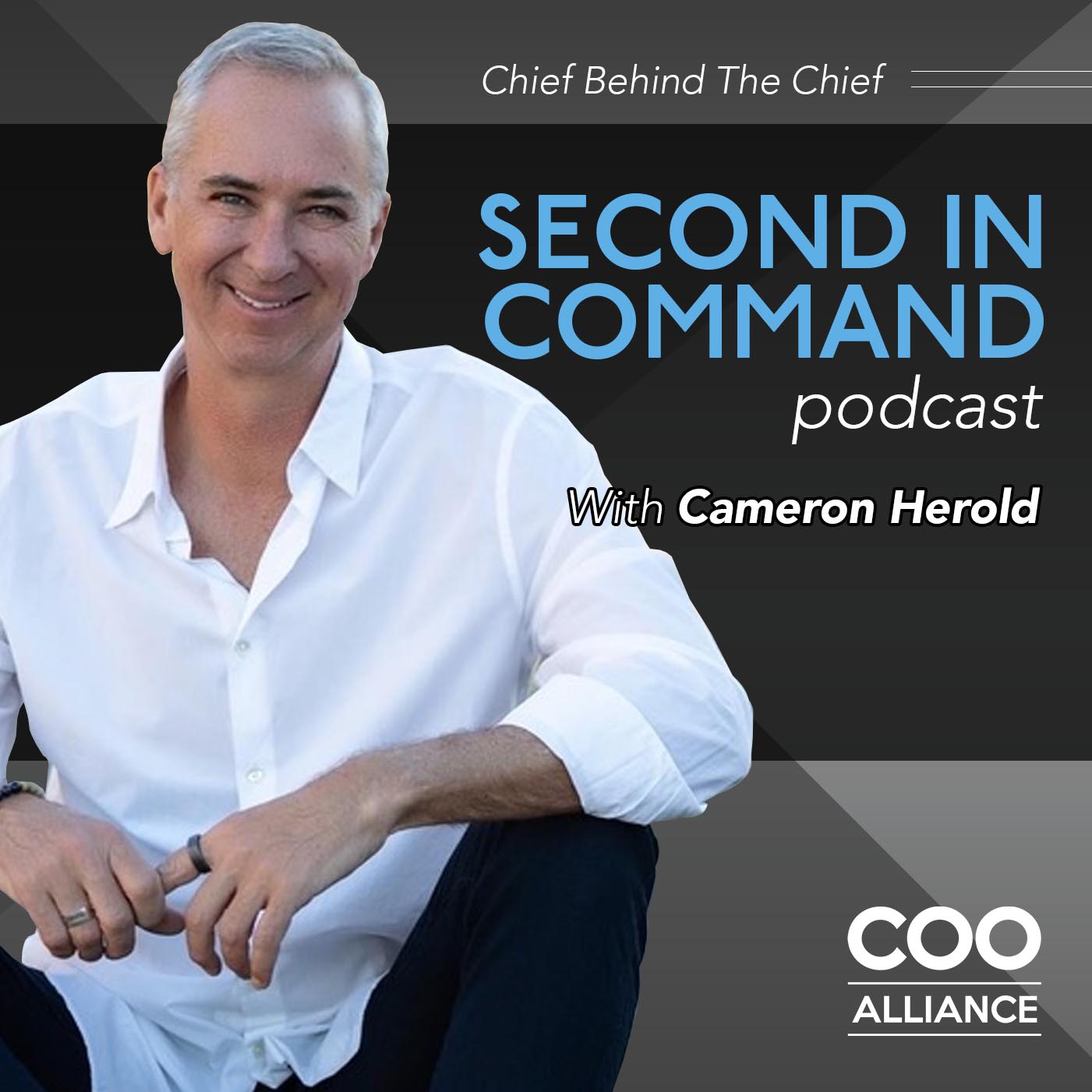
Welcome to the Second in Command podcast produced by the COO alliance and brought to you by its founder, Cameron Herold. In the second in command podcast we talk to top COOs who share the insights, strategies and tactics that made them the chief behind the chief. And now here's your host, Cameron Herald.
- [01:22]
C
Hey, it's Cameron Herold. I'm your go to guy for crushing it as a COO and scaling businesses. Welcome to the Second in Command podcast. Today I'm stoked to bring on Nick Malone, who is the former COO of Sitecore in London. He's got over 25 years of global experience. He's a C suite rock star who's boosted revenue and streamlined operations for tech companies, both public and PE backed. Nick transformed Sitecore by doubling their ARR from 250 million to 500 million in three years through smart growth and acquisitions. He also had past roles like SVP at SAP for the Middle east and South. He was the Managing Director at SAP Kazakhstan and he's got a great knack for scaling. He's going to be sharing a lot of his insights into building these companies, working in the senior roles inside the organizations, and also some global leadership tips that you'll be sure to be able to use inside of your company. This chat is loaded with tips for CEOs and success stories. So let's jump in. You can also watch all of our episodes on our second Grand Podcast YouTube channel. We'll see you on the inside. So Nick, welcome to the Second Command Podcast.
- [02:32]
A
Garen, thank you very much.
- [02:33]
C
Pleasure to be here, Looking forward to it. I'm. You and I are sitting on opposite sides of the planet right now. I'm over in Australia, you're over in the UK right now. Amazing how we've got the, the technology set up to be able to do this today and to run businesses to this, to this day. Why don't you just kind of walk us through a little bit of your, your background and kind of how you got into the C suite positions that you've been in over time.
- [02:56]
A
Well, yeah, thanks Cameron. Yeah, great to see technology joining us. From literally one side of the planet to the other, my career is evolved undeliberately over the course of time. I guess, you know, I'm an engineer by education but discovered quite quickly that I like the opportunity to travel the world actually and to explore different aspects of life and I spent first 20 odd years of my career in sales and sales leadership and that gave me the opportunity to actually go and live in the, in the uk of course lived in the us I managed to live down in Georgia, in Atlanta, but covered the whole country which was great. Got to experience what life in the Big Apple was, as it were. And then, yeah, then I moved across into enterprise sales with software. I've always been in the software industry in one way, shape or form and then my career took me into general management and I was running Central Asia based out of Kazakhstan which I did for a company called SAP, big German company, enterprise software before then coming and working at sitecore and I've had I guess a career which has taken me from many different countries, many different departments and themes. So I've really had the opportunity to grow into different aspects of leadership and culminated in the COO role which has been fascinating, challenging and I guess not for the faint hearted at times as well I'm sure.
- [04:30]
C
And I don't want to skip over that Kazakhstan too quickly. That's a bit of a random comment that we don't hear that often. You said you were based there, were you living there as well as working out of that region?
- [04:40]
A
Yeah, I'm very fortunate. I got a very courageous wife. We had a couple of very young kids at the time and yeah, we went over and lived in Kazakhstan out of Almaty, which is, you know, a wonderful, wonderful experience for family to, to live and operate in, in a, in a culture that's very different I guess from from what we were used to here in the uk. To give you a sense of, you know, the climate, it was sort of plus 40ish in the summer, minus 40 in the winter. Almaty sits on an earthquake fault line in a bowl surrounded by mountains. It's one of the great things you can get from your office desk to the top of the mountain. Skis pointing down the slopes within an hour. Cameron, there were some perks to that thing but it's a long way from anywhere. It's a seven hour flight from London, four and a half hours to Dubai. And know from a cultural perspective, definitely got a different perspective. You know, you got a very Russian centric way of doing business.
- [05:40]
C
Amazing. So I mean I, I've been all over the world. That's a region I haven't been been to. But is it Kazakhstan kind of in the, the northern part of Turkey? What. Or am I even kind of remotely in the right area?
- [05:53]
A
It's, it's a landlocked country and it's just, it borders to the south border of Russia and borders to the east onto China. So and then you've got the other stands around it, Kyrgyzstan to Turkmenistan, Uzbekistan and so on and so forth. So yeah, quite, quite remote in the kind of formerly part of the ussr. You know, essentially the former CIS countries. Yeah, yeah.
- [06:15]
C
The only, only area I've even like kind of been to some of them. But it's, it's the, I guess the ones that are further west. I was up in Estonia last summer. What was it, what was it like working out of that region? What do you think some of the lessons are that you pulled from, from that region that you would maybe carry with you today?
- [06:31]
A
If you look at the economy, you know, firstly I have the opportunity to do a little bit of research before I get there. And quite often people say to me, my goodness, you must have a real appetite for risk to go and live in a place that is that far from anywhere and that different culturally from everything else. And my studies. It's a insight adjusted risk. So number one, of course because I was going there with my wife and kids, I needed to know that it was safe. Is very much a safe place. Medical facilities are not ideal. You don't want to be in a serious situation but you know, as long as that doesn't occur, you're in good shape. The economy and the population is interesting. It's not a large country. There's only sort of 18ish million people there and the economy is essentially split into quasi government owned assets and then the rest and that half that's quasi government is under the sovereign welfare fund of Kazakhstan. And in that is all of those very rich assets. So Kazakhstan is a very oil rich country and they have Kazmune gas, which is a big concern there. Uranium is also mined there, one of the biggest producers in the world. So within that sovereign welfare fund there was at that time, when I was in the country, it was about a $78 billion asset with 350,000 employees across all of those things, be it oil and gas, mining, utilities, railroads and so on and so forth. So the country as a whole was very dependent on those assets and then basically peeling off profit to fuel and fund expansion of the economy as a whole, which actually the, the President set out his vision for 2050 and, and the, the sovereign welfare fund was very much a vehicle for fueling that journey.
- [08:26]
C
And I did, I just kind of looked up on a map where Kazakhstan is. It's actually a much larger geographical country than I thought it was too. It's, it's actually like, I'm going to guess about maybe a third of the size or half the size of the United States by, by landmass. It's pretty big.
- [08:40]
A
It's huge. I, I think, I think it's the seventh largest country by landmass in the world. You, you, I, I can tell you that in the, in the seven hours you fly to get back from, from Almaty to London, the vast majority of the flight, you're still over Kazakhstan. It's, it's extraordinary.
- [08:56]
C
And the sovereign, the sovereign wealth fund was actually financing the business that you were CIO of there, correct?
- [09:03]
A
Well, actually I, I went to Kazakhstan to run SAP's business in central Asia. All right, so, and when I went there, we were a small, smallish business. We were, you know, single digit millions, probably about 20 people across the whole organization from finance and sales and pre, sales and so on and so forth. And we grew that material. We were, you know, 5x that when I, when I stepped out of that role three years later. But I stepped out to join the sovereign welfare fund. And that came about because as I mentioned, you know, Nazarbayev, who was the President there, had been there for quite a long time, had a vision for the country and there was an opportunity to, I had an opportunity to present to the board of the sovereign welfare fund how technology could enable that growth journey and fuel not only the efficiency of the fund through using technology to run all of their businesses, but also that that would be a mechanism to establish and scale the IT industry in Kazakhstan to service all of those businesses, but also establish the IT business to then service the surrounding countries in the following years. And that essentially was the narrative that we put in place to articulate how technology could be an enabler of the vision that the President had outlined. And subsequently then that led me to taking on the role as an operating partner at sovereign welfare fund itself to drive that national digital transformation strategy, which was, you know, an incredible opportunity and a wonderful experience.
- [10:40]
C
What was that like kind of moving from, from SAP and then working into that kind of quasi government, you know, entrepreneurial kind of style fund too?
- [10:49]
A
Well, yeah, extraordinary. I mean, there are some practical challenges in that kind of scenario. And so, you know, I'm an English speaker. I am a typical British English speaker, which means I'm not a linguist, I've not mastered many languages. So consequently, I, I was working with a full time synchronous translator in my role at at Samrock. But what it does do, it makes you understand the importance of identifying and, you know, bringing on board talent. So my role essentially was to clearly articulate the strategy of how we were going to drive this digital transformation and then to bring in some real skilled talent. To do that. I established a role called Chief Business Transformation Officer. A gentleman that I'd actually worked with. He was a customer of mine, actually, when I was running SAP in the region. He was driving a transformation project for one of our customers. A very articulate, very highly energetic and skilled individual that we brought into the business. And then we set up a core transformation team that we then allowed us to scale across and work with all the companies. And the theory was, you know, each and every one of the national companies, if we asked them to go on a digital transformation journey, and we'd led that through their boards, they'd have all gone to reinvent the wheel. So what we did by establishing a core transformation team was to give them the methodologies, the principles. We created it. Once we made life easy for them, we then educated them on, you know, the why, the what and the how, gave them all the tools and then the support to go on that journey. And that proved to be, you know, quite impactful.
- [12:39]
C
Curious about the recruiting over there. Was it all expats that you were recruiting and hiring? Was it locals? Did you have any kind of a mandate to hire locally as well?
- [12:48]
A
Yeah, local was the key driver. I mean, there was a clear understanding that foreign expertise was going to be needed, but it needed to be brought in in a way that was building the foundation for a sustainable impact into the mid and long term. So, you know, typical processes, you know, you recruit people in, they Parachute in from London, usa, wherever or even from Moscow. They come in, they do the work and they leave. That's not building the foundations that would enable the vision the President had put in place. And it wouldn't have built something that was a scaling sustainable IT industry in the country. So we took an approach that said yes, we are going to use some foreign expertise as and when required. We will get those through the big large service providers, but we will surround that with a mandate that we will then be bringing on what we call local content, was the term used for bringing on local people with the right skills. I mean the education system there is pretty impressive actually and has seen a lot of investment, a lot of talented people. So bringing the yin and the yang and you know, we don't need to reinvent the wheel. There is technology available, adopt, rather adopt it and use it in practice rather than trying to reinvent stuff from scratch.
- [14:09]
C
And I'm curious culturally, what did you learn? You know, I think it's the world is, is pretty flat right now where most companies are starting to deal with people globally, but often the smaller to mid sized companies, you know, work with people within their own city and country. They don't really get that opportunity to maybe, maybe they're, they're listening to or being exposed to people globally, but certainly not working with day to day. Do you think there are any lessons culturally that you picked up from working with people in Kazakhstan that you carry with you to your career today or did you have to adapt your style in any way to work in that region differently?
- [14:43]
A
Definitely have to do a little bit of adapting style. There are certain principles that are non negotiable. So when I went to Kazakhstan, I was running SAP's business. SAP is a publicly traded company, the largest in software company in Europe. There are certain ways you run a business very transparently as a publicly traded company and they're not non negotiable. Right. So there are certain things that you bring to an organization which you have to be absolutely crystal clear on at the same time from a cultural perspective. And this was very evident when I joined the fund in that part of the world. Culturally things are a little bit more command and control, which in some senses dampens the entrepreneurial spirit within the workplace. But in others it fuels the entrepreneurial spiritual that are there as well. So you know, it just means that from a practical perspective you do need to acknowledge that, you know, at certain, you know, for a British bus, we tend to try to inspire and let people forge their own journey. You Know you, you need to lead with a bit of followship. In that part of the world there is a necessity to, yes, lead, you know, bring your own style, but acknowledge the fact that there is a commander got. You will actually have to, you know, dictate is the wrong word. But you have to be quite, quite clear and explicit on what's going to be done by. When things are very procedural, you will find that minutes of meetings are the, you know, things written down, documented. This is, this is the way the business is run. It's absolutely of that nature.
- [16:28]
C
Interesting. Yeah. And it is very different. I was coaching somebody who was based in Thailand years ago and you know, there's no way that a mid to senior level person would ever criticize their CEO. And then you go to a North American, especially an American company and you know, lower level reports, they march right into the CEO's office. I mean you do have to be kind of cognizant of the, the social differences and the lay of the land there. But it's interesting to hear you even use the term command and control. It seems like something back from the, the 70s, but it kind of makes sense that that's how it is too. I know it's very similar to what, how business operates in the UAE and Saudi Arabia currently is very much that kind of style.
- [17:06]
A
Yeah, but the, I mean the country as a whole is evolving, you know, from that very sort of Soviet mentality into being a little bit, you know, bringing in some western style. But again, change is something that has to be managed in a, in, you know, with sort of fast and slow as and when is needed and viable really. But from a personal development perspective, it was very enriching and actually my wife and kids also had the opportunity to spend quite a lot of time there. It is always tougher for the spouse, I have to say. It's for those of us that go, we're there in the work environment but yeah, it can be quite tough in that kind of climate with two young kids, but we've got some fond memories.
- [17:53]
C
I'd actually like to ask you a question about that because you know, quite often mid sized companies are bringing in senior people to other cities to work in their companies. You know, you hire somebody from Boston and they, they move to Vancouver, Canada or you hire someone in Dubai and they move to London. What is it like and how do you help the family to integrate and is that part of the company or do you leave it up to the, you know, the individual you're hiring to help have them Figure it out for the spouse and kids.
- [18:23]
A
Well, that's a great question. SAP is a phenomenal company in many, many ways. We were the guinea pigs in terms of a transition to Kazakhstan and that was one area that they could have done a lot better with. We had quite a few challenges in administrative process of getting there, but there was little to no in country onboarding and I think that's pretty important. So one of the benefits of working in a geography like that is that the expat community is relatively small. And in that geography I mentioned before that it's quite dependent on oil and gas to drive the economy. And what that means is they partnered with some of the big oil and gas majors around the world and many of the US and that is of course a very expat driven thing. So when those companies come in, they come in with a very strong health and safety. They've very proceduralized and that onboarding is phenomenal. So we met a lot of our expat friends who were going through that experience. So I've seen what great looks like and I've seen and experienced what challenging is to any company that would be looking to bring people on board in a different geography. Yeah, I think investing a little bit of time and effort to make that as smooth and painless as possible would be. Was fantastic. And it helps, it helps both the individual who's working, but also the family embed themselves more quickly get up to speed. You take the stress out of it all.
- [20:07]
C
And if a company doesn't do a good job at helping to integrate the family, the spouse and the kids, you're going to be losing the executive that you're bringing in because that spouse at some point is going to say this. It's not worth the hassle. We're heading back to London and then all of a sudden the company's out an employee. But I don't often hear companies think about that or talk about it. I've often looked to try to make sure that the employee has a couple of really good friends inside the company early. You try to make sure that they get to meet people and know and like people. But then as you mentioned, you know, the spouse is kind of often up on their own fighting for themselves.
- [20:43]
A
Yeah, I mean, like all these places, there's an expat community. The idea is you tap into it as quickly as possible. You become. And we've got some great friends that we made there in that part of the world. So yeah, there's a lot of positives that came out of it as well, Cameron. But yeah, not for the faint hearted and as I said, a lot of courage from the dependents.
- [21:02]
C
Well, I'm going to add that one to my list too because that's a region of the world I haven't been to yet. And as I mentioned that my wife and I are nomads and traveling. I got to put the stands up, up the list because I know there's some beauty over in that area and as you mentioned, the skiing too, I want to go, go check some of that out. So you left there and, and you moved over to sitecore, is that correct?
- [21:19]
A
Yeah, well I, I stepped from, from that, from that part of the world. I came back to the UK and I returned to SAP and I was running the mid market business for, for SAP across Southern Europe, Middle east and Africa, which was a growth engine, not the typical side of the market for SAP. I think it's typically used in large enterprise which, which was great. Gave us an opportunity to be a little bit innovative and entrepreneurial within a, a big organization. We introduced things like inside sales SDRs, a lot more digital motion and we worked predominantly through partners. So, so that was my second chapter with SAP and, and again, bigger business, again, we tripled that, but it was a, you know, a larger company, a larger business, part of the business overall. And then I moved to Cyclone to take in that COO role.
- [22:08]
C
And how many employees were at Sitecore when you joined them?
- [22:12]
A
1200.
- [22:12]
C
Okay. So you move from, you know, SAP and the Sovereign Welfare Fund and go back into SAP and then you're, you're jumping into a CEO role of a pretty good sized company. 1200. 1200 people is, I mean, I mean it's not as big as SAP was, but it's also, it's an enterprise level company. I can't imagine that all 1199 other people that were there when you joined were happy because a few of them wanted the job and didn't get it. So can you speak to what it was like to come into a company in that COO role? And how do you navigate those early days of getting to know people and getting them to know like and trust you? Can you speak to that? Hey, it's Cameron. I hope you're loving today's episode. Quick question for you. Does your company have a strong leadership training program in place to grow the skills of everyone who manages people? If you want to help yourself and your company grow, get everyone who manages people learning from my invest in your leaders online training program. There are 12 core leadership skills that I cover online and they're all going to really grow. CEOs pay me $78,000 a year to coach them one on one and now you can all benefit for 1% of what they pay me. These are the same leadership skills that I created and certified everyone in at 1, 800 got junk when I was there as COO. Go to investinyourleaders.com today and use promo code podcast10 before the end of the month to get 10% off each manager you sign up. Now back to the show.
- [23:59]
A
Yeah, well, I mean firstly, you know, the company been around for about 20 years and yeah, done a great job. They sort of almost invented the category of content management back in the day up in the Nordics. And that company had evolved and we were at an exciting inflection point in the context that it was, it was a growth agenda. It was a bit of a buy and build. We were looking to go essentially to take a product offering into, you know, from an on premise through to a SaaS offering. And we, we had this vision that we wanted to build what's called a composable digital experience platform. And to do that we needed to acquire some companies with some really modern technology to complement what the company had done. And then we wanted to grow. So there was, it was a nice infusion camera that one of the things that we knew was we're going to have to transform the business because an on prem business going to SaaS, it's very different. As you know, it's. It affects everything, the processes, the way you engineer your products, the frequency release into the market, how that affects the way you look after your customers, you know, the way you sell, everything changes. But of course we also acquired some companies and the companies we acquired were born in the cloud. So not only did we have the benefit of acquiring some really quite great technology to complement our portfolio, but of course we had the people, the talented people that came with that and they have a slightly different mindset. They're using different technology, they work with a different methodology, different pace. So by bringing those acquisitions into the business and integrating them deeply across all functions allowed us to manage and evolve the change that was needed in our organization to go on that journey to becoming a true Sacks organization. And I guess the numbers speak for themselves. We made basically half a dozen acquisitions in the first six months of 2021. We grew the business over the following three and a half years up to 500 million ARR. We expanded the profitability, we entered some new markets, we really leaned in Heavy on our partner go to market. It was, it was an exciting journey. As I said, not, not for the faint hearted, but to your point about the welcome, there was so much energy in the company because we were really clear about setting out what's the vision and you know, why are we, why are we going on this journey and what's the art of the possible. And I think that we had a, we benefited from a company where people were super proud of the brand. Now Cycle, I wasn't, I wasn't familiar with who was sitecore and what it was before I was approached to join the company. But CMOs, they knew cycle and they knew cycle because Sitecore is that sort of key platform that drives that whole website experience and what ultimately evolved into the digital experience platform. So just to clarify what that offering is, when you go to a website you want to see something that's different than I would see or my wife would see. So when you go there, you want a personalized experience. You want it to be allowing you to explore what you want when you want. It has to be highly performant and it has to ultimately enable you to transact in some way, shape or form. And that was essentially what we built over the course of time. And we were competing in the market as a whole, but we were trying to grow into the larger end of the market, competing predominantly with Adobe at the top end. And we have quite a fragmented number of customers or organizations that we were competing with in the mid market.
- [27:45]
C
Amazing. I want to ask you a little bit more about, about kind of the, the entry point for you when you came in as the CEO. What was your first 90 days there like? What did you do to get to know the business and to know the people and to get the lay of the land. And how, how early did you start making major decisions or did you try to delay some of those? Because I know we've got, we have a lot of our listeners, you know, our COOs are looking to get into that COO role. I'm just curious if you can impart any lessons to them of, you know, the first 90 days.
- [28:18]
A
Yeah, there's a lot of listening, a lot of travel, a lot of listening, a lot of meeting people and when I say travel, I mean digital travel. Because at this time it was January 2021, we were all still locked now. So it was very long hours, you know, working with people around the world over, over Zoom, as we are today and trying to wrap my head around, you know, all of the organization and of course coo. All COO roles are a little bit different and my remit evolved over the course of time. It was very much focused on the operational side of things at the beginning around revenue, operations and enablement and go to market strategy and so on and so forth. I also had IT and security and privacy and all those things that are pretty important in a SaaS business. And it evolved, doing also include partners, our partner strategy, our customer success organization which we had to build, our customer support organization. So when you start putting all the things together, you start to appreciate and get that opportunity to see the company through a different lens. You get to see a very broad remit and of course you can start to see the interdependencies of what the, what the business looks like. So I spent my first 90 days was very much actively listening. I had the idea that we needed to. Obviously we had a strategy that we were going to go and acquire some companies and integrate them and evolve and not only our product offering but everything. So it was all about listening, identifying the talent, understanding who was going to be in the boat, you know, what the culture of the business was like and understand how we could add some value going forward.
- [30:08]
C
What do you think the company saw in you to hire you in that role? What did you see in them? Because that's a big jump for you to join a company in the middle of COVID like that. And how did they find you?
- [30:20]
A
Well, that was rather fortuitous. The gentleman I was working for at SAP became the CEO of sitecore. So he knew hands down what I was capable of in terms of, you know, my experience. He'd seen what we'd achieved in Kazakhstan, he'd seen what we'd achieved in the mid market. And so there was a strong vote of confidence in that context. Albeit of course the CEO role was broader than all of that. What did I see in the. In the company was a great opportunity to take on a journey of change and transformation. So obviously during the interview process the company was able to articulate what was their value creation plan. Cycor is a private equity backed organization and as you know they're pretty clear on what they want to achieve, at least in terms of the high level metrics in a certain period of time. So it was an opportunity. The thing that attracted me was it's clear what we've got to do. We've got to double the business, we've got a relatively short Runway, three or four years to do that, we're going to do some acquisitions, but it was going to be predominantly the execution of our transformation that was going to get us to meeting our goals. So similarly to taking on the role in Kazakhstan, that little bit of insight gave me the opportunity to realize, yeah, it's a little bit risky, it's a little bit different than what I've done before, but my goodness, it's going to be an exciting journey and it's going to be a lot of fun on the way.
- [31:46]
C
Well, you just touched on something that I've spoken about in the past, and I want to just really underscore for everybody who's listening, which is really critical. The more senior a person truly is, one of the things that they bring to the table is often other employees that they've worked with in the past, other partners, other suppliers. When an employee tends to be junior, they don't really have that network to draw on. So a true CEO coming into a company usually brings people and partnerships in, just like that CEO did. So it makes a lot of sense that that's why you followed him is. And that's, that's a sign of great people as you tend to bring people with you. Right. So how did you prevent yourself from getting sucked into the weeds at site core? I know you had so many different areas, and I want to talk about some of the lessons from acquisitions, but just briefly, how did you prevent yourself from getting sucked into all the different, you know, meetings and business areas and decisions when, you know, those 1200 people could have monopolized your inbox and your calendar?
- [32:48]
A
Well, it comes back to that old adage, it's all about talented people. Right. When we, first of all, when we arrived there, yeah, as I said, I spent a lot of my time in the first 30, 60 days just meeting people. And even though we were using Zoom, it becomes quite intense. And you can identify, you know, who's really there and where they got the energy and what their skill sets are. And as I mentioned, we made half a dozen acquisitions. And with those acquisitions came some pretty talented people, because most of the acquisitions we made were something in the order of 70, 80 people strong, 8, 10 million of ARR. So each of those companies had a CEO, one or two of them had a COO. They all had people in finance. So we had the opportunity to identify the top talent that was coming in with those companies. And of course, they were successful companies because we were looking to buy them. So we managed to identify and cherry pick the top talent from the acquisitions that we made, and we placed them into super important roles within our business to infuse their Character and their experience to help us become that SaaS company that we wanted to become, to take what was their DNA, bring it in, and then amplify and infuse it within the business. So really trusting the talent that we had, empowering them to take on certain roles within our business, and of course, holding them accountable. But yeah, bringing on the talent and making sure that we had the right people in the right seats with the right game plan was important. We introduced a few things along the way. Cameron. Okrs was a thing that we introduced. Objectives, key results. Because when you've got that much change going on, you kind of do need to settle the nerves and bring everybody to focus on what's important at any one quarter or any one six months. So we adopted OKRs as the vehicle to help us do that. And as I said, the talented folks that were within our business and joined our business through acquisition were the folks that made it all happen.
- [34:57]
C
Yeah, it really is about working on those critical few things versus the important many. And you've mentioned now a couple times this kind of concept of aqua hiring that you're doing acquisitions. You end up also, you know, not only you're acquiring a company, be able to grab some key talent that is often harder to go out and recruit when they're already working somewhere. So when you have that talent pool coming in and you and you're acquiring this company, what were the first kind of two or three things that you would focus on? Do you get all the employees using your systems or you try to integrate them in the culture first? Can you kind of speak to what that mindset is and how do you get those new employees to calm their nerves? Because they must be a little nervous going through that acquisition process too, right? They have a different lens.
- [35:40]
A
Yeah, that last one is pretty creaky. Of course people are nervous, right? They're joining a bigger company. They're wondering, what does this mean for me? Of course, the executive, you know, they've got clarity of what's going on, and of course they've got equity interest and so on. But for the other people in the business, it's a nervous time. So the first thing, of course you do is that you explained we're in a growth phase, you know, and the reason we've acquired this company and this product is not just for the company, and the product is also for the people that are going to forge and create the next journey of growth for us collectively. So I think that is super important. So communications, we did very regular communications from day one. With the all hands to get everybody on board, share our vision, why are we on this journey? What's the strategy, what's the ambition? And people resonate with that. And of course there will be one or two people that don't resonate with it or they didn't want to be part of a 12, 14, 1500 employee organization. It just doesn't suit. So that's fine. Also, we obviously make sure that people can transition to pursue the next chapter in their career if that's the direction they want to go in. But the way we did it, the first one, obviously we brought a team together, we had a PMO which we established to try to drive this. And during that process we formed a playbook for our post merger integration which we used for the subsequent ones. But I think one of the simplest yet most effective things that we did was to introduce this concept of a cycle Sherpa. And the cycle Sherpa, like when you're climbing a mountain, you want someone to lead the way who's been there before, who's familiar with where are the crevasses to avoid and how to navigate successfully to get to the top. And so basically we buddied everybody up. Everybody within the business was buddied up with somebody that was being acquired. Because when we made the acquisitions, we made the decision very early on that we were going to embed and integrate all of the individuals into the business straight away. So if they were in engineering, we put them as part of the engineering team. If they were in sales, they moved into sales team, they had a Sherpa and then we embedded them into that. We didn't waste any time in keeping them standard. We didn't want the company to be a silo within our organization. So very quickly we, we did that. And to your point around systems, yeah, we had again, we, we were pretty brisk in driving the agenda here. So we happen to be a Microsoft house in terms of, you know, email and some of the tech we used to, Some of the companies we, we acquired were from the Google apps. Well, everybody likes their Google Docs and stuff. So yeah, it's a painful conversation at the beginning, but it's, you know, you have to, you know, be clear in terms of why you have to make the transition. So yeah, love it. Okay.
- [38:33]
C
So in doing some of these acquisitions, I'm sure that not everything was smooth. I'm sure there's every, every once in a while there's a misstep or a hiccup or a mistake that happens and we like Learning from some of those. Can you talk to any of the lessons maybe that didn't go so well in some of the acquisitions and what you would do differently or what, you know, someone listening might want to consider when they're doing acquisitions in the future?
- [38:56]
A
Yeah, I guess a couple of, a couple of things spring to mind. One was one of our hypotheses in terms of growth was we're going to acquire this smallish company and then we're going to cross. We're going to basically take it to our customer. We have 3,000 customers, we're going to take it to our customers, we're going to cross sell and upsell into our customers and we're going to do that through our sales organization and through our partner organization. But what's the thing you need to do that you need to train people. So let's take the, let's take the training manual and go and educate our people. There is no training manual. Let's take the product documentation. Oh, there isn't any product. So this was, this was a bit of a challenge because of course it somehow during due diligence it, it didn't pop up. So yeah, we had to, we had to double down and get some, some feed on the street to very quickly pull that stuff together because you know, you have to have that to scale both internally and externally. The second thing was, you know, we acquired a number of technologies. Most of them were selling to the same customer profile, right. Whether it's the CMO or the CIO or something. But one of them, which was on the commerce side, the buying center is a bit different, the vocabulary is a bit different, the narrative is a bit different. And I don't think we had quite appreciated that there was going to be materially more cross and upselling skills, training and enablement that we would need to do and identify different partners that we were going to be working with to deliver on the promise of that. So there were some nuances there. One of course being the documentation piece and the second thing being the change in the buying centers, but nothing insurmountable. But these things, if you didn't see them coming, you have to pivot. And that's part of the fun of being in a fast growth business. You have to be agile.
- [40:51]
C
I'm curious on that. When you mentioned the cross selling and the obvious super exciting, we're going to take your product and all of our customers will buy it. How, how optimistic or overly optimistic do the acquiring companies tend to be on this stuff and how far short do they tend to fall? Do they think that they're going to get 30% of the customers and they end up at 3%, or do they think they're going to get 80 and they end up at 10? Can you give us some, some guidelines for people to be mindful of when they're getting excited about doing some acquisitions?
- [41:24]
A
Well, I'm sure it's dependent on each and every scenario. I mean, for us, of course, we had this strategy that we were going to build a digital experience platform. And you know, people do, you know, we go to website, you want to have a search capability, you would like it to be personalized to you, you'd like to be able to do the commerce base. So we had pretty strong conviction that we are our value proposition, that we could be the, you know, a strategic partner to our customers where we could service more of the challenges that they had, that they could compose the solution at the pace they wanted to do. Starting and evolving over time with a trusted partner like us, extended partnerships with our partner ecosystem was a pretty strong proposition. And I guess over the, over the period of time, we ramped pretty quickly. And it comes in the numbers, Cameron. Right. So our gross retention rate when a customer has one product is, let's say, about 94%. But as a customer gets two products, three products, four products, you get almost to zero churn. Right. So you get to a point where your relationship with the customer is evolved and you're more valuable to them. You know, you're more strategically important to them. And you know, from your side, you're getting more recurring revenue. Well, so the nature of that relationship evolves over the course of time.
- [42:50]
C
Wow, that's, that's. Was that an unexpected result that the, the, the lifetime value of that customer would just get extended because the churn just goes to zero when you, when you add, as you mentioned, two, three, four products versus one.
- [43:02]
A
Well, I, I didn't think we, I think we, we had any benchmark to go with. We just, you know, we knew that by adding value we should see a, a better return. Our core measure was to see the average revenue per customer going with which, you know, came through. But it takes a bit.
- [43:18]
C
It's our retention grow, too.
- [43:19]
A
We saw retention grow. We saw absolutely. We saw customer success being a really strong source of lead. So actually, by having a customer success team whose focus was to drive adoption, actually fueled a much better conversion rate in the sales pipe. So actually with one of our products, we saw that if the lead came from the customer success team, the Time to close was half and the valuation was double. Right. So it just shows that if you do truly live by a customer centric, customer first mindset, you're trying to drive adoption of your product which they've already bought. Then when your customer success managers hear some of the other challenges they face, they're able to give them a guide that, yes, we've actually got a complementary product that may help you do that. Let me, let me put you in touch with our sales team. You know, it's, it's a, it's a pretty lucrative return.
- [44:16]
C
Makes a lot of sense. All right, You've clearly got some experience, you've got some global experience. You definitely kind of earned your stripes over the years. I want you to go back and give the younger you some advice. What advice would you give the younger nick? Maybe the 21 or 22 year old. You know, my 21 year old is over in the UK right now traveling. If you were him, what advice you would give the younger you that you know to be true today?
- [44:38]
A
Well, you know, one of the things we shared with our kids is learning for life and little and often. And those two things I think are the things that I wouldn't say I didn't do, but I would do more. I would be more deliberate about learning for life and really being deliberate about little and often because we get very consumed by our day job. We get very consumed by the chapter of our life that we're in right now. If you don't take a little bit of a step back to draw the boundaries and say, do you know what? Every day I'm going to do a little bit of exercise. Every day I'm going to do a little bit of maths or every day I'm going to read about a certain area or topic and expand. Then I think you can get lost within the day job, as it were. So learning for life little and often, be it exercise, learning, time with friends, et cetera, et cetera, I think are probably good staples in terms of the rules of the game for, for a successful journey.
- [45:36]
C
I love both of those. Thank you. And I appreciate some of the lessons that I've been able to learn from you today. So, Nick, super appreciative of your time today. We've got Nick Malone, the past or former COO for sitecore. Thanks so much for sharing with us. Really appreciate the experience here today.
- [45:53]
A
It's been a pleasure. Cameron, thanks very much indeed. And enjoy the rest of your nomadic journey.
- [45:57]
C
Thank you. Heck.
- [46:01]
B
You'Ve been listening to second in Command brought to you by COO Alliance Founder Cameron Herald. If you enjoyed this episode, please be sure to like, share and subscribe to us on Apple Podcasts, Spotify and our other podcast streaming platforms. For more best practices from industry leading COOs, visit COOAlliance.com.
- [46:22]
A
SAM.