← Second in Command: The Chief Behind the Chief with Cameron Herold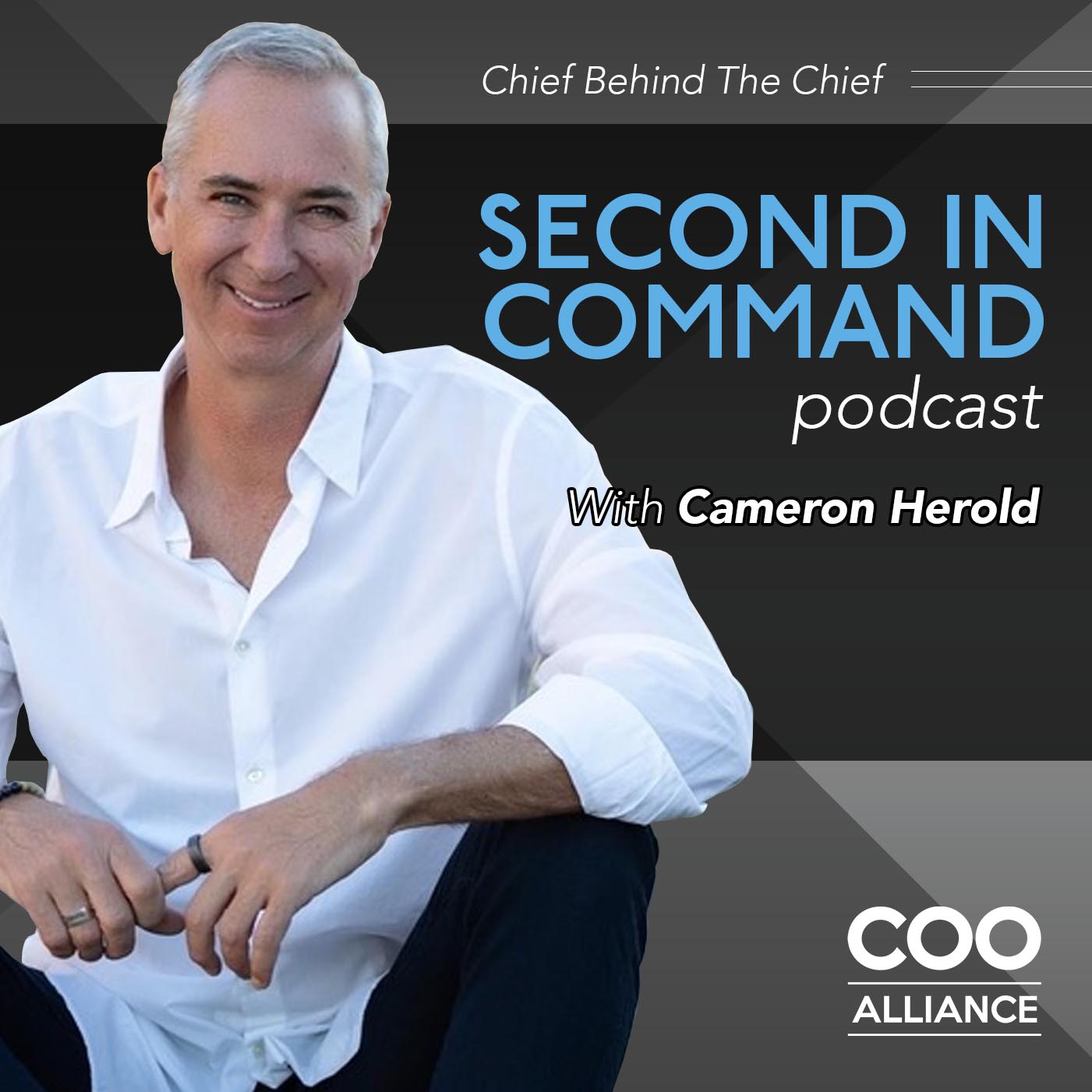
Second in Command: The Chief Behind the Chief with Cameron Herold
Ep. 522 - Will Smith – How Trust and Time Created a Profitable 15-Store Brand
00:47:02
Loading summary
Transcript54 lines
- [00:00]
Will Smith
Honestly, it's 100% discipline. We are, you know, this latest generation is, is like what people have coined the Burger King generation. They want it their way right now. And so I want that new phone. I deserve that new phone even though I can't afford it. But I've been working hard, right? So they put it on credit and they don't realize that they can work their money, have their money work for them instead of them working for their money. Right. I don't trade my time for money anymore. Right. What I trade my time for is the ability to grow my portfolio.
- [00:38]
Savannah Brewer
Welcome to the Second in Command podcast produced by the COO alliance and brought to you by its founder, Cameron Herold. In the Second in Command podcast, we Talk to top COOs who share the insights, strategies and tactics that made them the chief behind the chief. And now here's your co host, former COO of a multi eight figure remote company and alumni member of the COO Alliance, Savannah Brewer. Today on the Second in Command podcast, I'm joined by Will Smith, the COO and Managing partner of Lone Star Pups llc. They are leading a Dogtopia franchise. He is a operator with locations across San Antonio, Denver and 15 total locations. He has a deep background in hospitality from brands like Weston, Hyatt and Hilton. Really bringing a people first mindset and operational excellence to the pet care industry. And he is just full of energy, enthusiasm. This was a really, really fun, enjoyable one for me and I'm sure it will be for you as well. Not just in terms of his zest for life and people, but the takeaways from this conversation were really incredible. We talk about his philosophy behind leadership and growing 18 to 140 employees in just a few years, including his framework of time plus trust equals influence and what that means in building a really amazing culture and specifically for him, a high turnover industry. Also about team surveys that he's used to get clarity on where his team is looking for more support, really driving more engagement, and why teaching personal finance to staff is key to retention and wellbeing and really the success of your people and their life outside of business, but also how that correlates to supporting your business, which I just found really amazing and a little bit of a different take as well. So if you're leading in a service business or scaling a growing team, really want to learn more about leadership principles. And specifically in this episode, we also talked a lot about the younger generation and growing them up and supporting them in ways that maybe there wasn't a need for in the past and other generations. So if that's you and any of this resonates, keep listening because I know you're going to get a ton of actual insights from this episode. Let's get started. We are live with Will. Welcome to the show.
- [03:07]
Will Smith
Excellent. So glad to be here. Thank you.
- [03:10]
Savannah Brewer
Absolutely. And we've just been jamming for 10 minutes before clicking record. And I just love your energy and your enthusiasm. And as I was pulling out some of the topics we're going to dive into, personally, I'm a little, I'm saying I'm like personally invested in this because I'm really excited to learn about some of the leadership topics based on your background and all the things that you've done. And also we're going to talk about some personal finance and some of your findings with just the younger generation of leaders moving up and the kind of the, the importance of being able to know about finance and how that relates to the COO position, which is something that I personally have not actually had in my role as a CEO yet. And kind of look at the high level overview of a pnl, but in terms of some of the other ways of thinking about it, I don't think I've been as educated on. So I'm really interested myself, selfishly to learn a little bit about this. But before we go into all of that, let's kind of give us a high level overview. Tell us about Lone Star Pups. What do you do and who do you serve?
- [04:15]
Will Smith
Outstanding. All right, so Lone Star Pups was a passion project that me and my business partner Devin got involved in post. Covid. Right? Covid changed a lot of lives, including this guy. And so we wanted to find something we were passionate about. And so we started Lone Star Pups just about, not quite four years ago. And this was really a vision around, you know, we love dogs and we knew that being the hotel side of it, you know, and having that servant leadership, and when you really get the brass tags, it's kind of a lot of the same, right. We're, we're bringing dogs in and they're boarding with us. You know, we're playing with them all day and then we send them on their way to have the greatest day ever. And so it's kind of a natural fit into this. And so as that, when, when Devin approached me, the CEO, he said, okay, well, this is a passion project you want to get involved in. I said, of course. And he goes, well, you got to put skin in the game. So where's your capital and time. And so he said, you know, you could be the COO managing partner. He is a serial entrepreneur and so he's not involved in the day to day. And so for me, that is a blessing and a curse all in one. But, you know, here we are almost four years later. We have 15 franchise license agreements for Dogtopia and we manage those in two states in San Antonio and then in Denver, Colorado.
- [05:41]
Savannah Brewer
Awesome. What was the reason why he wanted to bring you in SEO?
- [05:47]
Will Smith
So I met Devin when I worked on the Hilton brand team for the Embassy Suites brand. And so he owned an Embassy Suites and we got to know each other really well and we just really connected. We have a lot of the same leadership capabilities and background. And so, um, one of the reasons he called me is he goes, hey, I don't know if it's time for you or not. Because he knew I was in transition and just said, I'm going to make this. You're my first phone call. And so I'm, I'm happy to say this with a bit of humility, but he's like, I have never. This is a serial entrepreneur that has 600 team members and 30 businesses. And he just said, I've never recruited nor have I ever asked anybody to join my company. They've always asked me. You're the very first. So. So for me, I knew that he was serious about it. And there were so many similarities and dates. And it was 10 years to the day that we met each other, that I was back in the city and we were talking about this project. Family members have same birth dates. I mean, it's just crazy, all the coincidences, and we don't call them coincidences. So that's how we got together in this project. And honestly, a phenomenal man. Never mind the leader, never mind the other businesses, but genuinely really good person who to this day, right now has never said no to me. Never. Not in anything I've ever asked for. Even when you know things are tight, it's always, let's do this. If you need more, let me know. And so the support there is has always been superlative. Anything I've expected going through this time post Covid. So it's been a great partnership.
- [07:23]
Savannah Brewer
Incredible. The relationship that you guys had up until the time that you were the first person that he actually invited in. What were some of the things that you did? Because there's clearly something about you that stood out. What was it about you, if you had to kind of brag about yourself for a second, that positioned you in such a state.
- [07:43]
Will Smith
So that's really hard to answer, but I will take a shot. I think at the end of the day, I've always been a guy that I lean into any issue. I don't run away from things. So when, you know, when his hotel was. When he was opening his hotel, he didn't know about the Hilton brand from the full service side. He has other hotels even currently. But he came to me and just, you know, I go to him saying, hey, this is where you're struggling. This is where you got to spend some money. And he'd look at me and he'd be, you have to explain to me why I need to spend more money over this renovation that I'm doing. And so I would say, well, here's the roi, right? Here's the issue. And so for him, he started to build the trust in me because he realized that this wasn't just will, some brand guy coming in, trying to leverage him and try to get more out of it, but it was genuinely about providing value to him and his organization, you know, from my past experiences and supporting, you know, billion plus dollars in assets at that time. And so, you know, he just took me at my word, and he realized what I was saying was not, you know, there's no ulterior motive. It was about the success of his locations and, of course, mine and the brands. And so that was trust, right? And that was part of this, was.
- [08:54]
Savannah Brewer
The passion part of it surrounding both of you guys or.
- [08:59]
Will Smith
Absolutely. So I've always been a very passionate person. If you go back and you talk to a lot of people around me, that's the one thing, is that it's passion, right? Because I genuinely love to serve. I love to be around people tying me up and, you know, putting me in the doghouse, so to speak, is. Is the ultimate restraint on me because I just don't thrive in an environment like that. So, you know, at the end of the day, when he came to me and said, would you like to do this? He had to convince me a little bit, right? Because of going outside of a career that I built for almost 30 years and, you know, a master's degree in hospitality from Conrad's School of Hospitality, University of Houston. But I knew that I would enjoy working with him, and so that's what we did.
- [09:42]
Savannah Brewer
Super cool. In terms of the loving to serve, peace, I think this is. This is really important because especially in a cool role, when you're handling fires and you've got a visionary bringing you big ideas and you're trying to create them, it can often bring up a lot of doubt. And one of my favorite quotes says, when in doubt, focus out. So when you start making it all about you and your fear of failure and all the things, it takes out, the fun of it, it makes it way more stressful than it needs to be. And the times that I just focus out and I'm really interested in, like, how do I serve other people? It's wild how the universe just brings puzzle pieces together. Was that way of being always something that you embodied or was there any particular moments where you were like, man, this is, this is the key to business and key to my success is having this view.
- [10:34]
Will Smith
So, you know, what's interesting about your question is in my entire life, I've never looked at something like I could or couldn't do it. I just looked at it as I'm gonna do it. There isn't an option. Right. So to your point, yes, I'm like everybody else. I have doubts about the way that things are going or a decision I've made. Because, listen, I think as a coo, one of the hardest things that I do every day is make decisions that impact 140 people. Really genuinely. Those are the things that keep me up at night and those are the pillow top pillow conversations. Right. That I have with my wife or, you know. But at the end of the day, what I know is, is that I can do it. It may take me a little bit of time, but I never have looked at, I mean, it doesn't matter whether it's something in a house or a job, I've never looked at things that I couldn't get it done. It's always, I will get it done. And there may be a little pain involved, but I can tell you it is something I've always leaned into and I, I have confidence that I can do anything. Uh, and it. But you know, that's kind of how I look at this from that perspective.
- [11:38]
Savannah Brewer
Speaking of having 140 people on your team and leadership, I know that that's something that's been a big part of your journey. What is your kind of overall view on leadership?
- [11:50]
Will Smith
So to me, it boils down to servant leadership. Right. And I know it's cliche, but that really genuinely is my style. I come in with big energy. I've heard, I've had people, you know, some really very successful management companies and the hotel world say, well, you got a big personality when you walk in the room. And we appreciate it. Right, because they realize they're in good hands. But for me, if my team realizes that I'm here to do that, like I get on a roof and try to fix an air conditioner, I have zero issues with that. Like, I'll figure it out, like, one way or another. It's not just the finances or the training or whatever, but when your team sees that you have zero issues going into a room and deep cleaning it or fixing a wall, that the most destructive force in the planet, dogs have, I mean, I. That to me, is me serving them. If we have an employee luncheon, I will clear all the plates, I will clear, I will put out the food, I will clear all the plates, I will serve them. Because to me, at the end of the day, they need to understand that I'm no more important than anybody else. And to me, a servant leader has no issues with, with serving them in any way past possible. And so that's my stuff.
- [12:59]
Savannah Brewer
What do you think is the benefit of that? Because there's also the executives that don't operate that way. Well, I've kind of outgrown this. There's a reason why I'm in a higher position. There's a reason why these people are, you know, the, the new intern can clear the dishes. What is the, the benefit to being in that even in the position that you're in?
- [13:19]
Will Smith
Well, the flag behind me is my grandfather, and he meant a lot to me, so I get a little choked up talking about him. But what he told me growing up was, it doesn't matter how successful the man or woman is. They put their pants on one leg at a time. So for me, it's the same thing. I don't. An intern, I don't have that approach. I understand that I'm in an elevated position, but to me, if I want people to serve our customers the way that they need to, then I need to model that behavior from the top down. I mean, and it kind of goes into a conversation that I know we're going to get into a little bit with, you know, the culture. Right? So culture to me, and this speaks to the culture of any organization in servant leadership. And so from that culture perspective, culture is the operating system on a computer. A computer is, you can buy the best and fanciest computer out there, but without the operating system behind it, the computer doesn't work. And culture is the same, in my opinion. So for us, the first thing I ever did in starting this company was built the structure for the culture. And it's time plus trust equals influence. So the More time I spend with my team, the more they trust me, the more they trust me, the more I can influence them to do the things I do. So and that is simply clearing a plate, helping them clean a room, contacting those customers that are upset. That to me is super important and I'll never change that. I don't care the size of the organization or not. So that's ingrained in me and how I've managed and how I've been so successful in my career to this point, managing big box hotels to managing, you know, entire brands and 600 hotels and, you know, $50 million budgets, those kinds of things. To me it comes from truly the ability to be a servant leader.
- [15:12]
Cameron Herold
Hey, it's Cameron. I hope you're loving today's episode. Quick question for you. Does your company have a strong leadership training program in place to grow the skills of everyone who manages people? If you want to help yourself and your company grow, get everyone who manages people learning from my invest in your leaders online training program. There are 12 core leadership skills that I cover online and they're all going to really grow. CEOs pay me $78,000 a year to coach them one on one. And now you can all benefit for 1% of what they pay me. These are the same leadership skills that I created and certified everyone in at 1-800-got junk when I was there as CEO. Go to investinyourleaders.com today and use promo code podcast10 before the end of the month to get 10% off each manager you sign up. Now back to the show.
- [16:09]
Savannah Brewer
Beautifully said. The role that you're in, you're managing the operations and you know, that can take a lot of time and focus. Just being by yourself, doing your own thing, maybe delegating some stuff out. But in terms of the timepiece and having 140 people and really being a huge believer and creating a healthy culture. What is your, what's your routine or your strategies for being able to create the time to pour into all those people? Do you guys have like big company wide meetings? Are there cool things that you've rolled out weekly? You know, things that people are reading, like, what is that for you?
- [16:52]
Will Smith
So that's a fantastic question and I will tell you this one came with some significant consternation through my time and leadership. One of the things that we sent out an employee survey for the first time in 2023 and it blew my mind. Number one, we had almost 80% of all of our team members respond to it, which was amazing for the first one, right. And secondarily, we had 10 questions. And then, of course, you know, for us, it was through. We wanted it to be anonymous. I didn't want anybody to know what I. I knew that they would complain or praise. And so we sent out this newsletter or this survey, and it blew us. We had over an 85% satisfaction rate among our company, and we were a year and a half old at that point. And to me, again, it sets the culture, right? It doesn't matter with turnover, retention, um, you still have to set that culture. And so for me, one of the things that I learned through that employee survey, which companies of our side typically don't do that, because they just don't. Um, but I need to understand my. To me, my team members are my customers as much as anything, for lack of a better term, because once I understand how to motivate them and time, trust, influence, they need to understand what I'm doing. So what came out of that was a monthly newsletter that we highlight team members, that we highlight processes, that we highlight all kinds. Celebrate all kinds of things and milestones for us. And I personally send it out. I don't have an admin do it. I personally send it out to every single team member that we pull down. And so they have a better understanding of what we do as a company and how we do it, as well as they have a personal connection to at least me, to be able to connect with me and say, hey, I'm struggling with this, or I can't tell you how many stories I've gotten from team members that say, hey, I saw the newsletter. Thank you for keeping me in the loop. Because I feel like, as a canine coach in the back of the room, that they. They just don't feel that, you know, important. And so we make sure they do that. And the story is, hey, I just wanted to tell you, I wanted to highlight X. This person did such a great job, they would never tell you what they did. And so there's really cool stories come out of it, too, so that we're able to sit and chat with them or take them to lunch when I'm in town and visiting the locations. And so it really gives me an opportunity to meet my team and spend more time with them and also communicate as a company how we're doing, because, come on, you can't set a level of expectations that you do not understand. And people don't. You know, John Maxwell says if. If you're. If you're somebody out there and you're in Your, you're, I think you're a leader and you're out by yourself. You're just taking a walk, right? Nobody's following you. So to me, you need to have followers and the way they follow you is because they understand your vision, period.
- [19:44]
Savannah Brewer
Do you guys send that survey out? Quarterly. Have you done it again?
- [19:48]
Will Smith
Yeah. Oh, yes, we have. And it's, it's routine. It's gotten better and worse in some areas, which is great. Honestly, I embrace, again, I'm a guy who leans into any issue. I embrace that because I need to understand the good and the bad. I don't want people, what's that old saying? I don't want people to be kind to me. I want them to be nice to me. I need them to tell me what I need to hear, not what I want to hear, because I can't fix the problem. And so for me, as a coo, I think that is the core of what we have to do is we have to figure out, don't tell me what you think I want to hear. I need to hear it. And so that's the trust. Because people will not tell you what you want to hear or will not tell you what you need to hear if they're not comfortable.
- [20:29]
Cameron Herold
Right.
- [20:29]
Will Smith
And that's where that truck trust comes in. And so, you know, when I go to Easter store, I will shake hands with every team member that is there. If I don't know, I'm introduced myself and I will get to know them and when I come back, I'll ask them specific things about them because they need to understand that they're just not a number to me, that their families are important. And work they're doing is amazing because we're trying to get an experience to a premium experience in that dogtopia world to our customers. And that's truly how you do that, Right? It's time. Trust, influence.
- [21:00]
Savannah Brewer
I mean, you seem like a guy who, if I was working at a store and I knew that you were coming in, I would be pumped. I mean, Will's coming in today. He's going to bring the energy, he's going to bring the fun.
- [21:12]
Will Smith
Yes. And you know what? From time to time, you got to get serious. But to your point, but I enjoy it. I mean, that's the thing. Like we had this Great Dane that came in and the dog's name is Heaven, okay? And this is 150 pound enormous dog. And so every time Heaven comes in, I melt. I, I, I grab her paw and I put it up to my hand and it's nearly the size of my hand. And so like those kinds of things all the way down to the miniature schnauzers that come in and everything in between. It's just amazing to me that we get to work with dogs all the time and you get pet parents that, that love what we do. So it's um. Yes, I'd love it.
- [21:52]
Savannah Brewer
Yeah, I would definitely bring my dog to you guys for sure. What is an example, if you're open to sharing of maybe some of the more negative or critiquing type feedback that you guys got on one of those surveys and what did you do about it?
- [22:06]
Will Smith
So that was the communication piece. That was it. They, they didn't understand what we were doing as a company because you know, for us we have something called our five key drivers, right? And this becomes an envision vision plan that we have. We create. So we get together at a team in Q4 and we create our vision statements for the next year, right? And so part of those are based around our five drivers and those are culture, top line cost controls, customer satisfaction, and then asset maintenance. So we create our goals around those five key drivers. Um, each one of those are based on a KPI. And so our team didn't have any idea what their expect, what my expectations were because they weren't being shared. So ultimately it will, it came down to communication. So that's the way to. That's the reason we changed these is because they need to know the customers are either happy or sad. They need to know whether even making money or not.
- [23:02]
Cameron Herold
Right?
- [23:03]
Will Smith
Because they're, they're thinking why don't we have more team members here? Or you know, why is this store not the maintenance, not being taken care of and they don't even know who to talk to about it. So I needed to make sure they understood that they have somebody that they can connect with and we can get those things taken care of. But I can't fix it if I don't know what's broken. So that communication piece was number one. And honestly I'm an over communicator, as you can tell. I love to talk to people. And the fact that that came in such a, maybe not a negative way, but I was surprised by it because I'm out there talking, but I wasn't talking about the things that were important to them. I was talking about the things that are important to our company. And I can't build trust that way. So I wanted to communicate with them on what they were expecting.
- [23:48]
Savannah Brewer
There's A couple quotes that are coming to mind. One is the biggest myth in communication is that it's actually happening. So there's that one and then the other one that was coming to mind is no one ever got in trouble from over communicating. It's something that Cole, the owner of the company that I helped build, he told me that frequently, like, if it's somewhat on your chest, just say it. And that has proven true so many times in my life where I'll be like, I don't need to say it. I'll just like, you know, just brush it under the rug. And then a problem gets created. And now I'm just like, even if I'll just tell someone, I'm like, hey, I don't want to make this a big deal, but, like, I would just rather throw it out there to just clear it and just clearing any of those open loops as quickly as I can. And the other piece kind of related to culture is that Cole, one of his first core values.
- [24:41]
Will Smith
We.
- [24:41]
Savannah Brewer
We crafted the core values together as an executive team. He. He did like the first draft of it and sent it to us and was like, hey, what's your guys thoughts? One of his core values that he came up with was get and stay in sync. When I first read that, I was kind of like, kind of boring. I don't know about this. Like, is that really the best one I have, anything that we could come up with? And he really stood by that. And throughout the time of building the company, especially when we started getting over 30 people, I realized the importance of getting and staying in sync. And that is one of the key things that I also have heard from team members is we don't know where the company's going. We don't know if we're on track. Like, you want us to work harder on these things, but why, like, what's the point? Why is this where we're putting attention? I thought this was good. And so one of the things that we started to do was a monthly all hands on deck meeting, which sounds like your newsletter. Is this for you guys? But all hands on deck. And we had all of the executives share what worked last month, what didn't work, and what the future plan was for the next month. And we would call on team members to share, hey, you want to add anything to that? You guys want to add anything to that? And then at the very end, we did like rapid fire team acknowledgments. And just people would leave that meeting so fired up, feeling connected and clear on where everyone's individual kind of piece and contribute. Contribution was to that next month's goal which is all tying into, you know, your three month or your rocks for the. For the quarter for the year. So yeah, I just love everything that you shared on that piece. And just to kind of take a little bit of a pivot into the book. You had mentioned earlier to me, the watering bamboo.
- [26:30]
Will Smith
Watering your bamboo.
- [26:31]
Savannah Brewer
Yes, watering bamboo. Tell us, what does that mean? I think this is a book, right?
- [26:37]
Will Smith
It is a book. His name great bell. I'm pretty sure that's what it is. Hopefully if you're on there. I loved your book. Be read this or hear it. So what it is is this is a premise on giant bamboo. Okay. It's a re. It's a really cool read. It's easy and I highly recommend it. Shameless Plug for somebody I don't know, but I've read the book. But the reality is some lecture on it too. But the reality is this giant bamboo, when you plant it, you have to water in a five foot radius. But it, it doesn't come out of the ground for five, six, seven years. So you don't know exactly where this is going to come out. But that whole time it's developing root structure and that root structure is paramount to the growth that. The exponential growth that happens once it exits the ground and comes up. And so, you know, it's Nothing to grow 30ft in a very short, just couple of months. And so in order for the bamboo to grow that fast obviously has the root structure. And so for me, learning that that was a. This was a management company that supported a decade or so ago and they had them come in and it was, it was amazing to me because I hadn't considered that. But it, but it's everything. It's. You know, again, it goes to that culture side of it goes to the financials, it goes to all of those things that are really important to the success of any organization and team members. So truly that's what it's about is it's creating that rock solid, you know, root system to support growth. Cool.
- [28:10]
Savannah Brewer
So you can do that with culture and you could also do that with the financial side of things, which is something that we had mentioned earlier. You were kind of mentioning that a lot of the younger generation growing up, they don't know how to read a P L because they just haven't been taught about money. And maybe you could share a little bit about your personal experience and that which we both laughed about. Same.
- [28:32]
Will Smith
Absolutely.
- [28:33]
Savannah Brewer
Yeah. Tell us A little bit about the background there.
- [28:36]
Will Smith
Well, what's interesting is, you know, when I grew up, the way I learned about money was, you know, I was always told, we don't have it. I mean, that was, that was how I learned about money. And schools, of course, aren't teaching. You weren't teaching me that at the time. So. So I really had no idea how to manage my money. With one exception, my grandfather. I used to swim growing up and he'd pay me for my medals. You know, something was nice. And so he handed me, and this was in the early 80s, and I'm going to shameless plug. He handed me a hundred dollar bill. And I'm looking at this hundred dollar bill, I'm like, oh my gosh, I'm the richest guy on the whole planet. And he, and he snatches it from my hand and he says, you can't have it. And I said, what do you mean? He goes, because it's going in a savings account. And I said, what? I just worked all summer for this. And he goes, it's going in a savings account. And so I had that saving because he wanted to teach me about compounding interest and all the things. And so I had that savings account up until I was in my 20s. And so that's the only two lessons I ever learned about money. And so what I'm learning about this younger generation, or even folks that are my age is they didn't have the ability. They do not understand a P and L they personal finance. So for me, what I've decided to do is break this down into a couple of easy, palatable lessons for people. Is the personal finance piece, right? It's, it's a course I teach to some high schoolers. I adjunct teach for Oklahoma Wesleyan and I teach personal finance in that too. Because I think at its basic core, people have to understand that, you know, in their lives, the money coming into the checking account and how quickly it leads, it's called flow through, right? So you get top line and then it flows through all your expenses. And then when you have at the end of the month is either a negative or positive balance, right? And so if you can control everything in the middle, we control the top line because you bring in whatever you trade your time for money, whatever that is, and then if you can control the money on your expenses, then at the bottom of that, then you're able to control your, your future, right? Whether that's savings. The, the 201010 rule that I subscribe to, it's 80% goes to bills, 10% goes to savings and 10, 10% goes to charities. And so for me, it's super important that I give back. And, and a lot of people have never heard that. 80, 10, 10. And to me, it's super important because you have the ability to give back and feel what it's like to get back into your community or church or what, whatever it is, you know, you people do and give back to. But the reality is it's discipline. And that's what this comes down to, discipline.
- [31:10]
Cameron Herold
Hey, it's Cameron Herold, founder of the Second in Command podcast. Are you or your COO struggling to level up? Every COO or second in command should join our COO alliance. Check out cooalliance.com for just the cost of a few copies a month. You get world class training, 12 monthly mastermind calls, 12 monthly AI expert calls, and two live events a year with top COOs globally. Since 2016, we've been building and growing the COO alliance to put the tools, peer support and strategies in place to help grow COOs and their companies. It's backed by rave reviews from hundreds of COOs and their CEOs who have seen insane growth. We also have a 10x guarantee. It's your time. Check out cooliance.com and sign up for a quick call to learn more.
- [32:05]
Savannah Brewer
What are some of the biggest challenges or mistakes you see young kids up in high school, all the way up to even adults making when it comes to these principles?
- [32:17]
Will Smith
So honestly, it's 100% discipline. We are, you know, this latest generation is what people are coined the Burger King generation. They want it their way right now. And so I want that new phone. I deserve that new phone even though I can't afford it. But I've been working hard, right? So they put it on credit and they don't realize that they can work their money, have their money work for them instead of them working for their money. Right? I, I don't trade my time for money anymore, right. What I trade my time for is the ability to grow my portfolio, right? And to be a serial entrepreneur and do the things that I've done and been taught. And so that's, I think ultimately the biggest thing is the discipline is that they can't, they don't need the new X phone or whatever the phone, you know, X is, or a phone or a laptop or whatever it is, or new car or house, bigger house. They, Warren Buffett lives in the same house and drives a 19 or a 2014 Cadillac. He's got all money he could ever spend. But the point is he is disciplined because he wants his money to work for him. So if people would realize that they could make their money work for them instead of work for their money, I think ultimately they would understand what personal finance and money management is about. Simply put.
- [33:32]
Savannah Brewer
Yeah. Is this something that you are teaching your managers or people at your company also?
- [33:38]
Will Smith
Absolutely. So we have something called canary metrics, right? And so the canary metrics are something like it's the cold in a coal mine. There's a canary in the coal mine, right. And so whenever the canary dies, they realize that it's dangerous situation. And so for us, we have canary metrics. And those canary metrics are around really about eight different things, but it's around top line. We have something called Dogmat. And I made it real easy because what I want my team to know is, is how much money they have to spend, right? It isn't what they think they need or. Because obviously, you know, the more top line you have, the more team members you can have because you're making more money and those kinds of things. But what I wanted them to see is if you per each dog is one hour of labor. So every dog that comes in, you get one hour labor. I wanted to simplify this so that they can start to see the P and L and manage their. The most. The thing that they have to manage the most in any business is really it's the uncontrollable, right. The controllables, or I'm sorry, the uncontrollables are things that, like mortgages and those kinds of brand fees, you can't. But the controllables are things like payroll, maybe insurance a little bit, because you're, you know, you're making sure your safety is there. But at the end of the day, if they are managing their money from the payroll standpoint, then they can manage the profitability of any business. And so I made it super simple for them to understand. And part of those canary metrics are we have virtual leads and then the leads we close in in that we also have NPS goals that net promoter scores that we have to have customer satisfaction. And again, it's all tied to the five key drivers that we have in our vision plan that we have to generate. Right? And so they have to understand what these canary metrics are. And so they also have to. We have a P and L that we put together and they have to write variances every month to their P L. So why they spent more money in supplies for cleaning supplies than they had budgeted or that they made. So they have to understand that each one of these, you know, it's manager, operating profit, it's more mobs, as we've identified it, is they're. That's everything in their control to manage. And so I've made it super easy in that perspective for them to be able to go in and get a really good understanding of our. The finances of the store so they can't come back to me and say, well, well, I need more payroll. And so my first question back is, is how are you going to drive top line to accommodate that? And then they look at it and be like, wow, okay, this is expensive. Insurance goes up, rents go up, supplies go up. Everything about that. But they really have to understand that there's a basic premise to this, and if they take that and they apply that in their personal finance, then they'll understand how to manage your own money.
- [36:27]
Savannah Brewer
I really love this because I have been in some teams where, you know, if it's their personal stuff, we stay out of it. We're not gonna support on that. We're just gonna what's really relevant to the business. But what I'm hearing and what you're saying is that actually by teaching your team about their own personal finances, that will also come into supporting your company because they know how to actually. It's like the simple facts, like, is the money going up or down with the decisions that we're making? And I think that there's a lot of. At least in my generation, there's so much opportunity for distraction. And, you know, there's bitcoin and there's real estate funds, and it's just all of these places that you can put your money. And then also, like you said, just the amount of things that we have access to and our phones giving us so many ads for this and that. But I've actually found that the people on my team who have found themselves in tighter financial spots are also the ones that I'm like, you're making just as much money as XYZ over here. But they're telling me that their savings is going up. Like, what's. What's going on for you? And it is that lack of knowledge and discipline on staying focused and saving and the people that are asking for the raises as well. It's like, here's where our company is at. We can't just be giving everybody raises just because they want more money. And it is just really interesting how those are typically the same people that are Asking most often for raises are the ones who least understand their finances and the finances of the company.
- [38:01]
Will Smith
Let me give you a good example. So there was a young man that was going through this course, right? And so got a new job. And. And he's like, I just don't have any money at the end of the month. And I'm like, well, you're making good money, so what's going on? And he goes, well, I don't know. And I said, great, let's do this. So I gave him a template for financial budget, right, for him to use and add his expenses to. I said, for the next three months, I don't. I'm not going to question the way that you spend your money, but I just want to show you where you're spending it. And I said, do you have any idea what you're spending? This? Well, like, my car, rent and all of that. And I said, okay. So then by the end of the first month, he realized he was spending 60% of his money on food. He had never even done an exercise like this to find out where he was spending his money. And then by the end of the third month, he's like, whoa, okay, now I can get this under control because I understand where I'm spending my money. And so until you truly first start to understand where you're spending your money, you will never understand how to save it or how to get it to use for you. Because the one thing I will tell you is, from my perspective is I wish I would have gotten involved into the financial. Like, I would have really engaged a financial advisor much, much, much earlier, like. Like in my late teens, early 20s, to say, well, I'm not making any, but I still can invest $10. It just doesn't matter because of the compounding interest. By the time they, you know, 60s are retired, a millionaire. Because there's the discipline on this. Because what I can tell you is in my early 20s, all I know is I want to spend money doing the things I want to do and out in food, but if I would have had a little more discipline and saved that, I would have been much better off faster. But I. You won't know that until you know where you're spending your money.
- [39:40]
Savannah Brewer
Totally. Yeah. I mean, the compounding interest. I think it was one of my very first mentors, Brad Hart, he asked me, he's like, if you were to be 1% better every day, how much better would you be in a year? And I said, 365%. You know, like, what A stupid question that you're asking me, that's obvious. And he's like, nope, I think the number is like 3,772% because of the compounding interest. And he taught me about compounding interest in terms of self development and money. And it was one of the best things that anyone could have told me so early. And then I think it was the book A Simple Path to Wealth. I think it's, that book is about index funds. And then the book Millionaire Next Door, which is all about, yeah, just saving and watching where your money goes, have been so helpful for me because actually my risk tolerance is way lower than a lot of the entrepreneurs in my life. I just, I would much rather have a lot more money in index funds in my Savings account than 80% of my wealth in bitcoin. Like, yeah, maybe I'm going to look back and be like, that was a silly decision because all my friends are now going to be bazillionaires from bitcoin. But at the end of the day I just know myself, my risk tolerance. And I think that's also something that you can learn and teach people about on your teams. And in the same way that you kind of did that budget tracker, you could also do that with time. I have all of my people at least after I've been with them for 90 days and I really know about their role and I make sure that they're kind of in a steady. They've been doing that job for at least three months, having my team do time trackers in 15 minute increments and jotting down what they're doing. Because some people will come to you and they'll say that they have no time, they're super overwhelmed. And I'm thinking, I feel like I can do your job in 10 hours a week. Like how, how is this taking 70 hours? And sometimes I'm proven right that they're just, you know, diddle daddling and there's distractions and they're checking Slack like 50 times. Like you only need to select check check 3 times, 4 times a day and we can start batching things. And other times I've been proven really wrong where I realized, wait, there's actually way more going on in their job. Or they're doing things that I'm like, why are you still doing this? And they're like, well, I was told to do this, you know when I first came on. And you know when they first came on was five years ago. And that project doesn't even like we're not even using that anymore. So having the visibility and the awareness from their side and as a leader is just really, really important.
- [42:09]
Will Smith
Absolutely agree with you. And, you know, you capitalize on something or you brought up a topic that is super important is the time. Right? That's the one thing, time management skills that I've noticed in this younger generation. They get wrapped up in things like, you know, scrolling, and they do not realize, not to be disrespectful, but they just didn't realize that two hours at a time just went away. And they could have been. They're living somebody else's life in that moment where they could be doing things that are positive and wrong. And so to your point, I love that time study because I've even asked my young son, you know, who, who's a manager at Shields and said the same thing. Hey, what are you doing with your time? Well, I'm busy and I'm doing this. And I was like, well, manage your time a little better and, and maybe you have the opportunity to, you know, to grow because they realize that you're getting more done in less time. But if you don't know what you're doing with your time, then you'll never understand that. Truly. It's a great point.
- [43:02]
Savannah Brewer
Yeah, true. Well, speaking of time, what are you most excited about in the next six months? It could be personally, professionally, just to kind of close out. I always love asking a little bit more on a personal basis what you're, what you're looking forward to, you know.
- [43:17]
Will Smith
So for me, I, I love teaching, right? The, the reason I only reason I got a master, well, one of the big reasons is because of teaching. So I know that giving back to the younger generation with information and knowledge that I was blessed to get is super important in my life. So, so teaching, continuing to teach those classes, and there's some new ones rolling out that I'm doing on a college level, but that's from a personal perspective as well as my family. You know, just some really cool things happening there. But from a professional standpoint, our business is growing. I look forward to the challenges of that because here's what I know. I tell my team all the time, if you're not making mistakes, you're not trying. I don't have any problems with the mistakes. What I have a problem with is the knuckleheaded mistakes, right? Like the things you didn't think through that just ended up causing significant problems. We still find a way to deal with those. But to me, I have no problems with that. So leaning into those issues, trying to figure out how to make this company even more successful, managing between states gives us the opportunity. And of course, I. There's some personal projects that I have behind me that I'm doing. As I said, I like to be a serial entrepreneur and that. That are going to come up in the next six months, too. So maybe have the opportunity to jump back on this with you. But, you know, ultimately, it's about the growth of the company. We have the resources in front of us. I will tell you, this may be a bit controversial, but based on indices that I see from the economic side of things, you know, it's growing. And so we're seeing more leads, we're seeing more business because of the current administration. Don't want to get into that. But what I'm saying is it's more positive, upbeat for the folks that are walking through my doors. Let me just say it that way that they. They're saying, well, I was, you know, holding back and I wasn't going to spend the money. I was. So we're seeing our customer base telling us that they'd like to see more. They're coming in and we have something called enrichments, right? So you bring your dog in during the day, and it's open hour, open play for 10 hours. But we have enrichments. And so they do paw prints, you know, paintings, and then they have, you know, snacks or those things. And we're seeing parents spend more money in those enrichments throughout the day, which is an indicator to us that there's a little bit more discretionary income that's coming in that they're spending. So for us, like, really beginning to see that. And of course, coming into this year, the end of the year is always heavier boarding time because of people, you know, or traveling. So just looking forward to the growth that's happening here for us, you know, and continuing in that pattern.
- [45:54]
Savannah Brewer
I'm super excited to see everything that you guys do because just in a few years, getting to 15 stores and 140 is no small feat. And it sounds like just with your energy and commitment to doing whatever it takes, I have no doubt you guys are going to keep growing, and I'm really excited to see everything that you do. So thank you so much for coming on and sharing so much wisdom and experience with us. Really appreciate your time.
- [46:20]
Will Smith
Thank you very much. It's been a pleasure. Absolutely been a pleasure.
- [46:26]
Savannah Brewer
You've been listening to Second in Command brought to you by COO alliance founder Cameron Herold. If you enjoyed this episode, please be sure to like, share and subscribe to us on Apple Podcasts, Podcasts, Spotify and our other podcast streaming platforms. For more best practices from industry leading COOs, visit COOAlliance.com.