← Second in Command: The Chief Behind the Chief with Cameron Herold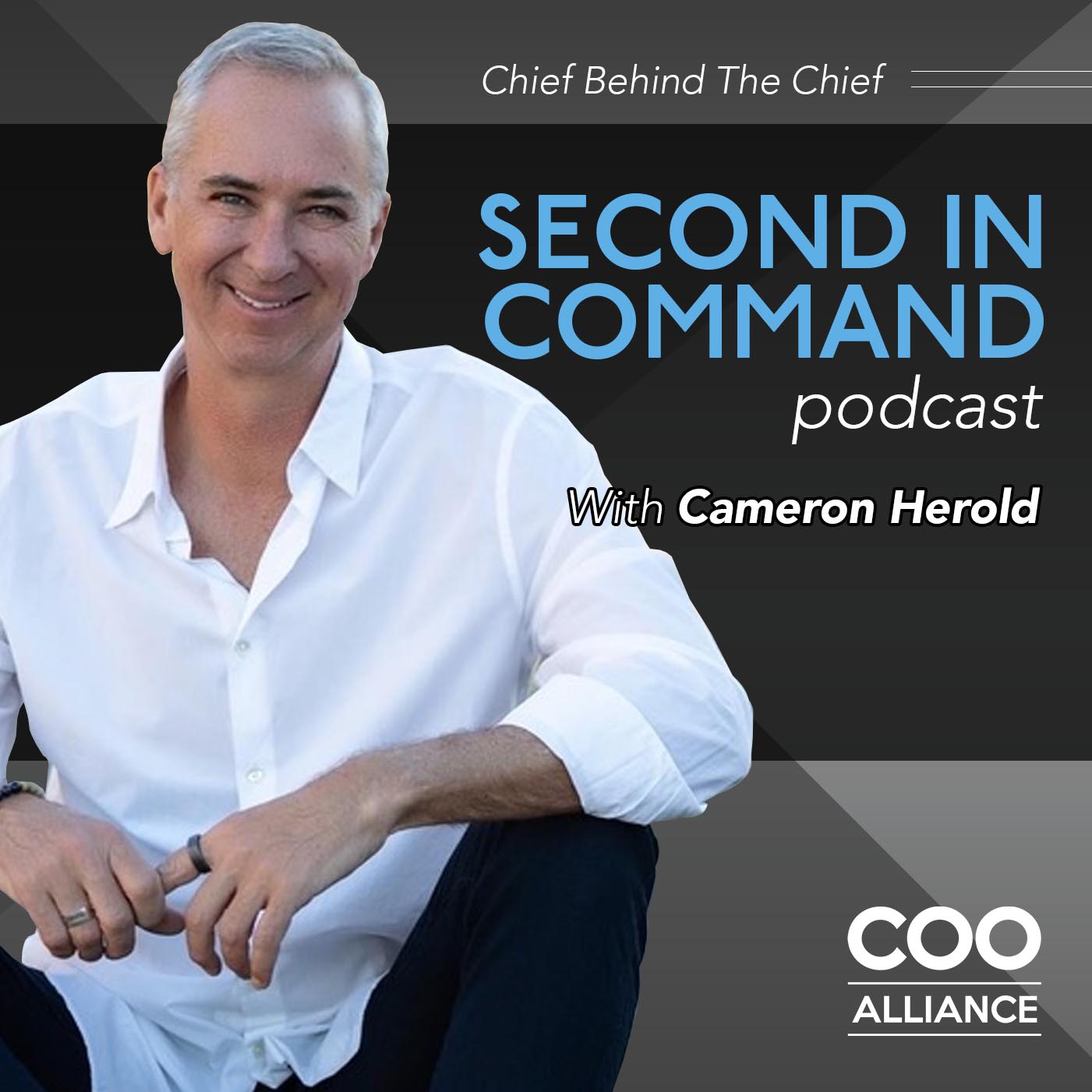
Second in Command: The Chief Behind the Chief with Cameron Herold
Ep. 523 - Brittany Dunn – Remarkable Resilience and Building Hope in 90 Days
00:50:18
Loading summary
Transcript67 lines
- [00:00]
Brittany Dunn
It really creates opportunities for everybody to see themselves as part of a leadership team, even regardless of whether they're an intern up to, you know, the C suite, it doesn't matter where they are. Every single person is part of our succession plan. And so we want to be cultivating every single person, regardless of where they currently are at in their career journey. And so that's one way that we get to do that is through our custom discuss. Welcome to the Second in Command podcast produced by the COO alliance and brought to you by its founder, Cameron Herold. In the second in command podcast, we talk to top COOs who share the insights, strategies and tactics that made them the chief behind the Chief. And now here's your co host, former COO of a multi eight figure remote company and alumni member of the COO Alliance, Savannah Brewer.
- [01:03]
Savannah Brewer
Our guest today is Brittany Dunn, the chief operating officer and co founder of Safe House Project, a national nonprofit dedicated to eradicating human trafficking and supporting survivors with safe housing and holistic care. Brittany brings over a decade of leadership experience across both corporate and nonprofit sectors, including international business development in Europe and Southeast Asia. And she served on Virginia's Commission on Human Trafficking Prevention and Survivor Support. In this conversation, Brittany shares how she balances leading systemic change with staying grounded as a leader. We also dive into how to avoid burnout in your team, principles of building strong partnerships outside your organization, and how to navigate healthy conflict as you scale. You'll also hear Brittany's personal philosophies on leadership and resilience, shaped by her life as a US Navy spouse and her deep commitment to service. This is a really, really powerful episode on leading with purpose and building impact that really lasts. We are live with Brittany. Welcome to the show.
- [02:08]
Brittany Dunn
Thank you for having me. Absolutely.
- [02:10]
Savannah Brewer
I am really excited about this. I was telling you that this is something that my heart just absolutely breaks for when I hear about what's happening in the world, especially just in our own backyard.
- [02:21]
Brittany Dunn
It's crazy.
- [02:22]
Savannah Brewer
And for anyone that is listening that maybe doesn't know too much about what you guys do or even the kind of overall challenge that you guys are trying to solve in the world, would love to just hear a little bit about Safe House Project. What do you do and who are you serving?
- [02:38]
Brittany Dunn
Yeah, absolutely. So my name is Brittany Dunn and I am one of the co founders of Safe House Project. We are a national nonprofit committed to really eradicating human trafficking in the United States. When we launched as an organization back in 2017, it was in response to the fact that at that Time, Health and Human services estimated that 300,000American kids are trafficked every single year, but that victim identification was at 1%. And so it was from that realization that as a mom, as a military spouse, as a member of your community, and just somebody who believes that what you tolerate, you give permission to exist, my co founder and I really launched into figuring out how we could use our gifts for service. So today, Safe House Project leads a national team, really helping increase victim identification above 1%. And then we'll serve over 3,000 survivors this year as they exit a trafficking situation and helping get them into safe house programs around the country. We get to do a lot in policy and really just see people become aware of a problem that, I don't know, many knew existed a decade ago. And so being on the front lines of hopefully turning a nation towards a big problem, but one that has big solutions, I love it.
- [03:59]
Savannah Brewer
And could you tell me a little bit about the number of beds that were available when you guys started this? I was reading a little bit about on your website. It was just mind blowing to me. But out of the 3,000 that were identified, there was only maybe like 300 beds for them to actually come out and recover. That, right?
- [04:18]
Brittany Dunn
Yeah. So when we launched, there were a hundred beds in the United States for minor victims of trafficking. So you think about 300,000 kids being exploited every year, hundred beds. The numbers do not work. You don't even have to be a business person to realize those numbers aren't going to work.
- [04:35]
Savannah Brewer
What, what is the problem that has kept there from being more resources, more beds available for this?
- [04:42]
Brittany Dunn
Unfortunately, it kind of goes back to that idea that when we are always on the reactive side of complex issues, the cost of treatment is so much higher than prevention. And so what we're dealing with is a lot of individuals have been trafficked for years and have experienced the most traffic parts of humanity. And so the recovery process is not overnight. It is not about just removing somebody from a trafficking experience. It's about investing in that whole person to help them reestablish their normal, get back into stable housing, helping them maybe get their GED or pursue career goals. And then you have to bring along all the therapy and all the other additional resources. And so it is, it is very costly to help somebody recover from trauma. And there are resource constraints. So that just is a challenge that we have faced in the United States.
- [05:41]
Savannah Brewer
Well, thank you so much for putting your life force energy into solving this. It's really incredible and I just feel honored to be having the conversation. And specifically in terms of, you know, business and related to the position of CEO, specifically why I wanted to have you on is I'm sure there are very specific challenges that you guys encounter that I'm sure your ability to work through can totally transfer to other companies, but there's probably some really specific, unique things here. So I want to talk first about how you guys got started with this, because it sounds like you have a co founder that you guys started from the very beginning. What was the relationship like? How did you guys decide that this is what you wanted to do?
- [06:28]
Brittany Dunn
So normally I'm somebody who really likes a really good structured plan, and that is not where this started. At the time that we launched, I was actually in international business development doing mergers and acquisitions for a tech firm in Southeast Asia and Europe. I had product team, 30 product teams under me was leading really the release of products across the globe. And, and went on maternity leave. And I had met my co founder, Christie in a Bible study and we had both had a heart for the issue. And so I told her that while I was on maternity leave, I would help her get this organization off the ground. So the other part is as military spouses, you know, husbands deploy. So between us, we had five children under the age of seven. I added my newborn, a two year old, and her husband was set to deploy. Mine deployed with three days notice unexpectedly when my daughter is five weeks old. And so, yeah, so I've been in this like, idea of helping her. I was like, well, I have even more time. If you'll hold a baby, I will help build a business plan. So it really was very organic compared to a lot of other things in my life. And so I never ended up going back to corporate America. We had a full organization within three months of launching. And we've never looked back.
- [07:57]
Savannah Brewer
Wow, okay, so full organization in 90 days. How did you do that?
- [08:01]
Brittany Dunn
I think that there was such a limited amount of resources and attention. Like when we started to really go out and talk to other nonprofits and talk to government officials and talk to law enforcement, they all started to say, well, I think the only one responding to human trafficking or we don't have a response to human trafficking. And so it became abundantly clear very quickly that there was no coordinating entity that was helping bridge the gap between the different stakeholders in communities. A lot of people asked us why we launched nationally. They're like, why don't you start local and then go national? That was twofold. I mean, part of it. We were military family. She moved at the end of those three months from Virginia to California. So we became national overnight, whether or not we liked it or not. But more importantly, resources for victims of human trafficking aren't always available in the community where they're recovered or it's not always the best place for somebody to heal if they're surrounded by the environment that exploited them. And so that really demands a more creative approach to utilizing resources nationally and matching people to the programs that will meet their needs holistically. We'll see them as the whole person versus just responding to that immediate need for stabilization. We really try to walk along survivors for their journey and freedom more than just a moment in time.
- [09:33]
Savannah Brewer
There sounds like there's a really big range here of just the types of responsibilities and even ways of being. I imagine how you're interacting with, you know, a victim is completely different than when you're having a meeting with someone in the government. The type of demeanor, so. So there's that energetically and then just all of the responsibilities in between that. So I'm curious, like what is your day to day look like now?
- [10:01]
Brittany Dunn
I wish that was consistent, actually. I don't. I do not wish it was consistent. It's the best thing. Every day is truly different. We do obviously a lot of work in policy. We have to create sustainable solutions for communities to be able to combat human trafficking. So we work a lot around the protection of survivors, strengthening laws around the prosecution of traffickers and buyers. And then what are those preventative education pieces that need to come into play? But the policy is just one piece of it because then we have our entire survivor support team that fields questions from all over the country every single day or outreaches for support. And so they are walking alongside survivors, advocates, law enforcement, educators, healthcare systems. They're reaching all parts of our community and really helping be a bridge to the different services around the country. But then we also do a lot in the training and education space. So one of my favorite things is doing victim centered approach to law enforcement trainings which are full day intensives to help equip law enforcement. We do sting operation. So that also is a lot of fun because you kind of get to get into those places and spaces where the crime is happening and being there with your law enforcement partners. And then there's always the leadership components of just guiding a field and coming alongside partners to strengthen their response. I also work to produce thought leadership. So my co author and I are currently writing our third book and really pushing forward how do we think about the eradication of Human trafficking as a collective impact model where we have to bring stakeholders from all different parts of the US Together in order to really solve it. From a business mindset of applying business practices to a social justice issue.
- [11:59]
Savannah Brewer
What were the skills that transferred from what you're doing before? It sounds like this is very different, but I'm sure there are things that transferred. What was it about the corporate skills you had that were really helpful in this? And what were the things where you jumped in and you were like, oh, my gosh, where do we start? What do I need to learn?
- [12:17]
Brittany Dunn
I think practically there were so many things that transferred because during, like, from a merger and acquisition standpoint, I did a lot of the acquisition integration after sale. And so that was understanding the finances, the sales pipelines, the decisions from product and research and development. So I was already integrated into all aspects of how a business runs. So then, you know, applying those skills and being able to build solutions was already there and it was applying those tools just to a totally different problem. I think that where I had to really learn a lot was a little bit to your point, around how your tone changes in different situations. Like, my background is not health and Human services, it is not a counselor. And sometimes you can go into a nonprofit setting and almost be too corporate. And there's value to that in certain rooms. But you also have to figure out how to be trauma informed and survivor centered and really honestly deal with people who have experienced a lot of trauma, which means emotions can be very heightened and working alongside a lot of different complex personalities. The other challenge is that not everybody that we serve looks one way, you know, and so the response is very individualized. And so even though you have your idea of this is the solution I'm bringing to the table. We can't be prescriptive with human beings. We have to be responsive and we have to allow for their personal autonomy and agency and dignity to take the forefront. So it's a little bit of this dance between, okay, this is the product offering in the corporate world that I would normally have said to, okay, this person doesn't want this at all, but they still need help and they still are worthy of our time and our investment. So how do you reconcile the bill.
- [14:10]
Savannah Brewer
Sure. With your hiring process? I'm curious, because I saw on your website, I watched a video, which your video content, by the way, is incredible. But it looks like one of the people on your team, she actually is a survivor and I think was maybe involved in like the Director of Product or director of care. Yes, I'M curious how many people on your team, and maybe this is different from the beginning versus now have actually been survivors that you've been able to integrate into the more business side.
- [14:43]
Brittany Dunn
Yeah, when we in that first about two years when we were started to grow, we actually were 50% survivors and 50% not survivors. Allies is what we call them. And so that really set a firm foundation for how our programs are built. All of our programs were built with survivors at the table advising on what it needs to look like to craft solutions that allow for equitable access to care. They are the ones who wrote all of our training collateral and make sure that it was guiding from a place of not the horrific things that happen behind closed doors, but what are those meaningful interactions with community members where they could understand and potentially report suspected trafficking. And so everything we've done has always been with the survivors on our team as well as other survivor consultants. Because there's times where maybe somebody's expertise isn't needed for a full time staffing position, but we work really intentionally to then consult with them on project based solutions to bring that kind of additional narrative to the table. And so survivors are really vital to making sure that we aren't building something for somebody, we're building it with them. And I think that's a great thing that all product owners should know is that you need to know your end user. Like if you aren't speaking to the people that you're serving, then you're probably serving yourself and not your client.
- [16:17]
Cameron Herold
Hey, it's Cameron. I hope you're loving today's episode. Quick question for you. Does your company have a strong leadership training program in place to grow the skills of everyone who manages people? If you want to help yourself and your company grow, get everyone who manages people learning from my invest in your leaders online training program. There are 12 core leadership skills that I cover online and they're all going to really grow. CEOs pay me $78,000 a year to coach them one on one and now you can all benefit for 1% of what they pay me. These are the same leadership skills that I created and certified everyone in at 1, 800 got junk when I was there as COO. Go to investinyourleaders.com today and use promo code podcast10 before the end of the month to get 10% off each manager you sign up. Now back to the show.
- [17:13]
Savannah Brewer
I think that balance is so important. When I was building a sales recruiting company, I would say the first like 2025 hires were all salespeople I mean, we just like hired salespeople and then we like put them into a position, maybe even an ops. And I was like, you know, good luck. And it took us some time to realize that the balance and hiring for, you know, if you want to hire an ops person, let's hire an ops person. However, having so many salespeople in the company, it kept us really close to what are salespeople really wanting and like you said, staying close to the client. I would be curious to hear with specifically what you're doing. I'm sure there is a lot of challenge and emotional. It's just maybe like a heavier emotional weight that you have in your work than you would if you're, you know, working in corporate of McDonald's or something. You know what would be some of the, the hardest parts of your job and the work that you're doing?
- [18:18]
Brittany Dunn
I think the hardest parts is knowing that I feel like if we don't show up fully and we don't do everything that we've said that we're going to do, like excellence doesn't mean perfection, but it does mean showing up fully and giving of yourself and pouring out. And the people that are reaching out to us for help, they depend on our ability to practice boundaries and self care in our personal lives in order that we show up that full as our full self when we come to the table. And that can be a really big challenge. I mean, vicarious trauma is part of this work. And so just balancing staff, wellness, making sure that our greatest asset is our people and how do we invest in as leaders, in our team professionally, but also then making sure that if we are starting to see those signs of burnout or somebody is struggling to excel in the ways that they need to to serve survivors. Well, it's a hard tension because we are really out there with a mission to serve. And I think that operating from that lens just, it does, it has a lot of extra weight because at the end of the day when somebody calls us, they are putting their trust in us that we are going to be there if they choose to have 10 seconds of insane courage to walk out of that door and get in that Uber and get transported to some unknown location in order for a chance of freedom. And it's the exact same thing that maybe that trafficker said to get them into the situation. And so how do we make sure that we're doing everything we can in every single interaction to build Trust?
- [20:04]
Savannah Brewer
Wow, the 10 seconds of courage piece, man, I just got like goosebumps all over my body. And are people on your team working? Do you have almost like a 24, 7 system? Because I imagine in some of those situations there got to be like in the middle of the night.
- [20:18]
Brittany Dunn
Yeah. So we just launched a proprietary tech solution called Simply Report and it's available in the app stores for Google and Android or for, sorry, Apple and Android. And so it is a way for anybody to go on and either submit a tip of suspected trafficking and have it validate that that is actually trafficking and then route to law enforcement. But it also allows survivors to get connected to our survivor support team. And so it provides that response reports are triaged depending on whether it's coming in as a tip or any sort of services by our team. And so it's creating a pipeline for really meeting needs very quickly.
- [21:01]
Savannah Brewer
That is so cool. Super cool. In terms of like the qualification of it. That's what stands out to me and my like personal experiences. Because there's been times when I saw you guys have a training, I would love to go through the training for identification, but I've definitely been in situations where I've like seen things and I might be with a group of friends, we're like on vacation or doing something and I'll be like, that doesn't look right to me. And then some people in the group were like, eh, I think it's fine. And it's like, do you really call the police about it and potentially like really embarrass this father that's just hanging.
- [21:34]
Brittany Dunn
Out with this kid?
- [21:35]
Savannah Brewer
Like you just never know. I think that's a really amazing idea.
- [21:39]
Brittany Dunn
Well, and it's great. So the experts that were brought to the table to develop Simply Report come from a wide set of books, interdisciplinary backgrounds. But one of the key stakeholders that we had is a gentleman who produced the original framework for predicting when Samuni is moving from extremists to terrorists in the United States. So we redid the behavioral Matrix with over 700 indicators of human trafficking. And so it's validating against a very robust kind of network of responses and a robust algorithm. And then we're overlaying that with understanding whether or not the caller is in distress or what are kind of the non verbal cues that are also coming in during that so that we can evaluate a risk score of whether or not we think it's still in those early grooming stages. And it hasn't really escalated. And so the intervention looks different than full control trafficking where you need to send in law enforcement immediately. And so it really allows for A more intentional response to an interdiction.
- [22:45]
Savannah Brewer
What is your plan on launching that as wide as possible?
- [22:49]
Brittany Dunn
Yeah, so we have an incredible PR team, which I'm always thankful for. So they work really hard to get us into a lot of different venues. But the best part is that we have over 3,000 partners. And so just mobilizing our partnership network really allows for us to extend our reach into communities across the US and our hope is that we're not just getting to the major metropolitan areas, but that we really can get it into our underserved and underrepresented areas and make it as well known as possible in order to really empower people at the grassroots level to feel equipped with a tool that they don't have to call police, they don't have to spend 45 minutes on a hotline. They can simply go on and within usually two to three minutes, submit a full report and know that it's being routed to the respective authorities for investigation. And they can kind of then go, okay, I did my, my part and trying to help and keep going with my day and feel like there's confidence that we're here to help support, whatever.
- [23:52]
Savannah Brewer
Amazing. For anyone who's listening that has maybe thought of getting partnerships or maybe they're wanting to get more even in like a more corporate setting, what advice would you give to someone who's wanting to develop those?
- [24:05]
Brittany Dunn
I think in those early years, we took every single call like, and I don't. I know as the, as your portfolio grows and as the company grows, like, you can't always take every single call and you have to become more discerning. But if you're just starting out, taking every single call is important because you have no idea where that is going to lead. I think the other part is listening is critical when it comes to partnership because oftentimes somebody's telling you what they want to do and then you just have to determine if there's missional alignment to where you're headed. And if there is, then oftentimes you can find that synergy and find that opportunity for connection, for how there's mutual benefit to both parties for growing and collaborating.
- [24:51]
Savannah Brewer
Amazing. I'm going to go back to what you were mentioning earlier regarding the burnout, because I know that there are not just in nonprofit, but across the board, there are companies where they have really dedicated teams who are passionate about what they're doing and are going to keep working, keep working, keep working to reach their goal and they burn out. This is something that actually happened to me And I had a ton of health issues come up. What has been your implementation of processes in order to keep your team from burning out, but also making sure that you do have a highly productive lean team?
- [25:28]
Brittany Dunn
Yeah, I think that that has been a learning curve for us at different points, honestly, because there are areas where we know we're in stretch goals and there are milestones and targets that have to be achieved that are time bound. And so I think more than anything we try, we say clarity of kindness. So if we are clearly defining the why we're maybe in that stretch period and asking people to give that 150%. I find that people are willing to do that for the predetermined amount of time. I think what is not fair is when, okay, we're going to push for the next month becomes the next two months, becomes the next three months and you're not actually honoring your people to say, okay, here is that breathing room that we kind of and that reprieve that we promised that's coming. I think also just making sure that the entire organization is knows which are one of the core goals that are being driven toward in a particular quarter and really breaking things down. And then for us, a lot of the attention to burnout is on weekly supervision and those one on one touch points, having honest conversations and cultivating a psychologically safe environment for people to disclose to their manager if they are starting to present with signs of burnout. And so in that, then we have different ways that we handle that depending on the staff member and their role and kind of what is available to help address it. Because for some, you know, on our survivor support team, they're sharing really hard information. They're, you know, constantly dealing with people in crisis and knowing what is their preferred decompression is important. Some of them, like, I just need to be able to have the ability to step away and go for a walk or I need to go to mass or I need to, I need to talk to somebody, I need a therapist in a counseling session. But understanding each person's kind of need is really critical for us to make sure that we're serving the whole person and offering those wellness opportunities.
- [27:42]
Savannah Brewer
I love that you mentioned the one on ones because it's been so fascinating to me how many companies I've stepped into that there's people working that have not had a one on one call with anyone on the team in months or even since the first time that they were hired. And it's really hard to know what's truly going on with Someone just through a screen or when you're on zoom with a bunch of people once a week. So I love the idea of doing the one on ones and having those checkpoints and creating a safe container for people to share if that's actually something they're experiencing. When it comes to the relationship with your CEO, who sounds like he's also a friend, could you tell us a little bit about that relationship? What is that like, what are some of the highs and lows of working with both a partner and a visionary and a friend?
- [28:29]
Brittany Dunn
Yeah, it's all the emotions that you can imagine. They all get rolled up into one. But more than anything, it's incredible. I mean, to have somebody that you know is lockstep with you, because I think where we have what's really incredible. So our team, our core team, our core leadership team, all women. And we always joke. None of us really enjoyed working with women before being in this organization. Like, it always felt competitive, but always felt like there was drama and gossiping and all of these things, and we have no drama. It is truly incredible. But I think it's because Christy and I work really hard to make sure that the mission remains the focus, like, that we know what our vision is. And so people are responding to this as a calling and not a career. And so they know that everybody who's showing up has good intentions, that they are wanting to see survivors served. So if there's a rub, it doesn't become as personal where we're competing with each other, whether that's Kristi or I at the top or somebody else throughout the organization, there's really a mutual respect and trust that that person was doing what they thought was best. And if it wasn't, then we fail fast. We fail forward. We learn from our mistakes. Like, we're not here to judge each other and hold each other accountable for things that we did hold each other accountable, but not in a way that is diminishing the value that somebody brings. And missteps happen. So I think that we've had to model that from the top because we don't always see eye to eye on things. And a lot of that comes through that. We will respectfully disagree and have that constructive discourse. And we don't hide that always behind closed doors. We don't necessarily make it public to everybody, but we're okay with our team learning that it's okay to disagree. And so Christy is joking the other day because she was on with one of our staff members, actually the director of Aftercare Survivor and so she's been with us basically since the beginning. And her husband walks in and it's like, you're not allowed to talk to your boss that way. And she goes, she raised me this.
- [30:42]
Savannah Brewer
Way, like, she raised me.
- [30:45]
Brittany Dunn
But it's because when we disagree, we come with solutions. When we disagree, it's because we're defending survivors and we're defending their rights and their personal agency. And so all of us have the same intention and we just have to sometimes figure out how do we get there together when we disagree.
- [31:03]
Savannah Brewer
Totally. Yeah. Creating an environment where people feel safe to disagree is so important. I mean, my, my boyfriend, he left his last company because he brought up a different opinion and had a really strong stance out of protection for the clients. And they had just brought in new leadership and they did not like that and they let them go for it. And it, you know, it can create this fear of bringing up things again in your new roles. And I've experienced this myself. There's a book called Radical Candor, which is really helpful around how to be direct but from a loving place. And like you said, to really protect the mission of the company. And along that line, you know, when you're having healthy conflict, there's also times when ownership needs to take place. And I. It sounds like you've really created a team. From some of the other things that I read before coming onto this episode are your team really embodies extreme ownership and hope and vision. What have you done to intentionally create a culture like that?
- [32:04]
Brittany Dunn
It really has started. We, when people join our team, they read trust based leadership. And so we go through the eight pillars of trust and the idea that you can't. In every interaction, you're going to either gain trust or lose trust. But that trust is really comprised of these eight pillars that we talk about. And so you can feel like you're doing extremely well and a few of them, but if you're doing really poor and others, you're still going to be losing trust with people. So we try to just establish like, what does trust look like when we're working together? I think the other piece is that we create space for that dialogue to happen. So our Friday calls are called Cuss and discuss because we want people to bring their issues, we want them to.
- [32:49]
Savannah Brewer
Amazing.
- [32:50]
Brittany Dunn
It used to be porn, politics and prayer. But that also been with a really weird thing. The first time somebody like would join the team, the very first meeting, they usually get sent, it's the Friday team call. And there were a lot more questions than answers. Our early years before hr. So we're on the cusp and discuss now that we have hr, but it really is a time where in there we are every week we go over, you know, sometimes it's over like one of somebody we oh, we do strength finders through onboarding as well. So we'll highlight one of the 34 strengths and talk about who on the team has those strengths. What does it mean to work with somebody with those strengths, but also what are the weaknesses that come with that strength and how do you balance that out? Other times, like we do a lot of professional development for staff during the year. So if they go to a conference or they go and do a specific training, then we have them come back and present on what they learned so that they have to transfer that information to the rest of the team. So it's not just one person developing, it's the entire team learning from each other. And so it really creates opportunities for everybody to see themselves as part of a leadership team, even regardless of whether they're an intern. Up to, you know, the C suite, it doesn't matter where they are. Every single person is part of our succession plan. And so we want to be cultivating every single person regardless of where they currently are at in their career journey. And so that's one way that we get to do that is through our custom discussion.
- [34:33]
Cameron Herold
Hey, it's Cameron Herold, your high energy leadership guru, here to pump you up on the Second in Command podcast. If you get frustrated because your managers aren't leading like you want them to be, check out my game changing leadership course@investinyourleaders.com that's investinyourleaders.com for just 347 per leader you get 30 years. My proven experience straight from taking 1-800-got junk from 2 million to 106 million as COO. And it's packed with 12 easy modules. Learn situational leadership coaching, delegation, conflict management and more all in under six hours@investinyourleaders.com with straight to the point videos, worksheets and real life scenarios, your team will master time management, be able to hire a players and get aligned with your vision. It's all backed by a 30 day money back guarantee and raved about by hundreds of CEOs and thousands of managers already learning from the content. Grab this now and watch your business soar.
- [35:33]
Savannah Brewer
Love it. It's so great the intentionality you guys have behind really making sure people are set up to win with the strengths finder and the having everyone go through the Same book and making sure you guys are looking at things through the same framework and language. I think it's super helpful. Reminds me of when I joined the COO Alliance. They asked me to do a Colby test, which I had never heard of. I've since gotten to meet the owner of Colby, and she's amazing. She's total, like, spitfire, but she's great. The Colby test was amazing for meetings with all of the CO alliance members because you put up. Are you familiar with Colby?
- [36:12]
Brittany Dunn
I'm not familiar with that one.
- [36:14]
Savannah Brewer
Okay, so there's like, four numbers. I'm a 4, 5, 8, 3. And each of the numbers is, like, one of them is fact finder. So if you're really high on that, you're someone that loves to research and find facts. If you're really low, like me, like, just give me, like, the two things I most need to know and I'll move on to the next thing. There's something called a quick start. So I'm really. I'm a little bit higher than, like, average on starting something quickly versus most operators are going to be really slow on the quick start, and the visionary is going to be like, an 8 or 9. So anyways, this is really helpful to see when everyone's studied the same thing. When you're in the same cohort, you can see, oh, this person is the opposite of me. And this is the problem that I'm coming across. Maybe I need some help with stabilizing something in my recruiting department. So I'm going to go to all of the really high numbers with or low numbers on the quick start. People that are really good at the sustainability and the organizational piece. So if anyone's listening, and that sounds like something that you could benefit from, the CO alliance is certainly something that I would recommend. It was one of the most helpful things that I was on my CO journey. The other thing I wanted to kind of talk about was in terms of hiring and firing, especially in what you're doing, I'm imagining there is different. There might be a higher level of.
- [37:37]
Brittany Dunn
With the word.
- [37:37]
Savannah Brewer
I'm looking like a personal connection and fear of firing someone when there's so much heart in the mission. What has that been like for you?
- [37:47]
Brittany Dunn
Yeah, so on the hiring side, we have probably a longer process because we really believe in hiring slow and firing fast. Even though that's hard when it comes to hiring, we want to make sure that it's a good cultural fit that they align to the core values of the organization. Because once you're ingrained in this work, it is so personal to everybody. When you hear and you're walking alongside Survivors like you want to have people that are aligned missionally to where we are seeking to serve. And so hiring has been a very intentional process. And to the point of involving Survivors, we always have at least one interview done with one of the Survivor members on our team just to make sure that they feel comfortable with that person. Because it is. These are very interpersonal relationships that develop in this work. But when it comes to firing, I think the biggest challenge is just in those level up seasons. You might have people who were really great for a period of time and integral to getting you to where you are, but that doesn't always mean that they can continue on that journey if they aren't in a place to have the capacity or this. And it's not even skills, because skills can be taught, but it's that.
- [39:10]
Savannah Brewer
That.
- [39:10]
Brittany Dunn
Capacity to level up with the rest of the team. And I think where we've seen challenges is when you have a team member who doesn't perform at the same level as everybody else, it creates an excuse for everybody else to stop performing as high. And that is a really dangerous spiral to put your entire organization into. So if you're looking at your weakest employee as kind of the ceiling of what's possible, then you want to make sure that person is somebody that is continually pushing, continually, you know, elevating everybody else. And so we really always say that we try to create a. We want to have leaders of leaders on our team because they're all leading other partners, they're all leading other stakeholders. Like, we want to create such extreme ownership that when somebody isn't in that mindset, it's clear and we have to make that hard decision.
- [40:04]
Savannah Brewer
Like you said, when you can remove someone that's not the right fit, it can be mind blowing how quickly a team will completely change in a different direction of performance. And I've had numerous times where I've been like, oh, give them another chance, give another chance. Give them a little bit more time. And then pretty much most times when I've got that gut feeling, no matter how much support for those people that are just not the right fitness when you remove them, I'm always wishing I would have done it a little bit earlier. And the thing is too, is that if they're not the right fit, it's unfair to them to keep them in a position. When everyone knows they're not winning, they probably themselves feel like they're not winning. And you're keeping them from finding a role that they could really win in. And, you know, there is also the. The hard part of it that being fired can really suck. And it can totally be a low point for someone in their career. And it can be the thing that catapults them into a really new direction that brings out a lot more beauty in their life. For you, I would love to know if you're open to sharing what was one of those really low moments in your career.
- [41:10]
Brittany Dunn
Yeah, I think that the lowest moments in my career have somewhere like, like just recently, we had worked on a. A really substantial application to try to win a contract for a big project. And the entire team had really dedicated itself to just strengthening infrastructure, doing the things that we needed to position as well. And although our application was extremely strong and really had and the team has the capacity to fulfill it, there are those outside forces that you can't predict. And there are things that happen, especially when you're working in a. In the nonprofit space, because you're relying on donors from the private side, but you're also relying on state and federal contracts and government and policymakers, and those shift really quickly. And so what you thought was, you know, your kind of focus, one day, the focus doesn't change, but who you thought you were having to appeal to or speak to that person, that role can change. And so that's what happened in this instance, is that the game changed when we didn't even know that it had changed. And so the outcome was a surprise to everybody. But that's okay because at the end of the day, our team is still positioned to do that work, and we will do it regardless. But it just is one of those where you see everybody pour their energy into it, kind of one of those by saying those 150% stretch times. And so when the outcome isn't what you were hoping, you have to lead your team through. And I think that's the beauty in it is it also gives you a chance to come around them and say, okay, even when the outcome isn't what we want, that we are still going to wake up every single day and do our core mission, which is serving survivors with excellence. And that does not change. And so the path to maybe getting to the next milestone might look different than we thought, but it's in the crushing that innovation is born. And so we are here to continue to innovate, continue to push the boundaries of what people believe is possible and see trafficking eradicated. And it's just one day at a.
- [43:28]
Savannah Brewer
Time when Those big bummers hit. What is your personal process for moving through kind of the emotional toll and even outside of just getting things done in the business, I'm sure even just hearing victim stories and all of the emotional toil that comes with that, how do you move through such painful, such painful work?
- [43:54]
Brittany Dunn
Yeah, I think that I had to learn this because when we first kind of had that first bottom out experience, I would say as an organization, we launched early 2018 and then we're on a really strong trajectory end of 2019, 2020 hits, and we're still in our infancy, we're still in our growth. And so we had made commitments to the field for helping fund some of the expansion of these safe house programs. And that was a really hard moment because it was, do you tell your partners that we have to rescind, you know, promised funds because nobody predicted Covid, or do you lean in and do you remain committed to your word? And so although it was an extremely difficult decision in so many ways, we felt like we were supposed to push out every dollar that we had raised. And that meant that, you know, for Christy and I, we just donated our salaries back in, like, made super hard decisions because keeping our word and being people that the field could show that would show up for them was more important than protecting what we were trying to build. And so I think you have to do the right things and you'll get the right results, but that doesn't mean that that doesn't hurt in the process. Doing the thing rarely means it's the easy thing. And so in that period, I had to learn like one, where is my identity? Like, what am I grounded in outside of the work? Who are my safe people that are outside of the work? Like, how do you invest in the relationships that aren't defined by success in your professional career and then set daily rhythms. So for us, like it is, our leadership team prays together every morning at 5:30, and then all of us hit the gym after that and then gets kids on buses and out the door to their respective locations and then are in our seats by 8am and that cadence of accountability every single morning, knowing that we're all starting from a place of grounding, like, whether that's meditation for you or whatever your grounding technique is for starting your day and setting your priorities and then moving into for all of us, like that mental health release of being able to stay active and knowing that's done before the day even starts so it doesn't get pushed off is not happening because often calls Go late and you're like getting home at 7:30 and everybody calls them done the things that you need to do to set yourself up for success. So those are some of the things that I have found really help.
- [46:30]
Savannah Brewer
That's so cool. I love that you guys meet at 5:30 in the morning to meet and pray and then go to the gym. Amazing. It sounds like superheroes are on, on your team for sure. Moving forward, what, what is the kind of overarching big challenge that's looming in the next quarter? I mean, I'm sure like, I mean the whole thing is a, is a big challenge, but specifically in your company now, what is that number one big thing that you guys are working towards?
- [46:58]
Brittany Dunn
Yeah. So we just launched Simply Report in May of this year from the United States Capitol and we really are excited but need to continue to push to see state level adoption. So in each state there's just different legislation, different ways to mobilize reporting mechanisms. And so we're working really hard to bring the solution down to our state through different channels and empower people. But getting that distribution out is absolutely critical because we're going to move that 1% needle. The more people that we can equip with Simply Report.
- [47:36]
Savannah Brewer
Awesome.
- [47:37]
Brittany Dunn
Cool.
- [47:38]
Savannah Brewer
Well, in terms of the kind of opposite of the challenge, what are you most excited about in the next six months? It could be personally or in, in business.
- [47:47]
Brittany Dunn
I think I'm excited that we are seeing a really market shift toward people understanding, I think more fully what human trafficking is now. There are still those who are having to bring along, help them understand what it really does look like in the United States. But I feel like we're on a good upward trajectory of people wanting to understand and know more. And so with that we are releasing a documentary later this year and so hoping to just continue the conversation. We're seeing, we have a podcast as well which allows us to really bring experts from all different parts of this field together and continue to just cast big visions for how to eradicate human trafficking through collective impact. And so I just, I think it's only the beginning of where we're headed and I think we're at a kairos moment in so many ways of seeing this nation hopefully really turn a public wave towards a very complex issue that's truly woven itself into the very fabric of our community.
- [48:51]
Savannah Brewer
Well, again, thank you so much for the work that you're doing and your heart. It's so clear to see for anyone who's listening, who wants to get involved, donate or just follow what you're doing. Where's the best place for them to do that?
- [49:04]
Brittany Dunn
Yeah, so if you go to faithhouseproject.org I encourage you to sign up for our newsletters. You can also volunteer become a Simply Report ambassador which provides you with a toolkit for mobilizing Simply Report in your community. Then of course donations help us make sure that we can get every single survivor that reaches out to safety so you can be part of life changing impact.
- [49:25]
Savannah Brewer
Wonderful. Well thank you so much for your time. It was really cool to just hear about your heart and the work that you're doing and also your advice and perspective was phenomenal. So really thank you for your time today.
- [49:38]
Brittany Dunn
Thank you. I appreciate it. You've been listening to Second In Command brought to you by COO Alliance Founder Cameron Herald. If you enjoyed this episode, please be sure to like, share and subscribe to us on Apple Podcasts, Spotify and our other podcast streaming platforms. For more best practices from industry leading COOs, visit COOAlliance.com.