← Second in Command: The Chief Behind the Chief with Cameron Herold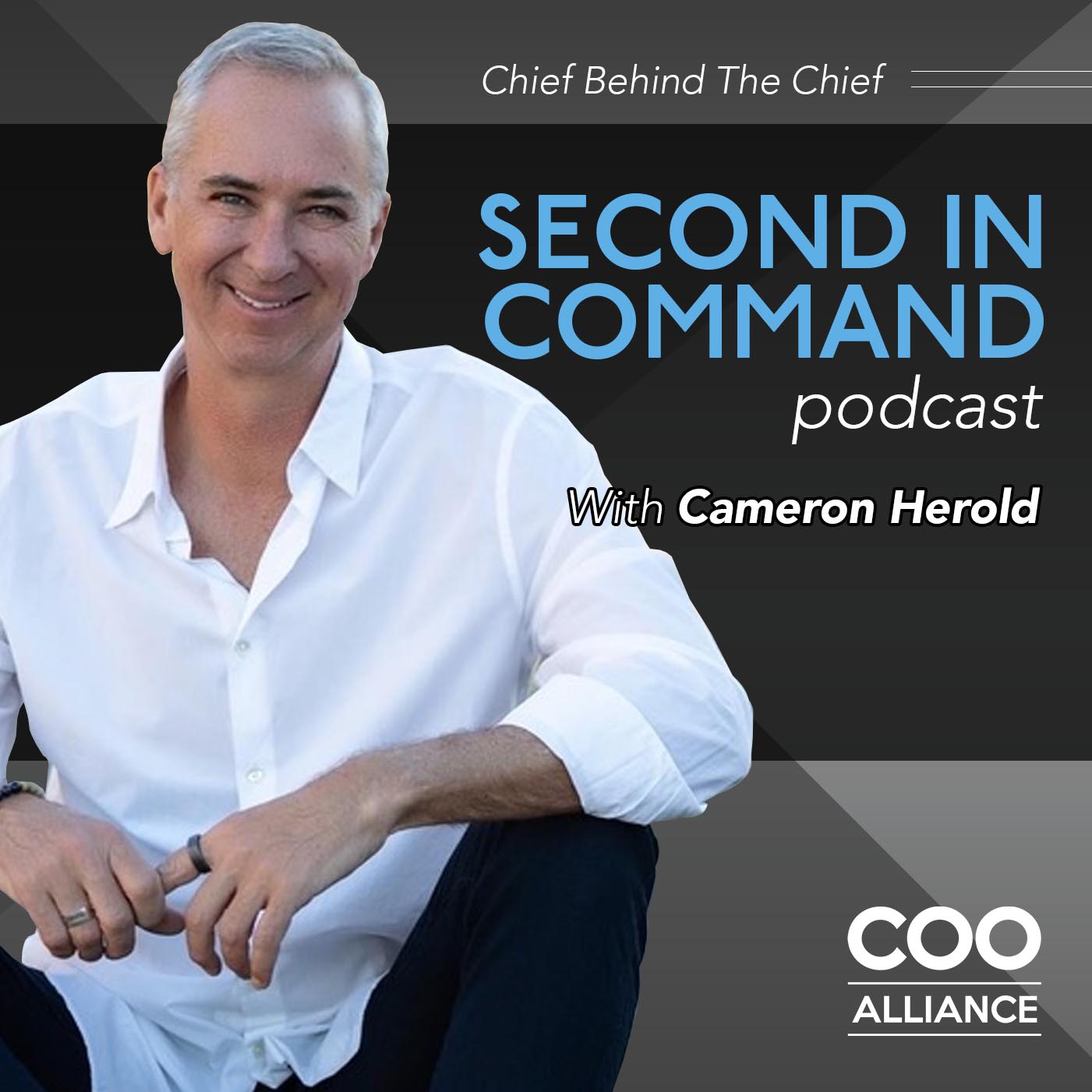
Second in Command: The Chief Behind the Chief with Cameron Herold
Ep. 526 - Dr. Melonie Boone - Secrets to Scaling a Mission That Saves Lives
00:49:18
Loading summary
Transcript64 lines
- [00:00]
A
Everything that we try to do. And I know people say, like, we're not making decisions by consensus by any stretch, but you need the input from others and you learn a lot because, like I am not using SAP to put orders in to make sure that it goes to the printer and all of those things that it needs to do. So we have to talk to the people who are actually using the systems to make sure it makes sense for us. And we're not like we don't want to move just to move right. There needs to be an impact, a positive impact on the business, a cost savings that doesn't sacrifice like time, productivity and things like that. So we think through all of those things before we make final decisions on systems changes.
- [00:49]
B
Welcome to the Second in Command podcast produced by the COO alliance and brought to you by its founder, Cameron Herold. In the second in command podcast, we talk to top COOs who share the insights, strategies and tactics that made them the chief behind the chief. And now here's your co host, former COO of a multi eight figure remote company and alumni member of the COO Alliance, Savannah Brewer. Today on the Second in Command podcast, we are joined by Dr. Melanie Boone, the COO of Adezia Nutrition. They're an organization on a mission to end childhood malnutrition worldwide. Melanie brings a rare combination of business psychology, operational rigor and people first leadership, having built her career across corporate leadership, nonprofit management and executive consulting. She's also the author of Heroic Leadership and holds a doctorate in organizational leadership. Blending academic depth with real world impact. In this conversation, we explore what it's like to lead a company where the mission carries deep emotional weight, and how she manages that while still running the business effectively. We talk about how she transitioned from consultant to coo, the ground rules that set her up for success with that, and why staying really close to the ground and caring deeply about people is critical for operational leaders. She also shares practical insights on tracking team morale across different departments and implementing systems where you can really generate buy in ensuring the change. It doesn't just happen, but really sticks and is impactful with your team. We are here with Melanie. Welcome to the show.
- [02:36]
A
Thank you. Thanks for having me.
- [02:38]
B
Yeah, we're so excited about this conversation. Specifically for me, just the work that you're doing is really, really important. And just from a heartfelt space, I've been really looking forward to this conversation. So for anyone who doesn't know, can you tell us a little bit about the company you work with and who do you serve?
- [02:58]
A
Yes. So I am CEO at Adesia Nutrition, located in Rhode Island. And we actually have a mission to eradicate malnutrition around the world. And so we make a product, multiple products that help to fight malnutrition. One of our primary products is called Pumping up. And it's like a fortified peanut butter. So it has all of the nutrients that is needed for kids who are what we call wasting. And so wasting means that these are children that are near death. And our product, one box literally saves a life. And so every time you see one box, one container, one truck leave, you know that it is going somewhere to help a child in need. And then we also have products for pregnant and nursing mothers as well. We have products for school age kids. And again, like, our true goal here and what we fight for every single day is to make sure that no child has to die from being malnutritioned. Yes.
- [04:03]
B
Wow. Big, big stuff. No, no small feat over here. And I know that when we had connected on the call at the beginning, you had mentioned that this is the work that you have really been wanting to do. And finding yourself at a position at a company like this was really important to you. So much so that you actually relocated your whole family from Chicago to Rhode Island. And so I would love to just hear a little bit about the mission and the drivers for you. Why is this the thing that is so important to you?
- [04:39]
A
Yeah. So, you know, I would say probably about two years ago now, because I've almost been here a year, I was going through a serious period of self reflection and a period of, like, what do I want to do when I grow up? Pretty much. Right. And I have wanted to be a CEO since, like very early in my career. There was an individual who was a CEO at a company that I worked for, and he was just amazing. And he was a Six Sigma black belt. And I was like, well, how do I get that I want to do all this things? And he's like running the company when the CEO was out. And it was just like one of those magnetic things. And back then I was in hr. I was like an HR manager. And I was like, I want to do coo. And I started looking things up. And so I always knew I was going to be on this path, but life took me in many different directions. Right. And so a couple of years ago, I was a business psychologist. I was doing some executive coaching, senior team effectiveness work, which was amazing. I graduated with my PhD and I was super proud to be doing work that was centered around the degree that I attained, but something was missing, and I wanted to do something that had purpose and meaning and impact. And then also, my mom passed away in 2020 from cancer. And it just kind of sent me through this thing of, like, how do you live her legacy? How do you complete the work that she wasn't able to complete? And she was such a giver. And so I actually started working with the CEO, Nathan Salem, here at Adesia as a consultant through my business psychology work. And I was working as her executive coach. I was doing some strategy stuff. I was working with hr. And literally the first time I stepped off the plane in Rhode Island, I was like, I have to move here. And then I got into the plant, and, like, the energy and the people was just so amazing. And I went back to the hotel and I called my husband, and I was like, I would do anything to work there. And then I said, but that'll never happen. Like, there's no role for me. We're in Chicago. And I gave myself this whole list of reasons why it could never happen. And in my work with Nathan, she really wanted to develop a COO role and someone who could be, like, the internal CEO to run the business, allow her to do the work that she does, allow her to go out into the field and actually visit the clinics and the children that we're working with. And so I helped create Job Description, and then I wasn't going to apply because I felt like it was a conflict of interest. And so I'm calling, like, my sisters are my biggest cheerleaders, and my middle sister was like, you just do it. Like, stop thinking about it. You reach out to her from your personal email. You do it. And I did. And I made it through the interview process, and I was selected. And honestly, it felt like it wasn't real because I was able to pair two things, like, my mission to have, like, an impact and help as many people as I possibly can to fulfill my mom's legacy. And then also this drive that I've had since the beginning to be a coo. And so here I sit, very excited, and it's not easy, but it's an amazing role and amazing opportunity. So I feel blessed to be able to be here.
- [08:23]
B
Thanks for sharing that. It's really cool to hear that journey and the bridging of both of those things. I mean, for me, this has been something that. I mean in different. In a different kind of area where I really feel my heart. For me, it's child sex trafficking that I just. It is the thing that if I spend too much time talking about on here, I will start crying immediately. But I've just always felt the pull to. That's where like I want to put my more impact type focus and resources. And so throughout my journey I've found like little ways to do that. Like I remember at 12, 13 years old when I first heard about it, donating like $5 a month, you know, and just doing what I could. But over time that's been able to develop in other things where I found myself running a sales recruiting company. We partnered with Tim Tebow's foundation and were able to help in their child rescue missions. And they also do work with orphans and a lot of really, really cool things. And now I'm at a point where like I'm feeling that pull even stronger that like not just like a partnership, but how else can I expand my impact? And there's definitely my own limiting beliefs that come up with that of like balancing career and finances and like what I want to build in my life, but then also this deep desire to go support in this mission. So it's just, yeah, it's bringing to me even just different possibility and openness to how things could look. So I really love hearing your story and one of the things that stood out to me is just that part that you were consulting and then came into the company. And so I would love to hear what did she originally hire you for as a consultant? Like what challenges was she experiencing at that point?
- [10:14]
A
Yeah, so as a consultant I came in to help support really around there were some people issues and just like rewind a little bit and give a little bit of background. I've probably worked in every part of an organization literally by curiosity, sometimes not by choice. But I have this very unique skill set where I have ran HR departments and that's where I started my career. I run operations, I've managed finance teams. It, I've done some marketing, I did sales where I learned really quickly that I am not a hunter. That's what they always used to say, like, you are not a hunter. Like you can sold a deal, but we will not send you out to go find one. I also started reporting to CEOs very early in my career, like before I was 30. And so I just had all of these different dynamics of like coaching and then you layer in like my education. I love school. So when people say like oh my God, you have four degrees, what's going on? It's just I generally love school. So I pick all of those things and wear all of these different hats. And a senior partner at the firm that I used to work at reached out to me and was like, I have this amazing opportunity for you. It's a nonprofit. They do really good work. The board and the CEO are just looking for a little bit of extra support for the CEO because the company had gotten to a point where there was just a lot of internal external pull. So she's kind of being pulled in all of these different directions. And so the coaching really started out with there were a couple of hot button employee issues that I came in and helped support. There was some stuff around procurement that I came in and supported. I did my assessment with the CEO and help with the development plan. And really the development plan was centered around how do we move things off of her plate so that she can focus on the donors, the external, the fundraising. Not to mention we're in the process of building $148 million plant expansion. And so there are all of these different things. So I was helping with that and a little bit with strategy. So I was kind of all over the company. You know, I had meetings with directors and different team members and felt like part of the team before I even started working here. And so it was a really great opportunity. And again, I never thought it was going to turn into this and an actual role. But I also have never had a job that I started and knew exactly what I was getting into.
- [12:50]
B
It's always different than you think.
- [12:52]
A
Yes, it's always different than you think. But this one I like because I worked from like March through August here before starting in September. I was kind of fully aware of the good, the bad and the ugly. Mostly good and just beautiful people and an amazing environment. So that's the work I did before I came on as boo.
- [13:14]
B
Well, and it's nice that you were kind of this like outside consultant because you kind of get to peek behind the curtain versus like when you're getting hired. People can tell you that the culture is good and they can try to how things are, but then you don't really know until you get in. And there is something I recently experienced as the fractional role that I did is, yeah, you get to kind of see in the limited view what's happening. And it's beautiful that you were able to see a lot of really good things that made you so compelled to send that personal email and apply. What was the. What was the first kind of 90 days like? Because I can imagine especially is the. I think you said her name is Navin, is She the original founder?
- [13:59]
A
She is the founder, yes.
- [14:01]
B
Okay, cool. So I imagine there's this really big heart and her vision that is pooling the direction of the business. And then this is often where a lot of founders get caught is they want to be talking to people and sharing the vision and inspiring, but then they get caught in the weeds of the business. And it sounds like she's really smart and thought that, you know, getting some of that off of her plate from an operational sense would allow her to step back out into kind of the field and the areas that, you know, you mentioned. So that first 90 days where you came in and started taking things off her plate, what was the process or that experience like for you? Both?
- [14:44]
A
You know, so we actually set a few ground rules before I started, which I think was very helpful. And so one of the things we said is like, let's really divide the business, right? Let's have her truly focused on external things. And we're building a sales department, which we have a new development and sales chief that started, you know, she's the advocacy, government affairs, communication, social media, all of that external facing stuff. And then I am the internal facing stuff. And I think like those original conversations were really good in setting the groundwork for how I started. But one thing we found over the past few months and in the first 90 days is there really is a blurred line and thankfully there's no ego. Right. So if I have some input about the sales strategy or something like that, there's no offense to her if she has input, which she does because she's been doing this 15 plus years and I can learn from her too. And so when she has input, like, we're able to have those conversations, we're able to have some of the tougher conversations between one another. We can like disagree and come back and re. Agree or disagree to disagree. Yep. Right. And then it was really interesting. And I will tell you, like, we had a major business disruption in my first 90 days. We actually had two major business disruptions in my first 180 days. Okay. So I started and thought like, okay, I'm going to do some structure stuff and we're going to get people in the right positions. And then the first thing happened in November and it's like, oh crap, we gotta adjust now and we have to address this issue, which stopped production for a little bit. And then we came out of that and then like early January, we had another huge disruption with our largest customer who went through some government reorg. And it meant that production had to stop again. And so, you know, we went through this process. We did this amazing strategy in October. We did an off site with the executive leadership team. We had our five strategic imperatives. We were ready to go, and we were going to do all of these great things and help as many babies as possible. And then we had those two disruptions happen. So it did require me to shift a little bit. And I'll be honest, I didn't handle it very well in the beginning because there is a lot of emotion around stocking production, right? So most manufacturers, if they stop production, they can make up for it later on in the year. It has a different impact for us when we lose time because we can only make so many metric tons a year. And when we lose time, you really can't make that up. And so I will be honest, Navin and I had a really good conversation about how I didn't handle things well in January because it was very, very emotional for me. I tend to step back and like, problem solve alone. And that created some challenges, right? Because then she's not really knowing what I'm doing and I'm not really sharing. So it was a really good lesson and kind of like a reset for me. Like, you know, everyone wants the seat at the table or they want to be in these positions, but you don't really know until you get in it how you need to shift and change. And I kept thinking to myself, like, what got you here won't keep you. There is a saying that you hear a lot, and it's so true. And so even just within the last 60 days, I have been making these adjustments to how I work, how I manage my team, how I manage my relationship, how I continue to build trust. You know, we went into crisis mode, and crisis mode doesn't really give you room to build trust with others, but you have to just be intentional about it. And so through a lot of reflection and taking, like, honest feedback and really processing it, I've had to change how I work a little bit. But I think it's a good evolution. A painful one, but a good evolution for me.
- [19:11]
B
I really appreciate your vulnerability and that because it can be easy to have the title and act like everything's fine and it's all great and it's this awesome position. But there's a lot of challenge that comes with being in a position with so much responsibility and especially in a space like the one that you're in, where there is such an emotional gravity to certain things happening. I'm curious how long has the company been around?
- [19:45]
A
About 15 years.
- [19:46]
B
I thought that's what you had mentioned with Nathan. Yeah. So with Nathan having been in this for 15 years, was there what was the advice or the support that she gave you around being able to manage? Because I'm sure it was the first time for her that she's experienced volatility and the emotional, you know, kind of waves that come with that. What did she share with you?
- [20:07]
A
Yeah. So we have a lot of deep conversations, especially on Saturdays. I always say our weekend calls are our best calls. And really the thing is, like, don't retreat. And that's the biggest message that I heard. Don't retreat. Keep fighting. Keep fighting with me. Right. I'm going to, you know, Maven. She's going to keep fighting, and she really wants fighters by her side. And so that's an adjustment. And then I also haven't worked in a corporate environment or a business environment for a while. I have been a consultant for quite a few years. I hadn't managed a team. And I'm going to be real honest here. Like, I underestimated what the transition was going to be. I worked from home since 2016, 2016. Now I'm back coming into an office that's not just an office, but there's a plan. And so I really underestimated what the transition was going to be like. And I am happy that Nathan has given me the grace to adapt, because I know that that can become very contentious. And like the CEO and the coo, the relationship is so critically important that if you can't have those conversations, if you can't be transparent with each other, if you can't, like, we don't yell, but, like, if you can't disagree vigorously, come back from it. You know, they're really. It's not going to be successful for you. And so sometimes you have to, like, humble yourself and really listen, whether you want to hear it or not, and then process it and then do something with the feedback. So the feedback that I've gotten, I've done something with, which I think is, like, the most important thing.
- [21:49]
B
Totally. Yeah. I'm sure from working with you in the role that you were in before with her, she got to see who you are. And at the core of it, I think when you have someone with such alignment on values and the way that you think about things, if there's alignment, most things can get figured out and you can learn and you can adapt. So it's really cool that you've been able to do that with the kind of consulting background. And I think you said you had. You have four degrees.
- [22:21]
A
I do.
- [22:23]
B
How has that prepared you for this role? Like, in what ways did that rollover?
- [22:30]
A
You know? So it's really interesting and we were talking about this before we started recording, but I did not take a traditional, like coo, which. Thanks for sharing your story because I see that you didn't either. Sometimes it feels like I'm the only one. But one thing that I always did is I wanted to make sure that I understood all parts of the business, right? Especially earlier in my career when I started recording for CEOs. And funny enough, I had a CEO once tell me I had presented this whole business case and I was super excited because I'm like, saving $60,000. Woo, woo, woo. You know, And I show him all of this and he's like, well, anyone can show me the numbers, but what does it mean? And I walked away and I was so angry. I was like, it means I'm saving you money. Like, what are you talking about? And it actually wasn't until so something that Navin and I talked about a couple of weeks ago where we're looking at, like, production staffing and all of these different things. And I'm very numbers focused. And so I'm looking at the numbers and she's like, but go out on the plant floor. Which I spent some time out there, but not enough, right? Because of everything that's been going on the last six months. And I was out there on the floor and I'm talking to people and I'm really listening. Like, what are some of the pain points? What are the challenges out here? And it gave me a different perspective on what we're looking at from a staffing perspective. And I was like, oh, crap. That's what he meant. Like, anyone? I can show the numbers, right? But there's stories behind it. There's lies, there's nuance, there's context, and all of these different things. And so if I knew where he was today, I would say thank you for that lesson I'm now learning, like, almost 20 years later.
- [24:16]
B
That's amazing. Hey, it's Cameron Herold, your COO whisperer and guide to scaling businesses. Check out my YouTube channel@YouTube.com amronherald and that's H E R O L D, where I share tons of raw tips and insider secrets to have you level up as a leader and grow your company. From leadership hacks to growth strategies. It's all there. No fluff. Subscribe now. Hit that Bell for notifications and comment on a few of the 100 videos that I've uploaded so far. And let's build your empire together. Let's go.
- [24:58]
A
But, like, that is. Planted the seeds. Yeah, he planted the seeds. But that's what I pulled from, like, all of my experience and my education. And, you know, it's like, how do I be the best me and use the experience that I have to help in a way that, like, makes sense for the business? That's not just the numbers. And I think like anyone else in a role like this, you would focus on the numbers, right? Because the numbers may say that to get to a certain dollar per kilogram, that's how we price things. You only need 14 people out there, but then you go out there and you see how 16 people are struggling, and you're like, wait a minute, I can't run nine lives with, like, 18 people. It's just no way. So, like, there's the. Being open to seeing the story in addition to the numbers is another one of these big lessons that I've learned over the past couple of months. But, like, the degrees, the education helped me process the numbers. You know, it's really interesting. So I have my bachelor's is in human resource management, and that's where I started my career. I went back and got an MBA because I wanted to report to CEO. And I just felt like you had to have an MBA to do that. So you can talk the talk. Right. And know what EBITDA is, which I didn't know for a very long time in my career. And then I went back and I got a Master of Jurisprudence in Business Law and Corporate Governance from Loyola Law School. And that degree helped me to process differently, to look at problems in a different way. Like, when you dissect a case and you're like writing these case briefs, it causes you to just think through problems a lot differently. And then I'm like, topped it all off with a psychology degree.
- [26:46]
B
Amazing.
- [26:47]
A
In business psychology. So now I have the people, the human behavior aspect of it. But one thing I will tell you that I have learned as a CEO is you have to know when to wear what hat, and you cannot wear them all at the same time. Right. And so this is the type of role where you. I am literally stretched across, I think, 14 or 15 departments, plus I am sponsor of the expansion. Plus plus plus plus right. And so but you have to know, like, when should I be the business psychologist and the coach? When should I be the numbers person? When should I be the person that's honestly just listening, when should I be the people culture person? Because I also lead HR as well. And so knowing like, how to show up is really important and which Melanie shows up for which meeting is really important. So in the beginning, you know, I was just showing up at everything and really that's not what the business needed. And so I now walk into things saying, what is the business? What is the conversation does Navin need from me in this moment? And then that's how I show up.
- [28:02]
B
There's a lot there that we could dive in. The main thing that's standing out to me right now is the 14 departments. I just thinking about that, I'm like, oh, that sounds like a lot. How do you, how do you keep the pulse on all of that?
- [28:17]
A
So it's very interesting. I believe I have always needed to be busy. Like I thrive off of doing a million things at one time. And I think, like, that is a skill that lends very well to this role. I also, to help with, I have a horrible memory. So to help with that, I've implemented things like department weekly updates that I get every week from every department, really showcasing, like, what are the wins, what are the barriers, what are the decisions that need to be made? What help do you need from me? And I'm also able to share that with Maven. So even when she's out of the building, she still has a post on what's going on too. Another great question that's included is what is the team morale right now so that we can keep an eye on that. And then it's so funny when I tell you I am everywhere and in everything. I am literally everywhere in everything. I have invites to all of the meetings. I show up, the ones I need to, I drop in where I need to, and then I really rely on my team. I think our one on ones, I do biweekly one on ones with the team and those are really important touch bases as well. They're 30 minutes. They're like super clean. What's going on? How can I help you? We talk a little bit about their developments and the things that we're working on through their growth plans. But you just have to stay really, really connected to the people and the business. And at the same time, I'm also learning the business. So I still did not know how to calculate metric tons to kilograms, but I have a guide for that.
- [29:58]
B
Well, yeah, I feel like I can be teaching that.
- [30:01]
A
Yes, yes, yes. But I really tried to know and understand the business and Like I just did these amazing check ins with every department. So I worked all three shifts. I spent like two hours with each desk in the production quality safety. I attended a lovely maintenance meeting which was amazing because it was a development meeting as well and I love seeing how the maintenance manager is developing his team. So you just have to be thoughtful and intentional about your time to make sure that you also get your work done. But again I thrive in that environment. I am not a sit and just do two things a day kind of personally as well.
- [30:43]
B
Amazing. The ability to manage a lot of different balls is definitely a skill that is needed in the CO position. And I love your, I love that you mentioned having biweekly one on ones with your team because I have found that that is like such a key must have for me at least in my experience if I am not meeting one on one with the main people who I'm leading consistently it creates so many issues and I what I additionally I implemented this like it's a one on one document that for every role is custom to them and they're, they fill it out and they send it to me 24 hours in advance. And so because what was happening was I would get on these one on one calls and ask all these questions to just finally at last five minutes of that 30 minute call hear what the real problem is that we're trying to solve.
- [31:41]
A
Yeah.
- [31:42]
B
And so instead I was like what if they could kind of do some of that brainstorming and prep beforehand so I'll read their one on ones and can kind of come in with resources or I'll ask other people on the team of like hey, can you clarify what they're meaning by this? And then you can get so much out of a 30 minute conversation when there's additional structure and you're consistently meeting every two weeks. I, I think that doing something like that is really amazing and like you said, keeps the pulse on what's actually happening with your team.
- [32:10]
A
Yes. And then we just recently implemented a really cool HRIS system that allows us to track our one on ones and so we can be in constant contact over the two weeks with messaging and putting notes and things like that. And then we can pull it up in the meeting to say like hey, what did I miss? And we can kind of track takeaways and action items and that was a really useful tool. So another big imperative for me is technology modernization and transformation and so introducing some of these systems to make work life a lot easier. The administrative path especially no one wants to spend 12 hours doing an administrative task. So that system has allowed me, I'm piloting it. It hasn't been rolled out for everyone yet, but it definitely allows for consistency with the one on ones. It schedules it for you through Outlook or whatever email you use. So it makes it very convenient.
- [33:08]
B
What is the name of that tool?
- [33:10]
A
It's PayCord. So we have the full PayCore suite of payroll. They have an ATS or recruiting system. We also have like our benefits admin in there, performance reviews, goals. It's changed the way we are engaging and managing with our teams. That was one of the first things I did when I got here.
- [33:33]
B
Thanks for sharing that. Yeah, I've often found myself struggling with certain tools because sometimes I would think it would fix something and then we'd implement it. Okay, as an example we had SOPs everywhere and so we got this trying to remember what system it was but some like SOP organizer. And then what happened is we just had this totally different website that I had at like another place for people to go check and I actually just made it worse. Yeah, you know what, like this Google Sheet, even though it's so simple, like sometimes I think that I need something really complex. The Google Sheet does the job and I'm pretty sure they're still using that. But then there's other systems where man like you implement it and handles so many things. Like for us one of those was moving over to school, the online platform. I don't know if you've heard of school, but it's S K O O L because we had our clients in Facebook group and then we were like letting them know that we had call times over email and then we had some clients in Slack man Kajabi. And then when we got on school it put all of that in one place and so it's being able to really determine which things are worth the squeeze because there's a cost to change guys with rolling out new systems and things like that. Do you guys have a process or just a way of thinking before you make a move on something like that?
- [35:00]
A
We do. And so we make sure we are the most cross functional company that I've ever worked for in my life. And so we make sure that before we implement anything we are meeting with not just the heads of departments but people who are actually going to use the system and we get feedback from them on like the current system, what's working, what's not working. If you had a dream system, what would it look like? For paycor we did demos with different groups of employees and managers to see how they felt about it. And the user interface was really important to us, like that employee experience when they're logging in, when they're using the system. And, you know, time cards and time clocks and stuff are also attached to that. So we wanted to make sure that employees felt good about it. We're actually doing an SAP refresh. And so one of our IT members just sent an email out saying, like, this is coming. Can you assign a super user to SAP? We're going to have these information sessions to understand how we use it and how we can use it better. So everything that we try to do. And I know people say, like, we're not making decisions by consensus by any stretch, but you need the input from others and you learn a lot because, like, I am not using SAP to put orders in, to make sure that it goes to the printer and all of those things that it needs to. To do. So we have to talk to the people who are actually using the systems to make sure it makes sense for us. And we're not, like, we don't want to move just to move right. There needs to be an impact, a positive impact on the business, a cost savings that doesn't sacrifice, like, time, productivity, and things like that. So we think through all of those things before we make final decisions on systems change.
- [36:46]
B
I love that you mentioned making sure the employees feel good about it.
- [36:52]
A
Yes.
- [36:53]
B
Because if they don't feel good about it, trying to get them to use it also creates that, you know, the issue if you roll it out. So, yeah, making sure. I love that you talk to your team and ask questions. And really also, like, when they see that you care about their genuine input on making a decision, then when you do make a decision, it's a little bit easier for people to be like, well, they asked me, you know, maybe it's not what I would have done, but, like, they went and collected all this information. So, like, let me just trust. So having those conversations, I think is really great. And it kind of ties into something you said earlier that I wanted to touch back on, which was, you guys kind of keep a point of measurement on team morale. How do you do that?
- [37:34]
A
So literally every Friday by 12pm, everyone needs to submit their department updates and they write like a little couple sentences about team morale and what's going on in the different departments. And then we also have an amazing director of HR who goes around and tests the temperature and talks to the employees and does check ins. It's like, really, everyone who's in a leadership role is required to do these walkabouts, the check ins to talk to the team. Right now I know it's like hot as heck in the warehouse so I after this call I'm going to go talk to maintenance because I heard that they had these cooling vests last year. So I'm going to see if we can order those again this year for the team. But I think the people part, especially here is so important. So I cannot be a COO that stays in my office and goes to meetings and goes home. Like I have to be out and that's actually tough for me. Does not sound like it, but I am very introverted and socially awkward. Oh yeah, but it's no, this is the other melody. I was like, like I have to make sure that I am intentional about going out, connecting with the team and it means so much to them. Like this last check in where I came in at like 4:30 in the morning to be with the third shift. I actually can't stay up past 10pm So I had to come in early. Like they were just so appreciative and they were like thanking me and I'm like, no thank you. Like you're the one that's doing the work. So you have to again make sure as a COO that you're truly aligned not only with the CEO but with like the culture. If it's a people driven organization, you need to make sure that you're prioritizing the people. Which I have been like really pushing myself to do. And now that I've done it, I'm like comfortable with it. I could go hang out with third shift every night and be just fine. It's just like that initial hurdle but being present, being available. Our doors are always open from sanitation all the way up to C suite. Anyone can come in. I actually, I would pan over here but I created this really comfortable living room type of scenario in my office with nice lighting. I invite people in to come and talk because that's how you know what's going on in the business. And you know, we're about 120, 125 employees and I do try to connect with as many of them as possible.
- [40:08]
B
I remember when we first started doing team off sites because we were running a remote company. It was really amazing. Just in my own experience as a leader and my own connection to my team. How you know when you're meeting remotely on Zoom and we're talking about numbers and one on ones, like there's a level of Personal relationship that gets built, but nothing gets built like being together over a cup of coffee in person and making jokes and seeing someone being like, at least this is in a remote work environment. Like, for me, things go on being like, wow, you're way taller than I expected. You did not look this tall too. And then, like, asking, you know, about whatever in their life. There's just such a different form of relationship and trust that gets built when you're really in person with people. So anyone that's running a remote team, like, I highly recommend finding ways to get your team together and getting close to the ground. I remember this video. I cannot remember the company that this was with, but Cameron, I was at one of his COO alliance events and he showed a video of it was, man, there was probably like 2,000, 3,000 employees in this big building. And the CEO, it was his birthday. And they made a video of him, like, walking into the office and they created this insane celebration for him. And every employee is, like, standing on desks and there's balloons and he's saying hi to everyone and, like, making eye contact. And you can just see how much his people were supporting him. And, like, you could tell that this man has walked through that office and seen people, and you can just feel the energy of that company from that. That relationship that he's built with all the people in the office. And I think that gets missed a lot of times when we're so busy with meeting numbers and there's stressors and people are getting fired and there's accountability. But just coming back down to the human connection makes such a big difference.
- [42:12]
A
Yes. And I'm trying to feed off of Nathan's energy. Like, she does these amazing bingo events where we'll shut down production and everybody comes in the break room and plays bingo and she hands out, like, cash and other prizes. And I won bingo for the first time a couple weeks ago.
- [42:29]
B
Yeah.
- [42:29]
A
Yay.
- [42:30]
B
What did you win?
- [42:32]
A
$10? No, I got $10 and I put it in the bagel fund. We have a Tuesday bagel fund outside my office. A little box to put money in to help support Tuesday bagels. Tuesday bagels.
- [42:45]
B
That's so fun.
- [42:45]
A
I donated it to bagels. But we actually were talking yesterday, and she wants a culture that has fun. And I'm like, me too. That is, I. One of my earlier management jobs was at Target and fast, fun and friendly was, like, drilled into you as, like, this is what you have to be as a leader. And if you're not having fun, like, you're not doing something right. And so it's great for us to be aligned on that too. So I can do like some quirky, silly things.
- [43:14]
B
The quirky, silly things. Like that's totally up my alley.
- [43:18]
A
Yes.
- [43:19]
B
When I was working at Closers, you know, I'm on a all male executive team. We eventually brought in another woman, but. And the early like first year and a half, just me and the guys and being in a sales company just it was very male dominated first. And eventually kind of like with other roles it started to get a little bit more even. But I remember we had a. It was Halloween and with my team, I'm like, let's all. I was like, I know that the whole company, like the sales guys are probably not going to be as interested in this. Like I knew my recruiting and operations team and hiring team. I'm like, let's have a Halloween party, bring costumes and we're all on zoom. And it's one of my favorite memories to date is having like one of my team members. I had sent him because we had made a joke about how he eats like a lot of bacon. And so I had sent him for his birthday. Like these are the types of things I love doing is like finding these little moments that I can drop gifts. I love gift giving. So I sent him a bacon costume and I had never seen him actually wearing it but like to the Halloween party he showed up in his bacon costume. Everyone on there and I just remember thinking like how cool it was that we could have so much fun and be silly. And at the time I was. I ran that from 22 to 25. So I'm young and I'm just with a bunch of other young people. And yeah, at the same time my team had. And I've. Cole, the owner of the company said that to this day the recruiting team has the strongest, some of the strongest culture in the entire company and the ability to both perform really well, hold each other high. You can do both, but first it takes the belief that you can do both and experiencing it. So yeah, I'm a big fan of the quirky and fun.
- [45:00]
A
Yes, yes. We also. She does trivia as well, which I do not do as good at.
- [45:07]
B
That wouldn't be good for me. I'm with you on like the memory thing. I'm not super great with stuff like that, but oh man, this has been really great. I always love to kind of wrap up by asking what are you most excited about in the next six months both personally and in business.
- [45:25]
A
So in business like I am like a kid at Disney with this construction. My mom used to own a construction company when I was little and like I was 8 or 9 on construction sites picking up nails and learning what a drill is and all of that kind of stuff. So over the next six months we will have a weather tight building of over 100,000 square feet in phase one that I will be able to walk and look in awe. And you know, we are really planning for growth and that's exciting as well, regardless of all the turbulence that's in our industry. We also are running a Children can't wait campaign to help with funding like $50 literally pays for one box and saves a life. And so I'm working to promote that as well. So anyone who is listening can go to adcnnutrition.org and know that your any donation is used for us to help in our mission. And then personally, you know, I'm going to get a social life. So I have worked really hard my entire career and have never had the opportunity to actually just have a social life and have a little bit of fun. And so that is a personal goal of mine. I want to learn how to golf. I want to, I don't know what else because that's all I got.
- [46:56]
B
I was a golfer.
- [46:57]
A
Anyone who wants tips on how to have fun because Melanie has not had fun in a very long time, please send that to me via email. But you know, I just want to enjoy life, enjoy this opportunity. I do truly feel lucky to be here and to be able to do this work, both our mission driven work and the stuff that I do. And so I just want to keep getting better at that.
- [47:22]
B
Well, thank you for sharing all of that and thank you for the work that you're doing and your heart and intention. It is crazy how much need is out there in the world and it takes people stepping up. So thank you for stepping up and leading something so impactful.
- [47:39]
A
Yes, yes. And I just like one last few words for anyone who wants to be a coo. Learn the business and learn all parts of the business. Raise your hand. Volunteer. Do the stuff nobody wants to do. That's how I got a lot of my experience. I think if you are already a coo, my lesson that I'm just giving to everybody is not just about the numbers. Know the story, know the context, know the nuance and weave that into your decision making. And then any CEO who is looking for a coo, you know, you may find someone like myself who's not on a conventional path that's going to do some amazing things for your organization. So just keep an open mind and have those upfront conversations so that you align early in the role. So hopefully that leads to new success.
- [48:31]
B
Perfect. Well, thank you for sharing your wisdom and best wishes with everything you guys are working on and really appreciate your time.
- [48:38]
A
Yes, thanks for having me.
- [48:42]
B
You've been listening to Second In Command, brought to you by COO Alliance Founder Cameron Herald. If you enjoyed this episode, please be sure to like, share and subscribe to us on Apple Podcasts, Spotify and our other podcast streaming platforms. For more best practices from industry leading COOs, visit COOAlliance.com com.