← Second in Command: The Chief Behind the Chief with Cameron Herold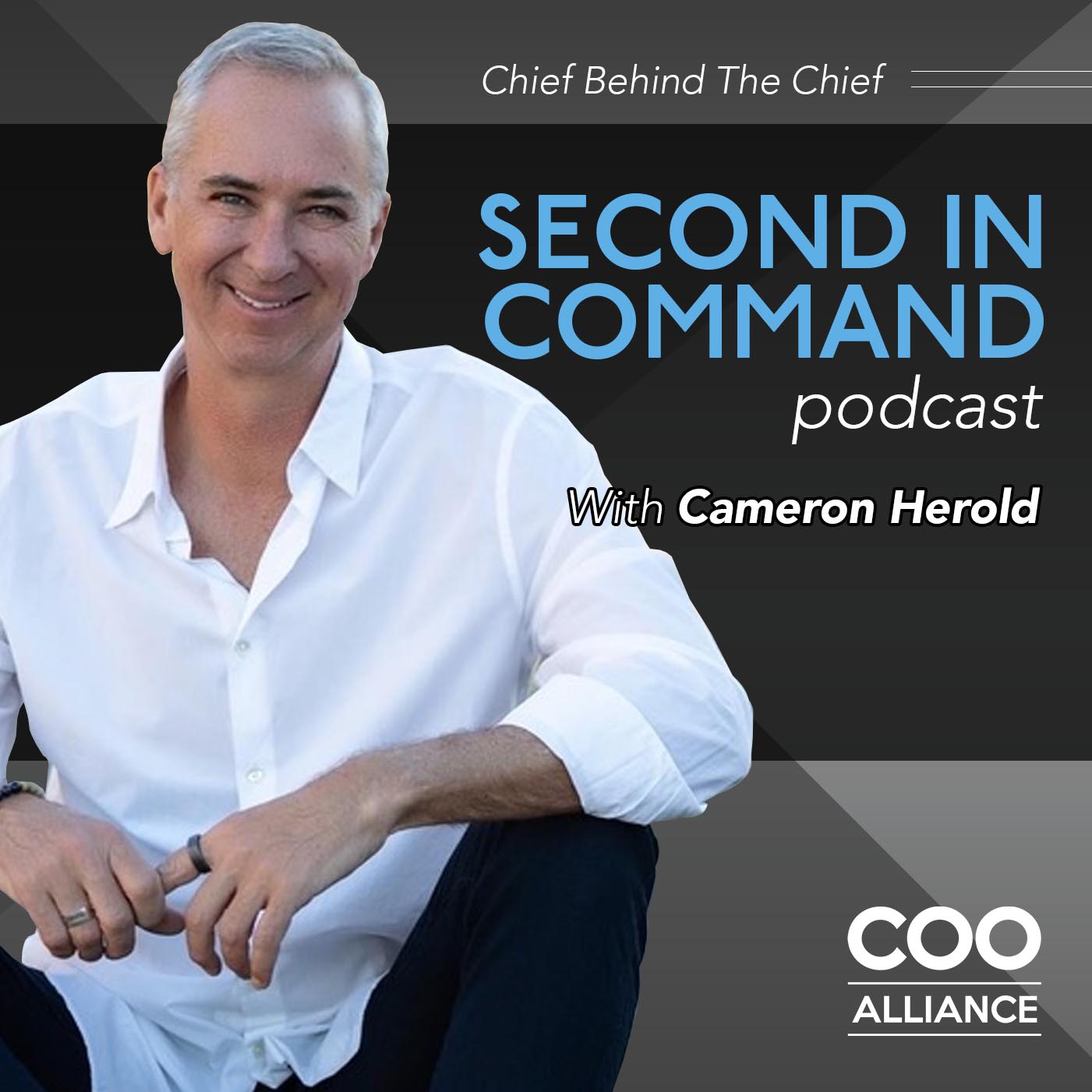
Second in Command: The Chief Behind the Chief with Cameron Herold
Ep. 528 - Brett Bruggeman - How Land O’Lakes Powers Its $16B, 104-Year Cooperative - Brett Bruggeman
00:45:35
Loading summary
Transcript63 lines
- [00:00]
A
If somebody would have came to me and said, hey, I have this market access approach with this many retail owners and would like to work with a certain product group. When we were introducing a new product like Pursuit or another product, I would have been like, that's the most predictable market access model I'd ever been a part of. It would be automatic. And that's really what we want to try to do. We want to be seen as a place to go with new innovation, for predictability, to scale innovation. And our owners own that last mile, Cameron. We don't at Lando Lakes, our retail owners do. And that's important, especially what's happening with farmer consolidation.
- [00:44]
B
Welcome to the Second in Command podcast produced by the COO alliance and brought to you by its founder, Cameron Herald. In the Second in Command podcast, we Talk to top COOs who share the insights, strategies and tactics that made them the chief behind the chief. And now here's your host, Cameron Harold.
- [01:11]
C
Hello, listener. It's Cameron Herald here and I'm fired up. For today's episode, we've got Brett Brugeman, who's the Rockstar CEO and Executive VP of Land O Lakes, dropping some serious wisdom. This is a company that I bumped into for the first time, believe it or not, only 10 years ago. Even though they've been around for 104 years, they do $16 billion in revenue. He's leading their company, thinking about the agriculture game. Think crops, think animal nutrition. He also is steering the company's big picture growth. Today, he's breaking down why co ops are still a powerhouse. He tackles the wild challenges of today's business world. And he's also sharing killer concepts like outside in thinking, asking bold strategic questions and also zeroing in on what they call the vital few. Buckle up. This one's epic. And make sure you subscribe and share this episode as well. We'll see you on the inside. So, Brett, welcome to the Second In Command podcast.
- [02:07]
A
Thanks for having me, Cameron. We appreciate it very much.
- [02:10]
C
Yeah, I'm really looking forward to this. And I need to tell you a funny story to start the episode off because I grew up in Canada. I was on a plane, gosh, probably 10 or 12 years ago, and I was flying from, I think it was Vancouver down to Arizona. And I think I was on American Airlines and they gave me. And I don't love plane food. It's typically not that great. And I got this food and there was this little pad of butter and it said land O' Lakes. And I'm like, that's really cute. Is that this new company, Land O' Lakes? And the flight attendant's like, no, it's been around forever. And I think I took a picture of it or something and sent it to my wife and I was like, yeah, I saw this cute little company. She's like, no, babe, this is a huge company. Yeah, I just didn't know of it. I'd never heard of it before. But you guys have been, how long have you been around and how big are you? That was my introduction. That was 10 years ago.
- [03:05]
A
No, it's a great question. We've been around for over 104 years and we're about a 16 billion dollar company. But it's, it's interesting because family and friends ask, you know, who do you work for? Everybody knows the Land O Lake butter brand and it's been a brand that has got high, high, high recognition and we're proud of it. So I'm glad. Right. I'm glad that you noticed that. And yeah, it's, it's part of our value system.
- [03:32]
C
Can you speak about that for a second? I'm curious, what was the genesis of the company? Like a brand that's been around for 104 years. I think it's irresponsible to not ask about the starting point even though it's largely irrelevant today. But it actually is probably very relevant culturally to who you are as a brand, I guess.
- [03:51]
A
Yeah, it's the core of our business and started as the core of our business. We're supply and marketing cooperative and basically it was started with dairy farmers wanting to find a home for cream. And the reality is some 104 years later, our dairy. We have three businesses. Our dairy foods business, our animal nutrition business and then our crop inputs business. You know, our animal nutrition business from a purina brand perspective. But then our crop inputs business also has a Winfield type brand. And our dairy foods obviously carries the Land O' Lakes piece. So yeah, we've just continued to grow. We have about 20 different businesses that roll up into those three business units. And again, it's a supply and marketing cooperative. We're made up of owners that are dairy producers and then also retail owners who obviously are cooperatives and independents who serve their growers across the U.S. we're in 50 states, roughly 60 countries. If you go down the road, there's probably a pretty Good chance Cameron, one out of two acres or one out of two fields will be on. So we touch about 50% of the fields in one way or another. A crop input standpoint and then we also cover about 13 billion pounds of milk. From that standpoint, in 100 million animals we feed. So a lot of market access. If you said, what does Land O lakes really have a recognition for? We start with market access and scale, both domestically and internationally.
- [05:31]
C
Okay, you just mentioned Purina. I've got to, I'm curious. My uncle was the head of, I think he was the head of sales and marketing for Ralston Purina Canada for years for, for like 20 years. Is that the Purina or is Purina Animal Foods like a separate subsection of a big brand as well?
- [05:48]
A
Yeah, great, great question. So domestically we own the brand for livestock. From that standpoint, Nestle owns the pet in an international part of it.
- [05:59]
C
Okay, makes sense. Now, between the three kind of core products or core verticals, what's the rough revenue split can you give us?
- [06:07]
A
So yeah, it's, you know, we're about 16 billion and you run about 8 billion on the crop input side, about 6 to, or 4 to 6 on the animal nutrition side and then the remaining on dairy. So depending on the year, it could be as much as a third, a third, A third. But depending on commodity prices. But a crop inputs business is what we call our growth business unit. And again, the core in our foundation is our dairy foods business. And then animal nutrition really is the opportunity for us to manufacture. We have about 60 some manufacturing feed plants and that we sell to obviously the livestock rancher, farmer, what we call livestock producer. But then we also sell to the consumer through our farm and ranch stores, all the way down to the consumer. So we cover what we say in a lot of cases, both from the soil to the shelf with all three of those businesses and then the businesses that roll up into that.
- [07:11]
C
Cameron, I guess operating at EVP and COO of a $16 billion company, as you mentioned, you could get pulled into every single possible minutiae meeting, commerce, versation. How do you avoid that giant hairball you? How do you stay focused on what matters for you? Can you walk us through some of that?
- [07:33]
A
The reality is, to your point, like one of the things that I learned early on with this role is the fact that if you're used to pulling all the levers, you're never gonna, you're never gonna be successful. And you gotta have a team around you that work the day to day piece. That is their accountability, their agency that they work on. Where I try to add value and spend more time on is asking the strategic questions. If you would have told me before I started this role like what is the most critical capability? Lots of times it's, it's making sure that you can ask the questions, connect the dots to the strategies and then follow through and make sure that the teams are, are implementing from a day to day basis. But having a network of people that you can ask for help and, and have a you is a, is a big part of this piece of it. So do I get pulled in day to day? Absolutely. My boss, Beth Ford, she's really good about making sure that we're always connecting back and forth. And then my team also, Cameron is saying, hey, I got this in the first year or so. It was one of those areas we, we walked through, stumbled through. But I think now we're at a point where we truly understand the role description. And of course it's put in a whole new twist with what's happening with tariffs and some of the regulatory pieces to assist in that area. So not perfect, but feels so much better than I did the first year into this role.
- [09:10]
C
So how many years have you been in the role now?
- [09:12]
A
This will be the second year.
- [09:14]
C
Okay, and you've been with Land o' Lakes for 11 years. It's funny, I was just reading your bio just before we kind of went live. And there's another great brand that you worked with that I had have a connection with. I was the head of corporate development and all the franchising for what's now called Gerber Auto Collision in the United States was called Boyd Autobody in Canada. But we were a big, we were probably the largest customer from BASF on the automotive paint side of the business. I remembered choosing BASF over sequins back in the days. And there's another gazillion, gazillion products inside of that brand. So when you're inside of an organization the size of Land O' Lakes, what do you try to focus on on a weekly basis for yourself?
- [09:57]
A
You know, your first question is so spot on. One of the things that helped us, we brought in Jason Trussley who was a chief marketing officer at Nike, because we wanted to bring somebody in that could help us with an outside in thinking. A lot of us in Land O Lakes, we have a good mix now from a thinking of AG and growing up in ag, but also having an outside in thinking. And it's allowed us to think about growth from a perform and transform perspective. So one of the first things that we did when I got into this role, he got into his role is we talked about developing what we call the vital few back to Your being distracted and having so many priorities. We said what are the three or four priorities, the vital few. And those were the perform pieces. And we built some what I would call lead and leg indicators to make sure that we're clicking. And then just recently we were working on transformation. And in that case we have about six what we call big bets that allow us to think further out in what's coming around the corner. And so we've developed a discipline that I think has helped us keep that focus and we set up processes internally to help us make sure that we're monitoring and hitting those, those indicators as we go through. So you know, if you would ask me again three or four years ago, do you focus on growth? Absolutely. We always talk about growth, but we were more what I would call in the, in the perform, in the now, which is good. But the reality is this market is moving so fast and in a lot of cases, Cameron, we play in markets that aren't growing, they're shrinking. And so we got to reinvent ourselves and create some markets, expand the pie. And that's what Jason and his team has allowed us to do from a corporate strategy standpoint.
- [11:59]
C
It's interesting you mentioned the vital few. I know Jim Collins in his book Good to Great talked about focusing on the critical few versus the important many. So it's the same the kind of thought process. What are the vital few then for Land O' Lakes? What would those three or four core things be specifically that you kind of hone in on?
- [12:15]
A
Yeah, each one of the businesses, business units have their vital few. You would, you would have a constant theme of making sure from a growth standpoint, number one is market access through customer segmentation. We do a lot of that. Number two is around brand strength. We lead with brand strength a lot. Number three are is alliances. For example, we have a strong alliance with Microsoft that helps us from an AI standpoint. And number four, and again there'll be very little bit is data like we want to be a data first company. I talked about what Land O Lakes is known for as far as market access and scale. But we lead Cameron with insights. We really like to grab insights and create new markets and know at the same time that we got to serve our members with commodity. But we like to create value add innovation type opportunities to always what I would call get the most out of productivity, whether it's a feed efficiency, whether it's a crop input standpoint, whether it's a food product. If you look us up and you think about our DNA productivity Increase is what we try to try to get.
- [13:35]
C
I love the focus on the data, too. There used to be a saying at Google years ago which was, I don't care what you think. What's the data say? I mean, clearly you care what the person thinks, but the data does give you a different lens. Right. So you mentioned outside in thinking is outside in thinking kind of the person from the outside coming in with a different perspective. Like someone who can see the forest for the trees. Is that what you mean by it?
- [13:56]
A
Yeah, I think someone that can see the forest through the trees, but also I think somebody that can push us past status quo because they're seeing it.
- [14:03]
C
They're seeing it from the outside. They're seeing it from a different.
- [14:05]
A
Okay, right. It's one of my biggest learnings. Like, I was so close to certain parts of the business and, you know, in fact, we had a conversation this morning and we were talking about equine. And the equine numbers across the US have been declining, but the reality is with performance equine, a certain segment of horses has actually been going the other way. And so, you know, how we think differently. Bringing in that fresh perspective is. Is so good for us.
- [14:36]
C
May I ask you a question? You mentioned the strategic questions. We had a commentary back in the 1-800-got junk days that strategy and planning are as different as sales and marketing. And our thought process was that planning is how you make the strategy and the goals come true. But strategy is having the discussions about stuff like what if, right? What if we tried this? What if that went wrong? Looking at the good and the bad, thinking about the swot. How do you guys apply strategy? How often do you think strategically? What meeting rhythms do you have to think strategically? Separate from planning?
- [15:09]
A
Yeah, separate from planning. That's a great question. You know, we do planning, obviously, but I would say our strategic thinking, particularly in a market that has this much uncertainty, has increased twofold. And, you know, you asked about strategic questions, and specifically two or three of the common questions that you hear in the hallways of Land O Lakes is number one, like, what's holding us back? I remember very early on in this job, Beth and I were talking about growth, and she asked me the question, like, what are you needing for resources? And all of a sudden I was looking in the mirror going, yeah, no one's telling me no. I just haven't asked in a way to put those resources in place for a growth plan. And I think we need to keep asking ourselves, like, what is holding us back? I think the Second thing is because our businesses are so diverse, Cameron, like what doesn't our competition want us to do? Or even better yet, like how are we staying ahead of our best customer? And you know, segmentation in this environment, the separation between certain customers at all of our businesses is large. And what we try to do is make sure that we're at pace. Would love to be ahead of our best customer, but at pace is, is where we, we try to be and we get a lot of feedback. We do a lot of what I would call listening and sessions and pressure testing with customers to, to get that side of it. So and then I think the third thing, just asking ourselves, like, where can the growth come from? And we've really focused, Cameron, on looking at growth coming from organically like scale and then also from a diversification, particularly around services in the ag space. And a lot of times in the cooperative side, we give away services or we put a value on services and give them away versus actually look at them as a product. And now we're starting to say what are the products and services and new markets that we can help create. And then it's a perfect time for inorganic. There are a lot of distressed assets out there in this environment. And so those three streams of growth is where we try to try to focus our calories.
- [17:44]
C
You talked a little bit about growth challenges. I want to ask you about that, but you mentioned the hallways and I just wanted to ask about. I almost said double click. I hate that term, double click on something. I want to ask you about the hallways. What's your thought around remote work? Has it changed now since COVID is now over and company like where does Land O' Lakes fall? Is it a. Is there a company thought around it? Is there an individual thought around it?
- [18:07]
A
You bet. We want to be, we want to be flexible. But we have in our office, our corporate office, three days a week back and it's. And it's back to your question, Cameron. In this type of environment, having the face to face conversations and being in the meeting room gives us that opportunity to interact with each other and see the non verbals in those pieces at the same time. The virtual part on teams and zoom have been highly effective. So we, we feel both are effective. But we, we know that the face to face to be all one way or another doesn't fit us.
- [18:47]
C
Yeah, I agree with that. It's interesting. I think you get truth from kids and you get truth from like the 95 year olds, right? And one of my kids, 22, runs his own business crushing life. He's running sub four hour marathons and stuff already. He said, you know, dad, he was trying to get an internship to extract ideas on how to grow his company. And he said all these internships are remote. He goes, I don't want remote. I want to be in an office. I want to be around people. He goes, I'm not going to learn anything talking to people over zoom. I need to be in the environment. And I realized when he said that that there is no way that new employees coming into an organization can be in the environment remote like you just can't.
- [19:26]
A
We have four kids, Kelly and I do. And to your point, just listening to them talk about how they're adapting in the work like you and I, at least I was a person that grew up. The more you were in the office, sometimes the more stars you got. Right. And that's not a good work life balance either. So. But this balance I think is good. And I think if I look at the family part of it is so important.
- [19:56]
C
I think the hybrid component of it is smart. So you've talked about the growth challenges a couple times. I know you are kind of Growth is a big focus on what you're. Can you speak to the growth challenges first and then talk to us about what you are focusing on for some growth? And I want to ask specifically about one that you'd mentioned before. We went live around your partnerships with co ops. But just talk about some of the growth challenges and where you guys are focusing currently on growth.
- [20:18]
A
Yeah, I think that the growth challenges and as you know, sometimes when you have the biggest challenges, they create the biggest opportunities. Right. And if you look what's happening right now in the ag space and I'll just take row crop farmers, for example, based on commodity prices and based on crop inputs, there's an inflection point right now where most row crop farmers have lost anywhere between 60 to maybe as much as $100 an acre, depending on their input style. So what it has created is farmers looking for opportunities to say, how do I get more productivity? In some cases they're trading, in some cases they're looking for efficiency. And one of the things that we've done and put a tangible investment piece, it's called Ag Rogue and it allows us to invest alongside of our retail owners. And the concept is for our retail owners, we have about seven now that have signed up for this growth fund. And we're putting together not something that we take to them, we're putting something together that fits our Retail owners and us and of course they, Cameron, own the last mile with their grower. And so we're putting this retail growth fund together that's between 70 and $100 million and it allows us to invest in what I would call these assets, these late stage assets that are focused on helping farmers get productivity. And so now you have a retailer who has market access with their grower investing alongside Land O Lakes, one of the largest cooperatives in the country. And it's, it's a great combination. We're doing this also with a company called Radical that is very ag focused and so it's just a perfect combination, a perfect time to, to do this type of investment in a way that helps the farmer, it helps the retailer and obviously we're going after growth from that standpoint in a very probably non traditional way and also a non traditional time where people are hunkered down. We're just the opposite, saying this is when the farmer needs us more than ever.
- [22:48]
C
Hey, it's Cameron Herold, your high energy leadership guru here to pump you up on the Second Command podcast. If you get frustrated because your managers aren't leading like you want them to be, check out my game changing leadership course@investinyourleaders.com that's investinyourleaders.com for just 347 per leader. You get 30 years. My proven experience straight from taking 1,800grout junk from 2 million to 106 million as COO. And it's packed with 12 easy modules. Learn situational leadership coaching, delegation, conflict management and more all in under six hours@investinyourleaders.com with straight to the point videos, worksheets and real life scenarios. Your team will master time management, be able to hire a players and get aligned with your vision. It's all backed by a 30 day money back guarantee and raved about by hundreds of CEOs and thousands of managers already learning from the content. Grab this now and watch your business soar. Karen, ask about the specifics of the model in a second. But I want to just ask to understand co op and I know that it's not a legacy way of doing business, but it's certainly look, it's no different. Like a corporation's been around forever and franchises have been around forever and you know, remote sales teams. So it's just, it's a part of a way of doing business that's been around for a long period of time. But what is it? What's a co op? What the structure, the financial structure, the Operating structure. Can you kind of give us some insights on that? Because I'll tell you, I think I've done 500 episodes and I think you're the first company that I've had on this operator, the co op model. And you're not doing something wrong when you're 16 billion in 104 years in business. So what is it?
- [24:31]
A
Yeah, thank you, Cameron. And there are a lot of ways to explain a cooperative, but from the fundamentals, it's owned by the cooperatives, is an entity that's owned by the owners. And when I think about describing a cooperative, I first start with the local community. That is kind of the foundation that is the core in most of the rural communities. I think we serve 10,000 rural communities, Cameron, across the US and obviously some internationally. In most cases those rural communities, the cooperative is either the largest employer or the largest tax player in that community. So it's really important that they're vibrant and that they're resilient to what's happening in the marketplace. What they do is provide products, in most cases to the farmers. They'll provide feed, they'll provide fuel and they'll provide crop inputs. And then in return what happens is they take back the grain that comes off of those fields and market those grains to international type markets. So it's a closed loop opportunity.
- [25:42]
C
Is it kind of like a commune that. I don't know what the terminology is. Like everybody benefits and everybody draws. Like so everybody owns it, everybody benefits, everybody pays into it. Kind of a model.
- [25:53]
A
There is, it's everybody benefits. Especially to your point, when there is the stewardship of the resources. In a lot of cases, a true cooperative invest in scalable assets that the farmer cannot, can't afford to. Yeah, right. That's truly the way that works or has access to markets. And what happens is, is when there's a profit, then that profit comes back to the owner, to the farmer and benefits from a patronage type model. So.
- [26:26]
C
So in many ways it's kind of, there's benefits like a franchise organization. A franchisee can't afford like a 1-800-got- junk franchisee can't afford to do all the advertising that that company does, but they all get the benefit of that advertising in the shared brand and pool and then they pay their percentage in. But they. Is that kind of the. The idea.
- [26:45]
A
That's the idea of it. And, and to your point, I don't know exactly how the 1-800-Junk franchise works, but I would tell you there's a large variance between our Members. And so we have the balancing act of, of serving some that need certain services. Right. And some that don many services. And so every day we're asking ourselves to make sure that we're pushing for the new scalable assets like this Agrog. It's a new scalable asset to a group of owners. And then at the same time there are some traditional services that are important for those local communities to have access to.
- [27:26]
C
So based on that, how, how many approximately owners are there or members of the co op? And is that one of the reasons why your revenue is strong is because your revenue base is loyal because they are owners as well?
- [27:38]
A
About 4,000. Yeah, about 4,000.
- [27:41]
C
They're not buying from anybody else because they get money if they buy from you. So it's kind of like a, it's a real close. It's good, right?
- [27:48]
A
It is good. And I. And to your point, I would love that they don't buy from other people, but they do.
- [27:55]
C
Sure. Of course. It's like I was in Austin, Texas about a month ago and one of my friends said, hey, you want to go to my restaurant? I'm like, you own a restaurant? He goes, well, I got a small little chunk of it. I'm like, how often you hear. He goes every week. Like every week, right. He's got a small little chunk of the restaurant, but he goes every week and he brings all of his friends to this high end steakhouse because he's so happy to be a $200,000 stock unit of this $10 million restaurant.
- [28:21]
A
Right.
- [28:22]
C
Is that kind of the benefit then?
- [28:24]
A
I would say the thing that I love about this model because I spent half my career with BASF right out of college. To your point, is it this reverse ownership? Not being a publicly owned company actually gives you the appetite to make sure that you're bringing these new innovations, but you also are competitive. So if they aren't buying from the system, you got to look in the mirror and go, we got to earn it every day and every year. Obviously some of it we, we sell every day, some of it once a year. But it's a good push pull type approach.
- [29:07]
C
I love that. Okay, with last part on the co op part, then is it similar then to an esop, like an employee stock option program? Is that kind of a similar or not at all?
- [29:18]
A
We don't have an ESOP type approach, but we do have some retail owners that have that. So I'm very familiar with that particular piece. But the co op itself is not an esopap.
- [29:29]
C
Interesting okay, so the. Walk us through this, this new growth initiative. So you've got a partnership with co ops and that's not just your. You operate as a co op but now you're partnering with other co ops. Is that right?
- [29:41]
A
Well, we cop, we, we are collaborating with our retail owners. So what happened, and this is a great, great piece. What happened is, is we were at one of our CEO conferences where we were asking feedback to say, how do we focus on certain areas around growth that are non traditional. And this idea came up to say, hey, let's look at how we could pool the resources together as a system where we have local investments and then we have the land o lakes investment. And together pooling those resources gives us scale but also gives us skin in the game. And so this was an idea that came up within our customer base. And then what we did is we went out and we looked at private equity funds to say what best fits our approach to the market to create this fund that's not our core. And you hear us talk about an alliance mindset and that's why we partnered with Radical, who is in that space every day, who understands the different assets that come up for sale from that end. And so we are not doing this right at the early adoption, we're doing more towards the late adoption, later phase approach. So it allows us to bring more predictability on these assets. But these assets, they could be technology, they could be products. They give us the opportunity again for the retailer to take to their farmer and increase productivity in the marketplace. And before what would happen, Cameron, is, you know, we might say, yeah, let's invest on behalf of our retail owners. But the reality is now we have our retail owners right alongside of us, understanding the homework that goes into us looking at these different assets. And so they have skin in the game too. And it's, it's just a perfect, this is a perfect combination. I think the other thing that's perfect, spending 15 or 17 years on the other side as a true innovation R and D company like bsf. And I think about when I had the marketing group there or the product P Ls if somebody would have came to me and said, hey, I have this market access approach with this many retail owners and would like to work with a certain product group when we were introducing a new product like Pursuit or another product, I would have been like, that's the most predictable market access model I'd ever been a part of. It would be automatic. And that's really what we want to try to do. We want to be seen as a place to go with new innovation, for predictability to scale innovation. And our owners own that last mile, Cameron. We don't at Land O Lakes, our retail owners do. And that's important. Especially what's happening with farmer consolidation.
- [32:45]
C
You mentioned predictability and scale right now, both of which would be like radically up for question when it comes to the business landscape right now. Like we're in a weird time right now with, with AI coming in at the pace it's coming in, automation coming in at the pace coming in. Robotics. I just read recently that South Korea, 7 or 14% of the workforce in South Korea are currently robots. Like what the actual F, like how is that happening already? Right. What are your thoughts related to AI coming in and the business landscape related to that? And what's the narrative inside of Land o' Lakes? How do you talk to the employees at all levels where they've got to be nervous? Right. Not there, but at all companies. I think employees are just going, what's going on? This is not we're using WI fi or we're using a laptop. This is the way that everything is being done is just being turned upside down overnight.
- [33:39]
A
Yeah, no, it is. And I want to come back to the talent piece of it because I talked about market access and I talked about creating new markets and having a great cost to serve and what I would call a great cogs globally or is important about Land O Lakes. The talent part of it is one that I think is probably the most exciting part right now. And I would go back to, I think from a skill set standpoint. If you asked Julie Sacrifice Sexton who heads up our hr, she would talk about a move from credentials to more of a skill set. And particularly around this AI space. And if we look at our approach because we are so data driven, digital first type mindset, we see plenty of space for both, particularly around looking at the data and the insights and then having someone with the EQ capability to sit down and say, how do we help turn this AI into a result or an outcome? And I give you a couple examples, particularly in supply chain and supply chain, particularly in crop inputs or even in the animal nutrition side. An animal eats every day, right? So like you have to make sure that you have availability every day. Within the crop input side, it's a little bit different is you plant most of the US crop in a two to three week period and you get one time, Cameron, to put that those inputs on the crop. And so what we challenged ourselves back in 2023 was to say, based on all of our data sets, if we looked at 2020, which was Covid right started and then 2021 and then 2022 could have. We predicted what the supply chain needs would have been for 2023. And the reason that we did that is because there was this huge destocking event that happened in 2023 that cost the industry millions of dollars from manufacturing excess supply chain, et cetera. And we did that study based on the data and what we found out is we came very close with the predictability of that. Now there's no way we could with spreadsheets and yellow pads. Right. And number two, pencils. And, and so we think about that from the perspective of AI to say how does AI help us do one of three things. Number one, target volume growth, where's the growth that we can go after and create a sort of what we would call hot lead. Number two, how do we take out waste? And the example I just talked about is all about that particular piece. And then the third area which I just had an experience this weekend is how do we improve the customer experience. And you know, I bought a set of tires for my daughter who goes to Creighton University. And the difference between how that company use technology to sell me tires versus how the other one didn't was night and day. Right. And, and so there's just all these different examples. But what we're trying to do is really simplify, not get over our skis because we're still learning. Fortunately, Land O Lakes gives our employees the opportunity to use co pilot and then our relationship with Microsoft. Teddy Bekelly is our cto. He has what I would say a vision and a strategy for around this. So we're all in, but we are walking before we run, trying to simplify it and try to do it alongside our retail owners in this ag space and food space. The food space. I would tell you I'm an envy like Circana. You probably are familiar with that. That's a database that has real time purchasing. Like there are so many data points in that particular piece there. There isn't such a Circana type approach in crop inputs or animal nutrition feed. And so we're trying to create a platform that allows us some predictability.
- [38:13]
C
I love it. All right, I got two final questions I want to wrap with related to growth and leadership for you. You've clearly worked on yourself over all these years. You're not old. My guess is you're around 50.
- [38:26]
A
A little older. But I appreciate it you're looking good.
- [38:30]
C
With the dark hair because I'll be 60 next month and I got the gray going on. So my question though is related to your skill sets currently. I think every day that we wake up, it's the biggest thing we've ever run. Right. This is tomorrow. This will be the biggest company you've ever run. The next day will be even bigger. What are you working on currently? To continue to grow and to evolve as a leader.
- [38:53]
A
Yeah, I think, I think the ability to make sure at the end of the day that you get the highest engagement from your talent. And I, I don't think it comes from one area, but one area in particular is about being present. Cameron, you know this, this device that I just picked up is a great device, but the reality is lots of times I might get 45 with the VPs a week that are truly undivided attention. And what I've found, one of the most important pieces is to make sure when I get that time to be 100 focused. And, and the reason I say that is because I hear about the times when others aren't and I'm sure, of course.
- [39:43]
C
And we experience it.
- [39:44]
A
Yeah, that's exactly right. And it's so different. So I think being present and not being distracted is number one. I think number two. And, and I would love. We talked about your podcast and, and the 500th episode. I'm sure there's an episode on this particular piece. But when I think about retention and recruiting of talent, understanding the change management curves with people is so, so important. And the reality of understanding not everybody takes it at the same time the change management. But we can't wait for the market. We, we don't get in a get out of jail card free because we want to get everything right. Like having something 70% accurate and ahead of the market in our belief today is better than having 100 accurate in the market past us. And so this change management and pace piece and then constantly working on delivering results, I listen to a lot of people that tell a great story and I need to get better at telling a great story. Back to your original question, but at the end of the day, are you delivering results in this uncertainty world and chaotic world? And if you are, I think it's one of those areas that you want to duplicate. You want to multiply yourself in that area. So I do more reading today and this is in benefit to my boss Beth, who sets a high bar and she pushes us as a team every day to get better. But when I Think about the last 20 years of my reading and how I was so focused, maybe in one spot. And now I compare it to the reading when I get up in the morning, whether it's the Wall street, the Economist, Bloomberg podcast, so much more broader. And I think that is what it's going to require to your point to say how do I keep getting better to manage in this environment? And I think you got to, you got to be. You need or want to be coached. Kelly and I, we've been married 34 years and there are days she doesn't want me coaching her and there are days I don't want her coaching me. But I could tell you it's usually the best when we're helping each other. And I think you just got to keep that open mindset.
- [42:16]
C
Yeah, usually it is coming from, well, they know us better than anybody else. They do definitely see us. I love that your, your whole 70 approach, I call it minimum viable everything instead of just minimum viable. Just get it done and out the door because momentum creates momentum. I also love just your focus around the change management of people. I launched an online course about three years ago called invest in your leaders. One of my clients just signed up 50 of his management team to it this week. And it's all around growing the soft skills of managers. The stuff around coaching and delegation, handling conflict situations, the skill sets that our job is to grow people. Right. To grow their confidence, their competence and then their connection so they can all do more. And I think leaders that are only growing themselves miss that. So the last question I have is if you were going to go back and give the younger you some advice, the 20 year old going back 30 years, go to the 20 year old Brett and give him some advice. What advice would you give the younger you that you know to be true today?
- [43:09]
A
Well, I would, I would start with sharpening in on your questioning skills. Like the reality is, is, is. You know, in fact, I just. All four kids were, were back and, and they're now at different stages in their career. But in most companies, in all companies, I should say, is you're surrounded by a lot of different talent. Sometimes just showing a little bit of vulnerability and asking for help is is the gate opener to a lot of different pieces. The second thing, and this is a big one and I think it's much different than when you and I came up. But like don't pass up an opportunity to do an international assignment or a lateral assignment or lots of times I would come home and Kelly and I would have 72 hours to make a decision to move someplace different. That's not the case today as much as it used to be. But I think back. I was so fortunate. My mom and my mom and dad have both passed right now. But my mom would say in growing up on a fifth generation farm, my dad wanted me to come home and farm. And my mom would say, you can always come home and farm, Brett. Like go. Like just you go. And she was my driver. Everybody needs that in their life and, and find a mentor. Find somebody that's going to push you from that standpoint because you only get one one time around here and the world is full of opportunities. But you need somebody to help push you on that.
- [44:42]
C
I love it. Brett Brugman, the executive Vice President and COO for that cute little butter company that I found. That must be a brand new firm that that's 104 years old and 16 billion in revenue. Thanks for sharing with us on the Second in Command podcast.
- [44:55]
A
Thank you, Cameron. It was our pleasure.
- [45:00]
B
You've been listening to Second in Command, brought to you by COO alliance founder Cameron Herald. If you enjoyed this episode, please be sure to like, share and subscribe to us on Apple Podcasts, Spotify and our other podcast streaming platforms. For more best practice practices from industry leading COOs, visit cooalliance. Com.