← Second in Command: The Chief Behind the Chief with Cameron Herold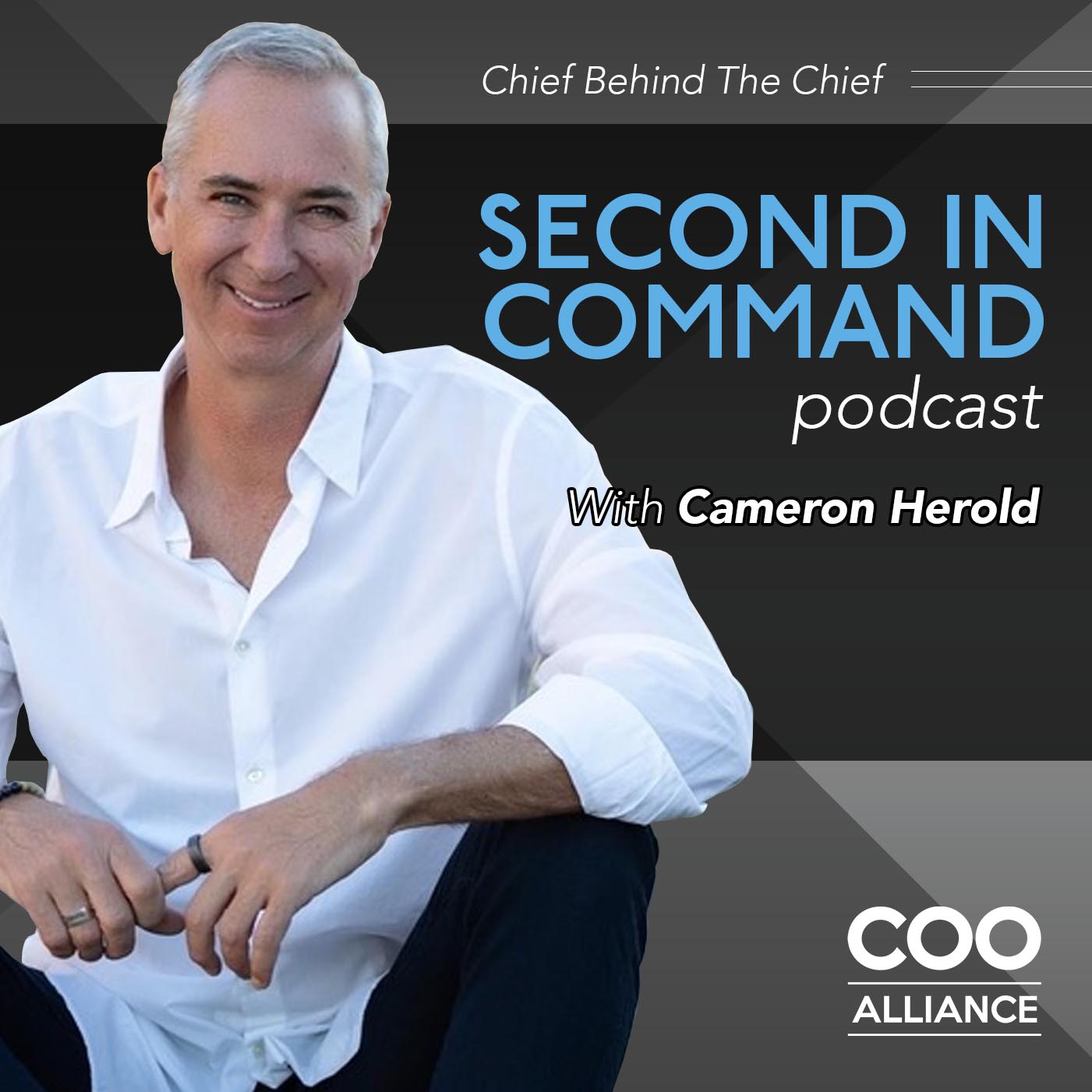
Second in Command: The Chief Behind the Chief with Cameron Herold
Ep. 529 - FAN FAVORITE | Tom Keiser – The Powerful Execution Rhythm That Transformed Zendesk
00:46:21
Loading summary
Transcript78 lines
- [00:00]
Cameron Herald
Just a quick note before we dive in. This is actually one of our older episodes, but we're bringing it back because it's one of the most downloaded ones we've ever released. Clearly it struck a chord with a lot of listeners and I know there's so much value packed inside. So whether you're hearing it for the first time or revisiting it, Enjoy this.
- [00:16]
Tom Kaiser
Fan Favorite A lot of my time is spent with our leaders on the now if we have things we need to deal with immediately, but then also talking about and getting clear on where we need to be 6 months and 12 months out so that we're putting those capabilities in place. So it's a lot of meeting with direct reports and with teams to just make sure that they're as clear and as working on the right priorities as much as possible. Welcome to the Second in Command Podcast, produced by the COO alliance and brought to you by its founder, Cameron Herald. In the second in command podcast, we talk to top COOs who share the insights, strategies and tactics that made him the Chief behind the Chief. And now here's your host, Cameron Herold.
- [01:12]
Cameron Herald
Tom Kaiser is the Chief Operations Officer at Zendesk. Tom is a business and technology leader with over 25 years of global technology and business experience with a focus on retail and E commerce. He oversees IT security and compliance, enterprise data and analytics, and more. Tom has a track record of being a problem solver, delivering improved business results and strengthening operations. Previously, Tom was the Chief Information Officer at L Brands, a fashion retail company that includes Victoria's Secret and Bath and Body Works. Tom, welcome to the Seconding Fan podcast.
- [01:49]
Tom Kaiser
Thank you. Delighted to be here.
- [01:51]
Cameron Herald
Yeah, I'm looking forward to this. You get to work with Victoria's Secret. I mean that's like a natural ghost. Not just because of the pretty girls but like what a. What an amazing. How long were you with that, that group of companies?
- [02:04]
Tom Kaiser
I I started there as a consultant in 2002. I was working for at the time, it was Captain Gemini, Ernst and Young. Captain Gemini had bought the Ernst and Young's management consulting and I went in to straighten out a project that had gone gone south there. So I consulted there for two years and at the end of that two years I was asked to help put a strategy together for what they should be doing around business and technology and ended up stepping across the line and joining them to run that. So then I was with them for another six and a half years after that.
- [02:34]
Cameron Herald
So is that when they got into E Commerce?
- [02:36]
Tom Kaiser
Then the E Commerce had Already started. They were, it was still. They were still halfway in between the catalog business, which is really the. That where Victoria's Secret initiated from. And that was that mail order business was, was a big part of their business. And the E commerce business had, had started, but they were still on equal footing. But it was when E commerce was starting to significantly outpace and outgrow the catalog business.
- [03:00]
Cameron Herald
Interesting. Now, when you, when you got into the operations side of the business, did you have a tech background? Did you. Did you kind of start off in technology and then move into operations, or did you start in operations and have to dive into it?
- [03:12]
Tom Kaiser
Yeah. So my education was, it was called system science. It's effectively computer science. So I was an assembler and COBOL programmer for the first handful of years in my career. So I definitely started from a technology mindset. I grew up in management consulting. So I did five years of hardcore programming in telecom billing and then moved into management consulting. And so that allowed me to balance out the technology and solving business problems with technology. And that kind of led me into CIO roles. And the CIO roles I was in, I still approached it from a management consulting mindset, which was trying to solve business problems with technology and not falling too deeply into just relying on technology and technology speak. And the CIO role is a great role if you're interested in operations and making things work better, because you touch every part of a business. And if you're paying attention and you're asking questions and you're working with business leaders, you can see what's working and not working. And so each of the CIO roles that I had, that was always part of where my focus was. And I always had an aspiration to be more operationally responsible than just running the technology in retail. Just running the technology, though, was really every aspect of the business. The stores, the E commerce, the supply chains, and all of the back office functions. But I had an aspiration for something more that I would always pull on with my various bosses and leaders. And ultimately that's how I ended up in this spot.
- [04:53]
Cameron Herald
So I want to ask you a little bit about the IT and the technology side and really how do we get IT departments to interface better with the rest of the operational side of the business where we don't really understand it as well as, as well as the IT group does. And maybe it's a little bit different in the Bay Area with some of the hardcore technology companies, but for the most part, most businesses out there, you know, are just normal companies and. And IT is almost this, this group that we just can't speak the language, we don't understand it. So I'd love to hear your thoughts on how do we work better there. But before you dive into that, can you tell us a little bit about what Zendesk does? Yeah.
- [05:28]
Tom Kaiser
Zendesk is a cloud based SaaS based customer experience software. So we're almost 12 year old company started off with just a pure customer service ticketing solution and have evolved over the last 12 years into a full platform of CRM and customer communication and customer experience solutions. We're up over 130,000 customers now globally. We're in I think over 160 countries with customers. We're on a trajectory to cross over a billion dollars in annual revenue in 2020 and growing 30 to 40% really every quarter. So a fast growing SaaS software company focused on customer experience. Okay, perfect.
- [06:19]
Cameron Herald
So I knew what that was. But there's a couple listeners out there that are like, which is amazing. I still haven't heard of it.
- [06:25]
Tom Kaiser
Right, yeah.
- [06:26]
Cameron Herald
So talk about then. How do we get the IT groups to talk with operations? How do you get the groups to talk and understand each other better?
- [06:36]
Tom Kaiser
Yeah, I think you know, some of that is you still see in traditional companies that are running older software and that have traditional structures. The migration that my personal transition from big traditional retailers into a modern software company has been quite eye opening for me. And by that I mean we run this entire business on only SaaS. We have no on prem software. And by running and architecting for SaaS solutions that means that the business is frequently leading and making the decisions around the technology that they want. And you know, over, over time we're balancing that out but it means that there's a much more equal footing and play in standing between the business and IT to make the technology decisions. And they're, the decisions that are being made are less risky than the decisions we were making five and 10 years ago where you were making the decision that was like a 10 plus year, you know, SAP decision or Oracle decision. Now you're making decisions in 12 or 24 months and if you get it wrong, if it's not the right solution, then you change it out and the business and IT can actively work on that. And we're seeing, you know, we sell SaaS software, we're frequently a modern technology solution and rapper over some really old systems. And when they get, when companies get that modern solution and the business and the technology organization can be on equal footing around that selection, it leads to A much better and healthier outcome on things. So I think it's happening through modern technology and through really good CIOs who have a business orientation. I've worked for my last three jobs, have been reporting to CEOs. CEOs want a technology partner that is a business partner that can help them navigate the complexity, but not have to get into the complexity and is really focused on solving their business problems. And there's lots of CIOs out there that are doing that and driving that down into their organization to kind of get past that kind of that old movie that has existed, not that wall between the IT department and the rest of the company.
- [08:55]
Cameron Herald
That makes sense. What do you focus on day to day for yourself and your role then as cio? What do you focus on?
- [09:02]
Tom Kaiser
So I came in here into Zendesk as cio. So a little almost three years ago, I came in as our cio. And Zendesk was a little different than the previous roles in that it was very fast growing, small company. And so part of what I needed to put in place here was to make sure that we had the right application systems and processes to support the scale. And we had done a whole series of things while we were growing that made sense, but were those the right solutions to take us to a billion and to $2 billion? And so really trying to bring that thinking into the scaling of the business. We also had many undefined processes. We were very scrappy. And so there was a lot of work to to put processes in place. And there still is, quite frankly, a lot of work to be done there. We needed a more robust set of analytics for business decision making. We had scrappy analytics teams spread around the business. But we needed a version of the truth that we were all working on. So really building up a data and analytics team that was taking advantage of all of this data that we had and bringing it together into a meaningful set of decision making metrics around that. The job here was much less. You know, in retail. My days always started with an operational meeting where we talked about everything that was broken all over the world and, you know, how critical were those things and what we needed to communicate. Coming into the Zendesk world, Into the all SaaS, no on prem software, no data centers, there's no operational meeting. Things are either up or down, but things in general just work. And so it really is about prioritization and making sure that we've got people focused on the most important priorities. There's a longer list of things that we can't do than we can. And so making sure that we're working on the right things and that we've got good open channels of communication between the business and the IT organization.
- [10:58]
Cameron Herald
How do you, how do you make sure that people are focused on the right areas? How do you make sure the prioritization is correct?
- [11:04]
Tom Kaiser
So one of the things that we did here, we had a PMO organization that was primarily on the product side. We're very much a product led business. So in our product management and our engineering organization, we had a PMO organization over there and we stretched that organization out. So we began staffing PMO talented individuals across our different first across it, across our analytics, and then across our business functions. And we have, we do two things here. One is we're on a six month goal setting which is really prioritization at the top of the company that flows all the way through. And then we're on quarterly prioritization and really a top five prioritization across every function in the company as well. And then we track all of that and keep that visible to, to, to our management. And that forces the conversation of are these really the right, top five? Do these priorities fit within the goals that we've set for ourselves in the next six months of what we want to accomplish? That's great.
- [12:05]
Cameron Herald
How do you, how do you keep the visibility up? Is it a dashboard that you're using? Is it reporting? Is it just communication?
- [12:12]
Tom Kaiser
Yeah. So one of the things I brought from retail that I learned at L Brands was, you know, you run your business on a weekly basis and Monday you read the business and Tuesday you make decisions. And in retail speak, that means that those decisions are about where you're putting inventory, what you're pricing, what promotions you're doing for a specific week. In our business, it's, how do we put health measures in place across every aspect of the business so that we can react to them. So when I stepped into the CEO role a year and a half ago, we instituted this weekly process. So on Monday afternoons we look at really every health measure in the business. We have a one hour meeting, we have representations from every function across the business. And we look at the health measures, we continue to refine those. Most of those are scorecarded and they're in the analytics engine that we continue to build out. And then from that there are usually key messages, something's falling behind. Recruiting is a huge deal for us. We're adding roughly 100 people a month here. And so we've got to have the people to fuel this growth. So we watch, we watch that, we look at our reliability of our product. We have big initiatives around product and that are cross functional that we look at the status against. And on Tuesday morning we have our C staff, our executive team meets and we bring into that meeting really the key messages that came out of the weekly operational and it's got to focus on what are we going to deal with. Big part of the CEO role is dealing, identifying and dealing and making sure that the right, right people are dealing and not everybody is trying to deal.
- [13:49]
Cameron Herald
With solving the problem and not just talking about it.
- [13:52]
Tom Kaiser
Yeah, absolutely.
- [13:53]
Cameron Herald
So you mentioned some of the, some of the health measures. Give us an example of a specific kind of health measure that you were watching, that you saw it was kind of outside of a band of acceptability and then what maybe actions you took as a company off that.
- [14:07]
Tom Kaiser
You know, we, we continue to go lower and lower into our measures and we break out, you know, we break our business. We're a publicly traded company. We break our business out in the quarters. We track our, our marketing pipeline and opportunities and our sales against a weekly and a daily set of goals. And so we can see globally and down to specific markets where business is going well or not. We've had some soft spots and I won't say which parts of our business but specific countries and specific bands of customers soft spots where we've turn that into action plans, marketing related action plans, sales related action plans and then watch that turn over subsequent weeks. We, we can react relatively quickly and, and turn things where there's an execution issue or where something is, has been missed. Sometimes you can't do that. But we've been able to watch ourselves turn and turn things from red back to yellow and then to green by taking action based off what we see happening.
- [15:12]
Cameron Herald
I had a mentor years ago. It was being groomed as the COO at Starbucks and one of the mantras at Starbucks was grow big, act small. Yeah, they wanted to kind of become this big brand but they didn't want to get corporate and bureaucratic.
- [15:23]
Tom Kaiser
Yeah.
- [15:23]
Cameron Herald
Curious. How have you at Zendesk, how have you kind of orbited that hairball and not become corporate? What things have you done or systems have you put in place to stay scrappy and stay entrepreneurial and not get all bureaucratic and bogged down?
- [15:38]
Tom Kaiser
Yeah, it's a, it's a really, it's a tough one. You know, we, we still have, you know, our founders still run the business and we're so, we're still the, we still have the mindset of a small scrappy startup in many parts of our business as we grow and scale the business. And it comes up a lot as part, you know, part of our, our culture is it's a very open and transparent culture and we do a lot of open Q and A. And it comes up a lot that people are concerned that we are, you know, we're putting too much bureaucracy in place. So one of the things that, that, that I've, I've focused on is around just agility and agility from the standpoint of not just agile development and organizing for, for agility, but really making sure that we think about our processes that we're putting in place for scale, our systems that we're putting in place for scale, that we're building them in a way that we can still have the flexibility to adjust our business model. Because my previous worlds, you know, we implemented these giant, ornate, you know, end to end sets of processes that made tremendous sense at the time five years and 10 years ago, drove out tons of costs, improved quality in all kinds of different ways. But those systems and processes are now, they're boat anchors around retailers that need the flexibility to be able to adjust very quickly to competitors, to different business models, to disruptors. And so how do we make sure that we build our processes and our systems with the flexibility to be able to adjust? Which means that we may not be able to be building the most perfectly efficient set of processes, but we're trying to build and measure speed in there. We haven't quite figured that out yet, but I bust that story out regularly as we're things to make sure that that's front and center. And we've built an agility set of kind of leadership competencies as we look at our leadership development to make sure that agility is a core competency that is a part of every level of our leadership as well.
- [17:40]
Cameron Herald
How about on the employee engagement side? What do you do as a company to first, to measure employee engagement and second, just to kind of turn yourself into that company for great talent. Especially you know, in the technology sector where you're competing against the best of the best and you're in that group. How do you, how do you build out that great culture? What are you guys doing that's different?
- [17:59]
Tom Kaiser
Yeah, it really, it's, and I've seen this in multiple companies, the cultures are really set early in a company's life cycle and we're fortunate. You know, our company was founded by, by three Danes in Copenhagen and they, they spent time on not just on the product that they were trying to put together, but on the design aesthetic and the culture they wanted around the product and the culture of the company early on. That's kind of still ingrained in us. And you know, it is, it is very much. We have a word that they originated called humbled. It which is who are very competent and confident but humble employees. And we definitely use that filter as we look at bringing people on. And we practice many things to keep ourselves humble as we, as we go through the building of this, this, this company. But it starts with that. I think it's very hard to change a culture. You can see some companies change bits and pieces, but it's hard to change the core of who you are once the, the company has started. And I think we started with really good roots. So we very much differentiate ourselves from our, our competitors up and down the streets here in San Francisco own that culture. People know that Zendesk is a special place. We've got the secret sauce of a great product, we've got the secret sauce of a great design esthetic, but we've also got the secret sauce of great people and a great culture that cares. And it's all about getting the work done.
- [19:36]
Cameron Herald
How do you say no to employees into projects without crushing their spirit?
- [19:42]
Tom Kaiser
Yeah, that's a tough one. I mean we, we have to work in a relatively fast and confined space. That's where, you know, having prioritization frameworks that everyone agrees to and that is, are consistently practiced helps with that. But there's no way, I mean, people care tremendously about our products and what we're doing. They care what our customers need. We're very much a horizontal product in that we're not verticalized at all. So our product was built as a free try and buy product, you know, 12 years ago. And it's grown from that. We still approach from the mindset of everyone should have access to these capabilities that we've built. So our customer base is from, you know, a five person mom and pop shop that is doing something around customer experience up to some of the largest companies in the world, still the same base of, of software. And that means we have tremendous customer request coming in at us all the time as well. And we try to just be, be fair and consistent, have a framework, make the decisions and move on.
- [20:58]
Cameron Herald
Hey, it's Cameron Herald, your high energy leadership guru here to pump you up on the Second In Command podcast. If you get frustrated because your managers aren't leading like you want them to be, check out my game changing leadership course@investinyourleaders.com that's investinyourleaders.com for just 347 per leader you get 30 years. My proven experience straight from taking 1,800 got junk from 2 million to 106 million as COO. And it's packed with 12 easy modules, level learn, situational leadership coaching, delegation, conflict management and more all in under 6 hours. @investinyourleaders.com with straight to the point videos, worksheets and real life scenarios, your team will master time management, be able to hire a players and get aligned with your vision. It's all backed by a 30 day money back guarantee and raved about by hundreds of CEOs and thousands of managers already learning from the content. Grab this now and watch your business soar.
- [21:59]
Tom Kaiser
Crushes people. There's no, no way around that too.
- [22:04]
Cameron Herald
What's that?
- [22:04]
Tom Kaiser
Including me. I mean I get disappointed and you know, and sometimes it gets said no to as well. Yeah.
- [22:10]
Cameron Herald
Now how do you manage the customer side of the business when your entire business is around the customer? How do you, how do you manage around that? Well, really high expectations from them.
- [22:23]
Tom Kaiser
Yes. And from us quite frankly. So we have a customer support organization, we call it customer advocacy of about 300 people in three primary locations and then some smaller locations around the world. That is they're leveraging our Zendesk products to provide support to our, our customer base around the world. We just hired our first chief customer officer, she just started last week from, from Microsoft and we'll be continuing to build out and more strongly represent to our customers and quite frankly back to our C staff and our organization what our customers want and need. We have a customer success organization that we've been building out over the last couple of years to really build an account management structure to better take care of our customers, larger customers that are, that are growing with us. So we're, we're highly critical of ourselves and we, we go through somewhat of a reinvention of our customer experience most every year. You know, pushed from the top and push from all of us that want to make sure that we're the best representation of our own product and what we're out espousing is best practices to be doing.
- [23:39]
Cameron Herald
So I was at an event a couple years ago and I was listening to one of the experts who was there and he was talking about customer engagement. He said the only reason we have customer service departments in the first place is on one of four reasons. Either our product sucks, our service sucks, we Overset expectations for the customer or we have really poor FAQs on our website. I'm curious from, from your perspective, what we can all kind of, what we can either learn from that statement or what we can also learn from your experience is having kind of been in that customer engagement world for so long, where can we, as just normal average companies, improve?
- [24:15]
Tom Kaiser
Yeah, there's truth in what you just quoted, but you can turn that into a more positive set of things as well. The reality is if your customer is contacting you, they have some question or some problem that they need resolved. And so what we talk about is answer their question and honestly do what you say you're going to do. So whatever they're looking for, respond to them. But the more importantly is use the data that you have, which most companies have quite a bit of data about their customers. And if they're coming through a mobile device or a website, you know where they are on the website, you know what they're looking at. You've got their purchase history. Get ahead of your customer and answer their questions before they have to contact you. And make the experience when they contact you super easy. So we've been pushing on this concept through our product of Omnichannel. Doesn't mean that, you know, they can contact you on the phone or email or text or you know, through a messenger service. It means they can do all of those things, but it's one continuous conversation across those so that you're not having to re authenticate each and every time and drive your customer Bongo. That's interesting that whoever is looking at that customer, whatever machine learning is working against their, their data. It's that one consistent conversation. So it's, it's, you know, we all experience good customer service. We all experience occasionally great customer service. And when we experience great, it just raises our expectations of what we expect and we know what great is and it's, how do you bring that into what you're providing to your, your customers? And the technology is there for the most part. It's a, it's a matter of will and being willing to. A lot of traditional companies have treated their customer service like a cost center. To the point the kind of the quote. But like how do we make this as cost efficient as possible? Which is part of it, but it's a small part of it. The big disruptor companies in the world that have exploded in the last five, six, seven years have put the customer at the center. They're still thinking about doing it as cost effectively as possible. But they want the best customer experience. And so they're bringing that data thoughts holistically.
- [26:33]
Cameron Herald
Yeah. They're trying to wow the customer, trying to understand and learn from the customer. And then as you said, they're trying to get ahead of the customer as well, which is huge. I have a client over in Germany and They've got about 6,000 clients and they're saying that their customer service team spends 90% of their time answering the same questions. I'm like, well, it seems pretty simple, like kind of explain it in advance so they don't have the same questions. It was like this big kind of flash the obvious for them.
- [26:59]
Tom Kaiser
Machine learning is a real thing now. It's not just a concept and those kinds of things. And we have a whole set of solutions that it's under our Help center, we have a product called Guide that is a content management process that has machine learning built into it. And it's here and thousands and thousands of companies are using it and getting after exactly what you're talking about.
- [27:21]
Cameron Herald
Is that where the AI is starting to come in then?
- [27:23]
Tom Kaiser
Yeah, yeah. And it's coming in on both sides. It's, it's what the questions customers are asking. It's serving up the most likely answers to their question and getting validation. So it gets better and better. But it's also serving up what content you're missing on your, your in your, your Help center products to help direct the content that needs to be built. That could answer those questions as well. Because our customers are frequently the disruptor companies and they want their customers fully engaged in whatever service they're providing. So if they're a gaming company, they don't want the gamer coming out of the game. They want the gamer to be able to ask their questions or raise their issue while they're playing the game and to continue to play the game. And they want as much speed and automation into those responses as possible. And they want their customer service reps to, to continue to provide and have deeper and deeper skills and just keep automating away all of the simple questions so that it's really a very, very rich, deep set of content that they're providing support for.
- [28:30]
Cameron Herald
Like, these are, these are technology tools that if a company A puts this in place, by the time company B figures it out, it's game over.
- [28:39]
Tom Kaiser
Could be, yeah. Well, I mean, if you, if you think about the unicorns that have taken off, I mean, for the most part, we're right in the middle of all of them. And it's usually something to do with it's your phone, it's an app and then it's an experience and it's a disruptive experience with the customer right in the middle of it. You think of Uber or Lyft or Airbnb, any of those gaming companies, any of the food delivery companies around the world, we're in the middle of all of those. They're disrupting industries but with the customer right at the center and just building off of the technologies and building a better and better experience and continuing to push and raise the bar on everybody else. That's pretty extraordinary.
- [29:22]
Cameron Herald
So what do you focus on day to day? What's your kind of core or you know, folks, over a course of a week, where are you spending your time?
- [29:30]
Tom Kaiser
So my responsibilities from when I stepped out of the CIO role into the COO role, it was an and role. So I kept responsibility for all the things I was responsible for as a cio. I backfilled myself with a CIO and then added all of our go to market functions, so added our sales and all of our post sales sets of activities and then we created a biz ops and kind of an operational organization. And it's really all about scaling. So we're on a growth trajectory that's pretty extraordinary. And it requires a whole lot of moving parts to be able to come together and deliver on those quarterly numbers while we're building the foundation for where we want to be in 6 months and 12 months and 18 months. So a lot of my time is spent with our leaders on the now if we have things we need to deal with immediately, but then also talking about and getting clear on where we need to be 6 months and 12 months out so that we're putting those capabilities in place. So it's a lot of of meeting with direct reports and with teams to just make sure that there is clear and as working on the right priorities as much as possible and then having a cadence to the way updates take place from the Monday operational meetings to the Tuesday C staff to the Wednesday go to market leadership meetings and COO organization meetings to make sure that everyone is, is clear on what the, the, the message and the, the direction is along the way and to answer questions.
- [31:11]
Cameron Herald
I like that you have that cadence built in as well. I mean companies need to have those meeting rhythms in place and then build everything else around it, right?
- [31:18]
Tom Kaiser
Yeah, absolutely. And then the, the other part of the, the job which is really, I mean it's the most educational part for me is I spend a lot of time with customers and with prospects. So we have a whole series of things that we do around the world, talking to customers and kind of bringing Silicon Valley and the approach that we have to customer experience. So I speak at a lot of those events. I speak at a lot of CIO events. The CIOs around how to leverage modern technology. And then I spend time with customers, especially if a customer has a CIO or a CTO involved in their decision making that they're trying to work their way through. So I get to, I probably meet with maybe 10 customers a week, launched an executive briefing center. Sometimes it's escalations of things that have gone awry, you know, that I have to take it on the nose sometimes as well. But frequently it's helping them think through what they're trying to do and where they're trying to go and how to leverage us. And, you know, I also make our technology stack and how we think about running our business very open to companies as well, which is of interest, especially for traditional companies as they try to sort out how to step in the modern technology. It's interesting.
- [32:36]
Cameron Herald
Where do you think that the average company, a small to medium enterprise, can learn from the bigger companies? What are the bigger companies doing well, or what are you doing well at Zendesk that the smaller to medium size, like a 50 to 500 person company can learn from?
- [32:48]
Tom Kaiser
Yeah, I think, you know, if you look at Zendesk, in just the three years I've been here, when I arrived, it was, I mean, it was full of brilliant people. We'd done a great job of building out and recruiting a lot of really brilliant people. But we were relearning a lot of things. Some things need to be disrupted, but some things you need experience in. And so over those three years, we've really tried to balance kind of the youth movement and the athletes that come with that with bringing in experience that have gone through some of the things we're about to go through so that we can apply those learnings more quickly to keep advancing the company. And I think that trying to get that right balance while embracing the culture and with what we're trying to do is a challenge. But I think we've done a pretty good job at it. Our leadership team, I think we could compete with almost any company you can name out there for horsepower and throughput and kind of mental acumen. It's a really strong leadership team, a mixture of deep experience and a lot of agility and speed.
- [34:02]
Cameron Herald
How about yourself? If you think about your career and growth as A leader as a coo, what have you really had to work at over the years to improve on?
- [34:11]
Tom Kaiser
It's endless. I had, you know, with every job there's a significant amount of discomfort that goes into it and that kind of fuels you. The discomfort I had coming into a more modern tech company was. I was really out of my depth from a business standpoint. I bought a lot of software in my career, but I had never worked in a software company before. I had experience with some of the modern tech, but I didn't have experience with anything like what we were doing or what we were building. I had responsibility for IT support desk and some forms of customer support desk, but nothing like what we are selling here. So I had to go through a fairly long and detailed learning of product, of technology, of mindset, you know, full of embarrassing moments and missteps along, along the way. But I think, you know, uh, for me, you know, I, I came In, I was 50 years old when I joined Zendesk and I, I had, I think embracing and stepping into new and super uncomfortable areas. Having confidence on the experiences that you've had and the successes you've had, but also being completely vulnerable and stepping into something uncomfortable and challenging yourself is, it's rejuvenating, right? From.
- [35:36]
Cameron Herald
How do you balance that vulnerability as a leader with also having your team not lose confidence in you?
- [35:41]
Tom Kaiser
Yeah, it's a tough one. I mean, you gotta be in it with them. We have a good culture here. We have a very strong culture. So it is one that has kind of a positive bend instead of expectations. But yeah, there's certainly a degree of cynicism you can feel, especially from engineering departments that are, you know, working on technology that you're, you're not familiar with and you're bringing in a perspective that is, is, is dated. I treat it as, as learning opportunities and I don't, I don't take it, take it personally. And I think you, you prove your, your worth over time, especially as a leader by, by being there with the team, by making decisions, by representing the team and getting them through whatever dark spots that they're in to a successful place and building trust about yourself right now.
- [36:36]
Cameron Herald
What are you working on currently as a leader for yourself? Where are you trying to grow?
- [36:41]
Tom Kaiser
I've had to get comfortable out front of the company, representing the company. We have founders that have very clear and strong points of view, which is extraordinary. But I have to do that as well. And I've had to, it's not something I've had to do. Before. So I've had to get comfortable with that. I've had to learn to scale and scale myself really out of a lot of the details that make me more comfortable, knowing and trust that the things are happening and then drop in at the right times to be able to ask the questions. But as we grow this company toward a multi billion dollar company, I get further away from the details. I spend time with customers, which keeps me in the details, but I get further away from the details and I like detail.
- [37:31]
Cameron Herald
So how do you know when to trust and when to drop in? And then how do you ensure that if you're moving away from that, that those details are still being taken care of?
- [37:41]
Tom Kaiser
That's where the cadence is important. So I prioritize that Monday operational meeting and try not to miss it. Even if I'm on a plane, I'm trying to listen in, to stay connected to what's going on in that meeting and then in the subsequent meetings that we have during the week to make sure that I'm not missing things. People also know to escalate to me if things are going awry or if something feels wrong or off. So I have frequent drop ins if something is happening there. And then I have a very demanding founder that I work for that is constantly not just asking questions about what's going on now, but asking questions about the future, about things that, you know, perhaps I have not thought of yet that are challenging as well.
- [38:26]
Cameron Herald
You know, what is a founder who, you know, has built such a large company? What do they do now?
- [38:32]
Tom Kaiser
Well, I mean we, we want to be a multibillion dollar, you know, full, really modern CRM platform and whatever that's really going to, to mean. So part of it is setting that vision and pushing us all toward that and pushing us past what we can see into something that is, that is better. So our founder, as the company has grown, has done something which is really difficult for most people to do, which is turn loose of some things. So that was when we agreed to create the COO role. He was turning loose of the sales organization and it was turning loose of the post sales organizations and allowing us to consolidate those and really build out a go to market function where while he still meets with those leaders and gets updates, he's spending his time more on the messaging and the product direction and the brand as we grow the brand, which is, in hindsight it seems really natural and easy to do. But the reality is for anyone who's had to turn loose of things, especially something that they've Built from nothing is a very difficult thing to go through and to do. And we've done it relatively well. Yeah.
- [39:47]
Cameron Herald
How would the whole business landscape right now, Is there anything that you see changing in the business world that we have to be more aware of or adapt to? Is there anything that you see that companies are getting. Get blindsided with? They're not careful?
- [39:59]
Tom Kaiser
I mean, everyone right now has backup plans for if our economy slows down. There's a lot of risk in our economy between Brexit and between the kind of the dice, the slides left and right that are going on in the United States, some of the other governmental things that are happening around the world and very important countries to us. So you've got to have a more conservative plan to go along with your aggressive growth, growth plans. I think the evolution of technology is both exciting, but it creates risk for everyone. So we are all in on the public cloud, we're all in on open source, which is creates a tremendous opportunity for us to collaborate with all kinds of great technology companies out there. But every iteration, every time you go to an AWS event and you see all of the new tools that they are launching, you see how fast competitors can enter into a space to compete with you. There's just so much available every year and more available that you have to stay on top of. And then the new technologies, you know, 5G is going to create all kinds of interesting and challenging business models. As that becomes we a clear line of sight of what our mobile phones are really going to be able to do here in the next few years. All of the different scrutiny and issues that are around data and privacy that have come up have an impact on really all enterprise software companies, but really any kind of company that's providing a set of services that has customer information in IT and that, you know, the EU passed their set of rules that kind of raised the game. And now we're seeing individual countries, individual states here in the US starting to pass their own laws. And it adds a degree of complexity for, especially for entities that are, you know, that are SaaS and horizontal that we have to stay on top of as well. So there's no shortage of risk and challenges.
- [42:01]
Cameron Herald
What's 5G going to do for us?
- [42:05]
Tom Kaiser
Well, I mean, it's going to, I mean, effectively open up really everything that you can do with a hard wire connected to your laptop onto your phone. So, I mean, it means every form of video service imaginable and machine learning. You'll be able to embed all kinds of things into Your phone. So what is it going to mean? I think it's to be determined. But each iteration of more bandwidth going to these phones and introduces another, you know, round of creative and disruptive thinking around what you can do with the phones. Like the things we can do today were unimaginable three or four years ago and we're going to go through another one of those unimaginable events.
- [42:45]
Cameron Herald
That's crazy. I remember, I remember getting my first computer was in 8086 back in 30 years ago now and having to export a Lotus 1, 2, 3 spreadsheet and then convert it using another software program called Sideways to print it out in landscape mode. And now I'm like printing from my phone and whatever. Last question I've got related to just your team. And then I want to wrap with a final question, but is there anything that you're working on cognizantly with your leadership team and trying to grow them?
- [43:15]
Tom Kaiser
Yeah, I mean we, we've, you know, as we're, we're a fast growing company and so we, but still relatively small. So we haven't had the traditional, you know, leadership development functions that like I had in my previous retailers or in consulting. So this past year we hired our first chief people officer and she joined us last spring. And so we're working our way into a competency model and a leadership development model that we're rolling out across our leaders. And it is all about building whole leaders as opposed to, you know, when you're in startup mode and you're fast growing, you want the best athletes and you keep them in the silo and you keep feeding them and make them run as fast as possible as opposed to when we go out and recruit leaders, we're looking for leaders with a broad set of experiences and the recognition is we're not building those and we need to be thinking about our leaders more cross, functionally, more holistically to make sure that we've got great session plans and that we've got the horsepower to grow to the multibillion dollar company that we aspire to.
- [44:19]
Cameron Herald
Yeah, that's going to be your bench for sure. Yeah. Final question. If you were your 21 year old self, Tom Kaiser, and you were giving yourself some advice because what, what advice would you give yourself back then that you know, now you know to be true, but you wish you'd known earlier.
- [44:33]
Tom Kaiser
That it's all going to be okay? You know, I came out of, I started working when I was really young. I didn't grow up with much and you know, and anxiety and, and the fear of where my next meal is going to come from, you know, has always fueled me. I've always, every job I've been in, I've always thought, you know, I'm going to be fired at any moment, so I have to do the best possible job. And, you know, that was a lot of wasted cycles. There's a lot of good that comes out of that. There's a lot of wasted cycles. But I think my mindset was to get as much experience and as broad a range of experience as possible that led me on my career path. I think I would reassure myself that is the right thing to do.
- [45:19]
Cameron Herald
It's great. It's interesting. I was Talking to my 17 year old last night about it. He's getting ready to go off to university and he's worried about all kinds of stuff that you normally worry about when you're that age. I'm like, it's gonna be fine. Like, it's all gonna work out. But hard to know that when you're that age still, right?
- [45:32]
Tom Kaiser
Absolutely. Absolutely.
- [45:34]
Cameron Herald
Tom Kaiser, the chief operating officer from Zendesk, thank you so much for sharing with us today. Really appreciate all the time.
- [45:40]
Tom Kaiser
Okay, thank you so much. I enjoyed it.
- [45:42]
Cameron Herald
Thank you.
- [45:45]
Tom Kaiser
You've been listening to Second in Command, brought to you by COO alliance founder Cameron Herald. If you enjoyed this episode, please be sure to like, share and subscribe to us on Apple Podcasts, Spotify and our other podcast streaming platforms. For more best practices from industry leading COOs, visit COOAlliance.com. Sam.