← Second in Command: The Chief Behind the Chief with Cameron Herold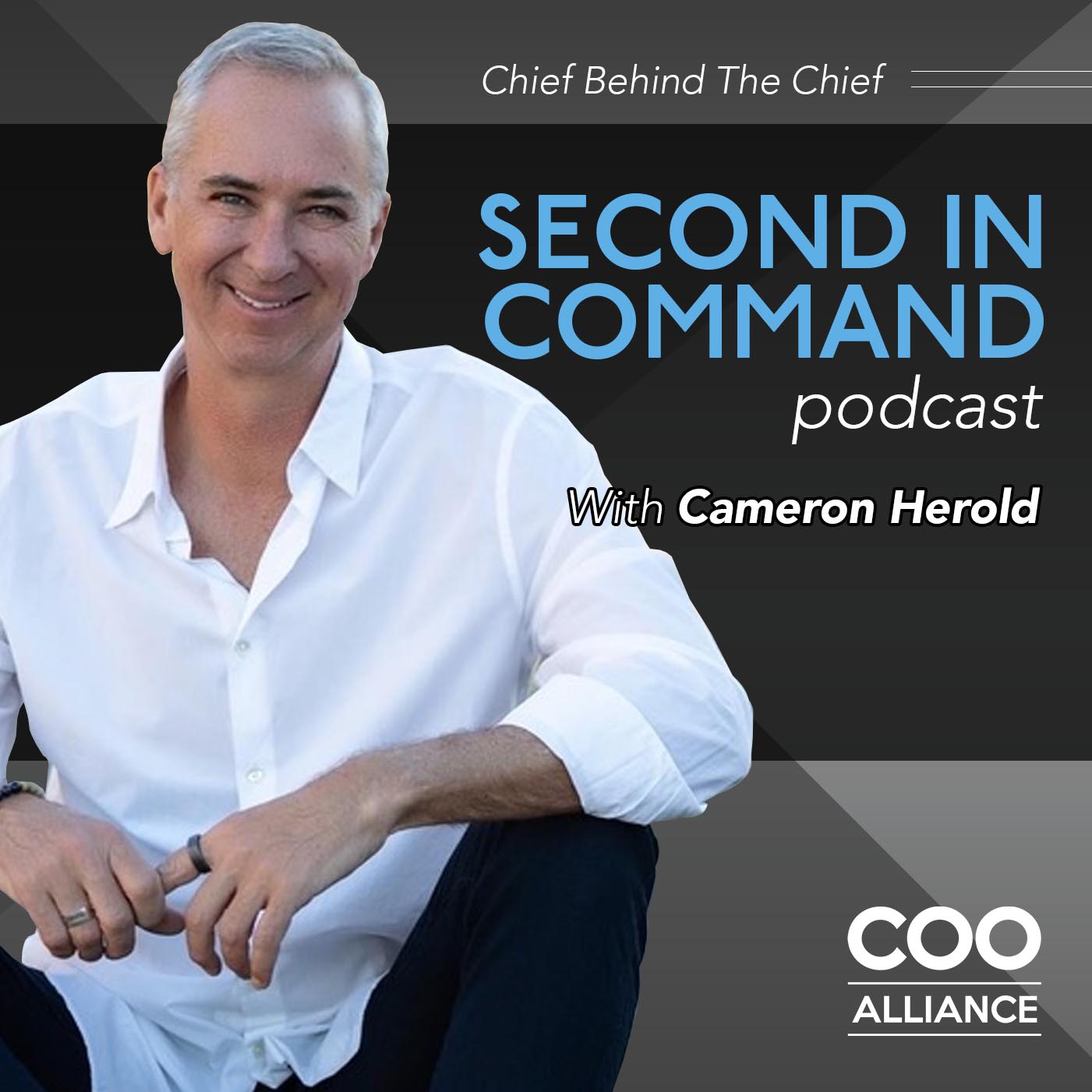
Second in Command: The Chief Behind the Chief with Cameron Herold
Ep. 531 - Watters International Realty COO, Aldo Siciliano – How EOS Drives Remarkable Calm in Rapid Growth
00:43:43
Loading summary
Transcript68 lines
- [00:00]
A
EOS is short for entrepreneurial Operating System and it was created, I want to say, in the late 90s to 2000s. There are a couple of fundamental ideas that drive it and it's one that it creates a cadence of tracking, meeting and problem solving for the leadership team inside of a company. But it also has a big emphasis on the relationship between what's called the visionary in the company and the integrator.
- [00:34]
B
Welcome to the Second in Command podcast produced by the COO alliance and brought to you by its founder, Cameron Herold. In the second in command podcast, we talk to top COOs who share the insights, strategies and tactics that made them the chief behind the chief. And now here's your co host, former COO of a multi eight figure remote company and alumni member of the COO Alliance, Savannah Brewer.
- [01:08]
C
Our guest today is Aldo Siciliano, COO and President of Waters International Realty. Aldo brings an amazing combination of data driven strategy and people first leadership to this role, helping the company scale while maintaining a strong culture of accountability and service. On today's episode, we dive into why Aldo and his team use eos to drive clarity and alignment, how they maintain accountability without sacrificing empathy and the art of attitude management in high performing teams. We also explore how to know when to adopt new tools versus keeping systems simple. And Aldo shares his insights on hiring the right people to build a culture that lasts. If you're a CEO looking to strengthen your team, streamline operations and lead with both results and heart, and this conversation is packed with actionable takeaways you won't want to miss. We are live with Aldo. Welcome to the show.
- [02:03]
A
Hi, I'm glad to be here.
- [02:05]
C
Absolutely. Well, let's go ahead and start off. Give us a little bit of an insight into Waters International Realty. What do you do and who do you serve?
- [02:14]
A
So we're a multi market real estate brokerage focused on the residential side and focused also on the state of Texas. So we've got offices currently in Austin, San Antonio, Dallas, Fort Worth. The latest one is Colleen Temple, Waco. And my, my role is obviously the CEO of Waters. And we generally serve all kinds of clients in all these markets who are looking to sell their homes and of course also purchase homes and. Yeah, I mean, that's roughly it.
- [02:51]
C
Awesome. And where are you located?
- [02:53]
A
I'm based out of Austin.
- [02:55]
C
Oh, you are? Okay, so we're both Austinites. Yes, yes. Okay.
- [02:59]
A
I'm a recent. I'm a recent transplant, but yes.
- [03:01]
C
Where did you move from previously?
- [03:04]
A
I lived in Houston but spent most of my life in Montreal.
- [03:07]
C
Oh, nice. Okay. I haven't been to Montreal, but I'm here. It's great here. Houston, on the other hand, I've been to a couple times and I would certainly say that Austin takes the cake for me at least.
- [03:20]
A
I do prefer Austin. Out of the cities in Texas I've had a chance to visit, it's the one I prefer, so I'm glad to be here.
- [03:26]
C
Yeah, it's really good. Well, in terms of your role, I would love to hear just a little bit of your journey. You've been with the company for almost four years. Tell us a little bit about how you found yourself in the position you're in now. Sure.
- [03:39]
A
So I actually initially came in as the VP of Marketing. I was looking partly to move to Austin at the time and was wrapping up my MBA and saw the opportunity here, met with Chris and sort of headed off from there. And I spent about a year and a half in that role and slowly transitioned to taking on my current responsibilities, which was to sort of integrate everything. Time and that's been the journey for the last three and a half years, more or less. It's just I started with marketing, which was a very big core function for the company. Sort of started taking on additional responsibilities as we were implementing the EOS system. And that was sort of a natural lead into taking this role. This was integrating the entire company, getting everybody accountable, setting up the measurements, and making sure that all the components of vision and strategy translated into execution. So that that's been the high level summary of the last two and a half years. Oh, sorry, three and a half years.
- [04:49]
C
In terms of the progression for you and taking on other responsibilities, what additional responsibilities did you take on outside of marketing? Because like we were saying kind of before we started the episode, Cameron talks about this book in his second in command book is that there's a million different variations of COO versus like a CFO might be able to transfer company to company a little bit easier than a coo because it's so specific to the CEO and the needs of the company. What were the responsibilities that you took on and what does your day to day look like now?
- [05:22]
A
So if we think about the transition going from VP of marketing, which was really focus on marketing, planning, marketing, budgeting, measurement of performance, thinking of the marketing mix, and it's really just, hey, I'm going to see feed the machine that provides customers to the entire company. And then slowly started to. Oh, slowly. It took maybe two to three months where I took on the responsibility of one understanding what the, each department did and then what it needed to accomplish and assign the metrics to maintain profitability and then cohesion and maintaining the right heading and direction. And what we did element that was there is also that in this role. And I think it's more apparent. It's not the first time that I've taken a more general management role. I did it previously with a company that I worked in Houston. You know, I've always had sort of that tendency to want to be a very, very good generalist without being a, you know, a, a super expert in any one thing. And what was really apparent was the ability to adapt to the CEO was probably the, the key factor. And I think it's very, very important for that dynamic of a CEO COO to function really well, for the talents, skills and personalities to be complimentary and not identical, simply because one has to know when to hit the gas and follow in the, you know, hey, let's charge ahead and, and, and follow the vision and, and grow. But also then when know when to sort of hit the brakes or throttle when there are additional ramifications across the organization.
- [07:16]
C
What was it about is Chris the CEO?
- [07:18]
A
Yes.
- [07:19]
C
Okay. What was it about Chris that stood out to you as someone that you would want to work kind of hand in hand with?
- [07:26]
A
Oh, I have to say that he is probably the best zero to one entrepreneur that I've worked with. You know, throughout my career. I've worked for great, great leaders and CEOs, but in terms of that ability to go from idea to, you know, from nothing to something, I find that he's, you know, extremely talented. It's, I don't know, it's this energy that, that he has where he has an idea and he's like, hey, this is possible. And you know, and it's not my personal inclination, I will, I will tend to want to get a little more data. That was really what made me want to spend more time with this company.
- [08:13]
C
What is your guys's dynamic in terms of him being the visionary driving things forward? Exactly what you just shared. What is that dynamic like between you guys in terms of him sharing where he wants to go and you actually executing, figuring out what to focus on, how to do it? What does that process look like?
- [08:33]
A
And generally speaking, he'll come up with an idea and he'll sort of shoot it off to me and say, hey, what about doing this? And I will naturally kind of start to, in my head, break it down as to what does it feasibly look like Think, hey, what would have to be true for this to happen? And then try to work the problem backward and then shoot back some ideas. And usually that's how we kind of get on the same page and decide whether or not to move ahead with know any kind of new thing or change that has to be implemented in the company.
- [09:08]
C
Awesome. And when he decided to transition you into the CEO position, obviously that's a big decision for him too. This is going to be his right hand person. What was it about you, the way that you were showing up, your philosophy or what you were doing that made that a clear decision for him?
- [09:26]
A
That's a good question. I think it's all of the above. And what I mean by that is I always like to ensure that all the parts are working well together as much as, you know, it's possible. And I always have that curiosity of, hey, how can we make this system more cohesive and how can we improve? And both on, in terms of you can get what are the opportunities to grow significantly, you know, the, the revenue or the top line and balance that out with what are the incremental improvements you can make. Right. And, and, and those are more around kind of discipline, they're more about systems and, and they might seem more boring to some people, but that I, I, I personally believe that it's both of those things have to be true. And so I think what he, what he saw was that I was naturally inclined to want to integrate everything together while still supporting the vision in generally speaking.
- [10:33]
C
You said that you guys implemented eos. What was the reason why you guys decided to do that?
- [10:41]
A
I've used a few of the business operating systems in the past. I think EOS is the best suited for the company that we work in simply because it's probably the simplest to operate, it doesn't have a lot of maintenance, and it's the easiest to implement across a smaller business like this one. Whereas, you know, if you think about scaling up, I think scaling up is an incredible system, but it requires a lot more input from the leadership team. And so the reason we chose this, you know, is that is it's the nature of the business and also the bandwidth of the team, probably what allowed it.
- [11:26]
C
For anyone who's listening who's not familiar with eos, can you give us a little breakdown of what is that and what are maybe the one or two key things that have been helpful for you that you've implemented from it?
- [11:36]
A
Yeah, sure. So EOS is short for Entrepreneurial Operating System and it was created once in the late 90s to 2000s. There are a couple of fundamental ideas that drive it and it's one that it creates a cadence of tracking, meeting and problem solving for the leadership team inside of a company. But it also has a big emphasis on the relationship between what's called the visionary in the company and the integrator. And so a lot of, I think the genesis of EOS comes from the idea that a lot of CEOs were struggling because a lot of them tend to be good at, you know, creating business, developing business, generating revenue and coming up with the big ideas. But they struggled with putting that all together into something that's a well oiled machine.
- [12:29]
C
So what are those kind of the machine parts? What are a couple of those that you guys use?
- [12:35]
A
I don't want to say, you know, I'm not a big fan of dogma when it comes to business, but we actually follow EOS as prescribed pretty closely. So we have the level 10 meetings, which are the weekly meetings where everybody looks at the metrics that the leaders around the table are accountable for. We follow the quarterly cadence for updating what's called the, the rocks. And so everybody has obviously their, their metrics and targets for the give for the given quarter, but they also have other projects that are meant to help the advancement of the existing targets, but also potentially expanding or improving those metrics in terms of revenue or in terms of profitability for the company.
- [13:17]
C
Great. In terms of the systems that you're implementing outside of eos, can you share an approach or maybe an example of a time where something felt really chaotic, things were breaking down, maybe you guys were scaling and you needed to put a system in place.
- [13:36]
A
And what you did, I was, I was stumbling.
- [13:39]
C
I know I try to avoid like example questions, maybe even.
- [13:43]
A
It's only because I do so many that I do so many that I, once they're done, I just sort of wipe them from my memory. But I'm trying to think of, you know, I can think of a lot of measurements that were, you know, not being taken. So one example would be the performance internally. What's important is that because it's a marketing and sales organization that the journey of, of the leads and, you know, thereafter clients have different transition or conversion points. And there is a lot of complexity. You know, from the outside, the real estate brokerage might not seem that complex simply because of its nature, where it just tends to be generally a, you know, a solo agent operating by themselves. But when you, when you scale it into an organization, there are a Lot of nuances and different elements that will get lost in, in, in the scaling. And so it's how do you systemize certain things? And if, for example, you notice that the conversion from, you know, someone booking an appointment to the appointment actually happening, well, there are, there's more than one explanation. And so setting up the systems to measure all of those possible outcomes as simply as possible becomes one of these incremental improvements that I mentioned earlier that helps the company know, are we being efficient? Is our money being allocated properly in marketing? Are we, are our systems allowing us to perform the best? And you know, it's that kind of thought process that really drives the, the.
- [15:32]
C
Machine forward over time with systems that you're kind of adding in. And I know from, in my experience, incremental, there's like the incremental changes where it's kind of like, we'll do this little thing here, a little thing here, and then you've got monumental changes which might be like we're changing, you know, an ATS system and you've got like a big cost of change and. But it might affect positively 100 times more than doing these like little incremental changes. I find that with the big changes, it's like almost a little bit easier to make Playbooks for because you're just like, everything's fresh versus incremental changes. Over time, SOPs and playbooks can kind of get outdated and people aren't watching them. Do you guys have any Playbooks or SOP systems for keeping those things up to date?
- [16:18]
A
We do. So we, you know, it's nothing fancy. We, we have department specific SOP folders where each leader is accountable for updating. And right now, as we're speaking, we have someone who's helping us internally who's building a knowledge base to sort of help parse that information and make it more accessible to everyone. And that usually is where, you know, all those things get updated. To your point, the smaller changes, what is sometimes a little challenging is that no department is an island. And so anything that you change on the one end has to take into consideration the impact on people who are upstream or downstream and how their work might be affected. And so it makes it seem as if the effort for such a small change is disproportionately bigger. But at the same time, even just thinking of the last three and a half years, the large changes are probably the ones that overall hit more resistance, even if they're hard, if they're easier to plan for.
- [17:32]
C
Yeah, when you are giving out projects like this team member that's building the knowledge base. What does your approach look like when it comes to delegating something and keeping tabs, keeping accountability with people on your team.
- [17:49]
A
So I tend to create a detail, a briefing as possible. And thanks to, you know, the advent of chat, GPT and the other LLMs, it's accelerated that process a lot for me. And the other thing is I use a, a project management tool where I also, I follow my projects, but also the tasks that you know that are included in projects or even other tasks that I need to keep track of given the dynamic environment.
- [18:22]
C
What project management tool do you guys use?
- [18:25]
A
I use Motion.
- [18:27]
C
Motion?
- [18:28]
A
Motion? Yeah.
- [18:29]
C
I've never used Motion. What do you like about motion versus like a sauna or click of a feedback if you have used those?
- [18:36]
A
I have. So I've tried a lot of them over the years. What I like about Motion is because it manages the calendar. So my calendar, it plugs into it, it will insert tasks that I have to do inside of the calendar, so sort of fills my schedule automatically rather than me having to go and look at the list all the time. And then I have. It keeps a separate project with the list of tasks and the different assignees in it separately. So I, I can kind of look at it differently from, you know, project and task based. And that's what I enjoy about it. I mean it has a bunch of keyboard shortcuts, so it's one of those things where it's a small change, but over the course of a week it saves me good amount of time. And you know, we've, in the past we've also used Monday.com internally, which is a lot of our choices are, are driven by simplicity and adoption rather than any kind of complicated abilities for people to, to be able to do any kind of product features. And so if I were working in a software company, you know, I'd probably have a different, be singing a different tune. But I think given the nature of what we do is just, you know, it's very dynamic. We have to. Marketing has to constantly be updating their, their messaging and so that, that has an impact on other different aspects in the company. It's the conversations we have. The, the product offering is, is, is one of the core competencies of the company is, is having a constantly updated customer offering and value proposition. And so all of those things have to, to, to fluctuate but they don't require any kind of technical or technical complexity to manage. It's just that things need to get done and we just have to make sure that balls don't get dropped.
- [20:34]
D
Hey, it's Cameron Herold, your COO whisperer and guide to scaling businesses. Check out my YouTube channel at YouTube.com amronherald. That's H E R O L D where I share tons of raw tips and insider secrets to have you level up as a leader and grow your company. From leadership hacks to growth strategies. It's all there. No fluff. Subscribe now. Hit that bell for notifications and comment on a few of the 100 videos that I've uploaded so far. And let's build your empire together. Let's go.
- [21:10]
C
I've definitely seen that in my experience with teams like coming in and I've been in, I've gone into teams that were 10% of the size of other companies that I've been at, but had three times more platforms that they were using or, you know, complexity of software. I know, like we initially, we originally had a sauna at one of these companies and we just, we needed more, we needed more features. And so we moved over to ClickUp and man, the, the time it took to get everybody really bought into why we were doing that. The cost of change was pretty significant just in terms of delays, kind of the resistance from team and getting them on board and then training them and, you know, then like you build one system in there that you think is the most effective, but then another team member ends up being like, this is not actually the best way to do it, which is great, let's find better ways. And it's just this constant reiteration of reteaching people how to do things. Because ClickUp is amazing and quite complex too.
- [22:15]
A
So it's a little, it's a little daunting. Yeah, I think it's a great product, but again, it's, it. What's, what's really hard to ascertain before implementation is the overhead that it's going to take in terms of time and bandwidth just to make sure that the system is set up and operating cost, because it's not like you can set it up once and forget about it. All these things tend to change and the company grows or, you know, the department split and the, because you're growing, the different functions have to go in different places. So yes, I think it's, it's tough. And as in a related topic, I have done now four or five Salesforce implementations and sort of acted in all cases as the internal product manager. And the ones that have gone well, always had a lot of buy in and a lot of willingness to adopt. Whereas the ones where people were very skeptical and I can probably take responsibility for not putting more effort in communicating and getting by in early. Even if the sort of the decision makers who were around the table were the right ones, the users might not have been as informed as they probably should have been. And so it's one of those things that you learn through experience is that you can, you can index for features and, you know, very nifty tools and what have you. But at the end of the day it really comes down to adoption and people getting value out of it. And that's the, that should be the prime, you know, the primary driver of anything of the sort that gets happening is any kind of change management should clearly and in practice provide that, that value and improve, you know, call it productivity, but also well being and satisfaction.
- [24:15]
C
I think when you go into a company and you're new or maybe it's even your first time as a coo, I know for me there was this like, okay, what does that actually mean for me? And like now I guess I'm in charge of systems and I'm actually not a systems person, but I'm really like, my strength is putting team in place and then holding them accountable and giving them the freedom to go build the systems. But there was a time early on where, you know, there's like three, four of us and I'm responsible for a lot more. And I found myself getting distracted. This is like one of those lessons was getting distracted with like the pretty object or the thing that sounded good on. And like, you know, started getting ads for. I remember like one of them was this SOP platform that was like, you know, you can put all your SOPs in here and all of your team trainings. And the video was really compelling.
- [25:08]
A
Yeah, I've been served the exact same ads.
- [25:11]
C
Yeah. And so then I'm like, okay, this is great, like we need to do this. And I went and like put. I mean, I spent probably a week, week and a half of my project time like transferring all this stuff. And then I had the lesson of, well, now I gotta convince the team to like start using this and things that we were using. And man, we probably use that for like two to three weeks. And then I was like, this is actually creating way more problems than just our Google sheets. And we ended up, I took that company. I was originally the recruiting manager. I was the second hire up to when I left. We had like 108 employees. That's when I was COO. And we were still using Google Sheets for all of our SOPs with zero problems. Yeah, just like funny looking back, thinking that I thought I needed some crazy platform. So it's something now that I really make sure when I go in to do fractional work or I'm even just like supporting other people, it's like you sometimes think that you need something way more extravagant than you really do. And so I just want to double click on your point. The kiss. Keep it simple. Stupid. Yeah, it's just way better. Yeah.
- [26:20]
A
And I think that I can't remember who said this, but that the simplicity is, you know, in itself an art form. And, and it applies to business, not just to, you know, designing a, a car or anything, is that it's, it's very tempting to want to delegate bandwidth and workload to, you know, a special software. But there is something a little perverse in the way the, I guess the idea is set up because you end up actually creating more work. And it's part of the adoption process from the software company side that they don't tell you that there is this overhead that's going to happen because obviously on the sales side there'll be all this is a solution to all your problems. You know, this is who, what you've been looking for. But in truth, I think especially at this scale of a business where, you know, we're 120, 100 some employees, that actually weighs pretty heavily. Whereas in a large corporation, well, you have a dedicated team who's responsible for vetting the software, setting it up, and then it kind of gets disseminated across the organization and that additional work and maintenance that is required won't be felt as much as it would be in a place that's smaller. And every contributor represents a much higher percentage of the output than it does in those large companies.
- [27:51]
C
There's also the importance of how this reflects in what it's teaching to your team. Also, it's like something that Cole, the owner of the company that I worked with, he always taught me, you need to teach people how to think, not what to do. And so if you're keeping things really simple, you're teaching your team also simplicity. And one of the things that I learned from Jen Hoodie, she did really good, who's actually one of Cameron's partners. I worked with her for 90 days and there was things that I wanted to implement and change and she was awesome. She let me just go in and really do whatever I wanted. And one of the most simple things that she did every single time where she said, what is the clear problem that this is solving? And it was interesting how many times that would sit me back and really be like, okay, what is the real problem here? And then when I would hear myself say it out loud sometimes I was like, man, maybe we don't actually need this big change. And so that's something that even asking your team when they're bringing you ideas and solutions, what is the clear problem that we're really trying to solve and what's the cascading effect of actually implementing this? Which, speaking of problems, I would be really curious to hear what is your approach to coaching team through burnout, stress, or even resistance to change?
- [29:14]
A
In my experience, those all sort of require different approaches, even if there are parallels and similarities. Burnout, you know, there it's really about, I think this is where the leader or the person who's in charge bears some responsibility because there are people who naturally will not know when to say no. And so it's important to monitor those people in particular to make sure that they are prioritizing. And so, you know, we can have a hundred ideas of things that would be amazing to try. And one of the strengths here internally is that we like to test a lot of things, especially on the marketing side and on the product development side. But that comes at a cost. And so the big challenge is making sure that we stay, you know, we don't derail anything from the core business and that the different team members are not getting pulled away from, from core or high, high value, high priority initiatives. And so I think one part of making sure that doesn't happen is, well, you know, are you managing your workload and just having that conversation and say, hey, are you prioritizing? Okay, show me, show me what. You know, sometimes they'll say, hey, hey, I'll check this out. I'm working on this, this, this, this. And they'll, when we meet, we'll do our one on one and check ins. They'll, they'll tell me, hey, here are the, you know, 60 things that I'm working on and if, if I, if I feel like they're okay, it's like, okay, great, you know, have at it. However, what are the things that, that you absolutely need to do? And if, you know, if you had to, to go on vacation next week, what are the ones that absolutely would have to get done and which ones are the ones that you can push back? And then we know, we, internally, we created a thing called the Ice Box, right? Which is this. Well, these are all these amazing ideas that we want to pursue at some point and we don't want to forget about them, but we don't have the current capacity to do it, so let's just put it in there. And then it's just having that discipline to do that constantly. Now, in a business like a real estate brokerage, another source of burnout is just the nature of the beast. This is a very, to begin with, a very relationship driven industry. So people tend to hire the, the realtors that they know or that they've been referred to, referred by somebody else. And in the people skills are very important. And with that comes that the, particularly on, on the sales leadership side that could be, that could be very demanding on the emotional dimension because there is this aspect of having to manage performance and emotional aspects rather than just outright performance. It's not just about, hey, you didn't make your calls this week. It's also thinking about this sales leader has spoken to 20 people this week and they're constantly having to repeat the same things. And so they have to manage that motivation. And really they end up being in what one former boss of mine just told me not long ago, he's like, hey, you're in the attitude management business. And that can take a toll on particularly the sales leaders more than even a list of tasks might because it is demanding to be both sort of empathetic but also holding them accountable at the same time. And it is a little tiring. And so that's kind of preventing that. And a lot of that solution will come from, you know, upstream solutions like hiring the right people, making sure that they're properly vetted, that they're properly trained. And, and so that's when you, when, when you solve for that, a lot of that burnout tends to go away. For that specific one thing. You asked me about two other things, right? It was change management. And what was the other one?
- [33:15]
C
Stress and resistance. Yeah, which we kind of talked a little bit about the change management piece. But yeah, in terms of stress, this is, this would be the one that I almost feel like can come first before the burnout. I mean this is my experience and I was going through a bunch of health issues as well. And man, I was, I was the person that would say yes to everything and learning boundaries. I mean it was one of the things that Cole, when we ended up deciding that I was leaving the company, he's like, I'm worried that if you don't go take time to heal yourself, like you're going to end up in the hospital or dead. And, you know, that's on me. Like my ability to really. I was working like 70, 80 hours a week. And I just, I mean, maybe in two and a half years I took one vacation and it's supposed to be 11 days and I cut it by like seven days. I only went to Hawaii for four because I just was like, I can't leave, as there's been a lot that I've had to learn. But the stress kind of came first for me. That's why we kept saying yes. And my inability to like, know how to work around that. And then the burnout really came in, the health issues. So what would you do in terms of your team coming to you really stressed?
- [34:29]
A
I think it comes back to one of the key benefits of having something like eos is that it forces the leadership team, and particularly the CEO and coo, to narrow down what the focus is going to be for three months at a time. And so when, when, for example, when we use the rocks, the guidelines tell you not to use more than approximately three or a quarter for a specific leader. And so the key thing is to really make sure you identify those rocks, like those key initiatives that are outside of the day to day, that those are really the ones that they have to be focused on so that, that as other things come up, they can, they can keep in mind what's, what's important and what, what, you know, what isn't. And, and, and learning to say no, I mean, you know, it's the, I, I learned the exact same lesson you learned. I can't say I had great boundaries, you know, early on in my career. And, and it's a skill that has to be learned. But at the same time, there's a silver lining to being that way. And it's that one takes on a lot of challenges. That one, if, if one had a lot of boundaries and then was very rigid, would probably not take on. And, and, and so it's learning to transition from being this, you know, ambitious, do everything person to being a little more strategic in, not in the business strategy sense, but strategic in how focus is allocated and then trying to teach that to other leaders so they understand, hey, yes, you've been asked to do this 10 things, but those three things that you have on your scoreboard are actually the ones that are most important. And so if those don't happen, hey, we'll do it later, it doesn't matter. And then just try to do that. Now I granted in different businesses, so if you're at a startup that's probably not a realistic approach because priorities will change, you know, weekly or bi weekly and you know, but they also off operate of a different operating system, you know, so it'll be, you know, we have sprints and we have different things that have that run on the two week schedule. The other thing is also to make sure that the right people are in the right company. Someone who wants to operate in that kind of constantly changing company might not fit so well in in the place that is either more established or requires a little more rigidity. And then, you know, there's everything in between. And so that's the other thing is that the stress, I think people don't outright say it, but sometimes comes from people not being in the either the right seat or on the right bus to begin with.
- [37:19]
C
Yeah, that's a great point. And going back to kind of the, the top three things too. And I think back to where I was at. I was leading five departments and each of those departments had their own kind of key rocks that they needed to focus on. And then for me, my top things, we weren't even using eos at the time. We didn't really have key rocks. We were just like, what are all the things that we want to get done this quarter? And sometimes there's two big things and sometimes there'd be 10. But my biggest learning lesson was kind of like you said, teaching people how to do the things that you're wanting them to do to take things off your plate. And my like number one, number one lesson through all of that was hiring people with experience at certain stages is so important because in the early days we didn't have as many resources. So I was bringing on people for 3k 4k a month who were just out of college, had no experience that I'm pouring into and teaching and that worked up until a certain stage. And then I have five departments under me and I'm trying to move all of these people up at the same rate of growth that I had and it just wasn't possible.
- [38:31]
A
Correct.
- [38:32]
C
And then, then it was like, now I'm way too deep in a hole where I'm responsible for all these things. I can't trust certain people with certain decisions. So I was still in the weeds. And if I would have hired probably six to eight months before I had this like epiphany moment, hired people with experience that already had been managers, already had led teams, already knew about recruiting, it would have saved so much pain for me and everybody else. So yeah, I'm just, it's a huge lesson.
- [39:03]
A
I mean, it's, it's amazing that it's, I think a lot of people don't necessarily learn that. And Chris and I have had this exact conversation over the course of the last year because as the company grows, you know, there is a, someone who was a kind of a leadership coach for the company in the past and she, she told us there's a difference between emerging talent and proven talent. And, and so, you know, those are the kind of labels that she assigned to that, to that exact point that you're making. And it's that, yes, it's great when the company is young, fresh, and it's great because in your case, you got the opportunity to, you know, to climb the ranks really quickly. But as the company scales, you know, the, the thought process behind hiring the right people has to change and the stakes become higher and higher. And so that's why you have to pay a lot more for, for the talent and the proven skill to reduce your risk as a business, because now you have a lot more to lose. Whereas at the beginning, you know, the risk might be smaller and you can iterate through the problem. But, you know, and especially I can give you the exact example. For our company, we, as we build new markets, the keystone is the sales leader and the one that is specific to that market. And that hire is very important because not only do they take on the responsibility for performance of that market, but making the wrong choice also leads to attrition on the agent side, that leads to losing clients. But also building it back up becomes very difficult because now all of those agents who were there under that leader were either selected by the leader or were operating throughout their tenure and are now tainted in a way. And it's got nothing to do with the fact of, you know, that person might, who was the sales leader might not have been a bad player. They just didn't fit that specific role in that specific company. And so it's, it really requires a, a mind shift as, as the company scales, you know, when you go from 0 to 10 to 20, $30 million in revenue, you're not thinking about talent the same way. And of course, the opportunities for, for, for people internally also will evolve in the sense that you can think, you can aspire to climb the ranks very quickly in a company that's fresh and where your 80 hours a week are going to generate a big amount of output. But as a company grows, your contribution relative to the overall output of the company shrinks. And so there are trade offs there where it's beneficial because now there isn't so much stress put on one single person. But your impact is not as highly felt as it would be if the company remains small. And so to say that is that what you're looking for is as you're scaling, is that you're paying more for this talent, but this talent is used to operating in that context makes a lot of sense.
- [42:19]
C
Well, thank you so much for all of your insight today. I always love to kind of wrap up with asking what is your in the next six months, what are you most excited about?
- [42:30]
A
We're testing a new strategy for expansion and so we're actually sort of building it as a test for expansion and selecting new expansion markets. And I'm really looking forward to rolling that out and seeing where the science meets the art in terms of selecting those markets and which ones are going to pan out.
- [42:52]
C
Awesome. Super exciting. If anyone wants to reach out to you, where would they do that?
- [42:57]
A
You can just look me up on LinkedIn.
- [42:59]
C
Okay, perfect. Well, Aldo, thank you so much for your time. Really appreciate it.
- [43:03]
A
All right, thanks for having me.
- [43:07]
B
You've been listening to Second In Command, brought to you by COO alliance founder Cameron Herald. If you enjoyed this episode, please be sure to like, share and subscribe to us on Apple Podcasts, Spotify and our other podcast streaming platforms. For more best practices from industry leading COOs, visit COOAlliance.com.