← Second in Command: The Chief Behind the Chief with Cameron Herold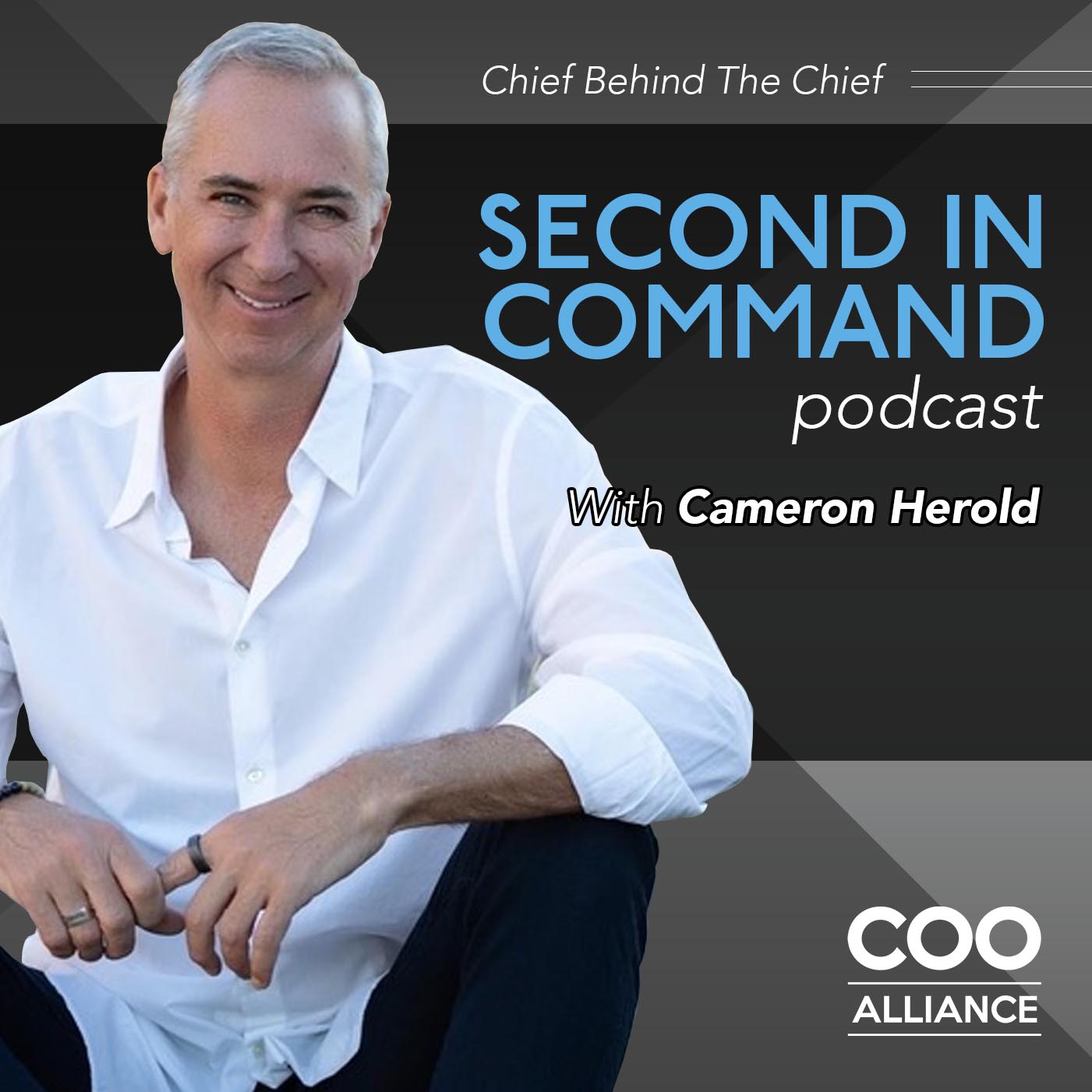
Second in Command: The Chief Behind the Chief with Cameron Herold
Ep. 532 - Next Level Planning Group Managing Partner Richard Scheele – The Untold Secrets Behind Leading a Rapidly Growing Organization
00:43:33
Loading summary
Transcript62 lines
- [00:00]
A
So we started implementing EOS in 2020 and I had the integrator title. And before that I was our financial planning manager. And we just kind of like left the financial planning manager title there for a while. And at some point we're just kind of like this, this doesn't really fit. Like we're talking to people outside of the business and they're like, why are we talking to this manager? And so the other partners and I talk about, you know, we should probably change the title to reflect the actual responsibilities. And we just, integrator didn't, wasn't known to everybody. And what we eventually settled on is kind of managing the day to day of the firm as a partner. So let's go with managing partner.
- [00:51]
B
Welcome to the Second in Command podcast produced by the COO alliance and brought to you by its founder, Cameron Herold. In the second in command podcast, we talk to top COOs who share the insights, strategies and tactics that made them the chief behind the chief. And now here's your co host, former COO of a multi eight figure remote company and alumni member of the COO Alliance, Savannah Brewer. Our guest today is Richard Scheele, Managing Partner at the Next Level Planning group. With over 20 years of experience in financial planning and wealth management, Richard has built a reputation for leading with integrity strategy and client first advisory. In this episode, we dive into how Richard helped implement eos at his firm and the impact it's had on clarity, alignment and decision making. He breaks down the three core functions of his role and how they serve as a compass for leadership. We also talk about what's kept him deeply engaged for almost 13 years, ultimately rising to Managing Partner after starting as an intern and the major internal shifts they've made to strengthen their team and operations. If you're a leader focused on vision, longevity and building a values driven team, you'll want to stick around for this one. We are live. Welcome to the show, Richard.
- [02:18]
A
Yeah, pleasure to be here.
- [02:20]
B
Let's go ahead and start with giving us a little bit of background about the Next Level planning group. What do you do and who do you serve?
- [02:30]
A
Yeah. So we are a comprehensive financial planning firm. We help people make and execute great financial decisions. The people that we serve are primarily business owners and people at the top of their fields. And very often when they come to us, they're at an inflection point where they focused on their career, their business and their finances have taken a backseat, but they're at a point where the stakes are high and they know that it probably isn't the best move for them to shift their focus to that. And so since they're at the top of their field, they want to hire someone at the top of that field, our field, to help them with that. So we tend to see people who their business is taking off. They have executive compensation, have a lot of wealth that's accumulated, have gotten a big increase in income, and realize these decisions are now much higher stakes. And I want to, I want to have someone who's, who's an expert in this field to help me through it.
- [03:26]
B
Amazing. Yeah. The inflection point, financially, I, I can relate to where it. There's this decision point of do I want to go and learn this myself and try to figure it out, or should I just go hire someone to help me with this? Because the diversion of focus in itself can take away from the cash flow that you might be experiencing that put you in that position in the first place.
- [03:51]
A
Right, exactly.
- [03:53]
B
The title that you have at the company is managing partner. Could you define what that really means?
- [03:59]
A
Yeah. So we started implementing EOs in 2020, and I had the integrator title. And before that I was our financial planning manager. And we just kind of like left the financial planning manager title there for a while. And at some point we're just kind of like, this doesn't really fit. Like, we're talking to people outside of the business and they're like, why are we talking to this manager? And so the other partners and I talk about, you know, we should probably change the title to reflect the actual responsibilities. And we just. Integrator didn't. Wasn't known to everybody. And what we eventually settled on is kind of managing the day to day of the firm as a partner. So let's go with managing partner. It may not be a direct corollary to like a managing partner in a law firm. I've heard the term operating partner periodically. That might have been a better term, but it's, it's that kind of idea.
- [04:57]
B
Gotcha. What were the specific challenges or the state of the business at the time when you guys decided to kind of move you into that direction?
- [05:07]
A
Yeah. So we, for many years, we grew at about 20% a year. And when we started in 2020 on EOS, we had just gotten to a point where our. We had four partners at the time. Three of them were advisors, and myself, I was the fourth. The three advisor partners had a lot of responsibilities. And we're trying to figure out how do we, how do we balance and manage all of these things? And we got introduced to eos and we started using EOS as a way to figure out who's responsible for what and how do those evolve and how can we bring other people into these responsibilities? And that structure that EOS provided, I thought was really helpful for us in being able to do that and being able to get really clear on what are the responsibilities in this seat and how like, is this really the best person to be in this seat? One of the things that we learned within a couple of years was initially our leadership team was all just the four partners. And we realized after a couple of years that what our partners were great at, which was working with clients and developing new business. It's not the same skill set for leading a department. They could do it and they've been leaders and they, you know, they're competent, intelligent people, but it takes a lot of time and it's a different skill set. And we could create more leverage in our firm by professionalizing the management responsibilities, if you will, rather than tacking it onto just a senior person's responsibilities, which I think is what is most common in our industry.
- [06:49]
B
How has that kind of maybe shifted over the years? How has that actually played out?
- [06:55]
A
Yeah, it. So the first, the first shift was moving two of the partners off of the leadership team off of leading departments, which was a very, I'd say it was a somewhat nerve wracking decision because they're used to being leaders, used to having involvement in all the, the decisions dayto day and kind of walk them through the logic of this is how much time it will free up. This is, you know, what your skill set is and what your skill set is not like, okay, I get it and I'm willing to try it. Just, it's going to be different. And I think within a few months from both of them, I heard like, I love this. I love not having all these responsibilities. I love not having to be in all these meetings. I can just work with clients and help them, you know, help them navigate their financial lives. And it's great. And then we had one partner left as the visionary. And I think we were also at a point in our firm where that particular partner in the visionary role, very innovative, very creative, a lot of ideas. And we were reaching point where we thought, A, it'd be great to leverage his time and B, we need to let some changes settle. And so we shifted from having a visionary to an executive committee, so all the partners on the executive committee, and it kind of replaced the visionary seat. And so that did bring our other partners back into the at least the high level decision making process and leverage some time for the partner who had been in the visionary seat. And we did that in 2024 and that went well, let's say for the firm. I found it challenging because for me, not having like a single visionary to bounce ideas off of, work through problems with, get direction from created a sense of being a little more adrift in terms of decision making. And so that was a challenge last year. I think it was also really good because it did force me to step into areas where I can and should continue to leverage, drive decisions forward faster because I couldn't just rely on having a visionary to bounce ideas off of. I just needed to figure it out in a lot of cases. So it was both uncomfortable and good for me. So this year we created a more limited visionary role, brought back one of the other partners into the visionary role who's more of a, rather than ideas innovative, creative person, he's more of a goal oriented. What are we aiming for? Let's go after that and let's stay really focused. I think that's the kind of visionary that we need right now. It's like, let's finish these changes that we're going through, let's stay focused, let's get these things done. And so that's also been interesting. Just like that flexibility and trying to figure out how to work with EOs of like, the visionary is not just one person. We can kind of figure out what kind of visionary do we need at any given point in time. And so that's been, it's been a journey to figure that out for ourselves and kind of work with the structure of eos to make it work for us.
- [10:16]
B
I like the idea of what visionary do we need at what time? There's these four energies I learned a while back and I don't know where this originates from, otherwise I would credit whoever came up with this. But if anyone knows and you want to reach out to me because I think I've brought this up on the podcast before, please do. But there's four energies. There's unification, stabilization, innovation and production. And anyone can be in any of those areas at any time. But we usually have one natural strength. For me, it's unification. I'm really good at bringing people together, inspiring, motivating. People have said that I'm like the color of the business. You have innovation, which is the person that always wants to be innovating, something changing. Those are also the people that sometimes just need to focus more on Stabilization, which is you've made all these changes. Let's just like really sit with this. Let's get used to this, let's give it some time. And then you have production, which is drivers sales, bringing new revenue and partnerships into the business and I think getting clear on what any one time of season and whatever role you're in. Because I know that there have been seasons in my roles where I didn't need as much unification energy. I really needed to be innovating and being able to know when I should go into each of those categories and being able to communicate with other leadership team. Hey, like I really feel like I need to step into innovating a little bit more. Just so you know I'm going to be like giving more vision, excitement in these areas because this is where I'm feeling the gap and it can be really supportive. And I could also see that there being some challenge with having multiple people switching around. And I've got some questions written down here that will loop back to in a second around that. But before we do, I would love to hear just a little bit about where you guys landed with your role in the kind of integrated position. What does that kind of day to day look like for you now?
- [12:20]
A
Yeah, so on our accountability chart right now I just have three responsibilities. One is LMA for our department heads, leadership, management and accountability. And we have at this point four departments. I lead two of them, although we're trying to hire someone in one of them who can eventually take over that role. So it's really two people that I lead and the three of us, we meet every, every week for our L10s. Our visionary just attends those once a month. And so we really have handle a lot of the day to day, a lot of the people, management and so working with them is kind of my number one priority. And then number two is our strategic planning process and having multiple partners, having an executive committee. We want to get different perspectives and voices in the strategic planning process but we also need to have it be an efficient process and that's. We can maybe come back to this later, but that's a process that we've made some changes to that I'm excited about. And the number three is execution of our, of our operational plan. Whatever we laid out for the year, whatever our priorities and projects initiatives are, coordinating the resources, getting, getting our team the training, making sure we have the processes in place and the communication in order to make sure that those things happen and get carried out throughout the year. Awesome.
- [13:51]
B
Thanks for sharing that Gives me a little bit of a better idea. And it makes me think back to this moment on a team that I had where I'm in a co position. I've got over 100 employees on our team at that point. And I had the amount of scorecards and KPIs and clear outcomes I'd made for all of the people on my team. So many. Because you have 100 people, you also got to think about the people that you let go, you fired. There's just a lot of clarification of roles that I had done. But we got to this point where we realized I had none of that because I was a second employee. I grew with the company and my role was changing so often that I didn't even have my own scorecard. And I remember trying to sit down and kind of think, what are those things? And it was quite difficult for me because it just felt like because we were growing so fast, my role evolved in directions that I didn't even foresee happening. When you got clear on those top three, you're the first person I've interviewed that has said, I have these three main outcomes. How did you clarify what those are?
- [15:01]
A
Yeah, a lot of trial and error. A lot of, you know, when we had the executive committee last year, we had strategic planning on the executive committee responsibility set on the accountability chart. But like we realized, it kind of defaulted to me to schedule the meetings, put together the agendas, facilitate them. When we had disagreements, people tended to look to me as the integrator to like, so what should we do? Because in eos, there's a conflict between visionary integrator, the integrator makes the call. And so even in those strategy sessions, it kind of looked to me for that tie breaking responsibility. And we realized we need to get really clear on what is it that the executive committee is responsible for for in strategic planning and what is it that I'm responsible for in strategic planning? Because people are kind of coming to those meetings. All right, Richard's going to run this. I'm like, I'm one of us who's part of this group making this decision. And so there's a little bit of being unclear on expectations. So it's really evolved through a process of getting clear on expectations, identifying some of the things that we had listed previously. It really falls under a lot of this stuff. Like at one point we had special projects. It really, all of those really fall under the operational plan. And so it's shifted every year or two as we've gotten clear on, like, yeah, this, this really falls under this or this. We're missing a little bit of this and just trying to make sure that expectations stay clear.
- [16:39]
B
So it's just not like there is, there is some coming back to the drawing board, reevaluating and it can shift over time, but at least having some idea of where you're going at least this year. Yes, makes sense with EOs. For someone that has never heard of that term. Can you share with us what even is that?
- [16:59]
A
Yeah, so EOS stands for Entrepreneurial Operating System and it's basically a system for small businesses to run pretty much everything. You know, it's got a two page business plan, it has long term vision components, it has short term components for getting traction towards your goals as systems for managing people and data and processes. I'd say we initially made the commitment to implement it in its pure form and then over time it figured out what do we need to tweak or adjust for our team in order to make it work best for us.
- [17:36]
B
Awesome. Did you guys hire. Because I think there's like an EOS implementer that you can bring in. Is that what you have to do or is there ways to implement EOS without that?
- [17:47]
A
Yeah, you don't. So we did have an implementer for three years and I think it was really important and critical for us. I do know of companies that have implemented EOS without an implementer and that that can work as well. My understanding from a lot of the ones I've talked to is someone high up in the organization has run on EOS before. There are some people who I've talked to, yeah, we read the book and implemented it and just did it ourselves and we've never had any experience with it.
- [18:16]
B
The implementer that you guys worked with, is this what they do full time or they kind of like a consultant on the side that helps with this or is this like they live and breathe the os? They come in and if that is the case, what does that look like if you were to bring someone on like that?
- [18:32]
A
Yeah. So she was a full time EOS implementer and she worked with, I don't remember exactly the number of clients at a time, but she did. I'm going to work with 10 client companies at a time. She facilitated all of our quarterly meetings and annual meetings for the first three years and trained us on all the systems and processes and how to use them. She was available if we had questions like, hey, we're trying to figure out this scorecard. I mean, I know what EOS says But it's just not really like fitting or landing, like, how can you help us think through it, those types of things. We found that to be really helpful. Hey, it's Cameron Herold, your COO whisperer and guide to scaling businesses. Check out my YouTube channel at YouTube.com forward slash@cameron Herald. That's H E R O L D where I share tons of raw tips and insider secrets to have you level up as a leader and grow your company. From leadership hacks to growth strategies. It's all there. No fluff. Subscribe now. Hit that bell for notifications and comment on a few of the hundred videos that I've uploaded so far. And let's build your empire together. Let's go.
- [19:49]
B
Was it challenging that she was working with so many? This is something I've personally, I've never worked with an implementer and I've been curious about. When they have so many clients, do you not find it necessary for them to know the ins and outs of really what you guys are doing for her to be giving you feedback? Or what is it about that system or the structure that they have that allows it to work?
- [20:11]
A
Yeah, that's a great question. I think there are two pieces to it. One is we spend a lot of time together. You know, during the initial onboarding phase. It's I think five days in the first 90 that we're together. So she learned a lot about our business up front. And then it's five days every year, full days. So she did learn quite a bit about our business. And the other piece of it is I don't think that would even be necessary because the implementer role is really focused on the process and the system. And so she very rarely, none that I can think of, said, this is what you should do in your business. It was more of, hey, you have a question about this person? Okay, let's use the tool. Are they the right person in the right seat? Do they meet the core values? Do they get it, want it? Do they have capacity for it? Can they do the roles and responsibilities? I don't need to know what their job is. I don't need to know what the roles and responsibilities are. But I can push you to look at them through that lens or if you need to fill this role, let's look at people through this lens. And so it's really just applying the tools, pushing us to apply the tools to our business.
- [21:25]
B
For anyone that's listening, that is interested in that, but maybe they're thinking, well, do we really need that? Couldn't we just do that on our own? Maybe I just need to read, you know, Scaling up or a similar book. What advice or questions would you recommend someone ask themselves?
- [21:44]
A
I think that. So we didn't really ever consider self implementing. So it's hard for me to, to really go back and ask myself that question. We got a. It was, I would say it was a big investment financially to hire someone for three years working five or six day full days with us every year. So I think that's one question is, is this a financial commitment you're willing to make? Say another is there is, there's an element of knowing yourself and are you a company or a team that can read a book, understand it and try to implement it or are you going to have a tendency to try to make it your own right away? Or like, yeah, I don't like this, kind of like that. Let's do it this way. I think that if there is that tendency of we just really like to create new things and create things as we go, I think an implementer can be really helpful in creating some of that discipline and structure. But if you're a, hey, we kind of take things as they are, we try them on for a while and then we tweak them. I think self implementing is more realistic.
- [22:56]
B
I think there's a lot to be said about just collapsing time. There's so many opportunities in business where we get distracted and we might work on things that feel exciting to us but actually isn't moving the needle forward and then it drags things out. And so yeah, I think there's for sure room where you can ask yourself, even if this is a big investment, how much time is it going to collapse versus us just having someone come in.
- [23:27]
A
Right.
- [23:27]
B
Five days, let's put this in place. Versus you trying to read all the books, ask the questions, build it out yourself, see what's not working. And now you're two, three years down the road and you're still going to go hire someone because you realize having someone that comes in with the expertise is way better than trying to reinvent the wheel.
- [23:44]
A
Yeah.
- [23:45]
B
When it comes to the lma, which you said was leadership, management and accountability, could you break that down? What does that really mean and how does that show up in your day to day?
- [23:55]
A
Yeah, I think about leadership and management as some people kind of put them together, I do think they are separate. I think of leadership as creating clarity and direction and giving people a vision of what is it that we want to accomplish or what do we want to try to achieve and what's your role in that? And the management is more of okay, we now that you know the goal and you're bought into the vision and you know what your role is, helping them manage, okay, what do I need to do? How do I get that done on a daily, weekly, monthly basis? And the accountability is okay, we set out to accomplish these goals, these projects, these are the measurables we're looking at. Are we hitting them or are we not? What's working? What's not working? What could we do better? What needs to be fixed or changed either in the approach you're taking or in the larger organization in order to make these more realistic?
- [24:58]
B
It sounds like you're in a really support heavy type position.
- [25:02]
A
Yeah, I think there's definitely an element of that. I think a lot of it really has to do with alignment and for people leading departments, helping them see how their department impacts and is impacted by the others and what we need for the business as a whole. Really helping them understand the role that they're playing and that their department plays to inform their decision making.
- [25:32]
B
How do you do that?
- [25:35]
A
Yeah, it's very situationally specific, but in, in large part it's thinking through. I know you would love it if your department could do things this way. This is the impact it has on this other department and we need to figure out which one's best. Like what are the costs, what are the benefits for both sides of the equation for a given decision and helping to bring that context. I've been leading a department before as well and I know that there's very much a tendency for people to view their department through their department's lens. Like this is really unrealistic for us or this takes a lot of time. If someone else changed something that would save us a bunch of time, great. My job is to say what's the cost of that change on the other end? What's the benefit? And make sure that we're accounting for all of those. Both sides of that equation or all sides of that equation. If it's more than two departments.
- [26:39]
B
Do you ever have people from different departments meet together to understand more about each other's departments or even like I've heard people do, like switch roles where for every role that you're. I've actually never implemented this in my team, but I'd be curious to try it at some point. You have your current team members who are connected to other departments and everything is connected to some degree. But some departments are way more, you know, yin and Yang to each other. And like you said, when you're just in your own bubble, you can't really see all of the impact. And so I've heard recommended that you can have those people switch roles for a week. And it also helps you make sure that the SOPs are up to date because you're like, is the, is the SOP up to date? We're going to be switching roles and they're not allowed to ask you any questions like can they figure it out with just the sop? So it's an SOP test and it gives both people insight into each other's roles. Have you guys ever played around with anything like that or what is your method of sharing those insights?
- [27:40]
A
Yeah, our method has largely been team problem solving sessions or team meetings. So it was one example. We went through a significant transition in our business and on the account opening side, we had a whole new set of systems to work with and that, that created a lot of work for our account opening team. And things. Things got backed up and we had a team retreat in early May and decided we're going to spend some of that time figuring out what is that experience like, like what do we need to do to help us help the team get caught up in that area so that things can function smoothly across the whole team. And that was a good opportunity for people who are opening accounts and advisors to have that dialogue of. There's the cost of every time we bring in the advisor to reach out to a client, that's more of their time. But if we bring them in to reach out to the client, they tend to get better responses than our operations team that the clients don't know nearly as well. And so how do we balance that and where can we set expectations and create clarity around this is what we need to do before we go to the advisor or and this is when we should go to the advisor. And having those kinds of conversations has been really helpful. Cool.
- [28:59]
B
I remember seeing on your kind of prep form that, that we have before these podcasts that you really enjoy mentoring young advisors on your team. What does that relationship or process look like?
- [29:13]
A
Yeah, a little bit different. So I've never been an advisor and so, so I started out actually as an intern and then had an entry level service client service position and then moved into a more technical analysis side, call them analysts essentially. And I really like, I did that for basically a decade and I really like that part of it, that part of the business. My initial, my college education and afterwards was as a teacher and so there's this element of, like, I really like the technical pie and solving problems and putting puzzles together. And I've got that teacher mentality a little bit. And so I do enjoy spending time with people and walking them through the process of, like, this is what I do and this is why I do it or how I think about it. And that's something that I enjoy. Leading a team training, for example, that we do every week. Whenever I get a chance to lead those, I find that fun and really enjoy putting the time into it to prepare for. What do they need to know? How can I simplify this? How can I make it really easy to remember and take away and something that I've just gotten a lot of. A lot of joy out of.
- [30:29]
B
I think having that teacher background or interest makes such a big difference. I know I've worked with people that have that also in their background, and I can just tell when they, like, present something, they're just like, so, so animated and excited. And I love when people really enjoy teaching others. With you starting as an intern and you've been with the company for how long now?
- [30:53]
A
Almost 13 years.
- [30:55]
B
A long time.
- [30:56]
A
Yeah.
- [30:57]
B
And you. So stay consistent. For someone that might be listening that is bringing on interns or is, you know, in the startup phase, bringing on new employees. And they want them to stay around. They want them to build loyalty with them. What was it about this company or the leadership that was above you at the time that created an environment where you've wanted to stay around for almost 13 years?
- [31:20]
A
Yeah. I think for me, I enjoy problem solving and mastering things. And because we're a comprehensive planning firm, we don't just do investments. We really help play the quarterback role for clients between investment advisors and insurance agents and estate planning attorneys and accountants. And so there's always more to learn. And so early on, it's like there's. There's so much I can learn. There's so much I. More that's always out there. And the tax laws change and just the investment environment changes, and so it never gets boring. And then also there was this. When I started, I was employee number five at the time. And so there were. There were always opportunities to take on new things and grow. As my history has shown, I just kept moving through roles and responsibilities. I think our founder, Adam, is really good about being a delegator and trusting people with responsibility. And I think that just. It creates a desire to step into that and just both from a. This person trusts me. I want to be. I want to be worthy of that trust. And then also I see that there's career opportunity here, and I want to take advantage of it.
- [32:42]
B
Speaking of career opportunity and changing into different roles, I know we were talking before this that me and you were actually in the CEO alliance at the same time together. You're like, oh, this is how we recognize each other's names. Could you tell us a little bit about why you were looking for something like the CEO alliance, or were you even looking? How did that play out and what was that journey like for you?
- [33:06]
A
Yeah, yeah. So I just. I think this was like, maybe six months after I had stepped into the integrator role with EOs, and before that, I'd let it let our team of analysts, which was a few people. And now I was responsible for coordinating all these departments, including partners. But the other partners who all, you know, older, more experienced, own more of the business than me. And now they're reporting to me as with them as department heads and me as the integrator. And so I was really in need of a forum or opportunity to learn how to step into that role and really be the second in command. And our founder, Adam, somehow knew of Cameron and shared the sec, the CO alliance with me. And it was a really, really appealing opportunity. And so I joined. And Cameron has described the years in different. As different purposes, really. The first year is about, I think, connection. Second year is about confidence and. Or vice versa. But, like, I really found that, like, the first year just learned so much and realize, wow, all these people who are really smart and who are in many cases more experienced, I can learn so much from them. And they're also not, you know, totally confident in everything they do. And so that first year in particular was really valuable, and the second year was still really valuable. And I just, I think it's a very worthwhile endeavor for anyone who's new to this COO role or maybe even new to a company to find that community of people. But especially if you're new to the role and I think you're going to learn so much, especially in the first year where you just like, I had no idea that this is what people are going through and this is what people are thinking about, and I think it'll be really valuable.
- [35:08]
B
Yeah, it goes. Goes back to that collapsing time and learning from other people's growth lessons and mistakes and avoiding those and going back to what you had mentioned around, you know, not knowing what you know and being in a new role and sometimes the nerves that come with that. The first event that I was at that Cameron hosted on the very first night. There's probably 40 of us standing around and he's like, raise your hand if you feel like an imposter in your role right now. And I'm like, my head is shooting up because I definitely felt that way. I had no idea what I was doing. Everything was new, every decision because I came from sales and that position was just. I didn't even, I don't even know if I like knew that that was even a title in the company before I got it. And everybody's hand went up. You know, I was the youngest in the room at the time, but there was people way older than me that still felt that way. And I remember, I think it was from Alex Hermosi. Do you know Alex?
- [36:11]
A
I know who he is.
- [36:12]
B
Yeah. Okay, cool. So the guy on YouTube puts out business content, talks about. You only feel like an imposter if you don't have the confidence in something where you don't have the track record yet or the experience. And if you're on the leading edge of challenging yourself, you're always going to feel like that. It's okay to feel like an imposter because it actually means that you're just stretching into something new and you're not staying in your cozy, comfortable thing where you're 100%. I am amazing at this. And I think that's a really important thing for anyone that's listening to know is if you're feeling nervous about a new role and you're feeling like a little bit like an imposter. Awesome. That just means that you're growing and expanding and you're going to learn a lot.
- [36:57]
A
Yeah, that makes a lot of sense.
- [37:00]
B
When it comes to the next six months in the company. You know, 13 years and now next six months. What is the most exciting thing for you?
- [37:10]
A
There are a couple things I think one is we, we started working with a marketing firm to help us have identify what kind of content we can create and how to get it out to our clients. And I've continued to deepen those relationships and share more of what we have to share outside of just being in a one on one meeting. And I'm really excited for how that might improve the client experience and also our ability to reach people who can benefit from our work. And then the other is made some shifts in our strategic planning process that I'm really excited about. And this kind of was kind of behind my thinking about when should you self implement or hire someone if you tend to want to always play around with things maybe you shouldn't self implement. I've noticed when we have our strategic planning conversations, we can very quickly get deep into the weeds and get very specific. And when we ask ourselves like this is what we should be talking about, it's an important decision, it's strategic and it's realizing. I've never heard the same definition of strategy or what's strategic from two different people. And it just means different things to different people. And I think we have often had the definition of if it's important, it's strategic. And I think that has caused us to get, especially with this executive committee structure at times too deep into the weeds of individual projects or ideas or problems. And the definition that I've started to work with recently is something is strategic if it informs other decisions in the business. So something might be important. But if we can make that decision and it doesn't impact anything else, it's just an important decision, it's not a strategic decision. But if making this decision is going to cause us to need to change other things, then it is a strategic decision. And part of that is we've gone through a lot of changes the last few years and some of them have informed other decisions about who do we work with, how do we develop people on our team, how do we structure our pricing and just realizing those are the kinds of decisions that are really strategic if we then need to align other elements of our business with that. And so what we did is created a playbook that's just in these five categories of strategy. What are the strategic decisions that we actually need to make? And I think that's really helped us to see what decisions have we already made, maybe didn't explicitly call it out as a strategic decision. And what decisions have we been making in a one off fashion that we can align with other strategy. So I'm really excited for the opportunity to just get some more clarity on that and see are there more opportunities for us to align our strategic thinking and strategic approaches to things and can that alignment create more clarity, efficiency and just help us get to the next stage of growth.
- [40:26]
B
I really like that. I love that you are coming up with kind of your own definitions and clarification of words. And it's so important too when people are using certain terminology, making sure that you're actually aligned on how you're meaning that and also the playbook and being able to actually take what's in your brain and be able to put that so you can continue teaching other people. I think that is one of the things I've seen in companies I've done some fractional work with is some of the reasons why team gets stuck is that the owner or the leadership team, they continue growing and learning all of these things, but there's not a transferring of knowledge. And so then you have an exec that's ready for their team to step up and start taking on more things and you've got this big gap in leadership. So finding ways to pass on that knowledge I think is really important outside of business. Personally, what are you excited about?
- [41:24]
A
So we live in Appleton, Wisconsin, which is where my, my wife grew up and she's really close with her family and her brother and sister and they have kids who are similar in ages to our kids, but they live literally all over the world. One is in Berlin and they come back to Appleton every summer. And so we've got six cousins and siblings and in laws and it's just a really fun time. And that's coming up in a couple of weeks, so that's something forward to.
- [41:56]
B
Yeah, that sounds amazing. How cool. I mean, I just think it's really sweet when families are still keeping the priority of getting together. I just got back from a family reunion myself and people from all over the us not outside the country. I imagine that's even more of a. Yeah, even more of a commitment. So good on you guys for keeping that going. If anyone wants to connect with you, reach out, what is the best platform or place to do that?
- [42:25]
A
Yeah, email me. My email is my first name.my last name s C H E L E n l p g.com or visit our website and check us out. Get to know the people on our team, learn more about us and we'd love to learn more about other people too.
- [42:44]
B
Awesome. Well, thank you so much Richard for your time. This was amazing. So many golden nuggets and I know that there's going to be a lot of people impacted by this, so really appreciate it.
- [42:52]
A
Yeah, thank you. Really appreciate the time. Savannah.
- [42:58]
B
You've been listening to Second in Command, brought to you by COO alliance founder Cameron Harrell. If you enjoyed this episode, please be sure to like share and subscribe to us on Apple Podcasts, Spotify and our other podcast streaming platforms. For more best practices from industry leading COOs, visit COOAlliance.com.