← Second in Command: The Chief Behind the Chief with Cameron Herold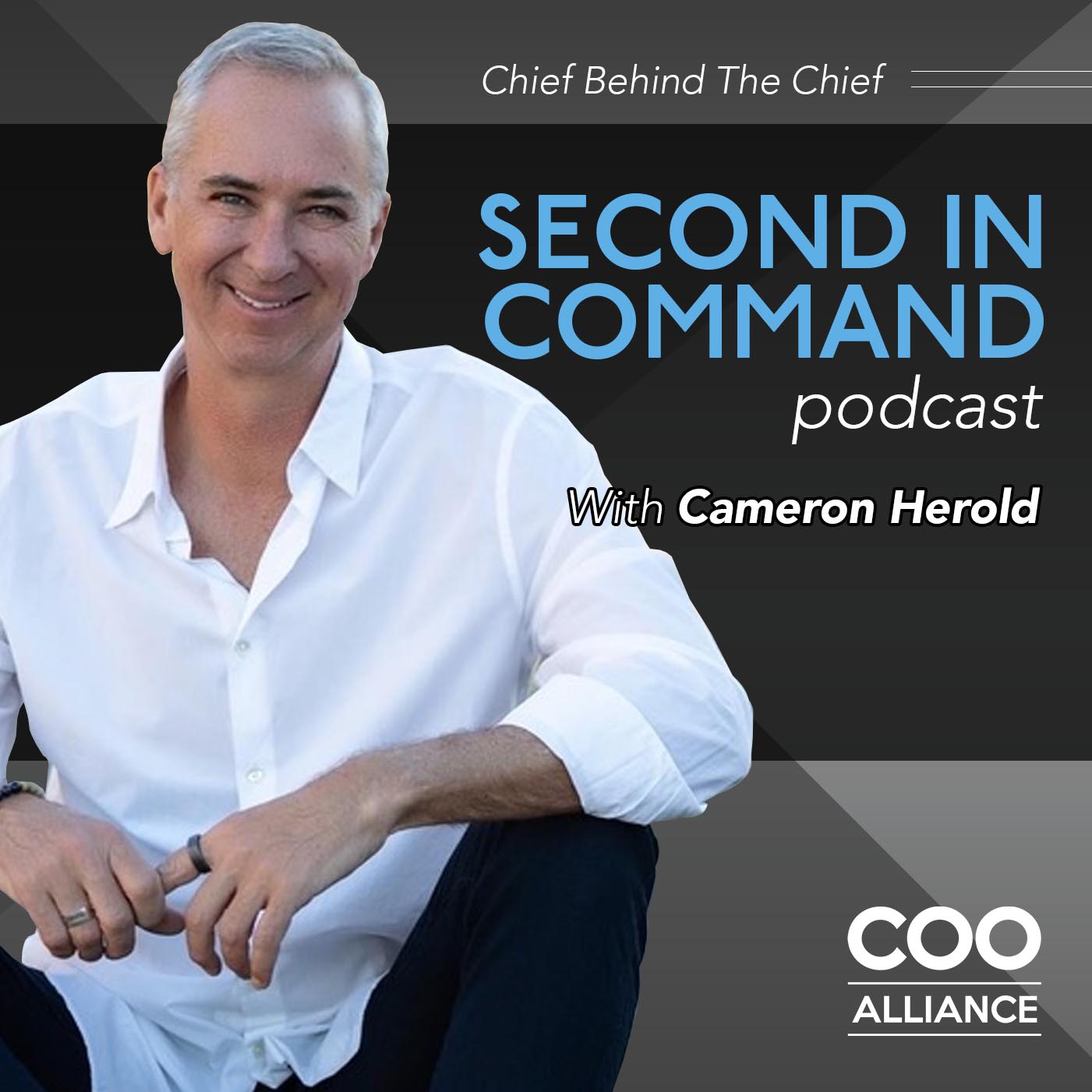
Second in Command: The Chief Behind the Chief with Cameron Herold
Ep. 537 - Equiton Developments COO Christopher Wein – How EOS Drives Remarkable Calm in Rapid Growth
01:06:56
Loading summary
Transcript68 lines
- [00:01]
A
I prefer a larger team. But what I think, what happens with a larger team, it's sort of a two part answer. So the initial vision, the initial direction should come from leadership, so from executive leadership. So when I'm looking at the vision of Equiton Developments, I'm initially thinking, okay, this is where I believe we should go and this is how we should position ourselves at a very, very high level, like 30,000ft. And as soon as I have that, I want to then bring in the team to be like, okay, this is what I'm thinking, but this is very 30,000 foot. Let's now dig into this as a team collectively, so that everybody feels like they take ownership of the vision and everybody's had a part of it.
- [00:51]
B
Welcome to the Second in Command podcast, produced by the COO alliance and brought to you by its founder, Cameron Herold. In the second in command podcast, we talk to top COOs who share the insights, strategies and tactics that made them the chief behind the chief. And now here's your co host, former COO of a multi eight figure remote company and alumni member of the COO Alliance, Savannah Brewer.
- [01:20]
C
Our guest today is Christopher Wine, COO of Equiton Developments, a seasoned real estate leader with over 25 years of experience across Canada and the U.S. leading projects from master plan communities to skyscrapers. Beyond his impressive operational expertise, Christopher is a recognized innovator in sustainable building solutions and a passionate contributor to Canadian philanthropy, earning honors like the King Charles III Coronation Medal. And he's also on Calgary's top 40 under 40. On today's episode, we dive into what it takes to build the right team chemistry. Christopher's philosophy for putting the right systems in place and why having a true power player on your team can transform your business. We also explore his views on productivity and what it means to play all out in both leadership and life. Whether you're scaling a company or refining your team's performance, this conversation is packed with actionable insights for any COO striving for excellence. Dive in. We are now live with Christopher. Welcome to the show.
- [02:36]
A
Thank you. Glad to be here. Absolutely.
- [02:38]
C
Here we are just kind of chatting. You have such a wide range of experience. You've been CEO, CEO, president, and have been involved in this kind of work for about 25 years. There's a lot we're going to get to dive into today, but first, why don't you just give us a little bit of an overview of the company that you're with now. What do you do and who do you serve?
- [03:02]
A
Sure. So I'm currently chief operating officer of Equiton Developments. Equiton Developments is basically a private equity development company. So we have about 18,000 investors across North America, mainly Canadian. And what Equiton Developments does is we actually take that money and we build the developments, condo developments, townhouse developments, purpose built rental. And the returns coming from those projects go back to the investors. And this is how it actually works out quite well, because in many cases the investors are earning returns of 20, 21% annually, which is fantastic as well. Equiton also has a very large rental portfolio. So we have about 5,000 rental units again across Canada. And that portfolio is something that we continue to grow and that's a long term portfolio. So we plan on building that and continuing to grow it over the next 25 years.
- [04:07]
C
Awesome. Who is kind of the ideal investor for you guys?
- [04:11]
A
It's really anybody. So we have a combination of, we have retail investors, so people who are looking to earn sort of returns anywhere from 8 to 12% if they're in the apartment fund, all the way up to 21% if they're in one of the development funds. So a lot of, a lot of people take some of their savings or take their RSP money and so on. At the, at the retail level, then we have larger investors, institutional investors, large, high net worth people. So it's really a full range. That's why we have approximately 18,000 investors. Because an investment can be anywhere from 25, $50,000 all the way up to $10 million.
- [04:53]
C
What do you think people should be looking for? Because this is something I've been thinking about for a little while, but I haven't really made any investments into. But what would you say to someone that hasn't made an investment like this yet in terms of looking for the right place to put their money? What is, what are the factors that someone should be looking for? And specifically for you guys, what are some of those kind of the draws for people to be investing with you?
- [05:17]
A
Sure, I think there's a few things. So one you want to look at the track record. So the company, we just celebrated our 10th anniversary. So you want a company that's established. Thank you. You want a company that, you know, has, has an independent board, has good governance, you know, is, is following all the, the proper sort of procedures and policies that you want with an investment. Of course, you know, as a, as a private equity company, we're governed by the securities commissions of the various provinces across Canada. So, you know, we make sure that we're fully compliant at all times and we have great sort of policies and procedures. And then beyond that, it's really the nature of the investment. So again, these are real estate investments. The great thing about real estate investments is real estate long term has always been a very solid investment. And the majority of our real estate holdings are residential in nature because residential real estate really across North America, both in Canada and the US Is growing as the populations continue to grow. You know, we, we're fortunate to be in Canada, you're fortunate to be in the US These are two amazing countries that and two amazing democracies that I think people from all around the world still would love to move to and reside in. So I think that's why we continue to see positive growth and positive immigration with both countries. And we need more housing and we need more real estate. So yeah, so I think it's a very safe investment and it's a good long term investment. And then beyond that, the last thing is to really look at, you know, where the, the real estate's located. So we have real estate across the country. The majority of our real estate is concentrated in the greater Toronto area. And Toronto has been one of the fastest growing cities in North America for the last 25 years. So again, pretty safe place to, to invest. Your.
- [07:10]
C
I know living in Austin, I cannot go anywhere without seeing construction, new builds, signs of coming soon. It's crazy. I think I don't know where Austin is ranked right now, but it's got to be one of the fastest growing cities in America, I would imagine.
- [07:30]
A
Yeah, Austin actually is doing very well. So you know, in one of my previous leadership roles with another company, we had a very large US presence. So we were in 15 states across America doing developments, real estate developments. And Texas was one of my favorite places to do real estate. And both Austin and Dallas, very, very robust markets, fantastic markets, Cool. Great place to live.
- [07:55]
C
Good notes. Yeah, maybe I'm like, I think I'm going to dip my toes in here soon. Well, so you've been with this company for 11 months. What was it about after 25 years of experience, what was it about this company that stood out to you that made you want to take a role here?
- [08:13]
A
Sure. So there's a few things. One, the ownership team. So there's two co founders that co founded it 10 years ago, a woman and a gentleman. They're fantastic industry veterans and their vision is really to grow a very progressive, positive real estate company. And really their vision is that every, you know, every Canadian and, and again, it's not limited to Canadians, but every person should have the ability to invest in real estate. The challenge of investing in real estate, for instance, if we can't all be developers because it takes an enormous amount of money and capacity to be a developer, we can't all go out and buy an apartment building because again, it's an enormous amount of money. So then how do you invest in real estate? Well, that, that was sort of the vision is to say, hey, we can be that vehicle. So even if you only have 25,000 or $50,000 to invest over the next several years, you can still be a real estate investor and you can still get the returns that the big institutions get by owning a bunch of apartment buildings or that private developers get from developing condo towers and condo buildings and housing and so on and so forth. So that vision really appealed to me because I do think it's sort of a very democratic approach to investment. And then, you know, if people, you know, sort of research our firm and look at our website and so on and see the developments we're doing, it also gave me the ability to really drive high quality development. So we want to do really, you know, beautiful buildings in great neighborhoods and really, you know, design and build homes that people will be proud to live in and happy to live in. And that, that's a great vision. And it's a vision I share with the founders and, and, you know, it was just a great match.
- [10:05]
C
So awesome. And in terms of that match, what are your responsibilities like day to day?
- [10:11]
A
So day to day, I'm responsible to basically oversee the, the operations of the development company. And I. And within the development company, we have, you know, sort of finance division, we have a sales and marketing division, we have a customer care division, we have a development division which is, you know, acquiring land, getting, you know, entitlements and zoning and so on. We have product design and then of course, we have construction. So we do our own construction in house. So basically all, all aspects of development from first acquiring land all the way through to delivering a finished building to a bunch of happy homeowners in your.
- [10:53]
C
First 90 days coming in. Because it's a fairly. How big is your team?
- [10:58]
A
My team. So the overall company is about 250 people, and the development team in particular is about 35 people.
- [11:07]
C
Okay, got it. So when you came in, there's obviously 10 years behind it and a decent sized team. What was that initial 90 days like when you came in? Were you immediately starting to change things, get in the weeds? Were you just observing what did that kind of ramp up look like.
- [11:25]
A
So it's in the first 90 days, you know, whenever I approach a new position, I kind of, on my 90 day plan, I kind of have sort of, I divided into three. So in the first 30 days it's really, you know, observation. So let's see what we're dealing with and you know, let's see what all the different parts and pieces are and different players and kind of the culture. And then the next 30 days is really developing, you know, my strategy for moving forward. And then the last 30 days is really starting to implement that strategy. So I like to be in a position where within 90 days I've actually come in, assessed, audited, and then made changes so that people can actually see true progress in that first 90 days. I think, you know, one of the things that's interesting is a lot of executives take, want to just observe for the full 90 days. I think it's too long. I think you, you know, if you really want to, you know, demonstrate your value to an organization, you need to actually start making changes, positive changes within that 90 day period. Not, not after that 90 day period.
- [12:32]
C
In the 11 months or I guess maybe the nine months of those last 30 days, the 90 days that you started to really put in some change. What were the priorities that you focused on?
- [12:43]
A
Sure. So there was, there was sort of three main priorities, maybe four to be, to be exact. So number one, making sure we had the right team members. So I made some adjustments to the team, both directions. So, you know, there were some departures and then there were some additions. And I think that's really important. And it's, and it's not just making sure that you have the right talent on the team, but also that you have the right chemistry. So, you know, talent is great and we all want the best and most talented people, but it's also important that talented people can work together and that, that you know, there's a, there's a, there's a chemistry and that there's a, there's a shared vision. And sometimes that isn't the case. And I think that shared vision and, you know, having that, that team chemistry is the most important part of leadership. So I made, you know, some changes there and got the team where I wanted them to be within that first 90 days. Number two was again making sure that we actually had a vision. So, you know, working with the team and myself to define what our vision was, you know, for the short term, midterm and long term and where we wanted to position Ourselves in the marketplace with respect to the type of product we wanted to build, quality positions we wanted to have, and really, you know, kind of deciding what our true value proposition to the consumer was. Number three was, you know, making sure that our systems. That we had the right systems in place. So we actually implemented some new software and some new systems, again, to make sure that we could be as efficient as possible, especially between the different departments. And then finally, the fourth thing was really, you know, working on the branding. So I'm a big believer in corporate branding and making sure that your brand, you know, your website, your brand, your vision, basically your mission statements all align with where it is you want to go and really where the team wants. Also wants to go. So we made a bunch of changes. So we launched a new website. We launched, you know, we updated our brand. We didn't change our name, but we updated the brand, updated tagline, and really, you know, kind of changed the narrative about who we are and where we want to be.
- [14:59]
C
There's a couple things we could dive into from that. Thank you. That was so succinct and clear. I loved it. The chemistry part, I've never heard anyone specify on the chemistry, and I think that's so important. I was just, like, going back through all the memories in my mind of teams I've been on where everyone. I mean, this was at a point where one of the companies I was at, we maybe had like, 50, 60 employees. Where I really started to see this shift was we had a bunch of a players, but the chemistry started to change, and then there started to become some toxicity and, you know, just different things that were happening that weren't happening when we were smaller and everyone was really aligned and kind of same vibe. So I'm curious, like, what is the. What are the one or two things? If someone's listening right now and they're like, how do I know if my team has good chemistry or not? How would you walk them through figuring that out?
- [15:52]
A
Sure. I think. I think. Well, I think one of the most important things is making sure that everyone understands their value and the value that they bring, and more importantly, the value that their teammates bring. So I think that I was. When I was young, I did a lot of sports, and I was, you know, sort of an athlete for a long time before I got into business. And the big thing with good teams in sports is good teams is where everybody understands their role and they all support each other to do their role. And, you know, to your point, like, the A players often teams with Big budgets will, you know, they'll. They'll recruit the best baseball players in the league, you know, the best hitter, the best pitcher, and the team watch you not do very well. And I'd be like, why isn't the team doing well? Well, because a bunch of individual superstars that don't know how to work together, and then you'll have another team where it's like, oh, there's really no superstar on the team, but the team's doing amazing. How's that possible? It's because, again, they have chemistry. So, you know, it's similar in business. So in business, when you have your teams, it really is about understanding, you know, is does the head of sales and marketing work with the head of construction and does the head of construction work with the head of finance? Or do they all compete with each other or space? Or do they all sort of compete with each other for importance? And when they do that, which happens often, that's not chemistry. Whereas when they understand that, hey, I'm the finance person, I'm here to support all the other, you know, leaders within the team. I'm the marketing person. I'm here to make sure that we have the best marketing. I'm not going to tell the construction person how to run their division or the customer care division how to run their division. So it's really that idea that, you know, I always liken it to, like in. In a lot of corporate retreats, you know, one of the most common things is, oh, let's do a tug of war. And the team that wins the tug of war is where everybody polls with their own weight at the same time, and then they win. And it's that they don't need to be the strongest, they don't need to be the biggest. They just all need to pull in the same direction at the same time. And that's really what chemistry.
- [17:55]
C
That's a great analogy. Another thing that I'm curious about is when you said in those first 90 days, some of those changes were letting people go and hiring new people on what is your approach or methodology to deciding if someone should go or stay when you know you're just coming in, these are all new people to you. How do you make sure that you make an accurate decision and you have all of the information needed?
- [18:25]
A
Sure. So I think one of the things that's really important again in the role of leadership is you need to have really strong antenna. And I think what's interesting is really good leaders generally spend a lot of time moving around. They Spend a lot of time walking the floor, going to office to office. Lots of impromptu meetings, lots of, you know, sort of casual conversation. And good leaders, I believe, are always listening. So I think one of the challenges is often in leadership you'll have. You have leaders who very much structure things. So we have structured meetings. We have structured one on ones, you know, other, you know, you see them once a week or once every couple of weeks. And, you know, aside from a formal meeting, there's really no interaction whatsoever. And maybe they're behind a locked door somewhere or a closed door in a closed office, and that's okay, but it's hard to really get a feel for things so early in my career. When I first started, you know, into sort of Senior Leadership maybe 25 years ago, my staff were like, do you have the office bugged? And I'm like, what do you mean, bugged? They're like, well, you just seem to know everything. You know, what everybody's talking about. You kind of know what's going on, you know, like, with the rumors and social and all that stuff. And it's like, yeah, because I walk around, I pay attention, I listen, I observe you guys. I observe what you're doing. And, you know, I. I observed that the three of you went for lunch and, you know, those two carpool together and all. It's like, wow, that's very perceptive. It's like, well, that's. The whole point is if you have that level of perception, then as a leader, you very quickly can see the teammates that don't quite fit, or the teammate that no one ever wants to go to lunch with, or the teammate that's always, you know, telling you what, you know, how important they are and everything that they've done, as opposed to coming into my office and saying, hey, you know, the team accomplished this. It's like, oh, no, I did all these things. It's like, you couldn't have done all those things. You must have had help from the team. So why are you. Why are you trying to sell me on how great you are instead of talking about how great your team is? So. And it's similar even with kind of. Kind of taking responsibility for when things go wrong. So that's the other big thing that I believe in. Like, I always take responsibility for my team, and I get not frustrated, but I'm disappointed when I'll have someone come in, especially a vice president or a senior vice president, and. And try and tell me something isn't their fault. And, you know, it's not Me, it's the so and so, made a mistake and so on and so forth. It's like, I, like, I don't care. I just want to solve the problem. So if there's a problem, come to me with a solution. Don't come to me trying to, you know, kind of COVID your butt, so to speak. So, so any so. So it's little things like that, you know, very quickly perceive. And once you perceive those things, you're like, okay, now I have to determine, is this person coachable? Can I teach them to not behave that way, or are they always going to behave that way? And if they're always going to behave that way, they're never going to have the chemistry that I need. And I determine that pretty quickly. And to be honest, from a coachability perspective, and I don't want to sound ageist, but at a certain point, people do become a little uncoachable. So. So I think, you know, people in their 20s and early 30s are highly coachable. I think when you start to get into your late 40s and late 50s, pretty tough to change someone's character if they've behaved a certain way for the last 25 years.
- [21:54]
C
What do you think is the. What's the sweet spot for a manager who maybe they do have some problems with the people on their team, but they're like, in the process of. They're taking ownership of their team and there's still mistakes happening. What's the sweet spot of them communicating to you in terms of the responsibility? Like, do you believe that they should take 100% responsibility? Or what part of. What part of the things are happening in the team do you actually feel is relevant for you to be hearing about?
- [22:24]
A
So, you know, I think the key is people need. People need to take responsibilities for solutions and outcomes. And that's something that I've always been very focused on. So if you're a vice president and you have team members under you and you're responsible for, let's say you're the sales and marketing vice president, then you're responsible for solutions and success within sales and marketing. And you're responsible to ensure that if there are issues or mistakes, that you find corrections for those and you find ways to get beyond that. As far as, you know, individual responsibilities, I worry less about, you know, hey, you know, you, you made this mistake or this, you did wrong. I don't really believe in wrong. What I believe in is continuous improvement. So, you know, let's. Let's sort of look at what happened on this particular case, and is there a way that we could improve that? And if there is, let's figure out how to improve it for next time. I do think people learn, like, I'm a big believer that you learn through positive reinforcement, not through negative reinforcement. So, you know, again, back when I was doing sports and athletics, when I. In my youth, the big thing was always in sports especially, you need to, like, if you tell the pitcher to, you know, throw more strikes, they'll throw more strikes. If you tell the pitcher stop throwing so many balls, then what sticks in their head is less balls, less balls, more strikes. And they actually throw more balls because the negative stays in their head. So when you tell someone not to do something, they actually are more likely to repeat it. Whereas don't tell people what not to do. Tell people what you want them to do. So give them the positive reinforcement. I would like more of this. Okay, More of this. And that's what sticks in their head. Because as soon as you give someone a negative, it never leaves their brain.
- [24:17]
C
So this is kind of a. Maybe a little bit of a silly example, but it's just the. The stage of life that I'm in is like, I've been learning a lot around my, like, in dating relationships because I've been so entrepreneurial. And if we're using like, the terms that are being thrown around now is like masculine energy, feminine energy. I've for many years been very driven, like, just go, go, go and telling people what to do. And so dating has been a. There's been a lot for me to learn into coming back, into softening and letting men lead. And one of the books that I read that actually really really impacted my experiences so much was around positive reinforcement. So if I want something to change, instead of being like, I really don't like when you do this. It's like, fine when they do it the way that you like and then just really appreciate that. And once I started to play with that, it was. It was mind blowing, the change that I saw and how I felt and how the man that I was with felt. And I've seen that in team too. But anyways, it's just like something that came up for mind for me because it works in all areas, not just in business. The other thing that you mentioned was around vision and getting clear with your team on that from short term and long term. To what degree do you think it's important to bring team into vision versus just the executive team writing the vision? Because Cameron has a book called Vivid Vision. It's amazing. He's partner with Jen Houdi. They actually help companies get clear on what that is in three year increments. And sometimes, you know, it's just the owner, sometimes it's the executive team. What is your personal philosophy on that?
- [25:59]
A
So I think I prefer a larger team. So. But what I think what happens with a larger team, it's sort of a two part answer. So the initial vision, the initial direction should come from leadership. So from executive leadership. So when I'm looking at the vision of Equiton Developments, I'm initially thinking, okay, this is where I believe we should go and this is how we should position ourselves at a very, very high level, like 30,000ft. And as soon as I have that, I want to then bring in the team to be like, okay, this is what I'm thinking, but this is very 30,000 foot. Let's now dig into this as a team collectively so that everybody feels like they take ownership of the vision and everybody's had a part of it. So you can't start with a blank piece of paper. So I think that's, that's where, you know, sometimes group think can be a mistake. So you don't want to bring in 25 people and say we have no vision. Let's, let's whiteboard this. Everybody start throwing out things that doesn't make any sense. It's sort of like when, you know, you get on a plane, you kind of want the pilot to have some indication of where planes go. You don't want to just leave it to the passengers, hey, where should we go?
- [27:10]
C
Right?
- [27:10]
A
But then, but then with respect to, okay, we know where we're trying to get to, but now as a group we can talk about how fast we want to get there. How aggressively do want to do we want to get there, you know, at what cost do we want to take to get there? Like, there's just so many variables in actually achieving a vision that that's where you can really engage a group. So, and that's, and that's the key is engaging them in, within the variables as to, okay, we kind of have, you know, that sort of peg on the wall, but there's a thousand ways to get there. So let's together collectively decide for us as a team with chemistry, what's the best way for us to get to that.
- [27:49]
C
So what I'm hearing in that is it sounds like at the top you guys are kind of creating the high level of where you want it to go and then you bring in the team. So they still feel a part of it. Sense of responsibility for, like I said, the variables are the pieces that actually get to be built to make that happen.
- [28:03]
A
Exactly. Yeah. And what's great about that is that the other thing too is again, with large teams and with different responsibilities, the variables for each sort of division and each, you know, like the variables around how construction is going to achieve the vision, the collective vision versus how finance is going to achieve the vision versus how customer care is going to achieve the vision, they're all going to go about it a different way because the responsibilities that they have are different. So they have different approaches to how they're going to get there. And that's why you want to engage them all. Because the other thing that's really important is you want always people to feel a sense of empowerment. And if you explain to people where we want to go, but then let them decide for themselves how they're going to take that journey, you get far better results and you get better productivity and you get more sense of ownership than if it's. Then if you're simply dictating, you know, this is where we're going to go to go. And by the way, these are the exact steps you have to take to get there. And these are my steps, and you must take them. And I'm going to double check if you don't take them and you know, you're going to be in trouble. Like that. Nobody want, like, people don't want to be dictated to at any level, all the way down to, you know, your, your admin assistant and your receptionist doesn't want to be dictated. They want to. They want to have an understanding of, okay, what am I, what's my responsibilities and what are my areas of influence? Great. And what is it that success looks like? Great. Okay, now I can sort of choose my own adventures, how I'm going to get there. Yes, absolutely. And that way everybody gets to let their personalities come out, which is also really important. I think the, you know, I think what's interesting, we always talk. I'm sort of changing the subject slightly, but we always talk about, you know, the most important thing for employees. Oh, I think it's their pay package. And every single survey always says that's not the case, that pay is not number one. And number one really is having a sense of ownership, having a sense of empowerment, having a feeling that they're making a difference and having a feeling that they, in their individual way are contributing, that they're not a robot, that they're bringing their own character and their own personality and their own ideals to the job. And they're allowed to express those things for the greater good of the company. And if you can accomplish that, that's what makes for happy people.
- [30:26]
D
Hey, it's Cameron. I hope you're loving today's episode. Quick question for you. Does your company have a strong leadership training program in place to grow the skills of everyone who manages people? If you want to help yourself and your company grow, get everyone who manages people learning from my invest in your leaders online training program. There are 12 core leadership skills that I cover online and they're all going to really grow. CEOs pay me $78,000 a year to coach them one on one, and now you can all benefit for 1% of what they pay me. These are the same leadership skills that I created and certified everyone in at 1-800-got junk when I was there as COO. Go to investinyourleaders.com today and use promo code podcast10 before the end of the month to get 10% off each manager you sign up. Now back to the show.
- [31:23]
C
I love that it's bringing back a memory for me where I really can see this point, which I didn't really reflect on until you were sharing it. But when I was building closers IO, we were maybe five or six people and we were really small at the time. And I texted Cole, the owner, and I said, I think we need some core values. And he's like, wow. He's like, I literally was working on these last night and I remember asking him like, well, are we all going to be involved in making them? And he called me and he said, he's like, you know, I really, really value your perspective and I think it's important that I create the core values because this is, you know, I don't know how long different people are going to be here and where it's going to go. And I think it's really important that they are aligned with where I want to go. And what I'm going to do is I'm going to bring them to you in terms of how they're phrased, how we're going to define them. I really, really want your perspective on that. And at first I was kind of bummed because I was his right hand person, second hire. I was like, I want to be a part of creating the core values. And I really admired the way that he did it and it felt really good to me. He brought me the five core values that he came up with a couple of Them I was kind of like, eh, I don't know about. And we changed the names of them. He took feedback on all of that. And we as an executive team crafted our core values. And by the time we all left, we all felt really good about them. And I think it was one of the most crucial, important things that we did because all of us were so bought in, we felt like they were ours. And that's how we built a really, really incredible culture from the ground up, was because of what you just said. So I, I can see that for sure. The third thing that you had mentioned was around the systems.
- [33:04]
A
Yes.
- [33:04]
C
I'm sure this is very different for you than in case, like me, the companies have gone in much smaller than the teams that you're leading. Where I've found myself getting caught in the weeds of actually going in and fixing things. Like I did a fractional role with a team under 10 and actually like, in order to get some of the things done and there was lack of resources, I needed to go actually kind of do some of that. And then there's other times where I've been in bigger companies where they've got a team that I can do have them do most of it. What was your, what was your approach to going in and seeing, first of all, what systems weren't working and how did you go about actually having those change? Because I've also seen systems get changed that end up making things worse, more complex, or it just wasn't the right decision in the first place. So how do you go about that when you first come into a company and you're overhauling systems?
- [33:54]
A
Sure. So I think, you know, the number one thing is systems are, you know, another word for systems that I like to think of is tools. So, you know, the systems are there as a tool and if the tool works great, and if the tool doesn't work, then it, you know, that's a real challenge. And what happens is, you know, the first thing I do is I talk to the teams and I talk to everybody on the team. So I talk to the teams that interact with a particular system and I say to them like this, this is a tool to make your life easier. This is actually meant to improve your productivity. Is it working for you? Oh, no, it's awful. I have to do all these workarounds. I have to, you know, cut and paste things into Excel spreadsheets and then I have to input them back into the accounting system. And so. And then it's sort of like, okay, I guess the tools aren't working. And, and I, you know, I, I like to keep things very simple. So similarly, you know, like, you go to the mechanic and you say, what, can you change the oil in my car? Well, I can't. Why? Well, like, because I don't have the right tools. I have a pipe wrench. It's like, okay, so it's not, it's not that you're a bad mechanic and it's not that you don't know what you're doing. It's not that you don't have the right skills. It's that you've got the wrong tool. You need these set of tools in order to do your job and you've got a tool that doesn't work. So now you're going to sort of do a makeshift and try and make it work. So that's the number one thing. So that's the first question, the first question to everybody is, do you have the tools to actually improve productivity or do you have tools that are actually making it slowing you down? Um, and in many cases they have the tools and everything's great. Or in some cases they have the tools, they just need more training, which is really important. But in other cases they have these strange workarounds where it's like, oh, we don't even use that tool because it's useless. It's like, well, we, you know, we pay for that and like there's a, you know, there's a subscription for that and so on and so forth. And that, that, that's where, you know, I find that quite frustrating because there's nothing worse than, than paying for these software systems and then they're not being used. So that, that's sort of the assessment phase. And then once we've assessed that, okay, these tools are working great, let's just, let's see if we can work them even harder and let's see if we can get more training and get some power users and even increase productivity further. And then these systems, they're not working so well. So then let's decide to stop using these systems and let's look and see on the market if there's, you know, improvements or better, better tools out there and then we assess it and so on. But I do agree that like I've been through over the last 25 years, some massive system overhauls, and what you don't want to do is you don't want to, you don't want to change out a system just because you want the new shiny penny like that. That's work. A lot of companies do make mistakes and it ends up costing them. And they spend millions of dollars with all new software upgrades and so on. And then at the end of the day they have to revert back to something old. So it's always about if it's working, don't change it, but if it's not working for the team and it's not increasing productivity, then let's figure out a better way to increase the productivity. And the other key thing to systems solutions is first figure out what the kind of task solution is. So what I always like to work out is, okay, what are we trying to do? Well, we need to make better budgets, we need to have a better PO system so that we can pay our vendors faster and that we can improve speed of construction. Okay, let's map that out. Not in a system, but let's map out all the different steps that have to happen to get from A to B and C and D and F. And then once we map that out, let's then go and look at systems that will make that the easiest. So, and, and if, if the system doesn't, can't, you know, can't the system goes A, B, C, but then it can't go from C to D, then it's, let's not buy that system because we got to get all the way to F. So let's sort of do that work, make sure that what we really need, you know, that the system we're going to buy really works for us. And then let's implement that so that, so you know, you have to take a pretty kind of refined approach to it and a disciplined approach. Otherwise you can just end up spending endless amounts of money on tools that never get you anywhere. And then, and then the other key thing is, and this a huge thing that I, that I've believe very strongly in, I don't believe in custom systems. So that's the other thing a lot of, I think a lot of companies, especially young entrepreneurial companies make the mistake of, well, we'll, we'll build our own system. We're going to build our own in house software system. And why? Well, because we're that special. And it's like no one's that special. Like IKEA uses the same accounting system that General Motors uses and it's the same accounting system that JP Morgan uses. So if those companies can use the same accounting software, why do we need to create custom software? Like no one's that special. So, and I think a lot of companies make a huge mistake with that, where you try and build custom tools. And then the biggest issue there is when you hire new staff, they don't. They've never seen your system before, so you can't, you know, whereas it's so much easier to say, hey, like, we use QuickBooks. So. And you put in your ad, we need people that have experience with the QuickBooks. Well, everybody knows what QuickBooks is. And there's people that have experience or don't have experience. Everybody knows what Microsoft Office is. But if it's like, oh, we have ACME accounting system 101 that we built in house, it's like, oh, great, there's not a person on planet Earth who's going to know that system.
- [39:18]
D
Yeah.
- [39:18]
C
So a core kind of words coming up to encapsulate that would just be simplicity. Yes, Simple. And what you had mentioned around kind of doubling down on what's already working. That was something that you said where you mentioned what's already working well. And like, can we do more with that thing? You know, I. Slack comes as an example. It's just like so easy to look at as just a communication tool for teams. But the more that I have dug into what their capabilities are, there's a lot of other things that you can get rid of that you can just keep in Slack for a lot of different customer support and reporting that now, especially with AI, they're doing even more so and keeping your team from going to multiple platforms and you got to go over here, and where do I do this? The simplicity, I think, is super, super valuable.
- [40:08]
A
I was going to say. I agree. And I think what's interesting too is to your point about Slack, which I think is a great platform, and you know, another great platform is we use Microsoft. Teams is a lot of people don't realize the capabilities of this software. So people think, oh, teams is just like, that's an alternative to Zoom. And it's like, not at all. Like, Teams is an incredibly powerful tool that, yes, can be used for video conferencing, but that's like 1% of its capabilities. Like, there's, it's, it's the capabilities around, you know, file management, communication, you know, team chats, all that. Like, there's literally an enormous amount of stuff you can, you can basically run a whole company out of teams almost. And again, this is where it goes back to my point. Like, if some, if software is working for us, let's make sure we use it to its full extent. Because most, most companies and most individuals don't. So they you know, whatever software they choose, they'll be like, we like this. It works great. It's like, you know, you're using 20% of the capabilities, and if you send some people for training and you created some power users within the organization, you can take that 20% and amp it up to 80 or 90%.
- [41:22]
C
What's a power user?
- [41:24]
A
So a power user is someone that. That understands the software inside and out. So. So, for instance, like, a very common power user is with Excel. So there's a lot of people who are like, oh, I kind of know my way around Excel, and I can create some spreadsheets and create some budgets and so on. And then you'll have a power user come along and, you know, like, do you understand what pivot tables are? I don't. What's a pivot table? Never heard of that. Well, you know, you could use these different tools. Like, we can create a bunch of macros to automate a lot of the formulas that you're creating by hand. Oh, I didn't know you could do that. And that's where that's a power user. So a power user is someone that I would suggest understands the software at at least a 75 to 85% capability level where they truly know how to, like, kind of like a virtuoso. So, you know, like, like, I can. I can play the violin, sure. I'm okay. And then there's a virtuoso who's literally like a genius with the violin. And they're going to be able to teach you things that just an average player would never know. And within companies, power users are not part of it. That's the other thing that's funny. People always, oh, that's the IT department. Like, that's their responsibility. It's like, no, not at all. Anybody can be a power user. There's a great book by, I think, the former head of McKinsey called. I think it's called Talent Wins. Very short read. Everybody should read it. And it's literally about how there. There can be these incredibly talented and gifted people throughout your entire organization at all levels. And that, you know, it's not always the senior vice presidents and the C suite that are, you know, the. The most talented people in the company. Sometimes the receptionist may be the most talented person in the company. Doesn't mean that he or she is going to become the CEO, but it means their contribution for what they do is actually more tremendous within their role because of the talent that they have. And, you know, what? They bring to the table. And that's often, like a power user is often someone that's a coordinator or a manager and they just, they know their software inside and out. And what you want to do is find those people and then reward them. And also explain that, hey, you go around the office and help everybody. So, like, like, let's do some lunch and learns. Let's, you know, you can be a very important person by helping everybody else use the tool 5% better, 10% better. So very cool.
- [43:49]
C
I love that power user. I'm gonna. I'm gonna adopt that term. What about outside of Microsoft Teams? Is there one other tool that you have found you just really love you bring with you to every team that you're in?
- [44:03]
A
Yeah. Well, I really like AI, so I think that. And I think AI is something that everybody needs to start adopting. And I won't, you know, call out a specific AI tool. I think we all know there's. There's so many now. I think, like, I use AI every day, and I use it, you know, in all aspects of my life. So I use it in my personal life. I use it in my business career. I use it, you know, with respect to the boards I sit on. So I see AI is just. It's an intelligence tool that, that can be great for everything. And when I say, you know, in my personal life, I'll use it to decide what I'm going to cook for dinner, you know, tonight, or if I. Where I want to go on a trip or, you know, where the, you know, the best things to do. We were just in the south of France, my wife and I, and we used AI, like, what are the best things to do in the south of France? So it's not just solving business issues. It's just a fantastic tool to augment your life. And I think that. I think what's interesting is I think it's sort of. There's people who are really embracing it, and the people who embrace it are going to get ahead very quickly. And I think there's still a large portion of the population. They're like, I don't know. I don't understand it. I don't trust it. And it's very similar to. I'm old enough to remember the, you know, a time before personal computers. And it's very similar where there were, you know, I was big into computers right from when they were first became available at an affordable price when I was a teenager. And I remember people like computers. We don't need computers. And these things are wild they're like toys. And it's like, are you crazy? Like, if you don't understand how to use a computer, you're not going to be able to, you know, do well in the workforce. And people are like, you're crazy. And now AI is more revolutionary than that, but it's facing the same kind of bit of backlash where people are like, oh, AI. You know, it's like, only techies need to understand AI. It's like, no, every single living human being should understand the power of AI and should start using AI tools to get comfortable with them.
- [46:13]
C
SH is like my best friend. So, I mean, truly, I'm on there. Yeah, it's amazing. Like, my. My refrigerator, my freezer went out yesterday and I texted my landlord and I'm like, the freezer went out again. I'm like, let me see if I can find, like, a serial number. And I just, like, send a picture of chat GPT or 2. ChatGPT. And I'm like, my freezer broke. What could be wrong? And it just gave me all these things without having to bring a technician. And, you know, just, it's. It's amazing. I, like, I cannot imagine, like, if Chat disappeared, I would not want to go back to typing out all of my sops on my own. Even, like, creating my questions for my podcast. You know, like, I could say that I sit down and I research and I come up with all of my questions on my own, and I take four hours to prepare. It's not true. I take the data that I can find from the most important places. I give it the things that are the interests that I have, some key things that I picked out that I think would be helpful for this episode. I give it a framework. I have a project for it. All my podcasts are in there. I can draft up what I'm doing in literally, like, five minutes, and it's way better than I would have done in four hours. But when I was originally exposed to ChatGPT, it freaked me out. I was like, I don't know about this. And it took me probably, like, six months longer than it should have for me to adopt. So, yeah, for anyone that's listening, if you're still on the fence, time to get off the fence, download, start using it. I'm sure most of our listeners are probably, like, way deep in it now, especially as operations. You're like, you're constantly wanting to know what's the most efficient thing to do anyway, so good for you all for doing that one thing that you had mentioned. Earlier was productivity. I'm actually reading a book right now, I cannot remember the title, but it's around productivity in teams. And he shows this graph of the research that they've done on actual output versus inputs. And it trends up after the, I think like it peaks at two hours. In between our two and hour four, you have peak productivity and then it drastically goes off and the last like four hours of the day is like very minimal. Now obviously like different roles are different. Like if you're replying to customer support emails all day, you can probably maintain the same level of productivity, but in terms of more management higher level decisions where your brain power is really important, your creative juice is important, that dwindles. And I have found that for sure. What is your personal like breakdown of your day when you're in charge of so many important things, Big projects, a large team. How do you make sure that you're focused on the right things at the right time? And do you work full time? 8 hours a day, 12 hours a day? What does that look like for you now at the stage you're in?
- [48:58]
A
Sure. So, so I've always been one of those individuals that was characterized as being hyper productive. So, so I have, I have pretty extreme productivity. And I also, even though not everyone believes you can, I'm a big believer in multitasking. So I do think, I don't think everyone's capable of multitasking. But you know, there's, there's theories out there that no human being can multitask, which I think is totally, you know, incorrect. I think human beings are capable of doing multiple things at the same time. It just, it takes training and you have to sort of train your, your brain for it. And, and to become hyper productive you also have to sort of manage yourself in a, in a certain way. So I'm pretty routine at this stage in my career. And what I mean by that is so the, the first thing I do when I wake up very early. So when I get up, the first thing I do is check all my online devices. So I check to make sure that nothing has gone wrong, you know, in the night type of thing. So check emails, check teams, check chat, you know, check WhatsApp, so on, you know, quickly review the News for about 30 minutes while I have my coffee and just sort of understand the state of affairs that I'm moving into for the day. Then I go exercise. So exercise is really important. So I'm a super avid cyclist, so I usually do between 50 and 70k kilometers, about 35 miles in the morning. So. Because I'm at that at like 5am so after I do my coffee and my, you know, my, my check in to make sure there's no fires, then I go for my ride. And the reason I'm. I'm a big believer in that exercise first thing in the morning is you're a little groggy. Everybody's a little groggy when they get up. And you're in a little bit of brain fog. By the time you get back from 35 or 40 miles, there's no brain fog. You are like rip, ready to go. Your heart beats in a 160 for an hour and a half and you're fired up. So I come back, shower, put my suit on, and head to the office. And what's great about that is I'm not arriving at the office, sort of like half asleep, one eye open and, you know, headed to the coffee room. I'm arriving at the office, totally pumped up and ready to go. So that's, that's sort of part one. Part two is then, you know, throughout the day I'm there to work. So, you know, again, coming from a sports background, I. This will sound funny, but I haven't had lunch in 30 years. I don't have lunch for two reasons. One, I don't. I'm not hungry. And number two, I always look at it that, you know, in the. It's weird, but like, in the middle of a hockey game or in the middle of a baseball game, they don't just all walk off the field and go to lunch for an hour. Imagine the middle of the Stanley cup playoffs and it'd be like, where are all the guys going? Oh, well, they're gonna go to lunch. They'll be back in about an hour and a half, and then they'll like, play the rest of the game. It'd be like, tom. Sorry, what? And the reason I say it that way is because, you know, when you're at work and you're trying to be productive, you're in the field. So you're literally like on the sports field, you're in the arena, you're on the tennis court. And play as hard as you can, work as hard as you can, and then when you're out of your productivity, then rest. So I'm lucky. I'm able to work a full day straight through lunch and come five o', clock, then I'm done. I want to go home, relax, make a beautiful dinner, spend time with my wife. And I think, you know, so I really compartmentalize. It really is about, first, wake your body up, wake your brain up, and get going with exercise. Then get to work wherever you work, Work as. As full and productive as you possibly can. And when you're ready to be done work, then rest and truly, like, turn work off. I think. I think there's, you know, and I think that that is a kind of a very healthy approach, and it certainly has worked for me. I think where I feel people sometimes, you know, kind of get into a lull, and I. And I talk to team members about this all the time. And staff, you know, is where they're kind of like, well, I kind of work for a bit, and then I take a long lunch. And then it takes me a while to get back into it, but then I get a couple of good hours in, but then I got to go home. But it's okay because I'll put the kids to bed and then I'll turn my computer back on again. And it's like, it's sort of haphazard. Like, it's like there's never this sort of concentrated focus. And I think that that's. And I think, again, this goes back to sports. Same as training. Like, if you. If you're, you know, at the gym training, train for an hour and a half or an hour intensely, and you're going to get into great shape. You know, five minutes on the treadmill, 10 minutes over at the water cooler, another five minutes skipping, and then 15 minutes getting a smooth. That's not really training. That's sort of. So. So I think you have to ask yourself, and I think every individual should, like, when you're working, are you in work mode or are you kind of just kind of running through tasks? And in between tasks, you're kind of drifting. And I think if you're drifting, then that, that's. That's why people find themselves being unproductive, because they're like, I never really get into that focused, you know, moment. And what's interesting is, again, people are like, you don't miss lunch. I'm like, I don't even know when. Like, I don't even think. Like, I'll poke my head up and be like, oh, it's 3:30 already. Like, it's not even. It's not even a thing. Like, it's not like, well, don't you start getting hungry around 11:30? It's like, I don't even know what 11:30 hits. Like, like, I'm just doing. Like, I'm doing this. Then I'M doing this and I'm doing this.
- [54:40]
C
You're in flow.
- [54:41]
A
Like, yeah, yeah.
- [54:42]
C
You're flowing with it. Well, the, the playing all out thing. I was listening to an episode that Sam Parr did with his co host on My First Million, and they were. They were doing an episode on, like, the main things that they've learned from billionaires that they've hung out with. And one of the guys, I cannot remember the name of this guy, but they said that the number one takeaway from him is that when he does anything, he does it 110%.
- [55:09]
A
Exactly.
- [55:10]
C
He normally doesn't do a podcast, but. But he said yes or he normally doesn't. Yeah. Do a podcast or hang out with people for media stuff like what they were doing. And he said yes. And so these guys show up at his house, like, interview him, and he's like, just stay with me all day. I've cleared my entire calendar. Like, how can we make it the best? And their takeaway from that was even though he doesn't say yes to many of those, the ones that he does say yes to, he's going to make it the absolute best he can. He can. And I think there's just so much value in what you said in your day. Like, I would much rather have three hours where I'm freaking on and I'm just, like, destroying it. I'm focused. I'm, like, not getting up. And that's kind of my tendency. I also, like, don't really eat very much. I have, like, usually, like a pile of cashews. I've probably eaten, I don't know, hundreds and hundreds of pounds of cashews because that's what I eat, to kind of give me a little bit of sustained energy during my day. And I'd rather have that than eight hours of, like, whimsical, like, okay, I'm over here. Let me go, you know, grab a snack. Yeah, Just playing all out. I think there's a lot to be said about that. A couple more questions here and then we'll wrap up. But one of the things on your pre form that you filled out kind of your golden nugget is this idea around causing things to happen rather than making things happen. Can you unpack that a bit?
- [56:28]
A
Sure. So. So one of my earliest mentors when I first was, well, in one of the roles where I was president. So one of the. One of the. One of the founders of a company that I was president of, very big North American company. He, he, you know, his advice to me, he was like, you're great. You're an amazing president. You're incredibly productive. You're, you know, super brilliant. But he's like, I want. I'm going to give you a sentence. He's like, you need to spend more time causing things to happen and less time making things happen. And this was. This was said to me about 15 years ago, and I was like, okay, I got to think about that and unpack that. And I went home and I thought about it and thought about it, and I kind of got it. I'm like, okay, so a lot of people are excited about, I'm going to make it happen. So I'm going to go to work and make it happen. And making things happen means that you are you. You're personally responsible for, you know, sort of pushing things forward. So you're going to go into the office and you're going to say to, you know, this staff member, you're going to do this and you're going to do that. And, like, think about it, like being a ship's captain and you're telling everybody, look, you know, this is your job. This is your job. This is your job. I'm making it happen. And a lot of people do that. And it can be quite positive and productive, but it doesn't actually empower, and it doesn't. It doesn't allow people to learn or to teach. Because what happens when you are focused on making things happen is you end up with a team that is always looking to you for direction. So if you're not there to give direction, they're then. They're then sitting, they're waiting. They're like, well, what are you doing? I don't know. What are you going to do next? I'm waiting for Christopher to tell me what to do next, because he always tells me what to do. And that's how we make things happen. Causing things to happen is the opposite. Causing things to happen is, as a leader, using the power of suggestion, the power of influence, the power of opportunity to have people accomplish the things you want them to accomplish, but by doing it through their own volition, by providing an opportunity, providing a suggestion, providing some influence, and then letting the rest kind of the magic happened. And it's really, you know, it's really interesting and a good example. And I'll use a very simplistic example, because people always say, well, well, show me how this works. And I'll be like, okay, so if you want to, let's go to a restaurant. And restaurants are the easiest way to do this. So you and I are going to go. You and I will go to a restaurant, we'll have lunch together. We don't eat lunch, we'll have dinner together. And you know, we were out of water and we want more water or we're out of wine, we want more wine. So we have two choices. We can make the water come, I can put my hand up and we can be like, hey, waiter, excuse me, excuse me, busboy, I need water. Can you please bring the water? That would be an example of making things happen. Or what you can do is just very subtly, you can take your empty water glass, your empty wine glass, and just move it to the edge of the table to where it's very obvious that it's empty. And miraculously enough, faster than if you were waving someone down, someone's going to show up and refill your water glass or ask you if you want more wine. Another similar example is at the end of the meal, we want to leave because we got to get to a meeting and we want to pay the bill. Again, we can be waving our arms and so on and trying to make it happen. Make the server see you and make the server come over and give you the bill because you're demanding the bill. Or you can just subtly pull your American Express card out of your wallet, set it on the edge of the table and keep carrying on your conversation. Pay no attention to anybody else, and miraculously, the bill will just arrive exactly when you want it and how you want it. And that's. And the great thing is the beauty of causing things to happen is it's very non confrontational. So in that instance, the waiter or the waitress of the server feels very good. They're like, oh, I see that table number 12 is ready to leave. I'm going to head over there, greet them nicely, you know, let them pay their bill. As opposed to like having an altercation where it's like, hey, waitress, please come over. Oh no, the guy's demanding I come up. Like so, you know, you, you take the temperature of making things happen. When you cause things to happen, the temperature comes down and it's just this nice, you know. And what's amazing is when you get really good at it, people will do things. It's sort of similar to what you said about, you know, your relationship. You know, by positively expressing yourself when your boyfriend did good things, you were causing things to happen as opposed to telling him so, you know, hey, I really like it when we go out to dinner, okay? That's trying to make him take you to dinner. Whereas when you do go out to dinner saying, you know what? That, that was really amazing, you know, when we went out two weeks ago, that was. I really enjoyed. I still have fond memories of that. That will sit in his brain and be like, you know what? I should do that again. So that's power of suggestion causing things to happen. So I use the technique every day. I think about it a lot, and I'm always passing it on. When anybody ever asks me for mentorship about how do I become a better leader, I always say, really think about how things happen around you and can you cause things to. To happen in a certain way without ever vocally demanding them or without ever giving a verbal instruction? And that's, that's the secret. And the beauty is, you know, as leaders, the less we tell people what to do, the happier they are. People don't want to be told what to do.
- [62:05]
C
That was absolute gold.
- [62:08]
A
Great.
- [62:09]
C
I am definitely taking that one away for sure. Speaking of things happening, what are you most excited about in the next six months?
- [62:18]
A
Well, you're gonna laugh. I'm gonna. I'm gonna give a funny answer, and then I'll give a more realistic answer.
- [62:22]
C
So we like funny. Funny is good.
- [62:24]
A
The funny answer is I'm looking forward to Trump and Canada coming up with a trade deal. So that's really what I'm most excited about. Let's, let's, let's put the tariffs behind us and get back to being great neighbors like we have been for the last 150 years. So that would be great. But also, you know, in more, more specifically from a business perspective, I'm actually, again, you know, we talked about this briefly, but I'm really, really excited about what's going to happen over the next six months and over the next 12 months with artificial intelligence. And I think that, you know, we're just starting to see the giant leaps that are going to happen, and I think it's just incredible. You know, it's, it's one of those things where six months ago there were certain capabilities compared to today. But when we see what the future is going to hold, the next six months, it's going to be just amazing, especially with respect to, I think, people's, you know, like, like what it can do around medical science, health care, you know, mental health, you know, helping people, you know, with diets and exercise and all sorts of things. Like, I think it can really be an amazing coach to help, you know, human beings, you know, live happier, better lives. And what's great about it is it's very affordable. Like, it's, you know, having a personal Coach is expensive. ChatGPT is like free. And there's so many other tools out there. And I, and I also think that, you know, generally speaking, the happier we can all be as a society, the better, the more productive we become. So that's always number one for me. @ the end of the day, I always say this to my, you know, whenever I have a team member that is going through something difficult or needs some time off or, you know, they have, you know, sick kids or anything like that, I'm always like, don't worry about it. Like, you have to take care of your family first, your, your personal life first. Like, because if, if there, if that's not good, you're not going to be, you're not going to, you're not going to perform well at the office. So if you need to take some time to get that sorted out, take all the time you need because I need you to have the happiest possible out of work life you can, so that when you do show up on the field or on the court, that you're ready to go raring to go, just like a star athlete. And, and I think that's a mistake that, that, you know, again, I think a lot of employers and a lot of leaders, they're like, nope, that person is mine from 9 o' clock in the morning till 5 o' clock at night. And I don't care what they do the rest of the time, but those eight hours, they're mine and they better be productive. And it's like, no, you got to think beyond that. You really have to think about the person as a holistic person because if that person's happy and healthy and comfortable, they're going to put in so much more work for you than if they're just stressed and, you know, kind of showing up to check a box, so to.
- [65:26]
C
Speak. Amazing, amazing advice. If anyone wants to connect with you, where would be the best place for them to do.
- [65:33]
A
That? They can reach out to me by email. So C W E I n@equiton.com or follow me on LinkedIn. I have a big LinkedIn following. I'm on LinkedIn every day and I do respond when people message me on LinkedIn. So I think it's.
- [65:51]
C
An. We connected on.
- [65:52]
A
LinkedIn. We did, and you responded. Exactly. No, I think it's one of the greatest networking tools. I, I love LinkedIn, so. And it, it, it's a great way to to communicate and and meet new people. So.
- [66:05]
C
Absolutely. Well, Christopher, thank you so much. You were so generous in your time and your wisdom. Thanks for being.
- [66:12]
A
Here. Thank you so much and you have a wonderful day and.
- [66:15]
B
Enjoy. Austin, you've been listening to Second In Command brought to you by COO alliance founder Cameron Herald. If you enjoyed this episode, please be sure to like, share and subscribe to us on Apple Podcasts, Spotify and our other podcast streaming platforms. For more best practices from industry leading COOs, visit.
- [66:38]
A
COOAlliance.com.