← Second in Command: The Chief Behind the Chief with Cameron Herold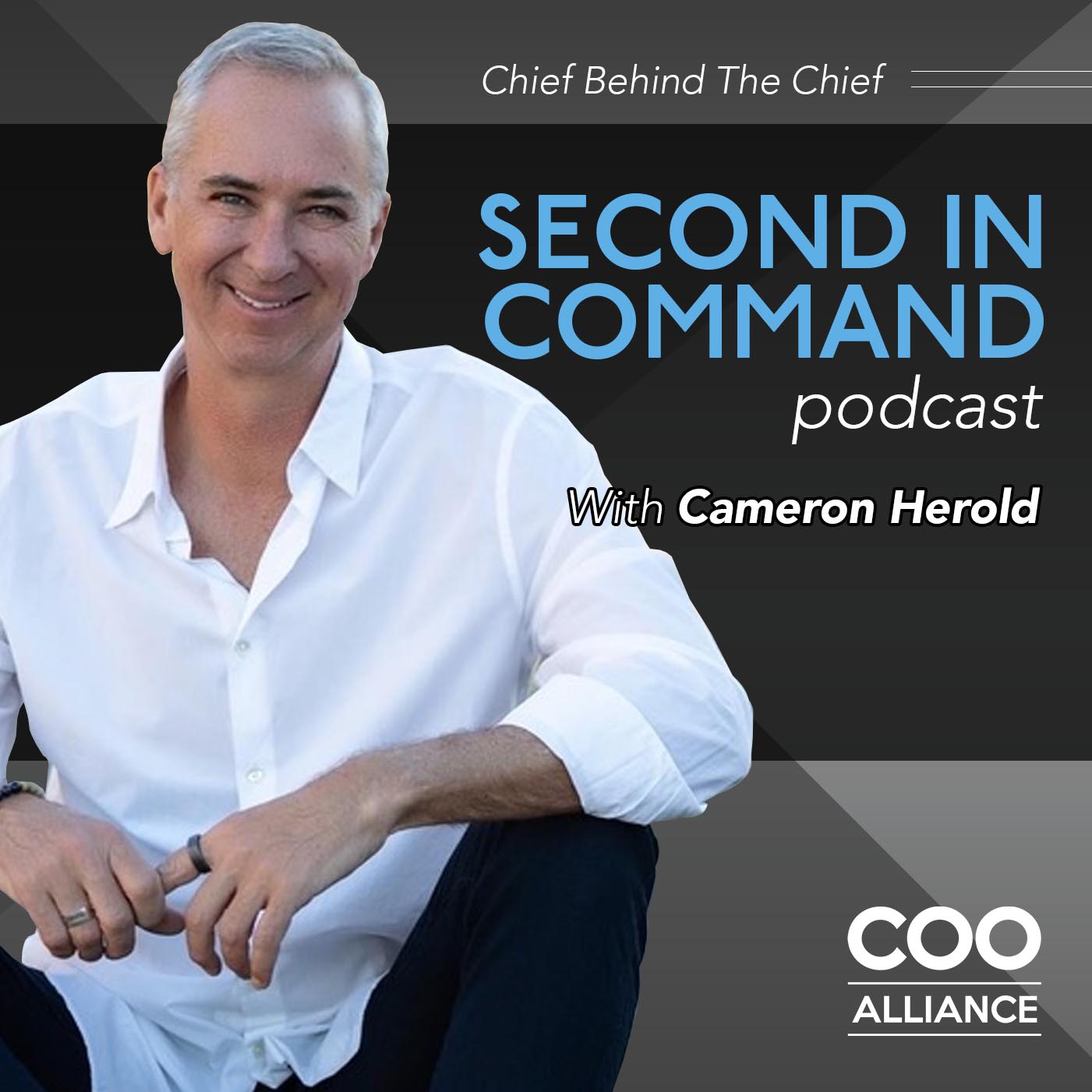
Second in Command: The Chief Behind the Chief with Cameron Herold
Ep. 550 - Zingerman’s Bakehouse Managing Partner Amy Emberling - Love, Vision, and the Art of Creating Irresistible Company Culture
00:40:06
Loading summary
Transcript54 lines
- [00:00]
Amy Emberling
At the bakery. I'd say we're not doing a great job of this. We know that and it's often discussed, and maybe some of the other businesses are doing it, that when you're hiring, you should show people the vision. You should show them the training plan. Because if they are not people who want to learn, they will see right away that this is maybe not a place for them. If they read the vision, they can decide is that something they want to buy into or not?
- [00:32]
Cameron Herold (Host Intro and Outro)
Welcome to the Second in Command podcast produced by the COO alliance and brought to you by its founder, Cameron Herold. In the second in command podcast, we talk to top COOs who share the insights, strategies and tactics that made them the chief behind the Chief. And now here's your host, Cameron Herald.
- [01:01]
Cameron Herold (Interviewer)
Our guest today is Zingerman's Bakehouse Managing Partner Amy Emberling. Zingerman's Bakehouse is a nationally acclaimed artisan bakery in Ann Arbor, Michigan. She received her Bachelor's degree from Harvard College in Social Theory and her MBA from Columbia University. He learned to cook at the Ritz Hotel in Paris and numerous Michigan restaurants. She's joined zingerman's Bakehouse in 1992 as a bread baker and in 2000 became managing partner. Zingerman's Bakehouse has annual sales of over 16 million, employs a staff of 150, and supplies 100 wholesale customers with artisan bread, pastries and cakes. The Bakehouse also is a retail store and a baking school for home bakers. Amy has co authored two books, Zingerman's Bakehouse that features well loved recipes for baking and business and Celebrate Every Day which features a selection of bakehouse recipes to celebrate the big and small events of our lives. We just did an incredible episode. You're going to learn lots about leadership, building a business that is a really strong cultural and aspect to it and the way that she actually can take a group of people and bring them into almost like a manufacturing business and create such a strong cult like environment around them. You'll love this episode. You can also watch all of our episodes on our Second Command podcast YouTube channel. We'll see you on the inside. So Amy, welcome to the Second in Command podcast.
- [02:23]
Amy Emberling
Thanks so much for having me Cameron.
- [02:25]
Cameron Herold (Interviewer)
Yeah, I'm really looking forward to this. I got to know your CEO Ari finally in person. He spoke at one of our COO alliance events about a month ago in Boston, but I'd heard of him and seen him over the years and then I think he and I had both. He may have even seen me speak about 10 years ago at an event too. But he's got this kind of aura and mystique around, you know, Ari and the Zingerman's Deli Group. And you're much bigger than I think the. The brand is, even talked about it sometimes. So maybe can you tell us what Zingerman's is and all the business units that are involved, and then maybe who this mystical character of Ari is?
- [03:01]
Amy Emberling
Right. So we call it Zingerman's Community of Businesses. And right now there are 10 businesses. We're all located in the Ann Arbor area. And every single business has an owner, at least one owner in the business. So we're not vice presidents of subsidiaries, we are just owners. So the businesses are the original businesses, Zingerman's Delicatessen, and that was founded by Ari Weinsweig and Paul Saginaw, who's the other founder of the whole organization. And that was in 1982. Then the second business, before there was even any conversation about Zingerman's Community of Businesses, and anyone really knew about that, it was maybe a twinkle in their eyes, but maybe not even was Zingerman's Bakehouse. And that's where I am now, the majority owner. And then came Zingerman's Mail Order, which ships the things that all the producers at Zingerman's make, plus all kinds of wonderful Otterson food from around the world to the entire. They shipped to the entire country. Then there is Zing Train, that teaches our business practices. Zingerman's Roadhouse, which makes really great American food. Ms. Kim, which makes traditional Korean food. Zingerman's Coffee Company, which is a roastery and a cafe. And Zingerman's Corman Farms, which is an event space. Let's see, am I what I'm missing? Zingerman's Food Tours, which takes people around the world to enjoy artisan food in different countries. And then Z, what we call Zingerman Service Network, which is a separate business. And that's where some of the people who do human resources, it's finance, and our creative services reside. So that's. That's the organization.
- [04:52]
Cameron Herold (Interviewer)
Incredible organization. I mean, it really has grown in some ways like a vertically integrated company. Right? You've got a company, you're running a deli. Well, we may as well do all of our own baking. Is that kind of how it started? Or was it just. Was it done through acquisitions? Were any of these Greenfield operations.
- [05:10]
Amy Emberling
None of it was through acquisition. So the way it started was the story, the origination story or the origination myth, whatever you want to call it, because it was much, you know, I love to tell the story, teach it to new employees, and I try to tell them a little bit more of the complexity. So the story that we tell is that Paul and Ari, that the deli was successful. They were about 10 years in and Paul said to Ari, ari, we got to figure out how to grow. We have managers here at the deli who really want opportunities. We were pretty successful in what we did here. Not that we can't do more, but we've kind of achieved our vision. How are we going to grow? And you know, as they tell it, people said, why don't you just open up delis across the country? You know, we have this wonderful customer base of students who went to University of Michigan and they leave and they go to other places and then they say, come here, come to Arkansas, open up a deli. So they thought about that, but they decided they really didn't want to do that. They. And so that's when they came up with what we refer to as the vision of 2009. And that vision was that they would have businesses all in the Ann Arbor area, all with an actual owner in the business, people who had a particular passion at that time about a food related activity and that each business would be unique so we wouldn't replicate it all. So that's how they envisioned it getting going. The bakehouse was the second business. But as Frank Carollo, who was my business partner, who has since retired, tells it, he was also my boss. I was an hourly employee when I started here. He had no idea about this vision. He just thought he was friends with them. He thought he was opening up a business with Polinari. And I think they hadn't really talked about this whole community of businesses. So after the bakehouse was open for a couple of years, then they decided to kind of go down this path.
- [07:07]
Cameron Herold (Interviewer)
Interesting. When I first learned about the whole Zingerman's group from a guy named Jannik Silver and Yannick was a entrepreneur in the tech space back in D.C. and he was talking about Ari because of the whole vision of 2009. And that's actually, I think, the connection point. I wrote a book called Vivid Vision where an entrepreneur crafts a four or five page description of what their company looks like, acts like and feels like three years in the future. And Ari had done something so similar that it was like, how are these two guys that have never met And I'd only ever heard of Ann Arbor. I read the Preppy Handbook, and Ann Arbor was all about the Preppy handbook. So that was like. It always had this other mystique for me. So the vision of 2009, what was it about? Not having a chain of restaurants? Why did they kind of preclude that? Because I think so many entrepreneurs just kind of go where everyone tells them, or they go where what seems natural. Why was that not a natural fit?
- [08:05]
Amy Emberling
Right. Okay. So Polinari, almost to a fault, have never really cared about making money. So that has never been the driving force. I grew up in a family business, and I've heard about profit and loss since I was tiny at the dinner table. And I remember coming here and listening to Ari and thinking, wow, he's talking about profit like it's a dirty word. I thought this was the point of what we were doing. So that's one part of it. They have always cared to make enough money to keep a business going, pay people decently, pay the taxes, invest back in the business. But that's not been the driving force. The driving force has always been to do something really great, something special and unique, and to be related and rooted in a community. So this idea of franchising didn't work because they really didn't think you could be rooted in a community if you were in 50 different communities. And they really have always believed, and I think there's some truth to it, that the second, third, fourth, you know, store number 44 is not the same as store number one. Now, if your model is that you primarily want to make money and you want to provide something decent and good to people in different communities, well, fine franchise. I mean, it's not a bad model. And I don't think they would say it was a bad model. It just didn't fit with their objectives. And so because of that, and they didn't want to personally, they didn't want to travel. They didn't want to be flying around and checking out, and they didn't want to be quality control people in different places. So it was just never interesting to them.
- [09:49]
Cameron Herold (Interviewer)
Interesting. Ann Arbor is a similar size to the city that I grew up in. You're about 120,000 people. I grew up in a city called Sudbury, Ontario, which is in northern Ontario, Canada. How far is Ann Arbor from a major city, from a Detroit?
- [10:02]
Amy Emberling
So Ann arbor is about 40 minutes from Detroit. Very, very close. Detroit has not been much of a force until the last, I would say, decade in the food world. I'VE lived in ann arbor since 1988. Until about a decade ago, the only time you would go into Detroit was for, you know, a hockey game.
- [10:22]
Cameron Herold (Interviewer)
So Ann Arbor is. Ann Arbor is still separate enough that it's its own city.
- [10:27]
Amy Emberling
Absolutely. There are not just suburbs.
- [10:30]
Cameron Herold (Interviewer)
It's not a suburb.
- [10:31]
Amy Emberling
No, no, no, no, no. It's its own place.
- [10:33]
Cameron Herold (Interviewer)
Do you think that if it was more of a suburb of Detroit that wouldn't have been as strong a calling? Like was there something for Paulinari that they were like. My brother still lives in Sudbury. He lives in my parents old home. He knows everybody. It's such a beautiful community. Do you think that it would have been different had it been a Detroit story? Like they opened, you know, they went to the University of Michigan or wherever the heck that's from. I guess that's at San Arbor.
- [10:55]
Amy Emberling
I. Absolutely. I think that's a great point that you're making. And one of the things that we talk about is that we are who we are because of the community that we're in. And people have said come and open in Detroit and we've discussed that that's not our community and there's a community there and we would be like either interlopers or colonists or that it's not, you know, there is a. And it would have a whole different feel if we had been born in Detroit or if we'd been born in Grand Rapids, Michigan. So the big, so the big, you know, we're about two and a half hours away from Cleveland. Four and a half hours. Four hours. If you're driving fast to Chicago. Four and a half hours to Toronto. Yeah, so that's where we are. But we, we talk about the terroir of Ann Arbor and it really, you know, being in a college town and a lot of foreigners also has had a big influence on.
- [11:52]
Cameron Herold (Interviewer)
It's all part of the culture. I, I had, I laughed when you used the word interlopers. My, my brother in law calls raisins in a, in a buttercup foreign interlopers that buttercups are not meant to have. I haven't heard anyone use that term in a long time. All right, so, so every one of the brands, the tennis plus brands within the whole Zingerman's community all have one owner. Is there a connection, is there a connection point between the owners? Like do you have an owner's group? Do you share best practices or do you really operate separately? How does that whole community work?
- [12:24]
Amy Emberling
No, it's great. It's interesting. Good question. No, we Meet almost every two weeks. And all of our agreements are pretty much just handshake. But we make decisions that impact the whole organization together. But they're very big picture decisions. Like we try to have consistent customer service training, we try to have con, we have consistent benefits. So those kinds of decisions we make together. But operational decisions completely made within the businesses. And we buy and sell between one another. They're real customers. We negotiate pricing, they don't. You know, we might make something at the bakery that we think is great but we really have to sell it to make maybe the deli. And they may say, you know, we don't want it or it's not as good as so and so's. We're not going to take it until, you know, it's better or so it's real business that happens between the businesses. But we do have points of connection that we make decisions about and we write one. So Polinari wrote that first vision 2009, but every vision for the organization after that has been written by the partners in coordination with everybody else in the organ in the organization. We all have visions for our own businesses too. But all the visions, you know, ride, they roll up and they have to be in alignment.
- [13:42]
Cameron Herold (Interviewer)
What's the vision for the Bakehouse group? What is it? I know and is it a multi page vision or is it like can you kind of give us some of the core points that maybe are part of that and then how does that impact the growth in the day to day, do you think?
- [13:56]
Amy Emberling
Yeah, so we have a 20, 28 vision right now that we're working on. It's a five year vision and it has, I don't know, about 15 key points. It is multi page. But what we have learned at the bakehouse is those multi page visions. I mean, you know a lot, you clearly know a lot about visioning. It is important to have them because that whole idea of vision and real description so that you can see it. And I do think that, you know, there are some studies that that really makes an impact on whether you actually take the actions to make it happen. However, when you're trying to communicate, you know, there are 150 people who work at the bakery. A lot of people don't want to read, they're not going to read that vision over and over again. So we have come up with 15 sort of summary points to try to keep the message in front of everyone. And we have posters all over the bakery in different rooms as reminders. So some examples of what's in it. The first one. The first three are about food. The first one is that we are positive members of developing the local grain economy in southeastern Michigan, and that 35% of the grain that we use in the bakery is regional grain. The second one is that we've expanded our knowledge of Jewish food and are making Jewish foods from around the world, not just Ashkenazi Jewish food. And then there are some that are very different. Like we don't own our building. We've been trying to buy our building for years. So there's a point in there that says we now have a facility that reflects the business that we've grown to become. So it's kind of vague. Maybe it will be the building that we're in that we finally own and that we've really renovated, or maybe we're going to move. But the point in the vision is that within five years of having written it, there will have been a decision and hopefully some construction to be in a place that's fitting for how the work flows now. So those are a few examples of what's in the vision.
- [15:54]
Cameron Herold (Interviewer)
I like it. So it is kind of pointing people in the direction of where you're going to. You mentioned the agreements are just handshakes. What did you mean by that?
- [16:02]
Amy Emberling
Well, we don't have contracts. We don't have. Like we. The idea is that we will buy between one another.
- [16:10]
Cameron Herold (Interviewer)
Okay, so. So there's no contracts between the different businesses of the Bakehouse Group.
- [16:14]
Amy Emberling
Okay, that's right.
- [16:15]
Cameron Herold (Interviewer)
But you have an. You have an operating agreement or a shareholders agreement for the managing partners?
- [16:21]
Amy Emberling
Yes, we do. With the. With the brand, with the business that's owned by the founders. Polinari.
- [16:28]
Cameron Herold (Interviewer)
Okay. You mentioned that you started as an hourly employee in the business, and you've kind of grown through that. Do you think the fact that you started as that operating hourly employee has given you? And did you start as an operating employee in the Bakehouse group or in the Zingerman's Delicatestin first?
- [16:46]
Amy Emberling
No, I started at the bakery.
- [16:48]
Cameron Herold (Interviewer)
At the bakery. Do you think that gave you some kind of cultural kind of foundation to build off of versus just coming in as an outsider? Do you think the working kind of the front lines gave you a different insight or a different appreciation of the people there?
- [17:04]
Amy Emberling
You mean rather than maybe coming and buying and being a partner and having never. Oh, probably, yes, I would say for sure. And certainly at the bakery, because I've been here. You know, I came when we opened and there's. I'm afraid I mean, I. That I was going to say you can never have the same sense of the whole thing as you, or you will always have a different sense if you weren't here from when it opened, which I'm now the last person here who was here when it opened. So you can have a commitment and a great sense of it, even if you weren't here. But it's just different. Yes, I think having grown up in it. I was 26, so I did a lot of growing and learning before I became an owner. And I was here for four years. My husband was a graduate student at University of Michigan, and finally he finished, and we left, and I thought it would never be back. And I landed in New York City. And as I tell it, my husband's an archeologist, and he was working at the Metropolitan Museum. And I say he made enough money to live in a studio apartment two hours outside of the city, and we already had two children. And I thought, oh, my God, somebody better. They better figure this out. So I went to business school, and then I worked in a consulting firm for all of 10 months. And I. It was not a good fit. And then they started to call and say, hey, do you want to come back and be an owner? So during that, I tell you that in that. During that time away, I really had a lot of. I had some time to reflect on what was going on here, and that it was also. It was. It really helped me understand what the founders and what Franco Rollo were, what they were trying to do. And as a young person, 26 to 30, I didn't completely understand what was happening. But that time away helped me. And then when I came back, we had really codified what was going on here. And we didn't have training programs or classes before I left, but when I came back, they had started to really talk about what visioning was. The vision of 2009 had been created. They created this thing that we call passports, which is our training process that we use. So a lot had been that they had been thinking, actually got put into words and was being taught. And so it was. It was interesting to see that massive transformation. And I don't know why I went with that, but it was important to me.
- [19:28]
Cameron Herold (Interviewer)
No, I totally get it. Well, you also got pulled into a culture and pulled back into a culture. You know, I was a guest on a podcast a few years ago. It's called A Little Bit Culty. And I was talking about when company culture goes too far and becomes a cult. And I think that you're right on the line of when it's perfect at 1-800-got junk. We were the same at College Pro Painters. It was the same. We were definitely a cult by design, but we didn't go too far. Can you speak to some of the cultural things that you do, like the branding of your activities, the branding of the systems? You do a really good job at Zingerman's of branding every aspect of the business. I also think, is it true that you don't really have a traditional org chart or a traditional structure there as well, or do you?
- [20:17]
Amy Emberling
I mean, it's traditional in. In that, you know, at the Bay, I'll speak to the bakery. And it's pretty similar in the other businesses. I mean, they're owner. There's managers, there's assistant managers, there's supervisors. So that exists. But what's different is that it's not that you're. You have more power when you're in those spots. It's that you have more responsibility and you have more obligation. So the power is really spread. We have weekly meetings in each department that we call huddles. You probably are aware of open book management. And so everybody gets to participate. And really and very much we want everybody to participate and we share tons of information so that people can really understand what's happening. So I think the org chart can look like it's traditional, but I think the power dynamic is not traditional. So that's one thing. And then you asked about branding. So we do have a very defined culture. We have a lot of our own internal jargon and language which, you know, can be great in that it really speaks to, it gives you information. It's shorthand for things that we're trying to communicate. It can be off putting and have people feel like they're on the outside. And that's a little bit of that culty thing. So. And we have all kinds of what we call organizational recipes. You know, the three steps to customer service, five steps to handling a customer complaint. I'm looking at a sign here in the room. I'm in the eight steps to getting ready to bake, the five steps to tasting great food. So we have all of those kinds of to teach. And that's very much our kind of cultural look and feel, how we teach things. And then on a visual level and really on a how we behave level, we have, you know, some descriptions. We want it to be bold and bright and fun and lively, but approachable, not off putting. The deli was started when people talked about fancy food or the fine food. And what they were really trying to do at the beginning is make food more available to people. So if you went into the store, you didn't feel like, oh, this is not food for me, or I'm embarrassed because I don't know how to pronounce the name of that cheese. So in all of our communication, we're trying to make it approachable and down to earth so we now have words for it. The thing, Cameron, that has always been important to me though is that all of this has come from people's heart and soul. This was not a concept that was created in an ad agency room or let's come up, I want to make money, so let's come up with a concept. That is not what happened here. And I think that's really important. And for years my partner Frank and I, we would just cringe when people talk about the brand. And I still. Because that's not what it's about. It's about people are doing things the way they want to do them and the way that we're excited about. And partners were drawn here because they liked it and this is really true to us. And then you want to teach it and so you do these things for consistency and for ease of teaching. But it's not sort of traditional branding. We didn't go to a focus group and say, what colors do you think would be more appealing when you're buying baked goods or you know, what do you want the website to look like? It's never been like that.
- [23:46]
Cameron Herold (Interviewer)
Yeah, it makes sense. Hey, it's Cameron Herald, your high energy leadership guru, here to pump you up on the second command podcast. If you get frustrated because your managers aren't leading like you want them to be, check out my game changing leadership course@investinyourleaders.com that's investinyourleaders.com for just 347 per leader. You get 30 years of my proven experience straight from taking 1-800-got junk from 2 million to 106 million as COO. And it's packed with 12 easy modules. Learn situational leadership, coaching, delegation, conflict management and more all in under six hours@investinyourleaders.com with straight to the point videos, worksheets and real life scenarios. Your team will master time management, be able to hire a players and get aligned with your vision. It's all backed by a 30 day money back guarantee and raved about by hundreds of CEOs and thousands of managers already learning from the content. Grab this now and Watch your business soar. What do you look for when you're bringing people into the organization? Are there character traits or behavioral traits or, you know, how do you interview against the core values, that kind of stuff?
- [25:05]
Amy Emberling
You know, I would say honestly, we're maybe not so great at that or so clearly defined. I mean the, you know, a lot of the jobs that we have, it's difficult to hire. The, the job market is often tight. And so we're basically looking for people who are willing to work and are consistent to coming to work. I mean the bakehouse in particular, you know, on some level we're a manufacturing plant. On the other hand, in terms of service people we've often talked about, you know, how does their, you know, are they, are they happy, are they lively, do they smile? You know, that's really important part of how we give service. And so to imagine someone who, who's not very good at doing that in a job interview, and we're going to put them facing the public, that probably wouldn't be a great fit.
- [25:52]
Cameron Herold (Interviewer)
Well, and it's interesting, you mentioned the manufacturing company. There's a business out of Vancouver, Canada called the Great Little Box Company and they make boxes for brands. So the boxes that beer might come in or the boxes that a pack of good might go out the door in, maybe a box that your Zingerman's group that ships stuff might ship in. And so they're a boring manufacturing company. They just make pretty boxes. But they decided to really obsess and care about the people. So even when they got the person in who is frontline staff, blue collar, minimum wage, English as a second language, the fact that they started to care about them as humans, I think is what changed the culture. Can you speak to that? Because yeah, maybe it's tough to find people, but it sounds like you probably do stuff when you have the people to indoctrinate them into the culture where all of a sudden they're just treated differently than they were if they were down at Fred's blue collar manufacturing business.
- [26:50]
Amy Emberling
Absolutely, that is true. So two things just to step back at the bakery. I'd say we're not doing a great job of this. We know that and it's often discussed and maybe some of the other businesses are doing it, that when you're hiring, you should show people the vision. You should show them the training plan. Because if they are not people who want to learn, they will see right away that this is maybe not a place for them. If they read the vision, they can decide Is that something they want to buy into or not? So there are things that we are supposed to do, we don't always do them. Okay, then when people, what I always say is, you know, because people's people, customers will say, well, how do you find these people like you at Sierman's? How do you get these people like, okay, there's not some magic pool of employees out there that we only know about and we get the good ones. No, it's what you do with people when they come just exactly what you're speaking to. And people often say, I didn't believe it the first month. People were so different. And it's really simple things, Cameron. Like we have a rule called the 104 rule and that is within 10ft you acknowledge someone in some. Like it doesn't, not verbally, but you nod or you wink or you give a little wave. And then when you're within four feet, you say hello. And what we teach at the bakehouse is we would also prefer if you learned everybody's name. The people that you regularly see and use their name. So we have everybody's picture with their name and a little thing, a little kind of fact that they wanted in there, in the, in the lunchroom so that it gives you a way to learn people's names. So something basic like that. So, you know, in a way we're in a plant, but we try to not have it, have the characteristics that, you know, maybe are not true. But in the worst case scenarios of manufacturing environments, like saying hello and knowing people, we have these weekly meetings that's totally different. We say appreciations at the end of every meeting. So those little short 15 minute meetings in the departments end with a round of appreciations. And when people first come, they're often a little uncomfortable, like, oh, is this for real? Like, oh, this is, this is weird. Or I'm uncomfortable. But then they're there for six months, nine months. You can see the outer shell start to melt and to, to trust and to feel comfortable. And then, you know, and then they're saying appreciations to people. So a couple, those are a couple of little examples of things that we.
- [29:21]
Cameron Herold (Interviewer)
Well, and I think that's when culty is perfect, right? When you're, you're hitting that edge and bumping into it perfectly. They get pulled into that culture and then they just don't want to leave, they don't want to go anywhere else. And I love the appreciations too, that it's so hard for people to remember that we all are on that one big team together. And I really love the whole just even knowing of people's names. I had a mentor who was being groomed as the COO at Starbucks, and he was mentoring me every month when I was the COO at 1-800-got junk. And he told me that I played favorites, and I didn't notice it, but I had some people that I called them by name, others that I casually waved to, and some that I had nicknames. He goes, you can't have nicknames for some people and only wave to others they feel. And I was like, wow, I never saw that was a blind spot of mine.
- [30:04]
Amy Emberling
Yeah, great point about that, too.
- [30:08]
Cameron Herold (Interviewer)
So growing up in a family business where profit was probably talked about more, and then you're working inside of a business, even as a managing partner, where profit isn't necessarily the point, how do you rationalize that or how do you balance that? Where we still have to operate with the P and L, we still have to. To control budgets and cogs and what's the line on that? That you have to dance?
- [30:30]
Amy Emberling
Yeah. So, I mean, I think that the next generation of partners after the founders have been a little more what I would call fiscally responsible. So in preparing to speak with you, I was thinking about what are the challenges between being the second in? And one of them is that sometimes the priorities are slightly different. So we are. But what I say, what they may have said was, profit's not so important. It's, you know, we hope that we get it. And what I say is, when I'm teaching it at Zingerman's or at the bakehouse, we're not trying to maximize profit. We're trying to optimize it. So we have three bottom lines. Great food, great service, and great finance. And we're trying to balance the three. So we would never switch from using butter to margarine, because at least in the short run, we'd have a lot more profit. But it doesn't mean that we not trying to negotiate good prices on the butter that we buy or on our flour that we don't have contracts for our flour. So just trying to balance all three of them. And it's tough, but it's a fun game. And so that's how we play it at the bakery. What.
- [31:44]
Cameron Herold (Interviewer)
What lessons do you think you learned growing up in a family business? What do. Do you remember any lessons that you kind of still carry with you today? Or do you think, oh, gosh, it's made you a different kind of a leader?
- [31:54]
Amy Emberling
Well, sure. I mean, my father, I think he only took off Sunday afternoons and on Sunday he worked Sunday morning, he worked all day Saturday and he worked Monday through Friday. Sunday afternoons he fell asleep in his chair in our tent, often with his price book in his lap. So one thing that I learned was about having a very strong work ethic and working that sometimes you have to work hard and a lot. Now I have never worked as much as he did. I've had to balance that, I think. I mean, he was a man of the 50s. My mother took. There were four children. My mother was primarily a stay at home mother. My husband is not a stay at home father. I have two children, they're grown up now. But I was balancing that. So I did not work as much as he did. But working hard then he always told me, amy, it's never just up. You know, it goes well and then there can be a dip, it could be a bad dip, and then it can come back up. And so when we've run through, you know, different challenges over the last, I've been here for most of the last 30 years, I, you know, I think about that, okay, we're in a down, but it doesn't mean it's over. And you know, there'll be another, there'll be another up. Not that we don't have to do things to make that happen, but that's an important part I lived through. He had multiple businesses and one went bankrupt. And I lived through that in our home in the many discussions. And he personally, I mean through his work, paid all of the debt of that bankruptcy because he thought for the integrity of his name and the ability to borrow money later. So having ethics and morality and how you conduct yourself in business was a big thing. Right? So those were. And that some parts of business and work, they're not always, you know, glamorous, but they have to be done and they're important then. And also sometimes the devil's in the details now. All that said Cameron, an interesting thing is that when I started was working here and I would tell my father about some of our ways, you guys are crazy, blah, blah, blah, and a little bit negative about it. But then years later he said, you know, I maybe should have done things a little bit more the way you were all doing things. So it was just interesting. I've taken things from him and I think that now if he were to do it again, he may have take some things from how we're conducting business.
- [34:23]
Cameron Herold (Interviewer)
I love it. Yeah, yeah, it's interesting. My dad said the same that I'd always learned lots from watching my dad grow a business. And then he read one of my first books that I'd written. He's like, wow, I wish I had that when I was running mine. So right now you've written a couple books as well. What was the impetus for writing books? Was that to help build a brand? Was it something that you just had to write?
- [34:43]
Amy Emberling
Yeah, it was a couple of reasons. One was we wrote it the first book we wrote for our 25th anniversary and people had asked us, they wanted the recipes and so I felt a little compelled to satisfy customers. Then there was just the personal challenge of it. There are a lot of bakeries out there or food businesses that have books and why are we not doing this? That we should do it and I should learn how to do that. So those were the main two reasons. Oh, and then the final one was it really helped me. I knew that my partner was going to retire and I felt like it was a way of sort of tying a bow. Bringing this period of the bakery to conclusion by working together, sort of writing about what we had done together. That was really important to me. So I wanted to do that with him, was sort of summarizing our 25 year partnership.
- [35:42]
Cameron Herold (Interviewer)
I love it. Well, I want to go back to your 21 or 22 year old. You were just starting off in your career at Zingerman's. What advice would you give the younger you that you know to be true today, but you wish you'd known back when you were just getting started?
- [35:55]
Amy Emberling
Maybe be a little more patient. I was always in a big hurry. A little more patient perhaps, which I say to people now, and I say to my own son, try to be a little more coachable. You know, it's good. And sometimes I say to the managers, you know, it's important. Try to hire, you know, you asked me this before, it's not always possible, but try to hire people who think that they're winners. And this word entitled sometimes has a bad rap, but I mean it in a good way. Try to hire people who feel entitled to a good life and to doing well because they will work toward all of us having a good life and doing well. And so. But on the other hand, I think I felt that way a little bit. I mean, I think Frank even he said he brought up the word entitled with me. So we didn't always get along. But I think that, I think that entitlement helped me do things and asked to be treated well. But it also stopped me Sometimes from learning when I could have learned, because maybe I thought I knew more than I knew. So being humble and that word Frank also brought up, you know, learning to be humble has been a really important lesson that I got and that I. But, you know, would have helped me if I'd gotten it even earlier.
- [37:14]
Cameron Herold (Interviewer)
I really love that whole sense of entitled, though. It's a really beautiful kind of perspective. It's like the glass half empty and the glass half full on the same word. Right. Entitled can come off as a. As a very negative connotation. But then I see what, like that really resonated with me. Entitled and that are deserving that. But they have to go work for it. Like it's there. If you want it, go get it. Right. Versus, yeah.
- [37:38]
Amy Emberling
So on that line, when you become a Zingerman's partner, you have to answer. You have like an application with a lot of different questions. And in this application you say sort of what your vision is for your career. And I put in how much money I wanted to make after. I don't even remember if I said, After 10 years, I want to be making this amount of money. And I think no other person had ever put that in their application. And I put in a large amount of money for that time. And compared to what people were earning. And I remember Paulinari laughing and saying, well, sure, go ahead, because if you're going to make that amount of money, we're going to be making more. But I think there was a sense that, you know, like, why do you. Like, why do you think it was entitled? Like, why. Why should you do make that money? But I thought, why in the food business, if we're trying to do something great, why can't we be deserving? You know, why not? Why does this. It was always presented that it was a. That we. It was a little bit of a sacrifice to doing what you want to do. And I thought, hey, why can't we do what we want to do, how we want to do it, and not sacrifice? And yeah, for everybody, everybody. Why should any of us sacrifice? So that's what I mean about that. Entitled. We all deserve no matter, you know, so if you're, you know, doctors do really important things, and yes, we're bakers and we're not curing cancer, but we bring joy every single day to people.
- [39:08]
Cameron Herold (Interviewer)
After spending as much time as I've been spending over in Europe and Asia and the bakery that we get, I agree. There's something that's beautiful about. About what the bakers produce so, Amy Emberling, the Managing Director for Zingerman's Bakehouse Group, thanks so much for sharing with us on the Second Command podcast.
- [39:24]
Amy Emberling
Thanks for having me, Cameron. It was nice to meet you.
- [39:26]
Cameron Herold (Interviewer)
Wonderful. You as well.
- [39:30]
Cameron Herold (Host Intro and Outro)
You've been listening to Second in Command, brought to you by COO alliance founder Cameron Herold. If you enjoyed this episode, please be sure to like, share and subscribe to us on Apple Podcasts, Spotify and our other podcast streaming platforms. For more best practices from industry leading COOs, visit COO Alignment clients. Com.