← Second in Command: The Chief Behind the Chief with Cameron Herold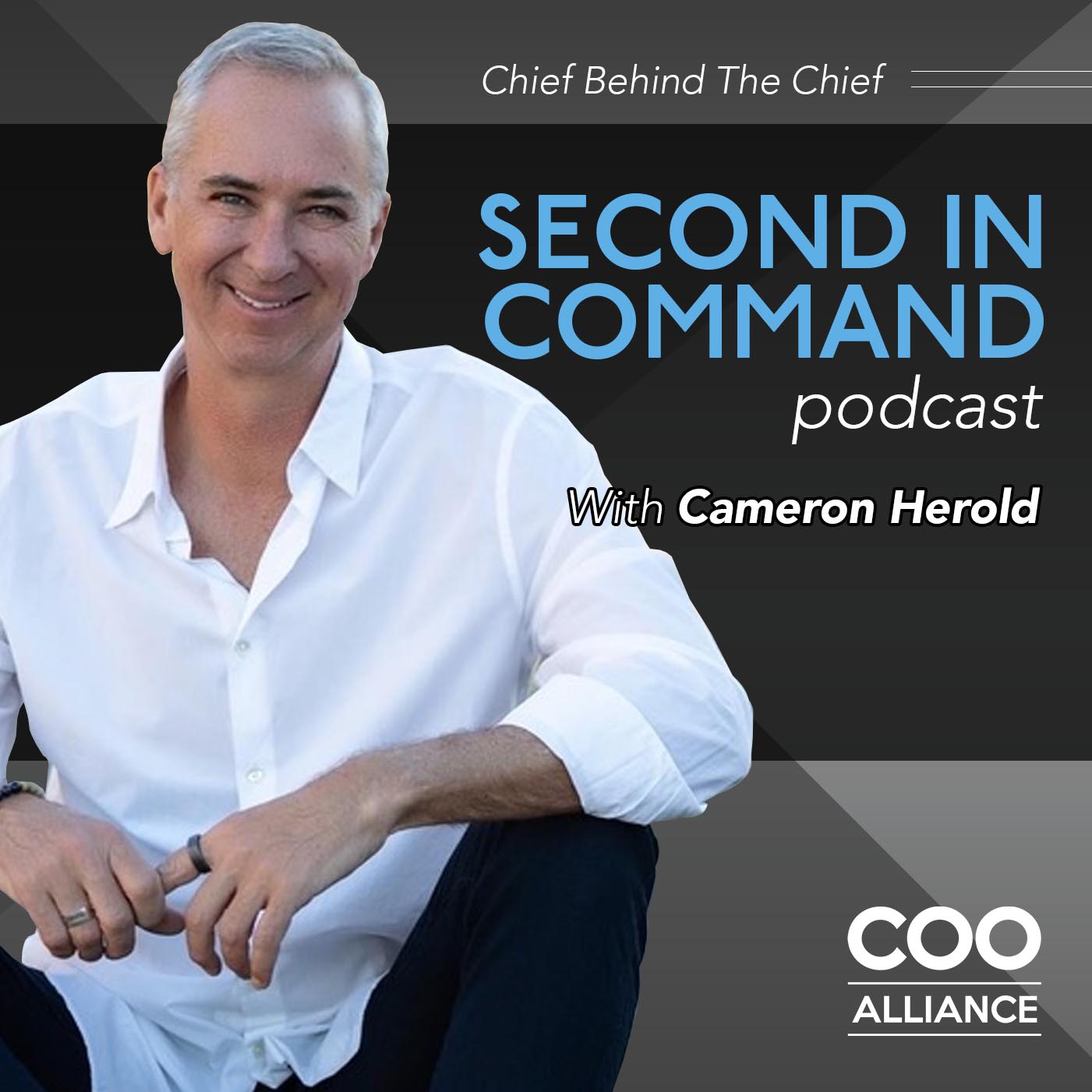
Second in Command: The Chief Behind the Chief with Cameron Herold
Ep. 551 - FAN FAVORITE | Orangetheory Fitness Former COO Griff Long | The Truth About Building Outstanding Leadership Teams
00:45:14
Loading summary
Transcript110 lines
- [00:00]
Cameron Herold
Just a quick note before we dive in. This is actually one of our older episodes, but we're bringing it back because it's one of the most downloaded ones we've ever released. Clearly it struck a chord with a lot of listeners and I know there's so much value packed inside. So whether you're hearing it for the first time or revisiting it, enjoy this fan favorite.
- [00:17]
Griff Long
Focus on the people, then the process and then the performance, but really understanding the people, where were their opportunities, whether it's personal or whether it's within their area of responsibility. So I think for me, first 30 days is just really focused on getting to know the people and making sure I understood that culture because I stepped early on my career, stepped on some landmines by going in there like a bull in a china shop and do it this way. But for me it was really about just listening and learning and figuring out where the opportunities were.
- [00:53]
Podcast Announcer
Welcome to the Second in Command Podcast produced by the COO alliance and brought to you by its founder camp. In the second in command podcast we talk to top COOs who share the insights, strategies and tactics that made them the Chief behind the Chief. And now here's your host, Cameron Herald.
- [01:17]
Cameron Herold
Griff Long is an avid health and wellness enthusiast. He blends his passion for fitness with his drive to develop world class organizations. As the Head of Operational development and innovation at Orangetheory Fitness, Griff has over 25 years of experience in transforming startup organizations into multimillion dollar corporations and has served leadership roles in both enterprise and consumer businesses across the country, including the COO of Purbar, VP of Operations for Equinox, Senior Vice President of SoulCycle, and Senior Director of Operations for Hertz. A graduate from Bridgewater State University with a Bachelor's degree in Business, Griff also prioritizes his own physical health and Wellness as a US Triathlon association coach, CrossFit coach, running coach, Sean Delaney, facilitator, and Six Sigma green belt. So a classic underachiever. Thanks for being on the Second Command podcast.
- [02:10]
Griff Long
Thank you for having me.
- [02:11]
Cameron Herold
Yeah, dude, I kind of read through that bio and they absolutely crushed it with bringing you on board as a coo. I mean, I can tell right away with every organization you were involved in, it was kind of the top of their game as well. So what was it that that attracted you to Orange Theory?
- [02:29]
Griff Long
I think, you know, a number of things. My passion for fitness obviously, but most importantly, just the innovation and the science behind the workout. You know, as, as a triathlete, I'm always studying I track every one of my workouts and the things we're doing at Orange Theory here just get me really excited to come to work every day. You know, we're not looking three months, four months ahead, we're looking five, 10 years. Had to really change the scope of what fitness looks like to remember in their experience.
- [03:00]
Cameron Herold
Awesome. And I guess I shouldn't assume that everybody knows what orangetheory does. Although I'm sure most of us at least heard the brand. Tell us what orangetheory is what you stand for so that we get a bit of an understanding there.
- [03:10]
Griff Long
Yeah, we are science backed, technology, track coaching inspired group fitness workout. So we use a few different tools within our studio to bring what I would say, more life to our members. We do that through heart rate interval training. We get you on a treadmill, we bring your heart rate up and down. We operate in five training zones, orange and red. We try and get you 12 or more splat points in every class. So you're always going to have a cardio component, you're going to have a strength and conditioning component. We also bring with the cardio, we'll bring in the rower and other tools to get that heart rate up and down.
- [03:49]
Cameron Herold
Is that where the orange comes from is staying kind of just below the red zone?
- [03:53]
Griff Long
Yeah, it's the, it's the orange zone. And when you have 12 or more flat points, you're going to get this epoch effect which is going to allow you to continuously burn calories for up to 36 hours after the workout.
- [04:05]
Cameron Herold
It's interesting, I remember when I was training for a marathon a couple years ago that there was a certain heart rate I had to try to stay in and if I, if I actually stayed at that heart rate I could, it was like Forrest Gump, you could just keep going. But as soon as I, even at a shorter distance, as soon as I got my heart rate too high, I was burning out way too quickly.
- [04:22]
Griff Long
Yeah. And that's one of the things from my training. When I started incorporating high intensity interval training into my run and my swim workup, it really trains the game for me and elevated my physical fitness. Because you're going up for small blocks at time where, which will help you train and be even stronger in your marathon. So will any. I would even incorporate those high intensity interval trains into those marathon or those triathlon workouts. Get the body to adapt more now.
- [04:51]
Cameron Herold
So Orange theories. I mean great brand, getting great recognition, really strong reputation in a super competitive industry. Like there's just so many different chains and Organizations where I guess you can do you compete against or do is it rising tides lift all boats? Are the markets just so big that it doesn't matter?
- [05:12]
Griff Long
I think we're, we're focused on, you know, we're always monitoring competition, but I think we're focused on what can we do to bring more life to our members. And we're doing that through technology and innovation. Thinking about what do the members need to see to get their results. It's easy to get somebody into a studio, but it's if they're not getting the results, then they're going to leave. And I think that's what happens in most fitness concepts. So the more data we can give them that simple, easy for them to use up and understand, the more we will get them to stick to this workout.
- [05:47]
Cameron Herold
That's interesting. Okay, so walk us through the makeup I guess of the leadership team and what did they see in you and bringing you on as COO 18 months ago.
- [05:57]
Griff Long
Yeah, so we have a very tight knit group. There's nine people on the leadership team. Dave Long's our CEO, Dave Carney's our president and we are still privately owned. But the reason they brought me on is I think I bring, I call it a double threat. I have an extensive background in leadership development training. This company has gone from 0 to 100 in only 10 years. And what they were looking for is more senior leadership, more of the process behind what we do today with all the initiatives we do. That Six Sigma background has really helped me prepare them to say, hey, let's slow down, let's make sure we nail it, let's not go too fast and then really couple that with the leadership development training is how can we support these franchise even more effective tomorrow than we are today.
- [06:54]
Cameron Herold
Interesting. Okay, so on the, the Six Sigma, where did you get trained in that? Was that at GE or was it at Motorola or where did you get your exposure? Those are the only two big organizations that I know were deep in it.
- [07:05]
Griff Long
Yeah, well, we got it. I got it through Hertz, which was at the time owned by Ford, which was probably the third company that was big into the Six Sigma.
- [07:12]
Cameron Herold
Sure. Yeah. Amazing training, right?
- [07:16]
Griff Long
Amazing. You know, I got a green belt. I didn't go through the full black belt because that requires a full time. But it just, it really helped me learn and understand the process and really what I took away. One of the things we always talk about now is the failure mode effect analysis. It's like you have a project and you're ramping it, but let's figure out what could go wrong. Let's put a risk score associated with it. And that really paid dividends in prior years when I was launching a new division for Hertz where if you can anticipate what could go wrong and put countermeasures before you even launch, it makes your launches even more effective than they would have been.
- [07:53]
Cameron Herold
Interesting. Yeah, I think the Six Sigma black belt is kind of like the Kona Ironman of process development. What would you throw out? Anything that you've learned in Six Sigma that you just like, we don't like that or it doesn't work, or it's too complicated?
- [08:08]
Griff Long
No, I think, you know, it was, it was originally built for manufacturing and you have to customize a little bit to your needs and whatever business you're in. But the concepts and the principles behind Six Sigma are still all there. So it's just really customizing it to your needs and your business.
- [08:25]
Cameron Herold
Interesting. Okay, so you joined the organization. How do you get up to speed? How did you come in? And especially with a very entrepreneurial organization, fast growth organization, how did you get up to speed? I don't imagine they had a strong onboarding process for you.
- [08:39]
Griff Long
No, I think. And you know, I've. I've relocated 18 times in 25 years, so I've learned what to do and what not to do when you come into an organization or to an increased responsibility. I said for the first two weeks I just shut up and listened and really asked two questions. What advice do you have for me and how can I make your job even more effective? And just really got to know, focus on the people, then the process and then the performance, but really understanding the people, where were their opportunities, whether it's personal or whether it's within their area, responsibility. So I think for me, first 30 days is just really focused on getting to know the people and making sure I understood that culture because I've stepped early on my career, stepped on some landmines by going in there like a bull in a China shop and do it this way. But for me, it was really about just listening and learning and figuring out where the opportunities were.
- [09:34]
Cameron Herold
So what did you find on the opportunities first on the people side?
- [09:38]
Griff Long
People said the most passionate people team members in the world craving more leadership development and more of a structured environment. You know, we have so many initiatives up in the pipeline that we really just had to determine what is most important for us in prioritizing them and getting the right team members involved. There was sort of a siloed approach in different departments and really breaking down those silos and making sure that we are all connected and the right people are involved early on in the process, so there's no surprises. Or finance didn't know about this. Or retail didn't know about this.
- [10:23]
Cameron Herold
How did you break through those silos? I'm working with a coaching a company right now that's just gotten up to 750 people and in five years they've gone from 70 to 750 and they're starting to kind of stratify into these silos. I'm trying to raid against that and break through it. I have a football analogy I'll give you in a second. But how did you break through those?
- [10:42]
Griff Long
I think it goes back to staying off email and trying to manage, manage the business and the team players through an email process. I would get the right people in the room, have conversations and making sure everybody's aligned. One of the things we also introduce is what I call a golden threat to every product that our project that we're developing. And this golden thread just really outlines what the objectives are of this project and it does a future state. It kind of describes the member experience throughout that. So when we introduce the golden thread, we combine that with what Tony Robbins talks about. State story, strategy. Every project now has a golden thread, so it clearly understands the why behind it. Especially when you're, when you're dealing with a large franchise organization, the why is so critical because these franchises are making money and they have a process. If you want something new, you got to start with a why.
- [11:41]
Cameron Herold
That's interesting. Yeah, we used to say sell them, don't tell them.
- [11:43]
Griff Long
Exactly.
- [11:44]
Cameron Herold
Yeah. And I love the whole golden thread idea because it's interesting how, you know, in the entrepreneurial world, I was building a company called 1-800-GETJUNK and our founder would come in and he'd have this amazing great idea that he'd probably spent two months swirling around in his head or at minimum at least an hour it was swirling in his head and he would kind of dump it onto either my lap as the CEO or onto the laps of the leadership team. But he rarely gave us the full why behind the what. We clearly understood what the project was, but we didn't see how it all fit into everything. And I think that slowing down to give them that a little bit of more time that creates. Does that create more of the buy in? Is that why you're doing it?
- [12:20]
Griff Long
100%. And you know, if we go and pitch a new idea to the franchise and it's not vetted out properly, they're going to go right into judgment mode and start saying, well, what about this, this and this? So another step in our process that I've instituted is we have a small number of corporate owned studios. So before anything's launched to our franchise system, we have tested it, broken it, proven it in the corporate studios, find all the questions that we didn't know answers to. So then I can explain this and I get ahead of it. I said, you might not think this is going to work, but here's the data to prove it did. Here's the data that shows this works. And again, getting back to your why?
- [13:01]
Cameron Herold
Well, and I love that you're actually running corporate locations. One of my things that has always bothered me about so many franchisors is they franchise because they couldn't make enough money running a location, instead of like the franchisees had to make a lot of money. And franchisors that run corporate locations understand the pain points. They understand how to get that leverage because they have to. Plus they can kind of point to themselves and go, look, it works.
- [13:25]
Griff Long
Correct. And it really is the proving ground for everything that we do now. And I think we've put a lot more structure, working with our technology team to say, okay, we're going to launch at this studio, expand from here. But again, it does make it bulletproof when you launch to the base.
- [13:40]
Cameron Herold
So I was going to tell this story of how to break down silos or something I've been working on and then I was pulling away from and I said no, but I keep seeing this Patriot shirt. So I have to kind of go into this. So if you think about Tom Brady for a second, you know, you think about the Patriots, you've got the offensive team and you've got the defensive team and you've got the special teams. Tom Brady, quarterback. What. What is his most important team?
- [14:04]
Griff Long
I think what is Tom Brady's most important team? Wow, that's a great question. I think. I don't think he could point to one. I think he would point to it. It's the sum of the all the parts.
- [14:17]
Cameron Herold
Thank you. And that's why you're good at what you do. I wish everyone could see what I just kind of threw my hands up. But so many companies that strug silos, what happens is they think that the quarterback's most important team is the offensive team, or they think the VP of marketing's most important team is marketing, and it's not the VP's most important team is the company. The COO's most important team is the company. The head of finance most important team is the company. Their second most important team is finance or marketing. Tom Brady's most important team are the Patriots. The second most important team is the offensive team. But when he's off the field, he's watching what's happening on there with the defense so he can show them what's going on because they're all in it for the good of the team.
- [14:58]
Griff Long
I agree with that.
- [15:00]
Cameron Herold
So did you have any of those issues at all where people were really more focused and obsessed about theirs? Did you have to break through that at all or was it more communication on projects?
- [15:10]
Griff Long
Yeah, no, I think, I think you see that in any organization I've worked for. I mean, you get tunnel vision and you start to think about one specific goal. My job, what it's that, what do I have to do to get that done? What I always remind the team that we make better decisions when we make them together. So I don't. I am the least important person in every room I'm in. I'm the one who will facilitate the conversation and make sure the different departments are saying, what do you see? Help me see around corners. What are we missing? So I think just making sure that transparent communication and it's a safe space where people can challenge the ideas. And if you do that, you, that's to me is how you break down those silos.
- [15:52]
Cameron Herold
Yeah, that totally works. All right, so then we've got on the areas of operations, when you said you were meeting with the people in the first two weeks, what operational improvements did you see that had to happen?
- [16:03]
Griff Long
I think for me I started with the corporate owned studios and typically in most startups you have the opportunity because you're, you're on an upward trajectory like a hockey stick is. We were really throwing a lot of bodies at problems with no clear infrastructure set up. So what I did is start on the corporate owned studios and created. I learned this from Hertz. Renicar is the COE concept. So we don't need 12 people working on marketing at the corporate owned studios. We need one expert, then we need one expert on ops support, then an expert on facilities. So what I did is restructured the team and then there's the regional managers out in the field who are generalists who know a little bit about everything. But when they're coming back to the corporate and don't have the answer, they can talk to a marketing expert who will help them create the right marketing strategy. They're struggling with lead generation or closing sales. They can talk to the sales expert in there. And we would deploy these experts throughout the region. When I say region of corporate owned studios to make sure that each plan was being executed and customized to, to their needs. So it's not a one size fits all. For every studio that's out there. Everybody has different challenges and pain points. And that's even more evident when you talk about international. So what is the customized approach? So my marketing person may be focused more on these three studios because they don't have lead generation on the sales side. Then we're going to have another power couple of studios that are focused on that. So it was really creating the infrastructure in that COE center of expertise concept that I think really made a biggest mark.
- [17:42]
Cameron Herold
How do you run your corporate versus your kind of operational locations in terms of, let's say for marketing as an example, what decisions and programs are being managed nationally and what percent do you allow or what do you allow the franchisees to do?
- [17:59]
Griff Long
So our marketing team is very robust and they have a marketing fund like most franchises. So they're crafting the overall strategy, the overall message and that is more life and they are cascading that on a national campaign. Then as we get into our infrastructure, it's then regional and then it's studio level. So there's three tiers that we will operate on what the operation teams is more focused on Tier 2 and Tier 3, while our national marketing is focused on Tier 1. In addition, we also have co ops in strategic areas that will partner together to get more bang for our buck in specific areas. Like if you think about New York, if every Studio was spending 5,000amonth on marketing, it's not going to have bang. But when you have that combination of studios going after that, it really puts more money and gives us more opportunity to create a message and to get that down to the local level.
- [18:57]
Cameron Herold
Yeah, it does. How do you worry about this whole concept of death by a thousand cuts? You know, you've got in every single zip code, you've got a really strong gym that's either an independent or another chain or another workout type or a big, you know, big box. How, how do you, how do you guys stay focused when you have the opportunity to get distracted by what every competitor is doing?
- [19:21]
Griff Long
I think we're laser focused on doing what and, and concentrating on what we're great at. And that is the science behind the workout. Yeah, there's a lot of gyms out there and there's a Lot of great gyms out there. But I think when you look at what we do that differentiates us is that we're focused on the science. We're going to prove to you that you're getting more results for. For example, we have in body scales being launched to all our studios which will get your BMI compensation. So if you're able to see that and then look at again in 90 days and see the results, there's proof that it works. Whereas some people might not feel they're getting the results because you can't necessarily see your body transform. But when you can put the numbers behind it, then you have the evidence. And that's where we like to always think about more sticky points, as we call them, to keep our members engaged.
- [20:12]
Cameron Herold
So how do you keep them engaged? What are those sticky points?
- [20:15]
Griff Long
Well, we, we have invested a lot in our mobile app. So it's, it's connecting with our members through our mobile applications. It's by delivering custom content to those members. And I think it's more, you know, the sticky points are just as I mentioned before, for the data, the science behind the workout. So if you took a workout for Orange Theory, it's immediately being fed to your iPhone, our app, and it's going to give you a history and you can also see your progress. You're going to just see we have a challenge tracker that enables you to see what your fastest 1000 meter row was. Six months later there's another challenge put out there and you see your improvement. So it's sticky points through all of those components.
- [20:57]
Cameron Herold
Okay, talk about the leadership team for a second. How do you get your whole leadership team on the same page with the vision and operations and plan on my opera?
- [21:07]
Griff Long
You mean my operations team?
- [21:09]
Cameron Herold
No, the company as a whole. The company leadership team.
- [21:12]
Griff Long
Yeah. Well, we have, we have a cadence of meetings every week. We meet at Tuesday at 12 o' clock and we are all. It's, it's a very short meeting but it's very strategic with what are the key things each of us need to know. And then every year we go away into what we call a strategic summit and we map out our priorities for that entire next year. And I think we are very disciplined with staying on that roadmap. Of course there's always going to be opportunities and things that change, but I would say 90% of those initiatives we start with, we finish the year by executing on those.
- [21:49]
Cameron Herold
So how do you stay on that roadmap?
- [21:53]
Griff Long
I think it's just execution with discipline. It's Making sure that we are meeting, communicating with each other and making sure we're always constantly aligned and we do that through those weekly touch based meetings that we have. And Ana Kate, you know I am very connected with the team. We will make sure we pass through the hallways and have those water cool conversations to make sure that we are always talking about those strategic initiatives.
- [22:18]
Cameron Herold
And is your head office all in one location?
- [22:21]
Griff Long
It is.
- [22:22]
Cameron Herold
Okay, any. And are you looking at all to go with any remote team at all or are you just trying to stay more and more on the corporate location?
- [22:30]
Griff Long
I think, you know, for the executive team we're always, we always want the team here because there's so much going on and having them all in one place. I know there's different points of view on that but for me just being able to walk into the CFO's office or to Dave Wong's office or to one of my colleagues to have that conversation is so critical and you can't do that via the phone. It's easy.
- [22:54]
Cameron Herold
Yeah, agreed. Hey, it's Cameron Herold, your COO whisperer and guide to scaling businesses. Check out my YouTube channel at YouTube.com amronherald and that's H E R O L- where I share tons of raw tips and insider secrets to have you level up as a leader and grow your company. From leadership hacks to growth strategies. It's all there, no fluff. Subscribe now. Hit that bell for notifications and comment on a few of the hundred videos that I've uploaded so far. And let's build your empire together. Let's go. All right, so then you talk about kind of staying on plan and then every once in a while good ideas pop up. What system or process do you have in place to say yes and to say no or not yet to ideas either ideas that come from the franchise or from the operations group or from the leadership team.
- [23:55]
Griff Long
Yeah, I think it starts when, when we put an idea together. The first thing we're doing, and I mentioned this earlier, is we're creating a golden thread and we're going to make sure we have the state the story and the strategy and then we're going to make sure that we put a business case behind this. Is this something that is going to be a revenue driver? Is this what's the why behind it? What's the KPI to measure to prove that this is going to work? So it's not just going great idea, let's launch it. It's let's prove it, let's put Some numbers behind it. And let's see if you know, when's the right time to do this.
- [24:32]
Cameron Herold
Interesting. Yeah, I like that you're actually saying that you're kind of quantifying the decision on that golden thread as well. So you're. I created something called the decision Filter, which is similar setup. And I look down at the bottom of it and I say, what's the amount of cash we have to put in? What's the ROI on that? What's the number of hours or days we have to put in? What's the ROI on that? And then will it increase one of these four things or multiple? Will it increase our employee net, Promoter score our customer, and promoter score our profitability or revenue? And it's only once we filled out that form. Are you allowed to say yes or no to a project.
- [25:05]
Griff Long
Correct. And there's also the, you know, the opportunity cost. If we put our resources to this, how crucial is that other project that might get, you know, down the priority list. So we look at all those components before moving forward.
- [25:18]
Cameron Herold
So we're. We're kind of the sum of all of our past experiences as leaders. So if you were to go back through a little bit of your resume for us and talk about, you know, where do we start? With Pure Bar or Hertz? I guess we started Hertz and kind of go the other way. Right, Hertz Soul Cycle, Would that be the direction you were in?
- [25:35]
Griff Long
Yeah, there's some others in there. A majority of my first 15 years were with Hertz, and then I went to work for Steve Case, the founder of aol. He had a startup called Flex Car that merged with Zipcar, and then I got into the fitness.
- [25:48]
Cameron Herold
Okay, so let's. Let's start with Hertz first and then Flex Car and then Steve Case, and then go to the others. I'd love to hear, so what maybe were your number one takeaways from Hertz or a couple of key things that you learned that you still carry with you today?
- [26:01]
Griff Long
Yeah, in fact, I actually printed my top 10 that I keep it with me all time, because I thought you might ask this, but if I had to pick, probably in no particular order, but number one is build relationships rooted in trust. And I always say this, especially when we're talking to the 5,500 coaches in the network. People aren't going to remember what you said, but they're going to remember the way you made them feel. So I think building those relationships and finding people's why I don't care if it's you know, an entry level person that's working part time. I want them, I want to understand who they are and making sure that entire team is vested in building those relationships. For me personally, it's about staying humble and vulnerable. You know, early on my career, especially at Hertz, back in the day, it was like, if you ask questions, it showed weakness. And I quickly learned that if I can really just be humble enough to ask for help and be vulnerable, to know that, hey, I need to. I need some more people on this to make a better decision, I'm going to be even more effective of a leader. And I'd say the third thing is just empowering, trusting your team, you know, the more empowerment you give them. I say to my team constantly, there's a level that in same thing I do with coaching Ironman triathletes, there's a level inside of you that you have not tapped into. In the next year, we're going to tap into that. How do you want to go about doing this?
- [27:29]
Cameron Herold
Oh, so you actually throw it back to them to see how they want to do it as well?
- [27:32]
Griff Long
Correct.
- [27:33]
Cameron Herold
I like it. And you're. You're right about that level of energy that's still in the tank. I remember finishing my first marathon and kind of crossing the line and going, damn. Like, I mean, I wouldn't have wanted to go run another 10k, but I was like, that wasn't actually as hard as I thought it was going to be.
- [27:48]
Griff Long
Yeah. And that's. And that's why my best races are when I get sick at the end. So I know I had nothing in the tank. And that's when I did good. I nailed it.
- [27:56]
Cameron Herold
I had that the next morning. So where you mentioned kind of the humility of a leader, I think that Jim Collins Talked about that Level 5 leadership and sounds like you kind of run in that thread. Where are you weak as a leader, as a coo? I don't think we're supposed to be strong in everything. The COO's got to be strong in a couple and we have to counter. But where do you think your weaknesses would be that you're just more cognizant of?
- [28:23]
Griff Long
I think I always have to remember that people operate at different skis and I have to be patient. I AM probably most COOs would say the same thing, but just I don't have a lot of patience. I will give somebody an assignment and then 24 hours I'm like, how are we doing on that? So I always have to remember that not everybody operates at the same level and just making sure that you're more of a support network and know when to push and when to pull. There's sometimes people need help and they're drowning. And that's why I get to that. Building the relationship rooted in trust and, you know, knowing having when your team has trust in you. And I'll give you a quick story. I was in New York last week and we were about to open the studio. So I immediately went into the studio and I started pointing out all the things that needed to be repaired in the next 24 hours. And my studio manager came up to me and this is talk, this is relationship rooted in trust. She says, griff, can you just tell me one thing that you like about the studio? And right there I stopped, I gasped, and I said, that's old Griff falling back, getting into that a type personality. And I said to Emily, I said, emily, I just want to thank you for coaching me on this and making sure I was set. So I sent her a text at the end of the night, I'll be back on my game tomorrow. I came in hot and I apologized. And that's where I go about being humble and vulnerable and rooted in trust. When your team can tell you that, you can course correct immediately. If I keep going and nobody coached me, that whole team wouldn't have been inspired for all the hard work they had done. And I was so focused on making it perfect. I missed that.
- [30:01]
Cameron Herold
That's interesting. Yeah, it's. You know, I think the school system hurt us as leaders, really, as humans in a lot of ways. But, you know, they kept showing us that if we were really bad in one subject, we needed to get a tutor at it and really work at it. And then we could become horribly average at something we didn'. Enjoy instead of just saying, you know what? I'm really not good at that, and letting someone else be good at that. I think in leadership, sometimes we have to give away some of those. Are there any real skills that aren't so much a strength of you, but are just a weakness? Like, for me, I'm really bad with numbers. I flip and transpose a lot of my numbers. So I get, I find it really. I struggle with financial statements, I struggle with budgets and spreadsheets.
- [30:43]
Griff Long
Anything. Yeah, totally get the question. I think for me it's along the same lines, is, you know, if you, if you give me an Excel spreadsheet with hundreds of lines of information, I, I have people on my team that can translate that into high level data because I don't like getting in the weeds of those Excel spreadsheets. Like, there's seven pages of files here. Give me the punchline, what do I need to focus on? And that's where, you know, I think great leaders will surround themselves with, where they have people that, that love to do that and can focus on that.
- [31:17]
Cameron Herold
Yeah. And that's why I think it's so important for us to be humble and say where we're strong on something. I heard a funny joke about humility the other day. I said, I'm so proud of how humble I've become. I think of a dashboard in our business, almost like our car dashboard. You know, our car dashboard might have 10 or 12 metrics on it, but then if you put plug in the car, there's thousands of data points that the mechanics can look at, but God forbid, if those were ever in front of us, we wouldn't be able to drive the car. Right. And then we have that one big one, that's the speed, and then the small one that lights up when it's less than a quarter tank, that goes, hey, fill up with gas. That's really how I want our leadership team dashboards to be. A little bit more than, you know, rows and rows of data.
- [31:57]
Griff Long
100%. I talk about dashboards all the time. Give me the punchline, let's make this. Let's. Let's get into the weeds with, you know, the analysts behind the scenes. But the punchline, especially when you're dealing with franchises, you have to keep it simple and straightforward and again, show the why.
- [32:12]
Cameron Herold
What are your nine people on your leadership team? What's your meeting rhythms with the leadership team? What types of meetings do you have and what kind of frequency do you guys have them?
- [32:22]
Griff Long
Yeah, so we, we have a once a week touch base with a roundtable meeting with our team where we just go around the room and share what are the critical projects. In addition to that, as I mentioned before, we have our strategic leadership summit that we do once a year, and I think it depends on the topic. I spend a lot of time with our chief Technology officer working on initiatives because we are very much aligned in where he delivers a product. And then it's my responsibility to decide when it's rolled out. So once it's done and his data, it comes to us, goes to our corporate studio. So I spend a lot of time. And the best thing about the COO job is you're involved in everything. So I promise you, I touch base with every one of my C Suite executives. At least once a week on a different topic.
- [33:13]
Cameron Herold
How do you stay out of all the areas that we could get ourselves into or how do you stay at the level you're supposed to be and avoid getting in on everything?
- [33:24]
Griff Long
I have amazing people behind me and I'm able to leverage my team in those, those players that are asking for more. I won't go to every meeting. You can't possibly do that. But they're great at giving me talking about the critical decision points or this came up and saying, you know, you'll need to be involved in this. Or I can give them the marching orders and go back. But for the most part it's really empowering, which I mentioned earlier and sometimes deciding what meetings are most important.
- [33:55]
Cameron Herold
Okay, so you do the, your one on one meetings with your direct reports. How many direct reports do you have and what kind of one on one or coaching do you work with them on?
- [34:06]
Griff Long
Yeah, so I have probably 16 direct reports right now. As we're creating some more infrastructure so it's not optimal. I want to be down to eight. So we're looking at how to tighten that. But as I've taken on more departments and more responsibility, we're still building that infrastructure. I do half hour check ins with every single one of my team members and those meetings are based on what do you need for me? And basically use what I call a traffic light. Red, what do you want me to stop doing? Yellow, what do you want me to think about? In green, what do you want me to keep doing? And then they provide me with a quick update of the key projects they're on. Outside of that, we will have at least I'd probably say every two months what I would call a development meeting. So I create personalized development plans for every single one of my employees, which is just about leadership. It has nothing to do with KPI's matrix. It just says what do you have to be more effective a leader? What do you need from me? And one example would be, you know, I need to empower and trust my team more. So then we would sit down and write. Okay, when you're faced with this, you're going to do this and create a course of action so every one of my people have developed it. And then there's the monthly financial reviews with every department to see how they're performing and where we, where our opportunities are.
- [35:24]
Cameron Herold
What do you mean by that with the financial reviews with each department?
- [35:29]
Griff Long
So when you think about our corporate owned studios, we are sitting down and we do a report out to Actually executive teams. So each team member has a little component of that. So on the corporate owned studios we'll have the marketing component, the sales component and we leverage the data to say how are we performing? This studio is up 20% but we're not closing leads. So we're doing the deep dive into each KPI to determine where our opportunities are.
- [35:56]
Cameron Herold
Got it. Okay. How about your area of growth? I mean you talked about the personal development of some of your team and the kind of one on one meetings with them. What are you working on today for yourself?
- [36:07]
Griff Long
I'm still working on communication. Has been in my project plan since I started. And I just think about how can I be more effective as a communicator? I asked myself, and this goes back to, to one of my coaches in triathlon, they said to me, what does it look like tomorrow if you were 10 times better than you were today? So I'm always thinking of how I can be more effective of a communicator. And that could be with public speaking, that could be with motivating teams, that could be with being a better listener. Is all something is something very important to me when I say listening beyond the word. So that person that I'm talking to feels like they are the only one on this planet. And really again on communication, thinking about how I can flex my style to different personality types. I got trained to be a Sendilini facilitator many years ago at Hertz. And really probably the biggest takeaway was, you know, thinking that we're always operating in our personality type. And when you can learn to flex the different people's styles, it is so powerful because you're connecting with them on a deeper level.
- [37:13]
Cameron Herold
Got it.
- [37:13]
Griff Long
All right.
- [37:14]
Cameron Herold
Talk about Steve Case for a second. You got to work with Steve was he was the founder or co founder of aol. What was that like?
- [37:22]
Griff Long
Well, I was working for Hertz for 15 years, had a great, had a great run with them, was never ever going to think about leaving. It was, you know, growing up, I spent no more than two years into a, getting from one position to the next. And then a recruiter called me up and said, just go down. And I'm like, I want to meet Steve Casey. He's pretty cool. So I just thought it was an opportunity, no intention of taking the job. I spent a half hour with Steve Case. We end up talking for an hour and a half. And he just, his humbleness, his ability to connect with people is something I aspire to. I actually signed the contract and quit my Job on the way back to go work for Steve Case and just the innovation in the way he thought about things. I learned so much in that year and a half. I was with Flex Car. I'll never forget it.
- [38:13]
Cameron Herold
Yeah, I'll bet you would. What was he like as a leader?
- [38:17]
Griff Long
Very humble and I think it goes back to some of the principles I talked about. He built relationships rooted in trust and he really empowered the team to make decisions. He had a general vision and he talked about that. But we brought it to life and he enabled and allowed us to challenge that.
- [38:36]
Cameron Herold
I see him every year at the main TED conference. I've been going for the last nine or 10 years and I've never actually either sat with him at a dinner or been able to just walk up and say hi. I think I'll make a point this April to go and just say hi to him because I, he always seems to be so approachable and he's never really, it's not like he's surrounded by a crowd anymore. It's not like, you know, it's not like, you know, Zuckerberg showing up and people like would swarm Steve. He's just been around the industry for so long that he's kind of like any of the VCs that might be there. So I'll go and say hi for sure.
- [39:07]
Griff Long
Yeah. And I, and I'd also stay with Steve is, you know, when he started Flexing Car, he knew there were opportunities where he wasn't an expert and, and the people he brought on, he brought on Joe Vittorio, who is the retired CEO of Avis. He brought on the guys from Nantucket Nectar. So he had a cross functional team that knew how to market, knew how, knew the car rental process. And that was, that was a great learning experience because I realized find people that don't have the expert expertise you do and leverage that and bring them on board to make your team stronger.
- [39:41]
Cameron Herold
That makes Sen. So over to Equinox. That's kind of more the large format I call the big box, but I don't know what the proper term would be for it. But you go into Equinox, how did, how is it working with that organization?
- [39:54]
Griff Long
That was probably the one of the best experiences of my life. Going from being in the transportation industry to try and infiltrate this organization where I was passionate about, took a long time and I, I, I didn't apply for anything. I actually wrote a letter to the president of Equinox, Scott Rosen, and said I have, you know, I have this set of skills. I see you may be looking for something here. I'd love to meet and talk and Scott and I met for six months before he finally offered me a job. But it, it was an amazing experience.
- [40:32]
Cameron Herold
How about on the franchising space? You've been in franchising multi unit operations now for so many brands and I think so few companies are those multiple brand or multiple location type businesses. What do you think we need to be better at when we're running those companies or what? What lessons can the single unit operators learn from the franchisors or multi units?
- [40:55]
Griff Long
Well, I think the first thing I've learned through working for different franchise organizations is you can never listen to your franchisees enough. It's. We think we know what's best and that's why you mentioned it earlier. Having a selection of corporate owned studios so we can see the pain points and understand that. I think sometimes in some of the organization we forget that our customer is the franchisee. We've got to listen to what their challenges are and try and devise solutions to help them be even more effective than they are today. Because ultimately if they're not successful, we're not successful. Yeah.
- [41:32]
Cameron Herold
It's interesting. When I left 1-800-got junk like 13 years ago, they brought in the former president of Starbucks US to replace me and she was gone 12 months later. And she did not listen to the franchisees. She didn't even like the franchisees and really was thinking of it as a more corporate decision that you would roll out. And I'm like, nah. They built this thing like they know it better than anybody. They know the employees, they know the customers, they know the pain points, they know pricing, they know what's working, what's not working. Like all we have to do is ask them and do what they want in the most part, kind of filter it through the highest leverage because some of them have random ideas that won't get enough leverage off. But we don't have to really think of anything. They've already got all the thoughts.
- [42:08]
Griff Long
Yeah. And that's what I did. And they built the foundation that this company is now reason why they're successful. I went out and identified who were the senior members of the team, what are their pain points. And it also gave me additional credibility because I had some franchise owners that own 20, 30 studios talking to them and understand what should I focus on first and then going back and then being able to deliver that gives you credibility. But if you are operating in a box and you're not visiting your franchises or listening to them. I've seen what can happen in those cases.
- [42:46]
Cameron Herold
Yeah, it's over.
- [42:47]
Griff Long
All right.
- [42:47]
Cameron Herold
You think back to when you were 22 years old, you're just starting out in your business career. What word of advice would you give yourself back then that now you know to be true, but you wish you'd known at 22?
- [42:57]
Griff Long
I have the words. I would say I'm going to, I'm going to edit them a little bit. I would say, don't be a jack, a jackass and leave your ego at the door. You know, I, I remember when early in my career I was all, I'm always been an athlete. I've always been performance driven. I'm like, we're number one. We're the best. That's all that matters. I'm the best. I'm the best. And what I really realize, even if, if my region was doing the greatest, a true leader is going up and talking to his colleague. That is not doing as good as you and making sure you're helping them, being, being again, humble, vulnerable and allowing yourself to, you know, continue to grow. And for a few years back then, when I was 20 something, I was not growing and I stopped, I stopped learning and as a result, I stopped growing. And the other thing, the other thing I'd say is never allow yourself to be a victim. There's so many opportunities where something goes wrong and you can blame technology, you can blame finance, whatever it is, but I find a way every time when something doesn't go right to say, what could I have done differently? And as soon as I own it, I'm actually able to get on with it and be more accountable. So I don't spend a lot of time pointing fingers that I spend a lot of time saying, what did I do? I didn't ask the right questions. I should have asked better questions.
- [44:21]
Cameron Herold
Yeah, that's one of the biggest things I look for in leaders is people who are introspective and they'll blame themselves before the outward forces. Griff Long, the COO for orangetheory Fitness. Thank you so much for being with us on the Second in Command podcast.
- [44:34]
Griff Long
Thank you. Appreciate your time.
- [44:35]
Cameron Herold
Yeah, it was amazing.
- [44:38]
Podcast Announcer
You've been listening to Second in Command Command, brought to you by COO alliance founder Cameron Herald. If you enjoyed this episode, please be sure to like, share and subscribe to us on Apple Podcasts, Spotify and our other podcast streaming platforms. For more best practices from industry leading COOs, visit COOAlliance.com.
- [45:06]
Cameron Herold
Sam.